Second Congregational Meetinghouse of Nantucket // 1809

Located on a fairly quiet street on Nantucket Island, you will find the Second Congregational Meetinghouse of Nantucket, towering over the rows of historical homes nearby. Erected between 1808-1809, the church was constructed to house Nantucket’s growing population of Congregationalists on land formerly occupied by a dwelling house and barn. The bell was brought from Lisbon, Portugal, in 1812 by Captain Thomas Cary, was placed in the square belfry in 1815. The Great Fire of 1846, combined with the collapse of the whaling industry, brought hard times to the island. The congregation found itself unable to support a minister, and for the next forty years the church struggled on the brink of financial collapse. The building and its congregation persevered and the building is both an architectural and cultural landmark to the charming island community.
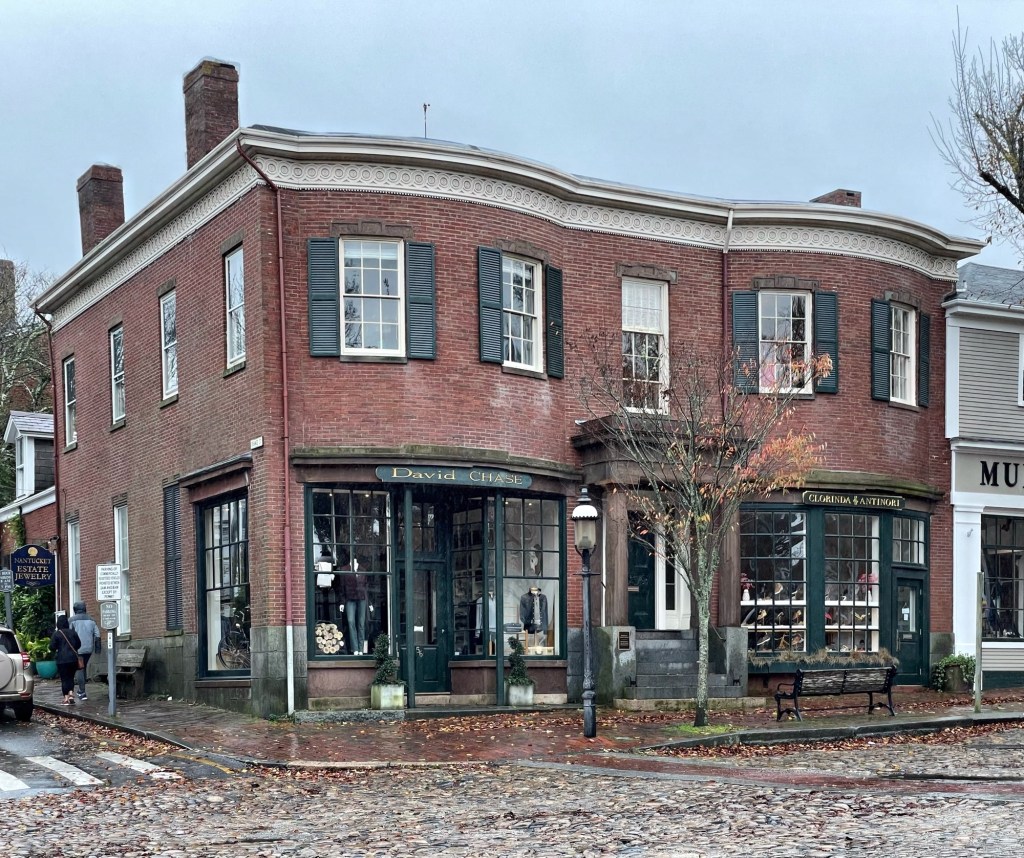
Folger House // 1831

Located in the middle of the commercial Main Street on Nantucket, the 1831 Folger House stands as a fully developed example of the Federal style in masonry construction. The house’s double bow front, brownstone lintels and Ionic portico, guilloche frieze, and cast-iron railings are the finest of their type in the community. Although the house was turned into commercial use in the mid-19th century with the addition of storefronts and the removal of its original hip roof, it retains substantial architectural elements of a more decorated design than was customary even among Nantucket’s wealthiest merchants in this period. The house was built for Philip H. Folger, a merchant and it was inherited by his son upon Philip’s death in 1865.

Joshua Coffin House // 1756

Nantucket in the off season is just as magical as the peak of summer. Quiet streets, gray shingled buildings, and the smell of the ocean is the perfect medicine! This is the historic Joshua Coffin House on the island of Nantucket. The house is one of the best examples of a mid-18th century sea captain’s residence on the island and it is in a great state of preservation. The dwelling was built in 1756 for newlyweds Joshua Coffin and Beulah Gardner on land given to them by Beulah’s father as a wedding present. The couple raised their children here until Joshua died at sea in a hurricane while on a whaling trip in the West Indies. The house remained in the family since at least 1971 and has been lovingly maintained by its stewards.

Old Gaol – Old Nantucket Jail // 1805

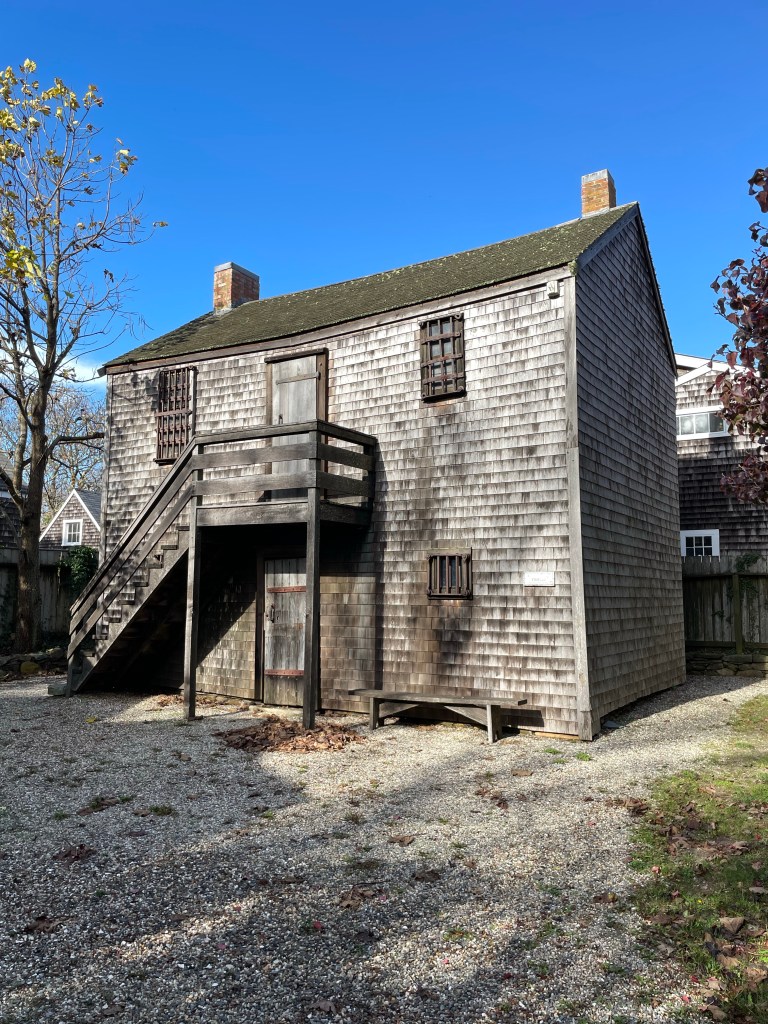
Nantucket built its first jail in 1696 on Vestal Street, which was at the time, far from a lot of the houses and businesses on the island. In 1805, taxpayers decided to spend $2,090 (roughly the cost of building a whaleship at the time) to build a new, sturdier jail nearby the original structure. Opened in 1805 and dubbed the “New Gaol,” the wooden structure represents colonial-era architecture with exceptional reinforcements, as to keep the prisoners inside those small four walls. The Gaol was constructed using massive oak timbers with iron bolts running the length of the walls, iron rods across the windows and heavy wooden doors reinforced with iron. The small structure saw a new neighbor when in 1855, the House of Corrections was moved from the Quaise Asylum and situated next to the Old Gaol. The House of Corrections was used for debtors, habitual drunkards, mentally ill, and juvenile prisoners—also used as a workhouse where debtors could ply their trades to pay their bills. It was no longer needed by 1933 and dismantled in 1954. Like with the old House of Corrections, the old jail saw its last prisoner in 1933, and sat underutilized (but surviving) until it was acquired by the Nantucket Historical Association in the 1940s and restored in 2013.