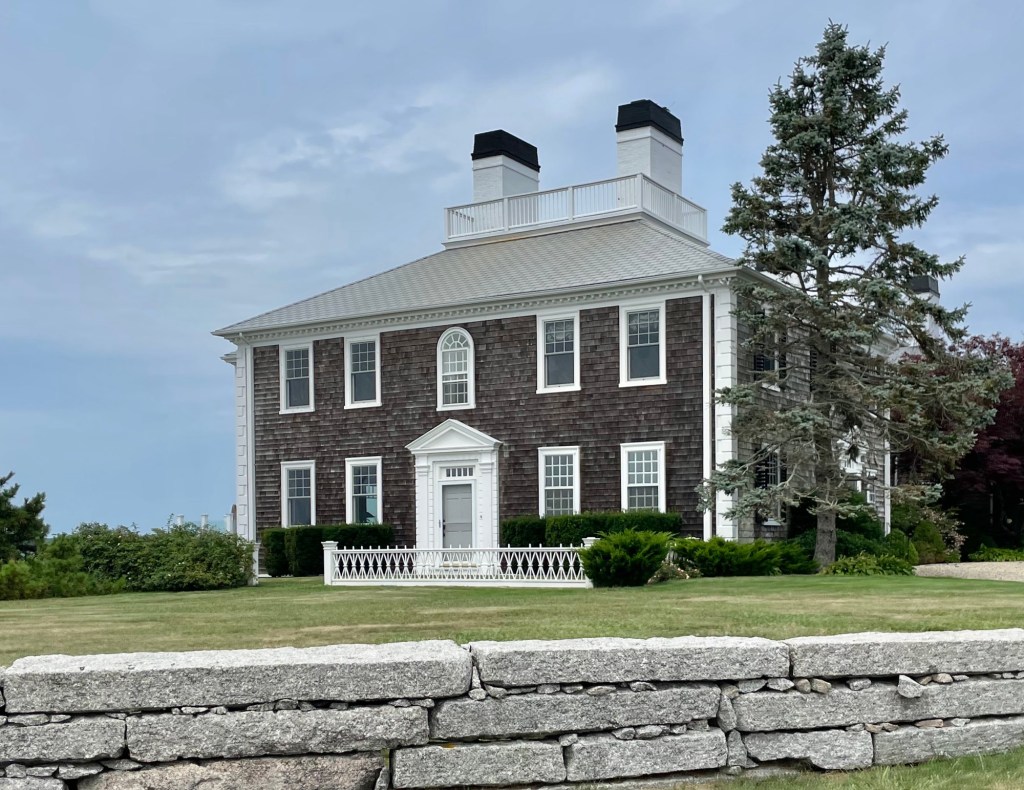
This Georgian Revival house on Butler Point in Marion, Massachusetts, was built in 1929 at the period of great transition of many coastal communities in New England between the Gilded Age and later summer cottage period of prosperity and the Great Depression.The “cottage” here was built for Jerome R. George (1867-1942), vice president and chief engineer of the Morgan Construction Company of Worcester and avid boater. A native of Ohio, he was a noted designer of steel mills in the United States, Europe, and India and built this home, likely as their summer retreat. The house is prominently sited and is one of the best examples of the Colonial Revival style I have seen in the seaside town. It is clad in cedar shingles as a nod to the vernacular coastal homes and larger Victorian-era summer homes seen in the village but resembles the 18th century Colonial homes with an elaborate pedimented entry, symmetrical facade, corner quoins, and massive brick chimneys.
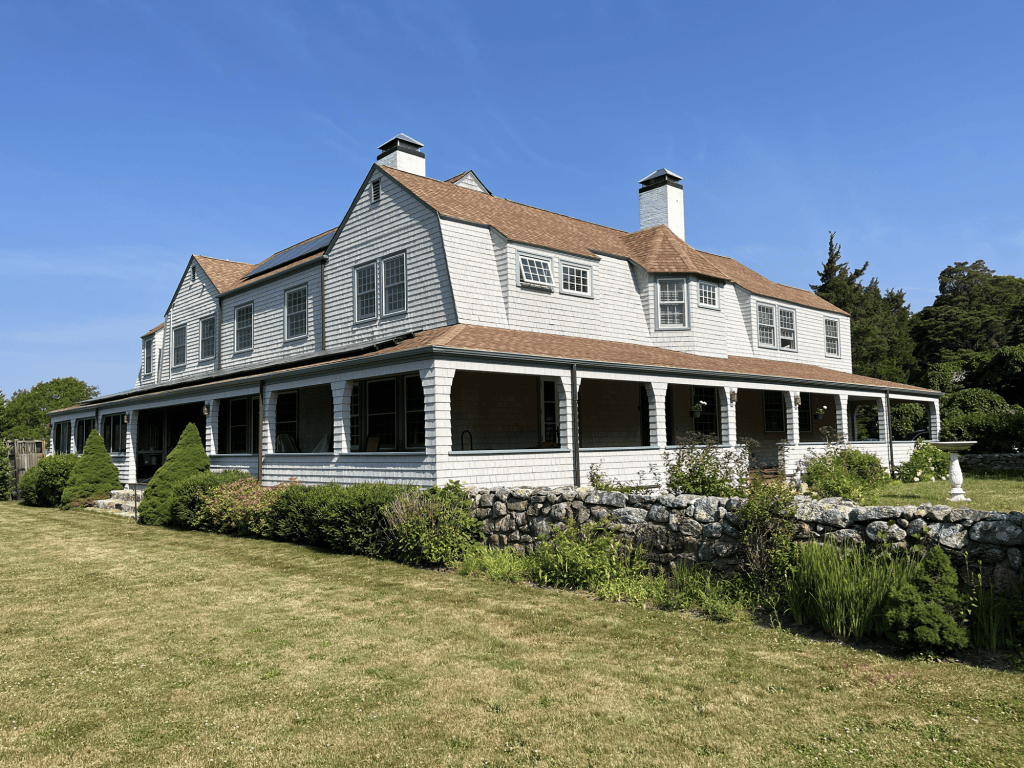
When an architect designs a house for their own use, you know it is going to be special. This is the Charles A. Coolidge Cottage in East Marion, on the South Shore of Massachusetts. American architect, Charles Allerton Coolidge (1858-1936), was born in Boston as a member of a Brahmin family. He graduated from Harvard College in 1877 and studied architecture at the Massachusetts Institute of Technology, later entering the office of the well-known firm of Ware & Van Brunt. He later joined the firm of renowned architect Henry Hobson Richardson in 1883 and soon after the death of Richardson in 1886, he formed a partnership with George Shepley and Charles Rutan, two other Richardson architects. Shepley, Rutan & Coolidge went on to become one of the most prominent architecture firms of the late 19th and early 20th centuries, performing major residential and institutional work in Boston and across the United States. Charles Coolidge married Julia Shepley of St. Louis, sister of his business partner, in 1889, and the couple would begin planning their summer retreat in the coastal community of Marion. The couple purchased a site already containing a residence and lived there before building this cottage around 1903 in the fashionable Shingle style. The over the years, various out-buildings were constructed on the site for his children’s cottages and other various uses. The property remains part of the Coolidge Family and is a private residence. The Coolidge Cottage is entirely clad in shingles, a hallmark of the Shingle style of architecture, and features broad gambrel roof forms and sweeping porches supported by shingled columns. Photo is courtesy of Lynn Smiledge.
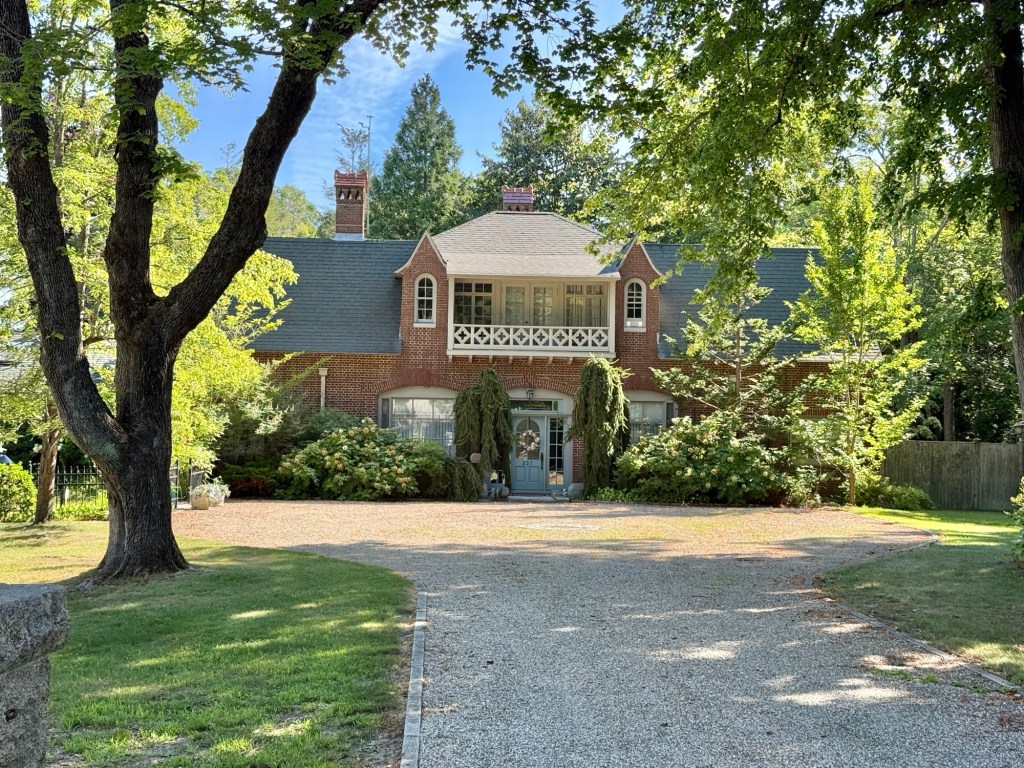
In the late 19th and early 20th century, Marion, Massachusetts, became an exclusive summer colony where wealthy families from cities would flock to soak up the sun and breathe fresh coastal air away from the heat and pollution of industrial centers at the time. One of these families was headed by Stanley Robert McCormick (1874-1947) of Chicago, the son of Cyrus McCormick, inventor and founder of the McCormick Harvesting Machine Company which would later become the International Harvester Corporation. Stanley McCormick was married in 1904 to Katharine Dexter McCormick (1875-1967), also a member of a wealthy family, who would devote her life to advancing women’s causes, serving as the vice-president of the National American Women Suffrage Association and in 1920, co-founded the League of Women Voters. Katharine remained active in later life, funding new birth-control research and the building of an all-women’s dormitory at the Massachusetts Institute of Technology, named McCormick Hall. Soon after Stanley and Katharine married, they purchased waterfront property in Marion, where Stanley spent summers as a child, to build a summer residence for his own family. In 1906, Stanley purchased land on Lewis Street and hired the Boston architectural firm of Page & Frothingham, to design and oversee construction of a large brick “cottage” and this brick garage structure down the street with a residence for the driver. While their summer residence was being built, Stanley McCormick, like his sister Mary, was diagnosed with schizophrenia. In 1909 he was declared incompetent by the California Supreme Court and would live for the rest of his life at the McCormick estate, “Riven Rock,” in Santa Barbara, California. In 1929, his wife Katharine and Stanley’s brother Harold were named conservators of his estate, which exceeded $30 million. The McCormick estate in Marion was occupied by Katharine’s mother for a number of years with Katharine visiting many summers. The cottage property was eventually sold and demolished in 1953, and the old garage was converted to a home with additions to make the property a year-round residence.
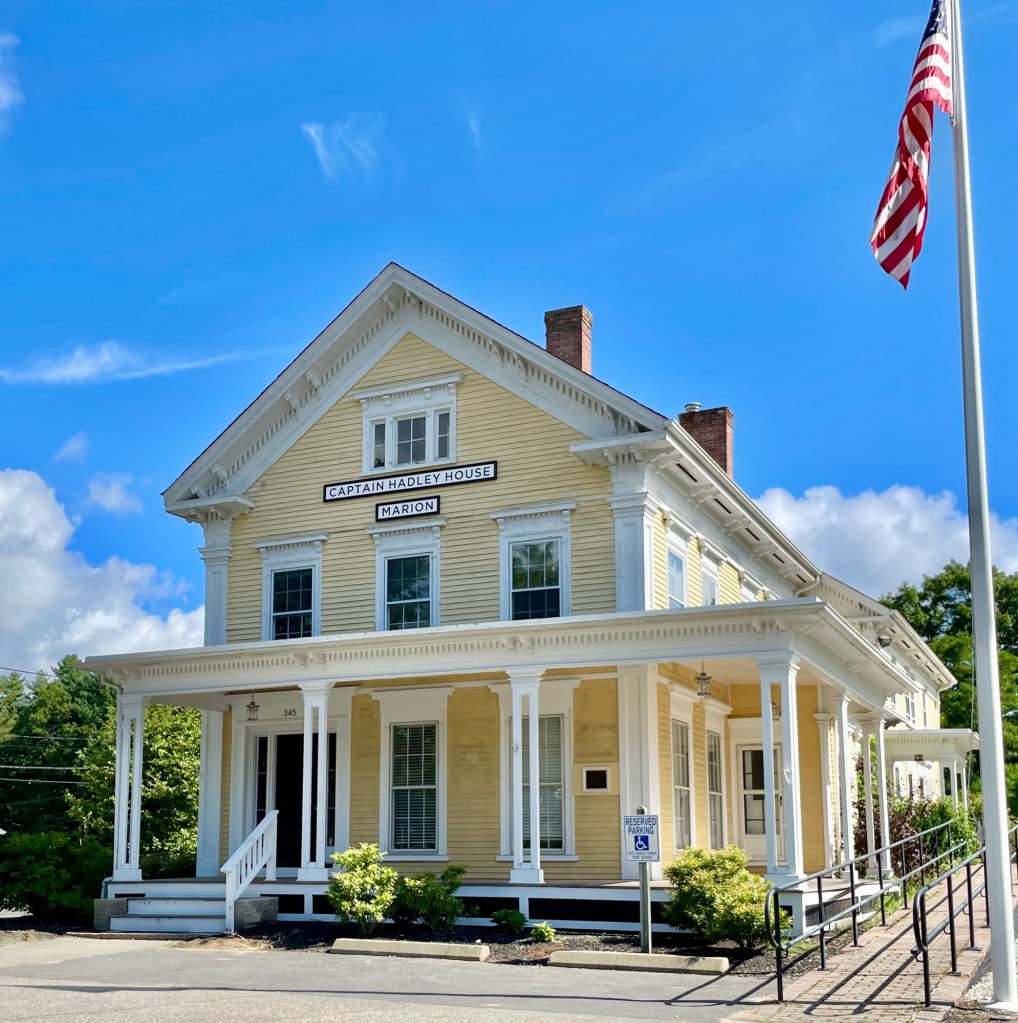
Built around 1850 for Captain Hadley this stately home in Marion, Massachusetts, is significant as a two-story transitional Greek Revival/Italianate landmark that has ties to one of the most prominent local families and has spent nearly two centuries as the visual entrance to the historic village. The home was built for sea captain, Stephen Delano Hadley (1814-1892) and his wife, Mary Soule. The home was at the northern end of the Old Landing, near the working harbor, and saw other owners in the 19th and 20th centuries until it became an office building. In the 2010s, the prominent site along a busy thoroughfare was eyed by CVS to redevelop the site with a suburban style store and parking lot. The community rallied with petitions signed by thousands and local groups mobilized to save the building and character of the community. The Sippican Historical Society and Sky Development Ltd. partnered to purchase the building and acquire a deed restriction on the site, preserving it in perpetuity. Today, the Captain Hadley House, as it’s still known locally, continues under new ownership as a small medical office, its Italianate details preserved under the historical society’s watch as one of Marion’s most recognizable surviving nineteenth-century landmarks.
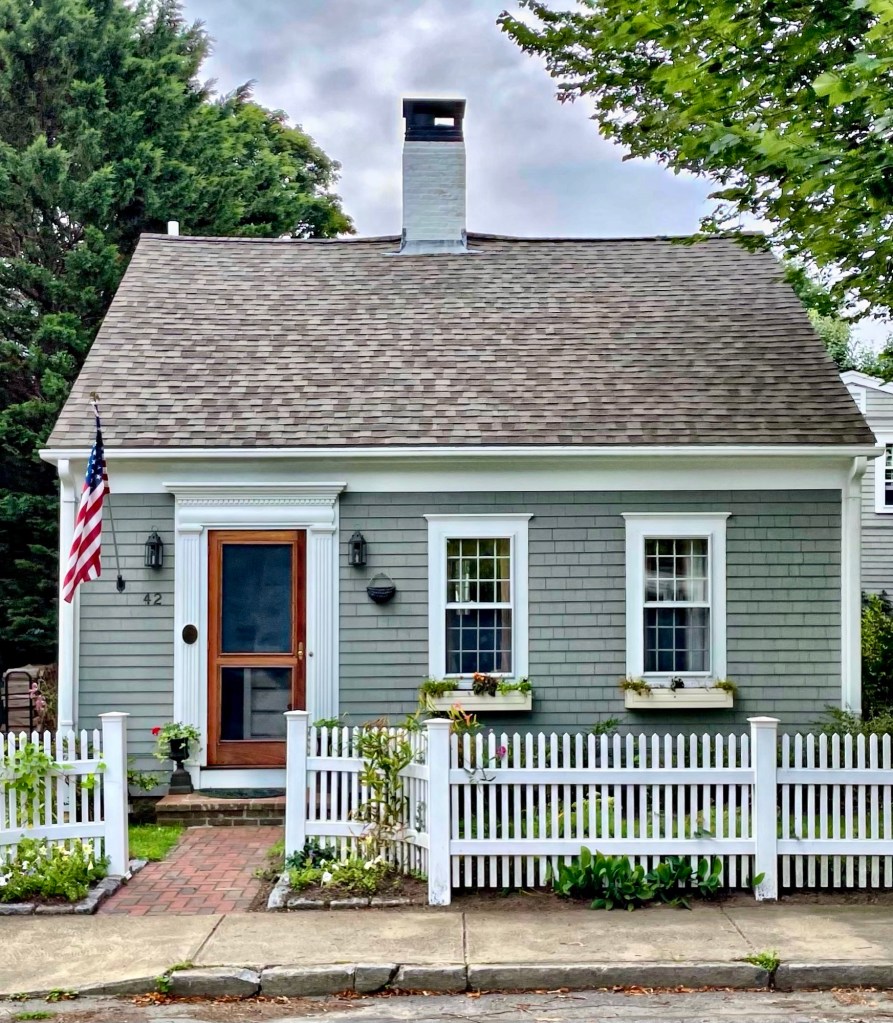
This tiny half-cape house on Main Street in the harbor town of Marion, Massachusetts, was likely built around 1820 for Silas Briggs (1792-1833), a mariner, who married Desire Clark a year prior. Silas would pass away by 1833, leaving Desire widowed to raise three children and maintain their home. When he came of age, the house was inherited by Timothy H. Briggs, who followed his father’s footsteps to become a sea captain. Timothy lived here with his wife, Josephine and elderly mother, never needing to expand the home into a full cape like what was done to so many other residences in the mid-19th century. Captain Timothy Briggs died in 1877 while at sea and his widow too lived in the home into the 20th century. The old Briggs House retains its original half-cape form, 12-over-12 sash windows, central chimney, and elaborate door surround, which makes the small but mighty cottage one of my favorites in Marion!
During late 18th and early 19th centuries, the rise of the coastal schooner trade and whaling ushered in a long period of prosperity for coastal towns in New England, which continued unabated until the Civil War. The War of 1812 provided many Marion sailors and sea captains with the chance to experience life at sea with privateers papers issued by the United States government, these captains went to sea in their schooners to hunt down British ships, plundering them like pirates. One of these captains was Ward Parker Delano (1819-1867), who lived in this house overlooking Sippican Harbor. The house likely dates to the mid-late 1700s and was probably originally built by his grandfather, Captain Stephen Delano (1749-1821). Under subsequent owners in the Delano family, the home was modified on numerous occasions in styles popular at the time until the early 20th century when it was Colonialized, which added the portico, gable, and dentils, possibly by Ward Parker Delano II (1851-1915) or his son, Ward Parker Delano III (1883-1940) descendants, who summered at the old family home, and were both prominent architects of the early 20th century.
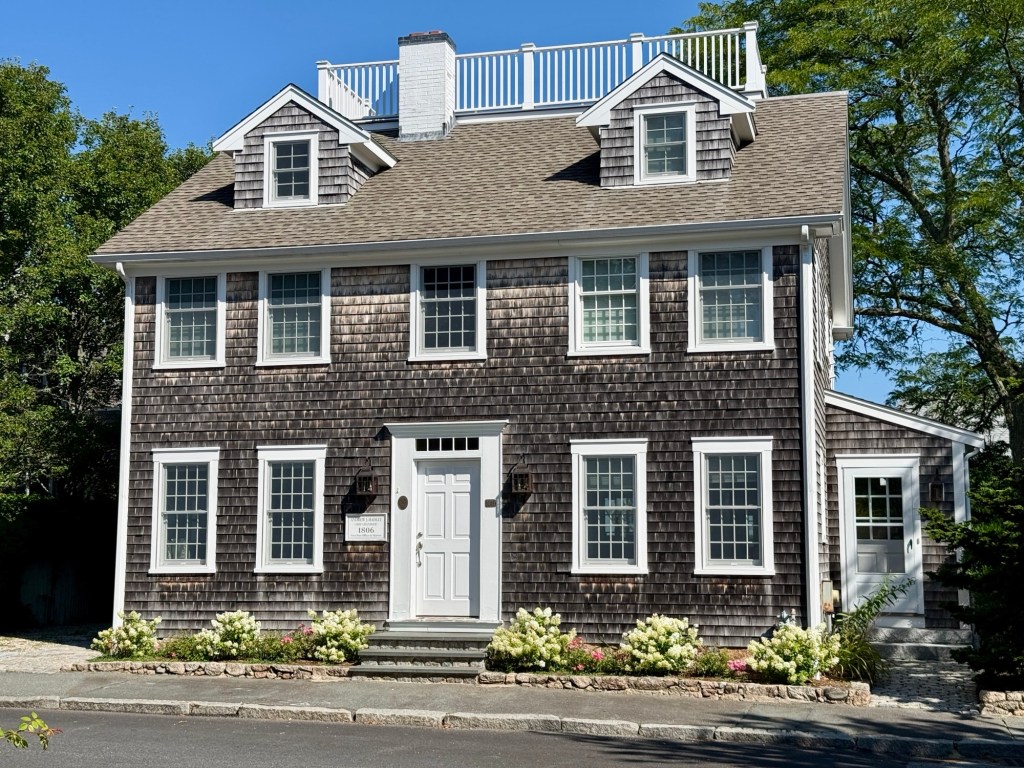
This late-Georgian style residence on Main Street in Marion’s Wharf Village is a stone’s throw from the harbor and has been conveniently located near the town’s Long Wharf since it was constructed around 1806. The building was constructed as a store for A. J. Hadley, where ships were outfitted for voyages. While Hadley’s store occupied the eastern half of the first story, the left side of the ground floor was Marion’s first post office. The second floor served as a clothes-making factory with the top floor operating as a sailmaker’s loft. By 1855, the structure was converted to a residence and owned by Sumner Ryder, who served as the Town Clerk and later joined the ranks of the Union Army during the Civil War. During the early 20th century, the property, with its widow’s walk, was owned by members of the Harwood family, including Ms. Sarah W. Harwood, who lived here with Margaret French (1860-1935) who was listed in the Census for decades as her partner, housemate, and boarder.
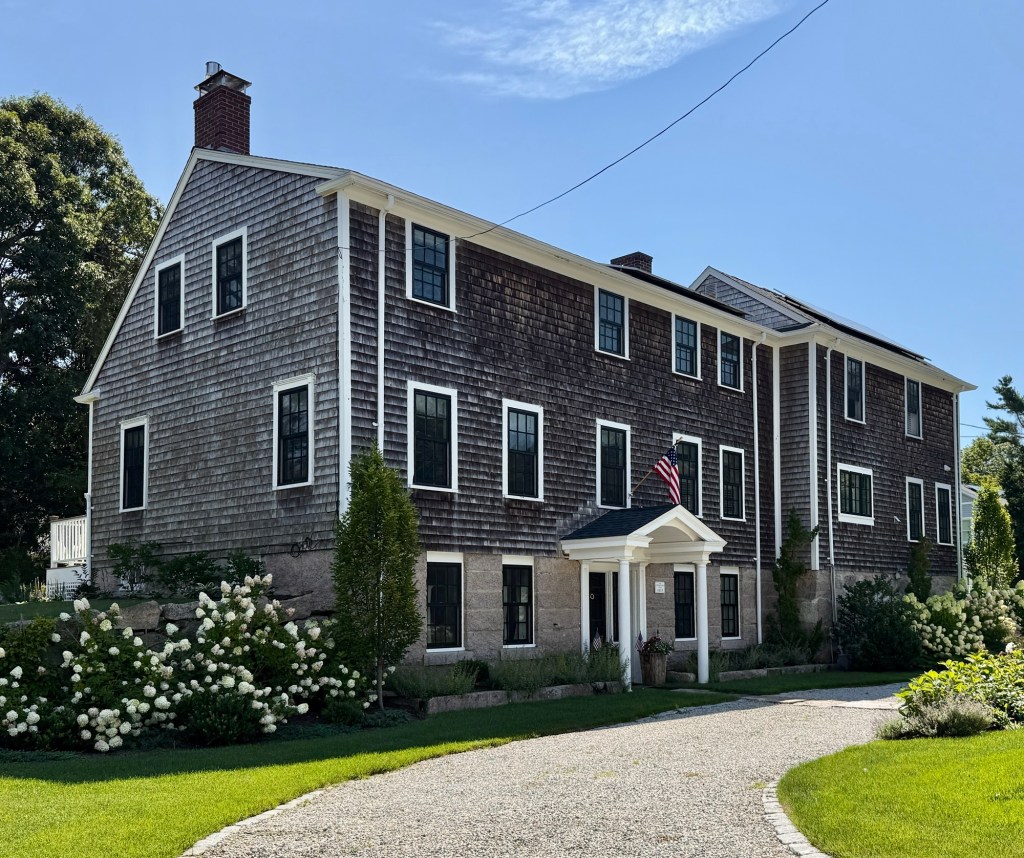
Known as the “Old Parsonage” this historic house in Marion, Massachusetts, was built in 1813 by Capt. John Pitcher (1788-1867) around the time of his marriage to Catharine Clark. John Pitcher was the brother of Elizabeth Pitcher Taber, a major benefactor of the town of Marion. The residence is unique in that the primary facade is actually facing away from the street, with the prominent three-story facade being the historic rear of the home. The Federal period house sits on a raised stone foundation with a central door and shingle siding above. Behind his home, a large pasture was grazed by sheep and cows until the land was sold off and subdivided for residential development later in the 19th century. When Capt. Pitcher died, he left his house to the Congregational Church, which used it as a parsonage for many years until 1966, when the church sold the property to Lawrence P. and Edith G. Pangaro, who co-founded the Marion Sentinel and the Sippican Publishing Company. The home was recently renovated.
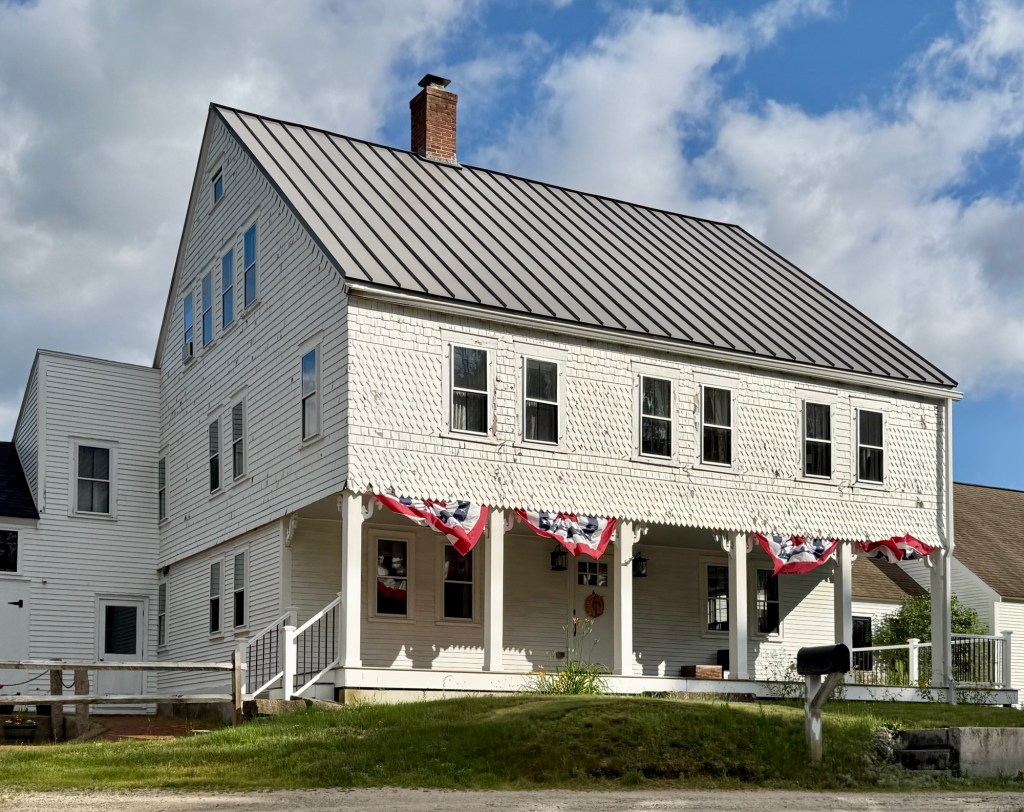
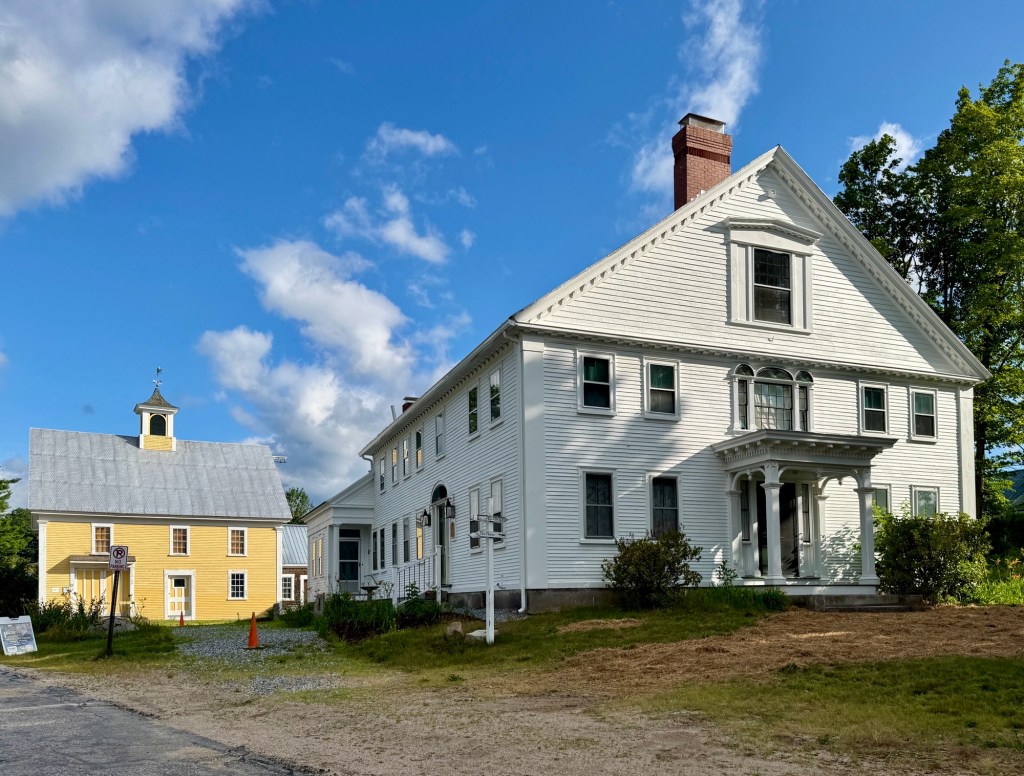
This now significantly altered Federal period residence is located in Tamworth, New Hampshire, and is a visual representation of the shift of the community from an agricultural economy to a tourism-based economy. The residence was built in the first half of the 19th century and owned by Henry Alonzo Wiggin (1808-1871) who was listed in the Census as a farmer. The formerly vernacular Federal period farmhouse was converted and expanded into an inn in the late 19th or early 20th century and became known as the Swift River House. When converted to an inn, the house was given the projecting addition on the facade at the second and third floors with the full-length porch, and covered with shingles. The structure served a vital role in the tourism economy when Lakes Region towns saw huge increases in visitors for the summer months. In 1929, Dr. Edwin Remick purchased the property for his son, Dr. Edwin Remick Jr., and his new wife, Marion. The father and son doctors maintained a medical office nearby in the Enoch Remick House, which now alongside this structure, are house museums operated by the Remick Country Doctor Museum & Farm.
Tucked into the quiet village of Tamworth, New Hampshire, the Captain Enoch Remick House can be traced back to around 1808, when John Remick, a shipwright and joiner formerly from Newmarket, had inherited part of a larger family land purchase dating to 1779. He purchased additional land and built a house in 1808 for his family. The property later passed to his son, Captain Enoch Remick (1798-1879), who modernized and expanded the house turning the once family farmhouse into a local hub as an inn and a stagecoach stop on the Center Harbor–Conway route. Besides running this inn and farm, owner Enoch Remick also served as the Sheriff for Carroll County. In 1867, Remick sold his property to Nathaniel Hubbard, Jr., the year prior to Hubbard’s marriage to Remick’s daughter Sarah. The couple farmed the land here for decades until Mr. Hubbard died in 1892. Edwin Remick, a doctor and nephew of Sarah Remick Hubbard, purchased the home in 1904 and lived upstairs with his family while he ran his medical practice below. His practice was joined by his son, Edwin Remick Jr., also a doctor. The property remained in the family and was added to the National Register of Historic Places in 1996, and today serves, alongside its farm outbuildings and roughly 69 acres of land, as the centerpiece of the Remick Country Doctor Museum & Farm. The main house is a landmark example of the Federal style with its main five-bay facade with later 19th century portico, unique Palladianesque window capped by louvered fans, and Federal style side entrance which long served as the entrance to the inn and later medical offices. The Remick House remains as one of the finest examples of a residence of its style in New Hampshire.
This charming example of a New England Federal style house is located in the village center of Tamworth, New Hampshire and has lived quite the life. The residence was built in about 1830 for Obed Hall (1795-1873), one of Tamworth’s first lawyers. Mr. Hall married a local woman, Elizabeth “Betsey” Gilman and they had a daughter, Caroline in 1830. Tragically, at the age of 26, Elizabeth died within a year of giving birth to Caroline, leaving Obed to care for their daughter alone. Obed Hall lived in this house with his daughter for 16 years until he remarried in 1847 to Caroline Eleanor. History repeated when Hall’s second wife had a baby daughter, Eleanor Mary (Nellie) in 1849 and then died within a month, leaving Obed with a second child to raise. Despite his family losses, Hall was Register for Probate for Carroll County from 1840 to 1851 and was a State Senator in 1854 and 1856. He appears to have extended the house to rent it to an additional family, likely to assist with raising his two daughters. After his death in 1873, the property was inherited by daughter, Nellie, and her husband, Jewett Lowe, who modernized the house likely to house hotel workers as Tamworth became a popular summer retreat in the early 20th century. In 1946, the house was sold to the New England Box Company, based in Greenfield, Massachusetts, but maintained mills around New England including one just east of Tamworth. The company divided up the house into three two-story apartments for local company employees, including lumbermen and mill workers, many of whom recently returned from overseas during WWII. The property went back to private ownership by the Dyer family, who in 2008, sold the property to the Tamworth Historical Society, now known as the Tamworth History Center, who maintain and operate it as a house museum.
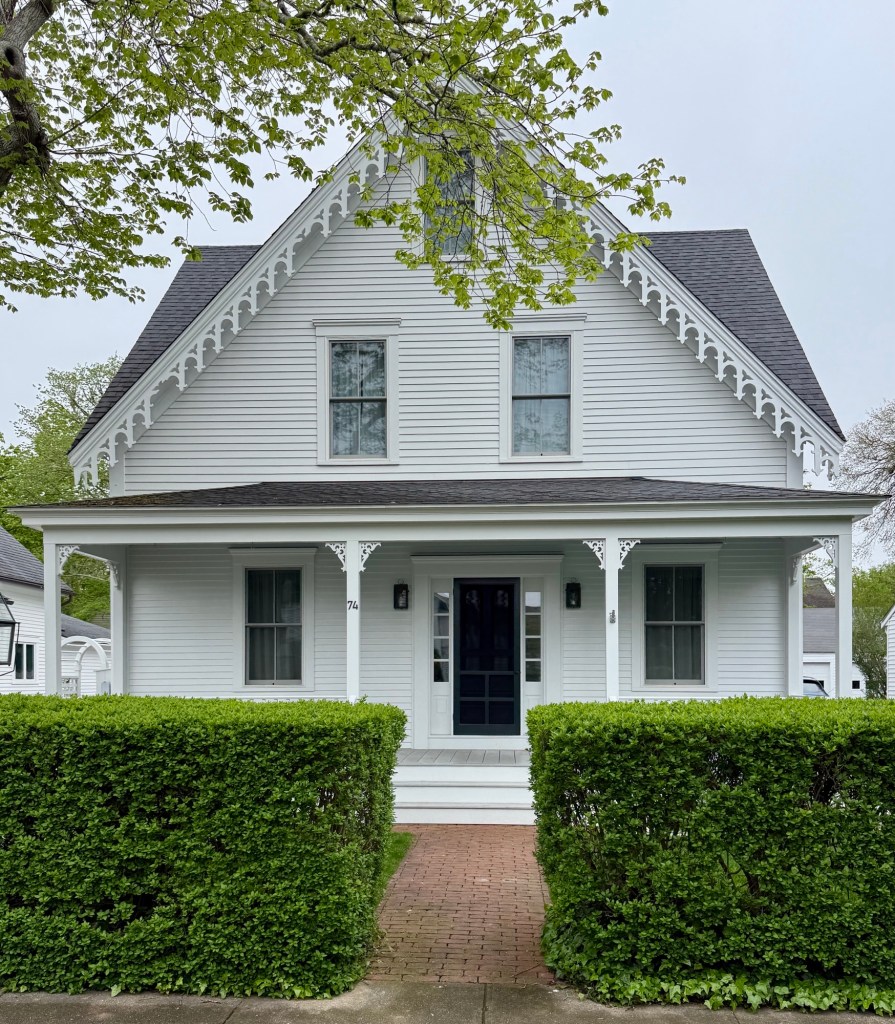
One of the more intricate Sea Captain’s residences on Martha’s Vineyard, can be found here on South Summer Street in Edgartown, a unique Gothic Revival residence notable for its carved bargeboards and full-length porch. The residence appears to have been built around 1856 for Thomas N. Fisher (1819-1885), a whaling captain who married his wife Phebe, leaving her soon after in this home on a whaling voyage. Historians state that Captain Fisher was a strict disciplinarian and one of a very few whaling masters to forbid prostitutes on board his ship. He served many more excursions even through the Civil War when whaling vessels were particularly prone to attacks by Confederate raiders. It is said that Captain Fisher cut the top of his topmasts to disguise his ship as an English rig to sail safely home. In 1885, Captain Fisher died of a heart attack while at church in Edgartown, but his residence remains well-preserved much like it was when maintained by his wife while he was away for months or years at a time out at sea.
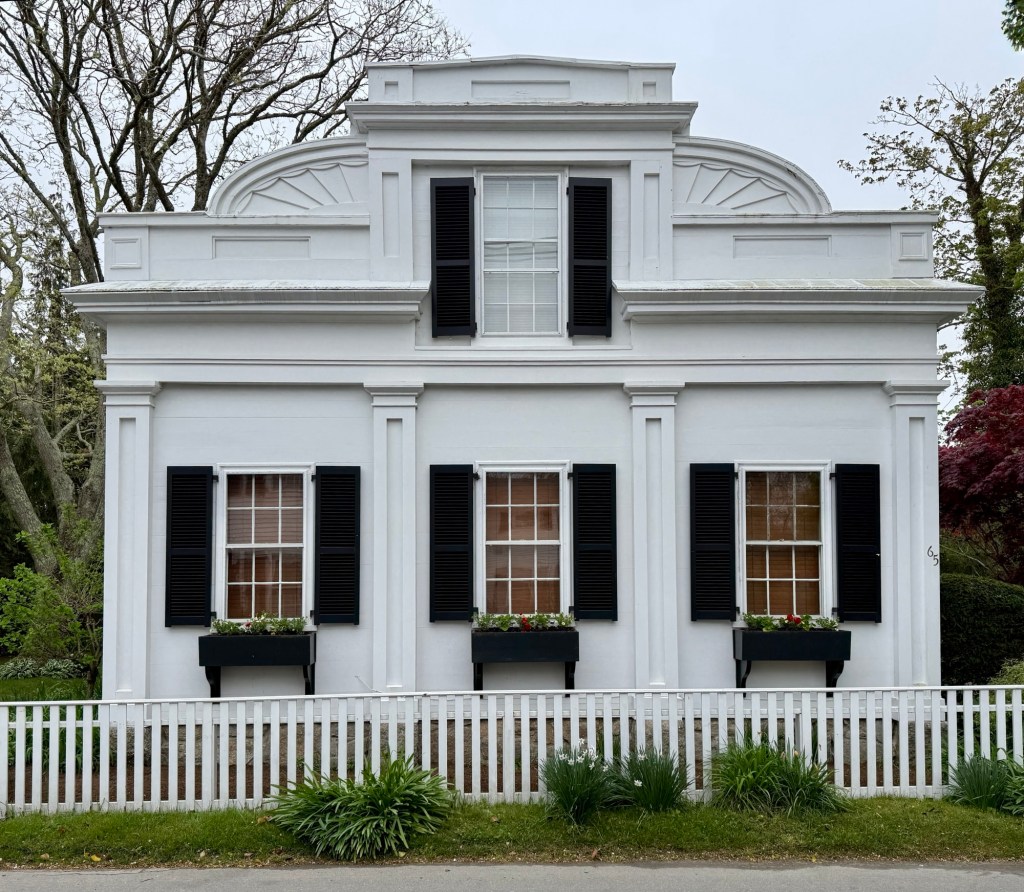
The architecturally distinguished Holmes Smith House on South Summer Street in Edgartown, Martha’s Vineyard, showcases the range in which the Greek Revival style could showcase whimsy and unique architectural details from the typical side-hall gable-end form seen all over New England. The house appears to date from the mid 1830s with its strong, symmetrical facade of flushboard siding, its three bays divided with paneled pilasters, and elaborate parapet containing a central dormer and arched fan motifs. The house was originally owned by Capt. Holmes Wass Smith (1798-1849) and his wife, Sophia (Coffin) Smith and later in the 19th and early 20th centuries by members of the Pease family. The residence is now a summer home and has been thoughtfully preserved as one of the most excellent and unique examples of its style on Martha’s Vineyard.
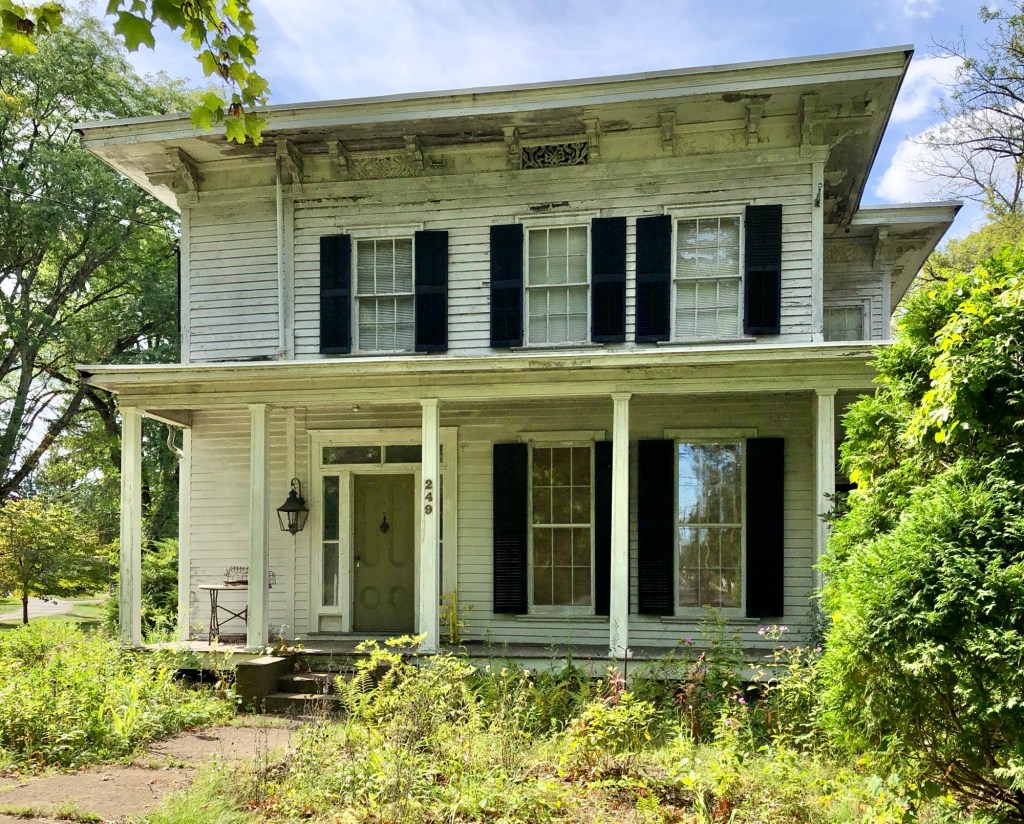
The Spencer family emigrated from Braintree, England to America in 1638, with Thomas Spencer settling in Hartford, Connecticut in 1640. Thomas Spencer Jr., the second generation in Connecticut moved to modern-day Suffield in the 1670s. Generations later, Israel L. Spencer (1833-1887) became a businessman and politician, later being employed at the First National Bank in Suffield, continuing the family’s successful legacy in town. Mr. Spencer had this Italianate house on South Main Street built for him and his family. Israel’s son Charles L. Spencer grew up in the home, later following in his father’s footsteps becoming the president of the local bank. The house has been restored since this photo was taken in 2020.
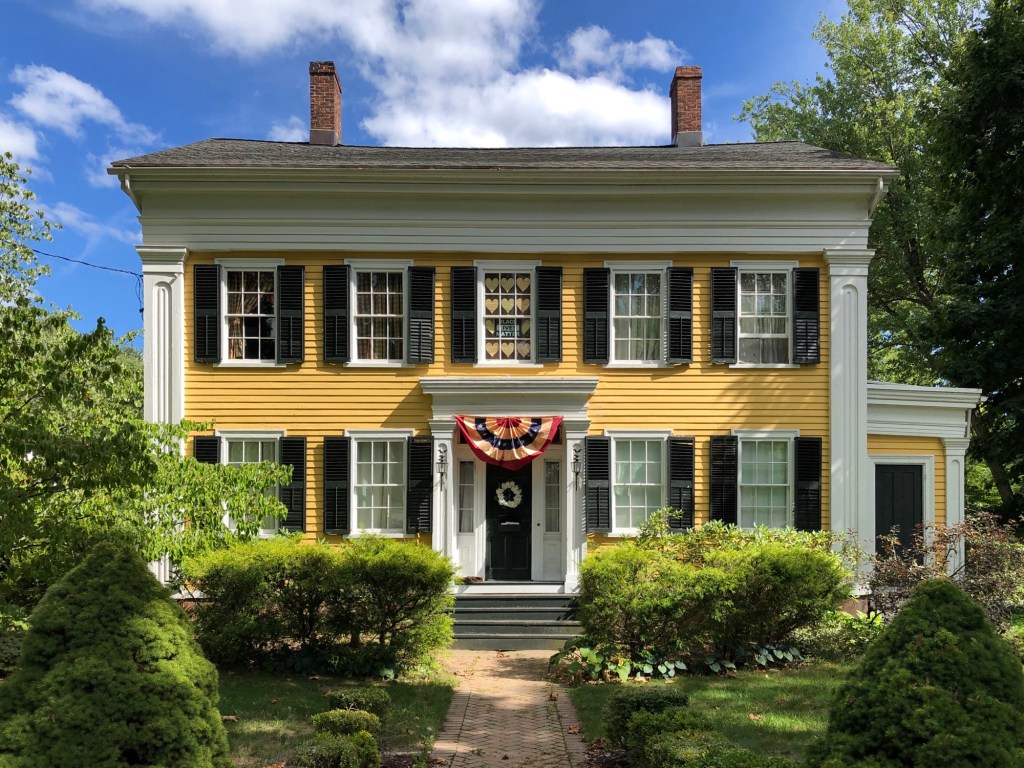
This stunning home sits on Main Street in Suffield, Connecticut, and was apparently built as a center-chimney home in the 18th century. By the 1840s, it was purchased by John Wells Loomis (1805-1879), and altered to fit the then-fashionable Greek Revival style, replacing the center chimney with two smaller chimneys, new pilasters were added to the corners and at the entry. John Loomis was the head of the Loomis family which made a fortune in the tobacco industry in Suffield, rolling and shipping products as far away as California. He operated his cigar business in a large warehouse, now gone, behind the house. Before his death, John Loomis built his son George a house nearby, knowing that his son would carry on the business, which he did until a couple years after his father’s death, until he sold the business and moved to New Haven. The Loomis House is one of the finest examples of a Greek Revival residence in the community.