Fleur-De-Lys Studios // 1885

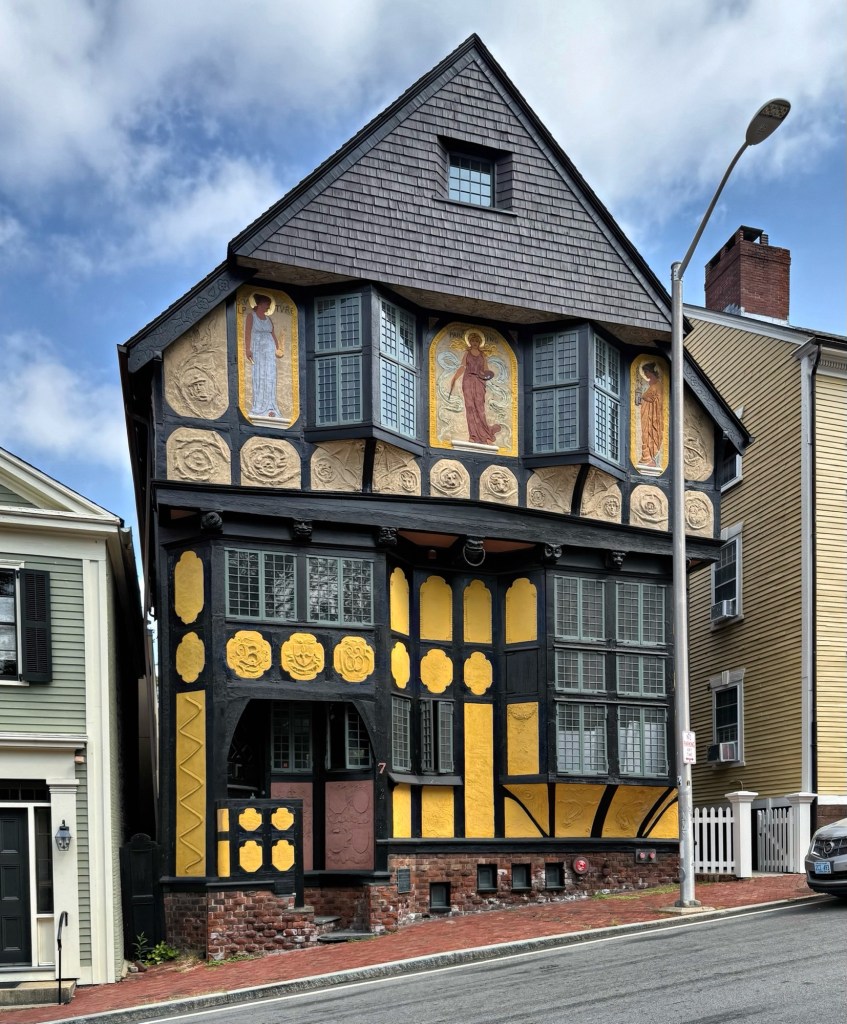
The Fleur-de-Lys Studios is of the most architecturally significant and unique buildings in New England and can be found on Thomas Street in the College Hill section of Providence. Built in 1885 and a vivid expression of the Queen Anne style and showing the emergence of the Arts and Crafts movement movement in America, the handsome building blending is the result of a partnership between artist, Sydney Richmond Burleigh and architect, Edmund R. Willson as a dedicated creative hub for working artists, a purpose it still serves today under the stewardship of the Providence Art Club, who received the deed of the property in 1939 by Burleigh’s widow. Its design draws heavily on medieval English and Tudor Revival influences, with a striking half-timbered façade, stucco panels, carved heads as hanging pendants, and projecting casement windows that break dramatically from the surrounding colonial streetscape. What truly sets the structure apart, however, is its richly symbolic ornamentation—allegorical figures representing painting, sculpture, and architecture adorn the exterior. More than a century later, the Fleur-de-Lys Studios remains both a National Historic Landmark and a living workspace, preserving its original spirit as a place where art and architecture are inseparably intertwined.
Deacon Edward Taylor House // 1786

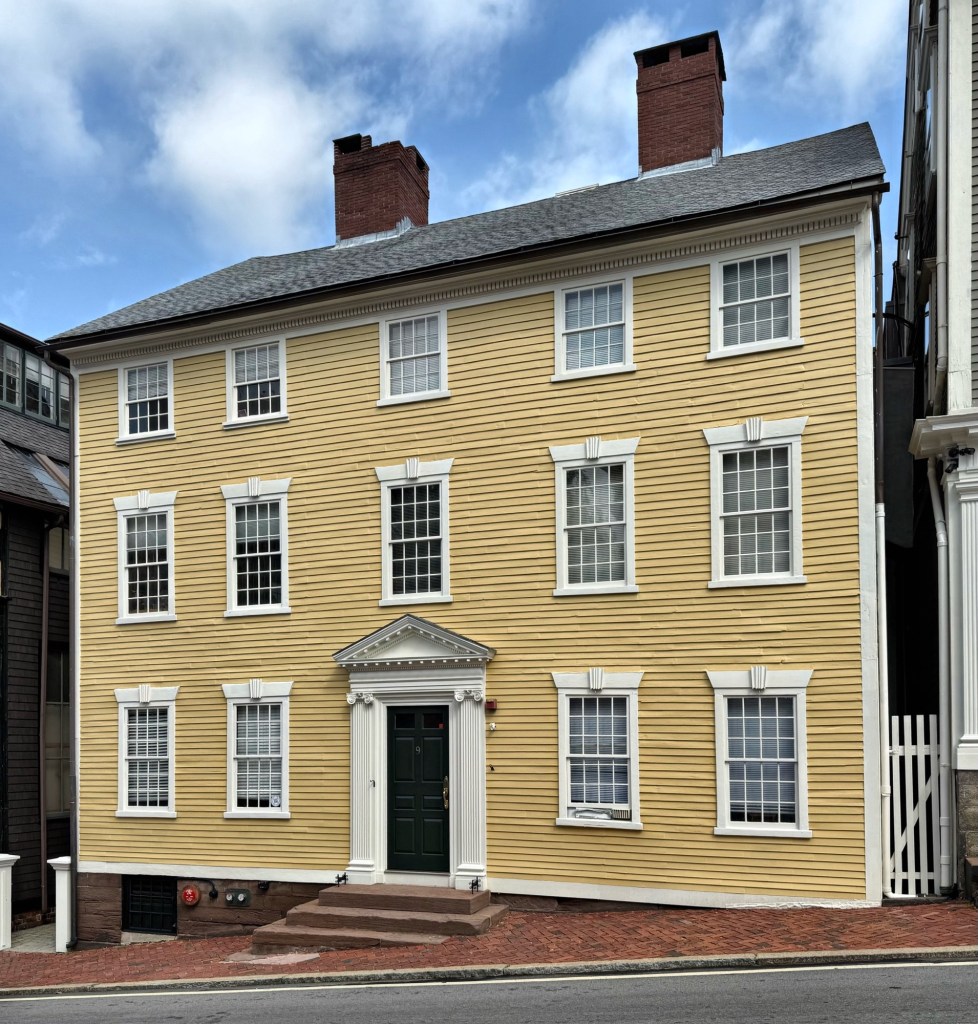
The oldest building on the iconic Thomas Street in Providence, Rhode Island, is the Deacon Edward Taylor House, a stunning early Federal residence built into the sloping site. The property was developed in 1786 for Edward Taylor, a chaise maker who had a shop on Main Street, also serving as a Deacon of the nearby church. Edward had bought out his brother’s half of the property and had this home built for his family. With its three-story symmetrical, five-bay facade, the house features a stately pedimented entry and flared lintels all atop a brownstone foundation. The property passed through many hands in the 19th and early 20th centuries until 1961, when it was purchased by the Providence Art Club as part of their multi-building campus.

Seril Dodge House // 1791

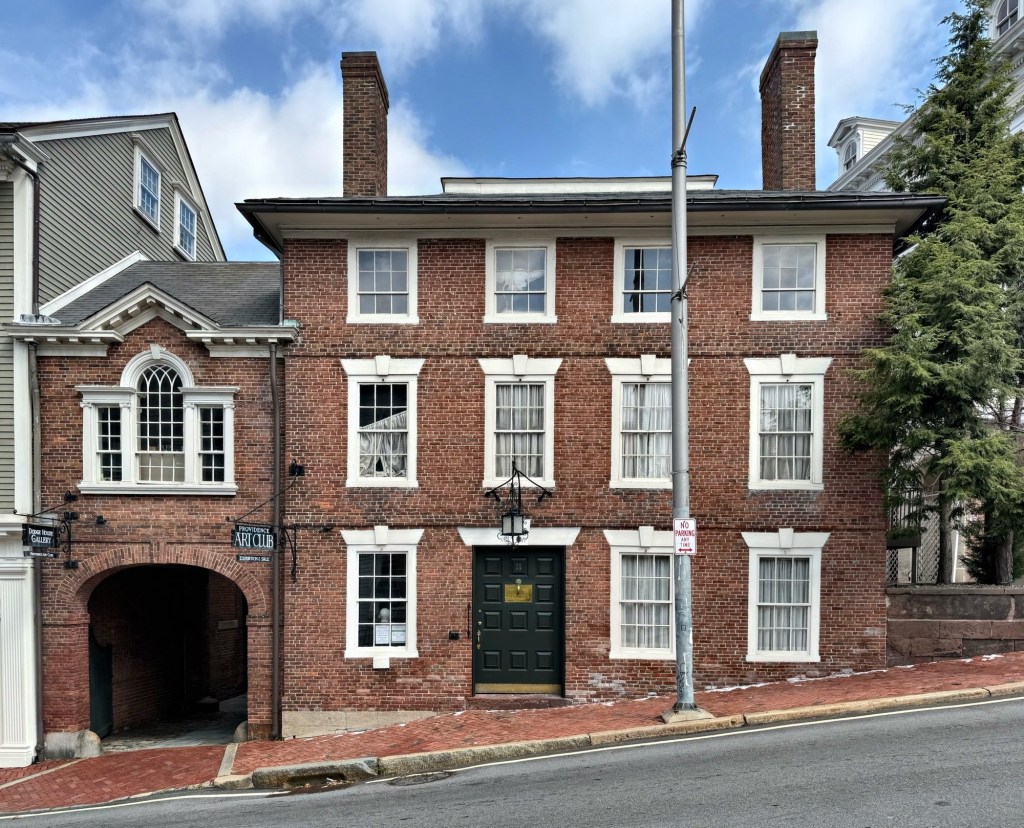
Years after Seril Dodge (1759-1802), a silversmith and clockmaker, built a house in 1786 on present-day Thomas Street in Providence’s East Side, he sold the property to the Brown Family and built this stately Federal period home next-door. Built in 1791, this three-story, side-hall brick house features belt courses above the first and second stories, a hipped roof, and flared lintels over the windows and doorway. After less than a decade, Seril Dodge moved back to his hometown of Pomfret, Connecticut, and sold this property to Moses Brown, who gifted the property to his son, Obadiah. Obadiah Brown (1771-1822) was a member of the Quaker faith and was a member of the Society of the Abolition of Slavery providing local jobs for free Blacks and sponsoring them in any legal disputes. Additionally, he helped secure the freedom of enslaved Africans who escaped to the north. This property was leased to the Providence Art Club in 1886 and acquired by the organization in 1906. Under the ownership of the Art Club, the side arcaded carriage entrance was added, likely designed by Stone, Carpenter and Willson, in conjunction with their 1906 renovation to the adjoining Dodge-Brown House. Today the building is known as the “Club House” and is home to the organization’s cafe, with an its intimate bar, and two exhibition spaces that are open to the public.

Dodge-Brown House // 1786

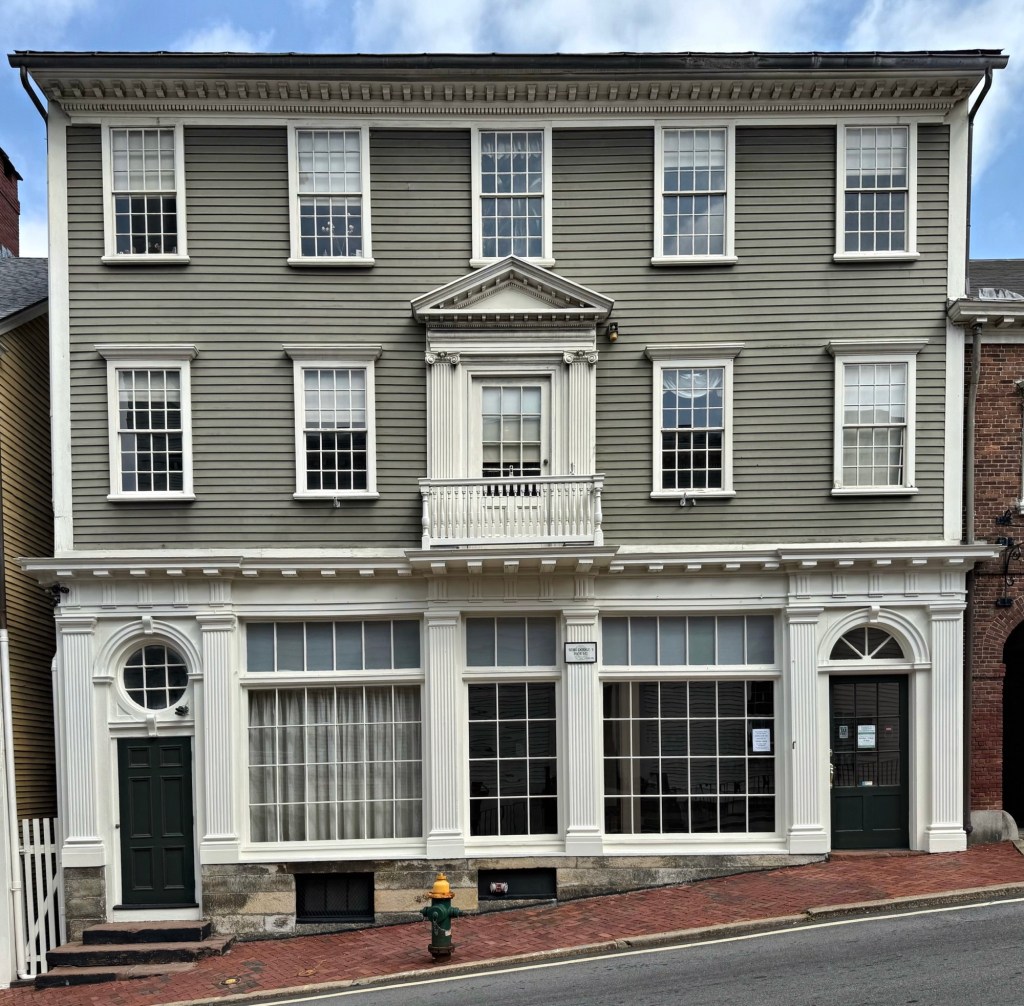
The Dodge-Brown House on Thomas Street in Providence, Rhode Island, was built in 1786 by Seril Dodge (1759-1802), a silversmith and clockmaker. Seril Dodge was a middle-class resident who did well in Providence circles, as an artisan and shop keeper. The house was originally a two-story residence with central entrance that was raised up in the early 20th century to facilitate a new storefront. Seril Dodge and his family only lived here briefly before moving to a brick house next door. Dodge sold the property to Nicholas Brown II (1769-1841) who rented the home to his stepmother, Avis Binney Brown, who became the widow of one of Providence’s richest men, Nicholas Sr. It continued to stay in Brown family hands through the nineteenth century, but only as an investment. The house was raised one story above street level in 1906, when the handsome Colonial revival storefront was installed from plans by the firm of Stone, Carpenter and Willson. The original front door with elaborate pedimented and pilastered enframement is now a door to a small second floor balcony. Since 1919, the Providence Art Club has owned the building, who for years had the ground retail space occupied as an art store, but now contains a club gallery.