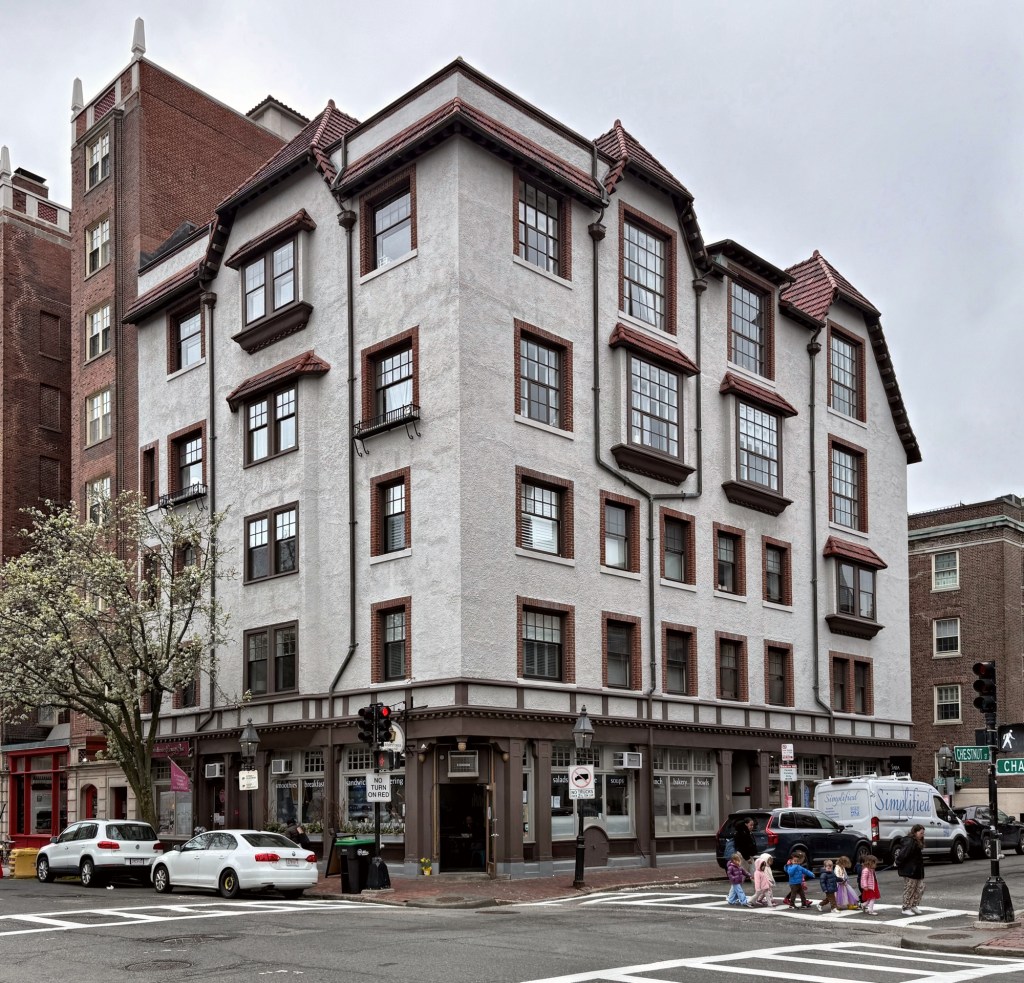
Studio Building, Beacon Hill // 1914

The Studio Building on Charles Street in Boston’s historic Beacon Hill, is a unique, Arts and Crafts style building constructed of brick with stucco walls and a red tile roof. Built in 1914 by William Coombs Codman, a real estate developer and member of the Beacon Hill Associates, a group of preservationists who bought and resold properties in the neighborhood with the aim to limit unsympathetic development. The group helped the Beacon Hill Flat area, which was a higher concentration of former stables west of Charles Street, a gentrified artist and residential enclave. Codman hired the young architectural firm of Loring & Leland, to design the Studio Building, which in its original configuration, contained three stores at the ground-level, two dwellings, offices and artist studios with oversized windows. Just years after the building was completed, Charles Street was widened in 1920, chopping ten feet off the facades of all buildings on the west side of Charles Street, including this building. Charles G. Loring was retained by Codman to oversee the renovations to the new facade and storefront, likely replicating what was once there. After 1920, the building was largely occupied by apartments for single women of means and remains one of the neighborhood’s most iconic and enchanting buildings.

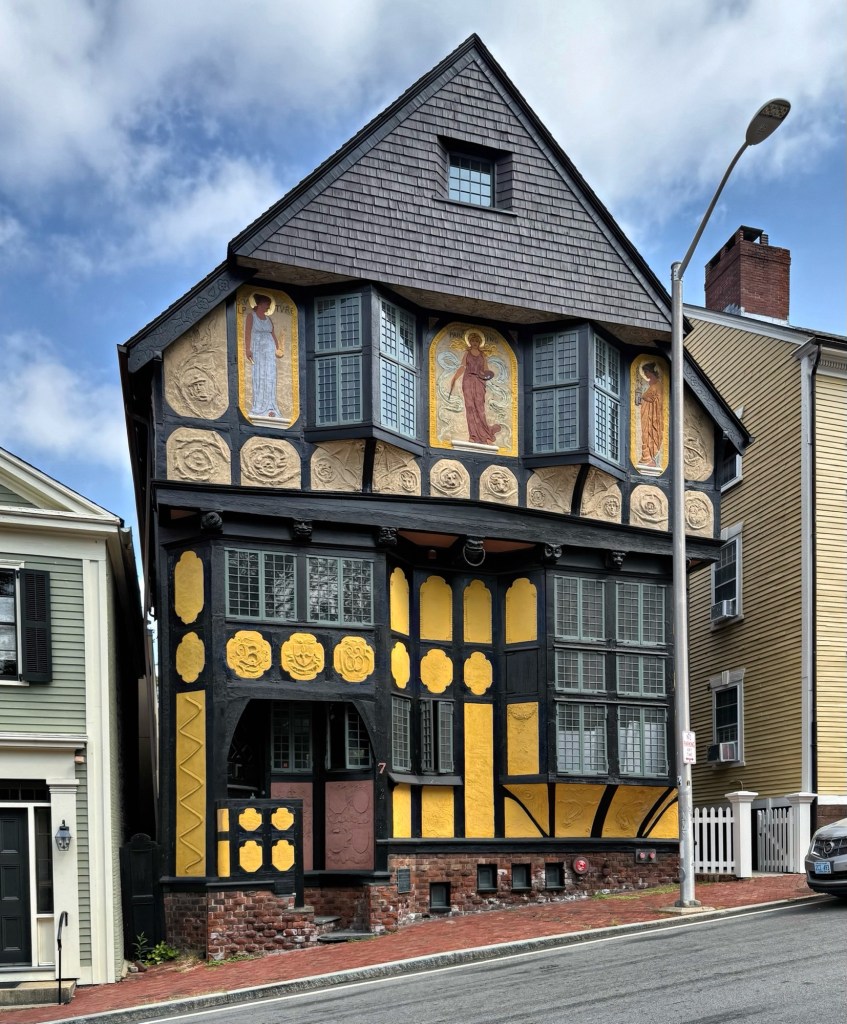
Fleur-De-Lys Studios // 1885

The Fleur-de-Lys Studios is of the most architecturally significant and unique buildings in New England and can be found on Thomas Street in the College Hill section of Providence. Built in 1885 and a vivid expression of the Queen Anne style and showing the emergence of the Arts and Crafts movement movement in America, the handsome building blending is the result of a partnership between artist, Sydney Richmond Burleigh and architect, Edmund R. Willson as a dedicated creative hub for working artists, a purpose it still serves today under the stewardship of the Providence Art Club, who received the deed of the property in 1939 by Burleigh’s widow. Its design draws heavily on medieval English and Tudor Revival influences, with a striking half-timbered façade, stucco panels, carved heads as hanging pendants, and projecting casement windows that break dramatically from the surrounding colonial streetscape. What truly sets the structure apart, however, is its richly symbolic ornamentation—allegorical figures representing painting, sculpture, and architecture adorn the exterior. More than a century later, the Fleur-de-Lys Studios remains both a National Historic Landmark and a living workspace, preserving its original spirit as a place where art and architecture are inseparably intertwined.

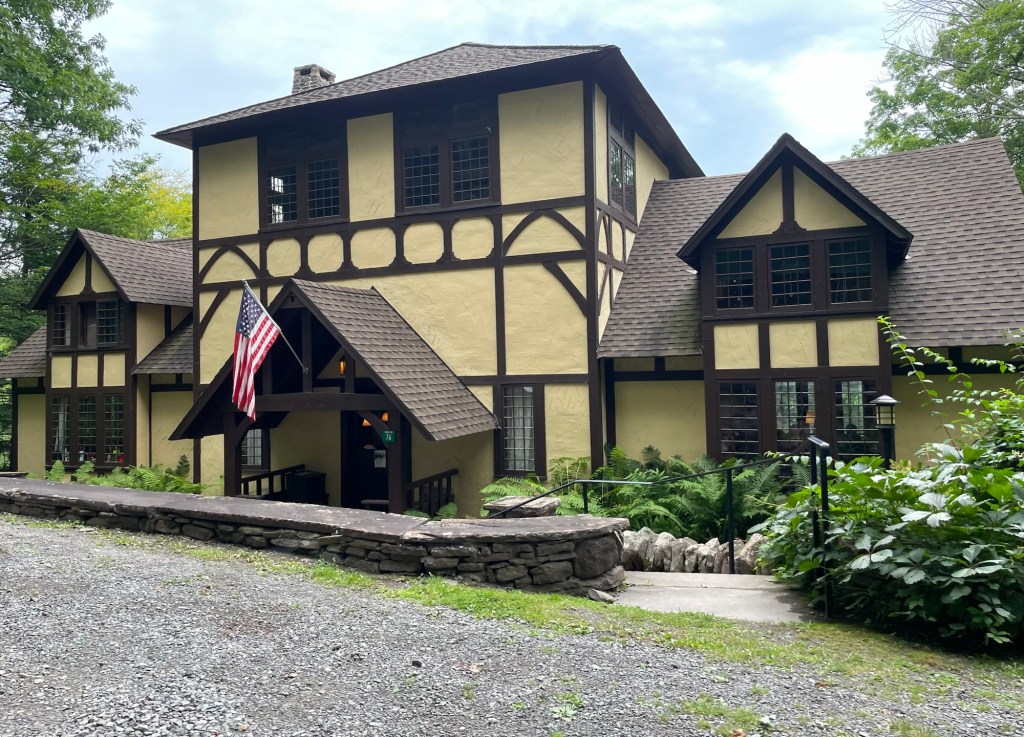
Onteora Park Library // 1906

Built in 1906, the Library at the Onteora Park summer colony in Hunter, New York, is one of the many architectural treasures in the development. Designed by George A. Reid, the Canadian artist, architect, and summer resident of Onteora Park, the Tudor-style Arts and Crafts building was constructed in 1906 and opened to a collection of over 1,500 books and a full-time librarian during the summer season. Built of wood-frame construction with stucco exterior finish and adorned by half-timbering, the building has been lovingly maintained and preserved by members of the community for over 120 years.

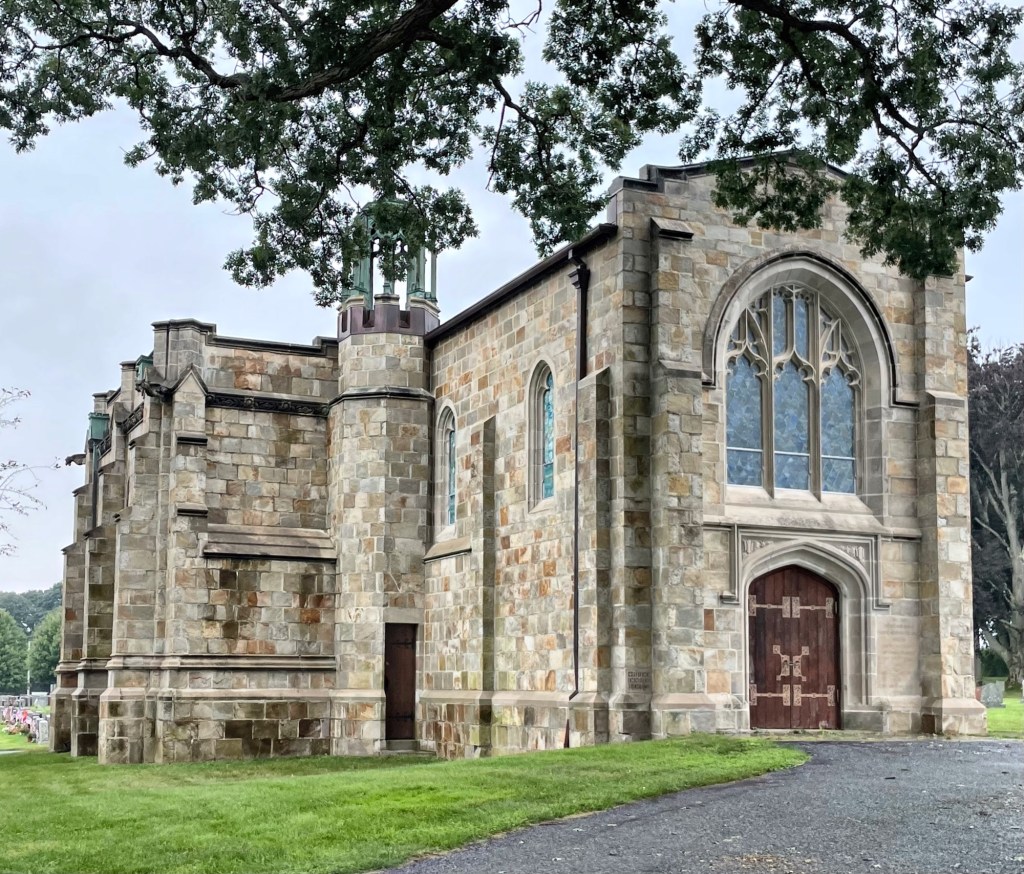
Highland Cemetery Chapel // 1903

Tucked away in Highland Cemetery, a typical looking cemetery in Norwood, Massachusetts, you will find a masterpiece chapel designed by one of the great architects of the Arts & Crafts movement. The Highland Cemetery was established in 1880 becoming the town’s second and primary burial ground. The town’s first burial ground was the Old Parish Cemetery which is located in the center of town on a 3/4-acre hill and because of its limited size and the difficult terrain; there was no room for growth. The rapidly developing town required a second cemetery and laid out Highland View on the outskirts of the village. In 1903, the Chapel of St. Gabriel the Archangel, also known as the Day Memorial Chapel, was erected at the center of the cemetery. The Chapel, which also acts as a mausoleum, was donated to the town by Lewis and Anna Smith Day in memory of their parents. Their only stipulation was that the chapel be available for use free of charge for any resident who desired to do so, no matter their religion or race. Esteemed architect Ralph Adams Cram designed the chapel in the Neo Gothic Revival style. Fred Holland Day, a renowned photographer and publisher, was the only child born to Lewis and Anna and he was a close friend of Ralph Adams Cram and Bertram Grosvenor Goodhue, likely leading to their commission here in Norwood. F. Holland Day lived in a Tudor mansion in town, modified from his childhood home. The Cemetery Chapel remains a seminal building for its genre and time.

Katherine Forrest Home and Studio // c.1860

This vernacular cottage in Noank was built in phases (and likely added onto from other historic buildings) since 1860. While the building dates to the 1860s, its significance derives from a later owner, Ms. Katherine Forrest. Katherine Forrest (1883­-1952) was a graphic designer and part of the Arts & Crafts movement of the early 1900s. She specialized in textile design and printmaking. Forrest came to Noank in 1914 and purchased her house in 1926. She was locally known by the nickname ‘Speedy’ and was remembered for dying textiles in a bathtub outside the house. The building’s vernacular character and its significance as a locally historic site as part of the village’s rebirth as an artist colony in the 20th century showcases how even smaller, unpretentious buildings in New England can tell a story.