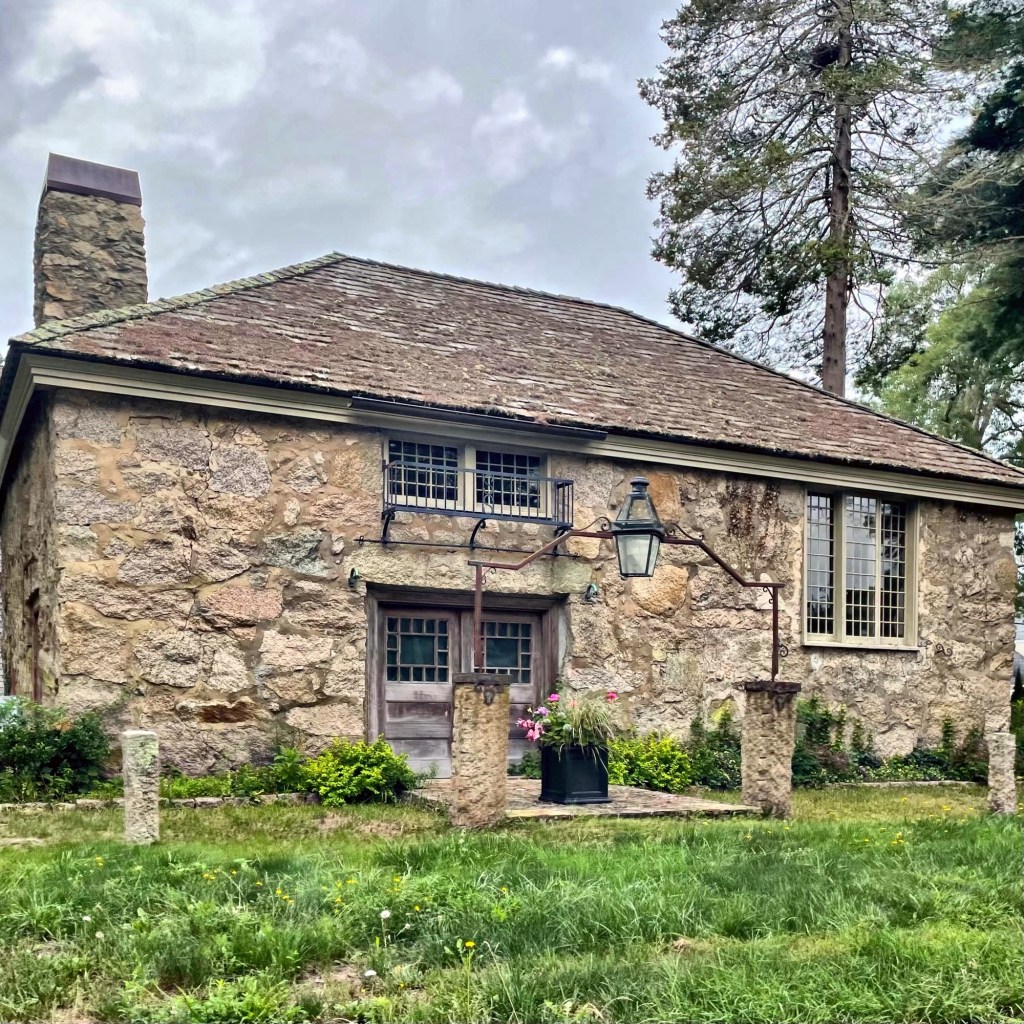
One of the most significant buildings in the coastal town of Marion, Massachusetts, is this stone structure, which is said to have had its beginnings as a storage warehouse. Located on Spring Street north of the main village, this building was constructed as early as 1820 as a salt works storage facility, and is an extremely rare surviving storage facility associated with the early 19th century salt industry in town. While many storage facilities we know today are void of architecture and soul, this building looks like it was plucked from the French countryside, thanks to a late 19th century renovation by one of the most prestigious architects in the United States. The salt industry in Massachusetts began on Cape Cod during the Revolution. Salt was a vital necessity for the preservation and curing of fish and meat for sale in this country and overseas. According to local lore, the Old Stone Studio was originally “a place for the conversion of sea water into salt.” Around the Civil War, the building was being used for petroleum processing facility, where kerosene, which had supplanted whale oil as a fuel for home and street lamps, was made and stored. The old stone structure had fallen into disrepair by the 1880s, that was until New York magazine editor, Richard Watson Gilder bought and restored it as a studio for his wife, artist Helena de Kay Gilder. At this point, Marion had become a premier summer colony with large waterfront estates and recreational facilities built for the wealthy in Boston and New York to spend the warmer months. Gilder hired his friend, Stanford White of McKim, Mead & White, to update the warehouse into a studio, adding the multi-light windows, decorative ironwork, and interior details, including the massive stone fireplace with a nine-foot mantle. The fireplace provided a stunning backdrop for guests, including President Grover Cleveland and First Lady Frances Folsom Cleveland, who summered in town. Ms. Gilder even painted the First Lady in the studio, and hosted her on occasions. The Old Stone Studio is now a private residence with addition off the rear.