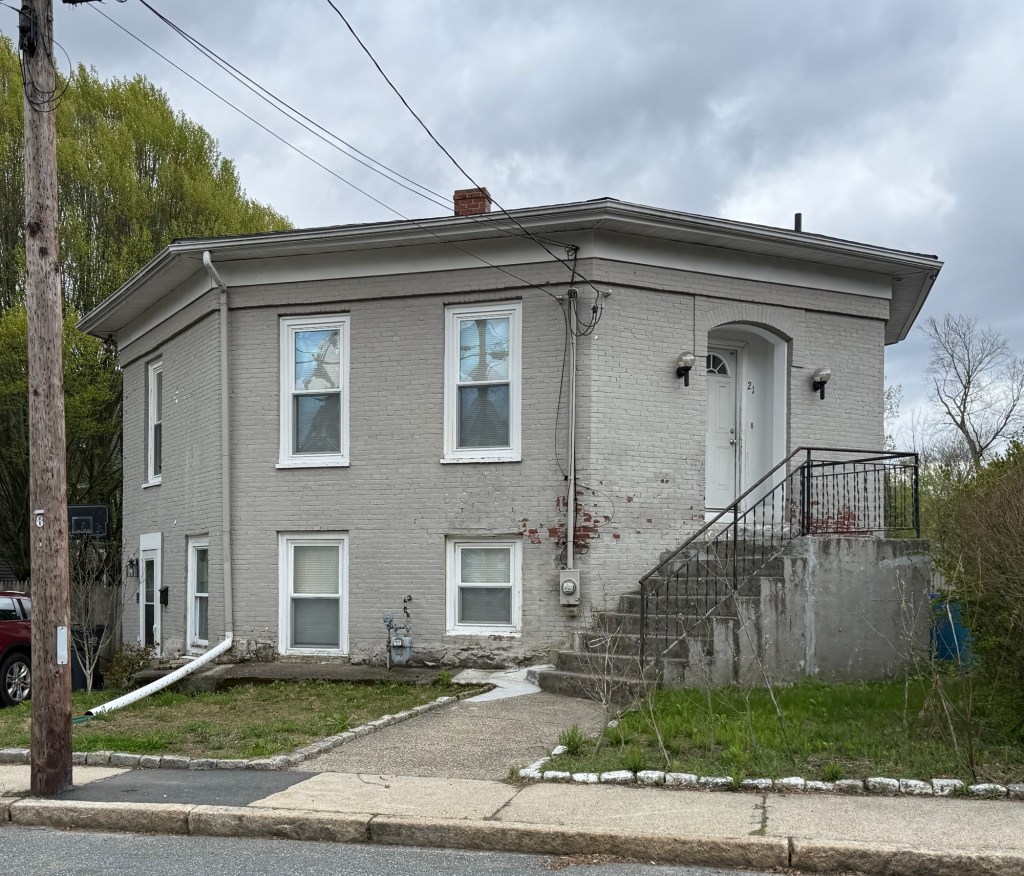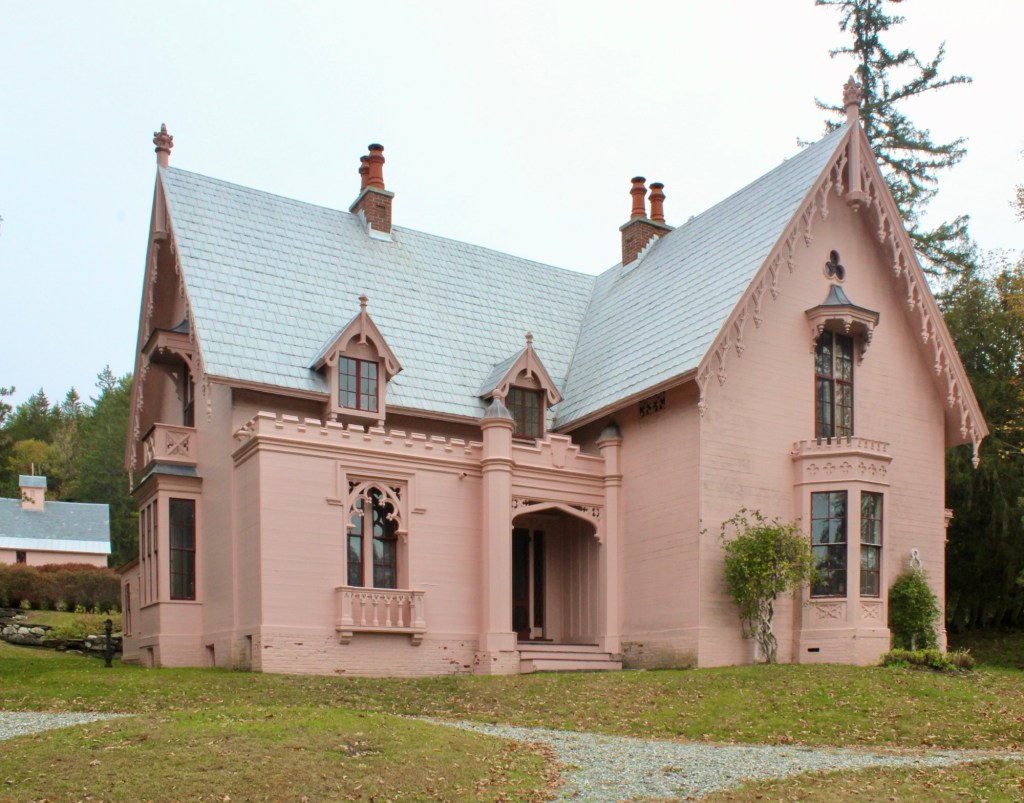
One of the rare examples of an intact Octagon house in New England, the Joel Chapin House in Milford, Massachusetts, is the only of its kind in the town. The octagonal brick residence was built for Joel Chapin (1822-1864), a produce and meat dealer in town, who resided here until his death. By the end of the 19th century, the house was owned by Anna Jourdain, who married James E. Reed, an early African-American photographer based in New Bedford They resided in the octagon house and their family members owned the property for nearly 100 years.
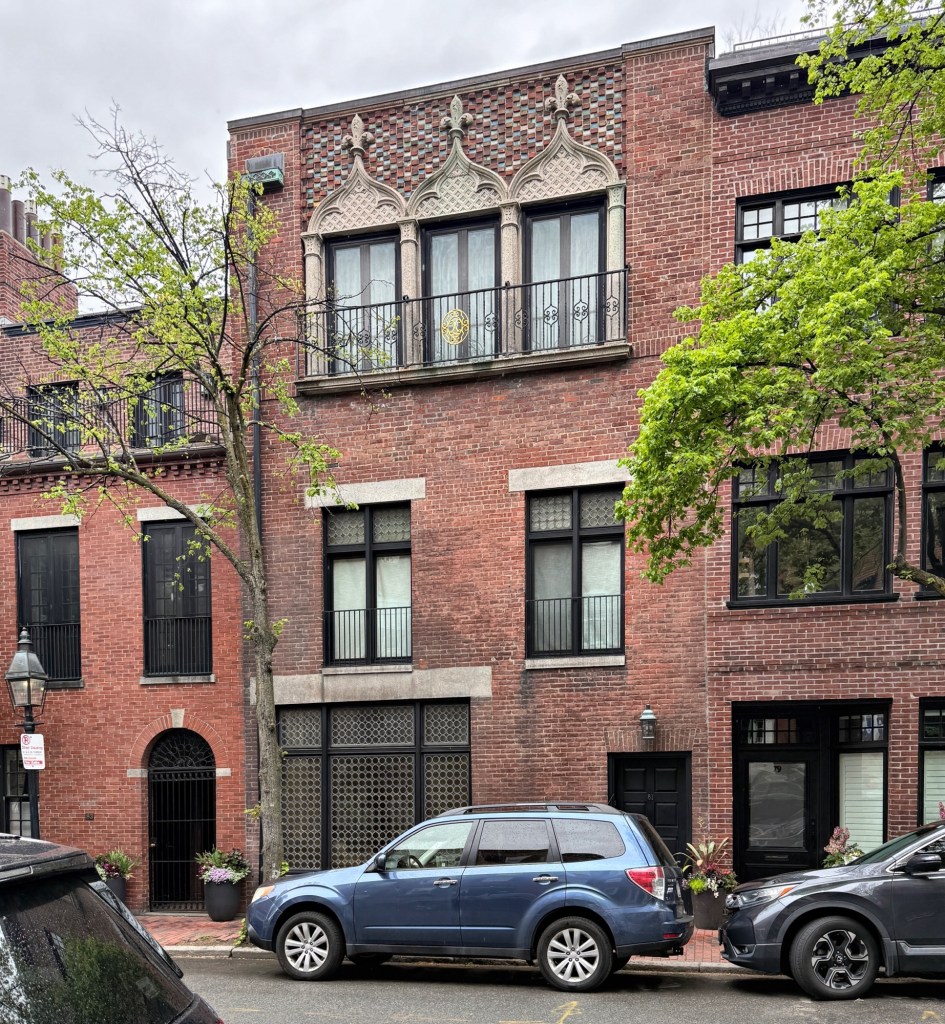
Built from a historic stable building, this unique building on Lime Street in Beacon Hill served as a residence and studio for Martha Silsbee, a prominent New England watercolor and pastel artist. For her Boston residence, Martha Silsbee hired the firm of Richardson, Barott, and Richardson, an office founded by Philip and Frederic Richardson, sons of famed architect Henry Hobson Richardson, who had designed a house nearby with similar design elements years prior. Taking cues from Venetian architecture, the interior spaces were covered with cream-colored plaster with iron gates and walls lined with art. The design includes a massive studio window on the facade, which flooded Ms. Silsbee’s studio where she painted when not at her residence in the Dublin Artist Colony in New Hampshire. The facade also features pointed arches and artistic glass at the entrance. After her death, the property sold at auction. After WWII, the former studio and residence was purchased by Georges F. Doriot (1899-1987), a Parisian businessman who later taught at Harvard Business School and in 1946, founded the American Research and Development Corporation, the first publicly owned venture capital firm in the United States.
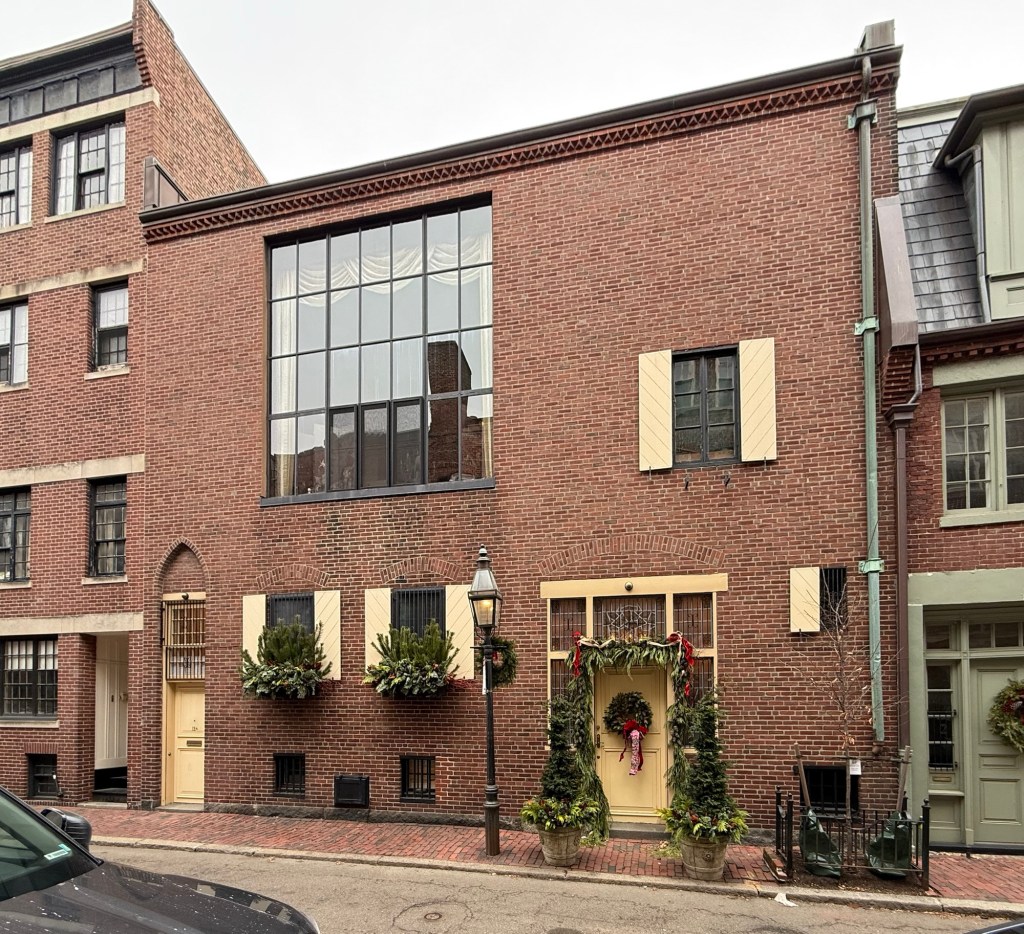
This handsome building at 81 Chestnut Street in Boston, began as a two-story brick stable and was later modernized with an additional floor and renovated for use as an artist’s studio, a perfect encapsulation of the history of the Flat of Beacon Hill from the “horsey end of town” to upper-class enclave and artist community. The stable was built around 1860 for Harleston Parker (1823-1888), the father of the more well-known, architect, J. Harleston Parker, and remained as a stable throughout the 19th century. In the early 20th century, the two-story building was converted to a auto repair shop but changed use in 1916 when owner, Edward H. Noyes hired architect, Harry Browning Russell, to convert the old stable to an artist studio. The second-story windows were enlarged and former carriage door were enclosed with small rounded art glass, likely for and by George Loftus Noyes, a painter who worked for a time at the New England Glass Company. Inside, a central landscaped courtyard flooded the spaces with natural light. In 1936, George Noyes moved to Vermont, divorcing his wife, Maybelle, but leaving her with the Boston studio. Maybelle remarried to George Lee, and soon-after hired architect, Frank Chouteau Brown, to add a third-story to the studio for conversion to a year-round residence. Brown added the unique Moorish arched windows and brickwork at the third floor.
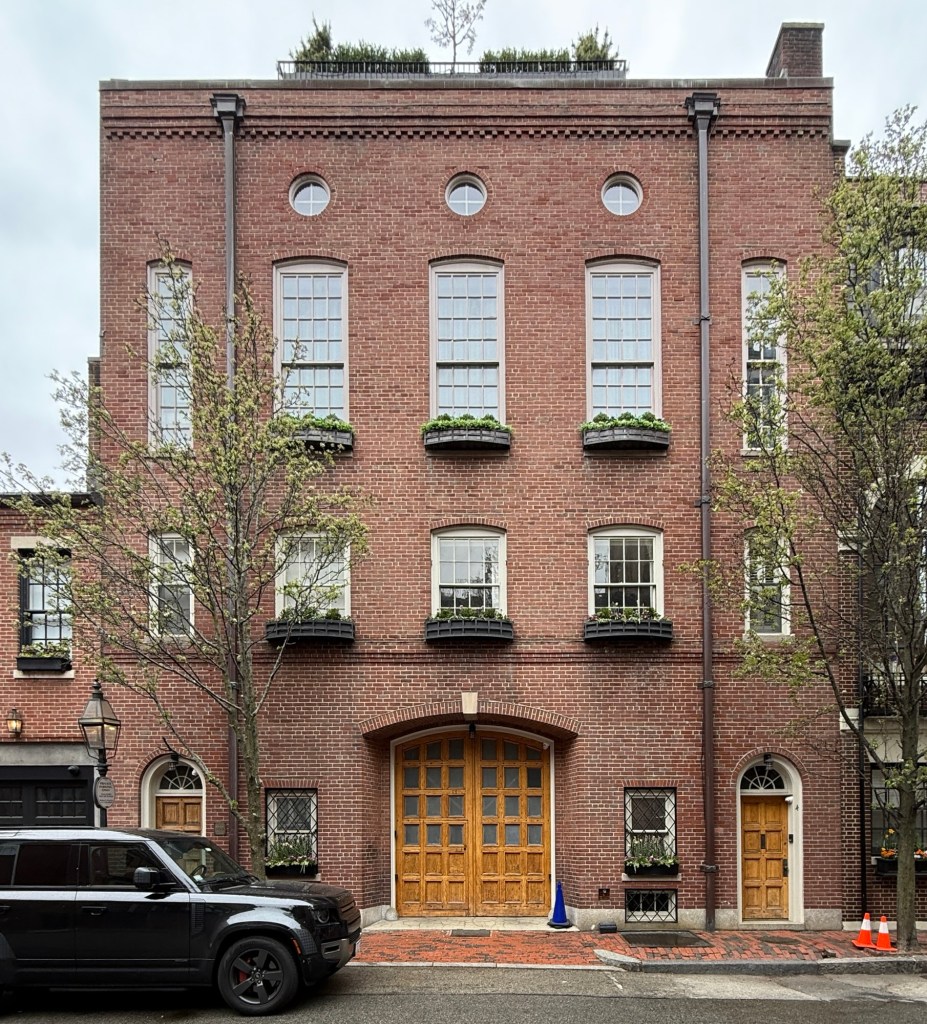
In 1929, Eleonora R. Sears (1881-1968), a tennis champion and great-great-great granddaughter of President Thomas Jefferson, had a 19th century stable she inherited from her late father, demolished and replaced with this stunning residence with garage on Byron Street in Boston’s Beacon Hill neighborhood. The present three-story building was designed by Henry Forbes Bigelow, who lived a few blocks away in his own mansion, as a unique Colonial Revival style building with symmetrical facade. Eleonora Sears was one of the first American women to drive an automobile and fly a plane and lived here with her chauffeur when she was not at one of her other properties. After Eleonora died in 1968, her Beacon Hill residence was converted into condominiums, while the facade retains its architectural features when built nearly 100 years ago.
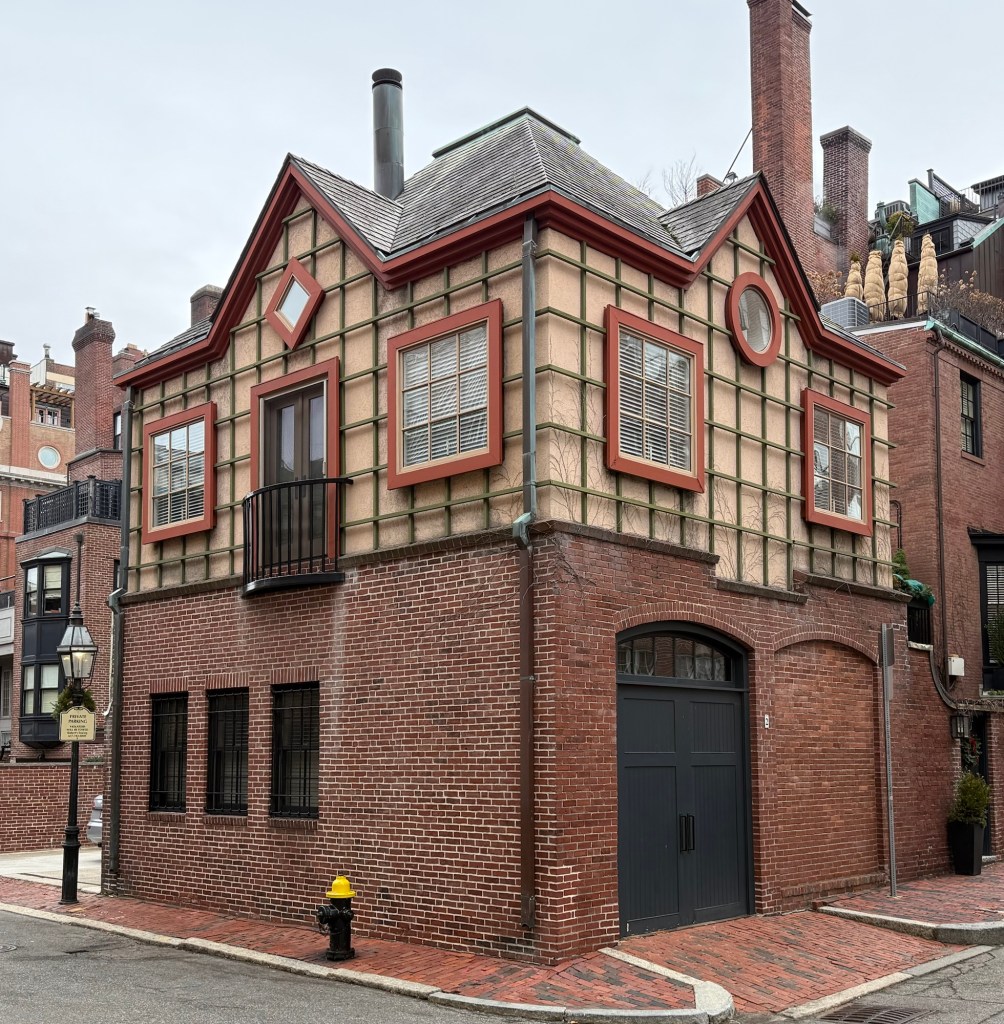
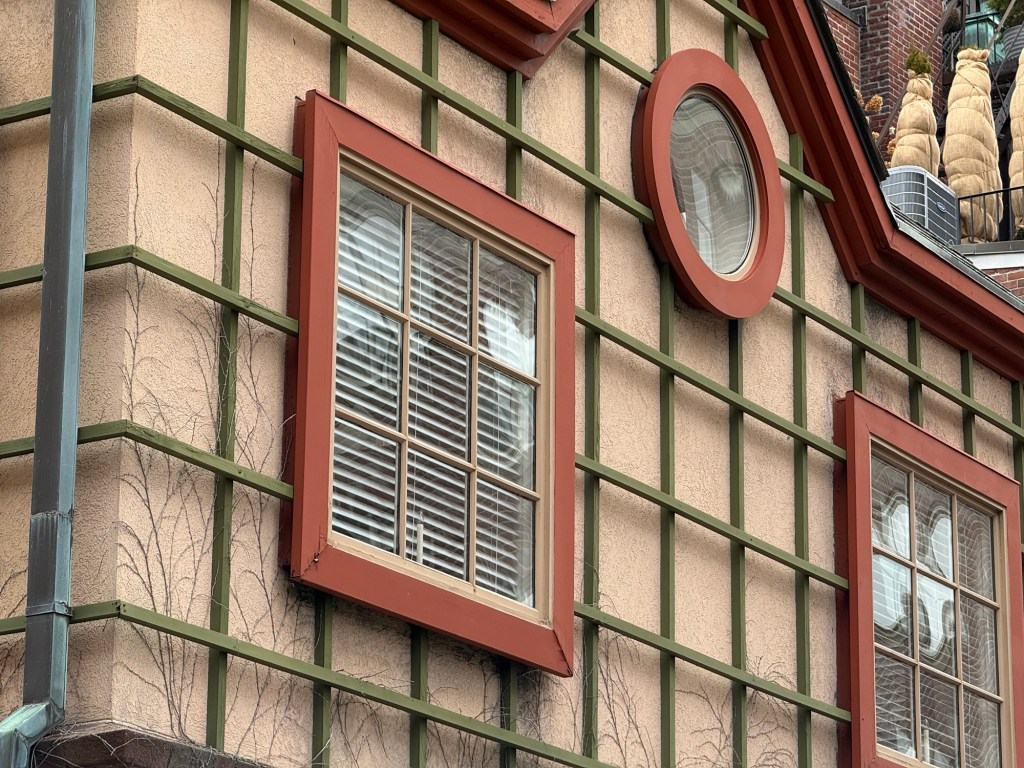
Originally built in 1915 as a two-car garage, this fanciful and diminutive residence was created atop the former garage in 1981 to become one of Boston’s best examples of Post-Modern architecture. Located at the corner of Beaver Place and Beaver Street on the Flat of Beacon Hill, the one-story brick garage was constructed behind 91 Beacon Street for Helen and Robert Emmons to store their personal automobiles. By 1981, the garage parcel was separated from the Beacon Street address and owners, Ira and Margaret Deutsch filed to build a one-story addition to the garage to create a residence. The couple worked with architect, Graham Gund, who designed a vertical, second-story addition to the brick garage, creating one of the most whimsical and unique buildings in Boston. The stuccoed walls with gables are covered with a projecting trellis which is set behind the framing of the windows to create a three-dimensional facade element.
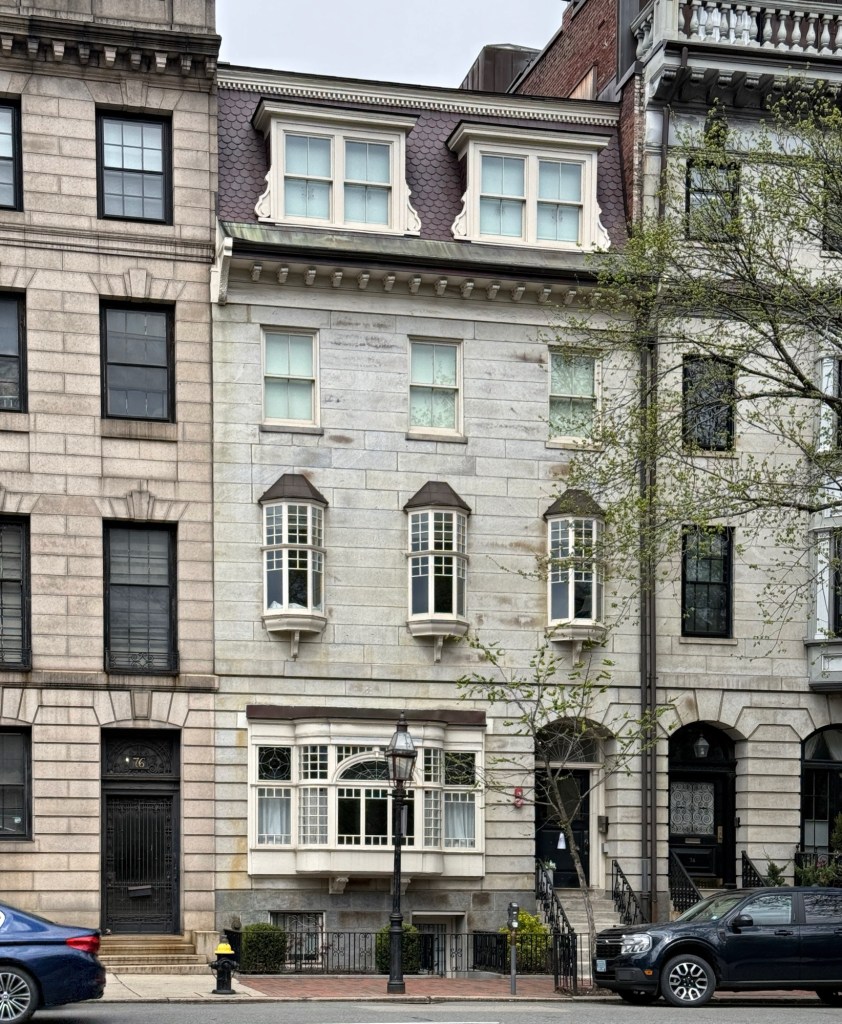
One of six attached houses townhouses between 70-75 Beacon Street, this stately granite-faced residence was built concurrently with its neighbors in 1828 on speculation for the Mount Vernon Proprietors, a group of wealthy Boston businessmen who helped develop Beacon Hill into the posh, architecturally significant neighborhood it is today. The Mount Vernon Proprietors knew how important Beacon Street was as the entry into the neighborhood, and thus, hired Boston’s premier architect, Asher Benjamin, to design the row. When completed, all of the houses were identical, but throughout the 19th and 20th centuries, they all deviated from the original design, some gaining additional floors, others adding bay windows, but all together form a cohesive and architecturally significant span of houses. Completed in 1829, the residence at 75 Beacon Street is known as the Mason-Fitz House and was originally owned by Jonathan Mason (1756-1831), a U.S. Congressman and U.S. Senator, and later inherited by his son, William Powell Mason (1791-1867), who engaged in real estate. It was likely William Mason who added the mansard roof in the late 1850s or 1860s, but the main unique detailing of the residence occurred in 1889 when newlyweds, Henrietta G. and Walter Scott Fitz hired the popular architectural firm of Little & Browneto reconfigure the front of the house in the Colonial Revival style. Little & Browne added the rather fanciful, oriel windows on the facade, which include the three, small hipped-roof oriels on the second story and larger projecting oriel on the first floor with fanlight and leaded glass. Cambridge architect, Edward T. P. Graham later purchased the residence and petitioned to convert the single-family house into eight apartments, but was denied, later converting the residence into four units. Today, the Mason-Fitz House is broken up into two larger condominium units.
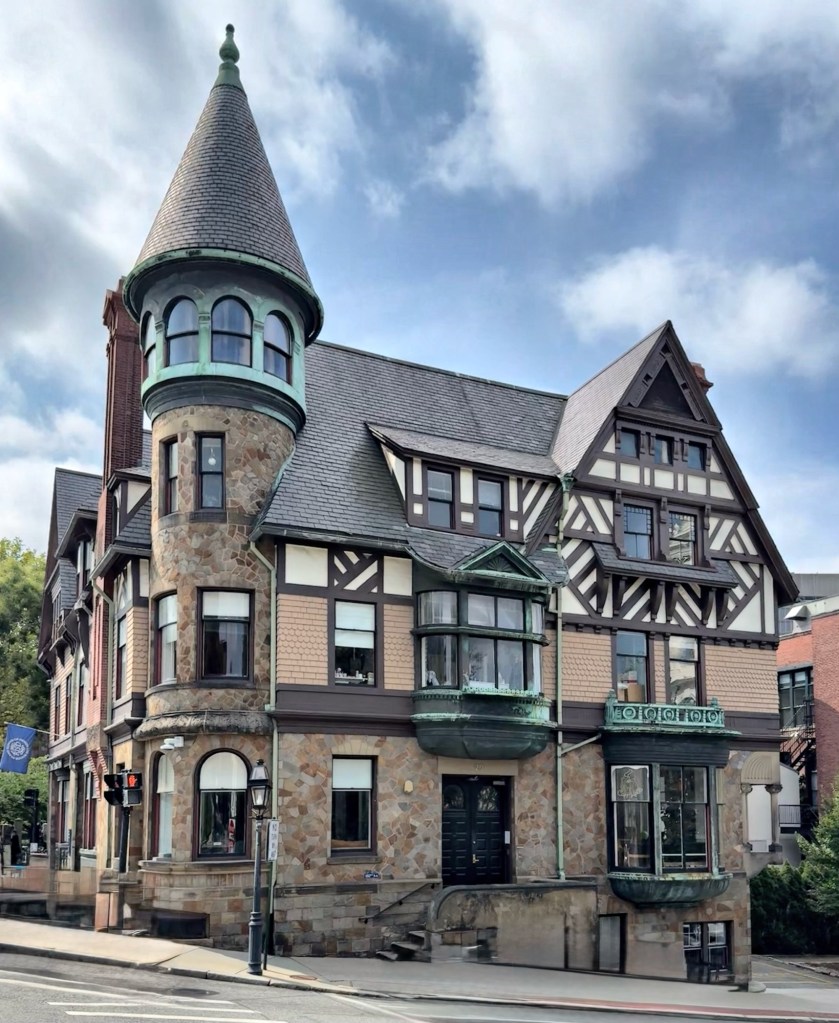
Perched on College Hill in Providence, Rhode Island, the Dr. George W. Carr Mansion at the corner of Benefit and Waterman streets, stands as one of the most attractive and interesting interpretations of the Queen Anne style in New England. The stately home was built in 1885 for George Wheaton Carr (1834-1907) a medical doctor who served as a surgeon during the Civil War and later as head surgeon for multiple Providence-area hospitals. For his Providence home, Dr. Carr hired architect, Edward I. Nickerson, to furnish plans, which resulted in this mansion with irregular plan, four-story corner corner capped with a conical roof, varied materials in stone, wood shingles, half-timbering, and copper bays. The Carr Mansion was purchased by the Rhode Island School of Design (RISD) in 1916, and has served a variety of roles for the school including as student housing and a cafe/lounge.
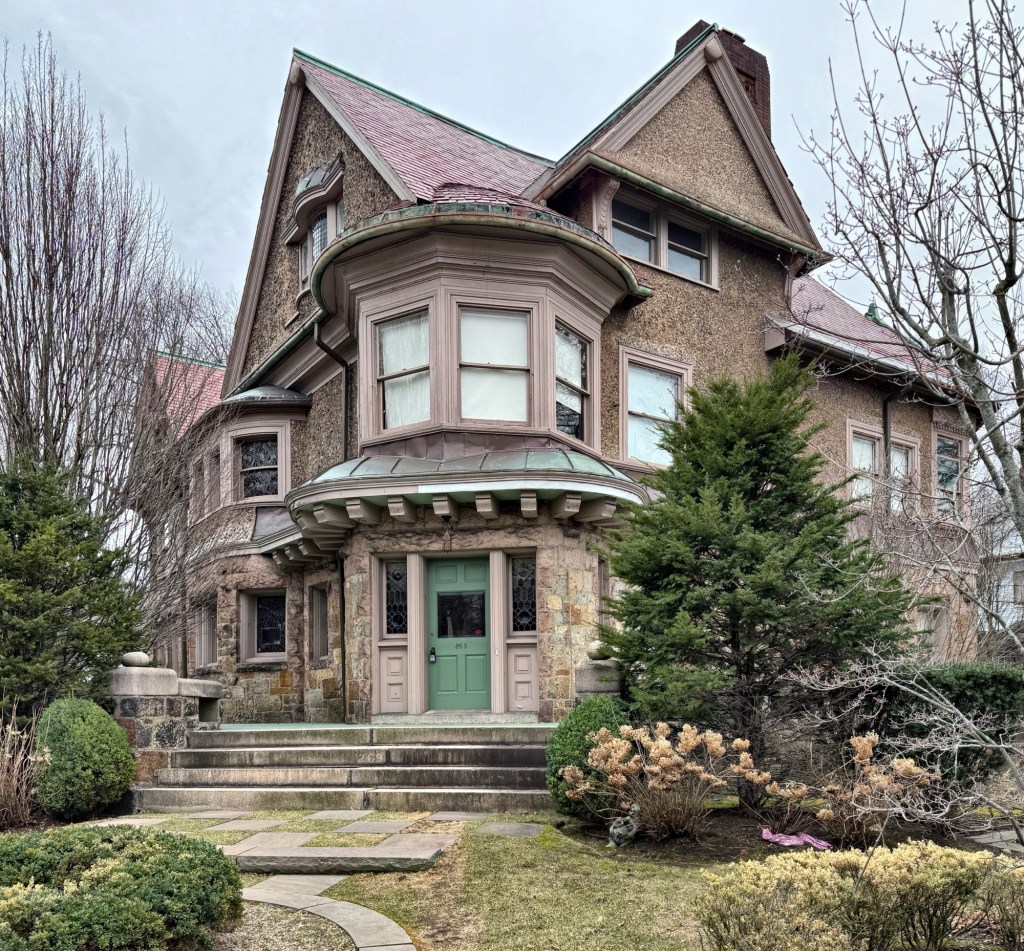
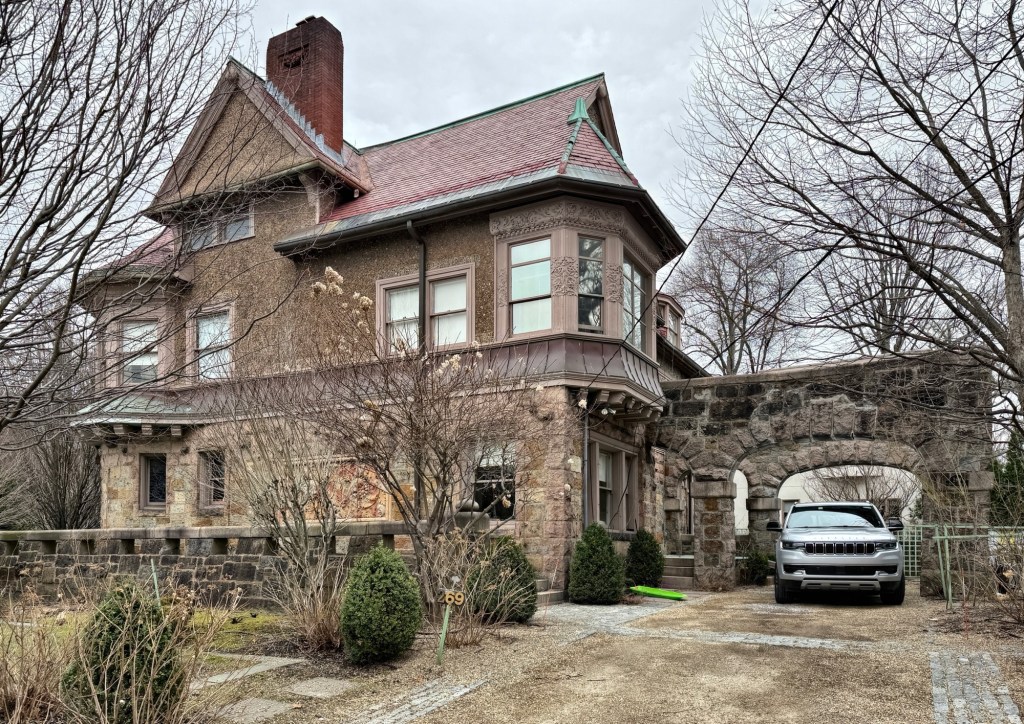
One of the most unique and truly great Victorian-era residences in Brookline, Massachusetts, can be found on Kent Street, an eclectic and fairly hidden mansion built of stucco, stone and terracotta. Built in 1885 by John Prescott Webber, a Maine lumber baron who moved to the Boston area and became a real estate magnate, the handsome residence was designed by architect, S. Edwin Tobey. The most important element of the structure is its surfacing material, with random and quarry-faced ashlar used on the first floor with roughcast stucco on the second level. Additional detailing includes the large brackets, irregular form and fenestration, massive bays, gables, stone porte-cochere, and carved terracotta details. The house was likely sold to George F. Bouve shortly after it was completed, and he remained the owner until his death in 1898. Mr. Bouve was a shoe and leather dealer and shoe manufacturer. The Webber-Bouve Mansion is one of those houses that the more you look at it, the more detail and unique features you notice. The historic stable was demolished in 1995 in exchange for a preservation restriction on the main house by the owners.
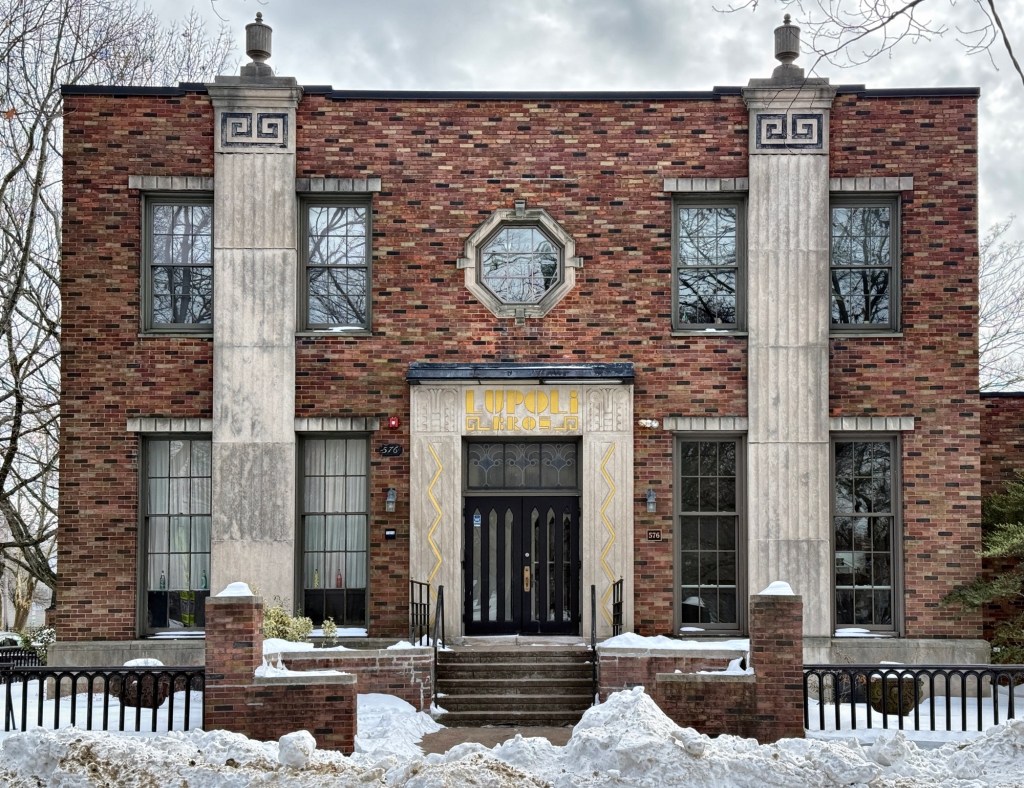
A rare example of the Art Deco architectural style in New Haven, the former Lupoli Brothers Funeral Home on Chapel Street in Wooster Square is more than meets the eye! This Art Deco jewel box was originally constructed in 1841 as a large, single family home and modernized nearly 100 years later in its current design. In 1841, Henry Lucas Hotchkiss (1810-1861), a businessman and president of the L. Candee Rubber Company, had a two-story Greek Revival style home built on this lot for his wife, Lucy. The home was originally two stories, but a third floor was added in the 1860s, around the time the rear stable (still extant) was constructed, for another owner. In the early 20th century, as the Wooster Square neighborhood became a center of Italian-American life and business in New Haven, the property was purchased by Liberato Lipoli (1862-1934) who moved to Connecticut from the Piedmont region of Italy. A year after their father’s death, sons Mario, Gennaro, Antonio and Louis Lupoli, established a funeral parlor catering to the local Italian American community. In 1935, the Lupoli Brothers hired local architect, Lester Julianelle to reimagine the former Hotchkiss House in a modern style. The result is the refaced building with Classical Revival and Art Deco elements including the iconic entry reading, “Lupoli Bros” in the iconic lettering. The Lupoli’s closed the parlor here in 2008 and the building was converted to eight condominium units.
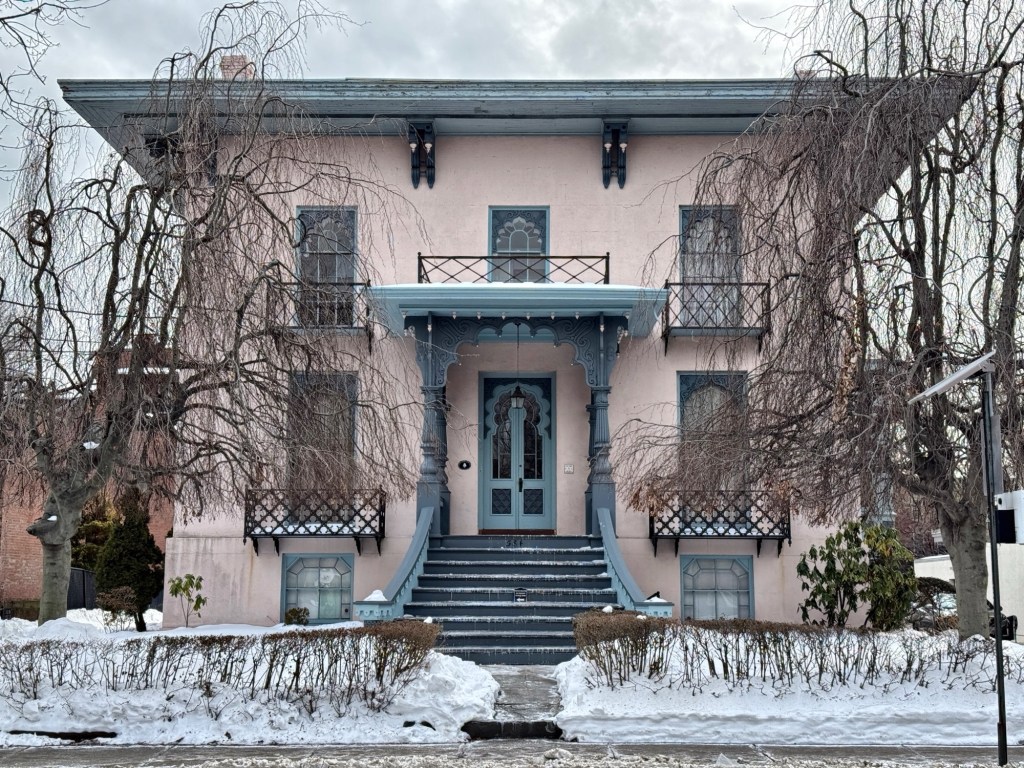
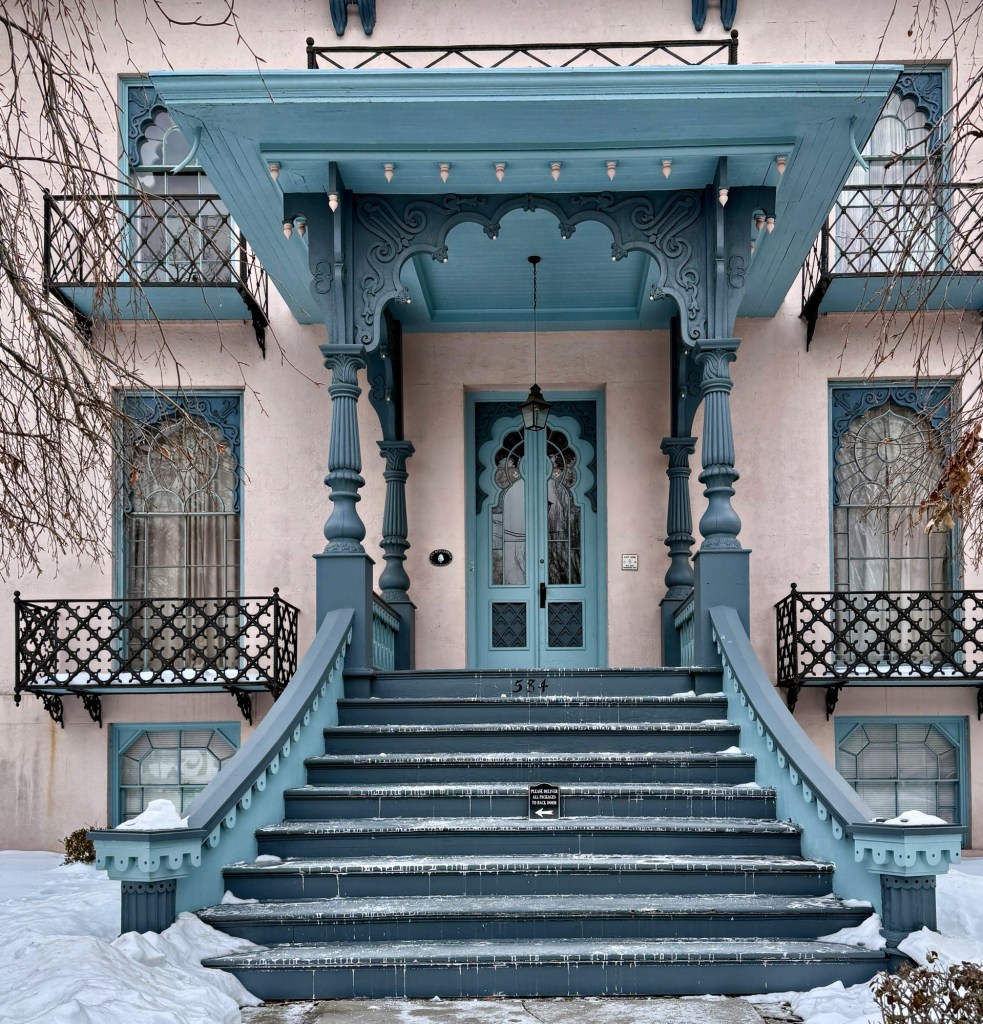
The Willis Bristol House on Chapel Street in the Wooster Square neighborhood of New Haven, Connecticut, is one of the finest and most architecturally distinctive residences in New England. Built in 1845 for Willis Bristol (1804-1875), a partner in the shoe manufacturer of Bristol & Hall, the home was designed by Connecticut architect, Henry Austin, who designed many of the other great mansions in Wooster Square around this period. The Bristol House is Italianate in style with Exotic Revival detailing which has often been described as Moorish Revival, but it is actually more Indian Revival, an extreme rarity in 19th century New England. It is believed that Henry Austin was influenced by an illustration of columns and capitals at the Ellora Caves in India published by Henry Repton in Designs for the Pavilion at Brighton (1808) and through this worked picked up a fascination with Indian architecture that was to influence his designs in the mid-19th century. Many of Austin’s designs in Wooster Square feature these Indianesque columns on their porches. The Willis Bristol House remained in the family until 1876 and was subsequently used as a congregation house, school, beauty parlor, and presently as apartments. The owners should be commended for preserving and protecting this ornate and unique residence for all to enjoy.
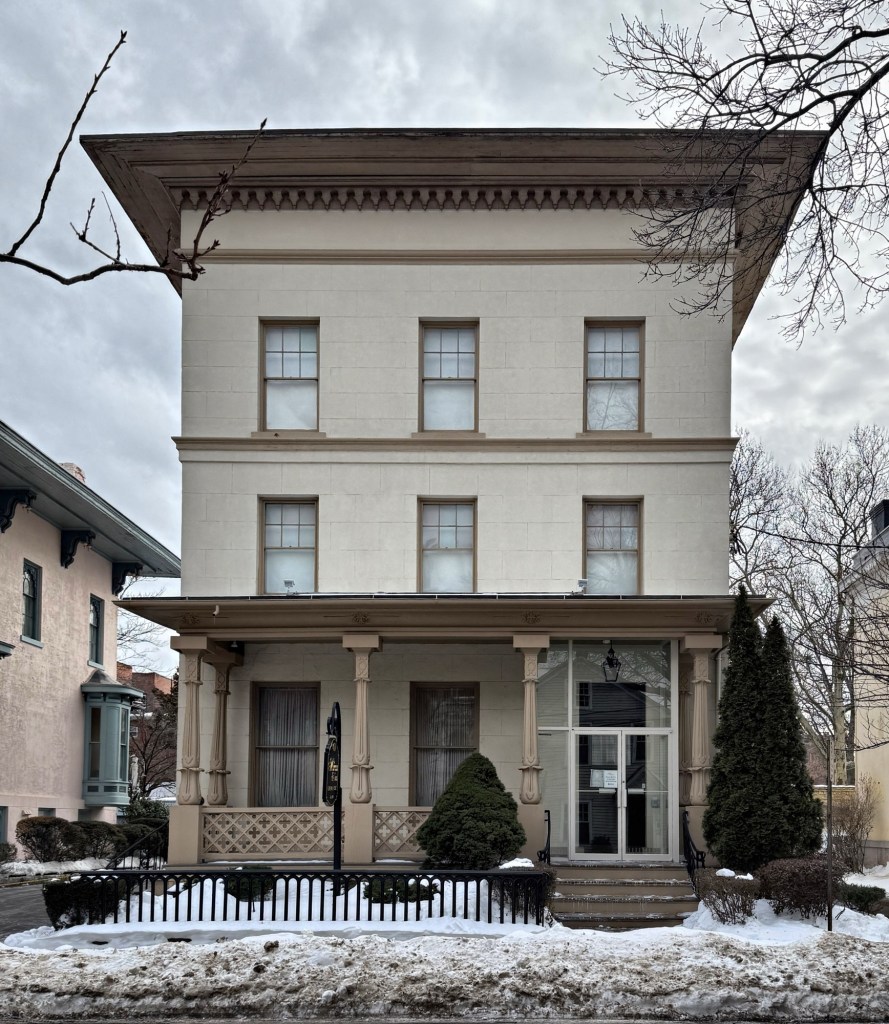
The oddly proportioned James E. English House stands on Chapel Street in New Haven’s Wooster Square neighborhood and remains one of the most interesting mid-19th century residences in the city. Built in 1845 for James Edward English (1812-1890), a prominent businessman who later became Governor of Connecticut and U.S. Senator. James English started his career as a carpenter and expanded to open the English & Welch Lumber Company. He was a savvy businessman and helped restructure the New Haven Clock Company into one of the largest clock manufacturers in the region. From his success, he purchased property in the new fashionable Wooster Square district and moved into this residence which was designed by architect, Henry Austin, who designed many other homes in the neighborhood. English got engaged in politics and served as the 43rd and 45th Governor of Connecticut and later as a U.S. Senator (1870-1871). Upon returning to Connecticut, James English continued his lumber business and with his own product, expanded his Wooster Square home, vertically. In the mid-1870s, the house, which was originally two stories, was given a third floor, creating the strong vertical proportions we see now. Today, the James E. English House operates as the Maresca & Sons Funeral Home, one of the many prominent Italian-American-owned businesses that helped revitalize the neighborhood in the 20th century.
The Phebe Wallace House on Greene Street in New Haven, Connecticut, at first glance, may appear as a typical mid-19th century house, but some of the architectural features and details make it stand out! The residence was built in 1854 for Phebe Barney Wallace (1792-1872), a widow of William B. Wallace who died decades earlier. Phebe lived here with her daughter, also named Phebe, and a servant. The house exhibits a traditional Greek Revival form with gable roof oriented towards the street, with an off-center entry with Ionic portico, but the massive overhanging eaves without brackets with paired arched windows in the gable and balcony off the side of the house showcase the emerging Victorian influence in American residential architecture.
One of the eclectic mid-19th century residences in New Haven’s Wooster Square neighborhood is the Bromley House, an exuberant blending of architectural styles that have been lovingly preserved. The history is a little murky on this residence but from research, the home was built around 1850 and was possibly a two-story flat-roofed Italianate style design with three-bay facade and off-center entrance. The home was acquired by Joseph Bromley, who appears to have added a third-story with gable roof. After the Civil War, the property was purchased by Lyman Erving Bradley, a veteran of the war who was employed as a police officer and later as private security for an area factory. It appears that Mr. Bradley, before his death in 1901, had the property expanded with a whimsical front porch, three-story side addition, and applied ornament in the Queen Anne style. The home is today a three-unit condominium, similar to the three-deckers found in cities all over New England.
This unique Queen Anne style house at the corner of Washington and Eddy streets in Warren, Rhode Island, stands out for its use of materials and late Victorian design, a departure from the Federal and mid-19th century architecture the waterfront community is best-known for. The residence was built for Hannah and Erastus Buckingham and today remains essentially as originally built. Its slightly asymmetric massing combining multiple materials of brick and weathered shingles with diamond pane sash windows, illustrate early 20″ century design simplification while retaining the use of materials typical of late 19″ century Queen Anne style. Erastus Buckingham inherited his father’s oyster farming business, which harvested over 200 acres of beds in the bays off Nayatt, Conanicut, Quonset, Rocky Point and Patience Island before packaging and shipping to markets.
The Smith-Winslow House on Warren’s Main Street is a striking two-story Italianate house with cubical massing with smooth stucco walls and bold detailing. The residence was constructed in around 1850 and was owned by Captain William Winslow captain of the schooner ‘‘Metamora’’, a trading vessel, and proprietor of Warwick’s Rocky Point, a shore resort and amusement park just across Narragansett Bay. The Winslow House was designed by Rhode Island architect, Russell Warren, who showcased his architectural prowess through the roof cupola, overhanging eaves, window hoods, and the unique Egyptian columns at the entry. Today, the residence operates as the Women’s Resource Center, a non-profit founded in 1977 to provide comprehensive domestic violence intervention and services that educate, advocate, and shelter any individual in need of assistance in the region.