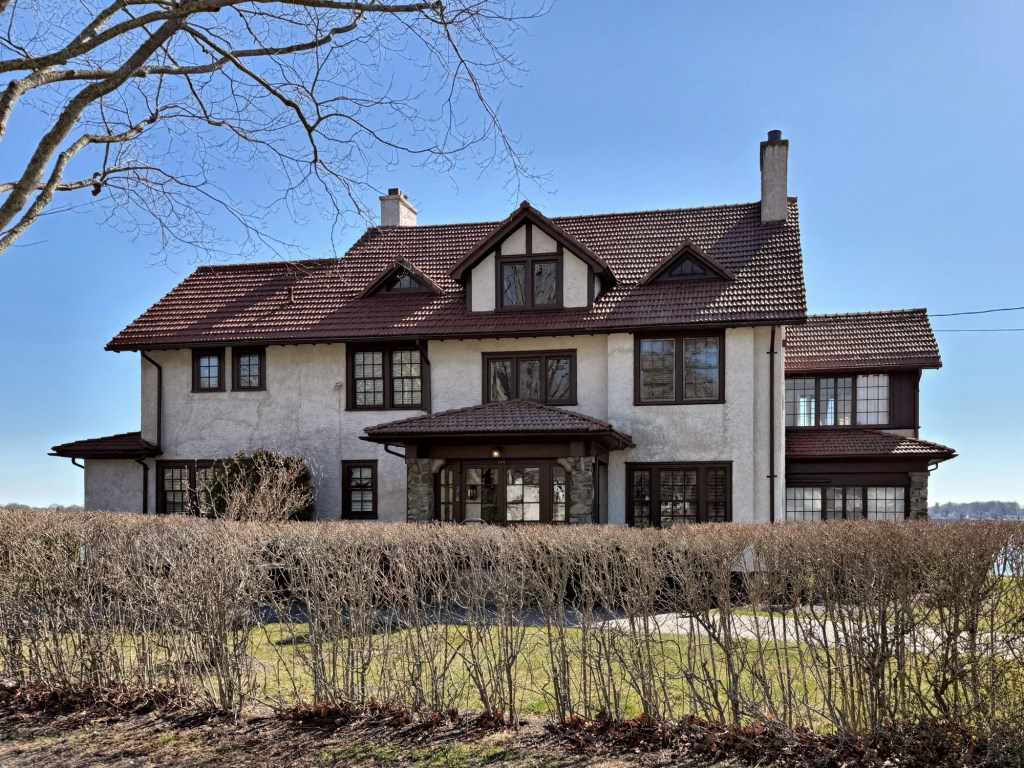
Gahm House // 1907

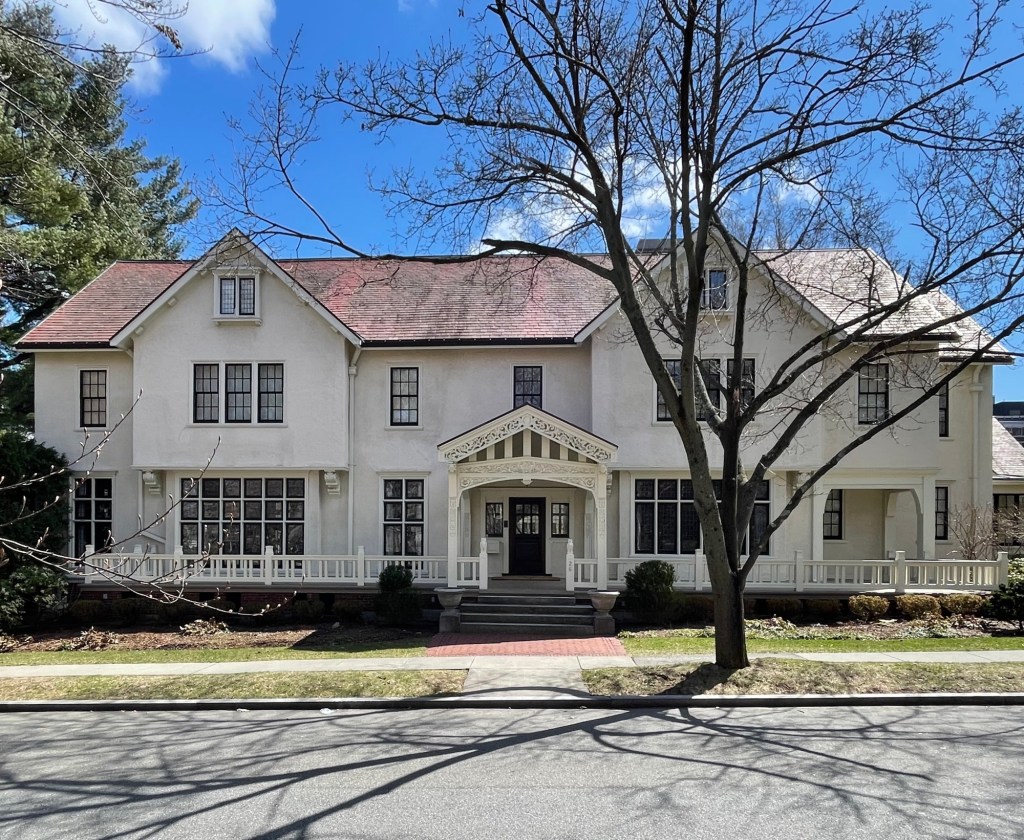
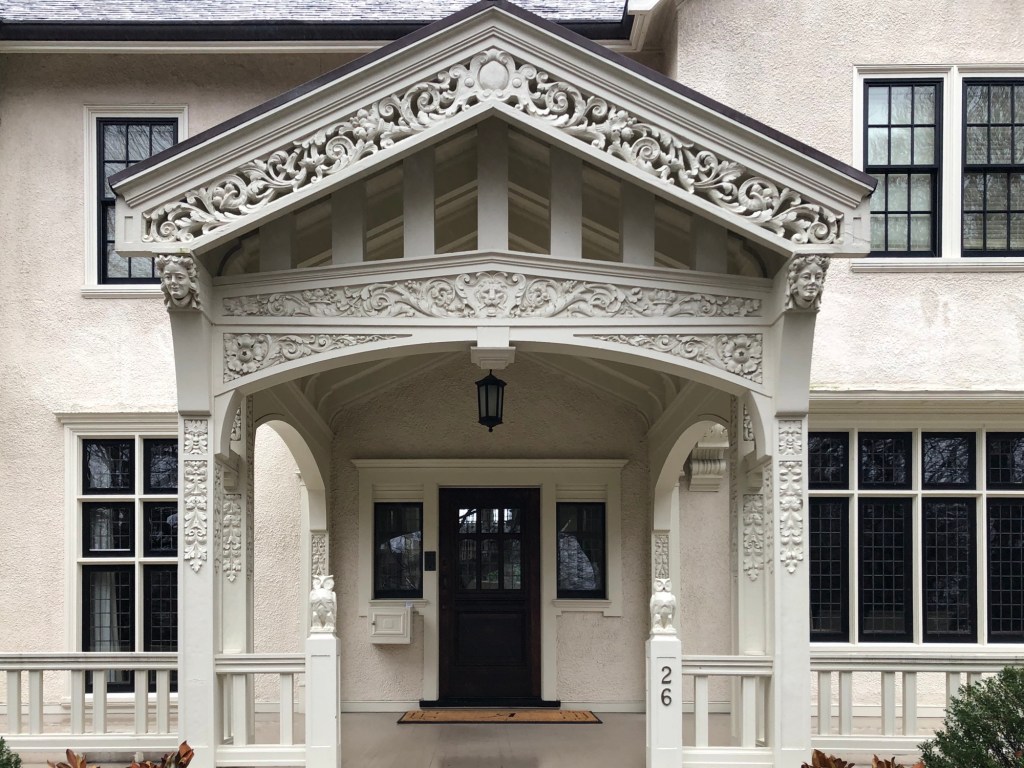
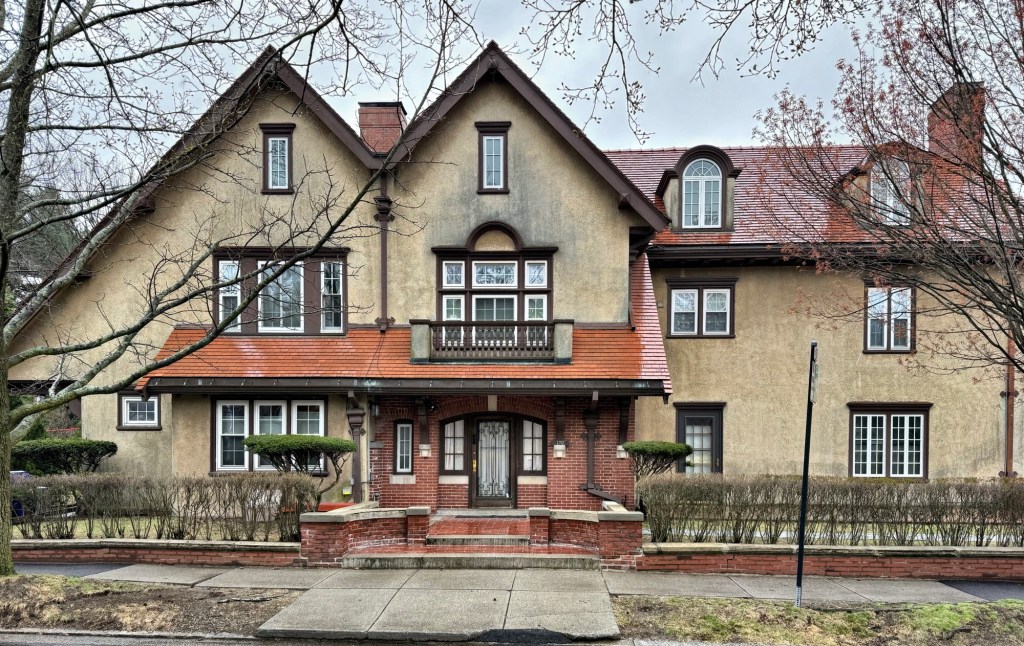
Located in the Longwood neighborhood of Brookline, Massachusetts, the Gahm House stands out not only for its size, but stunning details and architectural design. This house was designed in 1907 by the architectural firm of Hartwell, Richardson & Driver, one of the premier firms of the region at the time, who blended Arts and Crafts with Tudor Revival styles with a notable front entry. Joseph and Mary Gahm hired the firm to design their new home the same year the firm designed a bottling plant (no longer extant) in South Boston for Mr. Gahm’s business. Joseph Gahm was a native of Wurtemberg, Germany, who emigrated to Boston in 1854 and initially worked as a tailor. In the early 1860s, Gahm opened a restaurant in Charlestown, by the late 1860s he added a small bottling operation to this business. The bottling business soon expanded to such an extent that he was able to give up the restaurant business and open a large bottling plant in 1888. He eventually moved operations to South Boston where there was more room for transportation and shipping capabilities. Their stuccoed house in Brookline is especially notable for the well preserved carvings at the entrance, which include: faces, floral details, lions, and owls perched atop the newel posts. What do you think of this beauty?

Webber-Bouve Mansion // 1885

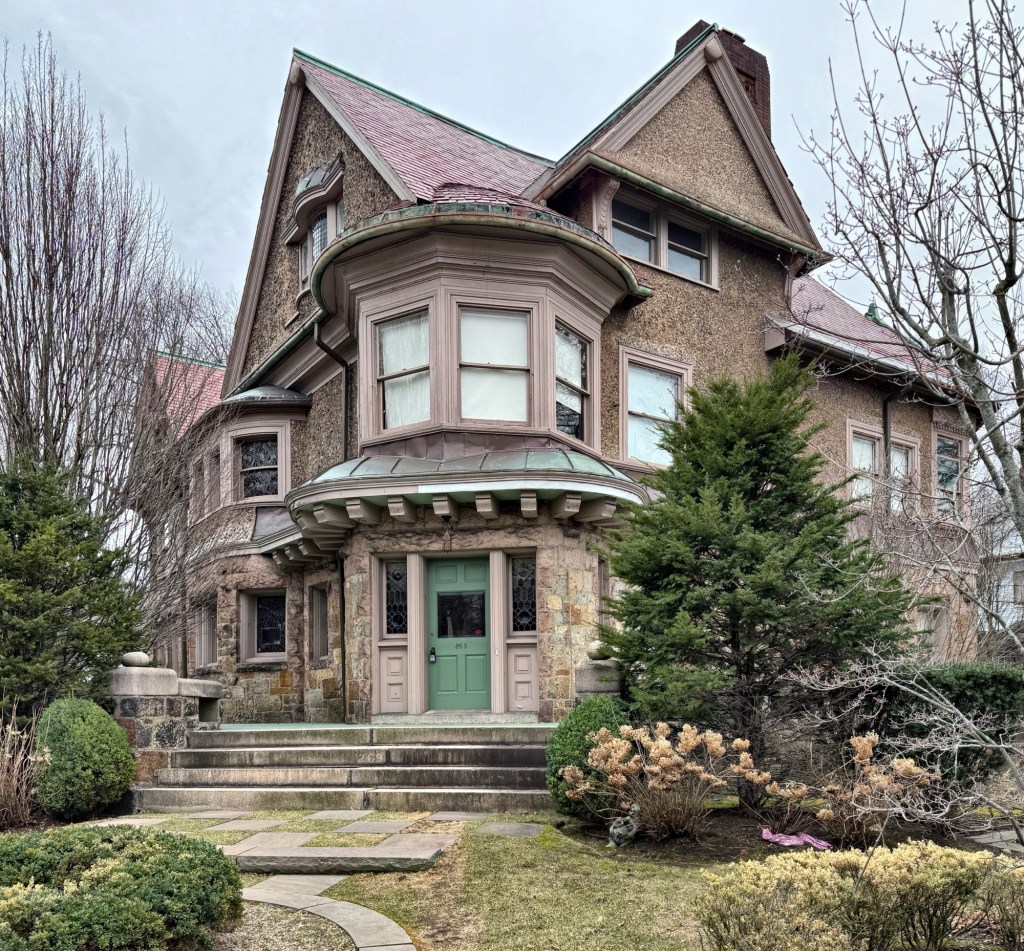
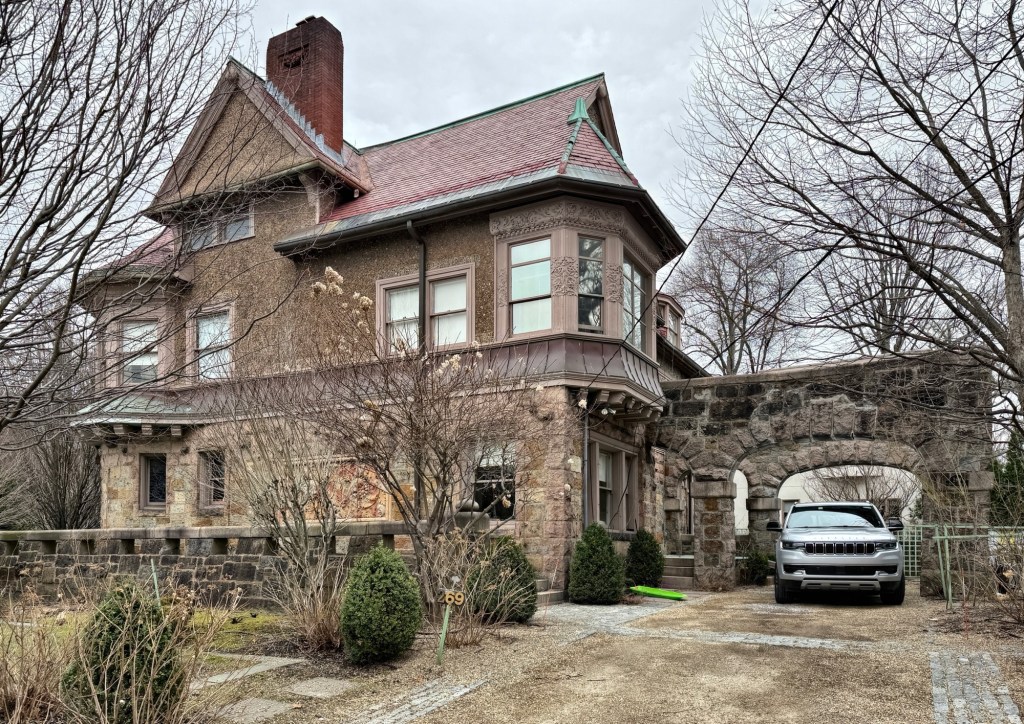
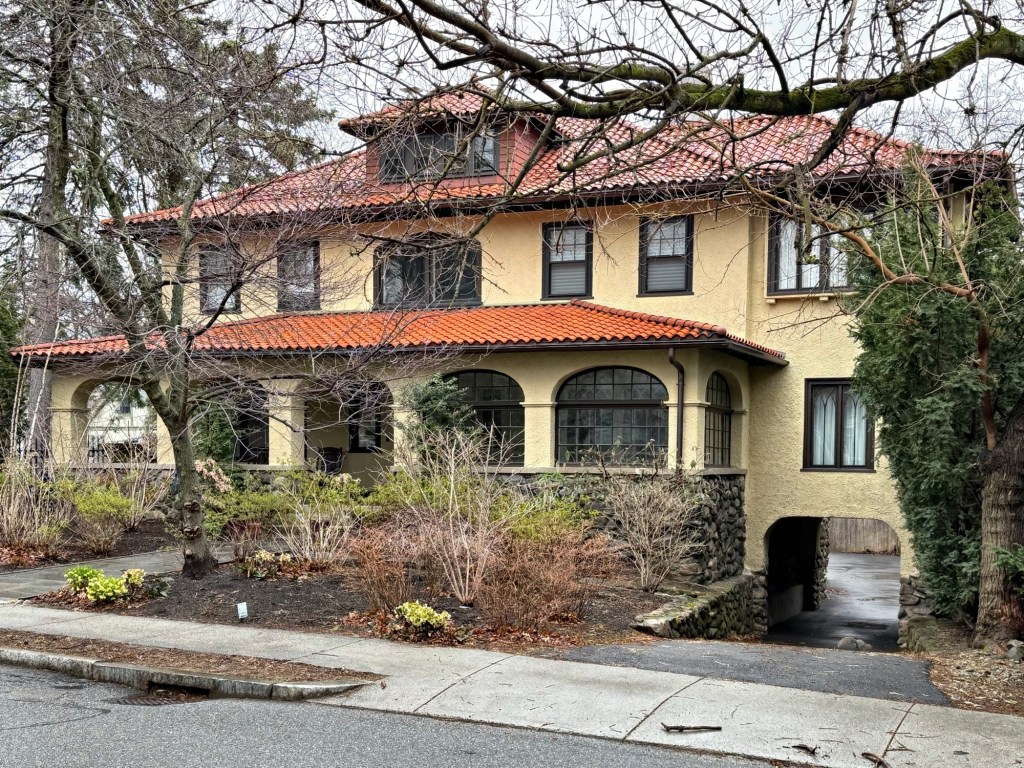
One of the most unique and truly great Victorian-era residences in Brookline, Massachusetts, can be found on Kent Street, an eclectic and fairly hidden mansion built of stucco, stone and terracotta. Built in 1885 by John Prescott Webber, a Maine lumber baron who moved to the Boston area and became a real estate magnate, the handsome residence was designed by architect, S. Edwin Tobey. The most important element of the structure is its surfacing material, with random and quarry-faced ashlar used on the first floor with roughcast stucco on the second level. Additional detailing includes the large brackets, irregular form and fenestration, massive bays, gables, stone porte-cochere, and carved terracotta details. The house was likely sold to George F. Bouve shortly after it was completed, and he remained the owner until his death in 1898. Mr. Bouve was a shoe and leather dealer and shoe manufacturer. The Webber-Bouve Mansion is one of those houses that the more you look at it, the more detail and unique features you notice. The historic stable was demolished in 1995 in exchange for a preservation restriction on the main house by the owners.

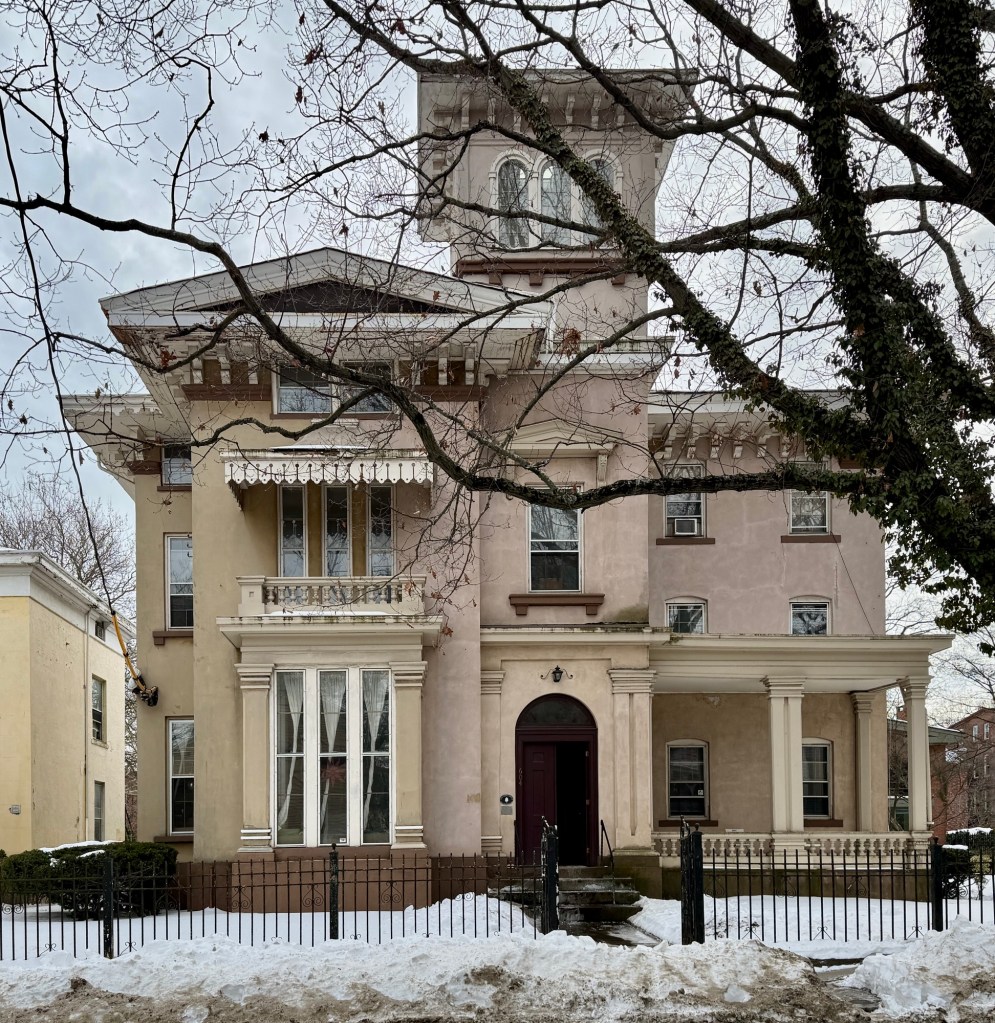
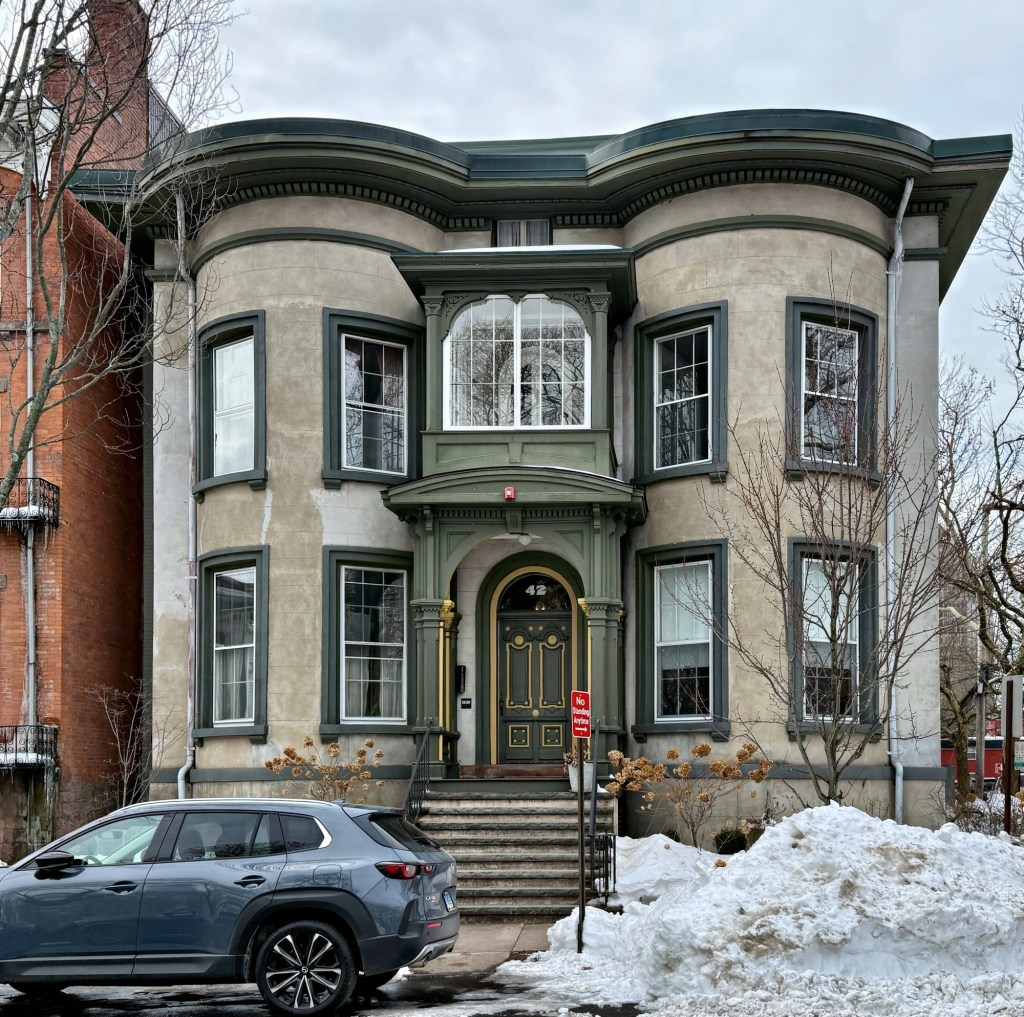
Jonathan King – Oliver B. North House // 1852

A true expression of the Italianate Villa style, the King-North House on Chapel Street in the Wooster Square neighborhood of New Haven is among the communities finest mid-19th century residences but suffers from some serious deferred maintenance. The residence was built in 1852 for Jonathan Williams King (1813-1863) a merchant who moved to New Haven from Cincinnati and hired famed Connecticut architect, Henry Austin, to design this home for him and his new bride, Ann Margaret Smith. The stuccoed mansion features a central tower, broad overhanging eaves with brackets, porches, and arched windows. After Jonathan King’s death in 1863, the property was purchased by Oliver B. North, owner of a saddlery and carriage firm. The property became a multi-family property in the 20th century and has suffered from some unsympathetic alterations and neglect, but remains a highly significant gem in Wooster Square.

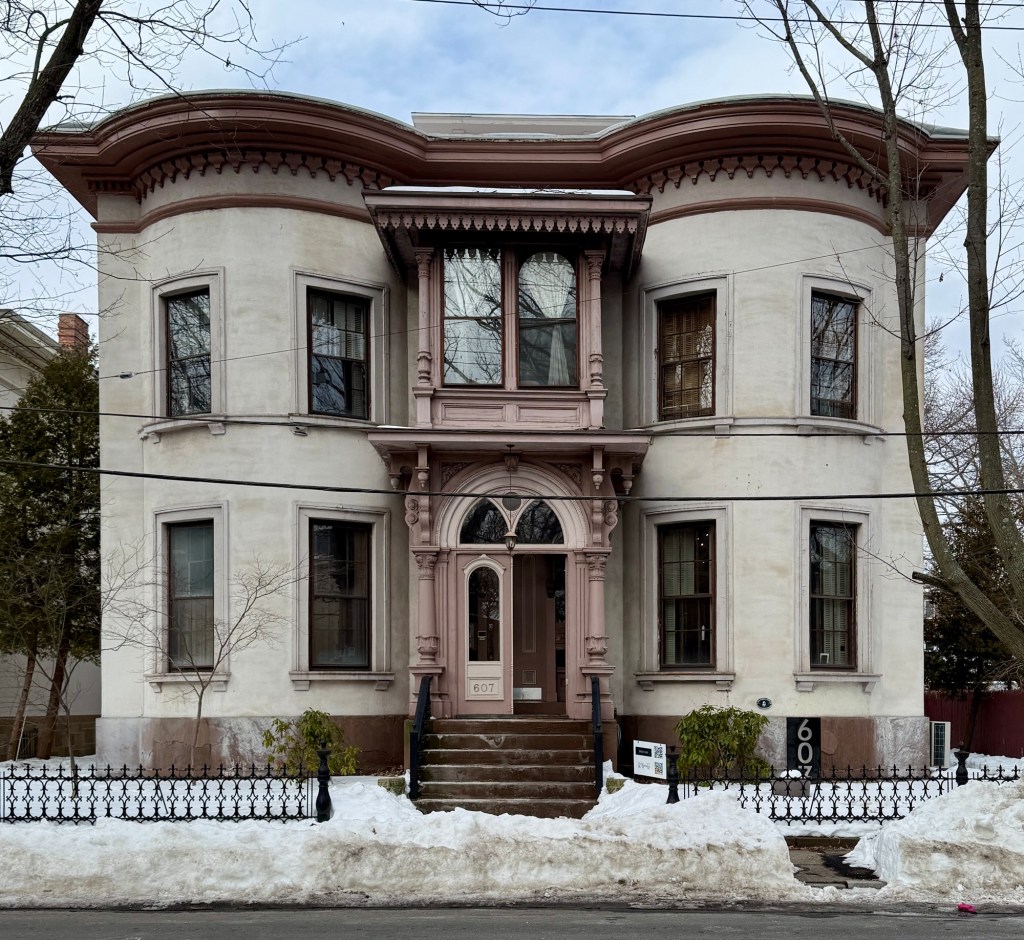
Hotchkiss-Shoninger House // 1854

The Hotchkiss-Shoninger House on Chapel Street in New Haven’s Wooster Square district is one of three residences in a row developed and designed by the duo of architect, Henry Austin, and lumber dealer/developer, Nelson Hotchkiss. The finest of the three residences, this house, was built in 1854 and features a double bow-front facade, brick walls covered in stucco, and ornate two-story central porch with brackets and colonettes. Nelson Hotchkiss moved into this home from his first Austin-designed house and resided here for a number of years before moving back to the first home again. The second owner Frederick Betts, was an insurance commissioner, and in the late 19th century and early 20th century, the home was owned by Bernard Shoninger, a German-born, Jewish organ maker.

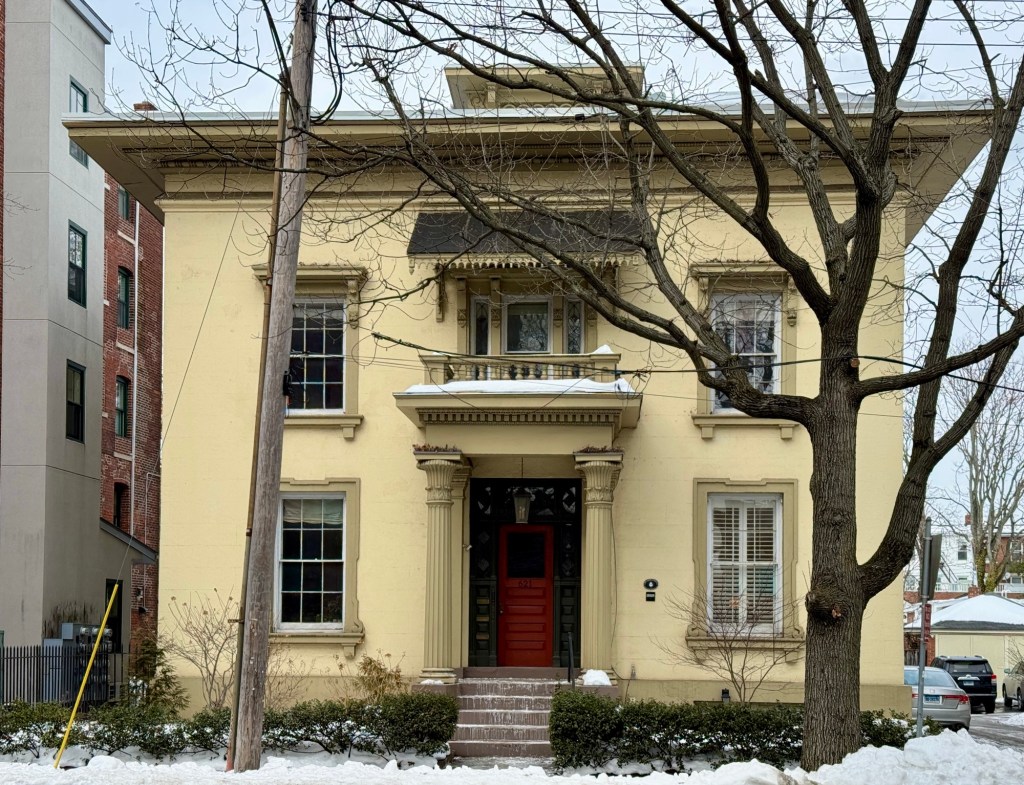
Nelson Hotchkiss House // 1850

Nelson Hotchkiss was a New Haven lumber dealer and developer in the Wooster Square district and had this stately home on Chapel Street built for his family. While the architect is not confirmed, it is probable that the residence (along with neighboring homes also developed by Hotchkiss) was the work of Henry Austin, who partnered with Hotchkiss on developments in New Haven and Trenton, New Jersey. The Nelson Hotchkiss House was built in 1850 and is an excellent example of Italianate style with boxy form, broad overhanging eaves, brick walls covered with stucco and Austin’s signature Greek Doric columns with fluted shafts and foliate capitals. The house maintains a window hood over the upper floor window with delicate carved wood bargeboard.

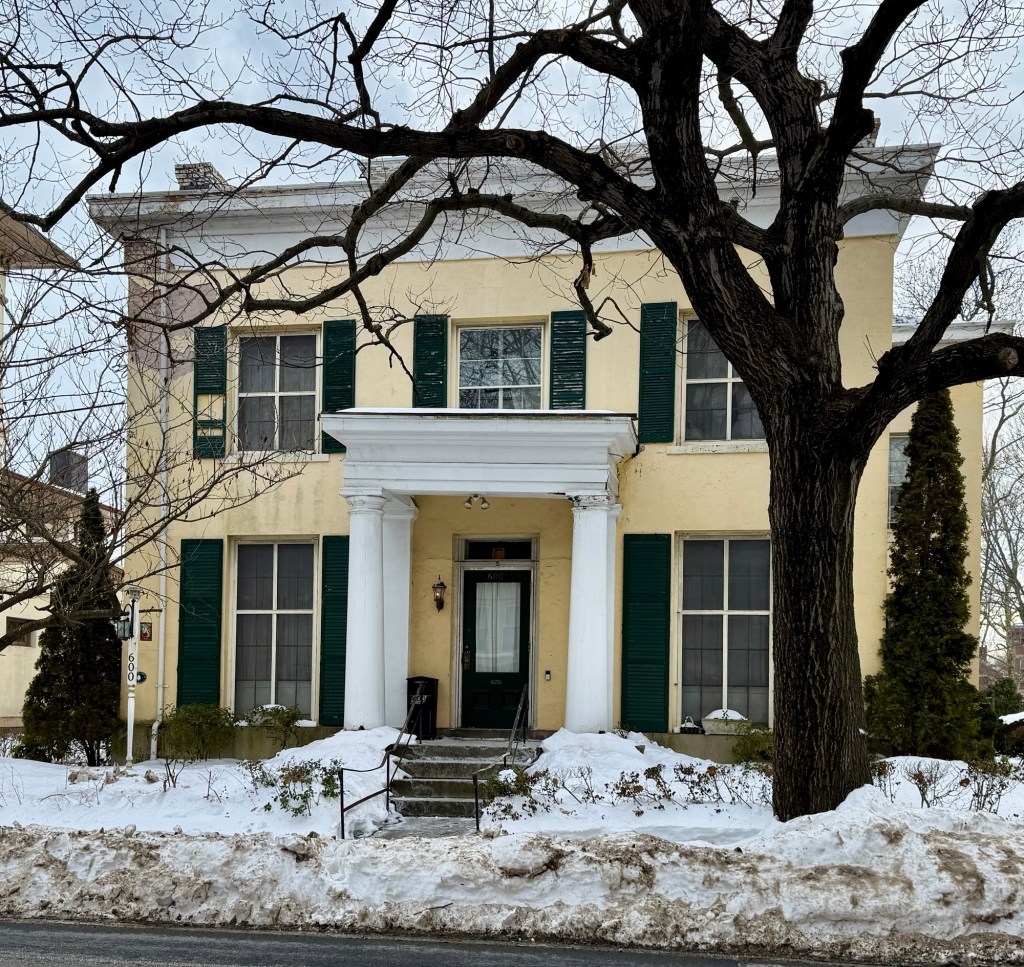
Soule-Parmelee House // 1844

The Soule-Parmelee House on Chapel Street in New Haven’s Wooster Square neighborhood is an excellent example of a mid-19th century Greek Revival style residence though with some deferred maintenance. The stately home was built in 1844 for Henchman Sylvester Soule (1800-1860) a merchant and trader who also partook in the California Gold Rush. After Soule’s death, the stucco Greek Revival style house was purchased by Henry S. Parmelee a piano maker, founder of the New Haven Trolley line and inventor of the first practical automatic sprinkler system, which he is said to have had installed in both his factory and his home here. Today, the Soule-Parmelee House operates as a bed & breakfast as the New Haven Historic Mansion.

Edward Rowland House // 1857

The Edward Rowland House on Academy Street in New Haven’s Wooster Square neighborhood is among the many great mid-19th century residences in the city and a rare example of a bowfront form. The residence was built for Edward Sherman Rowland (1812-1882), a prominent grocer, real estate developer, and Assistant U.S. Assessor and his family. The home is an example of the Italianate style with double-bow facade and is built of brick covered in stucco. The property was converted to condominium units and now houses six families.

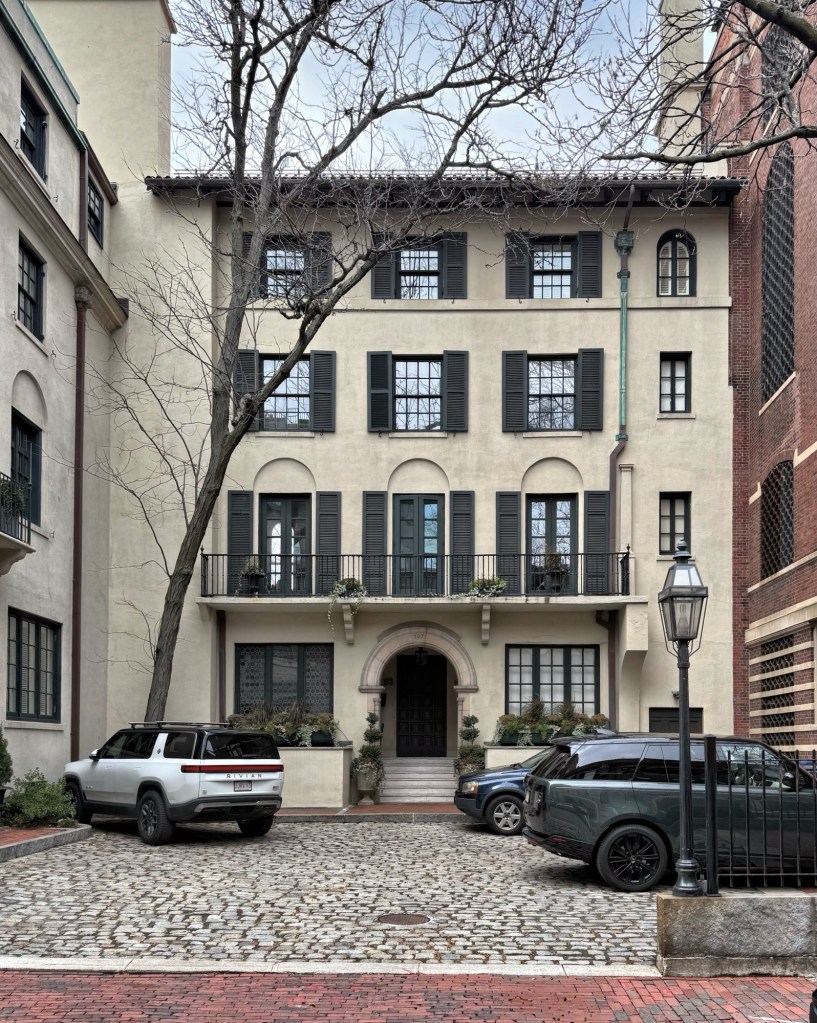
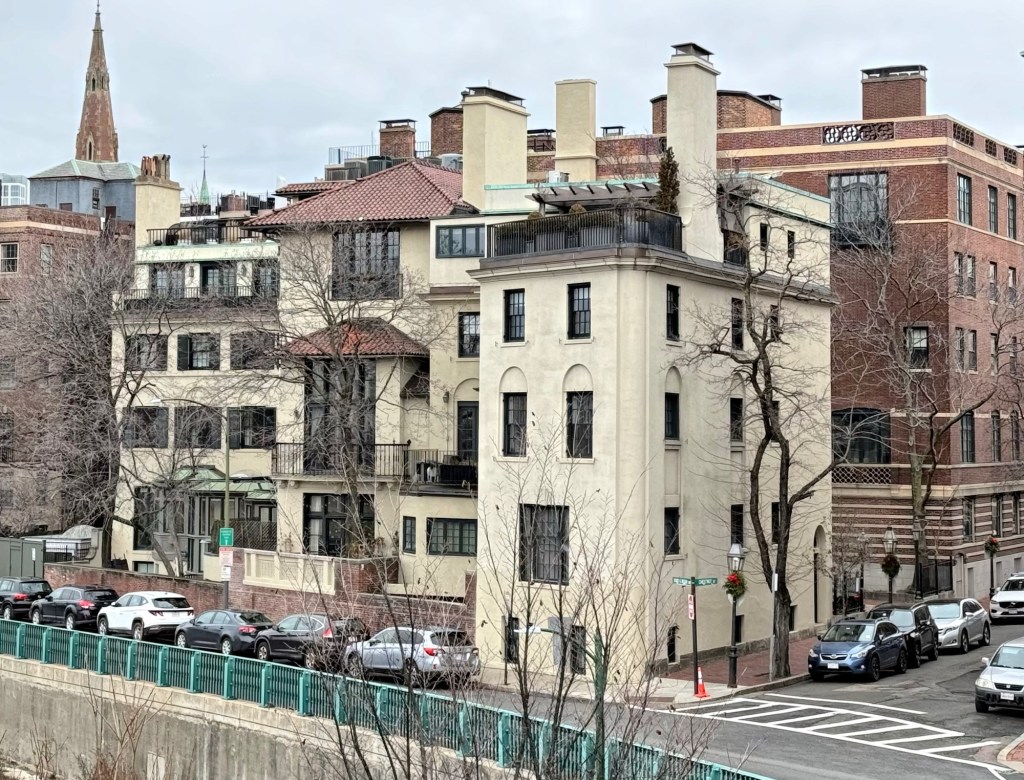
Miss Grace Nichols House // 1913

Located at the western end of Chestnut Street in the Flat of Beacon Hill, you will find this stucco residence, one of the finest mansions in Boston. The four-story residence with two entrances is built of brick and covered with stucco and was constructed for Miss Grace Nichols (1874-1944), the daughter of John Howard Nichols, who worked for John Lowell Gardner (the husband of Isabella Stewart Gardner) as a merchant transporting goods between Boston and Chinese markets, before overseeing mills. As a single woman, Grace inherited much of her parents wealth upon their deaths, and in 1913, hired architect, William Chester Chase, to design her Beacon Hill home in the Italian Renaissance Revival style, similar to Isabella Stewart Gardner’s Fenway Court mansion (1903). Grace Nichols married Richard Pearson Strong, a Harvard professor and medical researcher, in 1936 and the couple lived here with servants until their deaths in 1944 and 1948 respectively. After their death, the building was either purchased by or willed to the Boston Society of Natural History and the New England Museum of Natural History, which moved out of their Berkeley Street location in 1946. The Nichols Mansion served as the new Boston Museum of Science until 1951, when the new and current museum was built between Boston and Cambridge. Today, the former Nichols mansion is five condominium units, with owners having one of the most enchanting and unique properties in the exclusive Beacon Hill neighborhood.

Villa Bella Vista // 1908

Villa Bella Vista in Chester, Connecticut, stands as a striking and deeply personal interpretation of an Italian Villa, designed not by a professional architect, but by its remarkable owner, Eila Pierre. Known even among friends as Madame Pierre, she was a turn-of-the-century feminist of independent means who defied convention at nearly every turn. Drawing inspiration from the indigenous farmhouse architecture of northern Italy, Pierre personally designed the well-preserved stuccoed stone house, which was later constructed by local Italian immigrant masons who settled in Chester. Born Ila Rowland Stone (1870–1931), she was newly married to Reverend Dwight Stone, a Yale-educated minister of the town’s Congregational Church. Within just two years of marriage, it unraveled. Reverend Stone resigned his post, and by 1906, the couple’s uncontested divorce, scandalous for the time, was finalized. Casting off both marriage and social expectations, Ila reinvented herself as Eila Pierre. Despite the scandalous divorce and cheating rumors, she chose to remain in Chester and build a summer home that reflected her independence and worldview. Plans for Bella Vista were underway as early as 1904, when she purchased land on Old Depot Road. To prepare for the design, Pierre embarked on an extended tour of northern Italy, studying villas firsthand and bringing along a young local stone mason, Martin Lanzi, who later built his home across from Madame Pierre’s mansion. Villa Bella Vista, completed in 1908, includes common architectural details in the Italian Villa style with the campanile, or tower, the colonnaded piazza, and stone masonry that define the Latin prototype, all unique to Connecticut, which makes this home so special.

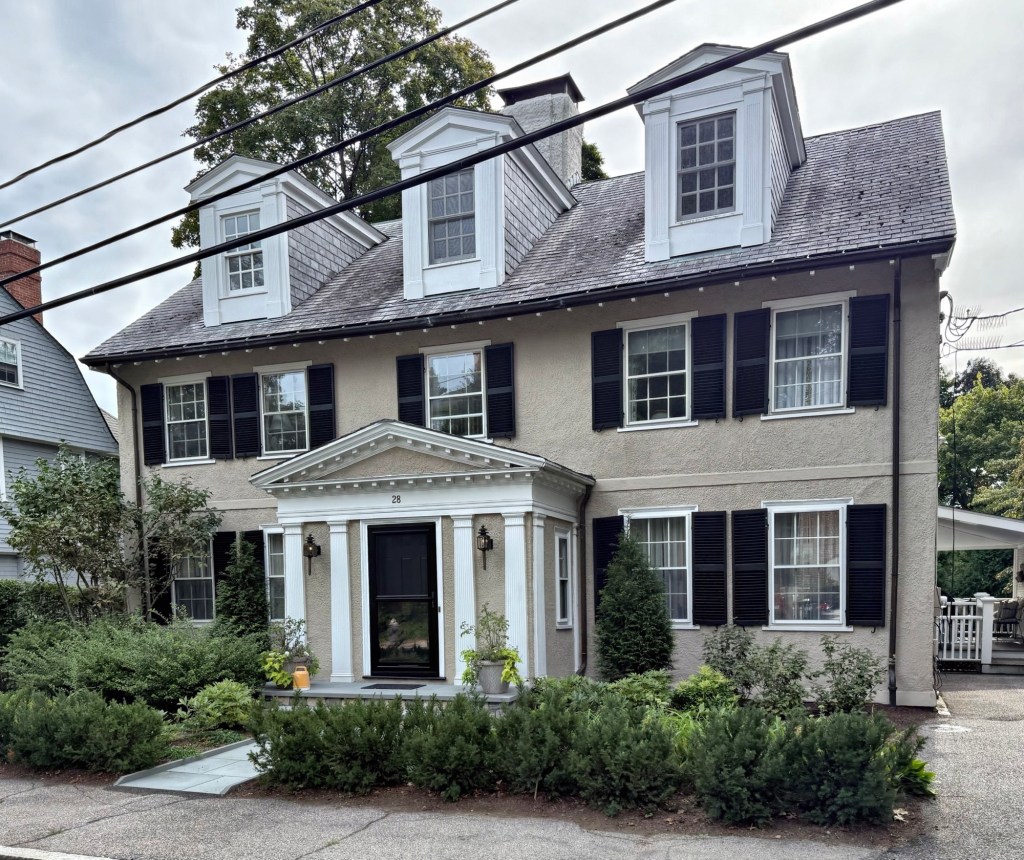
William & Sara Warren House // 1911

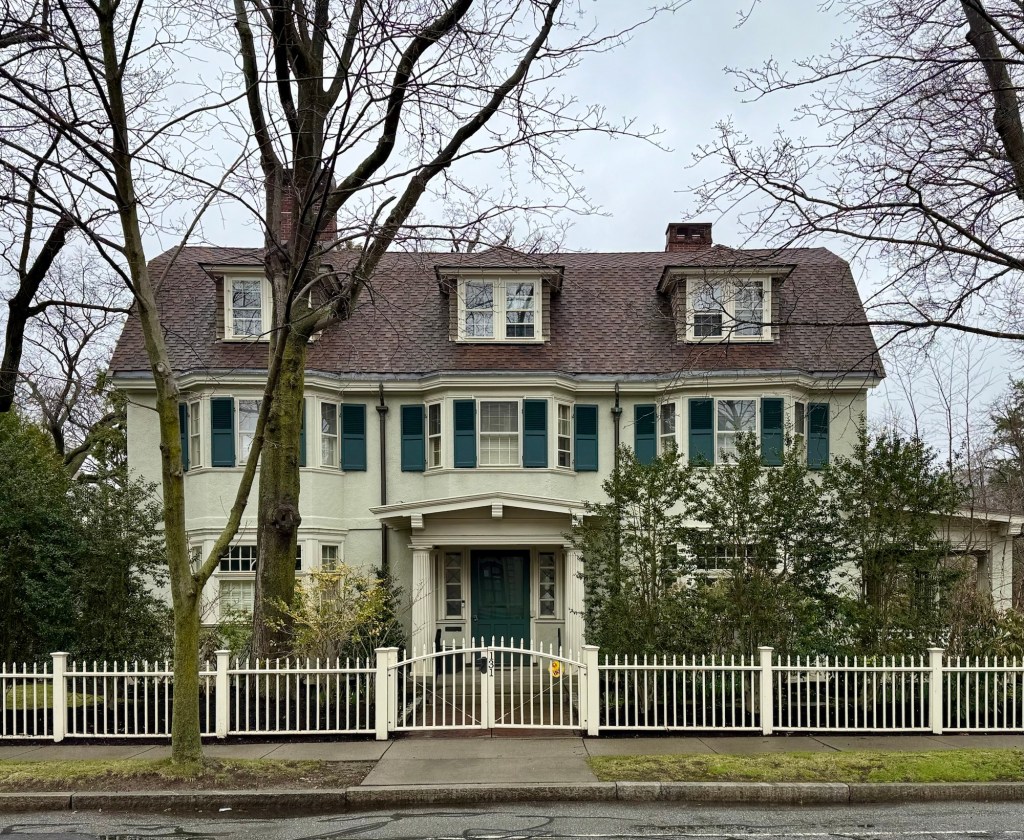
Built in 1911, this Colonial Revival style house rendered in stucco, is located at 28 Hawthorn Road in the Pill Hill neighborhood of Brookline, Massachusetts. The residence was built for William Marshall Warren (1865-1953) and his wife, Sara Shields Warren (1874-1964) from plans by the firm of Gay & Proctor. William M. Warren served on the faculty at Boston University as Professor of Philosophy and later as Dean of the College of Arts and Sciences, promoted by his father, William Fairfield Warren, who was President of the University. The Warren House features a symmetrical five-bay facade with central entrance within a projecting pedimented vestibule framed by four pilasters. The pilasters are replicated in the three dormers at the roof, set below the central chimney.