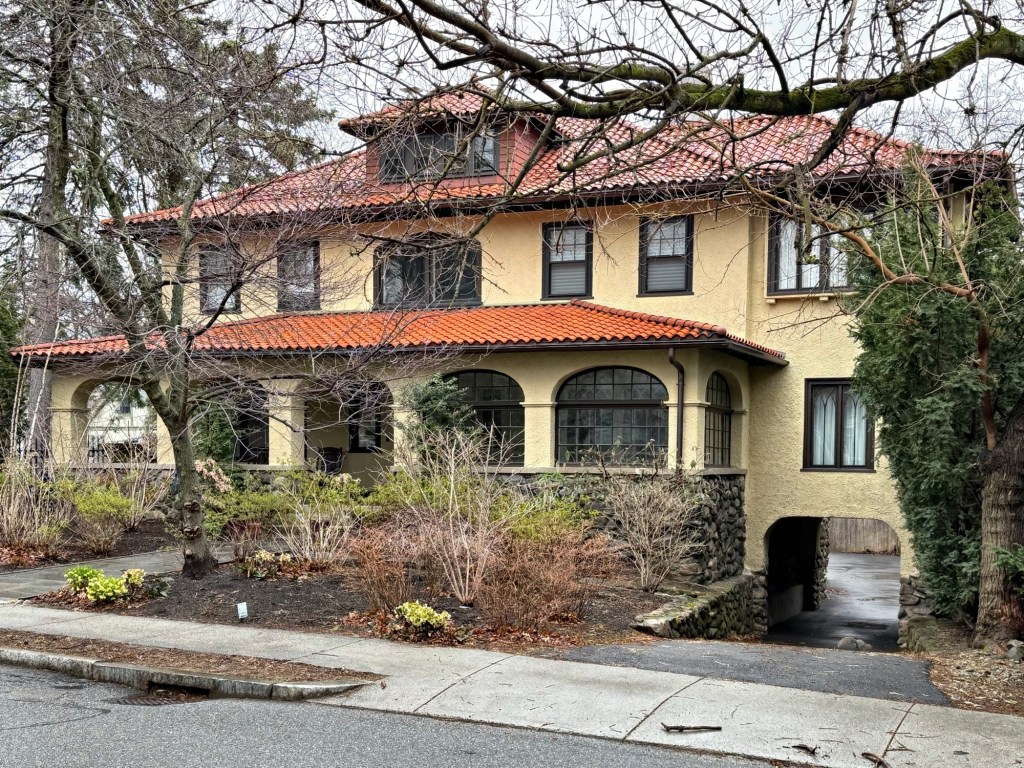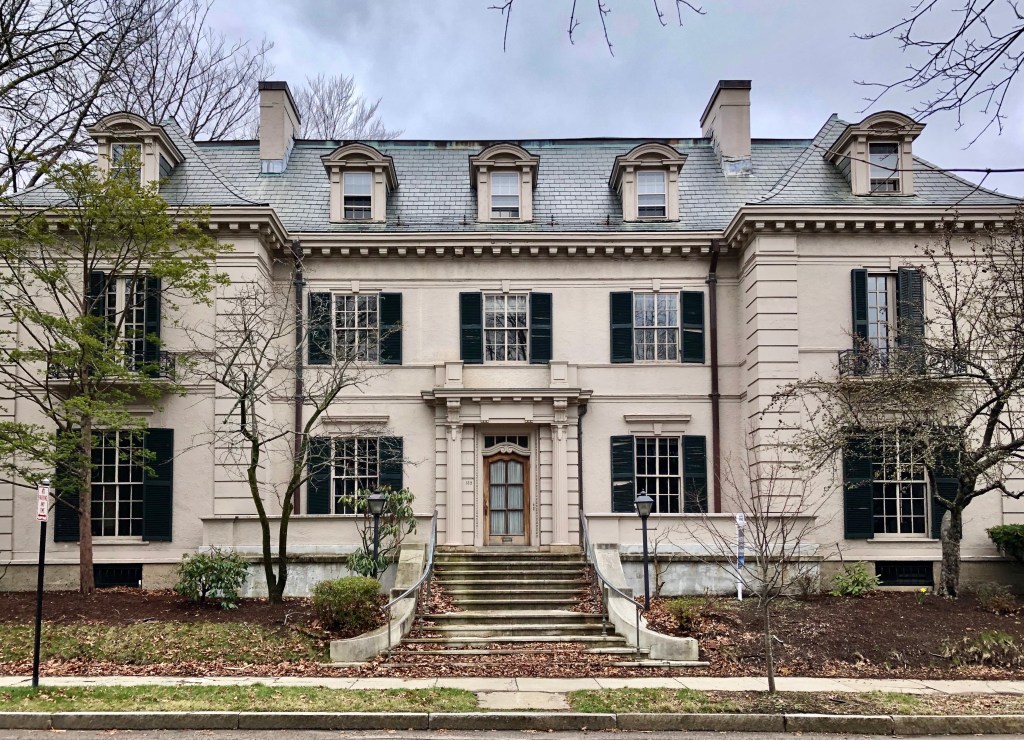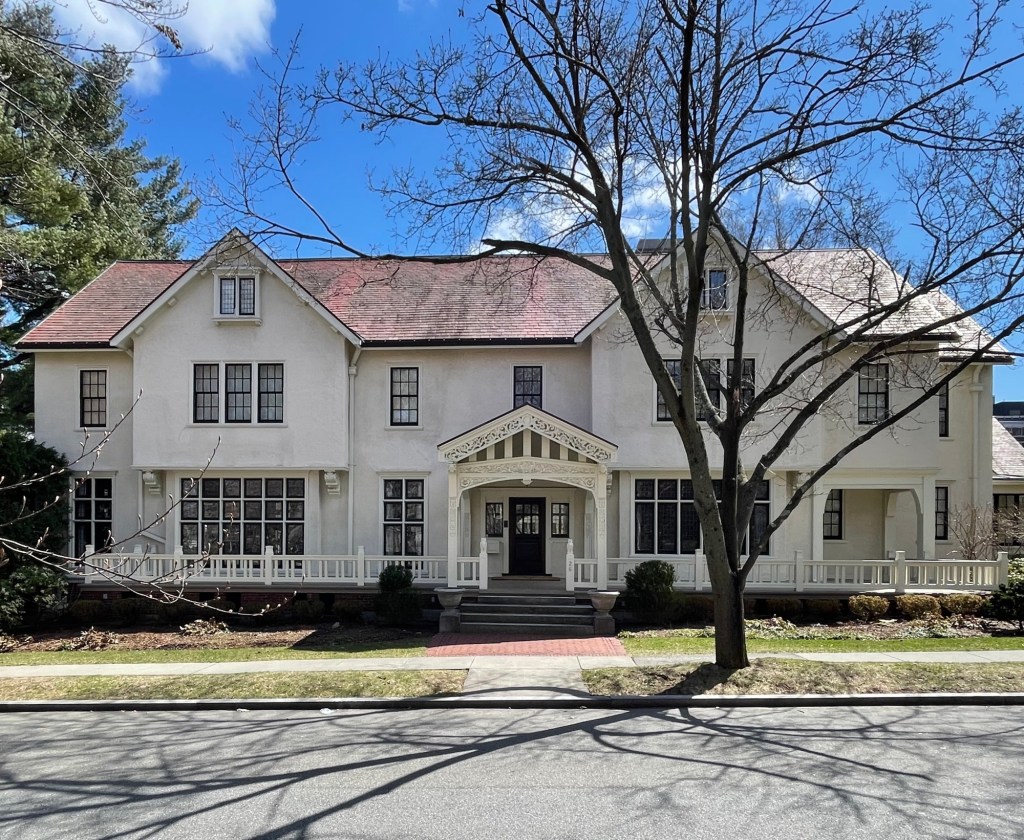
Gahm House // 1907

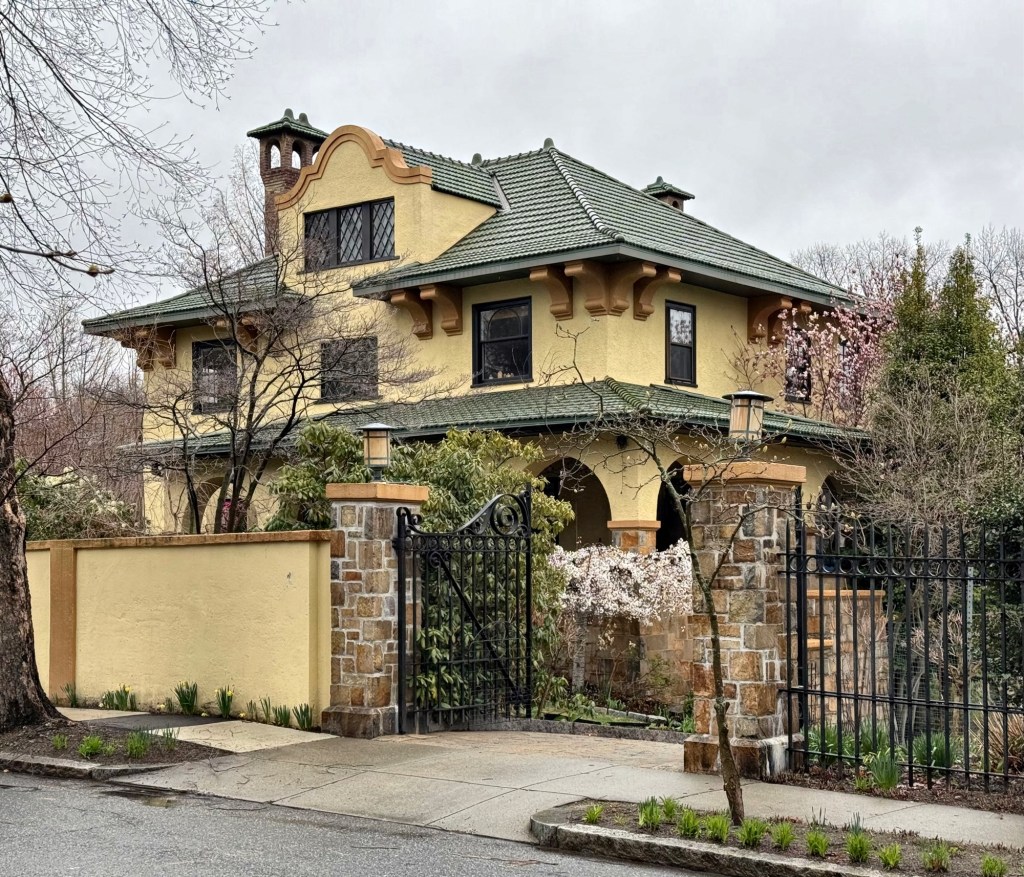
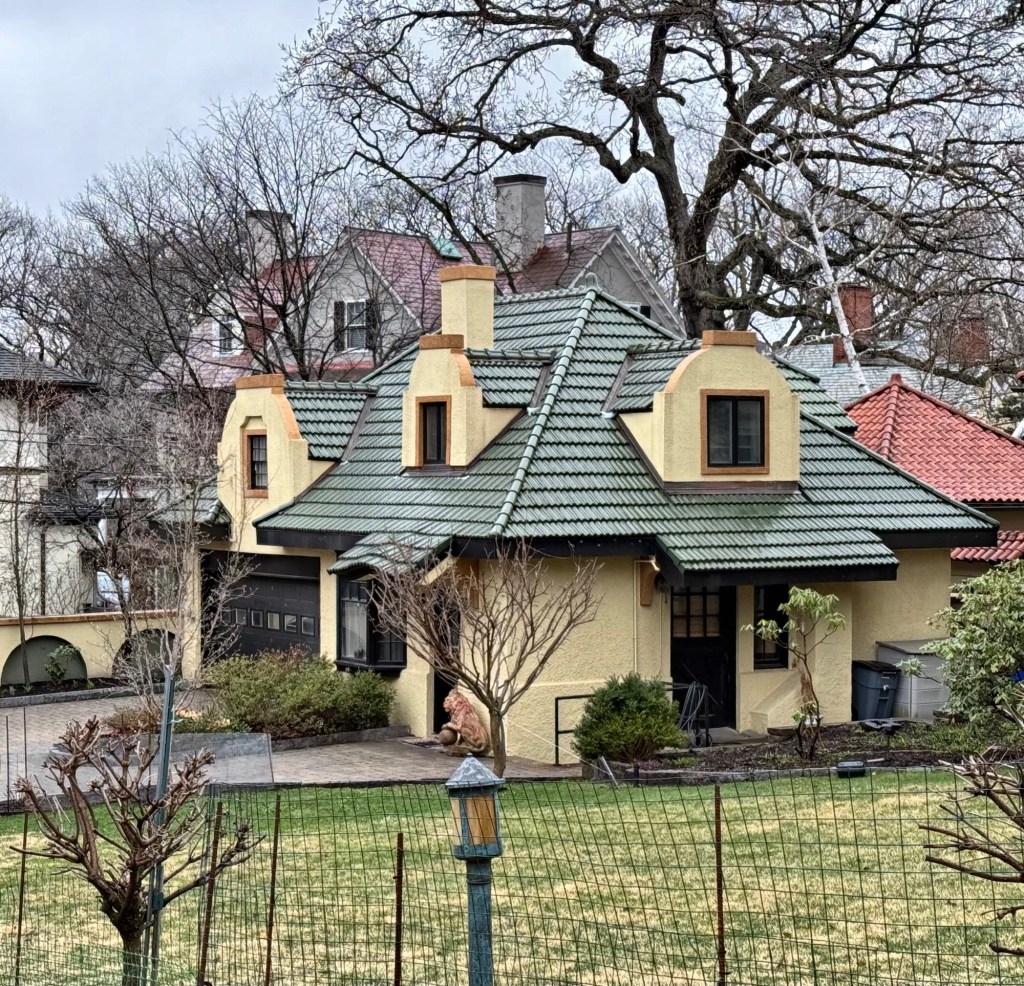
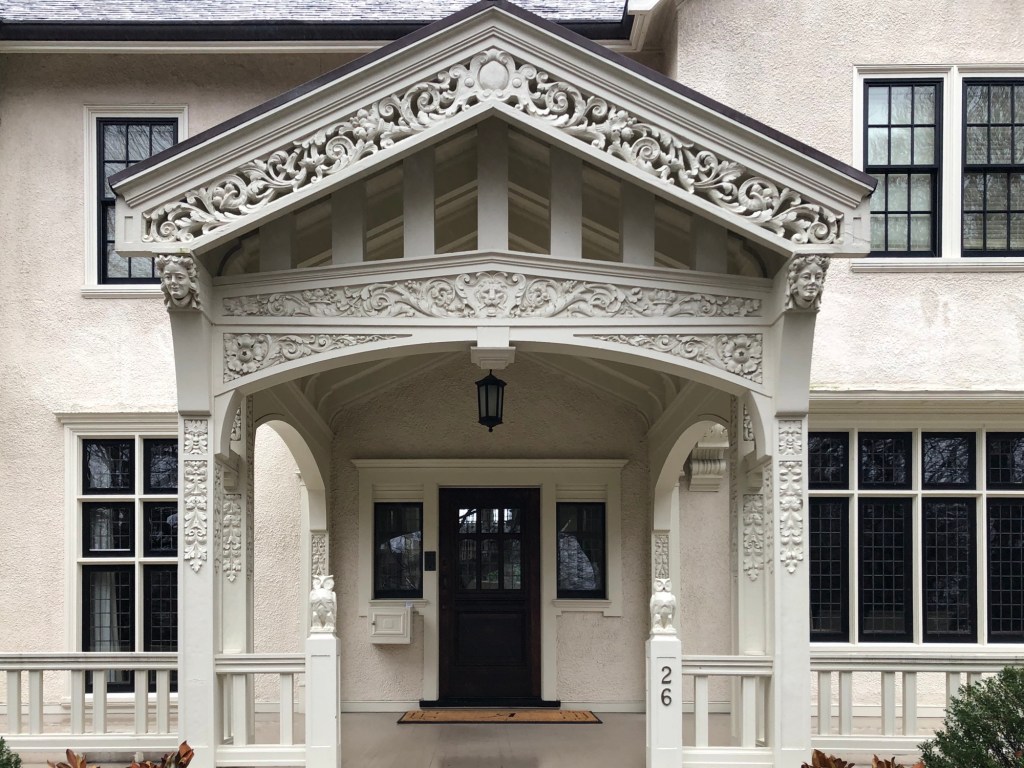
Located in the Longwood neighborhood of Brookline, Massachusetts, the Gahm House stands out not only for its size, but stunning details and architectural design. This house was designed in 1907 by the architectural firm of Hartwell, Richardson & Driver, one of the premier firms of the region at the time, who blended Arts and Crafts with Tudor Revival styles with a notable front entry. Joseph and Mary Gahm hired the firm to design their new home the same year the firm designed a bottling plant (no longer extant) in South Boston for Mr. Gahm’s business. Joseph Gahm was a native of Wurtemberg, Germany, who emigrated to Boston in 1854 and initially worked as a tailor. In the early 1860s, Gahm opened a restaurant in Charlestown, by the late 1860s he added a small bottling operation to this business. The bottling business soon expanded to such an extent that he was able to give up the restaurant business and open a large bottling plant in 1888. He eventually moved operations to South Boston where there was more room for transportation and shipping capabilities. Their stuccoed house in Brookline is especially notable for the well preserved carvings at the entrance, which include: faces, floral details, lions, and owls perched atop the newel posts. What do you think of this beauty?
Harrison Gardner House // c.1873

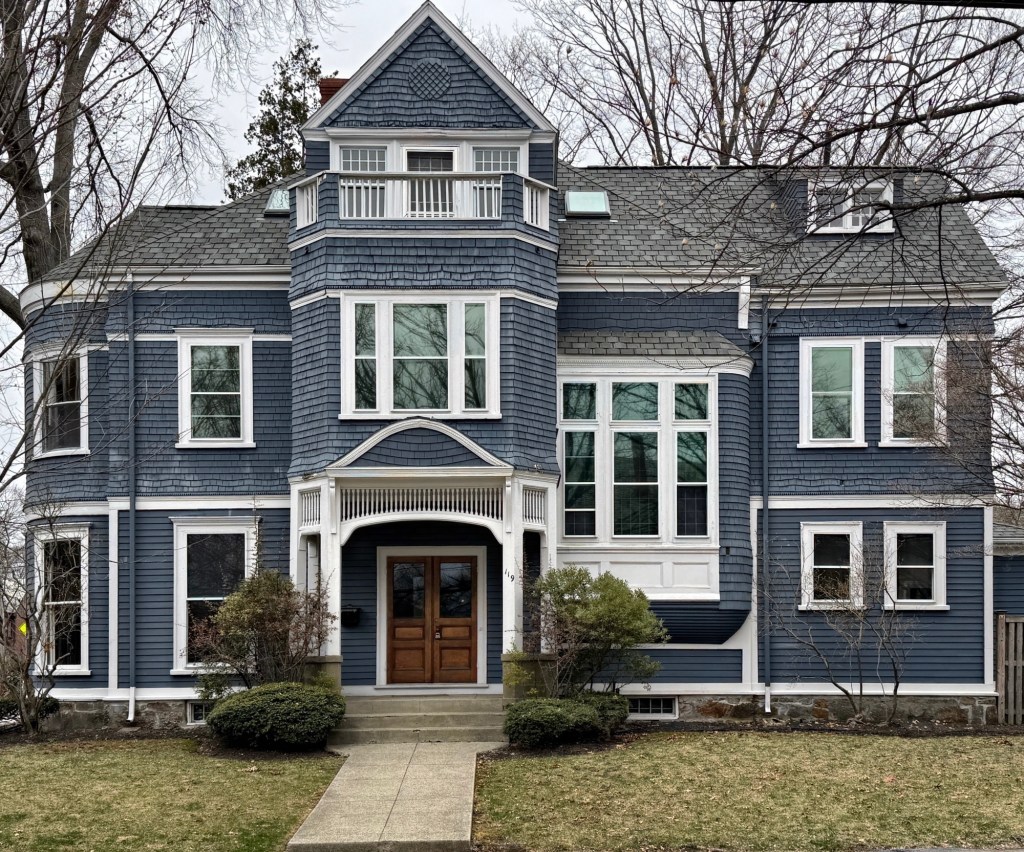
The Harrison Gardner House on Colchester Street in the Longwood section of Brookline is a stunning late Victorian residence that was “modernized” in 1887 to its current configuration. Harrison Gardner (1841-1899) was a Civil War veteran who arrived back in Boston becoming a wealthy dry goods wholesaler, later investing in Massachusetts mills. On January 20, 1871, Harrison was a founder and treasurer of the Boston Red Stockings of the new National Association of Professional Base Ball Players (NABBP). The team’s name  changed multiple times, eventually landing on the Boston Braves, which would later move to Atlanta to become the Atlanta Braves in the MLB. With increased wealth and status, Harrison Gardner in 1887, hired the prestigious architectural firm of Hartwell and Richardson, to update his Brookline residence with additions and renovations in the Queen Anne and Shingle styles. Years after his death in 1899, Harrison’s widow, Laura Perkins Harrison, moved out of the large Longwood home and into a new, Arts and Crafts style stucco residence on Amory Street, designed by William Gibbons Rantoul.

Amory-Boit House // 1865

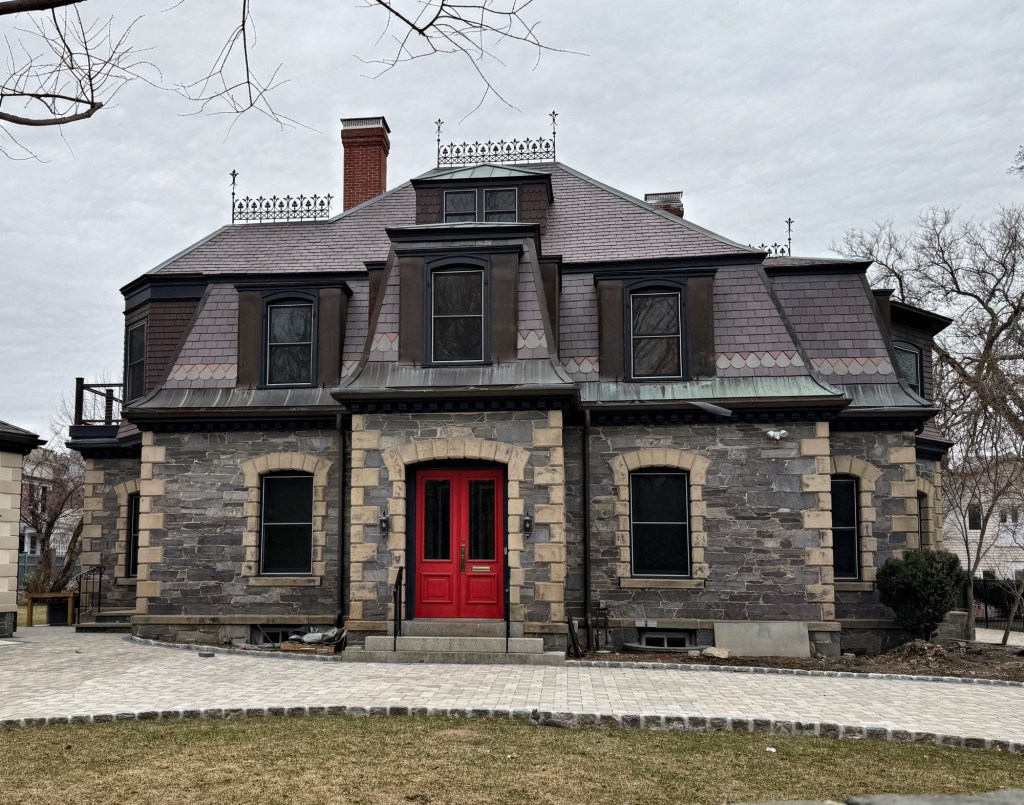
Built in 1865, the Amory-Boit House on Colchester Street in Brookline‘s exclusive Longwood neighborhood, is a stunning Second Empire style home with connections to prominent local families. The residence has a one-story stone base which meets the slate mansard roof providing two-and-a-half stories above which are crowned by iron cresting at the peak of the roof. The property was one of the early homes built in the area, developed by David Sears, one of the wealthiest property owners in Boston, who recognized the potential for development of this marshy area of Brookline due to its close proximity to the city. A large lot on Colchester Street was purchased by Dr. Robert Amory (1842-1910), who in 1864, married Marianne Appleton Lawrence (1843–1882), daughter of Amos Adams Lawrence, a major developer of the nearby Cottage Farm neighborhood of Brookline. This stone cottage, one of two neighboring homes built at the same time for Dr. Amory, was likely rented to friends and family with the other as his primary country house. This home was later sold to real estate and insurance businessman and author Robert Apthorp Boit (1846-1919). Robert Boit published the novel, Eustis in 1884 and his family history, Chronicles of the Boit Family and Their Descendants, in 1915. The home and its neighbor had been undergoing renovations for a while and are located within a local historic district.

Sewall Apartments // 1938

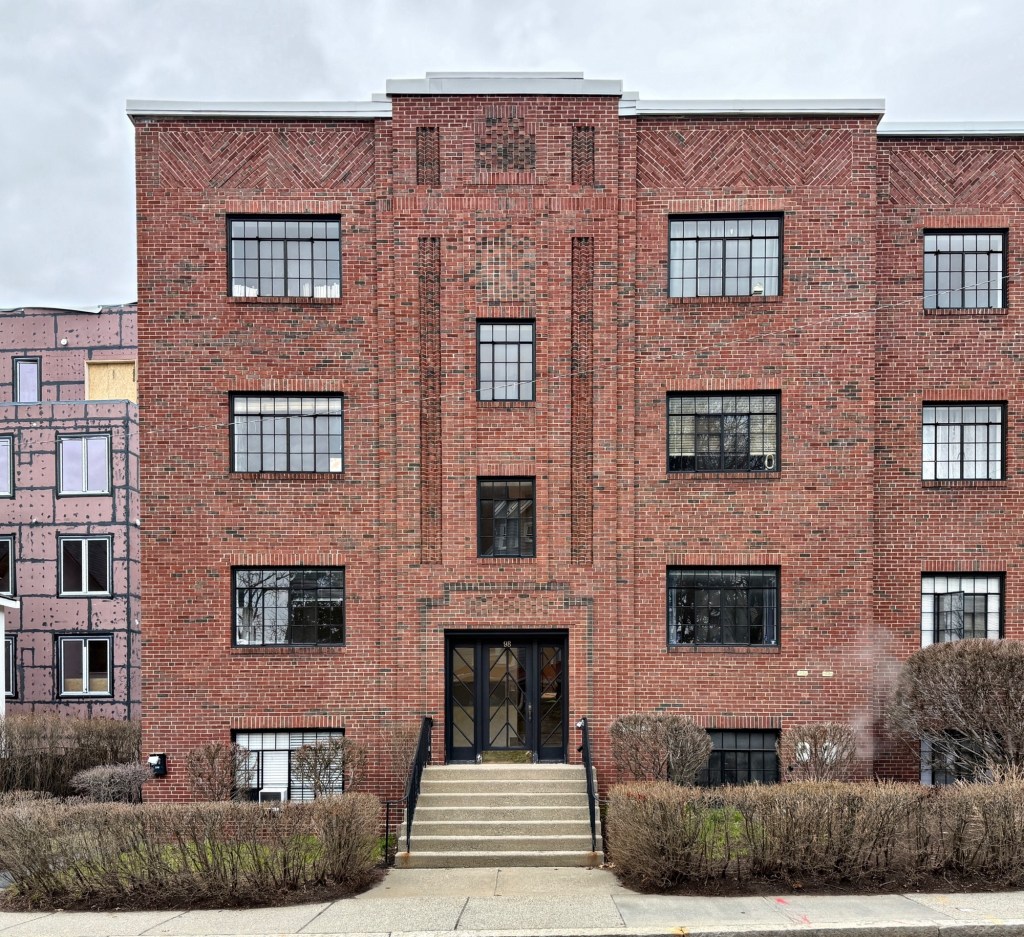
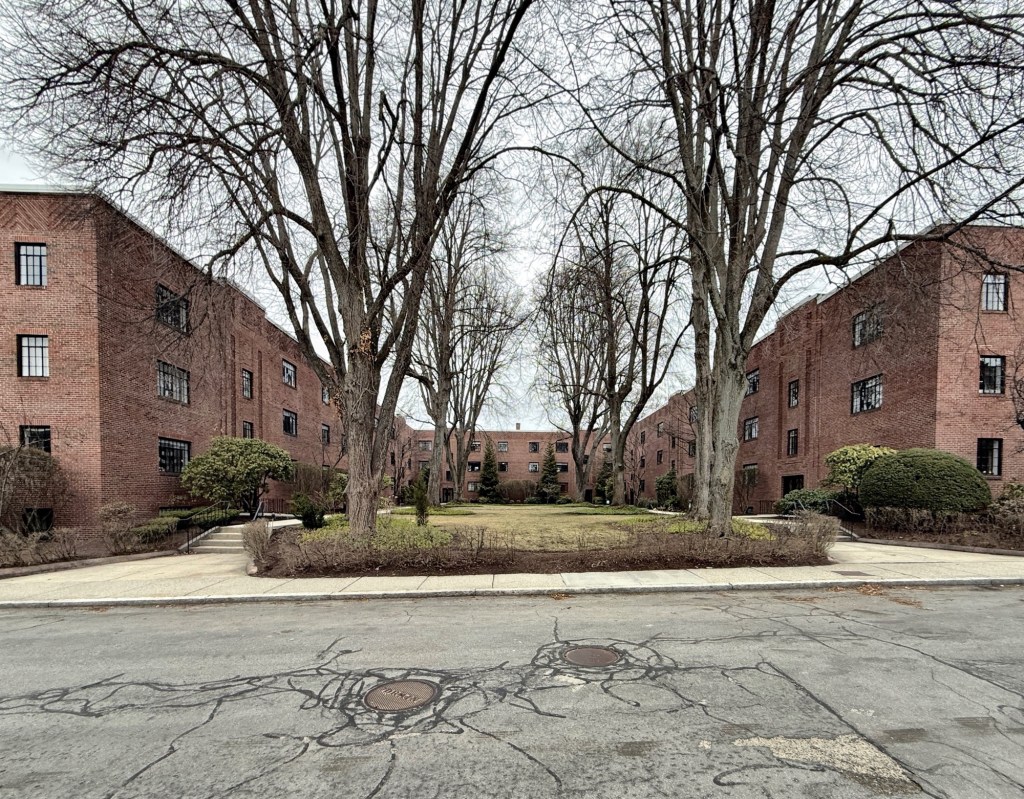
This garden apartment complex at 98-116 Sewall Avenue in Brookline is an excellent example of the Art Deco style which reached its height in popularity in the midst of the Great Depression, so fewer examples of the style are typically found. Here in Brookline, the city was seeing rapid development in the early decades of the 20th century, where large estates were subdivided and commercial areas expanded into once residential neighborhoods. U-shaped in plan and standing three-stories, this complex replaced a large property owned by the Stearns Family, a prominent local family with many properties around present-day Coolidge Corner. The apartments were developed by the G & S Investment Company, a real estate development firm, who hired architect, Saul Moffie, to design the building. Completed in 1938, the complex has richly articulated facades with a variety of geometric brick patterns, including chevrons, diapering, header courses and soldier courses with each entryway identified by a projecting pavilion with a stepped stone parapet above. The doors and sidelights are wood with glass panels in a chevron motif similar to the brickwork and all residential units have steel multi-pane windows. What a gem!

Thomas Aspinwall House // 1896

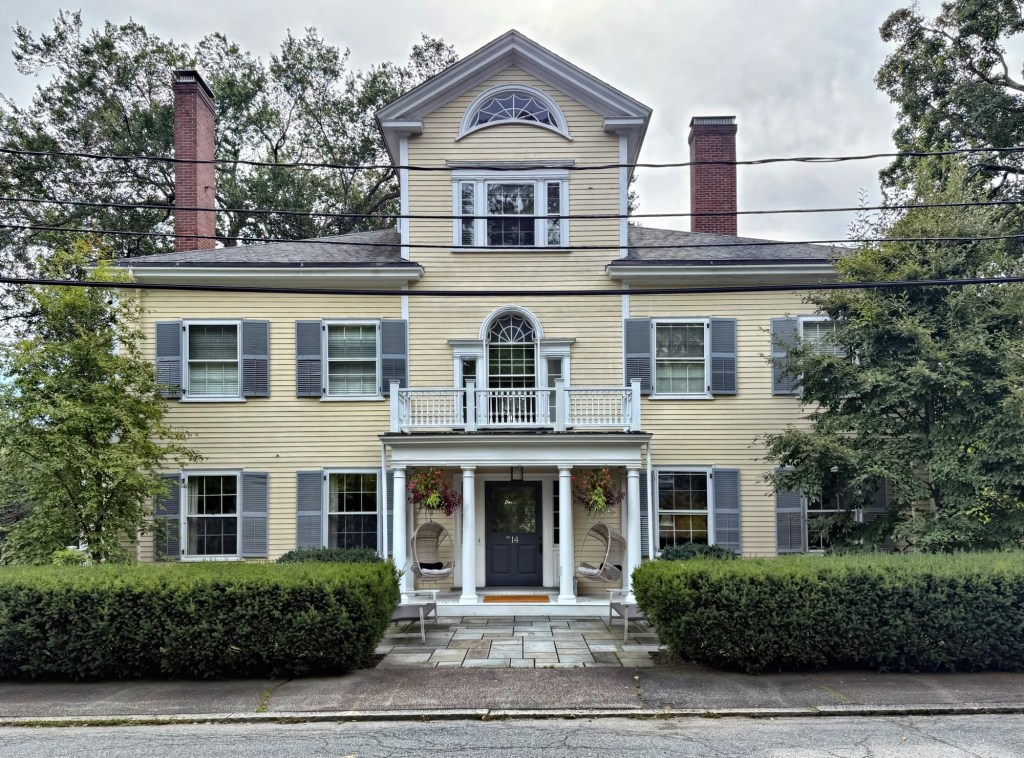
The Thomas Aspinwall House at 14 Hawthorn Road in Brookline was constructed in 1896 by architects, Ball & Dabney. The stately home was built for Thomas Aspinwall as a near copy of his great-grandfather’s 1803 Federal style house on Aspinwall Hill, the William Aspinwall House. Both residences feature a four-tier central bay with Palladian and lunette windows with a columned portico at the entrance. His grandfather, Dr. William Aspinwall graduated from Harvard in 1764 and studied medicine in Connecticut and in Philadelphia before beginning his medical practice in his hometown. He was one of the Brookline men who marched west and fought British troops as they retreated from Lexington and Concord in April 1775. He was put in charge of a hospital in Jamaica Plain during the Revolutionary War and later ran a hospital for smallpox victims in Brookline. His 1803 Federal style home was demolished in 1900 as the Aspinwall Hill area of Brookline was developed, but luckily, a replica remains on the other side of town, here on Hawthorn Road!

Rowe House // 1911

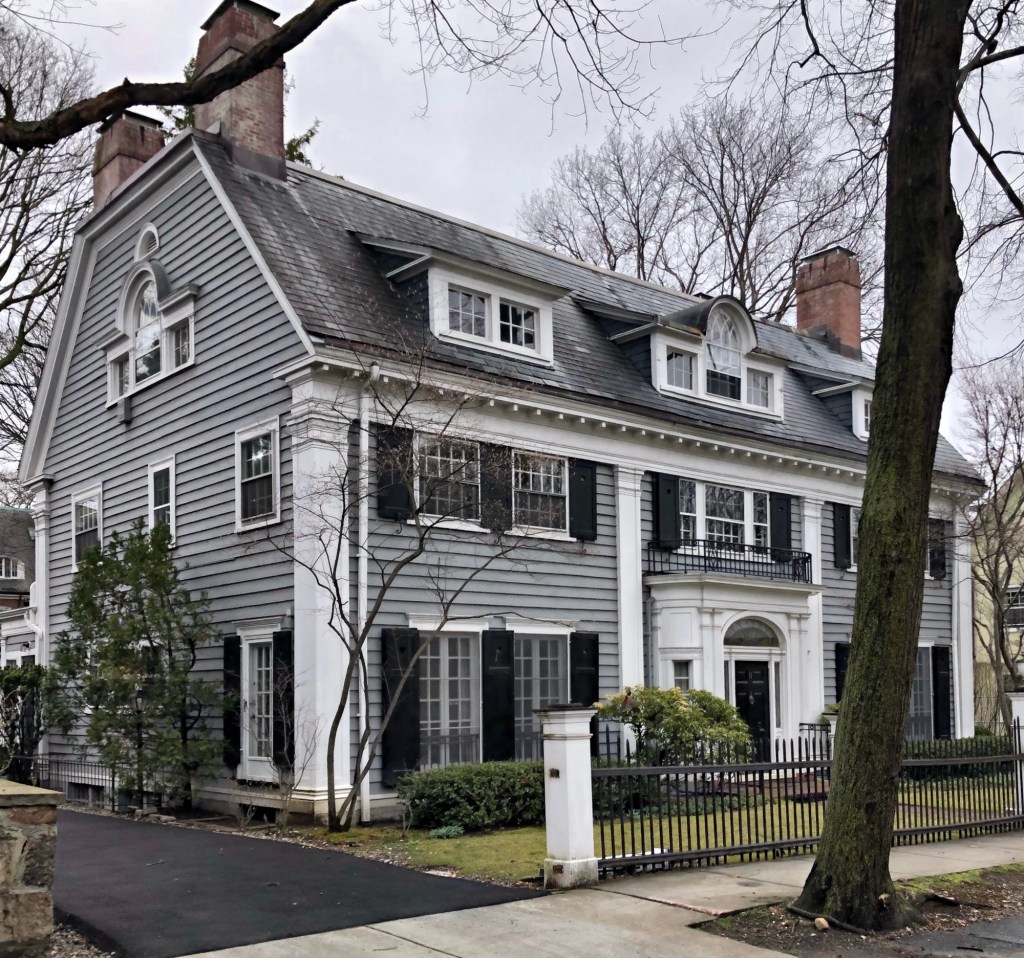
The Rowe House at 11 Mason Street is an over-the-top, and high-style example of the Colonial Revival style, showcasing the oversized proportions and scale that architects in the early 20th century followed when referencing Colonial American architecture. The house here was built in 1911 for Edward Prescott Rowe (1879-1936) and his wife, Eleanor Livingstone. Designed by the firm of Rowe & Keyes of Boston and New York, the commission was likely a relative of Mr. and Mrs. Rowe. The symmetrical house features a broad gambrel roof with Palladian windows in the side gable and central dormer at the facade, large pilasters breaking up the bays on the facade, a projecting Colonial Revival entry, and squat windows at the second floor terminating at the entablature above. The property even retains its Colonial Revival gateway.

Lawrence-Parker House // 1864

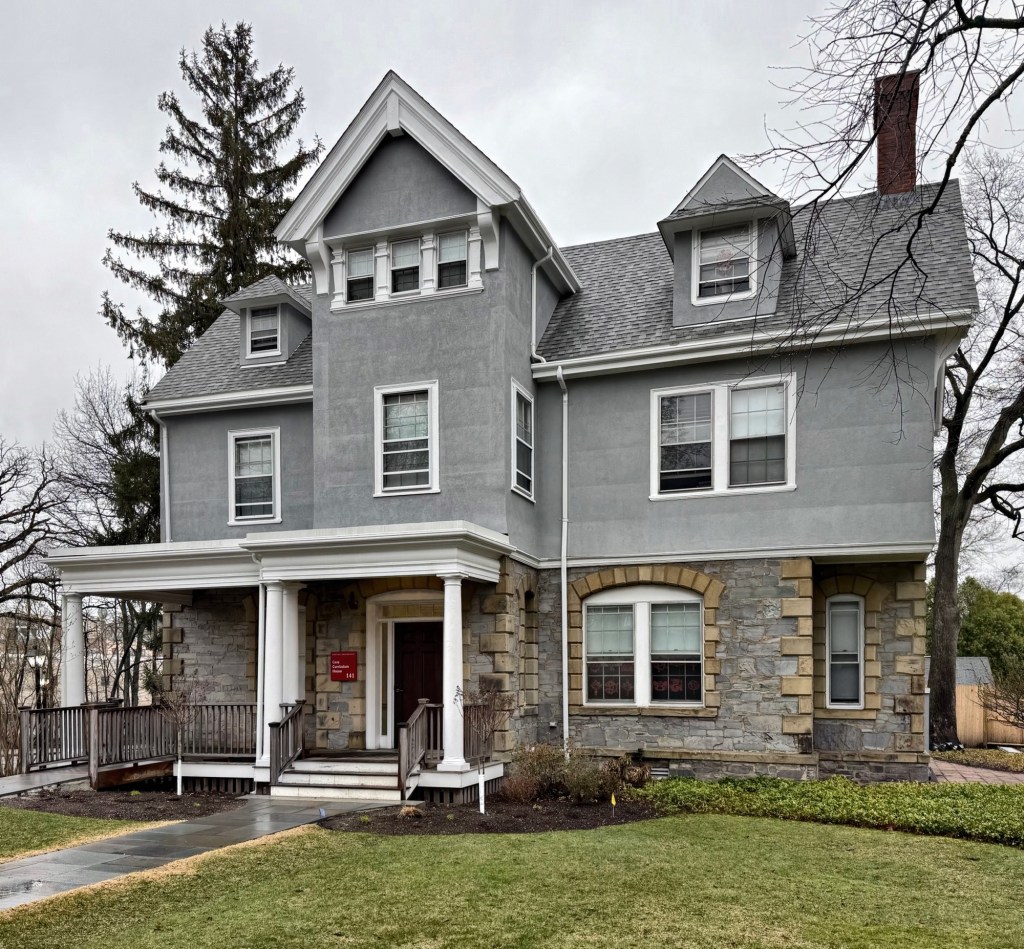
Built in 1864 as one of the rental properties owned by Amos A. Lawrence as part of his exclusive Cottage Farm neighborhood in Brookline, this house has been extensively altered and even moved but retains significance as a surviving mid-19th century “cottage” in the neighborhood. The house was likely constructed as a one-story, stone cottage with a second floor contained within a mansard roof. In 1903, Mrs. Francis W. Lawrence hired the well-known architect and Brookline resident, Julius A. Schweinfurth, to make extensive alterations to the cottage, replacing the mansard roof with a new second floor with gable roof, along with a new porch. Schweinfurth’s design included wood shingle siding for the upper floors, which were replaced with stucco in 1970. The house was moved to its current site at the corner of Carlton and Mountfort streets in 1929 when the street was re-oriented to follow the old Boston & Albany Railroad tracks. When moved, the cottage was occupied by Philip Stanley Parker, a judge, and his wife, Eleanor. Today, the cottage is owned by Boston University and known as the Core House.

Dexter-Hall Cottage // 1851

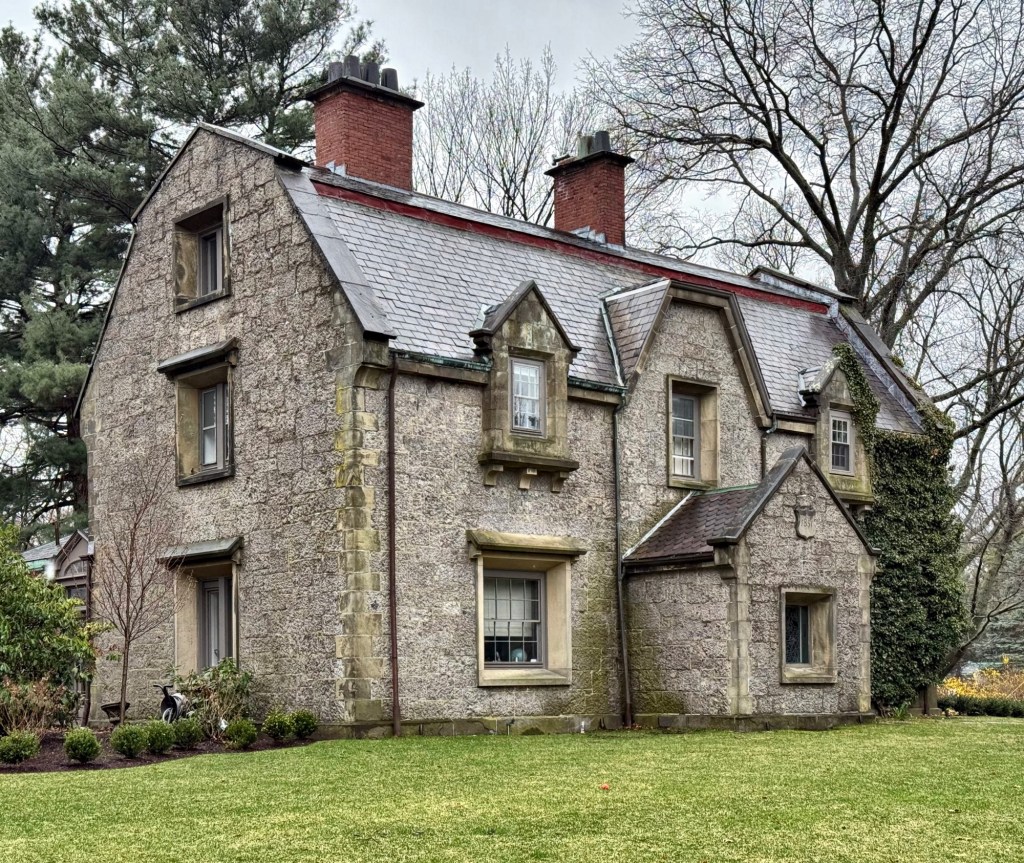
Built across the street from the Amos A. Lawrence House in the Cottage Farm neighborhood in Brookline, the Dexter-Hall Cottage is an early Gothic Revival style residence built in the first period of the district’s history. Architect, George Minot Dexter was gifted a desirable house lot in the neighborhood from Amos Lawrence as a reward for his designing his own property, and in turn, designed this cottage in 1851 in the the same mode as the Lawrence House. The stone cottage has a three bay façade with enclosed center entry. On the second floor are wall dormers as well as a central jerkinhead dormer with a gambrel slate roof. The property was later owned by George M. Dexter’s daughter, Emily, and her husband, Thomas Bartlett Hall. The house remained in the Hall family through at least the 1920s.

Amos A. Lawrence House // 1851

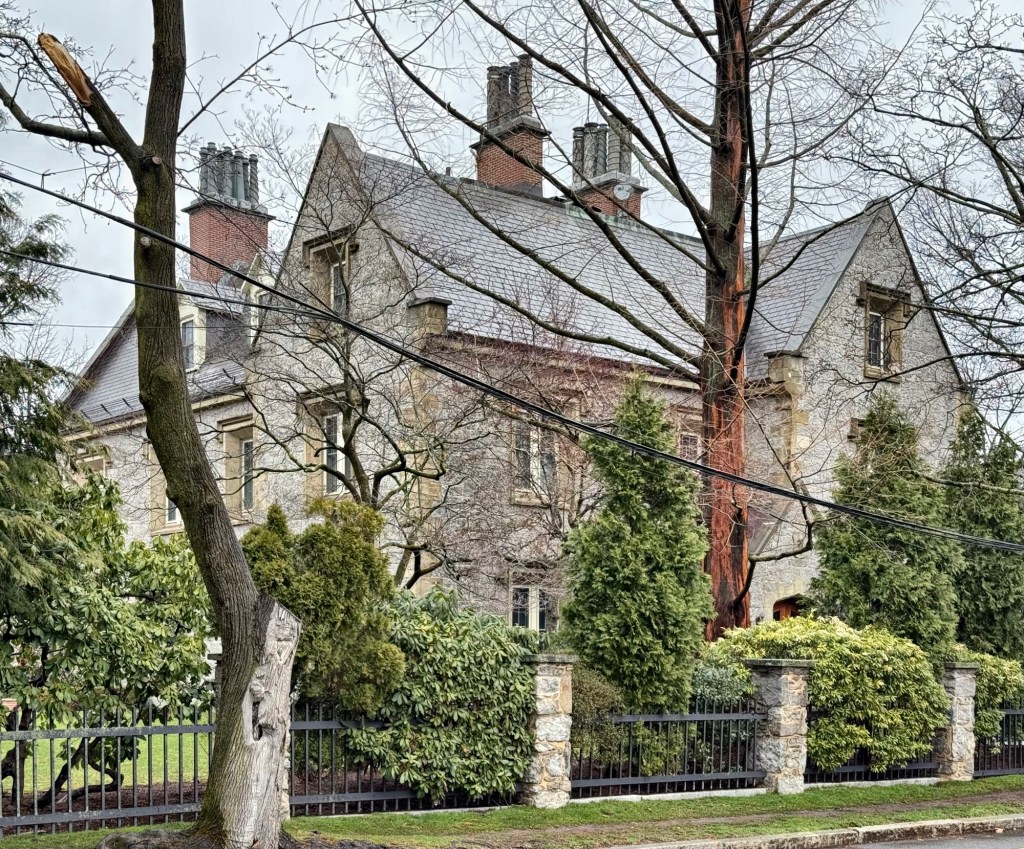
Cottage Farm area of Brookline is one of the finest neighborhoods in all of New England. The area was developed thanks to Amos A. Lawrence (1814-1886), a wealthy second-generation Bostonian, who provided much of the capital and enthusiasm for the growth of the cotton industry in New England prior to the Civil War. Lawrence’s involvement in the industry aided the development of the Massachusetts mill towns of Lowell and Lawrence, whom the city was named after. In 1851, Amos Lawrence purchased 200 acres of land from David Sears, who himself developed the equally beautiful Longwood neighborhood of Brookline on the other side of Beacon Street. Amos began to subdivide the land, working with the architect George Minot Dexter and landscape architect and surveyor, Alexander Wadsworth, who designed Mount Auburn Cemetery in Cambridge, to create an early picturesque residential suburb. With houses designed in the newly popular Gothic Revival and Mansard styles and several small parks, the area became known as Cottage Farm. This stone house was designed by George M. Dexter and was the country residence of Amos Lawrence, who had other homes built nearby and rented out to wealthy friends and family. By 1888, the property was owned by Amos’ daughter, Hettie S. Cunningham, who later, subdivided the estate into five house lots, and moved this stone house to the corner of Ivy and Carleton streets. Expressive of English architectural traditions over the more ornate Gothic Revival popularized by Andrew Jackson Downing, the Lawrence House is one of the finest residences in the Boston area. Built of granite with limestone trim and set behind landscaping and a perimeter fence, the mansion is surprisingly hard to get decent photos of, but it is a stunner. Today, the house is owned by Boston University and is known as Sloane House.

New England Fireproof Construction Co. Apartments // 1917

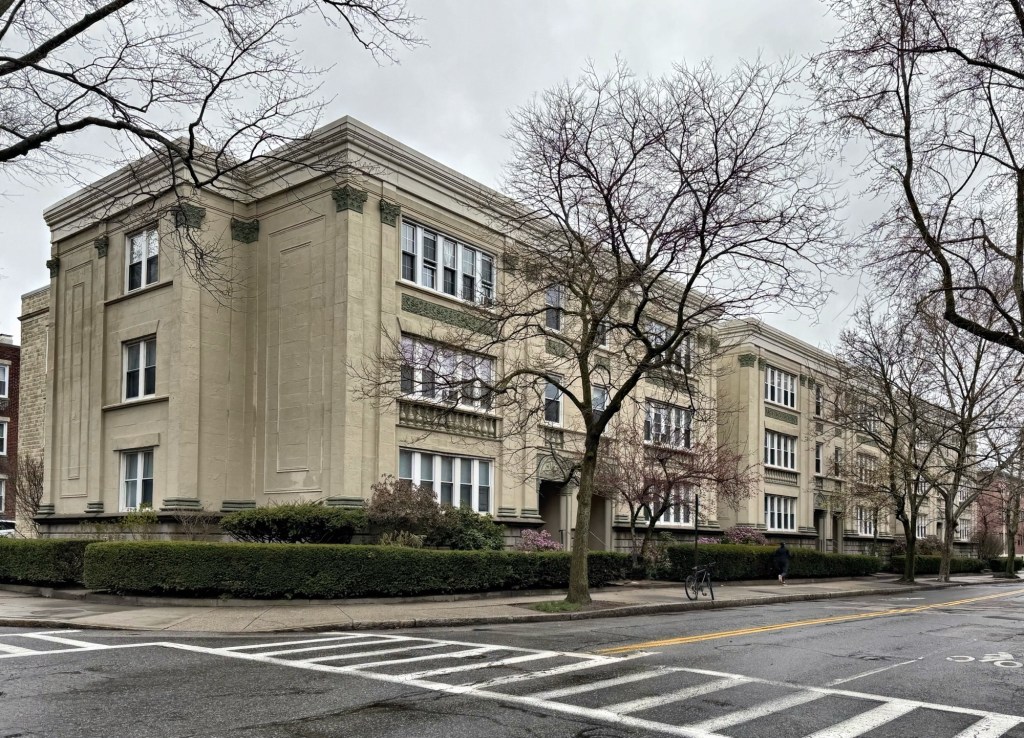
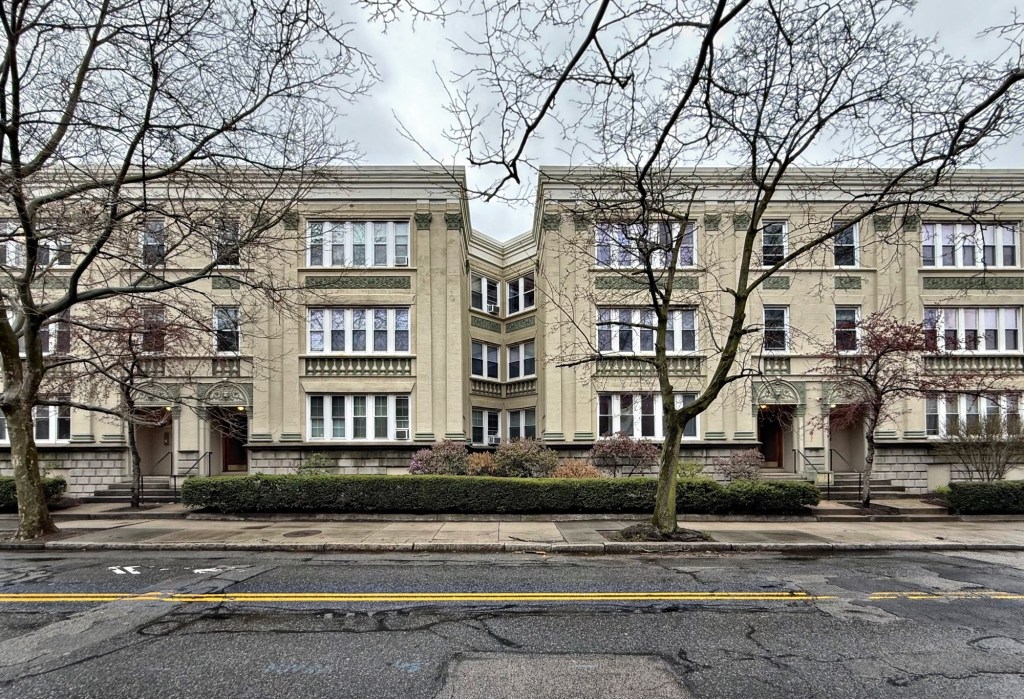
One of the most unique and architecturally pleasing buildings in Brookline has to be these apartments on Egmont and St. Paul streets that break the mold of traditional brick or wood-frame apartment houses. Built in 1917 by the New England Fireproof Construction Company as an example of how cheaper cement material can be used effectively and beautifully to design and construct high-quality housing. The company hired architect G. Bertram Washburn to design the buildings which utilize concrete block and cast concrete details with the facades embellished with pilasters capped with Corinthian capitals, engaged balusters, and modillioned and corniced entrances decorated with a lion’s head over each doorway. Additionally, a special touch is the recessed wells in the facade which not only break up the massing of the building, but provide additional light and air into the apartments inside.