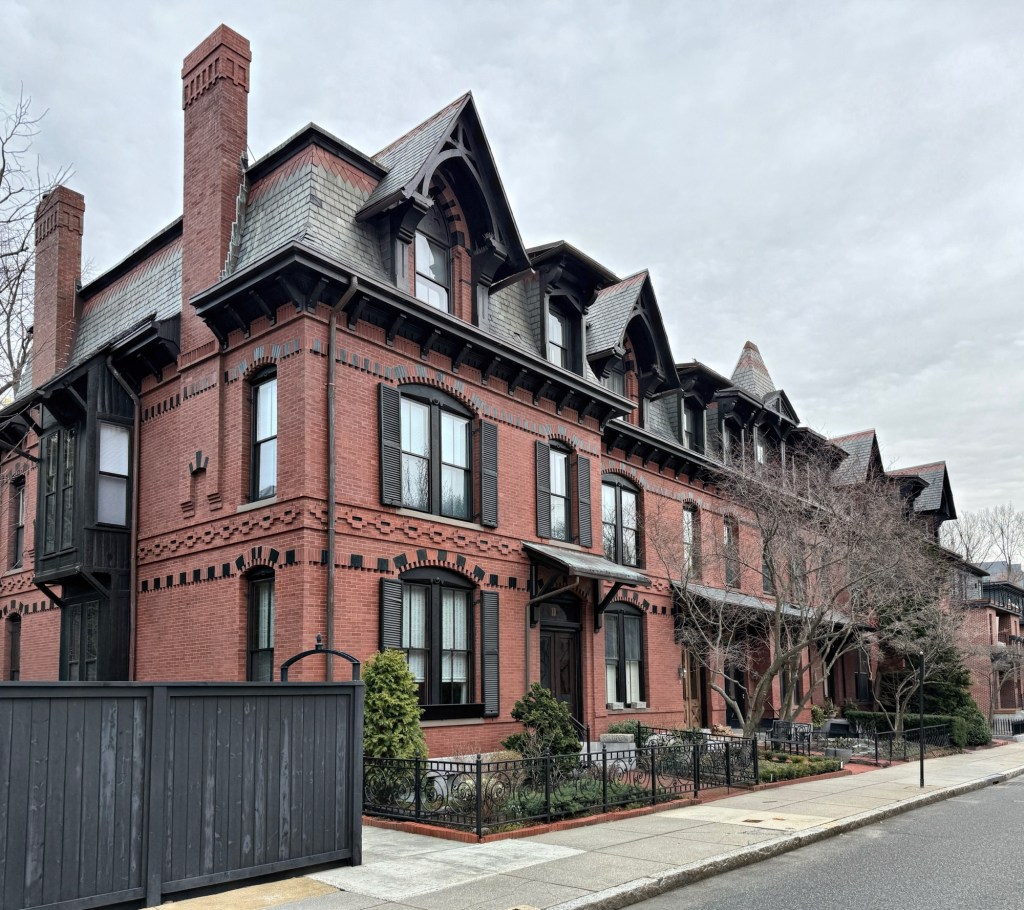
Amos Lawrence Rowhouses // 1876

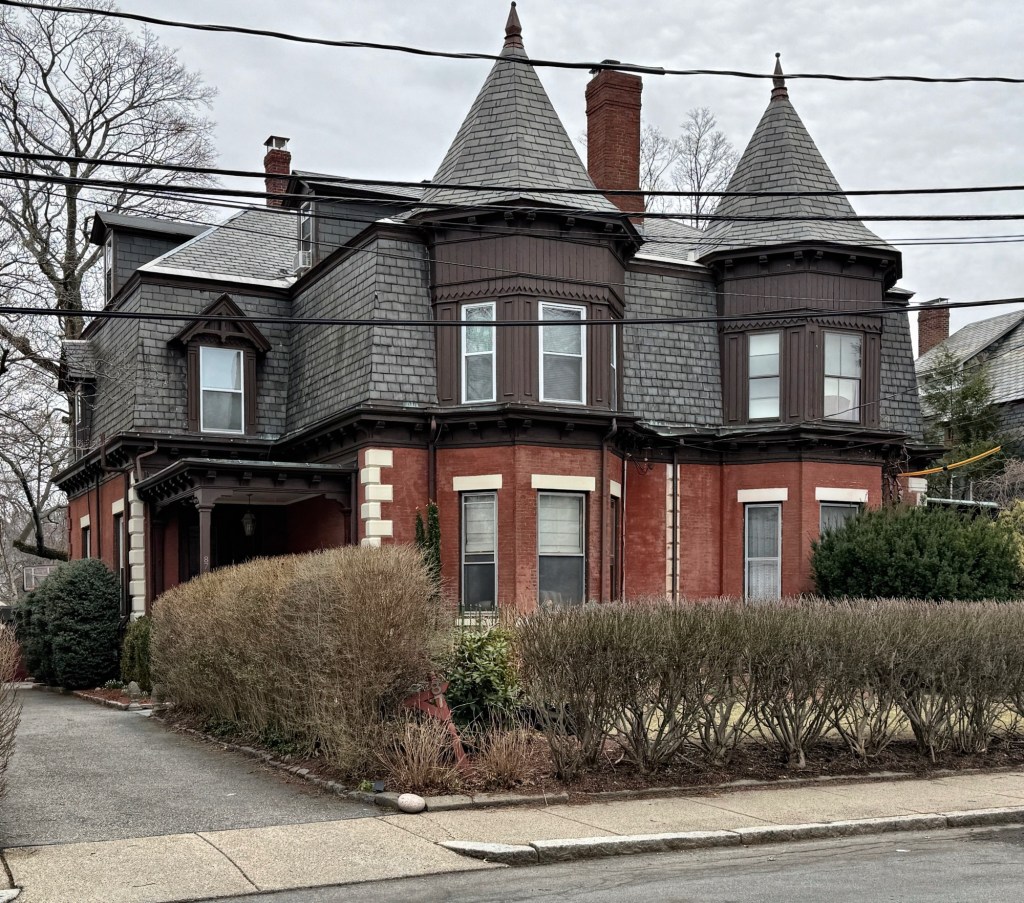
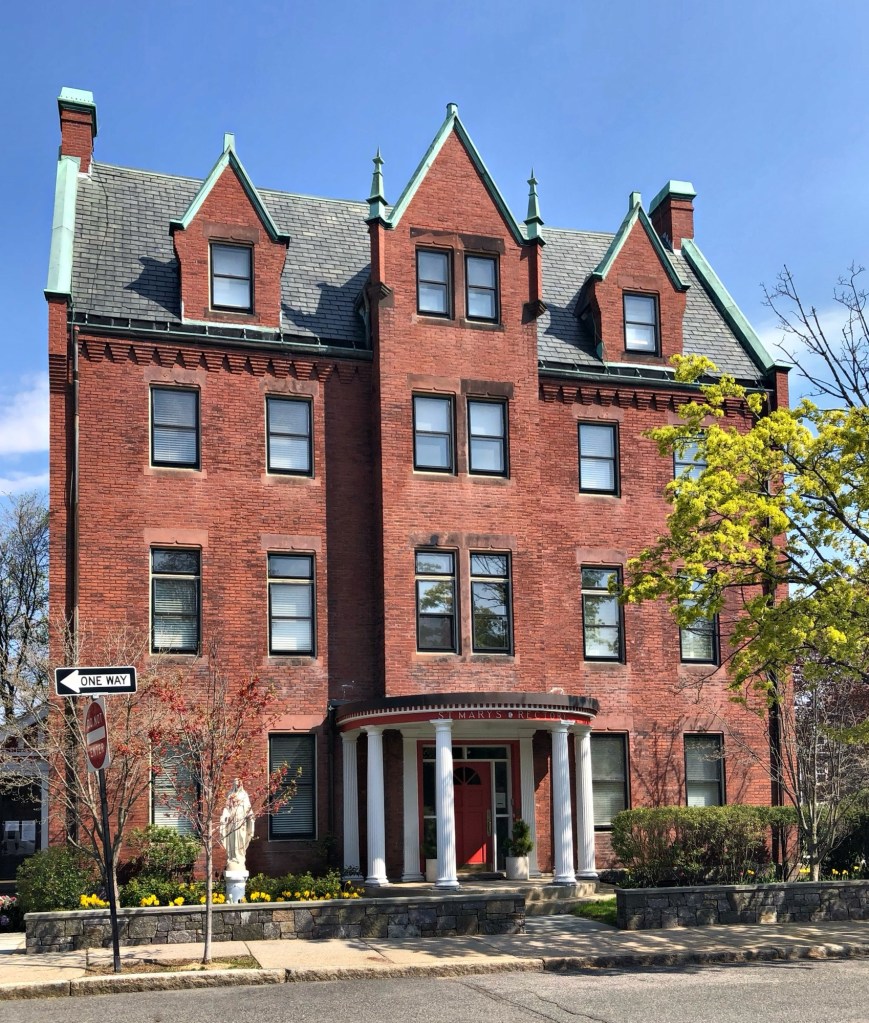
Amos A. Lawrence (1814-1886), a wealthy Boston merchant, owned land holdings in the present-day Longwood neighborhood of Brookline, just over the Muddy River from Boston, and developed the area into a wealthy and high-quality suburb. Lots were laid and Lawrence hired civil engineer, Ernest Bowditch, to plat for multiple sets of distinctive rowhouses surrounding a small green mall, which was later named Monmouth Court. Once the property was laid out, Amos Lawrence hired the Boston architects, J. Pickering Putnam and George T. Tilden, to design rowhouses for rental income. George Tilden was previously employed at the firm of Ware & Van Brunt, a firm that mastered and popularized the panel brick style in the Boston area in the 1870s and 1880s, and he clearly built upon this expertise for the rows for Amos Lawrence in Brookline. All four rows of houses are distinctive, yet compliment each other stylistically with projecting bays. intricate brickwork, complex rooflines with dormers, and applied ornament. This row at 10-18 Monmouth Court was from the designs of partner, J. Pickering Putnam and was highlighted in an architectural publication soon after completion. The row exhibits a slate mansard roof disrupted by dormers with trusses, lancet arch and trefoil motifs, polychromatic brick and pent roof entrances all stepping out to the private courtyard.
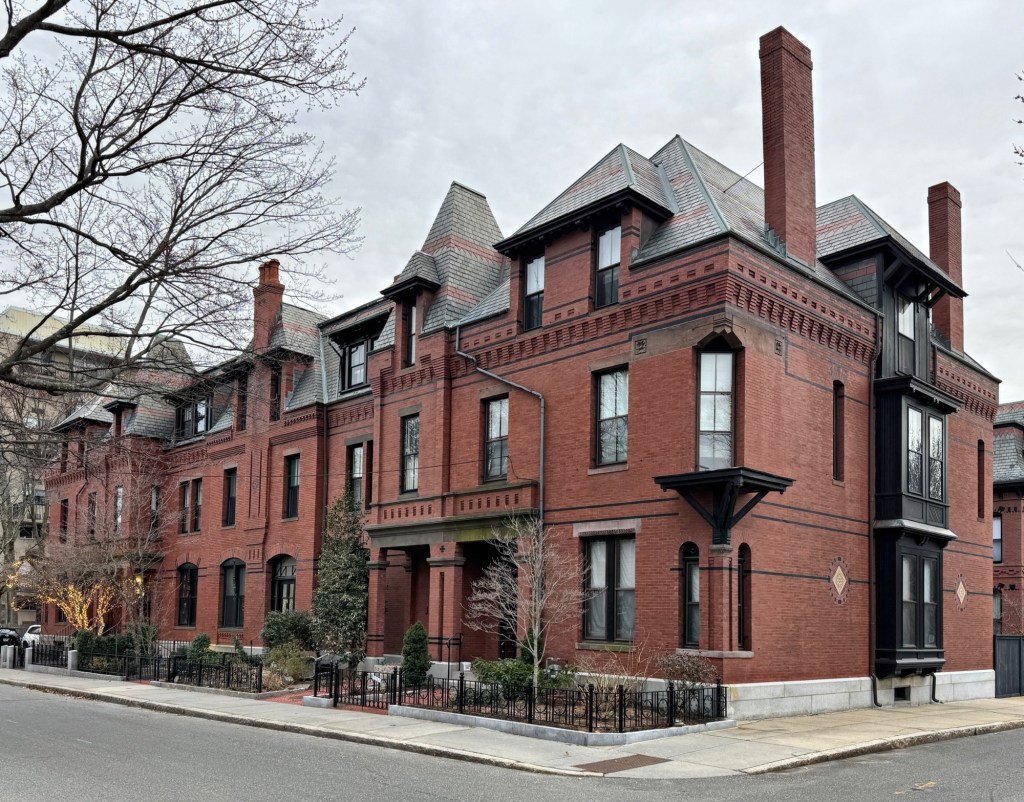
Amos Lawrence Rowhouses // 1876

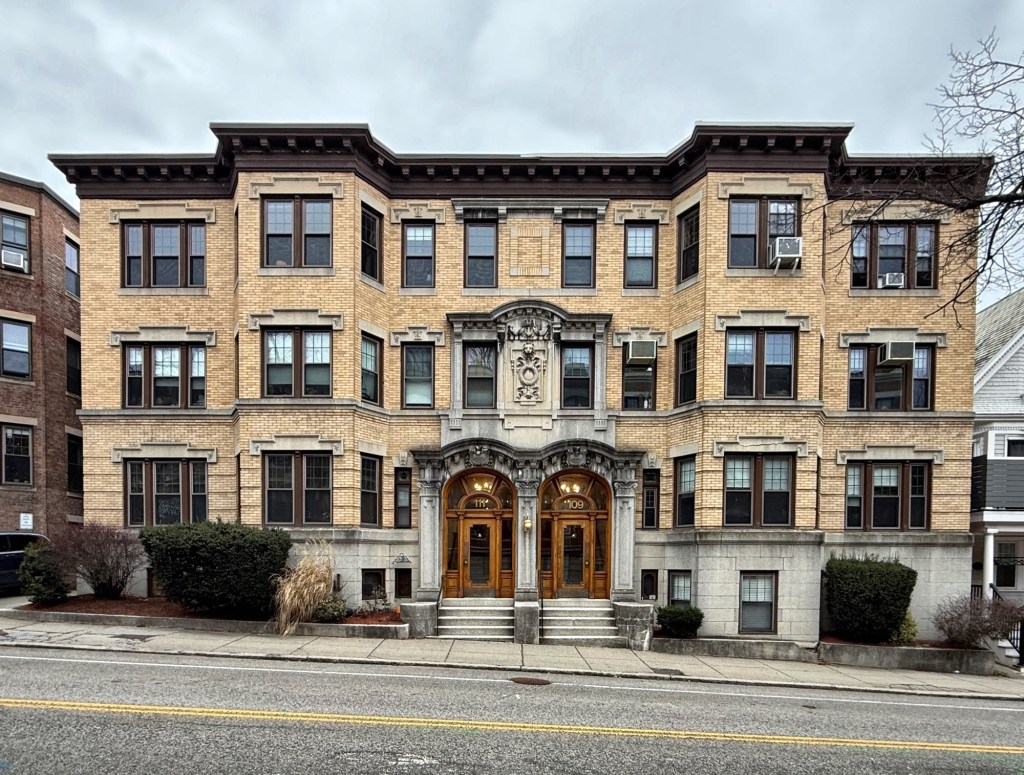
Amos A. Lawrence (1814-1886), a wealthy Boston merchant, owned land holdings in the present-day Longwood neighborhood of Brookline, just over the Muddy River from Boston, and developed the area into a wealthy and high-quality suburb. Lots were laid and Lawrence hired civil engineer, Ernest Bowditch, to plat for multiple sets of distinctive rowhouses surrounding a small green mall, which was later named Monmouth Court. Once the property was laid out, Amos Lawrence hired the Boston architects, J. Pickering Putnam and George T. Tilden, to design rowhouses for rental income. George Tilden was previously employed at the firm of Ware & Van Brunt, a firm that mastered and popularized the panel brick style in the Boston area in the 1870s and 1880s, and he clearly built upon this expertise for the rows for Amos Lawrence in Brookline. All four rows of houses are distinctive, yet compliment eachother stylistically with projecting bays. intricate brickwork, complex rooflines with dormers, and applied ornament. This row at 69-77 Monmouth Street exhibits inlaid tile medallions and small balconets on the chamfered corners that are missing their railings.

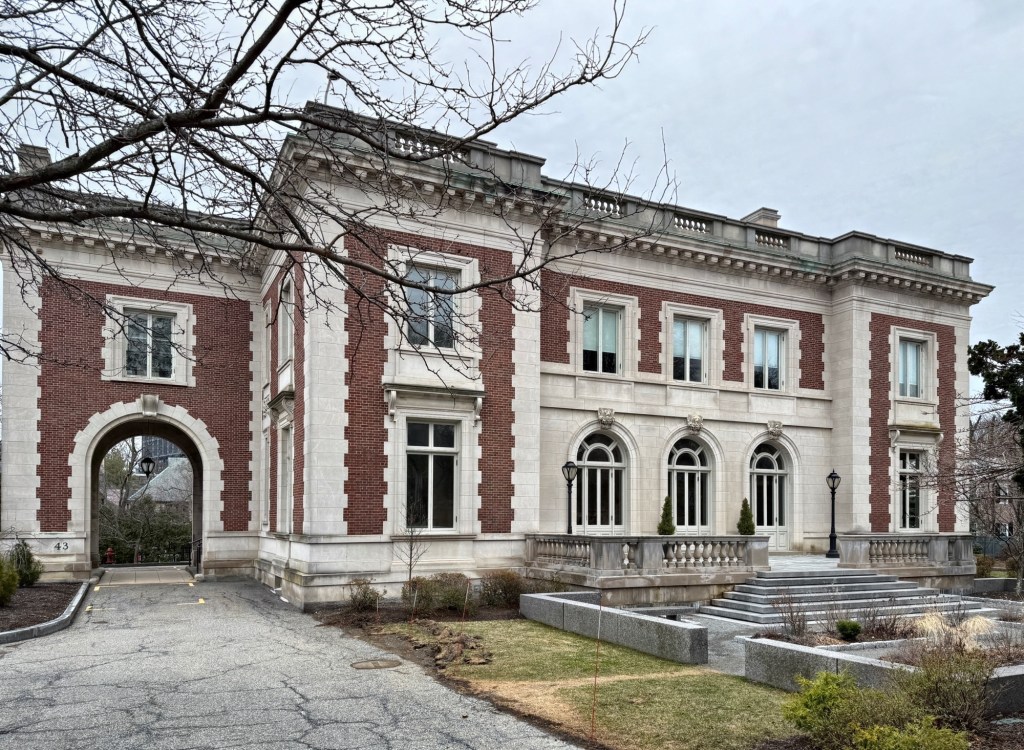
George Wightman Mansion // 1902

Tucked within the historic Longwood neighborhood of Brookline, the George Wightman Mansion stands as a striking reminder of turn-of-the-century wealth and architectural ambition. The mansion was built in 1902 for industrialist George Henry Wightman (1855-1937), a steel magnate associated with Andrew Carnegie and was known as one of the “Carnegie Boys“, a close-knit and influential group of partners and executives who managed Carnegie Steel. Wightman retired around the time of building his Brookline house, which coincided with the formation of U.S. Steel, a merger which benefitted the Carnegie Corporation and its partners handsomely. With his expansive wealth and eyes set on retirement, George Wightman hired the prominent firm Shepley, Rutan & Coolidge, to design his new mansion to live out the remainder of his life in solitude. The brick and stone Renaissance Revival/Beaux Arts style mansion sits atop large, elegantly landscaped grounds and is of a scale unlike anything else in the neighborhood. George H. Wightman was also known as the “Father of American Lawn Tennis” and his only son, George W. Wightman also played tennis at a high level. It was George W. Wightman’s wife however, who became a champion. She was Hazel Hotchkiss Wightman, who won 45 U.S. titles during her life and founded the Wightman Cup, an annual team competition for British and American women from 1923 to 1989. Over time, the mansion’s role evolved alongside the community. After Wightman’s death in 1937, it transitioned from private home to institutional use, notably housing the Boston Hebrew College beginning in 1952, adding onto the building to the rear, and later becoming part of Boston University, serving as event space for the University. 

Silas Peavy House // 1905

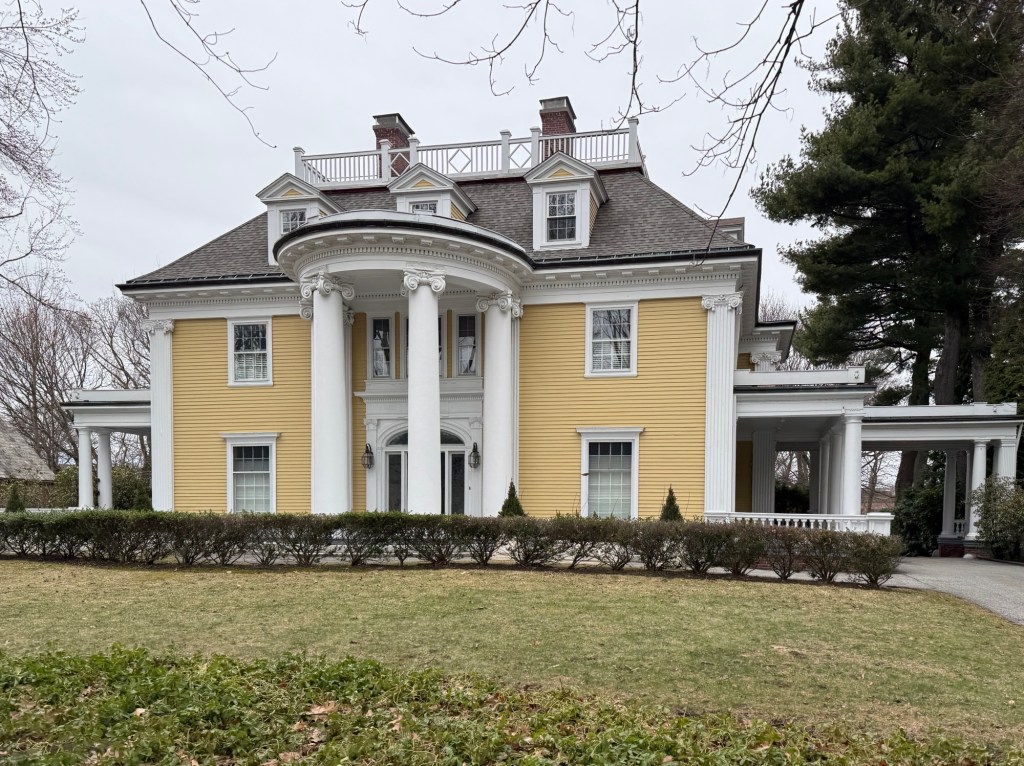
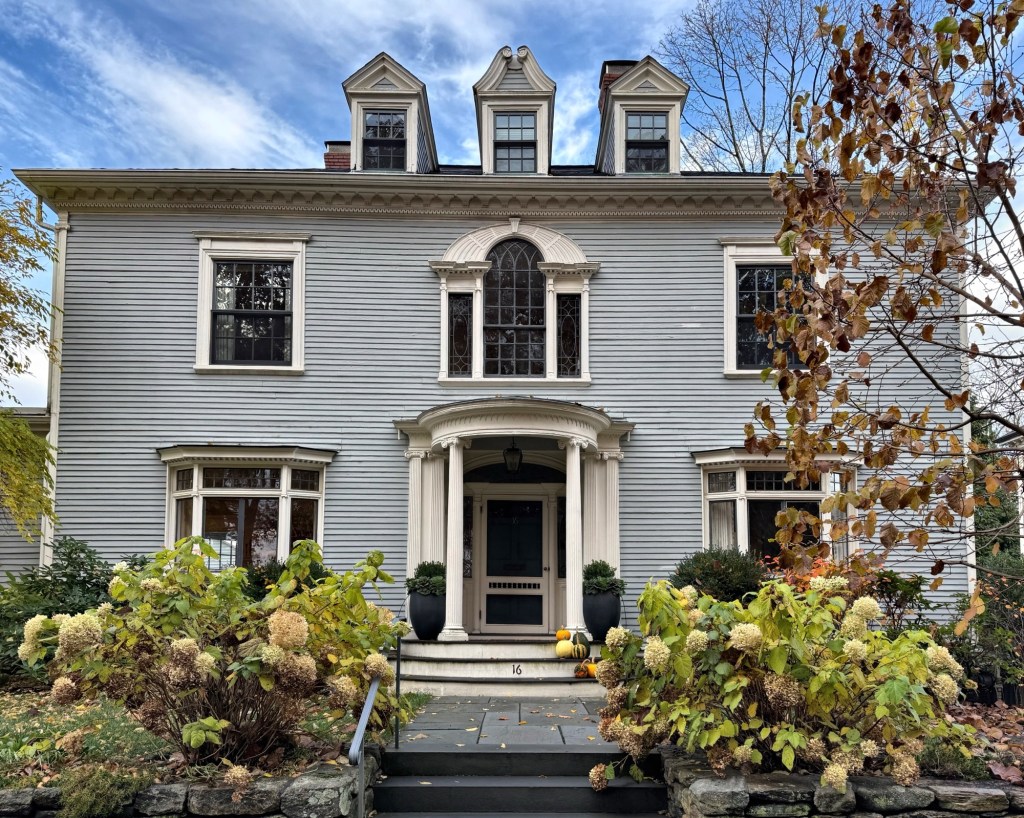
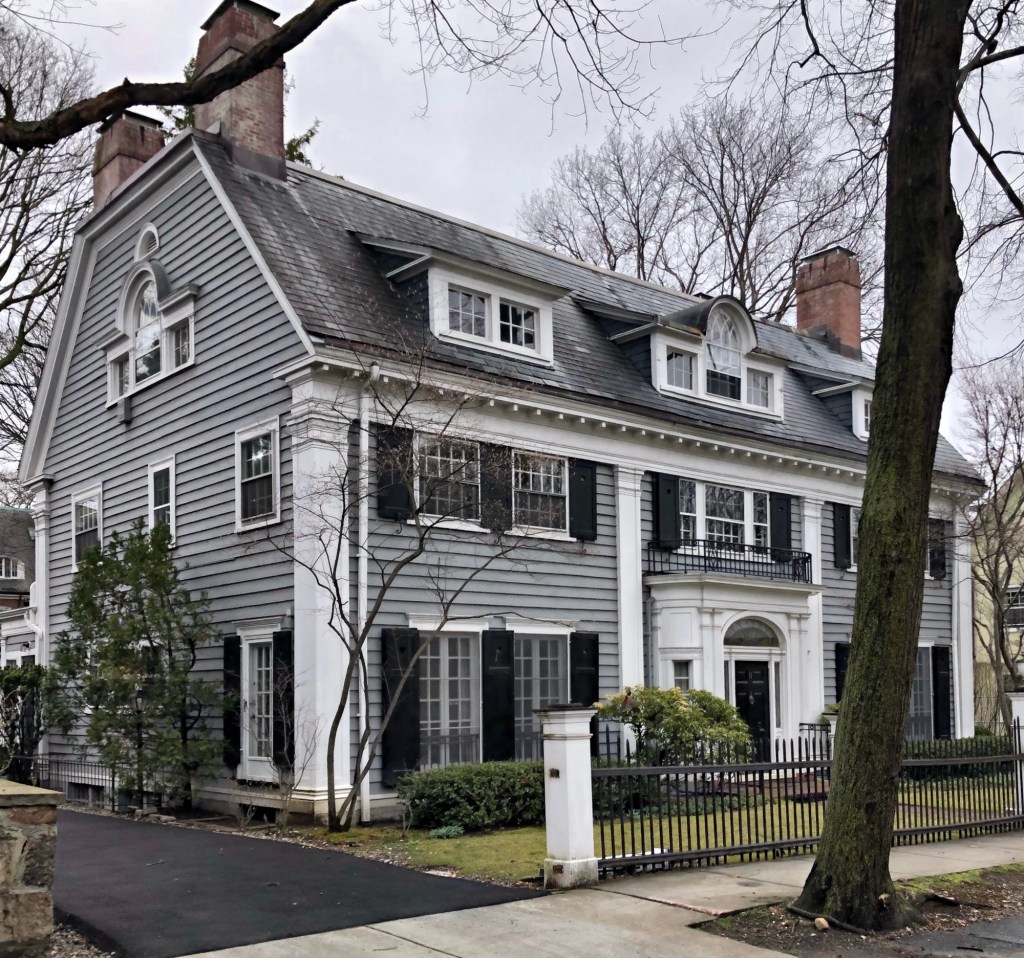
Silas Peavy (1858-1939) was born in Waterville, Maine, and with his brothers, Gustavus and Leopold, worked at his father’s clothing and merchandise store. The family moved to the Boston area and established J. Peavy and Brothers, continuing the family business in Boston with locations in New York. In 1904, Silas Peavy purchased a house lot on Kent Street and hired the architectural firm of Hartwell & Richardson to design a house there for his family. Peavy likely moved to this neighborhood as it became a Jewish enclave around the turn of the 20th century. The Silas Peavy House is an excellent example of the Neo-Classical style with symmetrical facade, porte cochere on the side, and monumental elliptical portico supported by two-story Ionic columns.

Mary E. Paul Triple Decker // 1898

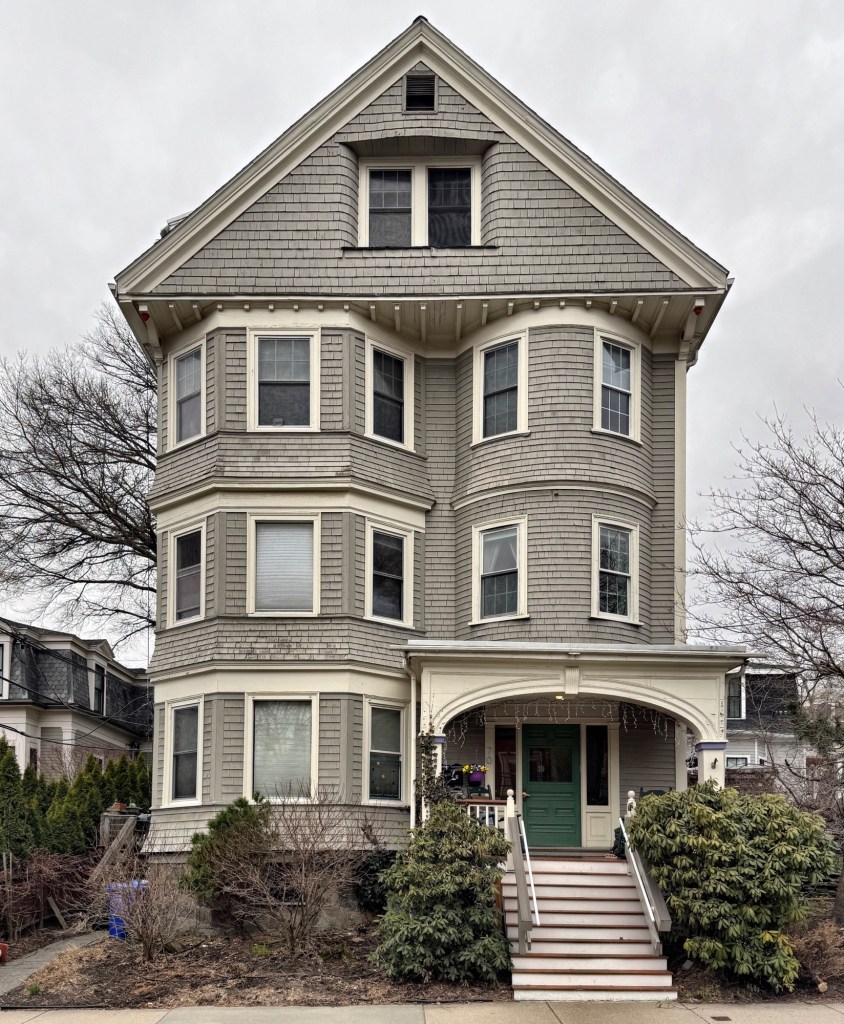
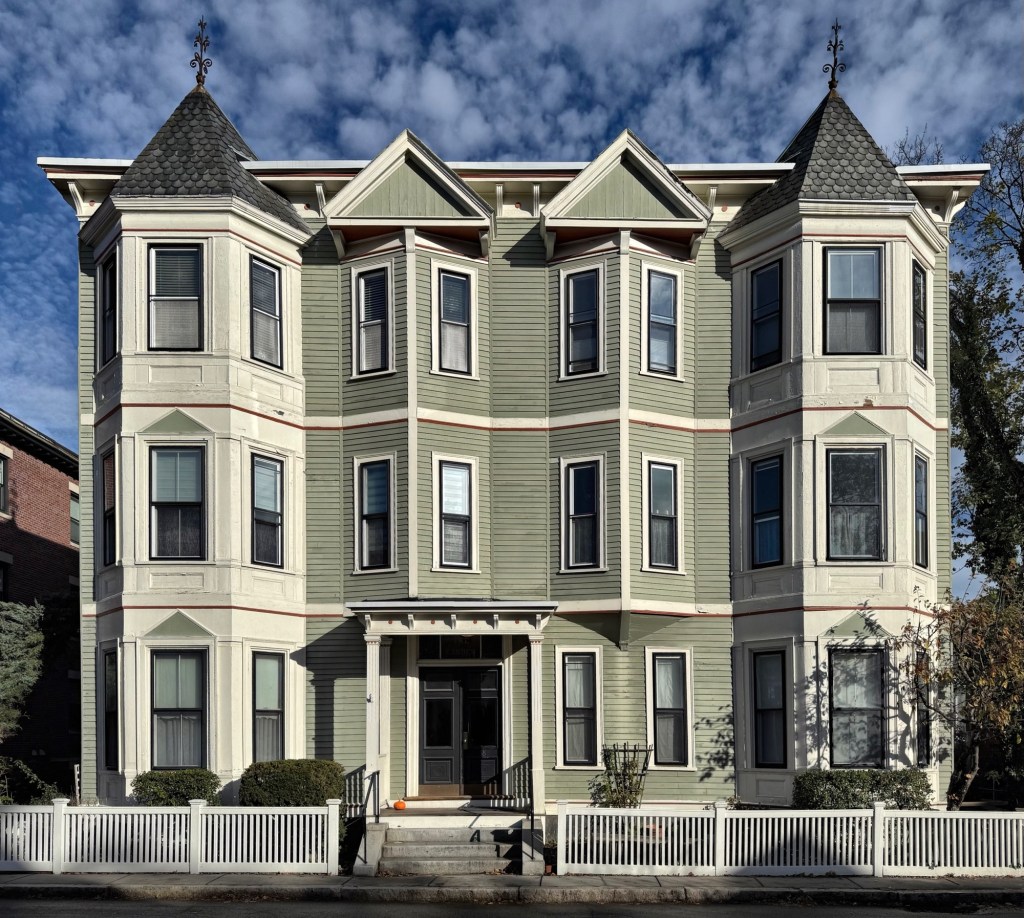
The Triple Decker is a popular housing form that between 1880 and 1930, saw an estimated 15,000 examples built in Boston and surrounding cities. The unique construction of three flats stacked on top of eachother provided density and lowered housing costs for three families and supplying the housing needs of huge numbers of new immigrants and working class families, providing an important path to homeownership. Often, a family could purchase a property, building a triple decker and could live in one unit while renting the others to pay for the mortgage and taxes, providing upward mobility for those who so long were priced out of owning their own home. By the late 19th century however, strong and organized pushback against the housing type occurred, led by groups like the Immigration Restriction League, who were “convinced that Anglo-Saxon traditions, peoples, and culture were being drowned in a flood of racially inferior foreigners from Southern and Eastern Europe,” sound familiar? Led by Prescott Farnsworth Hall, a Brookline resident, the group advocated to limit immigration from areas they deemed “lesser” and locally, fought to ban the construction of triple deckers in Massachusetts, ultimately succeeding in part when in 1912, Massachusetts passed a law allowing cities and towns to ban triple deckers by preventing construction of any ‘wooden tenement’ in which ‘cooking shall be done above the second floor. While major catastrophic fires like the Great Chelsea Fire of 1908 were fresh in people’s minds, a leading cause for the legislation was likely to limit upward mobility of groups of people from owning real estate. The Mary E. Paul Triple Decker, pictured here, was built in 1898 in the Shingle style, contributing to the rich architectural and social character of the surrounding neighborhood.

James H. F. Standish House // 1874

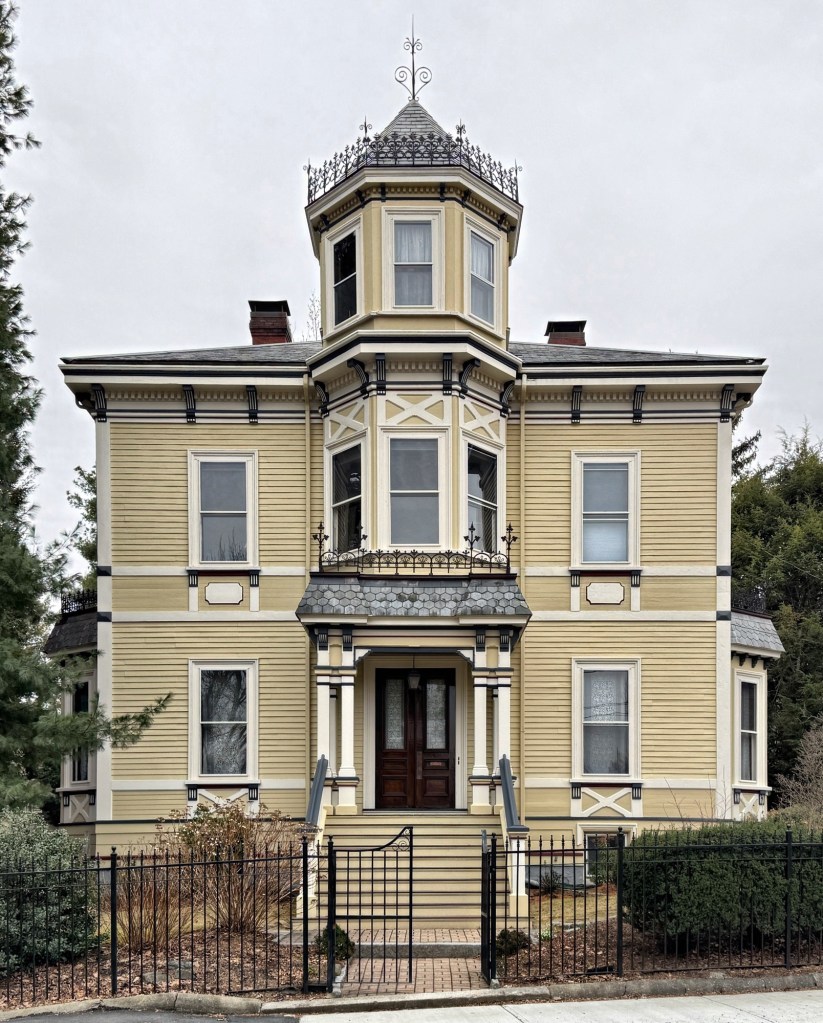
In 1873, James H. F. Standish (1811-1887) purchased a house lot on the corner of Francis and Toxteth streets in Brookline and set out building his forever home for his wife, Sarah. James and Sarah originally lived in Bath, Maine, where he worked as a builder and mason, constructing many large homes there before relocating to Brookline where he likely remained busy as Boston and its surrounding communities experienced a period of rapid development and suburbanization. James surely built this house and rear stable himself in the interpretation of the Stick and Italianate styles for his family, who moved in by 1874. Sadly, Sarah died unexpectedly in 1876 of heart disease, and James would sell their Brookline home. The Standish Home has been preserved by subsequent owners, including the central cupola, bracketed and dentilled cornice, stickwork and iron cresting. The Standish House was individually listed in the National Register of Historic Places in 1985 as a well-preserved, evocative example of Victorian period styles in a residence.

Gibson-Dukakis Double-House // 1881

Built in 1881 as an eclectic example of a Second Empire and Queen Anne style Victorian double-house, this charming residence on quiet Perry Street in Brookline, Massachusetts, shows that gentle density like double-houses and three-deckers provides needed housing without disrupting neighborhood character. The property was built for George Gibson and subsequently rented to two families as an investment. In the mid-20th century, half of the double-house was purchased by Michael Dukakis and his wife, Katharine “Kitty” (Dickson) Dukakis. Michael Dukakis would become a prominent politician, first being elected as a Member of the Massachusetts House of Representatives in 1963 later serving two terms as Massachusetts Governor. He was later nominated by the Democratic Party for president in the 1988 election, but ultimately lost to the Republican nominee, George H. W. Bush.

Sewall Apartments // 1938

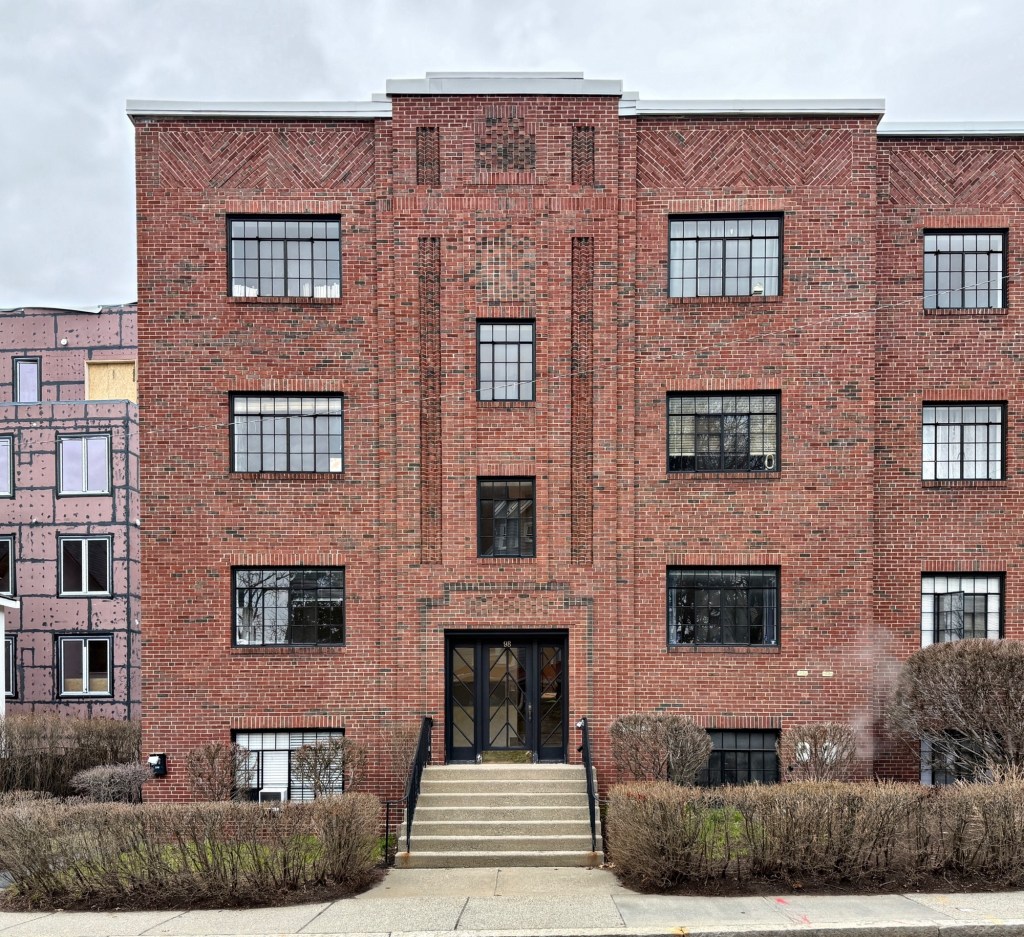
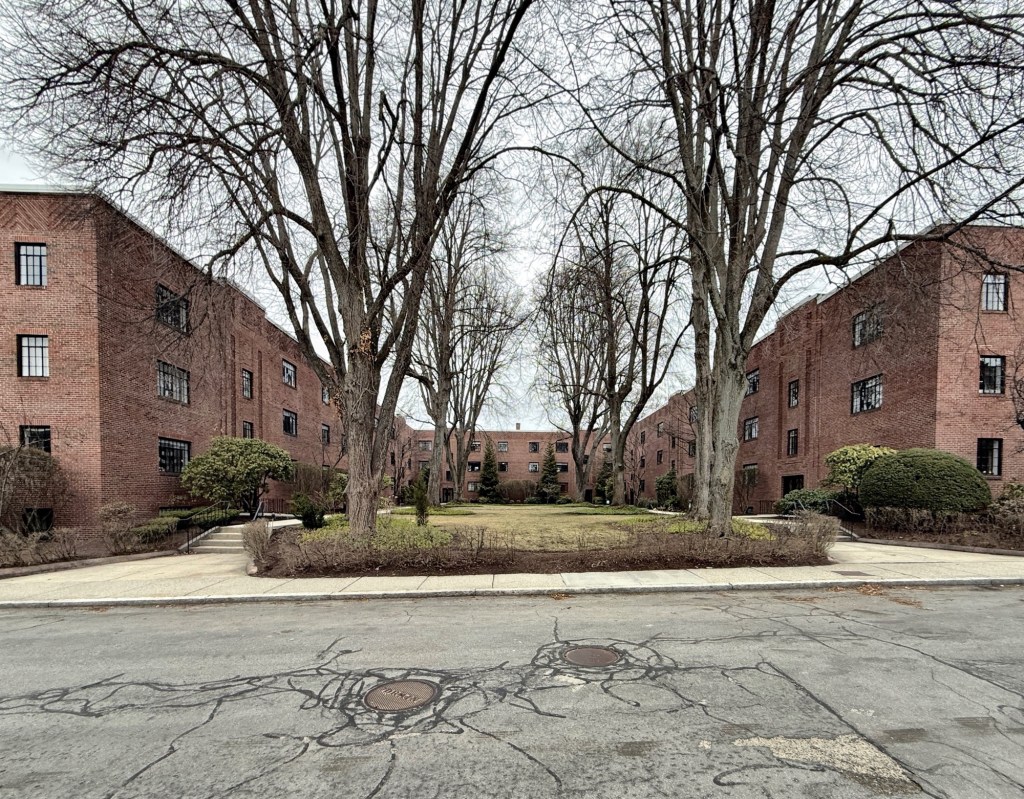
This garden apartment complex at 98-116 Sewall Avenue in Brookline is an excellent example of the Art Deco style which reached its height in popularity in the midst of the Great Depression, so fewer examples of the style are typically found. Here in Brookline, the city was seeing rapid development in the early decades of the 20th century, where large estates were subdivided and commercial areas expanded into once residential neighborhoods. U-shaped in plan and standing three-stories, this complex replaced a large property owned by the Stearns Family, a prominent local family with many properties around present-day Coolidge Corner. The apartments were developed by the G & S Investment Company, a real estate development firm, who hired architect, Saul Moffie, to design the building. Completed in 1938, the complex has richly articulated facades with a variety of geometric brick patterns, including chevrons, diapering, header courses and soldier courses with each entryway identified by a projecting pavilion with a stepped stone parapet above. The doors and sidelights are wood with glass panels in a chevron motif similar to the brickwork and all residential units have steel multi-pane windows. What a gem!

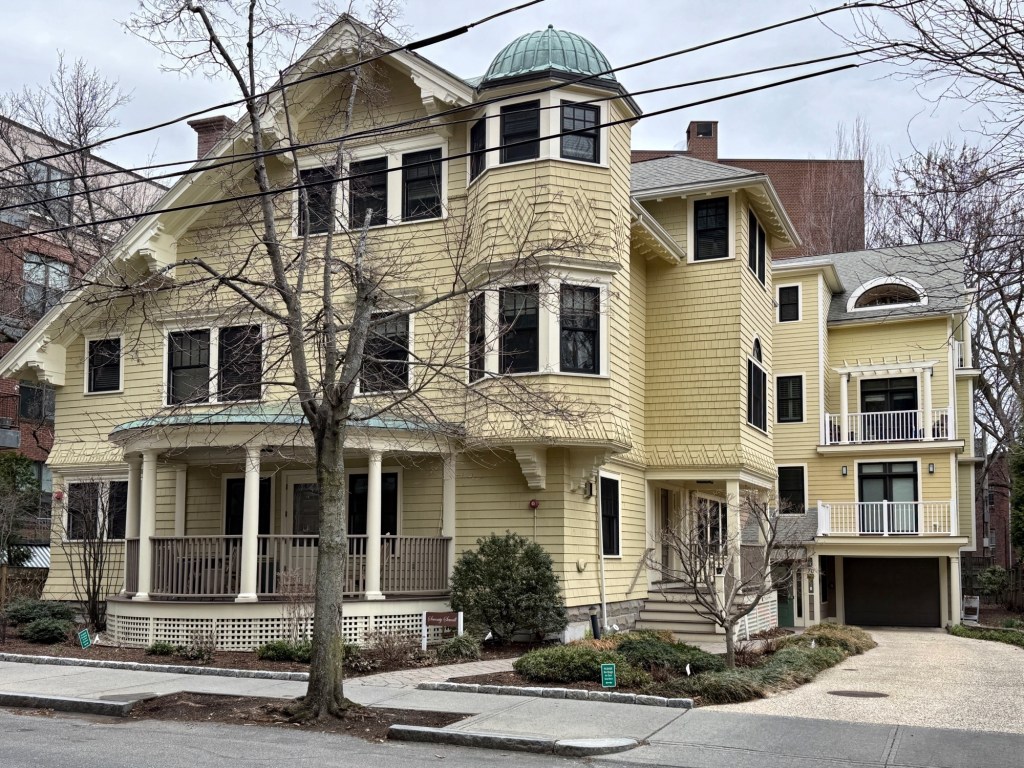
Charles P. Flagg House // 1899

Located on Sewall Avenue in Brookline, Massachusetts, the Charles P. Flagg House exemplifies upper-class single-family housing built in the late 19th century that has been added onto and converted into multi-family housing to serve a growing city. Charles Partridge Flagg (1851-1911) was a real estate developer and head of the D. F. Flagg & Co., a wholesale liquor company his father started in Boston. He purchased the former Dexter property, subdivided the estate, and hired architect Julius A. Schweinfurth to design a home for his family. “Jule” Schweinfurth was long-associated with the firm of Peabody & Stearns of Boston, which in the late 19th century, was one of the premier architectural offices in the United States, but when he was not offered a partnership offer by his bosses, he established a new firm under his name. For the Flagg House, Schweinfurth blended the Shingle, Queen Anne, and Arts and Crafts architectural styles with a unique asymmetrical roofline, wide overhanging eaves with cross brackets and exposed rafter tails, consistent shingle siding, and a two-story polygonal oriel with domed roof at the corner. The Flagg House was moved forward on the lot to facilitate a rear addition and completely renovated in 2011, transforming it into a seven-unit condominium building with garage and elevator. This example of “gentle density” is exactly what communities should allow for, to preserve the character at the streetscape but provide additional housing.

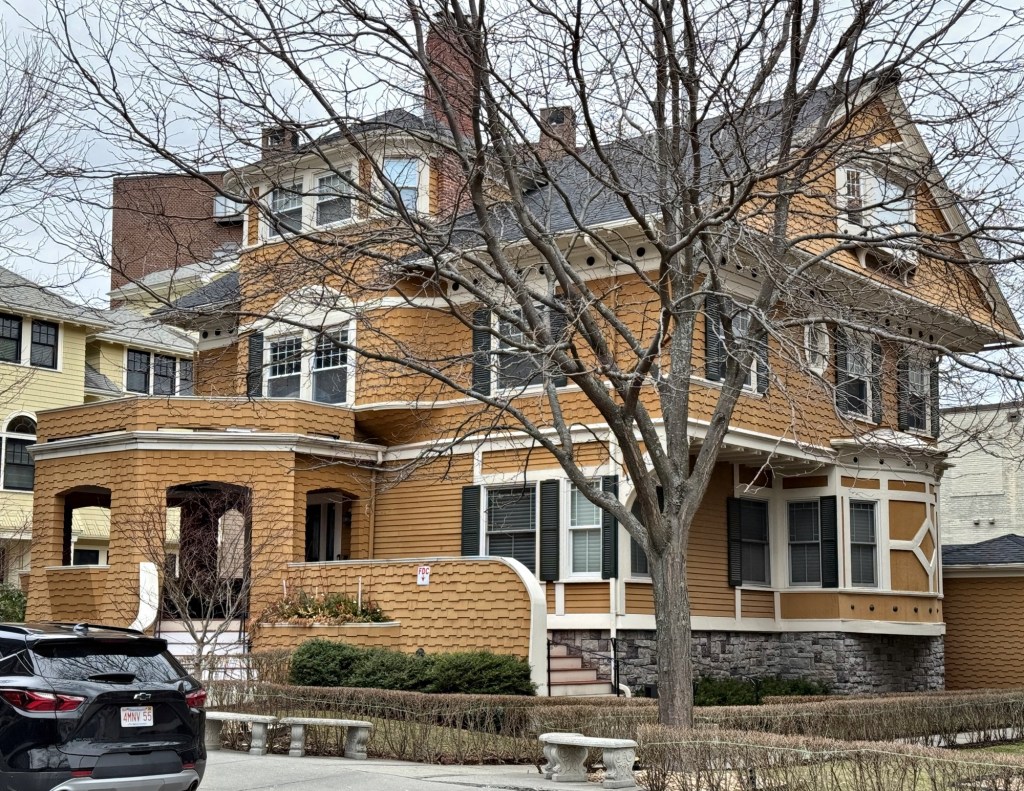
George B. Dexter House // 1885

An expression of the Shingle style in all her beauty, the George B. Dexter House on Sewall Avenue in Brookline was built in 1885 both as a residence and a billboard advertising the owner’s business, really. The residence was built for George B. Dexter (1854-1935) a partner in the Dexter Brothers Company a paint and stain manufacturer that was a favorite of architects in the late 19th and early 20th centuries. For his Brookline residence, George Dexter hired architect S. Edwin Tobey to design this Shingled masterpiece with continuous shingle siding with rounded bays and a shingled piazza to showcase the stain products of his company. According to articles, Dexter also stained and painted the interior a variety of colors to showcase the wide range of options his company had. George Dexter would move to Pill Hill neighborhood in a new home just a decade after having this residence built, likely caused by the development of apartments and commercialization in the Coolidge Corner area by the turn of the century. The Dexter House was converted to a two-family in the 1920s and today has three condominium units, with owners clearly taking great pride in this significant residence.