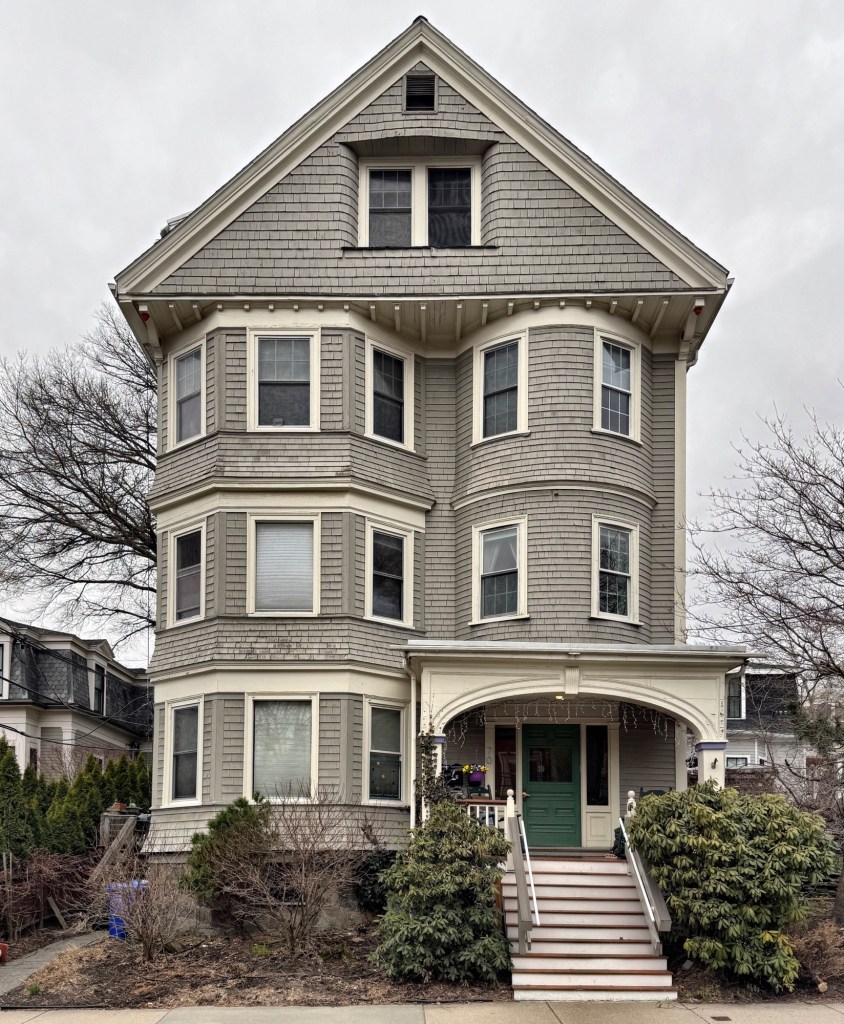
Mary E. Paul Triple Decker // 1898

The Triple Decker is a popular housing form that between 1880 and 1930, saw an estimated 15,000 examples built in Boston and surrounding cities. The unique construction of three flats stacked on top of eachother provided density and lowered housing costs for three families and supplying the housing needs of huge numbers of new immigrants and working class families, providing an important path to homeownership. Often, a family could purchase a property, building a triple decker and could live in one unit while renting the others to pay for the mortgage and taxes, providing upward mobility for those who so long were priced out of owning their own home. By the late 19th century however, strong and organized pushback against the housing type occurred, led by groups like the Immigration Restriction League, who were “convinced that Anglo-Saxon traditions, peoples, and culture were being drowned in a flood of racially inferior foreigners from Southern and Eastern Europe,” sound familiar? Led by Prescott Farnsworth Hall, a Brookline resident, the group advocated to limit immigration from areas they deemed “lesser” and locally, fought to ban the construction of triple deckers in Massachusetts, ultimately succeeding in part when in 1912, Massachusetts passed a law allowing cities and towns to ban triple deckers by preventing construction of any ‘wooden tenement’ in which ‘cooking shall be done above the second floor. While major catastrophic fires like the Great Chelsea Fire of 1908 were fresh in people’s minds, a leading cause for the legislation was likely to limit upward mobility of groups of people from owning real estate. The Mary E. Paul Triple Decker, pictured here, was built in 1898 in the Shingle style, contributing to the rich architectural and social character of the surrounding neighborhood.
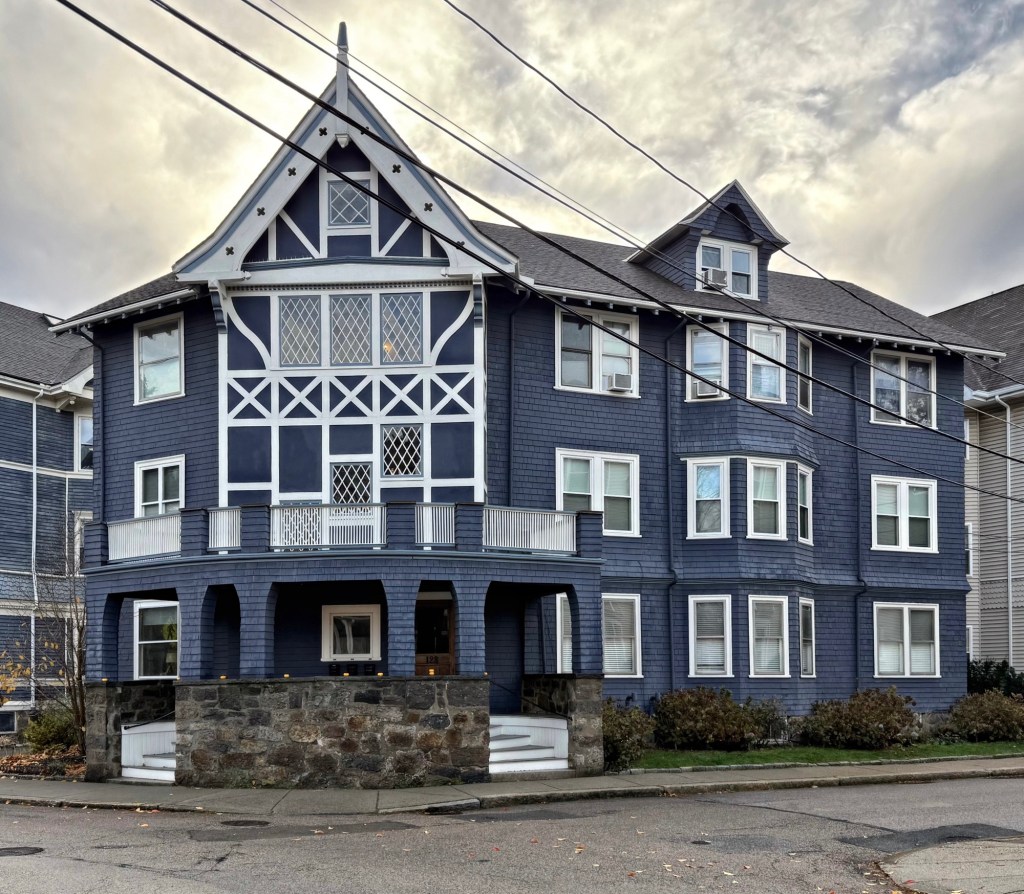
Graham Apartments // 1904

This handsome, and unique example of a three-decker in the English Revival style is located on a corner lot at 128 Davis Avenue in the Emerson/Brookline Village neighborhood of Brookline, Massachusetts. Built in 1904 from plans by architect and genealogist, J. Gardner Bartlett, whose work focused on colonial New England and the English origins of colonial families. Trained as an architect at MIT, he gave up architecture for genealogy, but still occasionally designed buildings in the Boston area. The building here was developed for Richard Graham, an Irish immigrant, who along with his wife, operated a laundry business in the village. The use of a shingle and stone entrance porch and entrance bay with stucco half-timbering and diamond-pane casement windows stand out architecturally as one of the few examples of a three-decker built in this style in New England.

Hotel Mellen // 1894

While Ashmont Hill in Dorchester is known for large, single-family Victorian houses, there are a number of grand apartment houses and three-deckers dispersed throughout the area, showing the evolution of housing in desirable neighborhoods in the late 19th and early 20th centuries. This is the Hotel Mellen, located at 18-20 Mellen Street, a multi-family building that architecturally blends in with its surroundings, not like many uninspiring boxes being built all over the region today. The property was developed by Louis Pfingst, a German streetcar designer and mechanic who was also active in the local Dorchester Gentlemen’s Driving Club. The building was designed by local architect Alexander B. Pinkham, who specialized in multi-family housing designs around Boston. The rounded bays, recessed porch in the gable, varied siding, and applied ornament, make the building stand out, while fitting well within its context of surrounding homes.

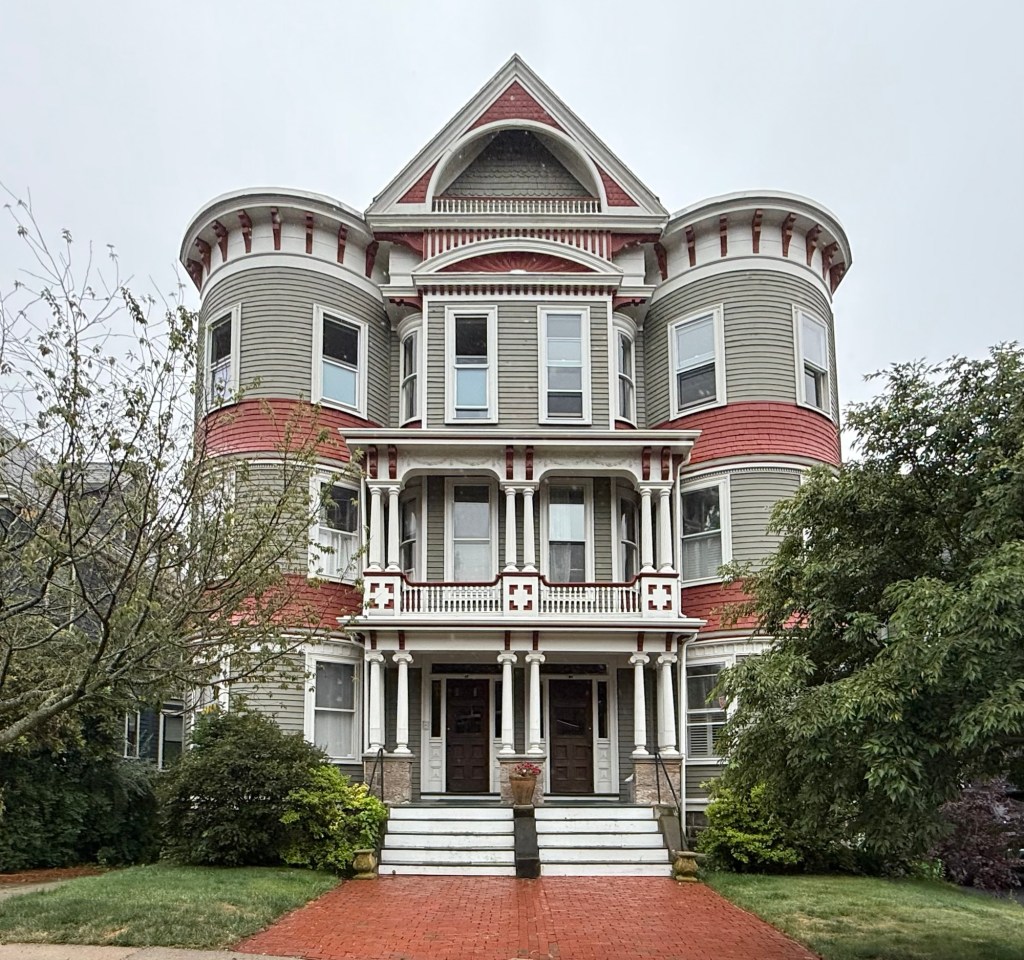
Sullivan Three-Deckers // 1895

The three-decker is a commonly found housing type in New England’s urban industrial cities. These buildings are typically of light-framed, wood construction, where each floor usually consists of a single apartment, and frequently, originally, extended families lived in two, or all three floors. These were affordable housing, largely built by and for first- or second-generation immigrant families who could build a home and rent the other two units to family or friends to offset the steep cost of a mortgage. These three buildings were constructed around 1895 by David Sullivan, a cabinet-maker in North Adams, Massachusetts. They are all Queen Anne in style with applied stickwork, gabled roofs, and multi-story porches. Housing like this is what keeps so many New England towns and cities (relatively) affordable with increased density without sacrificing character or charm.