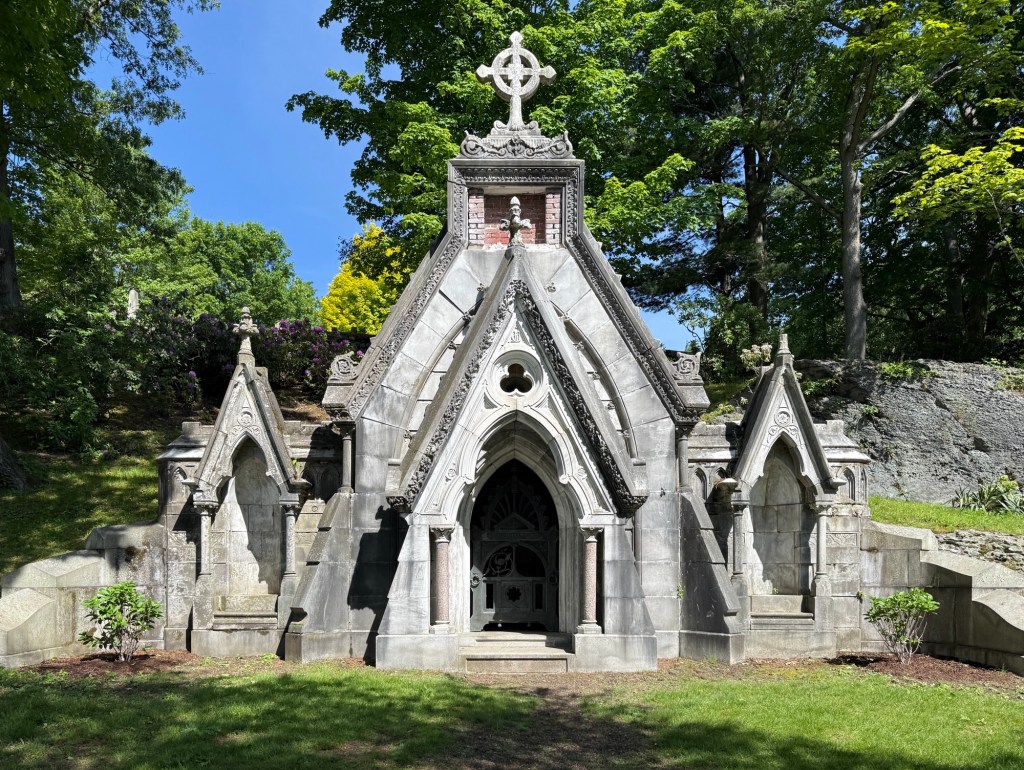
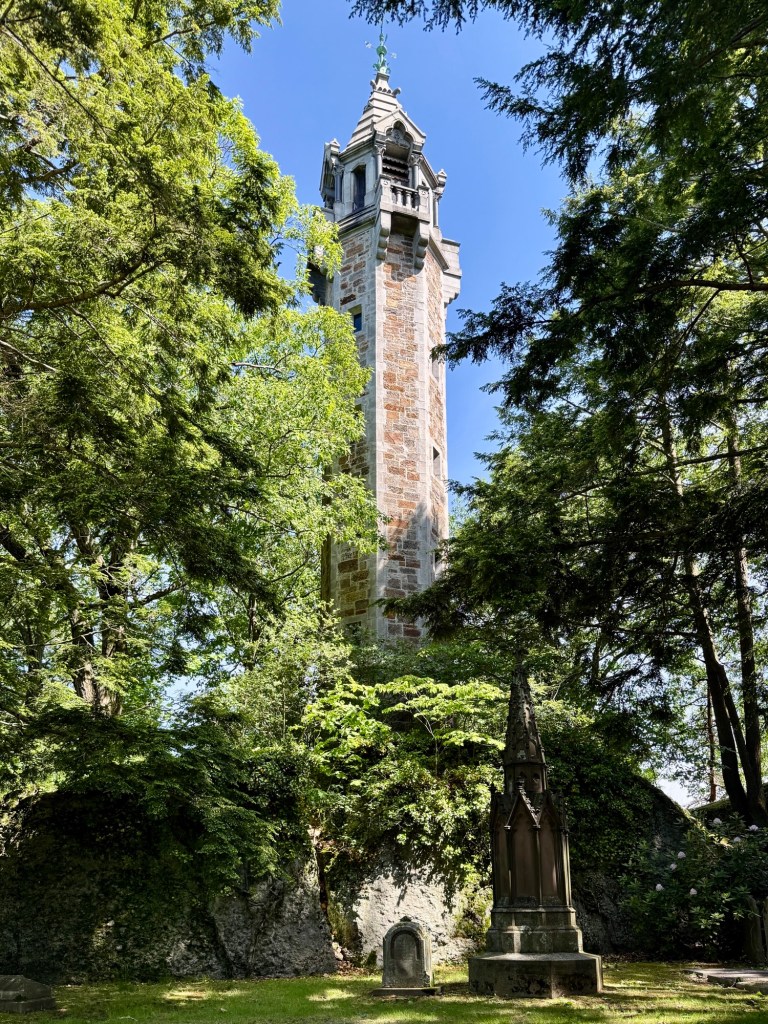
While many monuments in the Forest Hills Cemetery in Boston stand out for obvious reasons, there are many historic mausoleums dispersed throughout the cemetery, but none quite like the Chadwick Mausoleum. Mausoleums are above ground burial structures, where family can be interred together within the walls of the structure, that provides an interior space for family to mourn inside. Many mausoleums were designed by noted architects and are often outfitted with decorative bronze doors or stained-glass windows. The most visible and ornate at Forest Hills is the Chadwick Mausoleum, located at the west end of Lake Hibiscus. The structure was designed in the Gothic Revival style by William Gibbons Preston who designed the bridge over Greenwood Avenue. Nestled into the sloped hill in the rear, the stone mausoleum features a metal door bearing the name “Chadwick.” The structure was funded by Joseph Houghton Chadwick (1827-1902), following the death of his wife in 1872. Joseph was President of the Chadwick Lead Works in Downtown Boston and was a successful businessman, as a trustee of Boston University also serving as president and as a trustee of Forest Hills Cemetery where he was later interred.
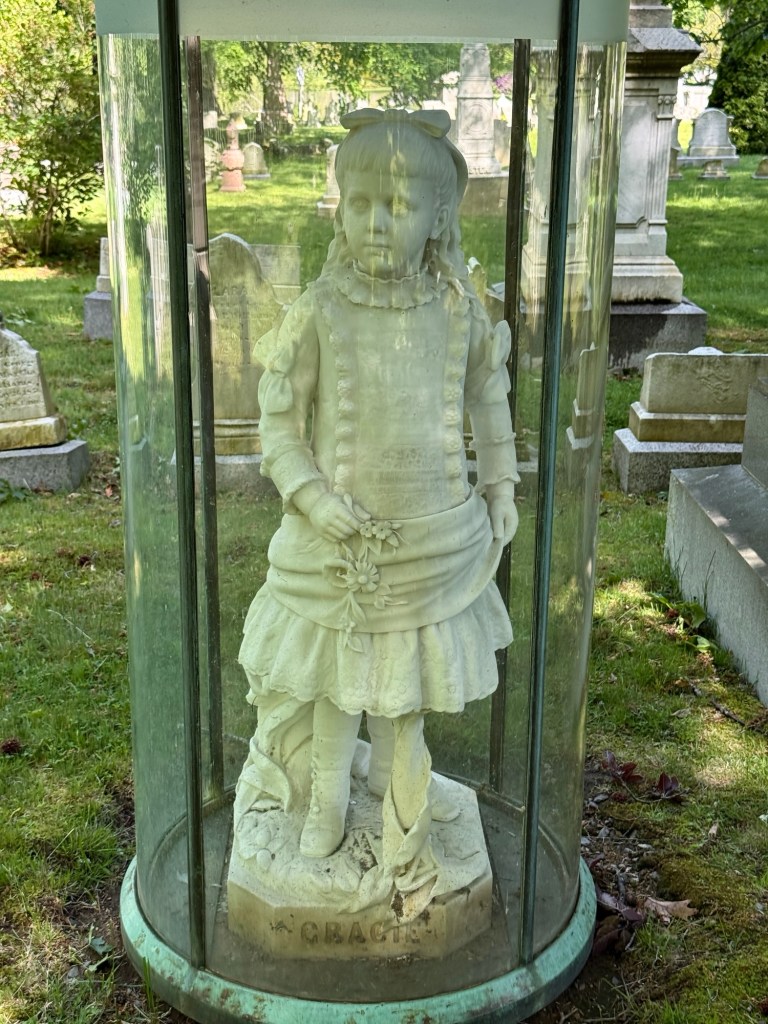
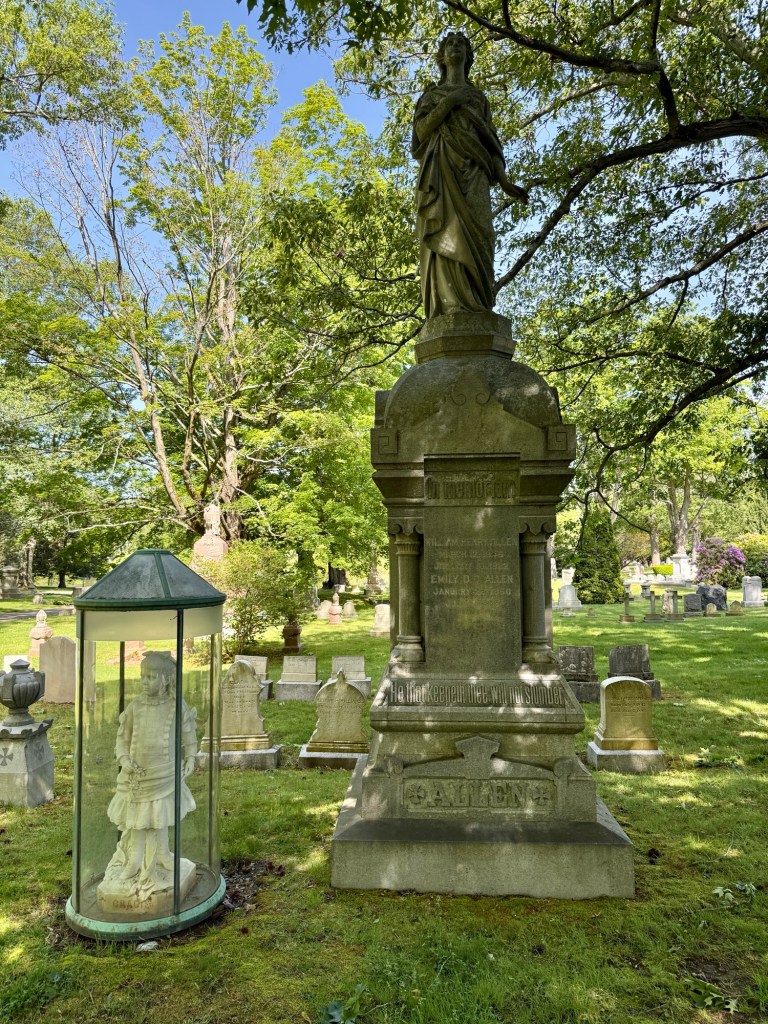
Similar to the story of Louis Mieusset, the “boy in the boat” at Forest Hills Cemetery, the memorial of Grace Sherwood Allen stands as a testament to parent’s ever-lasting love of their children. “Gracie” Allen (1876-1880) was born in Boston, the only daughter of William H. and Emily Jones Allen. She died several months prior to her fifth birthday from whooping cough and was later immortalized by sculptor Sydney H. Morse, who depicted the young girl in a buttoned dress, boots and bow-tied hair. In her hand are drooping flowers, the petals of which have begun to fall, showing her life fading. The life-size white marble sculpture is covered in a bronze and glass vitrine, to protect the fragile stone from acid rain, which would stain and weather the delicate monument.
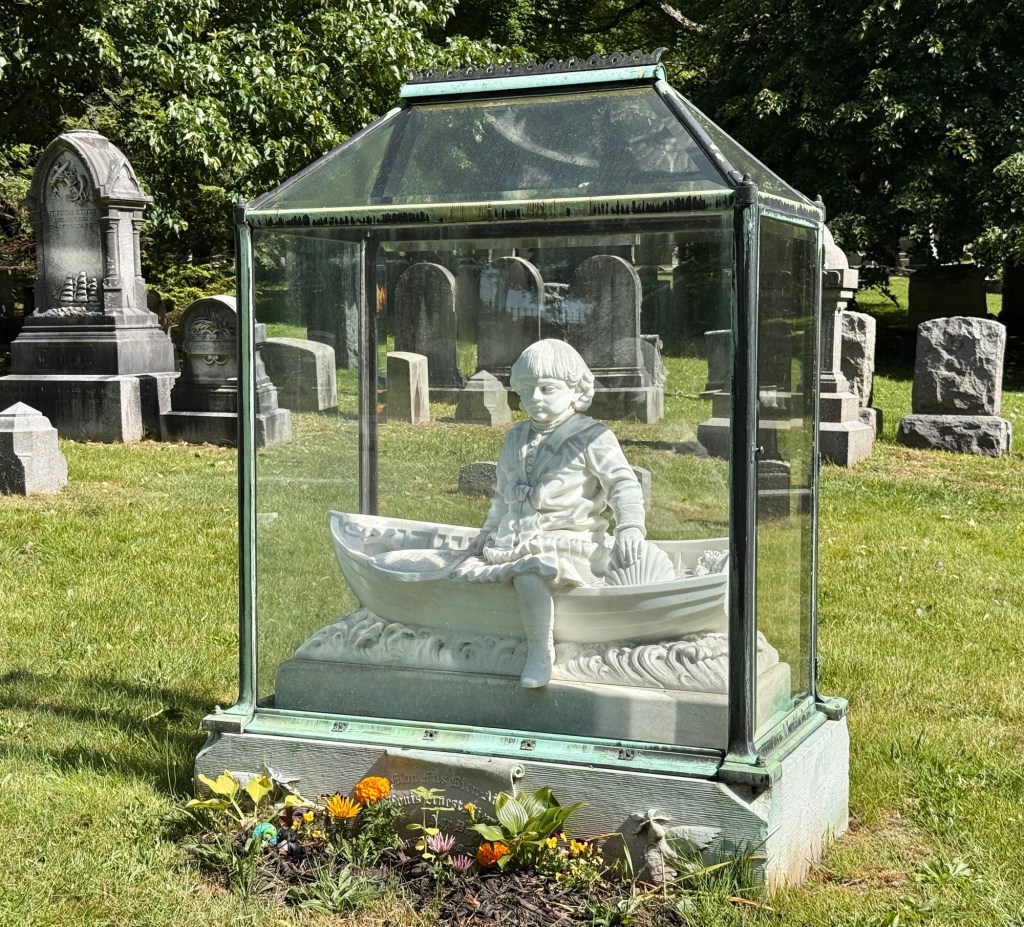
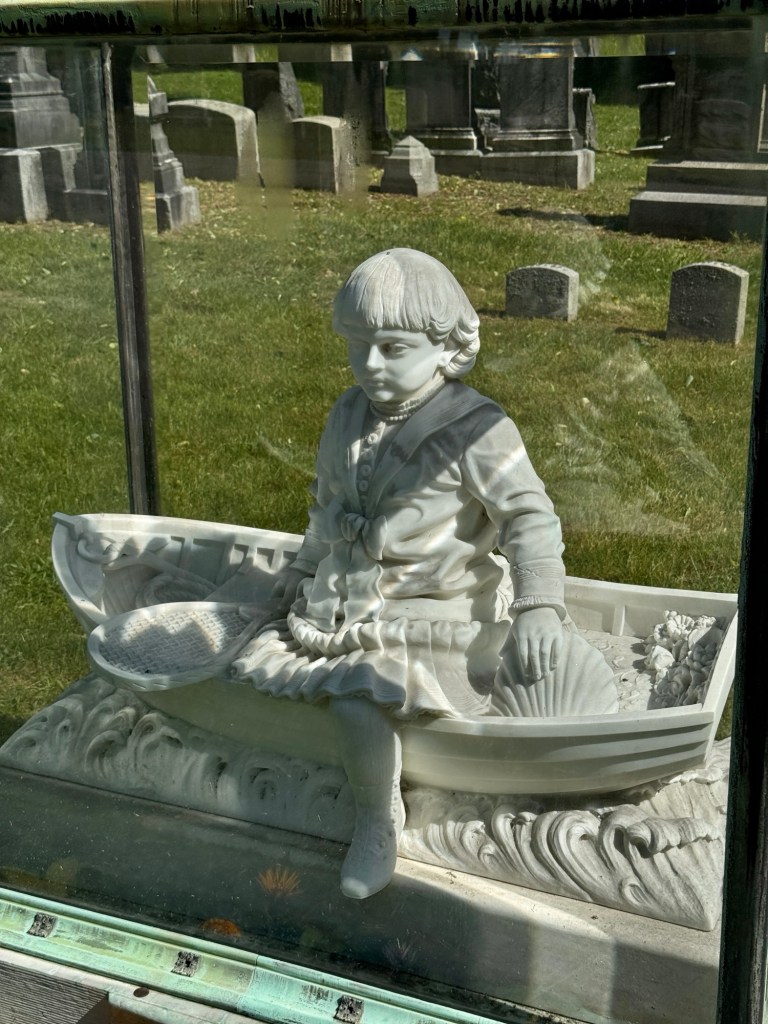
Louis Ernest Mieusset (1881-1886), just shy of his fifth birthday, died of Scarlet Fever and nephritis. His mother, Madame Louise Mieusset, took every penny she had saved for her son’s education and put it towards a commission of a funerary sculpture, depicting her late son’s playful spirit. The memorial of four-year-old Louis Mieusset is marked by a brilliant white marble figure depicting the young boy in a boat with a tennis racket in one hand and a shell in another. Marble was popular during the mid-19th century but it was understood that marble was too soft to stand up well outdoors, so it was additionally enclosed in a bronze and glass vitrine to protect it from acid rain and staining. Carved into the base, it states, “MY ONLY AND DARLING CHILD…A MOTHER’S TRIBUTE OF AFFECTION”. Madame Mieusset worked as a hat-maker in Boston, and after the death of her son, she struggled financially to support herself between frequent visits to mourn her son, even decades after his death. Louise planned to be buried next to her son, but died penniless in 1936. As she did not leave funds for burial in Forest Hills Cemetery, her body was buried in a pauper’s lot, until (legend says) Boston Mayor James Curley paid her burial expenses, funding the relocation of her body, allowing for her eternal rest with her late son Louis.
A similar monument, known as the “Girl in the Glass” is also found at Forest Hills.
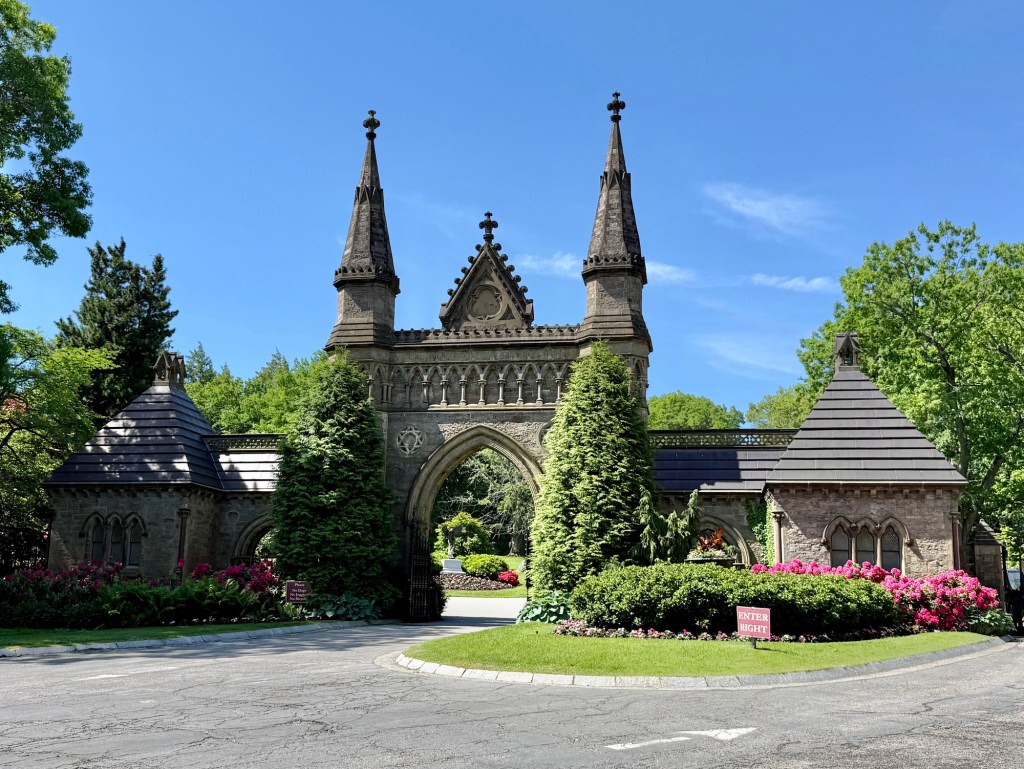
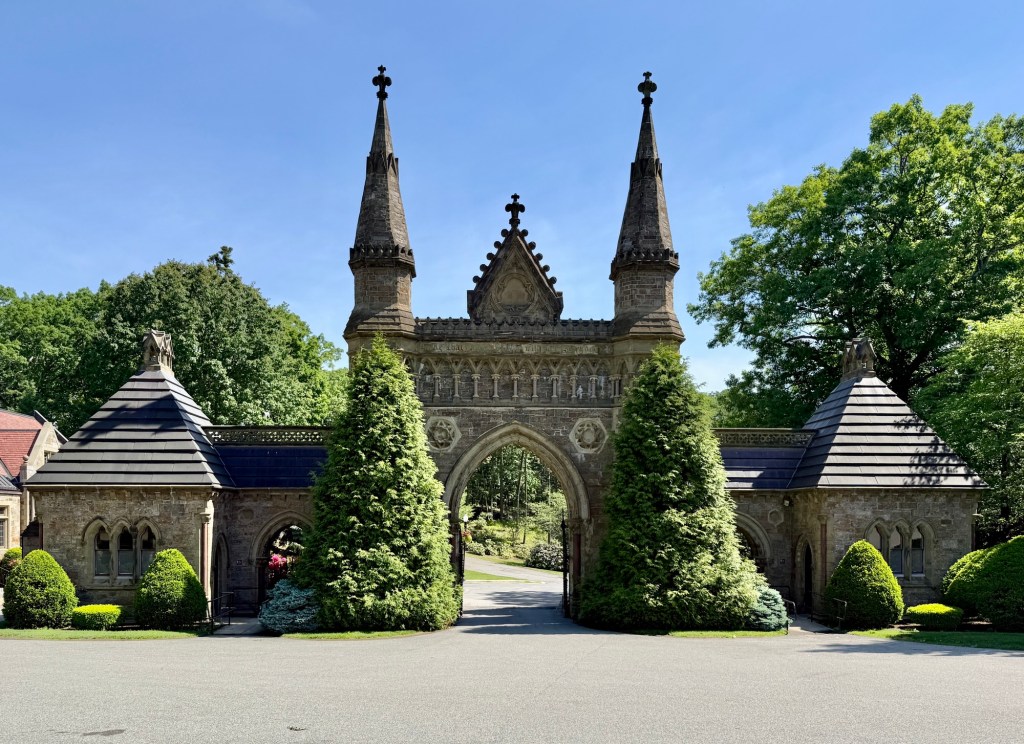
Forest Hills Cemetery in Boston was established in 1848 in the rural cemetery tradition, which followed Mount Auburn Cemetery, established in 1831 in nearby Cambridge and Watertown. The site was a municipal cemetery in Roxbury until it was annexed into Boston in 1868, becoming a private, non-denominational burial place for the who’s who of the area. The cemetery was envisioned by Henry A. S. Dearborn, who was the mayor of Roxbury in 1847 and first president of the Massachusetts Horticulture Society, who had also been instrumental in creating Mount Auburn. Since its creation in 1848, Forest Hills has grown from its original 72 acres to a total of approximately 250 acres today and is known for the rich topography and vegetation, dotted by thousands of beautiful monuments to the deceased and some iconic architectural landmarks tucked away in its winding paths. Forest Hills Cemetery was located on this site due to its varied natural features, which included hills, valleys and lakes, which together were preserved to enhance the experience of those visiting nearly 200 years later. The site’s topography consists of a series of geological drumlins of Roxbury puddingstone, an important material that was used in building projects all over the region (and for some of the buildings and monuments in Forest Hills). It is the burial place of a remarkable cross-section of people that reflect almost every aspect of American life — from statesmen to soldiers to industrialists to abolitionists to artists to poets. Forest Hills Cemetery is a somewhat hidden gem and is one of the best places in the area to walk and explore.
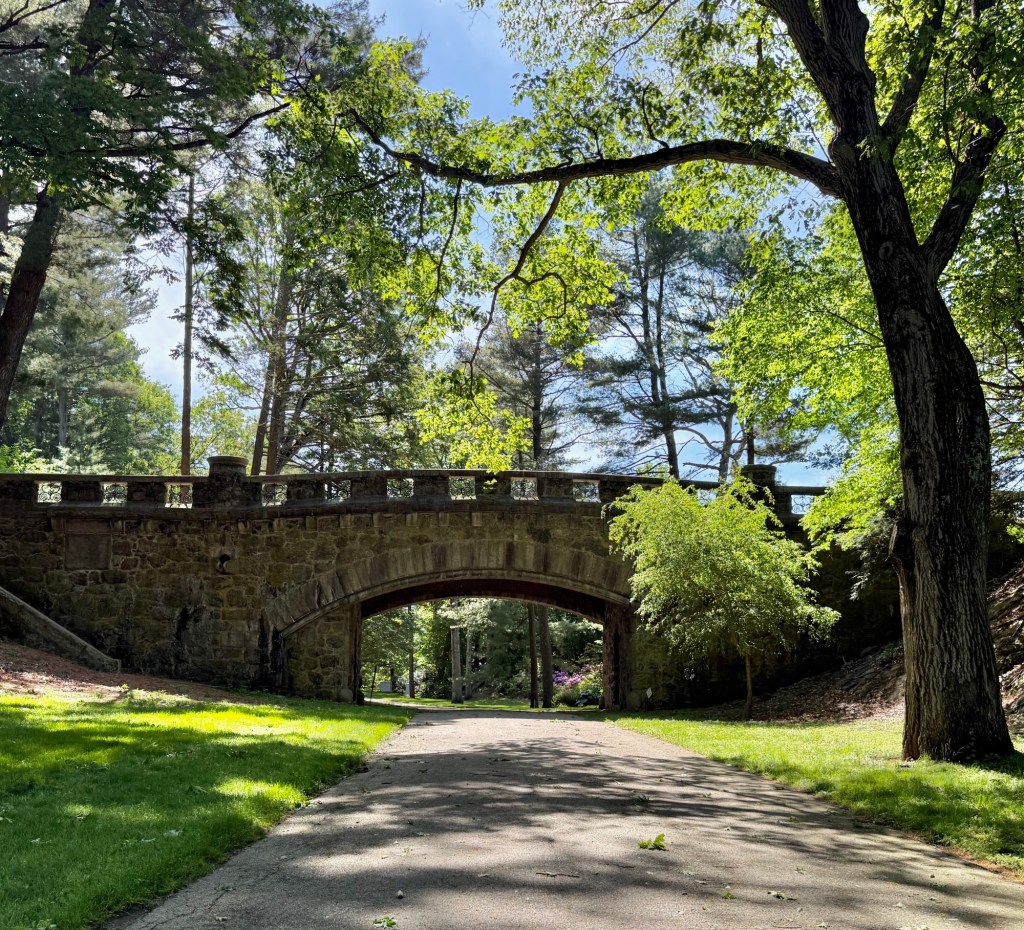
The stone bridge in Forest Hills spans over Greenwood Avenue, linking Consecration Hill to Milton Hill, was designed by William Gibbons Preston and built in 1891-1892. It is 180’ long and 23’ wide and was constructed of random laid Roxbury puddingstone with granite trim and is capped by a stone balustrade inlaid with decorative cast iron. The bridge shows that even a traditionally functional structure in the cemetery was designed with intent and was a vessel to enhance the experience of those visiting. Stay tuned for more sites in this iconic landscape!
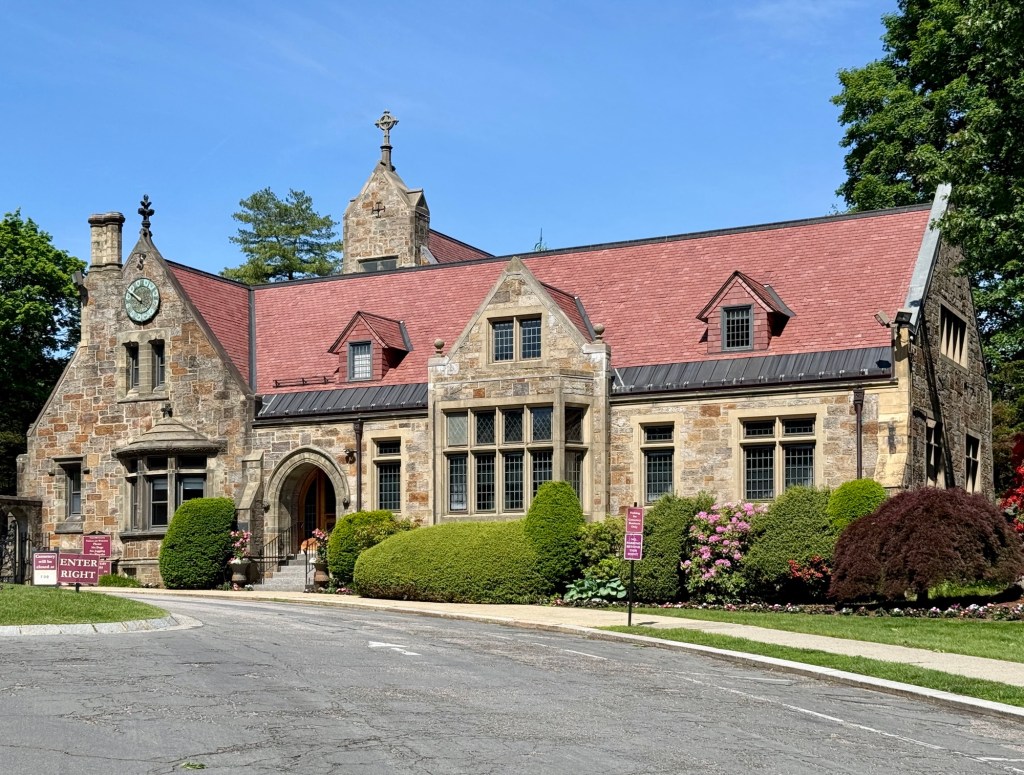
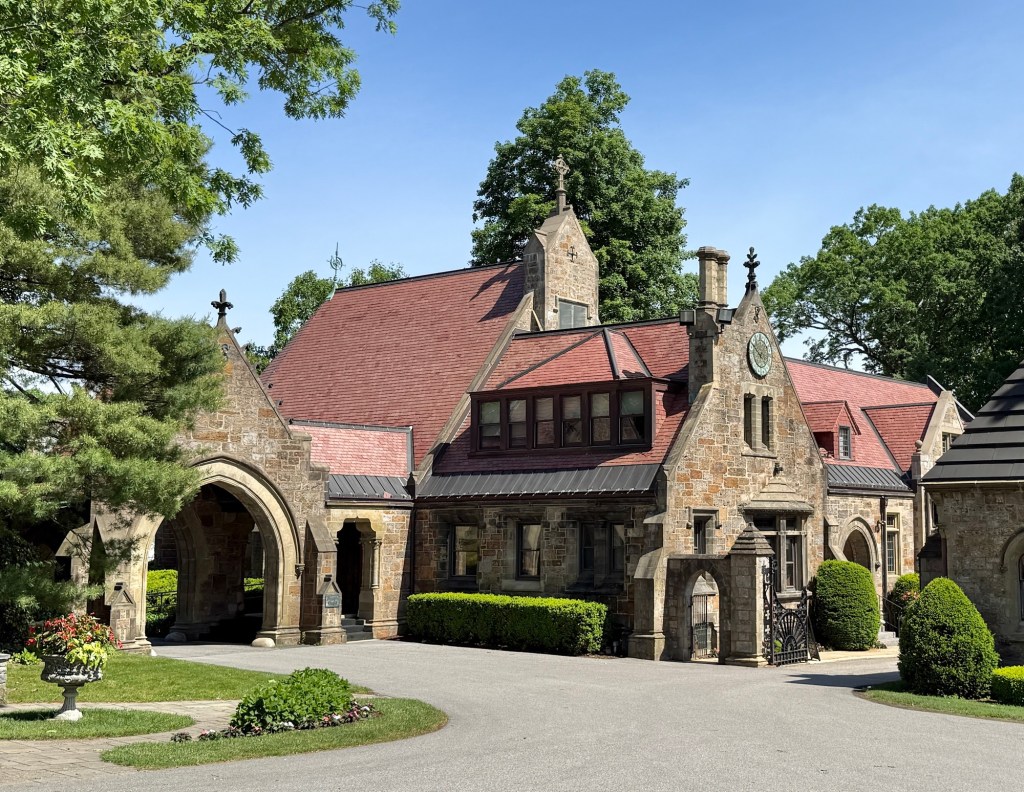
Adjacent to the Entrance Gate at Forest Hills Cemetery, the Forsyth Chapel and Cemetery Office building stands at the ceremonial entrance to the iconic landscape and architecturally compliments the adjacent structure and surrounding grounds. The Forsyth Chapel was designed by the firm of Van Brunt and Howe and completed in 1884 as a space for mourners and for celebration of lives well-lived. The chapel was expanded in 1921-22 when the Boston firm of Andrews, Jacques & Rantoul, was commissioned to expand the building perpendicular to the gateway, and expand the offices in the building, to serve the greater administrative needs of the busy cemetery and burial planning. The Neo-Gothic addition continues the architectural aesthetic of the cemetery, while being clearly of its time, a well-intentioned and designed addition.
Forest Hills Cemetery in Boston was established in 1848 in the rural cemetery tradition, which followed Mount Auburn Cemetery, established in 1831 in nearby Cambridge and Watertown. The site was a municipal cemetery in Roxbury until it was annexed into Boston in 1868, becoming a private, non-denominational burial place for the who’s who of the area. The cemetery was envisioned by Henry A. S. Dearborn, who was the mayor of Roxbury in 1847 and first president of the Massachusetts Horticulture Society, who had also been instrumental in creating Mount Auburn. Since its creation in 1848, Forest Hills has grown from its original 72 acres to a total of approximately 250 acres today and is known for the rich topography and vegetation, dotted by thousands of beautiful monuments to the deceased and some iconic architectural landmarks tucked away in its winding paths. Forest Hills Cemetery was located on this site due to its varied natural features, which included hills, valleys and lakes, which together were preserved to enhance the experience of those visiting nearly 200 years later. The site’s topography consists of a series of geological drumlins of Roxbury puddingstone, an important material that was used in building projects all over the region (and for some of the buildings and monuments in Forest Hills).
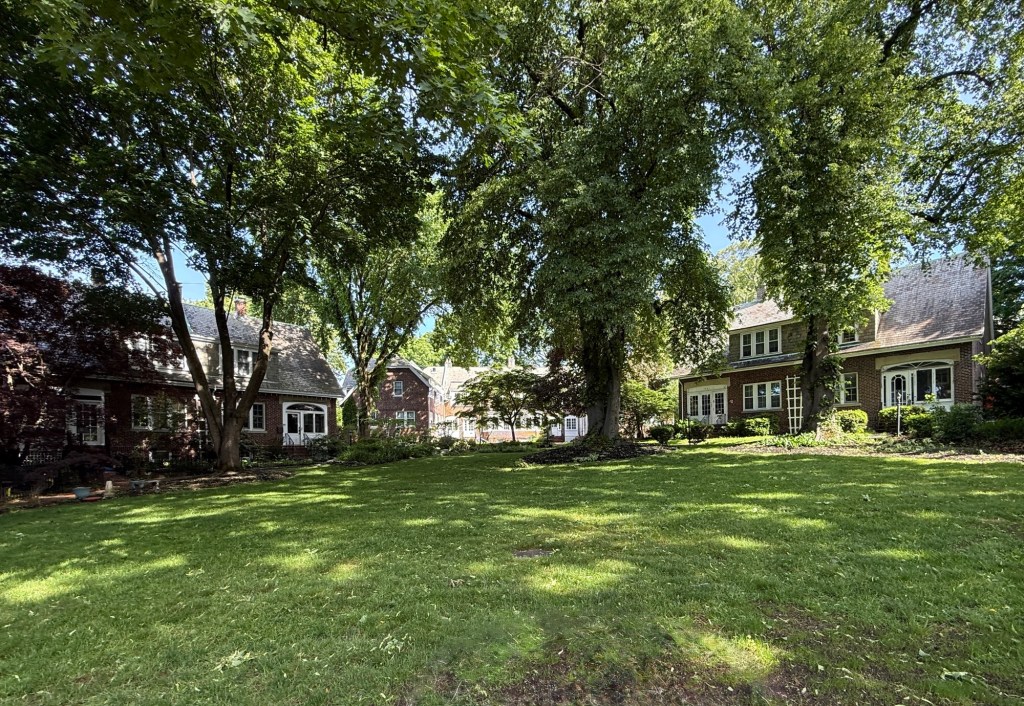
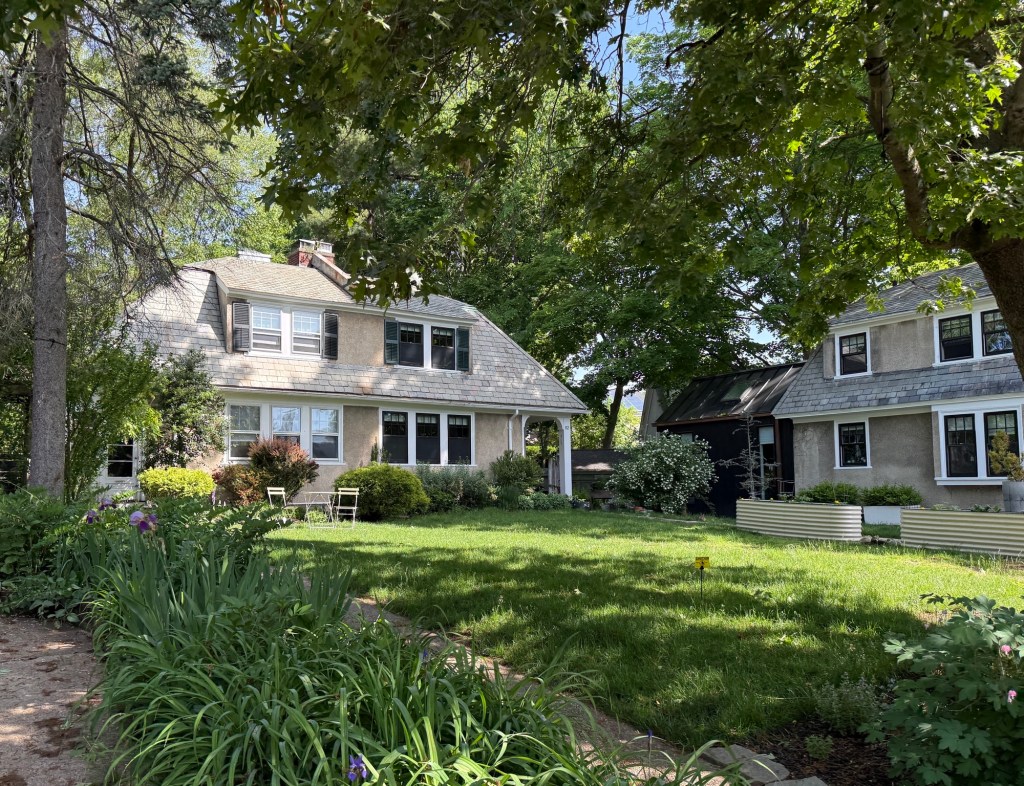
Nestled in Jamaica Plain, the Woodbourne neighborhood is one of Boston’s most notable early twentieth-century planned residential neighborhoods, developed in early 20th century on land that had once been part of large country estates. Inspired by Garden City planning principles, the neighborhood was designed to harmonize with its natural landscape, featuring curving streets, mature trees, and thoughtfully arranged green spaces rather than a rigid urban grid. Its architecture reflects the predominant architectural styles of the period, notably showcasing modest housing in Arts and Crafts and Colonial Revival styles with many of the original buildings designed by the firm of Kilham & Hopkins off Southbourne Road. The development envisioned and funded by The Boston Dwelling House Company, a who’s who of well-connected Boston residents who envisioned the development as an attractive and healthy suburban community for middle-class families with convenient access to streetcar and rail transportation, with the grounds laid out by the Olmsted Brothers. Woodbourne remains remarkably intact today, offering a rare glimpse into the ideals of early suburban planning amidst the somewhat hectic piecemeal development and layout of streets in other parts of the city.
This iconic Boston building is threatened with demolition!
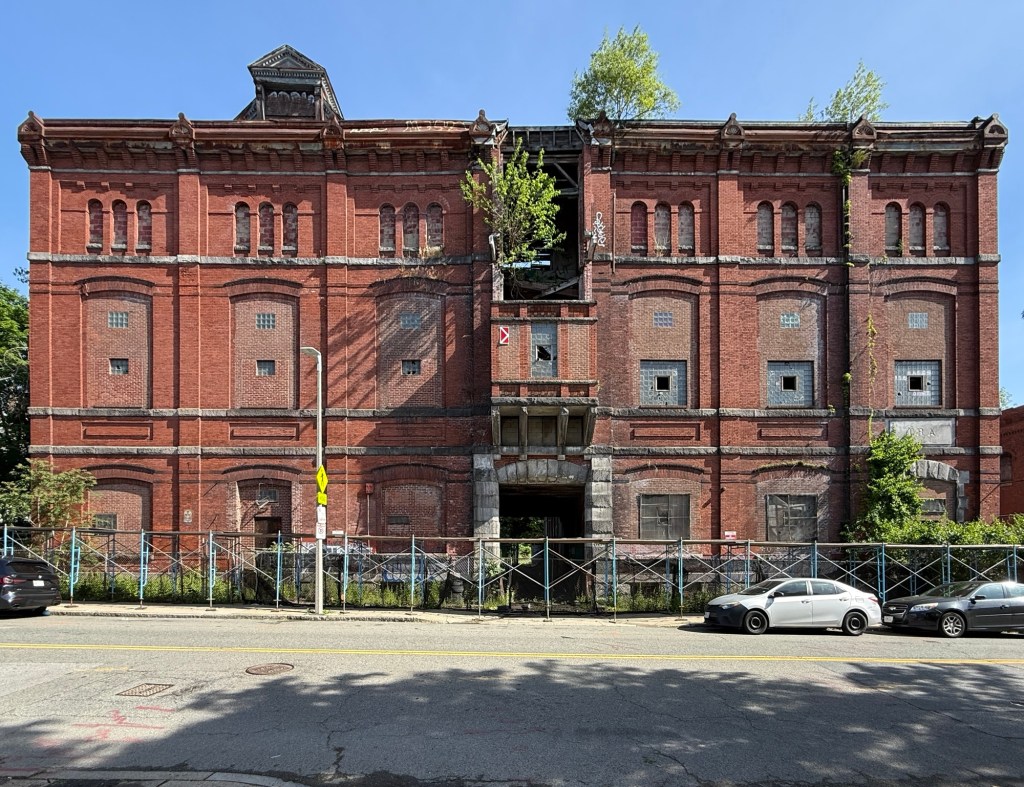
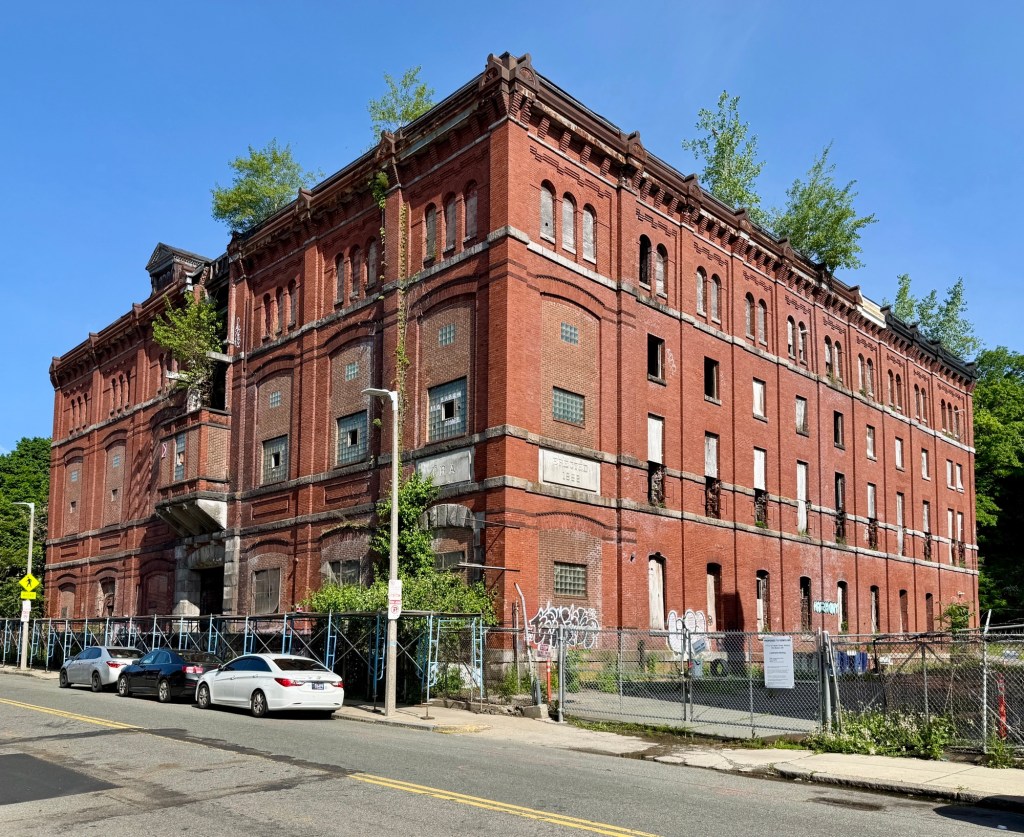
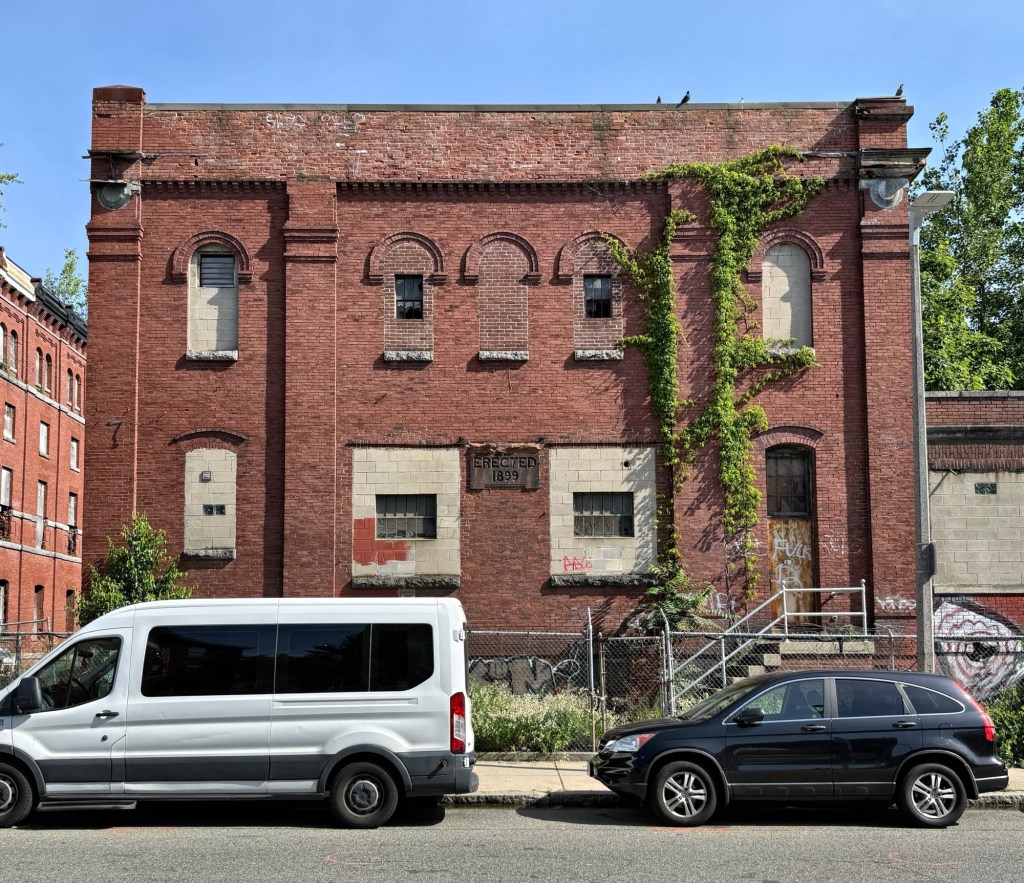
The clock is ticking for the Alley/Eblana Brewery, a historically and architecturally significant building in Boston’s Mission Hill neighborhood. Located on Heath Street, the historic Alley Brewery, also known as the Eblana Brewery, stands as a striking reminder of the city’s once-thriving brewing industry. Founded by Irish immigrant John R. Alley (1822-1888) in the mid-1880s, the brewery produced the popular Eblana Irish Ale, a name derived from the ancient term for Dublin, reflecting Alley’s heritage and the strong Irish influence in the area. John Alley previously co-owned the Highland Spring Brewery nearby, but founded a brewery in his own name in 1885. For his brewery, Alley hired Philadelphia architect Otto C. Wolf, who was the nation’s premier brewery architect and engineer in the late 19th and early 20th centuries. The four-story complex was built in 1886 and showcased some of the most advanced brewing technology of its era while displaying an impressive blend of brick and granite craftsmanship. Its distinctive façade features a dramatic central bay, granite-trimmed arches, rough-faced stone braces, wrought-iron gates, and carved stone plaques bearing Alley’s initials and the date of construction. After John’s death in 1888, the business continued under the ownership of his two sons, Frederick and George. The brothers in 1899, added the adjacent bottling and refrigeration building, which employs similar architectural features and materials to the main brewery. Brewing here ceased with Prohibition and the structure later served a variety of manufacturing uses, when during the 1960s, many windows were filled with brick. The Alley-Eblana Brewery remains one of Boston’s most architecturally significant surviving brewery buildings, embodying Boston’s rich industrial and ethnic heritage, but it is threatened. Developers have owned the building since 2013 and have done nothing to preserve or even maintain the structure, making it a case of demolition by neglect. They are requesting to demolish both structures, but the demolition has been delayed 90-days through the Boston Landmarks Commission Demolition Delay review process. If you want to see the building repurposed and saved, reach out to the Boston Landmarks Commission and advocate for its adaptive reuse, which would provide housing and maintain a significant architectural landmark for the community.
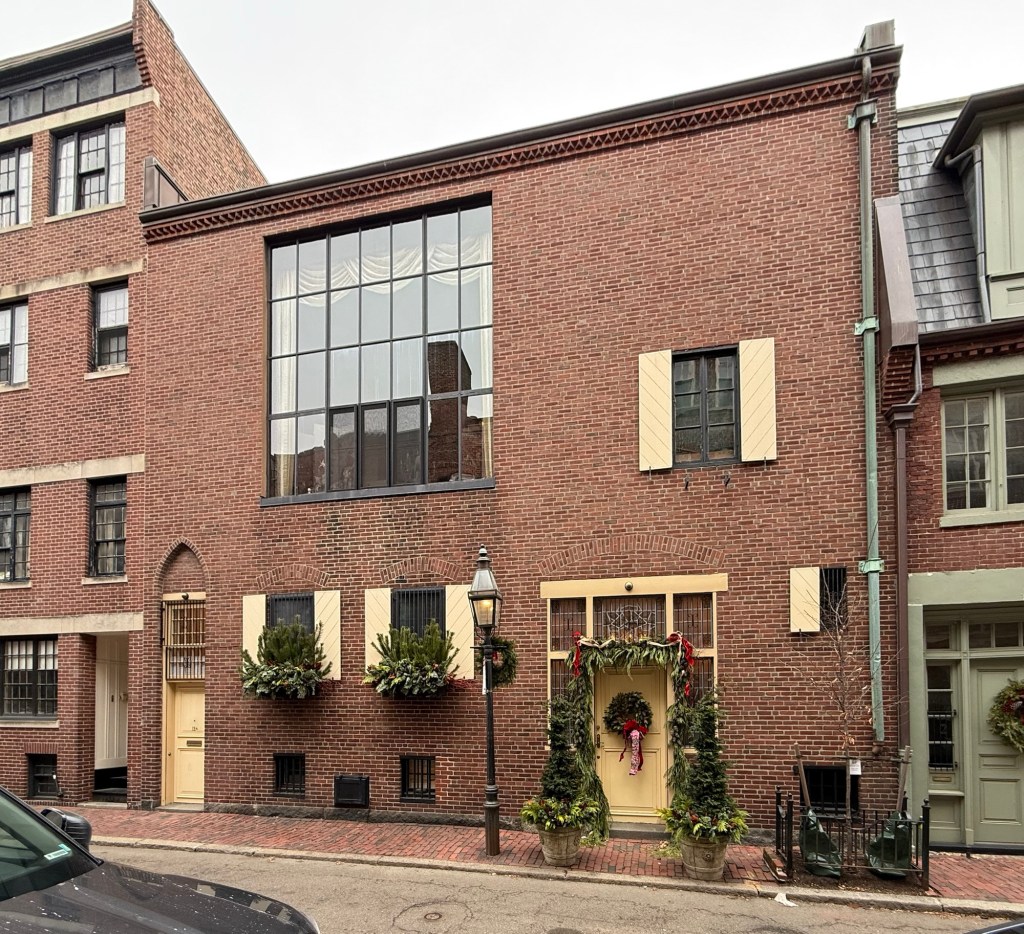
Built from a historic stable building, this unique building on Lime Street in Beacon Hill served as a residence and studio for Martha Silsbee, a prominent New England watercolor and pastel artist. For her Boston residence, Martha Silsbee hired the firm of Richardson, Barott, and Richardson, an office founded by Philip and Frederic Richardson, sons of famed architect Henry Hobson Richardson, who had designed a house nearby with similar design elements years prior. Taking cues from Venetian architecture, the interior spaces were covered with cream-colored plaster with iron gates and walls lined with art. The design includes a massive studio window on the facade, which flooded Ms. Silsbee’s studio where she painted when not at her residence in the Dublin Artist Colony in New Hampshire. The facade also features pointed arches and artistic glass at the entrance. After her death, the property sold at auction. After WWII, the former studio and residence was purchased by Georges F. Doriot (1899-1987), a Parisian businessman who later taught at Harvard Business School and in 1946, founded the American Research and Development Corporation, the first publicly owned venture capital firm in the United States.
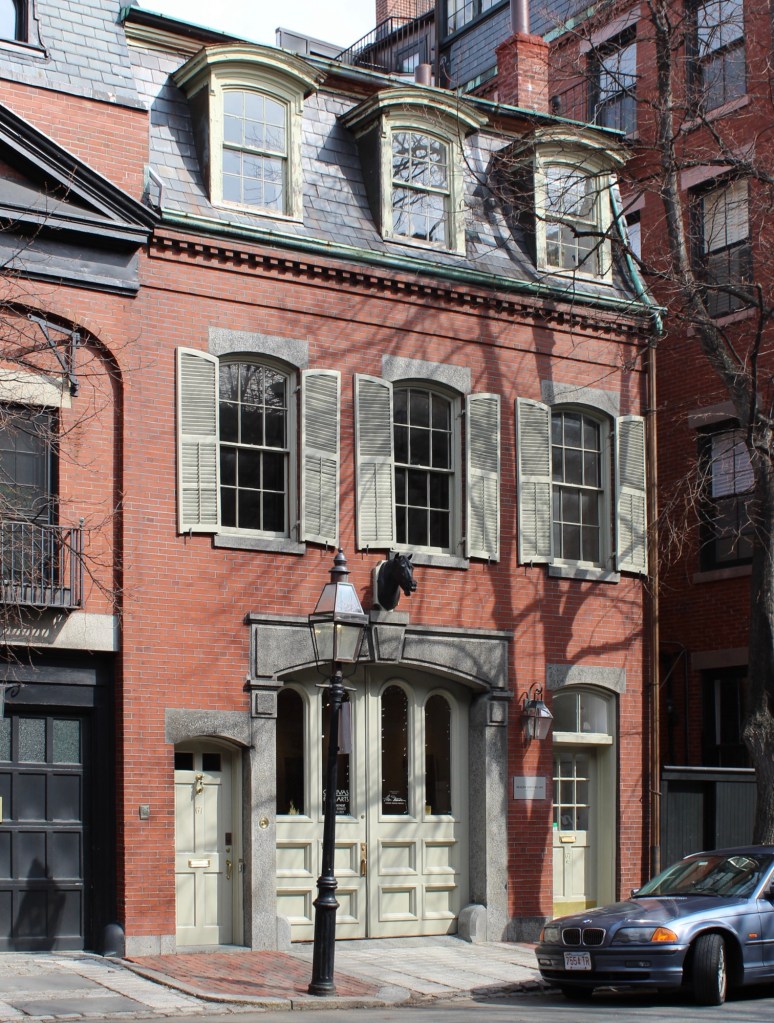
This charming stable building on Chestnut Street on the Flat of Beacon Hill, Boston, was probably built around 1865 for Elijah Williams (1804-1879), a shipping merchant who also served a term on the Boston Common Council. Elijah and his wife, Mary, lived on Louisburg Square and had this stable built to hold their stable, sleigh and horses. Additionally, the stable housed a small residence inside for the stable-keeper and coachman, who would chauffer the Williams’ around and take care of their horses. In the early 20th century, the stable was owned by George Nixon Black (1842-1928), an heir to a Boston real estate fortune that came to Boston to manage the office of his father’s lumber business. He eventually became one of Boston’s largest individual taxpayers and besides his home in Boston, spent time in other homes including the late Kragsyde in Manchester-by-the-Sea and Woodlawn in Ellsworth, Maine, now a house museum. The stunning Second Empire style stable building is built of brick with granite lintels, sills, and surrounding the carriage doorway, over which is a mounted statuary of a horse head as a nod to the building’s original use.
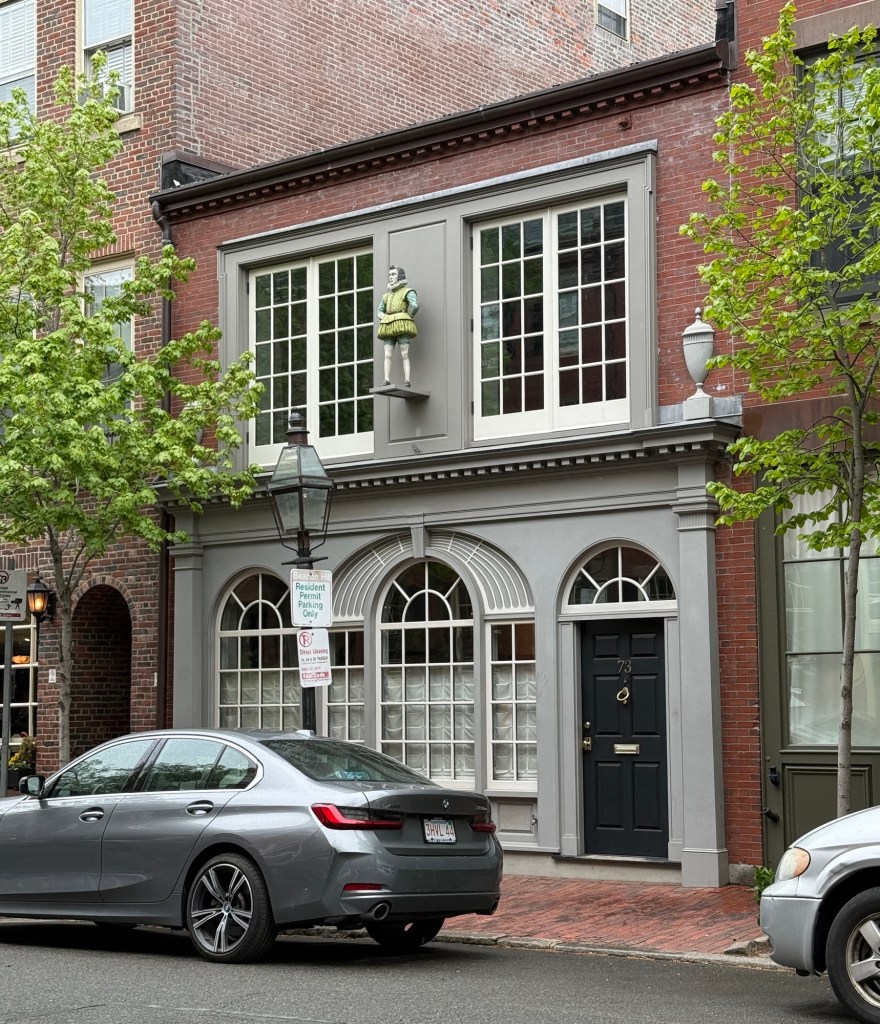
One of the many charming buildings on the Flat of Beacon Hill can be found here at 73 Chestnut Street, which has long been one of my favorites when strolling in the neighborhood. The building was constructed around 1895, replacing a wooden stable on the site, and appears to have been built as a stable and converted soon-after to commercial use. In 1917, the building was leased to tradespeople, and included a plumbing shop and cabinetmaker, but as the area gentrified after WWI, the building was purchased by Israel Sack, an antique dealer as his new store. Israel Sack was born in Lithuania and emigrated to the United States, first working as a cabinetmaker and later becoming an instrumental force in the antiques world, where he assisted with developing the private collections of Henry Ford, Henry Francis du Pont, Ima Hogg, and other leading collectors and supplying the Americana collections of many major museums. A year prior to buying and renovating this building, in 1924, Sack purchased the Robert “King” Hooper House in Marblehead, Massachusetts, and turned the 18th-century mansion into a showroom for his antiques. Israel Sack gave the building at 73 Chestnut Street its distinctive Colonial Revival facade with its urn finials and Bullfinch-eque Federal Revival storefront. Later operators of antique stores within the building include: Louis D. Prince and Stephen Score, until recently when it was converted to a residence, with the owners removing bright blue paint from the brick and restored the facade, down to the iconic wooden statuette on the second story.
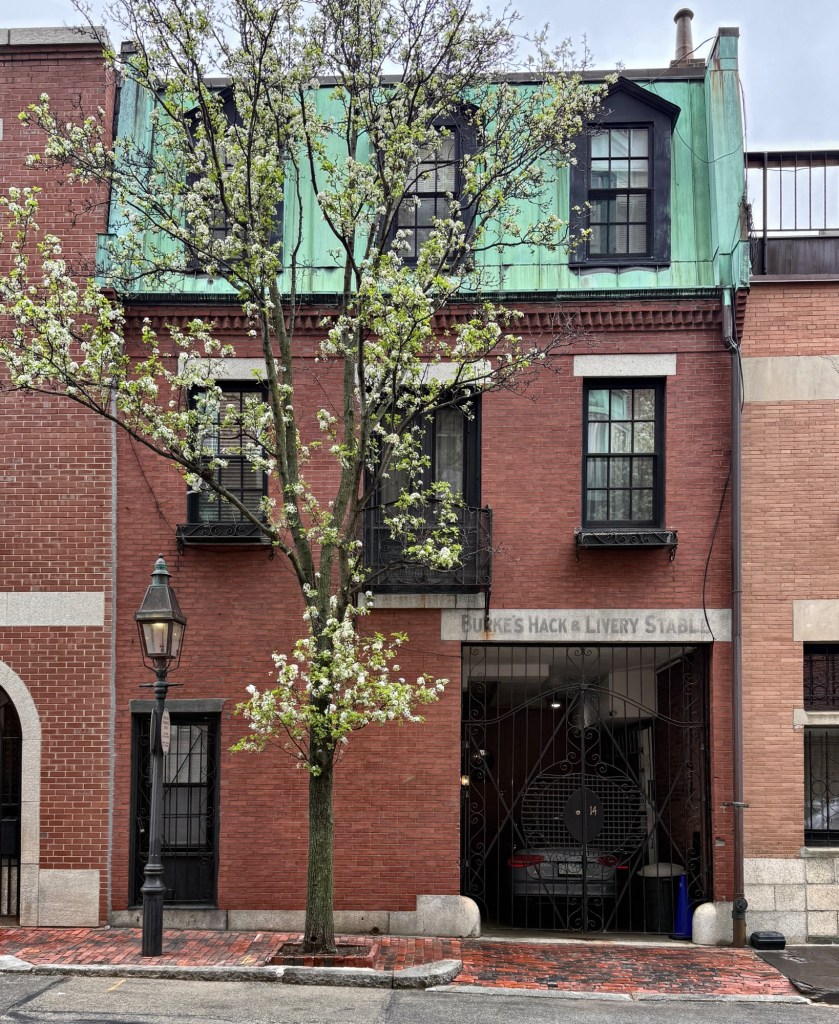
This handsome two-story brick stable on Byron Street in Boston’s Beacon Hill neighborhood was built around 1865 for the Sigourney family, and its front façade retains a distinctive appearance associated with that period. The brick façade sits on a granite base, and the first story contains two entrances characteristic of its stable use: a vehicle door providing access to ground floor and a domestic entrance connecting to stairs leading to upper levels including stableman’s quarters on the top floor. Around the time of WWI, the property was owned by James F. Burke, who added the painted sign over the carriage entry. The stable was converted to a residence in about 1964 for owner, Jay Schrochet by architect, Benjamin S. Fishstein and remains a single-family home today.
Photo courtesy of Boston Public Library collections.
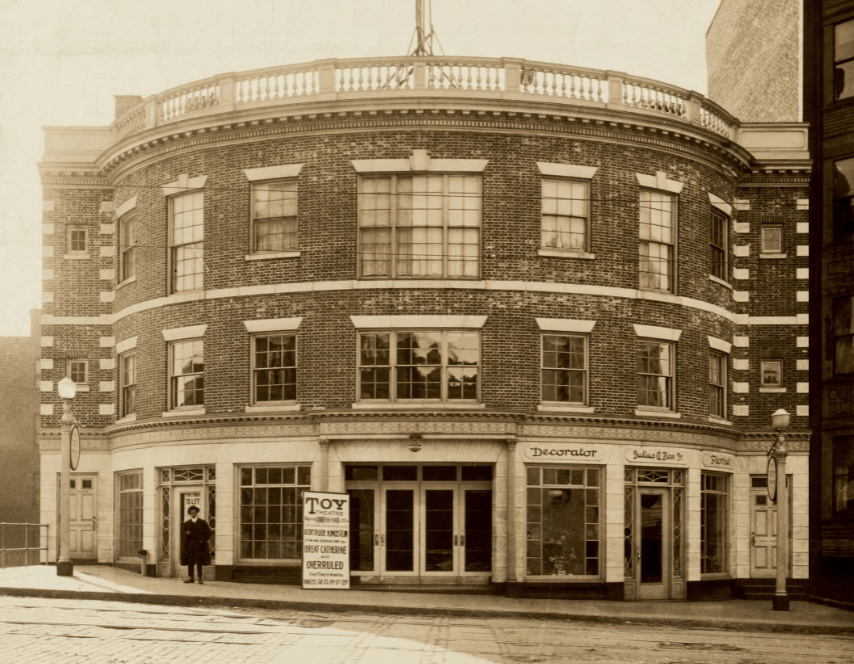
When the Toy Theatre on Lime Street in Beacon Hill (last post) was formed in the early 20th century, the members of the small theatre group of well-connected artists and actors had their sights on something with permanence. By 1914, the group had funding and acquired land on Dartmouth street, a block away from Copley Square, and ground was broken to build a large new theatre. Designed by the architecture firm of Putnam & Cox, the fashionable Colonial Revival style building featured a large, rounded facade and was constructed of brick with a marble base and detailing. The theatre was designed with a retail space for supplemental income. Inside, decorations were refined and also included a staircase and railings donated by Isabella Stewart Gardner’s Fenway Court mansion, that were removed when she created the Tapestry Room in her home. The organization could not support running the building through shows, and the space was sold and rebranded as the Copley Theatre within a couple years. Continuing the bad luck, the City of Boston decided to extend Stuart Street by 1921, and this building was along the proposed route. The Toy Theatre was demolished in 1921, after just seven years.
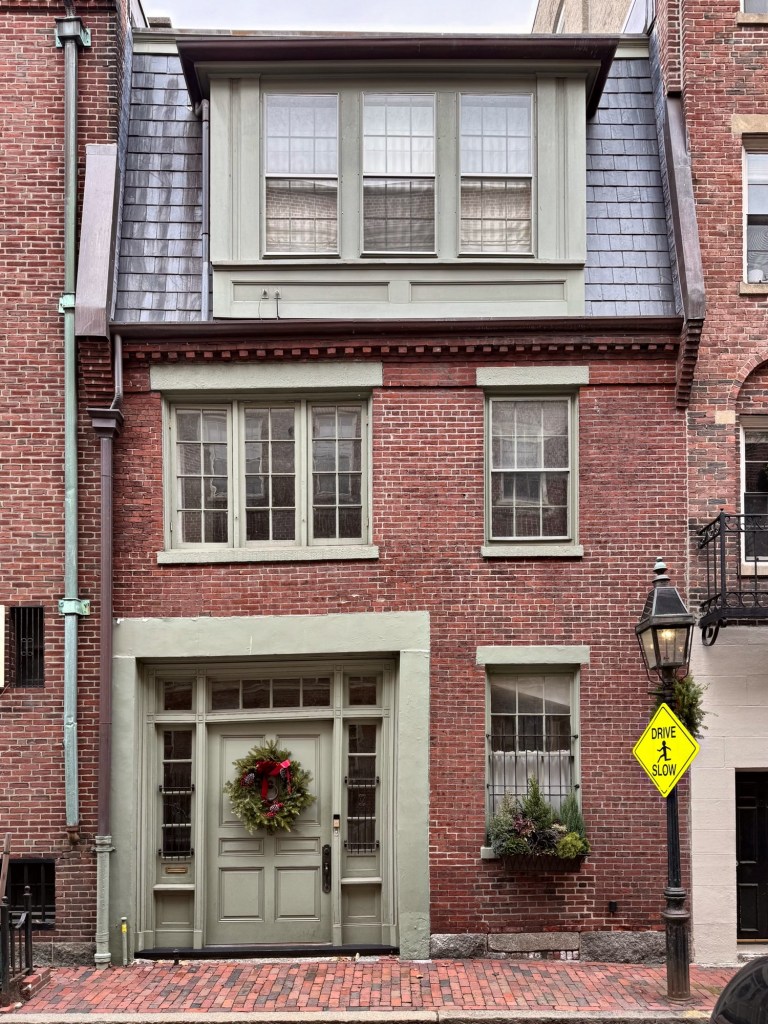
The early ownership is murky, but by the 1870s, this two-story with mansard roof stable was owned by a “Nathan Thayer”, either Nathaniel Thayer Jr. or Nathaniel Thayer III of Lancaster, who also retained city residences in Boston. The building features two portals on the first-floor that originated as doorways, the wider on the left for horses and a carriage, and the smaller for access to residential space for the stable-keeper and likely a hay loft over the carriage door. After the turn of the 20th century, the Flat of Beacon Hill gentrified into an exclusive enclave of residences, antiques shops, and artist studios and the former Thayer Stable was purchased by Frederick Oakes Houghton, an agent for transatlantic steamers. Houghton rented the building to an amateur theatrical group who organized as the Toy Theatre, that was founded in 1911 to present plays that had not been presented professionally in Boston. The founding group consisted of the usual, artistic, high society types, and had seating for 129 with no standing room. Houghton hired architect, Harold Symmes Graves, to convert the building into its theater use, enclosing the former carriage door and hay loft with multi-light windows, and creating a larger space inside for productions. The Toy Theatre did very well (due in part to its membership of upper-class Boston residents) and a new, purpose-built Toy Theatre was built in the Back Bay by 1914. In 1917, the former stable and theatre was purchased by Richard B. Platt, a musician and music teacher, and converted to a residence, a use that has remained ever since.