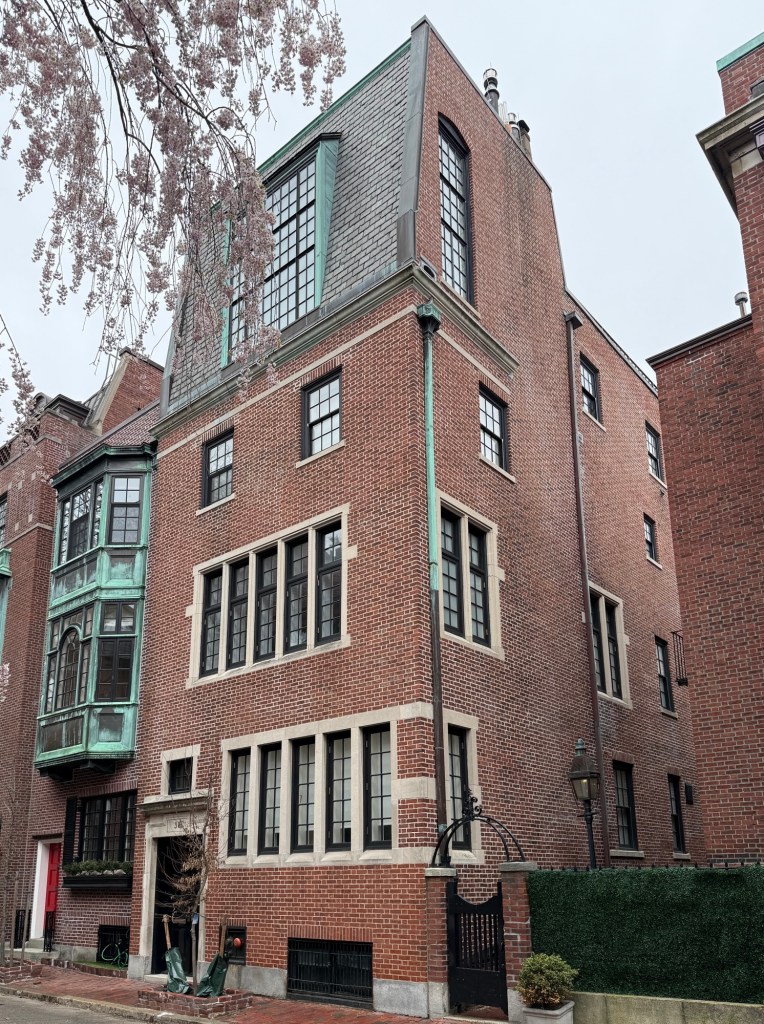
Converse-Brown Townhouse // 1912

One of the most amazing townhouses in Beacon Hill can be found here on Lime Street, where an oversized mansard roof addition with multi-light dormer, dominates the facade. The townhouse was built in 1912 from plans by architect Richard Arnold Fisher, who lived a few houses away, replacing a livery stable formerly on the lot. The site was developed on speculation by the Brimmer Street Trust, a real estate firm run by Gerald G. E. Street and William Coombs Codman, who sought to develop the area into high-end residences and art studios, protecting the area from unsympathetic developments. A few years after the house was built, it was owned by Frederick Shepherd Converse, a composer who also taught at the New England Conservatory of Music. By 1927, the house was owned by a young Waldo Hayward Brown, who at 32-years-old, occupied the house with his wife, Frances, three young children and four servants. The year he purchased the property, he hired the original architect, Richard Arnold Fisher, to add a In 1927 Brown filed a permit application to build a tall new room over an existing roof terrace at the front of the house, where the architect designed it as a mansard addition, which is of a large scale and broken up by the massive studio window. The blending of Tudor Revival and the later mansard roof surprisingly work here to create the unique composition we see today.
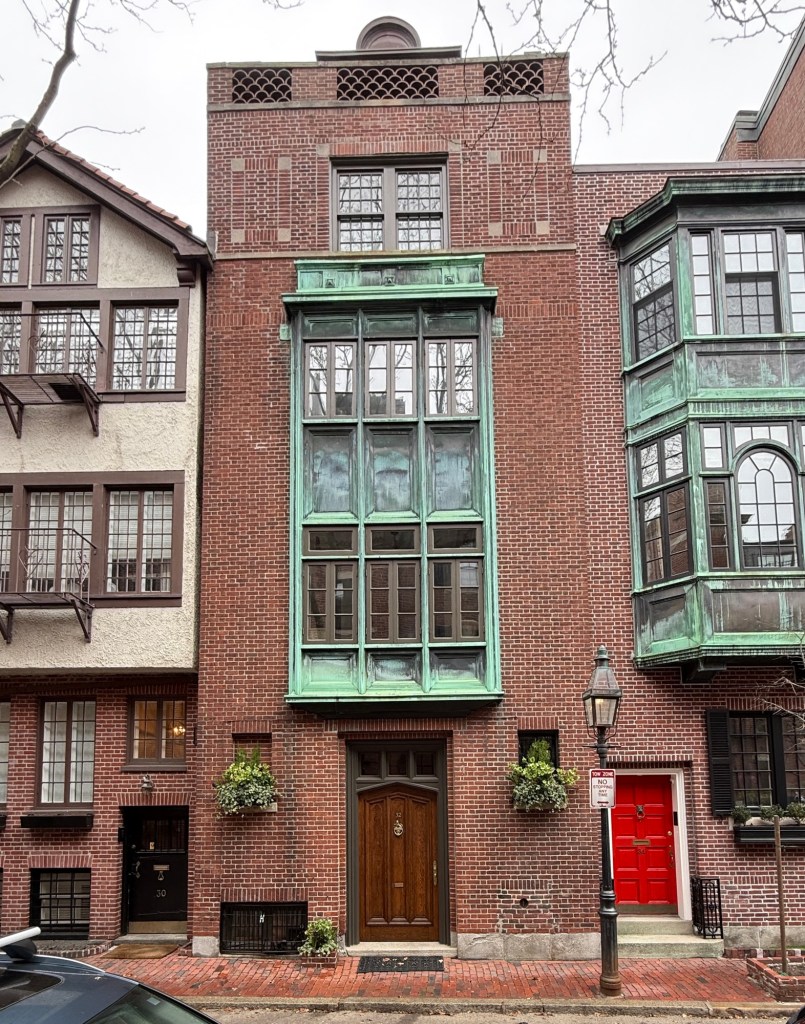
Roberts-Wirth Townhouse // 1912

This charming townhouse on Lime Street on the Flat of Beacon Hill, was built in 1912 for the Brimmer Realty Trust by architect, Richard Arnold Fisher, who lived two houses down the street. After the developers built the house on speculation, the townhouse was purchased by an A. G. Burgess, and soon after by Odin Roberts, a prominent patent lawyer with Roberts, Roberts & Cushman. After WWII, the townhouse was purchased by Jacob Wirth Jr., who took over his father’s iconic German restaurant, Jacob Wirth’s after his death. Jacob Wirth Jr. lived here until his death in the 1960s and it remained as the residence of his widow, Dorothy Wirth until 1995. The brick townhouse stands out for its two-story projecting copper oriel and the unique parapet at the roof.

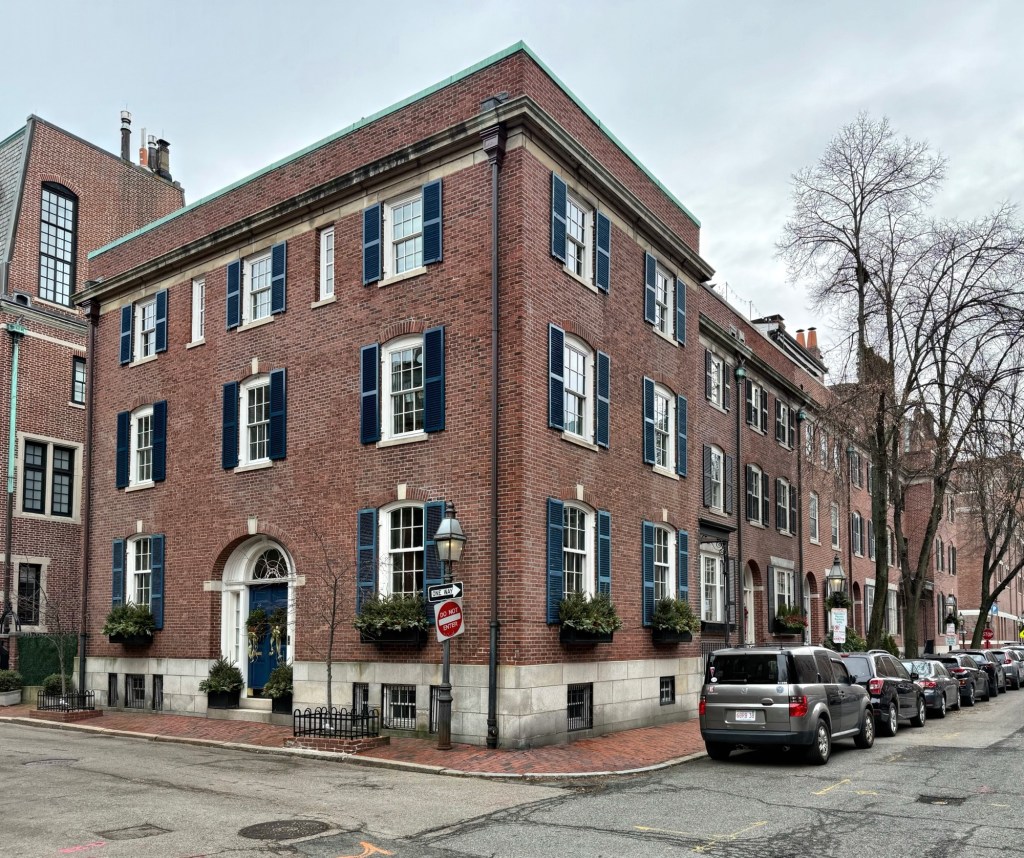
Brimmer Street Terrace // 1912

An interesting ensemble of seven rowhouses running along Brimmer Street in Beacon Hill, the Brimmer Street Terrace development showcases the rebirth the “Flat” of Beacon Hill encountered in the early 20th century from livery stables and carpentry shops to high-end housing and artist’s studios. Built on the site of a large livery stable, Brimmer Street Terrace was developed in 1912 by Gerald G. E. Street and William C. Codman, developers who sought to enhance this section of Beacon Hill and protect it from unsympathetic development, and hired architect Richard Arnold Fisher to design the houses. The rowhouses were originally rented to upper-class families but later were sold off as individual properties. Colonial Revival in style, the row is built of the iconic Boston red brick, Federal Revival style fanlight transoms over the entrances, include shutters, and all sit atop a stone basement. The row is anchored on each end by residences facing north and south with large symmetrical facades with the five more narrow rowhouses connecting them along Brimmer Street. 

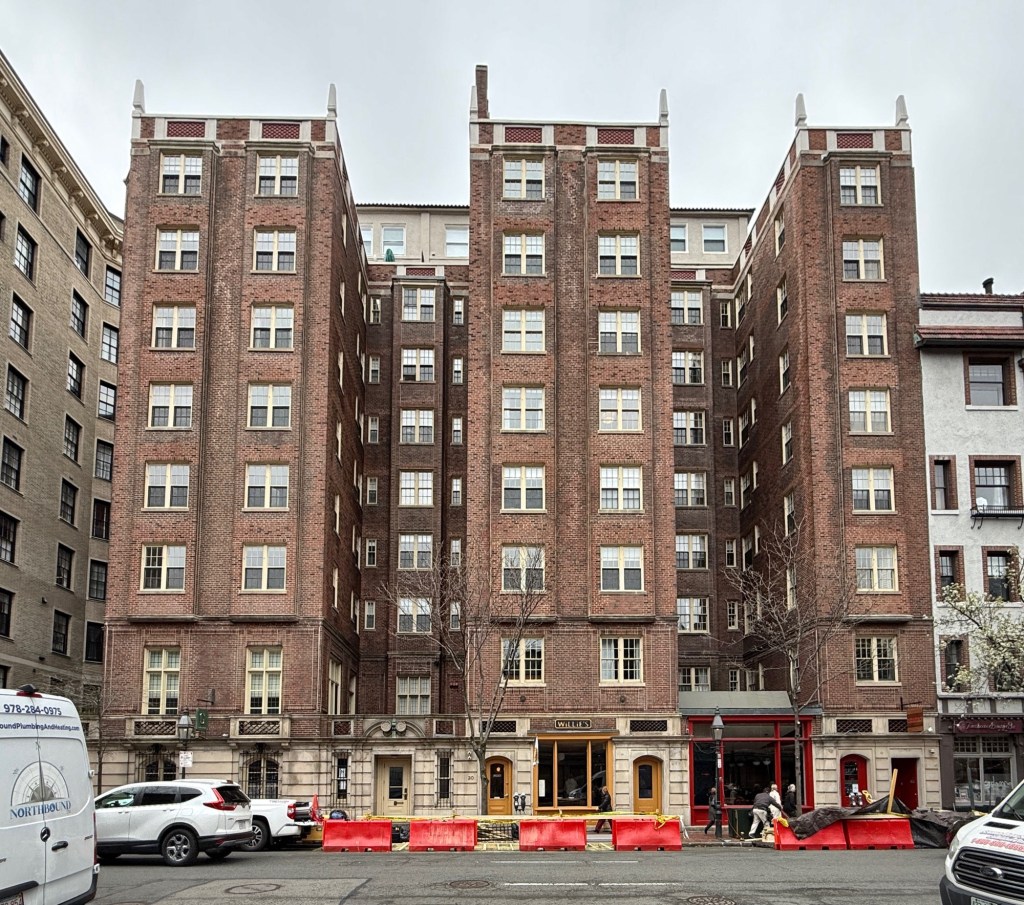
Hotel Lincolnshire // 1924

The Hotel Lincolnshire is a stunning eight-story apartment building on the west side of Charles Street in Boston’s Beacon Hill neighborhood. The building was developed in 1924 by William Coombs Codman, a real estate developer and member of the Beacon Hill Associates, a group of preservationists who bought and resold properties in the neighborhood with the aim to limit unsympathetic development. The group helped the Beacon Hill Flat area, which was a higher concentration of former stables west of Charles Street, a gentrified artist and residential enclave. The Hotel Lincolnshire was marketed as a residential apartment hotel, with furnished and unfurnished apartments with greater amenities than a traditional apartment building. Beacon Hill resident and architect, Richard Arnold Fisher, was responsible for designing the building, where he employed the use of courtyards (similar to his design nearby at 101 Chestnut Street) and walls of brick with cast-stone details. Of special interest is the use of perforated terracotta panels laid in half-round forms and the stone pinnacles at the parapet.