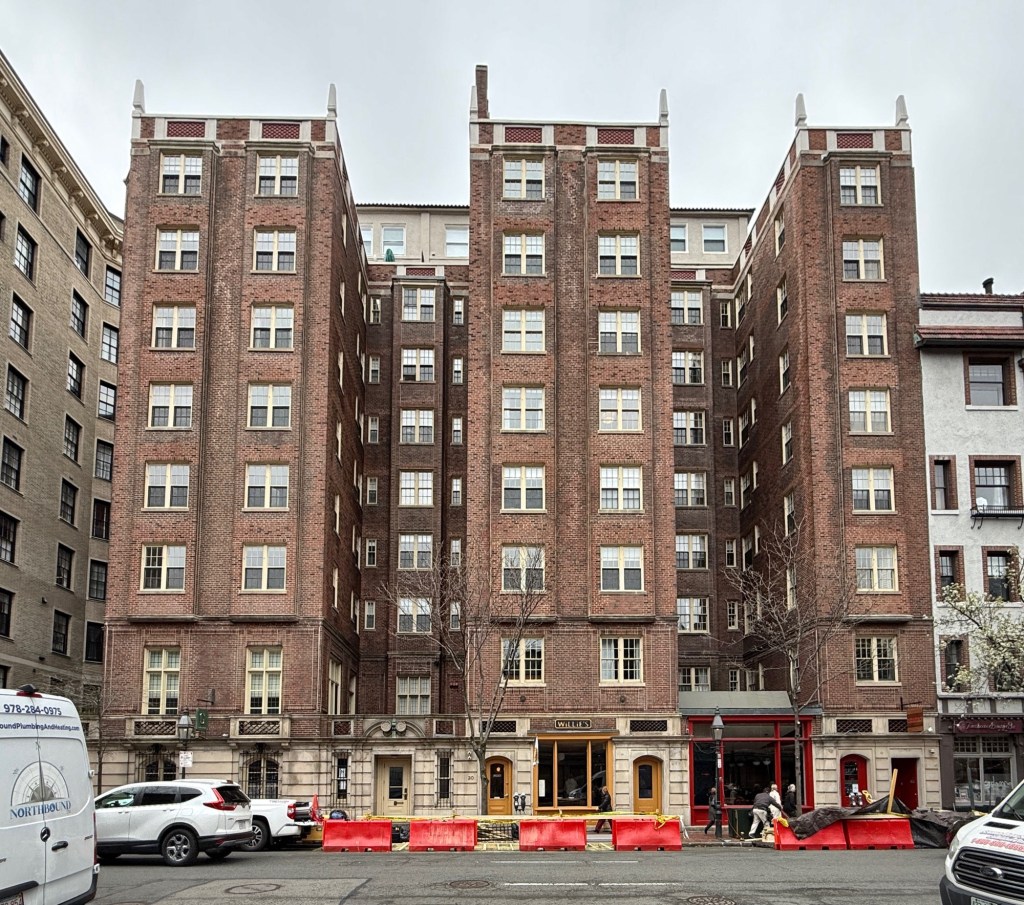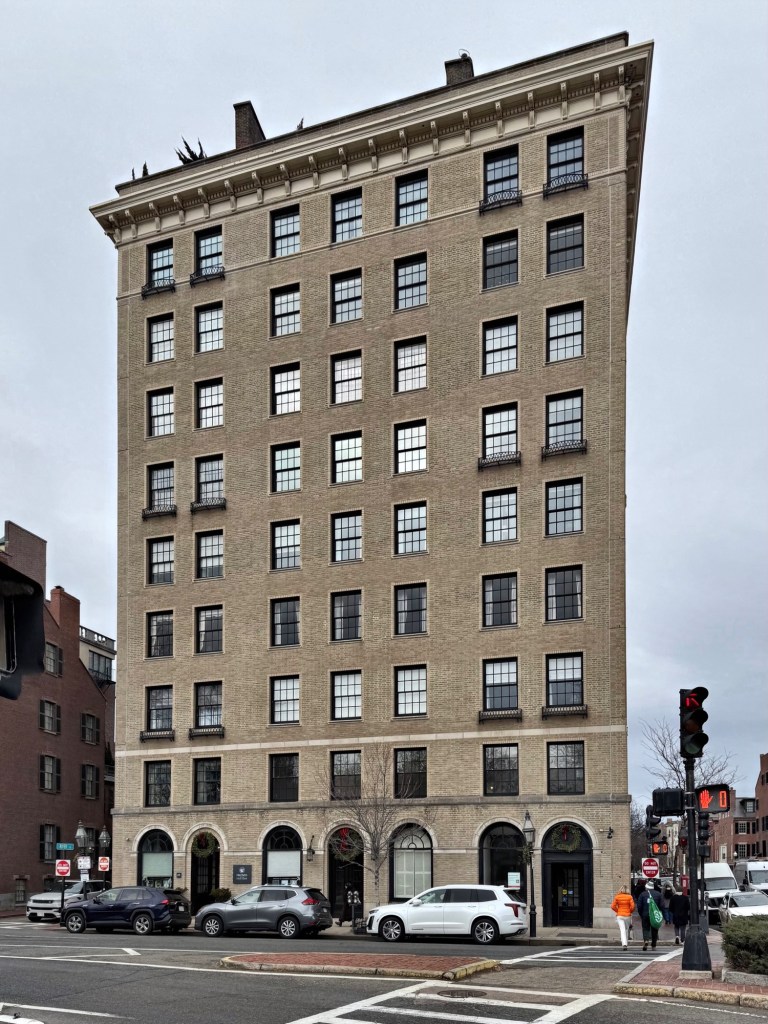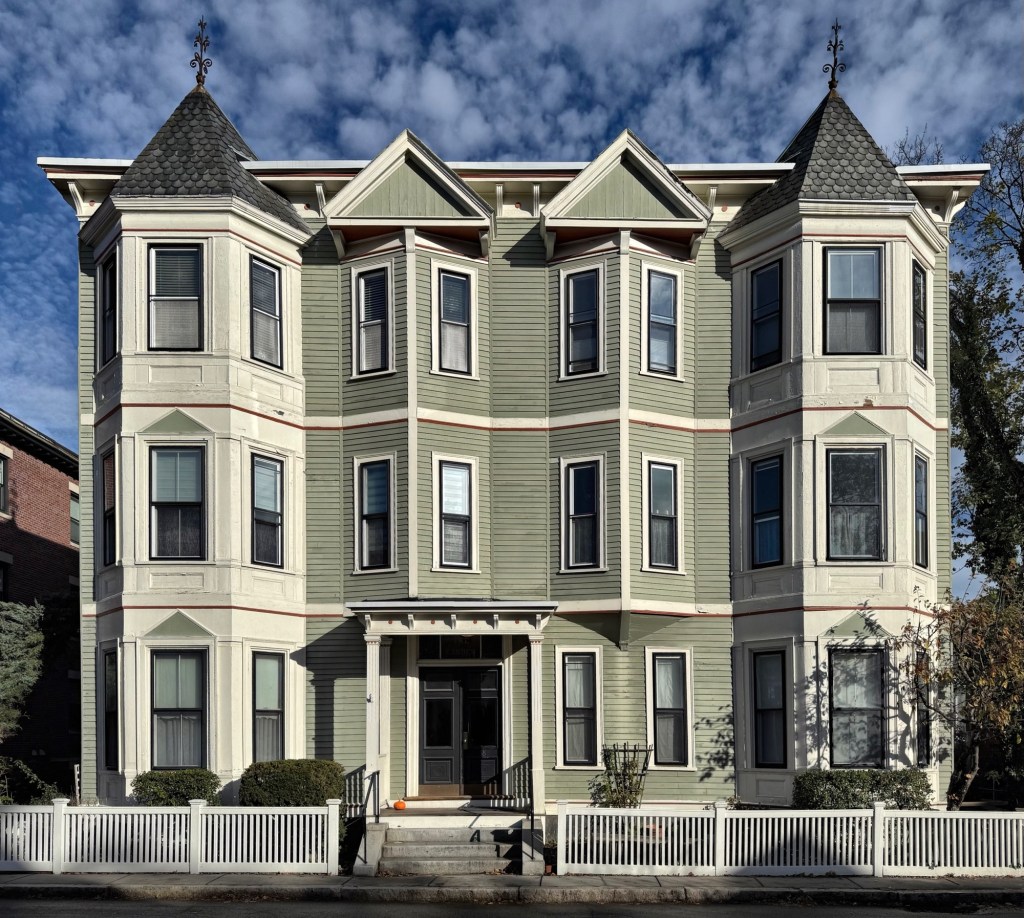
Blenheim Apartments // 1898

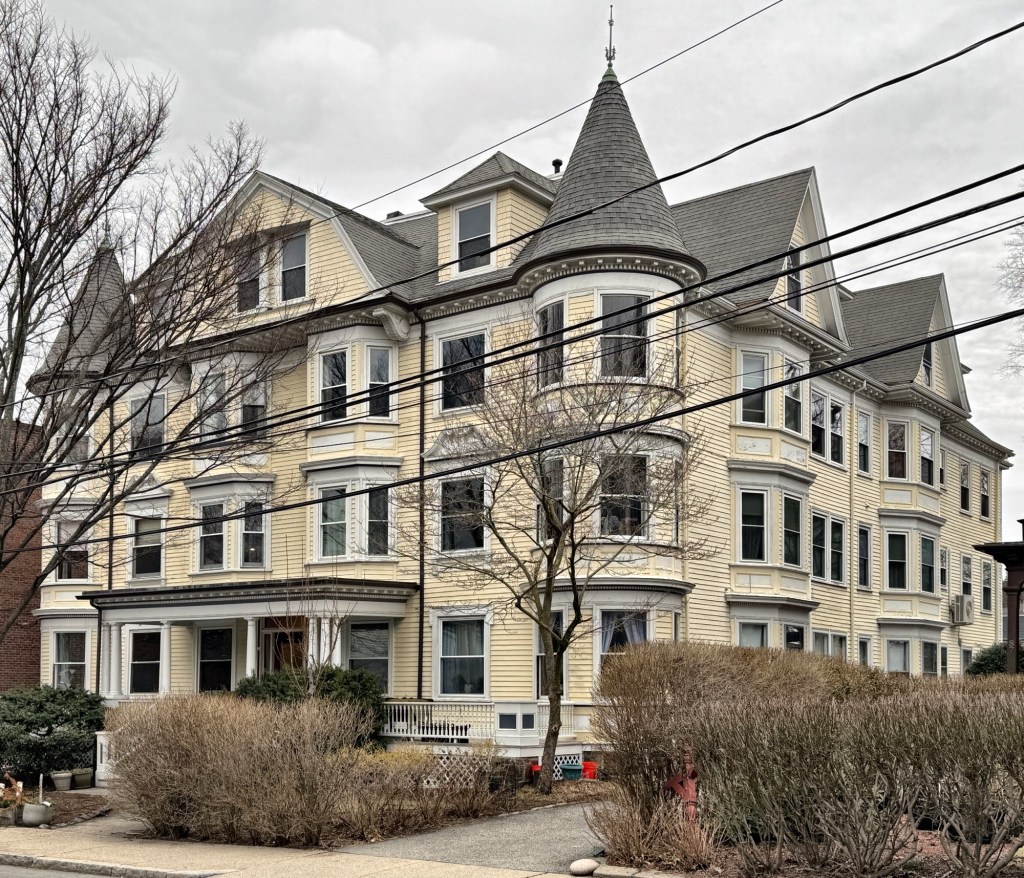
As Brookline, Massachusetts, saw rapid development in the late 19th and early 20th centuries, developers redeveloped lots formerly occupied by single-family residences and built large, multi-family triple-deckers and apartments, specifically in neighborhoods in close proximity to train stations into Boston. This building, constructed in 1898 by local builder, John H. Pineo, for owner, Walter H. Whittemore as an investment property. The building contained six apartments as a double triple-decker with two units on each floors accessed by a central entry and stairwell. The building has been known as the Blenheim Apartments and blends Queen Anne and Colonial Revival styles into a single, eclectic composition. The large massing is broken up by both the undulating facades and roof with projecting bays, dormers and corner towers, along with the applied ornament of panels, dentils, corbels and broken pediment motifs. If all multi-family housing looked like this, people would not complain about density as much!

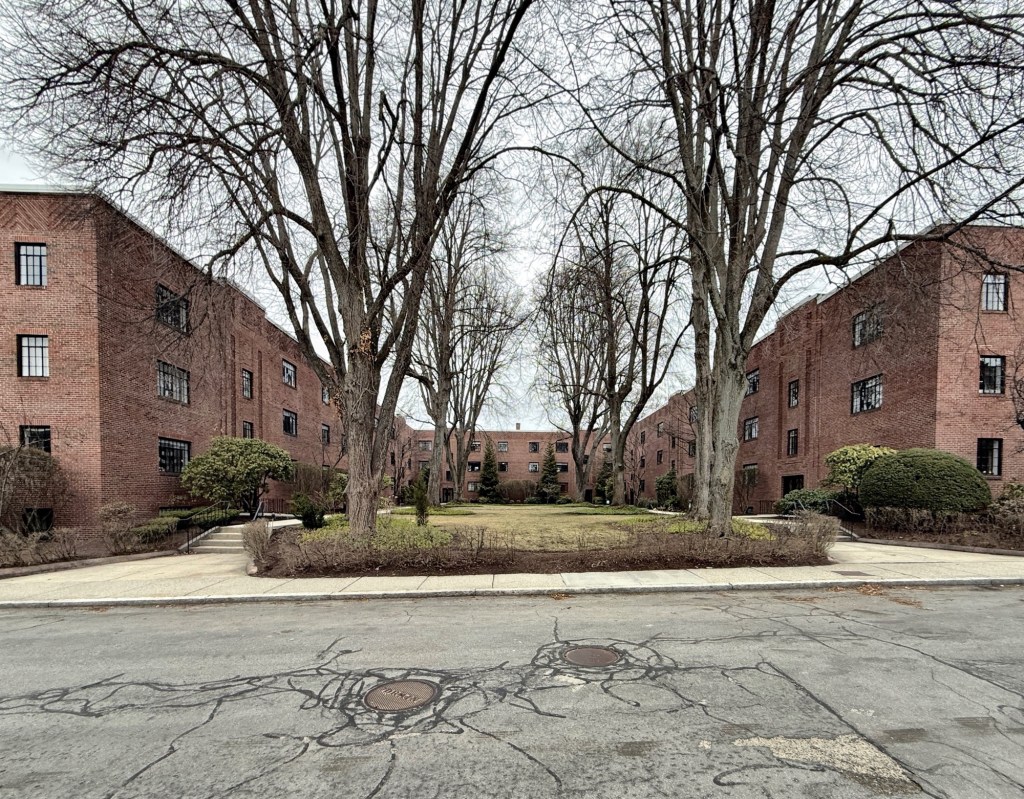
Sewall Apartments // 1938

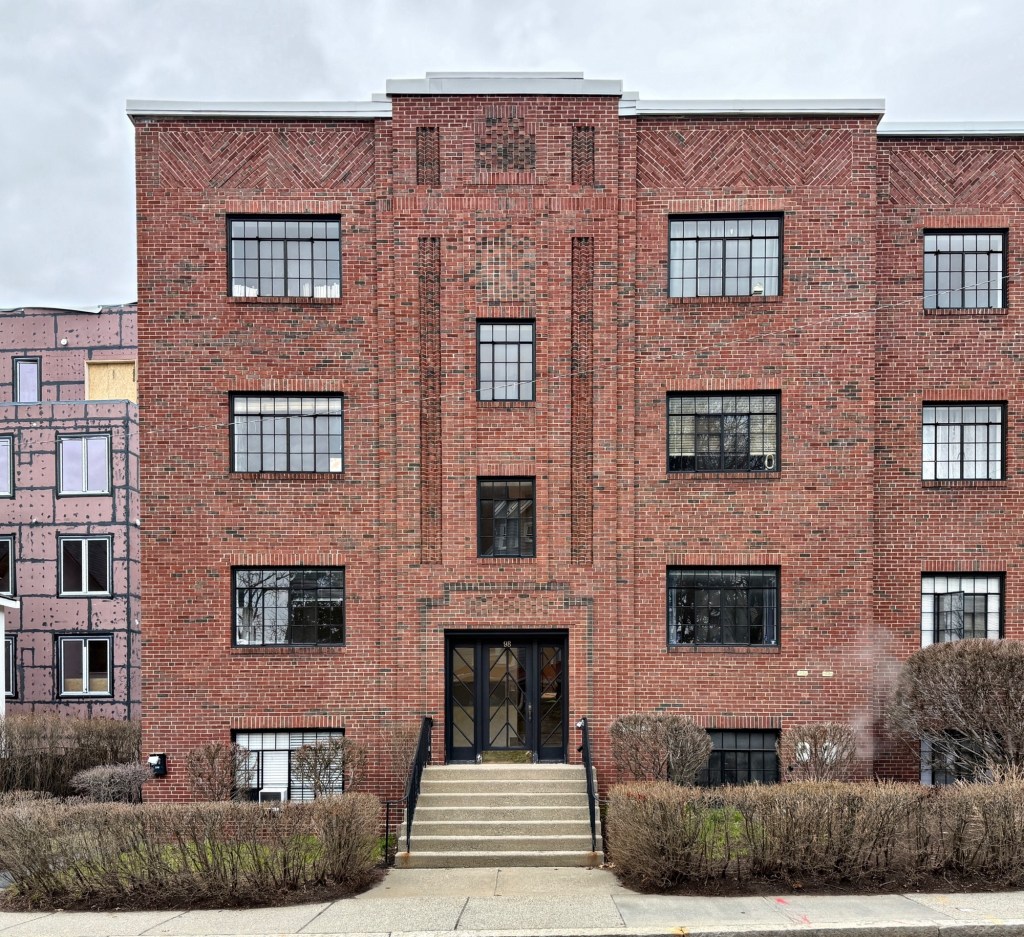
This garden apartment complex at 98-116 Sewall Avenue in Brookline is an excellent example of the Art Deco style which reached its height in popularity in the midst of the Great Depression, so fewer examples of the style are typically found. Here in Brookline, the city was seeing rapid development in the early decades of the 20th century, where large estates were subdivided and commercial areas expanded into once residential neighborhoods. U-shaped in plan and standing three-stories, this complex replaced a large property owned by the Stearns Family, a prominent local family with many properties around present-day Coolidge Corner. The apartments were developed by the G & S Investment Company, a real estate development firm, who hired architect, Saul Moffie, to design the building. Completed in 1938, the complex has richly articulated facades with a variety of geometric brick patterns, including chevrons, diapering, header courses and soldier courses with each entryway identified by a projecting pavilion with a stepped stone parapet above. The doors and sidelights are wood with glass panels in a chevron motif similar to the brickwork and all residential units have steel multi-pane windows. What a gem!

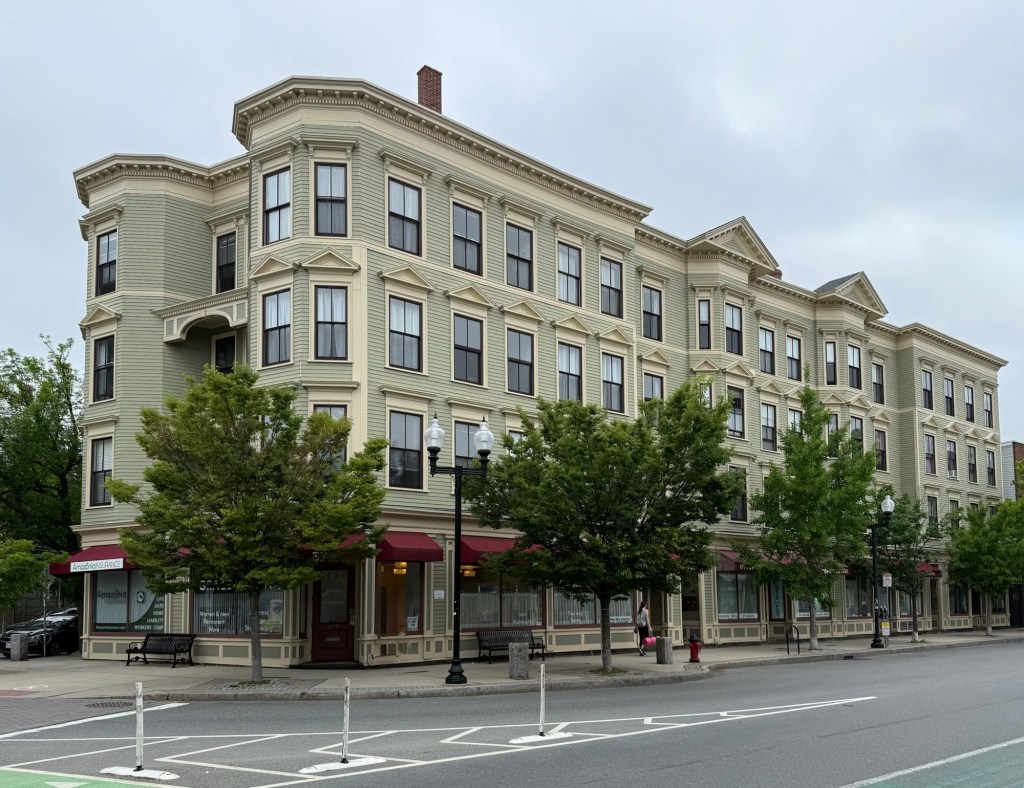
The Linden Apartments // 1885

The Linden Apartments is an early multi-family apartment building in Brookline Village that shows how density can be done tastefully. The building is located at the center of Linden Place, Brookline’s first planned subdivision which was laid out in the 1840s. By the end of the 19th century, development pressure associated with the growth of Brookline Village lead to further subdivision of the original building lots and greater density of settlement in this neighborhood. The Lindens was constructed in 1885 by and for James W. Tobey (1830-1914), a local builder, as an income-generating property. Designed in the Queen Anne style, the Linden Apartments contained six suites, all with exceptional quality materials and finishes. The façade is embellished with two octagonal bays at the ends and two angled bay windows with gables which break up the otherwise rectangular form. The building has been lovingly maintained by residents and contributes to the rich history of Brookline Village from a sleepy village to a vibrant and dense “downtown”.

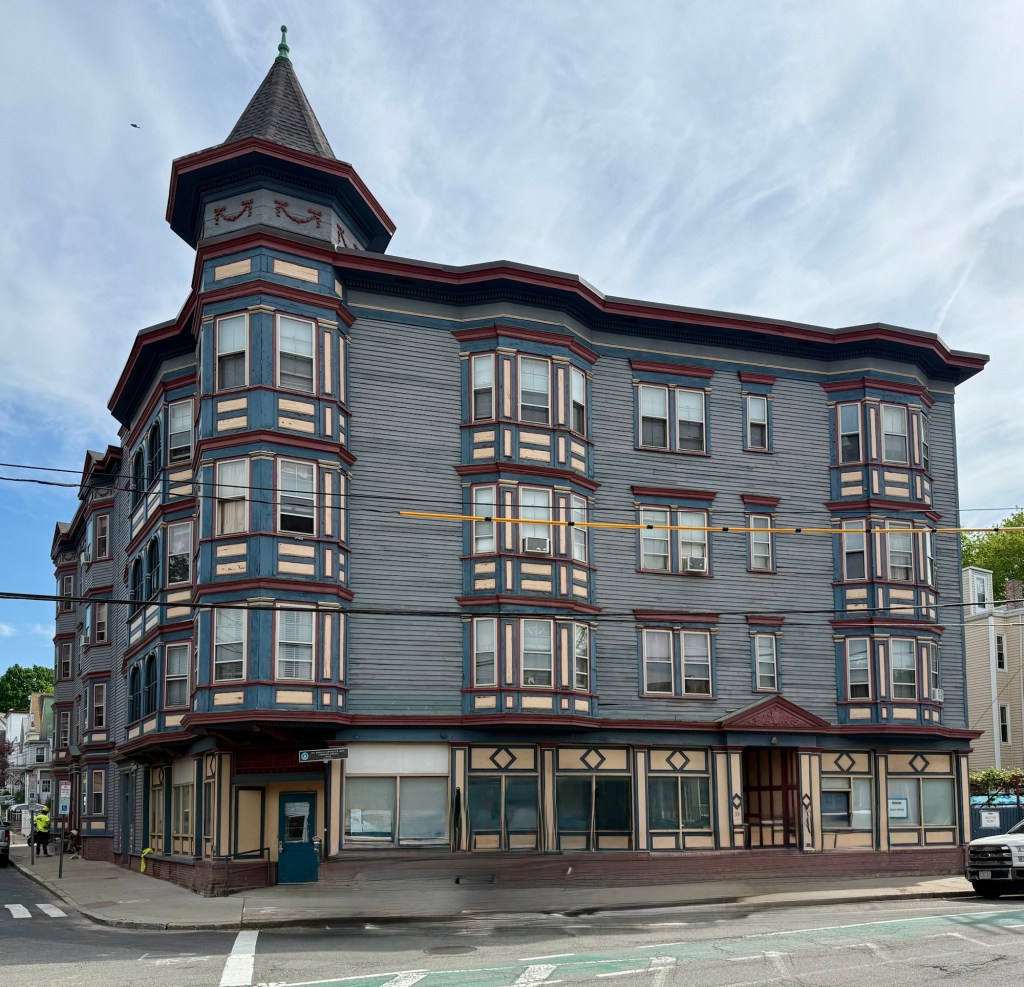
Drouet Block // 1896

Built in 1896, this handsome, four-story flatiron building at the corner of Bow Street and Somerville Avenue in Union Square, Somerville, was the largest tenement building in the city when completed. The property was developed by Charles Drouet, from plans by local architect, Aaron Hibert Gould. The block originally housed 37 apartments above six retail spaces at the street-level. The series of projections and an interior courtyard provided light and air into the apartments, which made them highly functional and desirable for families in the area. The building is more Colonial Revival than the 1892 Queen Anne style Richmond Apartments, also designed by Aaron H. Gould for Mr. Drouet nearby. The Drouet Block is a well-preserved example of late 19th century tenements in Somerville.

Richmond Block // 1892

The Richmond Block on Bow Street in Union Square, Somerville, is a historic and architecturally significant mixed use building. Constructed in 1892 as one of the substantial wood-frame buildings in the western section of Union Square, the Richmond was designed by architect Aaron Gould for Mr. Charles Drouet, who developed the Drouet Block, a historic flatiron building just years later. Designed in the Queen Anne style, this building is noteworthy for its corner tower, octagonal oriel bay windows, sleeping porches on the side facade, and polychromatic color scheme to highlight the many architectural details on the block.

The Highland Apartments // 1892

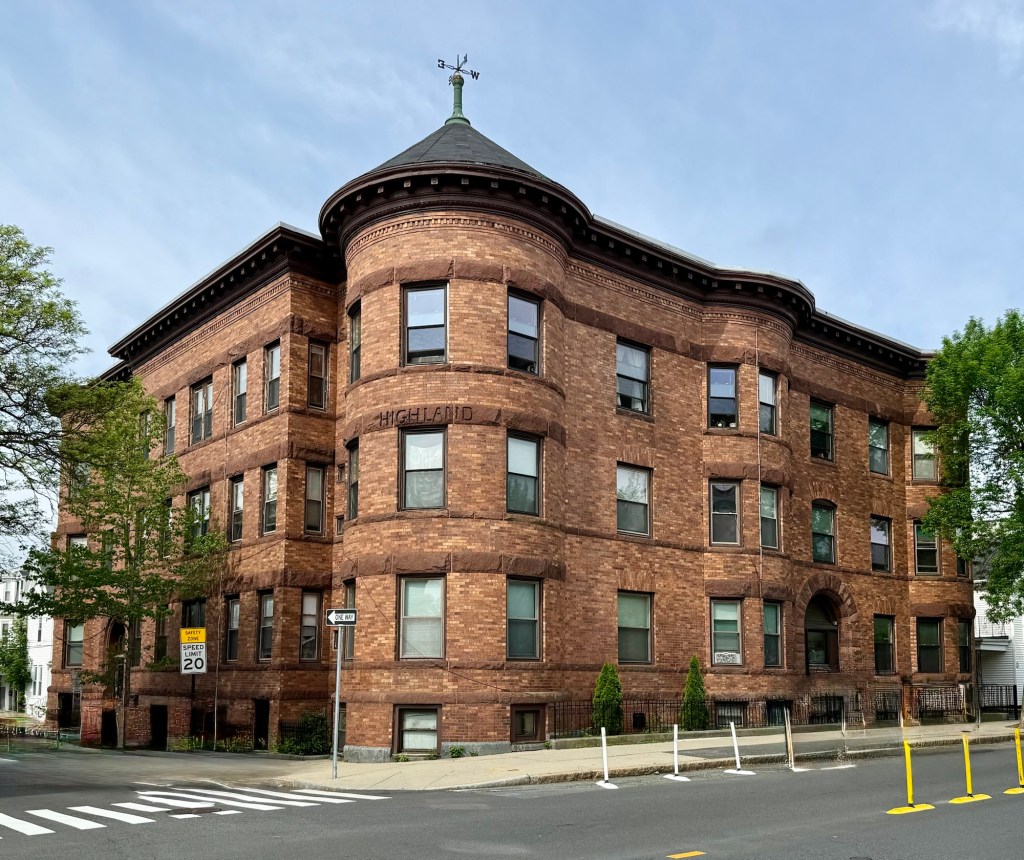
The Highland Apartments, on Highland Avenue in Somerville, is one of the city’s most architecturally distinguished and significant late 19th century apartment buildings. Richardsonian Romanesque in style, the building is constructed of brick with brownstone trimmings, a rounded corner tower with conical roof, and Romanesque arched entrances. The building even retains its name, “Highland”, carved in brownstone at the corner. The building contained 12 units, all with multiple windows and views of the adjacent park or ever-growing Boston from its hilltop location. The architect, Samuel Dudley Kelley, was a noted designer of apartment buildings at the time. The Highland remains an important, preserved example of late 19th century multi-family housing, and showcases how far we have fallen when designing such structures today. 

New England Fireproof Construction Co. Apartments // 1917

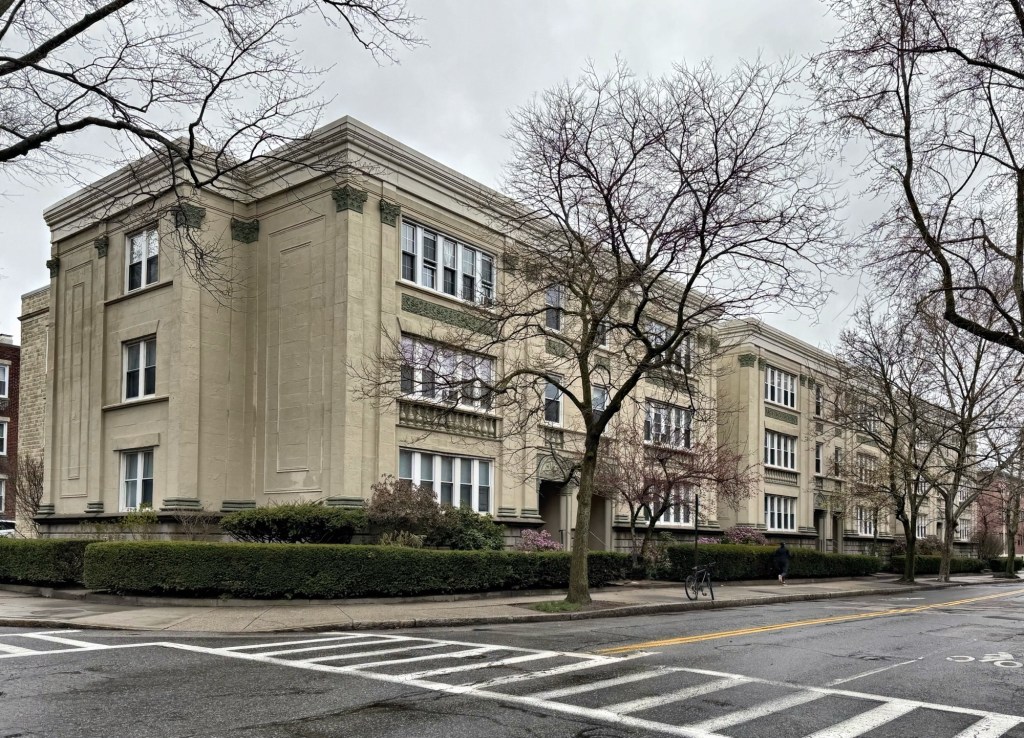
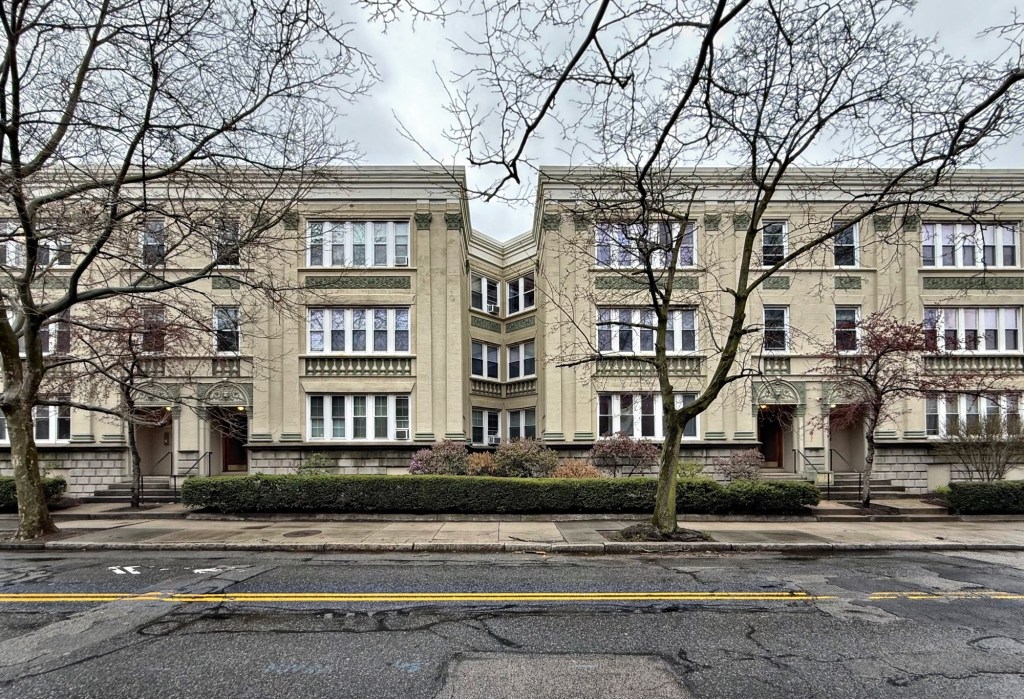
One of the most unique and architecturally pleasing buildings in Brookline has to be these apartments on Egmont and St. Paul streets that break the mold of traditional brick or wood-frame apartment houses. Built in 1917 by the New England Fireproof Construction Company as an example of how cheaper cement material can be used effectively and beautifully to design and construct high-quality housing. The company hired architect G. Bertram Washburn to design the buildings which utilize concrete block and cast concrete details with the facades embellished with pilasters capped with Corinthian capitals, engaged balusters, and modillioned and corniced entrances decorated with a lion’s head over each doorway. Additionally, a special touch is the recessed wells in the facade which not only break up the massing of the building, but provide additional light and air into the apartments inside. 

Temple Court Apartments // 1912

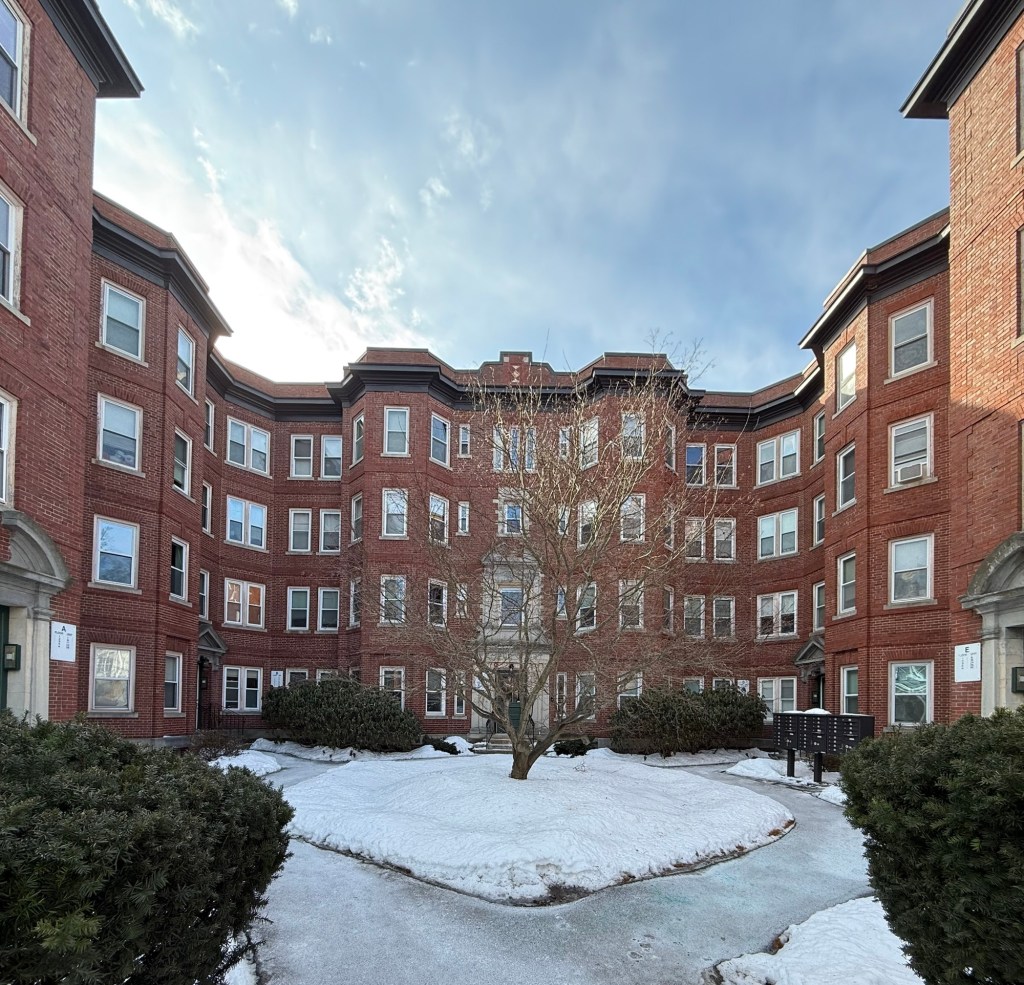
Constructed in 1912, Temple Court at 15 Lynde Street was erected on the site of two earlier buildings during a period of great population growth in Salem. The parcels here were acquired by Aroline C. Gove (1857-1939), a prominent local property-owner and developer between 1908 and 1911. Ms. Gove was a prominent Salem citizen and daughter of notable inventor and businesswoman Lydia Pinkham. With a business-oriented mindset like her mother, Aroline hired architect Harry Prescott Graves of Lowell to furnish plans for an apartment building on this site. Completed in 1912, the apartment building, known as Temple Court, included 36 units with two-, three-, and four-room suites with a live-in janitor. The building is unique for Salem as a courtyard style building, more common in Boston and Brookline. The building’s large mass is broken up by its setback with the U-shaped form and central landscaped courtyard, series of projecting octagonal bays, and multiple entrances. Temple Court was converted to condominiums in the 1980s.

282 Beacon Street // 1927

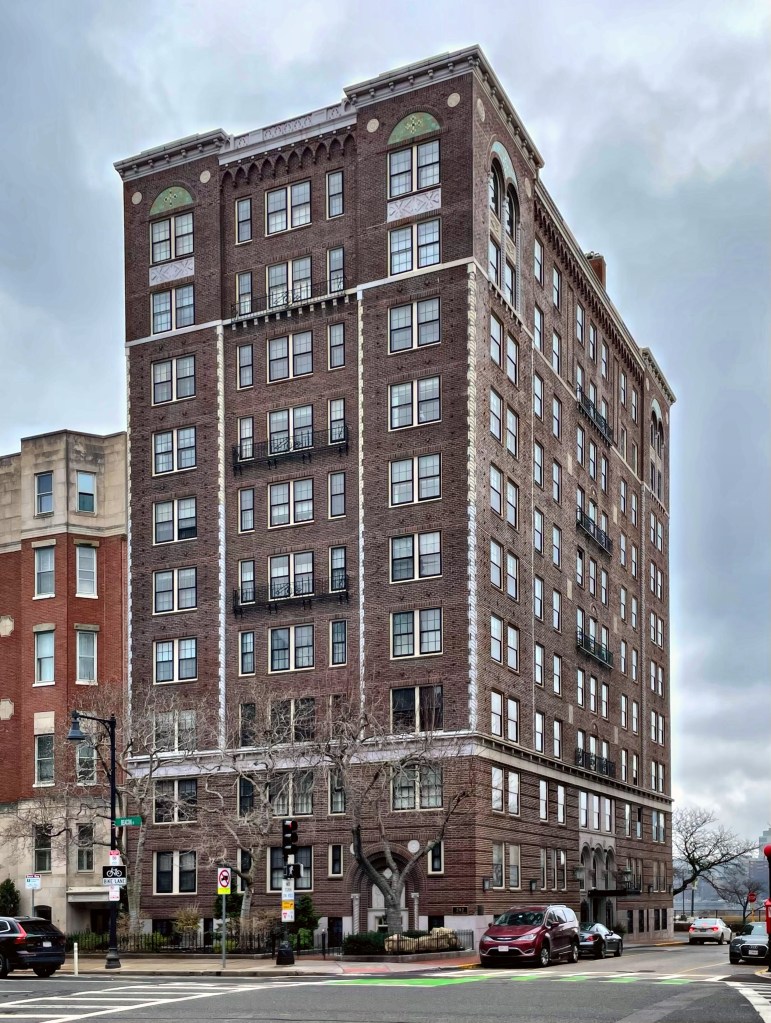
One of the finest apartment-houses in Boston is this towering building at the corner of Beacon and Exeter streets in the Back Bay neighborhood. In 1926, real estate dealers Elliott Henderson and Roger B. Tyler purchased two townhouses on small lots and demolished them for the present structure. They hired the architectural firm of Blackall and Elwell furnished the plans for the 11-story Renaissance Revival style residence which included ten large apartments. The design is unique to the Back Bay with amazing cast stone details at the entries with rounded arch windows, fanciful brickwork, and spiral columns!

Hotel Bretagne // 1897

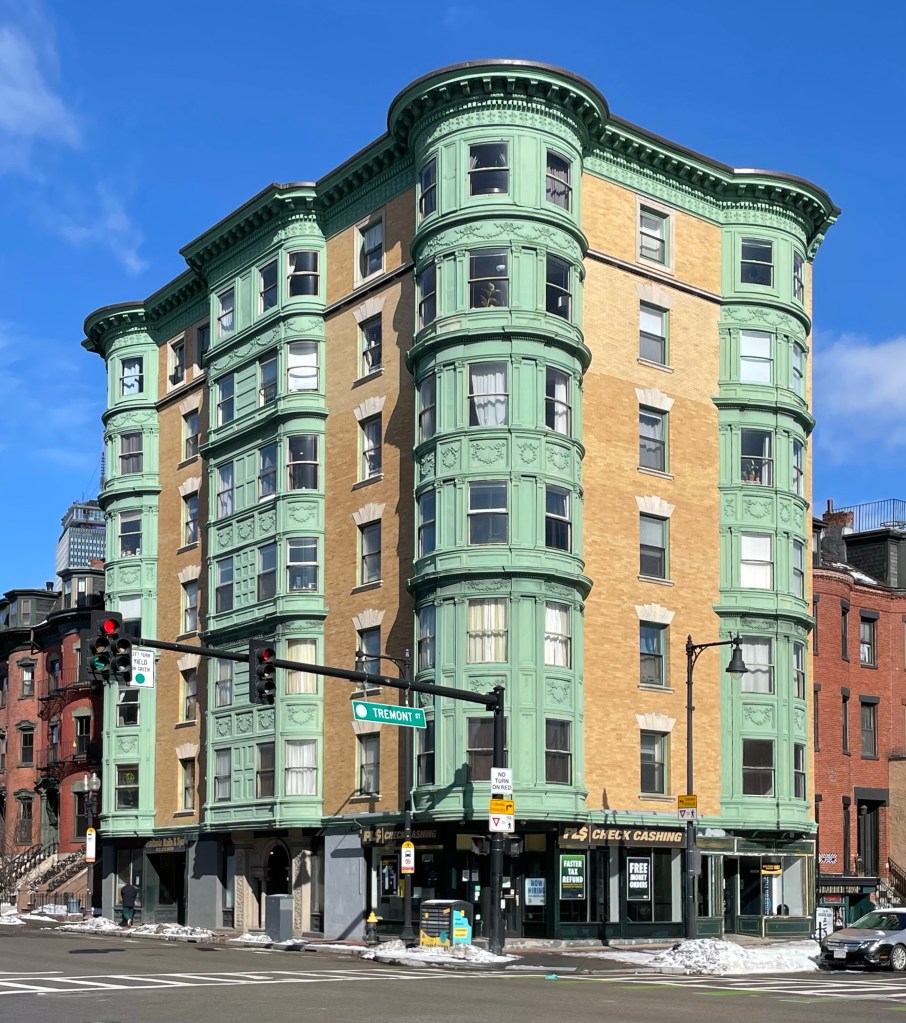
Located at the prominent corner of Mass Ave and Tremont Street in Boston’s South End neighborhood, this beautiful apartment building has long caught my eye, but I finally got around to looking up its history! The building was constructed in 1896-7 by Albert Geiger, a real estate developer who sold the completed building to a Josiah P. C. Marshall. The building is Classical Revival in style and had eleven suites for rental. The blond brick building with Indiana limestone trim are gorgeous, but the showstoppers are the metal bay windows with decorative wreaths and garlands.