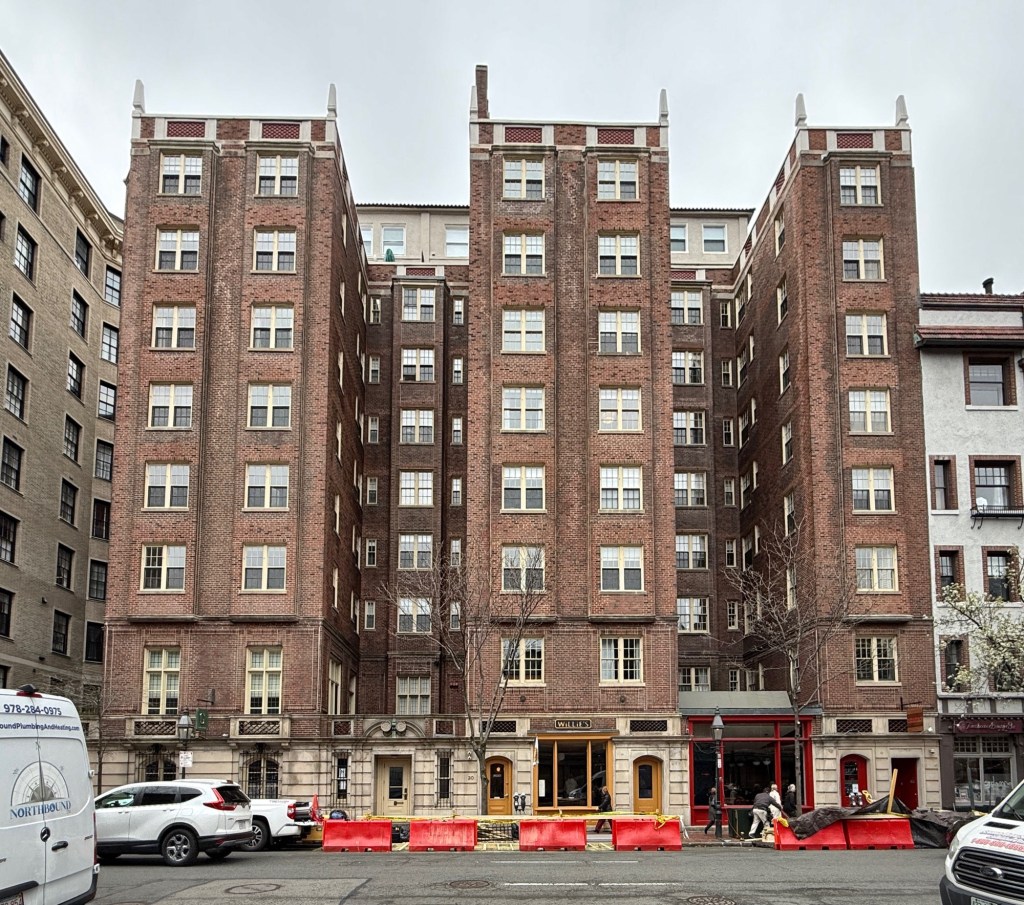
Hotel Lincolnshire // 1924

The Hotel Lincolnshire is a stunning eight-story apartment building on the west side of Charles Street in Boston’s Beacon Hill neighborhood. The building was developed in 1924 by William Coombs Codman, a real estate developer and member of the Beacon Hill Associates, a group of preservationists who bought and resold properties in the neighborhood with the aim to limit unsympathetic development. The group helped the Beacon Hill Flat area, which was a higher concentration of former stables west of Charles Street, a gentrified artist and residential enclave. The Hotel Lincolnshire was marketed as a residential apartment hotel, with furnished and unfurnished apartments with greater amenities than a traditional apartment building. Beacon Hill resident and architect, Richard Arnold Fisher, was responsible for designing the building, where he employed the use of courtyards (similar to his design nearby at 101 Chestnut Street) and walls of brick with cast-stone details. Of special interest is the use of perforated terracotta panels laid in half-round forms and the stone pinnacles at the parapet.
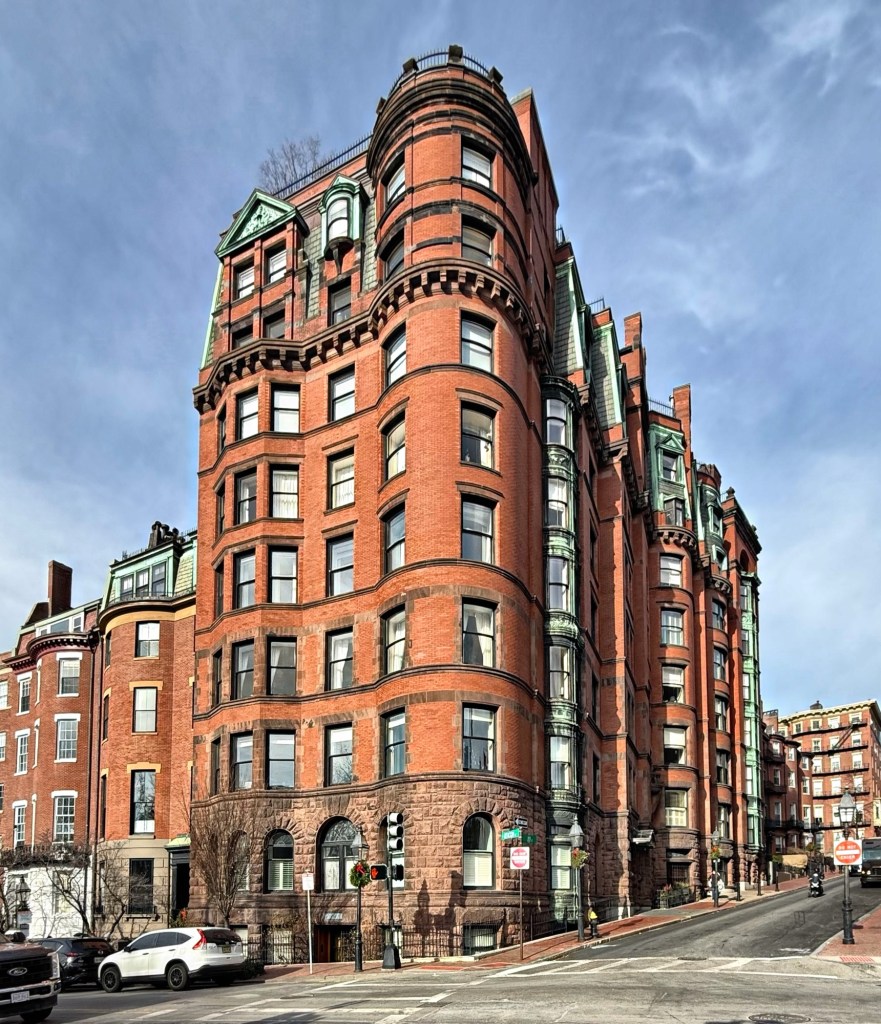
Tudor Apartments // 1887

Frederic Tudor (1783-1864) was a businessman and merchant known as Boston’s “Ice King” having founded the Tudor Ice Company and becoming a pioneer of the international ice trade in the early 19th century. Frederic Tudor lived in a house at the corner of Beacon and Joy streets in Beacon Hill, Boston, and after his death, the property was inherited by his widow, Euphemia Fenno and their children. By 1885, the old Tudor House was demolished and replaced by The Tudor Apartments, which was built between 1885 and 1887 to house twelve upper-class families who sought smaller living space as opposed to the typical townhouses in Beacon Hill. Designed by architect, Samuel J. F. Thayer, the nine-story Queen Anne/Romanesque Revival building features a brownstone base with brick walls above, combining the traditional Boston bowfront with late 19th century flair at the upper floors with the partial mansard roof punctuated with dormers and oriel windows. Thayer designed the Joy Street elevation with cascading bays to provide interiors with views of the Boston Common and ample natural light.


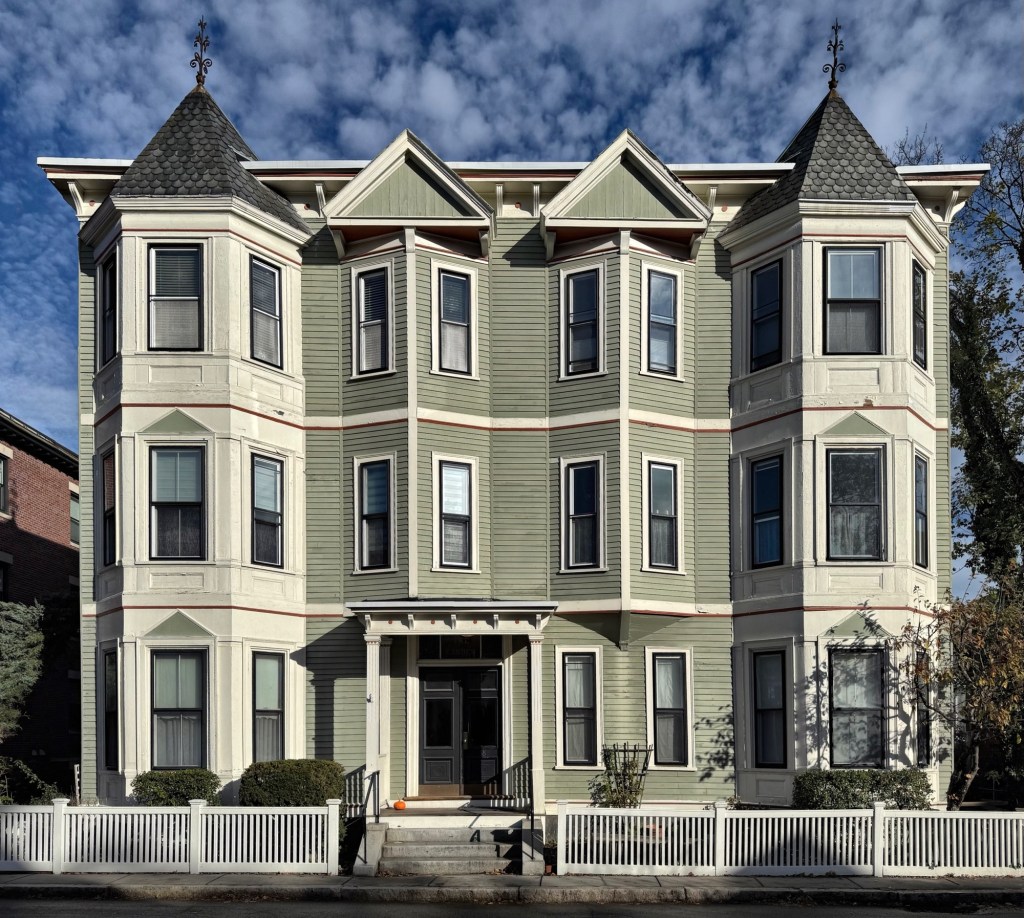
The Linden Apartments // 1885

The Linden Apartments is an early multi-family apartment building in Brookline Village that shows how density can be done tastefully. The building is located at the center of Linden Place, Brookline’s first planned subdivision which was laid out in the 1840s. By the end of the 19th century, development pressure associated with the growth of Brookline Village lead to further subdivision of the original building lots and greater density of settlement in this neighborhood. The Lindens was constructed in 1885 by and for James W. Tobey (1830-1914), a local builder, as an income-generating property. Designed in the Queen Anne style, the Linden Apartments contained six suites, all with exceptional quality materials and finishes. The façade is embellished with two octagonal bays at the ends and two angled bay windows with gables which break up the otherwise rectangular form. The building has been lovingly maintained by residents and contributes to the rich history of Brookline Village from a sleepy village to a vibrant and dense “downtown”.