Forest Hills Cemetery – Crematorium & Columbarium // 1893

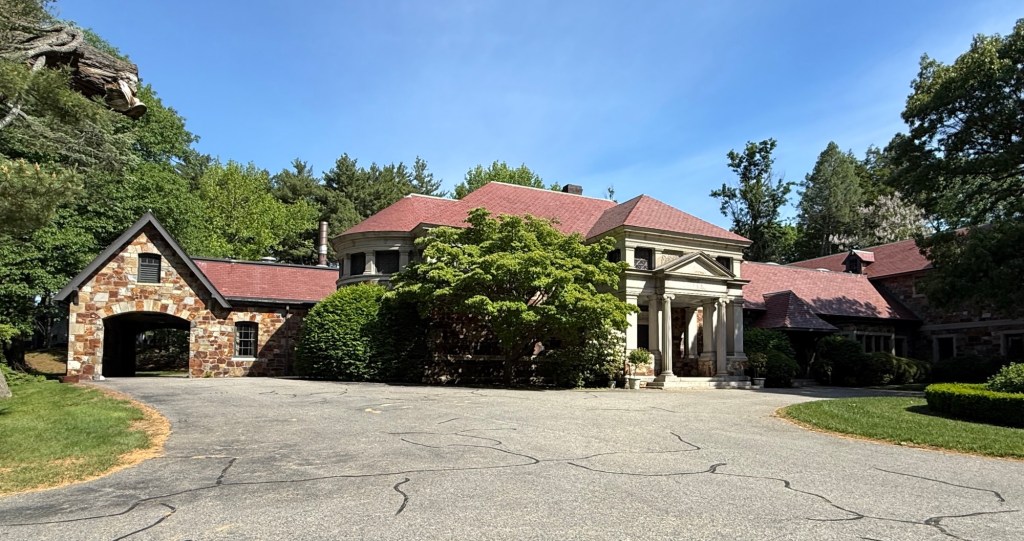
Separate from the main cemetery parcel, the Forest Hills Cemetery Crematory and Columbarium is architecturally significant and also historically significant as the the first crematory in New England. The cremation building was constructed in 1893 by the Massachusetts Cremation Society, an organization unaffiliated with the cemetery across the street. The original crematory building was designed by Ludvig Sandöe Ipsen, a Danish-American artist and designer who is best-known for his book illustrations. It is unclear why Ipsen, who had almost entirely given up architecture as a profession, was selected by the Massachusetts Cremation Society, but he showcased his design expertise for this handsome masonry building. The original crematory included a chapel, operating plant, guest area, and offices. Classical Revival in style, the building is constructed of granite with limestone trim and capped by a red slate roof. The first cremation in New England occurred here in 1894, when Lucy Stone, the important abolitionist and suffragist, passed away and was cremated here. The chapel inside the building was named after Lucy Stone. In 1905, the columbarium was added from plans by Ipsen, where cremated remains of the dead are stored and displayed in urns. In 1925, the property was sold to the Forest Hills Cemetery association and the building expanded to its current size.
Forest Hills Cemetery – Receiving Tomb // 1871

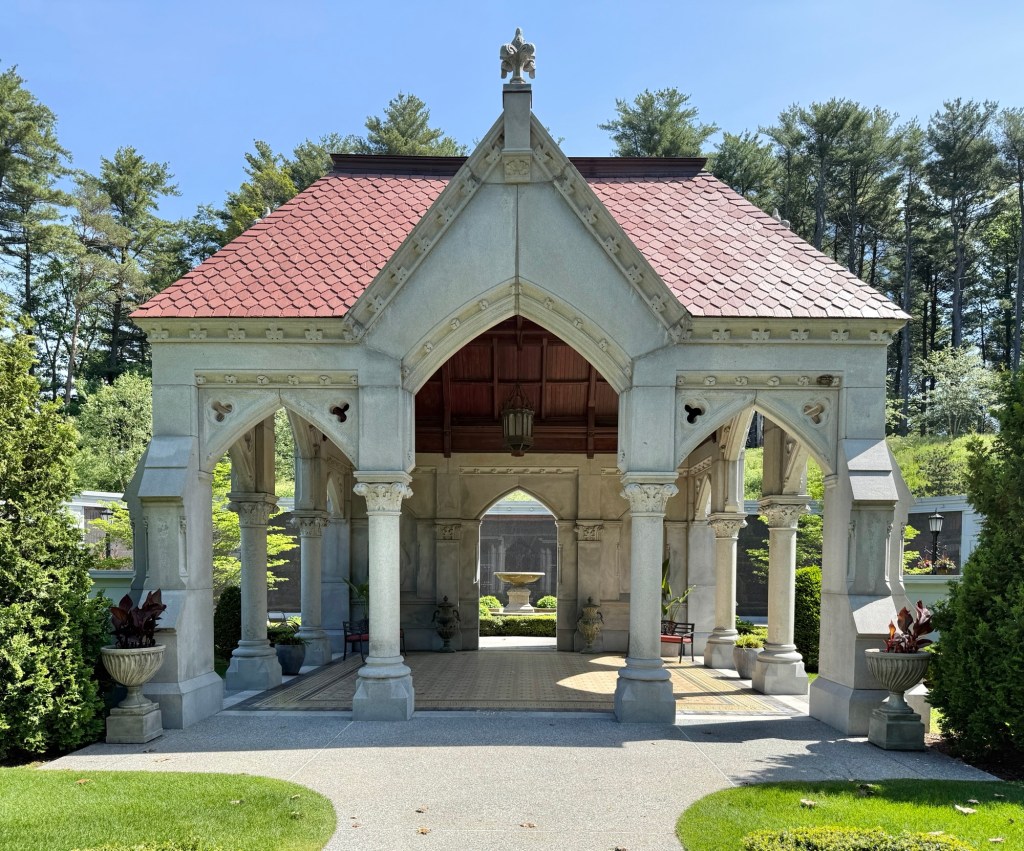
The Gothic Revival receiving tomb at Forest Hills Cemetery in Boston is located not far from the iconic entrance gate and chapel/offices. The structure was built in 1871 and designed by architects, Carl Fehmer and William R. Emerson in the Gothic style, a prevalent aesthetic that the overseers encouraged for the various 19th century buildings constructed on the grounds. Historically, the Gothic Revival structure served as the entrance to underground holding tombs for the temporary storage of bodies awaiting burial or relocation, typically stored when the ground was too frozen for burial. The structure features a granite structure with oak ceiling and painted tile flooring. A massive project began in 2016 to excavate and build a new Garden Mausoleum, built into the landscape with the restored Receiving Tomb serving as the focal point. The tomb portico was adapted as a gateway to an open-air courtyard flanked by walls set into the slope which contain internment chambers for burials, with a restored fountain in front and woman archer statue atop.

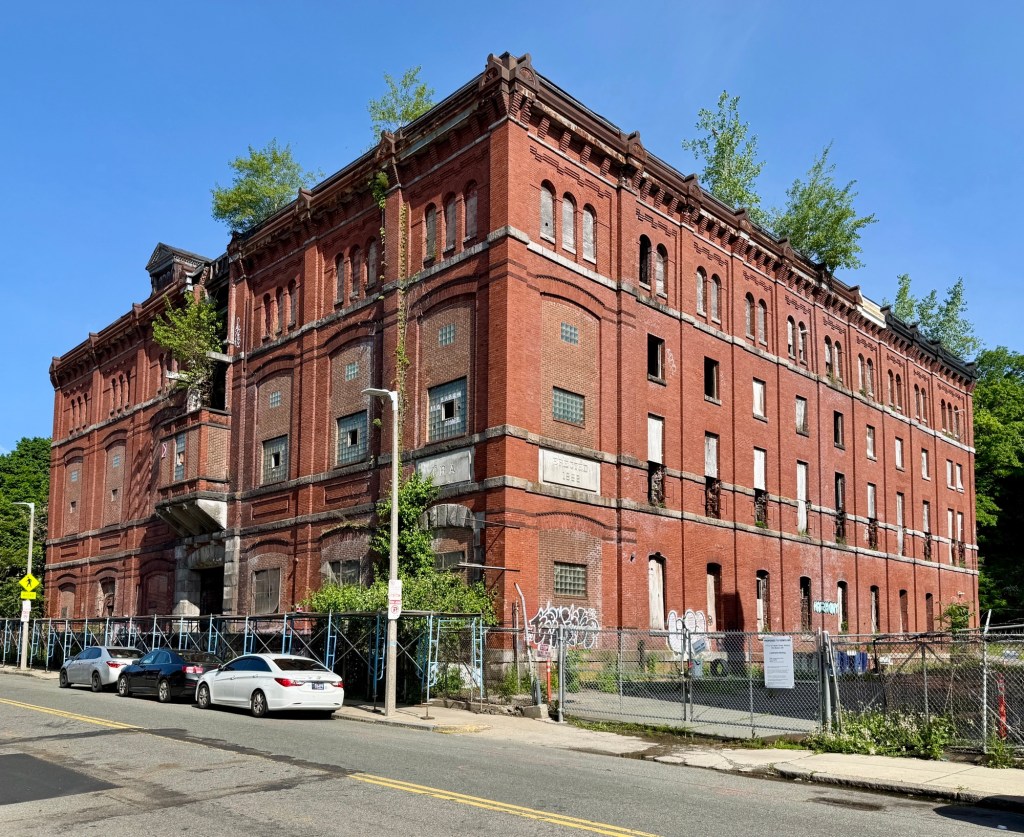
Alley-Eblana Brewery // 1886

This iconic Boston building is threatened with demolition!

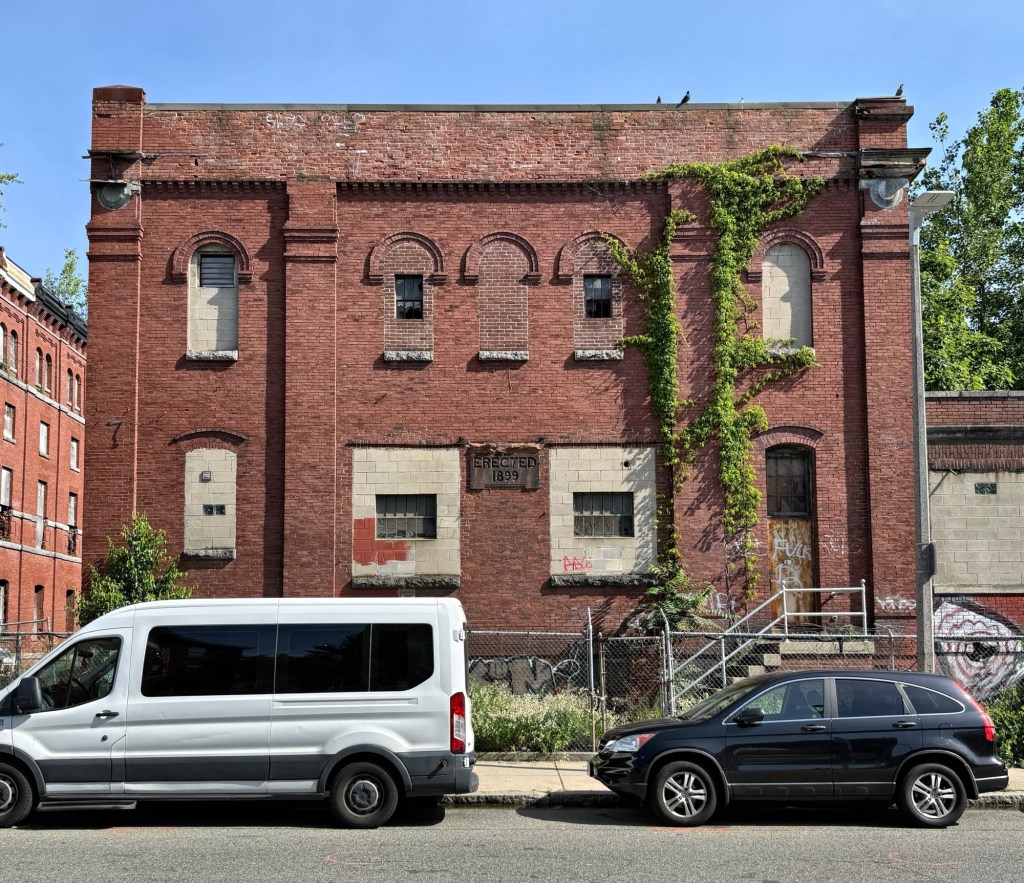
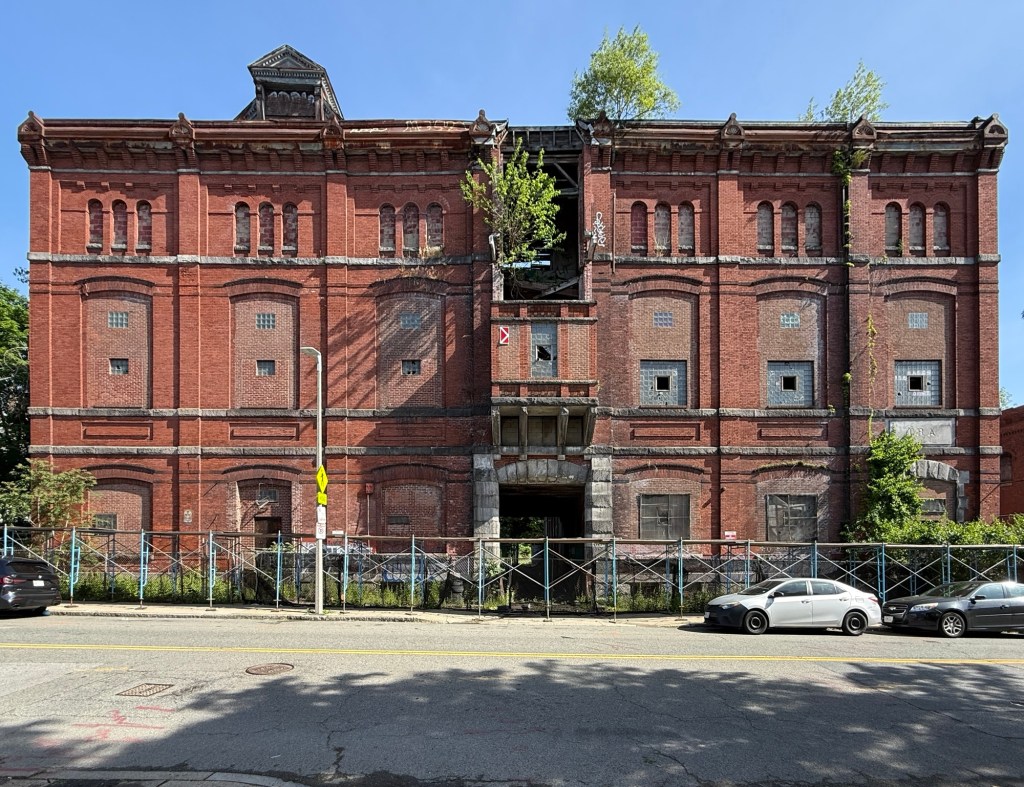
The clock is ticking for the Alley/Eblana Brewery, a historically and architecturally significant building in Boston’s Mission Hill neighborhood. Located on Heath Street, the historic Alley Brewery, also known as the Eblana Brewery, stands as a striking reminder of the city’s once-thriving brewing industry. Founded by Irish immigrant John R. Alley (1822-1888) in the mid-1880s, the brewery produced the popular Eblana Irish Ale, a name derived from the ancient term for Dublin, reflecting Alley’s heritage and the strong Irish influence in the area. John Alley previously co-owned the Highland Spring Brewery nearby, but founded a brewery in his own name in 1885. For his brewery, Alley hired Philadelphia architect Otto C. Wolf, who was the nation’s premier brewery architect and engineer in the late 19th and early 20th centuries. The four-story complex was built in 1886 and showcased some of the most advanced brewing technology of its era while displaying an impressive blend of brick and granite craftsmanship. Its distinctive façade features a dramatic central bay, granite-trimmed arches, rough-faced stone braces, wrought-iron gates, and carved stone plaques bearing Alley’s initials and the date of construction. After John’s death in 1888, the business continued under the ownership of his two sons, Frederick and George. The brothers in 1899, added the adjacent bottling and refrigeration building, which employs similar architectural features and materials to the main brewery. Brewing here ceased with Prohibition and the structure later served a variety of manufacturing uses, when during the 1960s, many windows were filled with brick. The Alley-Eblana Brewery remains one of Boston’s most architecturally significant surviving brewery buildings, embodying Boston’s rich industrial and ethnic heritage, but it is threatened. Developers have owned the building since 2013 and have done nothing to preserve or even maintain the structure, making it a case of demolition by neglect. They are requesting to demolish both structures, but the demolition has been delayed 90-days through the Boston Landmarks Commission Demolition Delay review process. If you want to see the building repurposed and saved, reach out to the Boston Landmarks Commission and advocate for its adaptive reuse, which would provide housing and maintain a significant architectural landmark for the community.

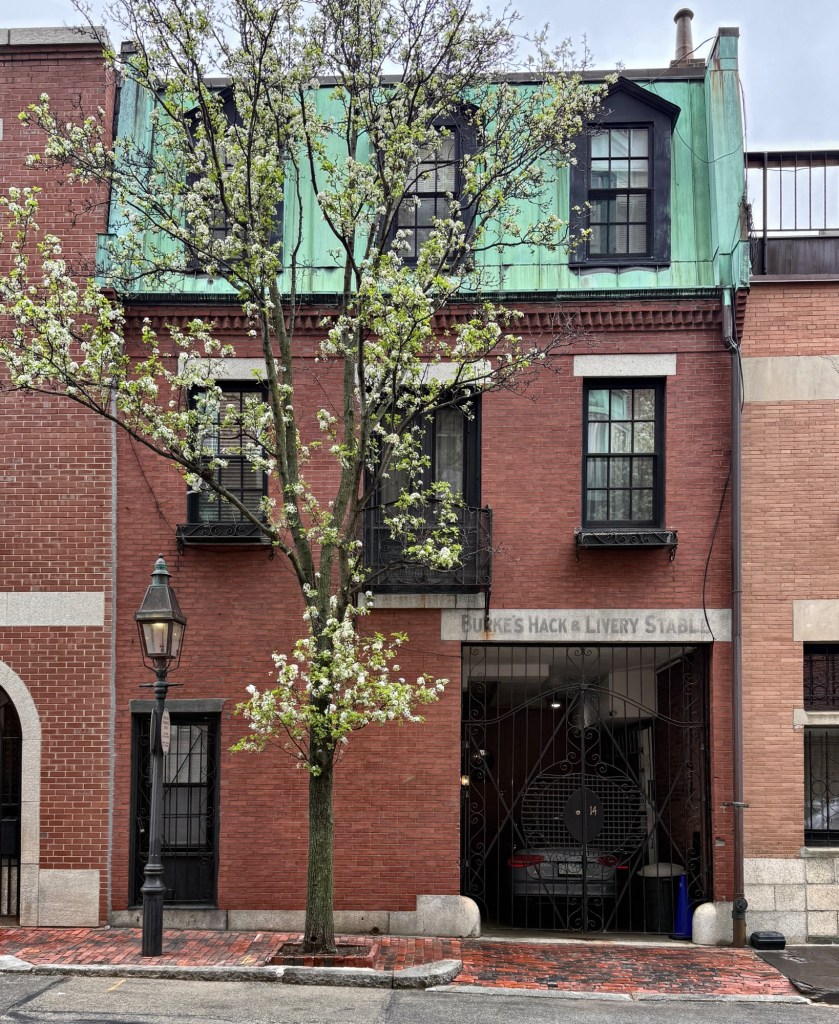
Burke’s Hack & Livery Stable // c.1865

This handsome two-story brick stable on Byron Street in Boston’s Beacon Hill neighborhood was built around 1865 for the Sigourney family, and its front façade retains a distinctive appearance associated with that period. The brick façade sits on a granite base, and the first story contains two entrances characteristic of its stable use: a vehicle door providing access to ground floor and a domestic entrance connecting to stairs leading to upper levels including stableman’s quarters on the top floor. Around the time of WWI, the property was owned by James F. Burke, who added the painted sign over the carriage entry. The stable was converted to a residence in about 1964 for owner, Jay Schrochet by architect, Benjamin S. Fishstein and remains a single-family home today.

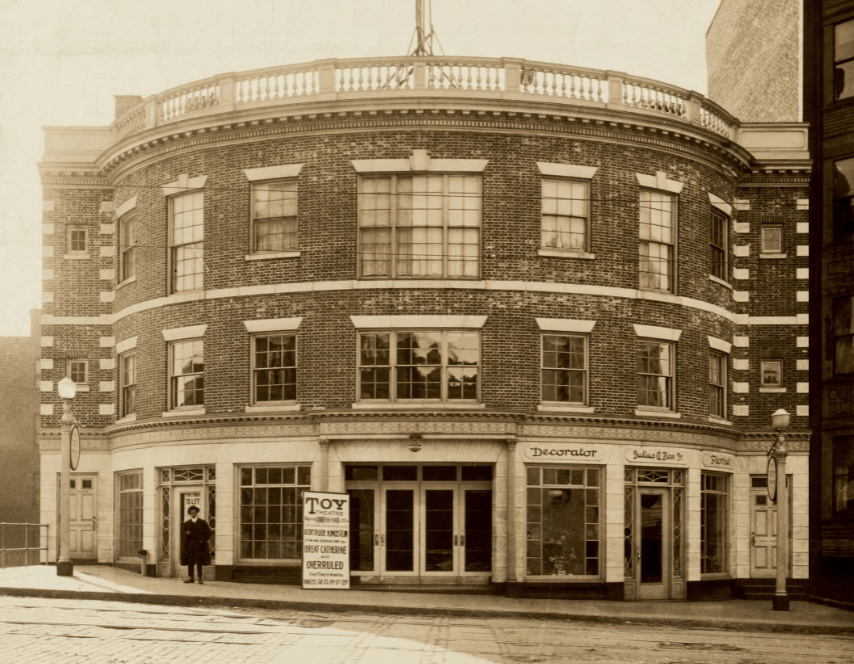
Toy Theatre – Copley Theatre // 1914-1921

Photo courtesy of Boston Public Library collections.

When the Toy Theatre on Lime Street in Beacon Hill (last post) was formed in the early 20th century, the members of the small theatre group of well-connected artists and actors had their sights on something with permanence. By 1914, the group had funding and acquired land on Dartmouth street, a block away from Copley Square, and ground was broken to build a large new theatre. Designed by the architecture firm of Putnam & Cox, the fashionable Colonial Revival style building featured a large, rounded facade and was constructed of brick with a marble base and detailing. The theatre was designed with a retail space for supplemental income. Inside, decorations were refined and also included a staircase and railings donated by Isabella Stewart Gardner’s Fenway Court mansion, that were removed when she created the Tapestry Room in her home. The organization could not support running the building through shows, and the space was sold and rebranded as the Copley Theatre within a couple years. Continuing the bad luck, the City of Boston decided to extend Stuart Street by 1921, and this building was along the proposed route. The Toy Theatre was demolished in 1921, after just seven years.

Bayard Thayer House – Hampshire House // 1911

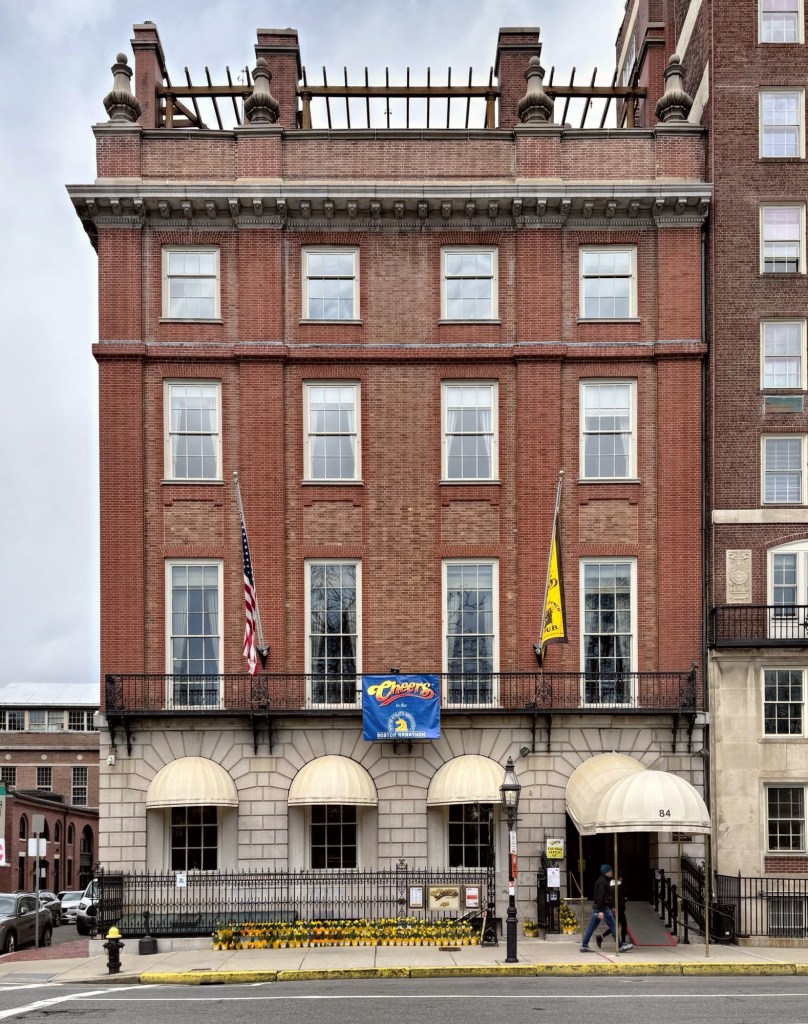
This iconic building at 84 Beacon Street in Boston’s Beacon Hill neighborhood, is best-known for its bar, which in 1982, became world-famous as the locale for the bar in the television sitcom Cheers, one of the most-watched programs in television history; but its history begins earlier. This five-story building was constructed in 1911 as a mansion for Bayard Thayer (1862-1916), who split his time between Boston and his country estate in his home-town of Lancaster, Massachusetts. Thayer hired architect, Ogden Codman Jr., a favorite designer of Boston and New York high-society, to design his Boston mansion, which is an expressive and overscaled example of a Colonial Revival style townhouse. Bayard Thayer died in 1916 and his widow, Ruth Simpkins Thayer, lived here with her granddaughter, Ruth, and nine domestic servants. After Ruth Thayer’s death in 1941, the property was conveyed to the Colonial Properties Trust in 1944, operating the building as a small luxury apartment hotel. From this point on, the hotel became known as Hampshire House. In about 1969, the basement space in the Hampshire House opened as the Bull & Finch Pub, which later became the inspiration of the iconic sitcom Cheers. Pictures of the exterior of the building were used in the show’s credits and scene changes, and the interior was faithfully replicated from the set in Hollywood, where the show was actually filmed. The Bull & Finch Pub has permanently been renamed Cheers Pub and visited by many who wish to visit the place where “everybody knows your name”.

Tudor Apartments // 1887

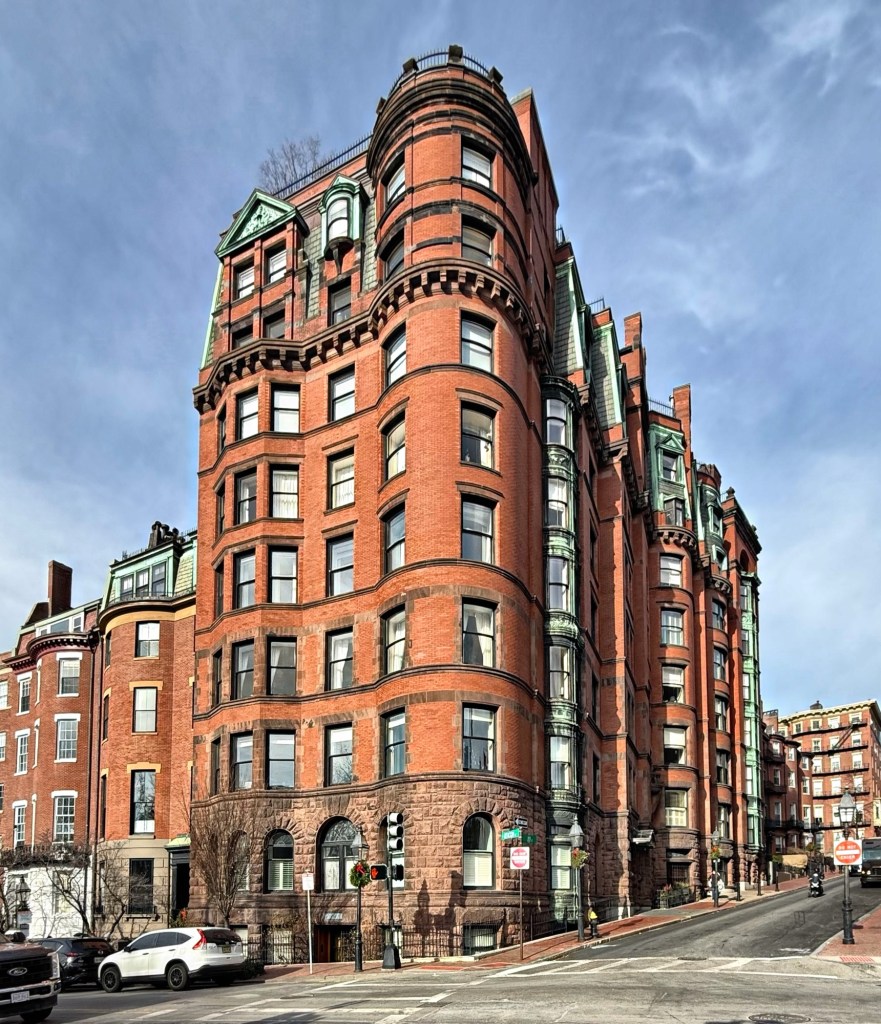
Frederic Tudor (1783-1864) was a businessman and merchant known as Boston’s “Ice King” having founded the Tudor Ice Company and becoming a pioneer of the international ice trade in the early 19th century. Frederic Tudor lived in a house at the corner of Beacon and Joy streets in Beacon Hill, Boston, and after his death, the property was inherited by his widow, Euphemia Fenno and their children. By 1885, the old Tudor House was demolished and replaced by The Tudor Apartments, which was built between 1885 and 1887 to house twelve upper-class families who sought smaller living space as opposed to the typical townhouses in Beacon Hill. Designed by architect, Samuel J. F. Thayer, the nine-story Queen Anne/Romanesque Revival building features a brownstone base with brick walls above, combining the traditional Boston bowfront with late 19th century flair at the upper floors with the partial mansard roof punctuated with dormers and oriel windows. Thayer designed the Joy Street elevation with cascading bays to provide interiors with views of the Boston Common and ample natural light.


Former Somerville District Courthouse // 1925

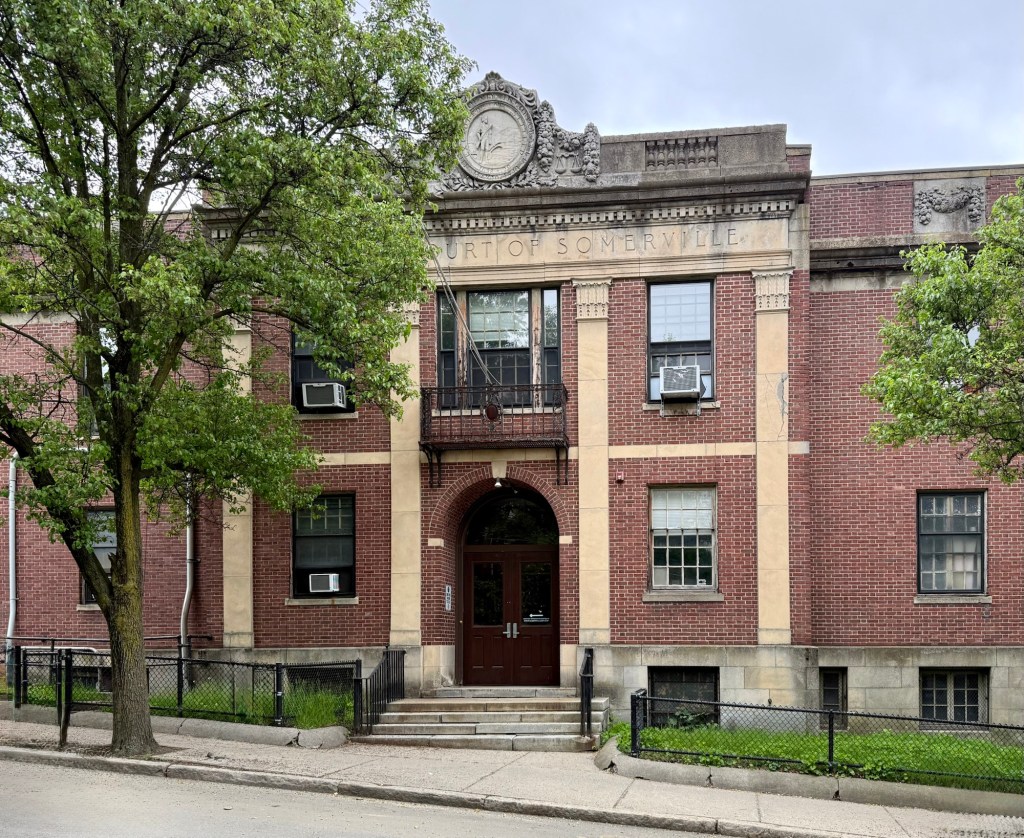
The former Somerville District Courthouse at 19 Walnut Street in Union Square, is a two-story masonry building constructed in 1925. While much smaller and less ornate than other courthouses, the small building is significant as the first courthouse built in the young city and an architecturally significant example of a Classical Revival style civic building designed by architect Charles R. Greco. The building served as the Somerville District Courthouse until the late 1960s, when the legislature authorized a new district courthouse. The City of Somerville purchased the old courthouse in 1969, and the building has housed offices for the City’s Recreation Commission since that time. Interestingly, the building was used for the filming of a courthouse scene in the 1980’s “Spencer for Hire” TV detective show.

Former Somerville Police Station // 1874

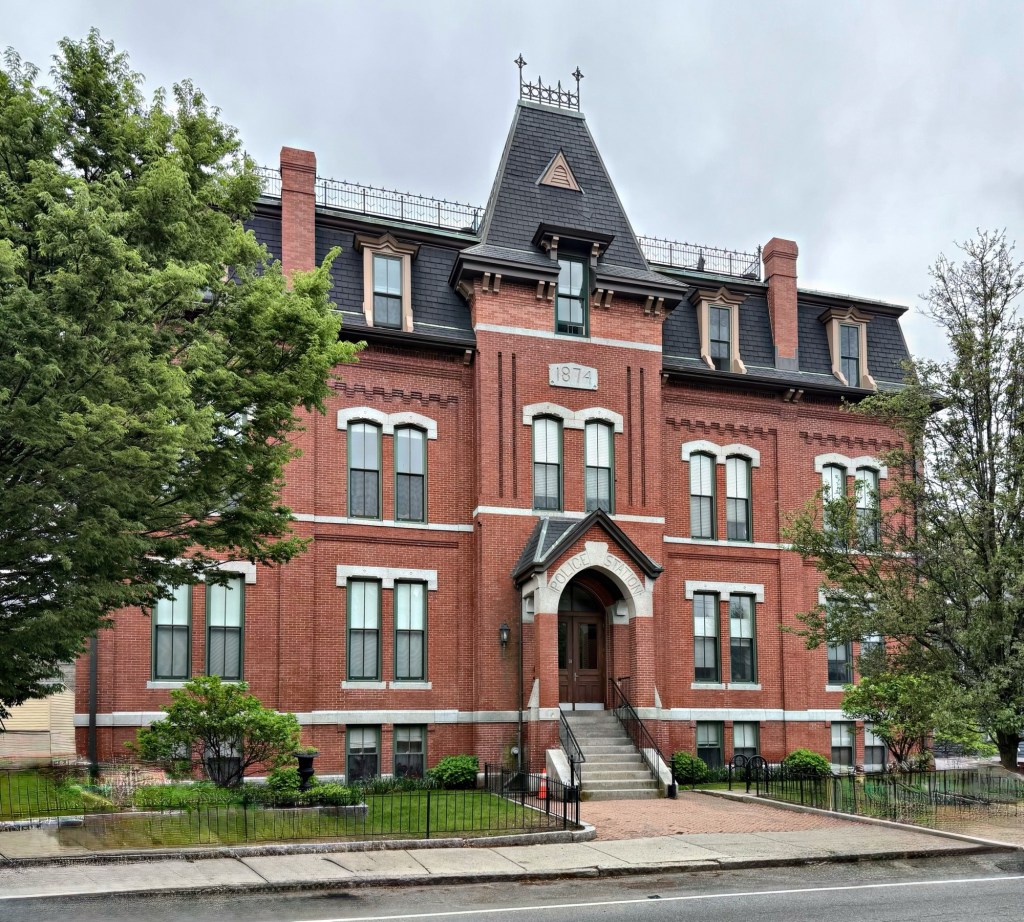
Somerville, Massachusetts, was long part of Charlestown, until it incorporated as a separate town in 1842. From the 1840s until just after the Civil War, Somerville went from a sleepy farming village to manufacturing center, spurring a sharp influx of immigrants to the city, industry boomed and brick manufacturing became the predominant trade. The town of Somerville incorporated as a city in 1872, and one of the first civic buildings constructed as a new city, was this Victorian Gothic building on Bow Street in Union Square to house the growing Somerville Police Station. Built in 1874 from plans by architect, George Albert Clough, a prominent and busy local designer. The handsome station was in use until the new Police Headquarters further east in Union Square was built in 1932. This building was sold off by the city and became offices and housed meeting spaces for a local boy’s club and an American Legion Post until it was converted into housing in the late 20th century. 

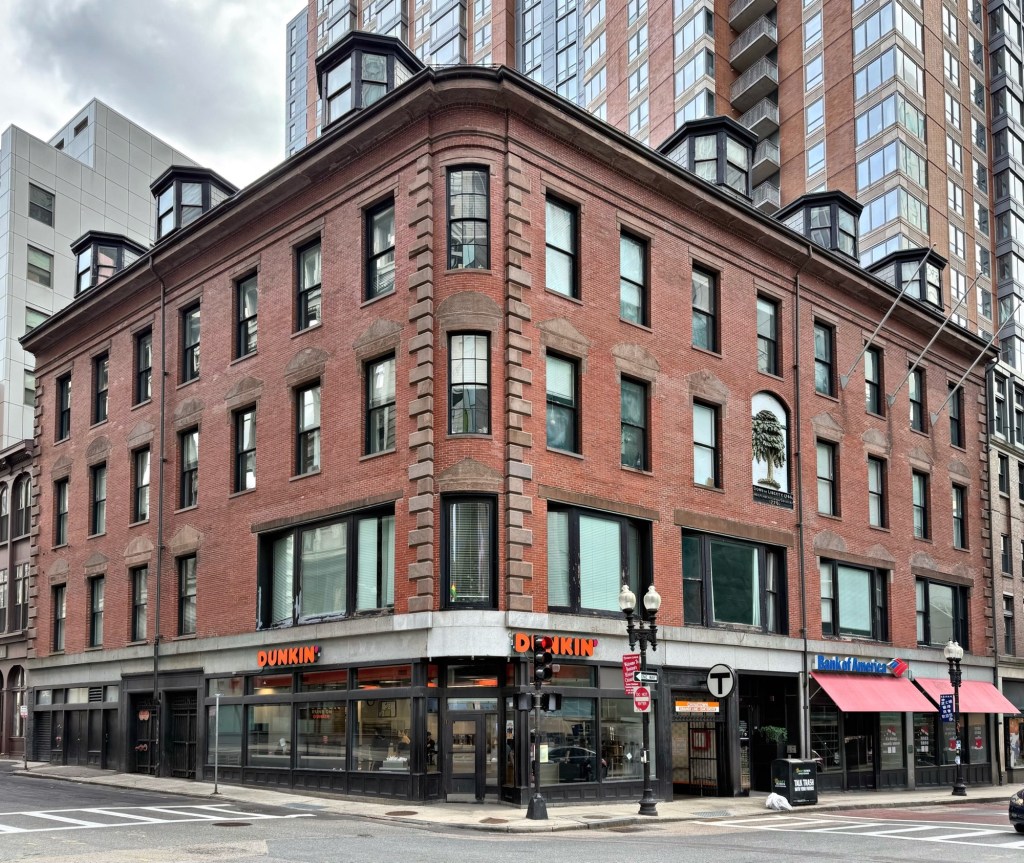
Liberty Tree Block // 1850

The Liberty Tree Block is located at one of Boston’s oldest and most important intersections, Boylston and Essex streets. It is said that near this site, the Liberty Tree stood, and where in 1765, Patriots in Boston staged the first act of defiance against the British government under its branches, The Stamp Act protests. The tree became a rallying point for the growing resistance to the rule of Britain over the American colonies. The Liberty Tree was cut down by British Loyalists in 1775, but the tree’s symbolism lives on in the building constructed on the site 75 years later. Nineteenth-century real estate developer David Sears had this commercial block built in 1850, which housed stores at the street with ballrooms on the upper floors. The Liberty Tree Block is best-known and named so due to the wooden relief plaque of the Liberty Tree on the Washington Street elevation. The motif stands 8′ high and 5′ wide and was carved by ship carvers. The bas relief is inscribed with “Liberty–1765” across the top, “Law and Order” at its roots, and at the bottom, “Sons of Liberty, 1765. Independence of their Country, 1776.” The building (and its carving) are protected Landmarks in Boston.

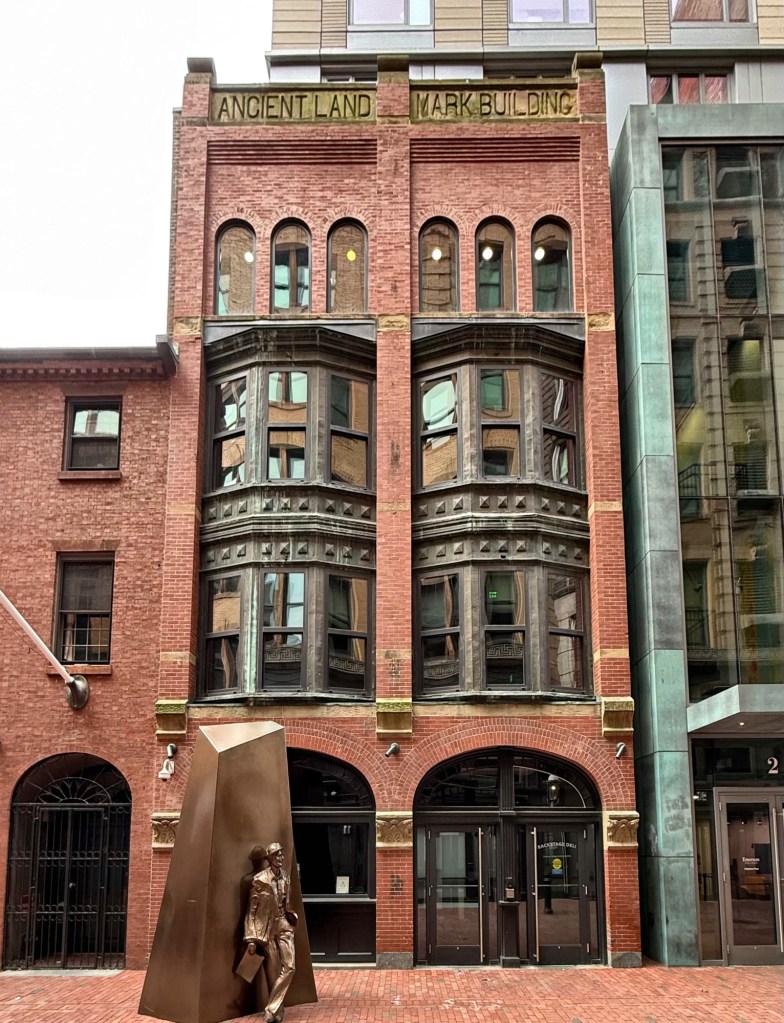
Ancient Landmark Building // 1887

Tucked away on Boylston Place, a dead-end pedestrian way off the bustling Boylston Street in Boston, you will find a collection of 19th century buildings that have miraculously survived over a century of growth, urban renewal, and rebirth. This is the Ancient Landmark Building, constructed in 1887 as a IOOF Lodge. The Independent Order of Odd Fellows (IOOF) is a non-political, non-sectarian international fraternal order established in the United States 1819. The four-story Ancient Landmark Building blends Queen Anne and Romanesque Revival styles effectively with its two arched openings, arched windows in the top floor and two-story metal projecting bays. In the 1970s, the building was listed as “substandard” by the infamous Boston Redevelopment Authority, and luckily did not get demolished as part of its Urban Renewal push. The property was eventually acquired by Emerson College, a great steward for historic buildings and cultural institutions, who restored the building and built a new dormitory above and alongside the Ancient Landmark Building. The project preserves the important streetscape of Boylston Place, while providing needed dormitories for the school.

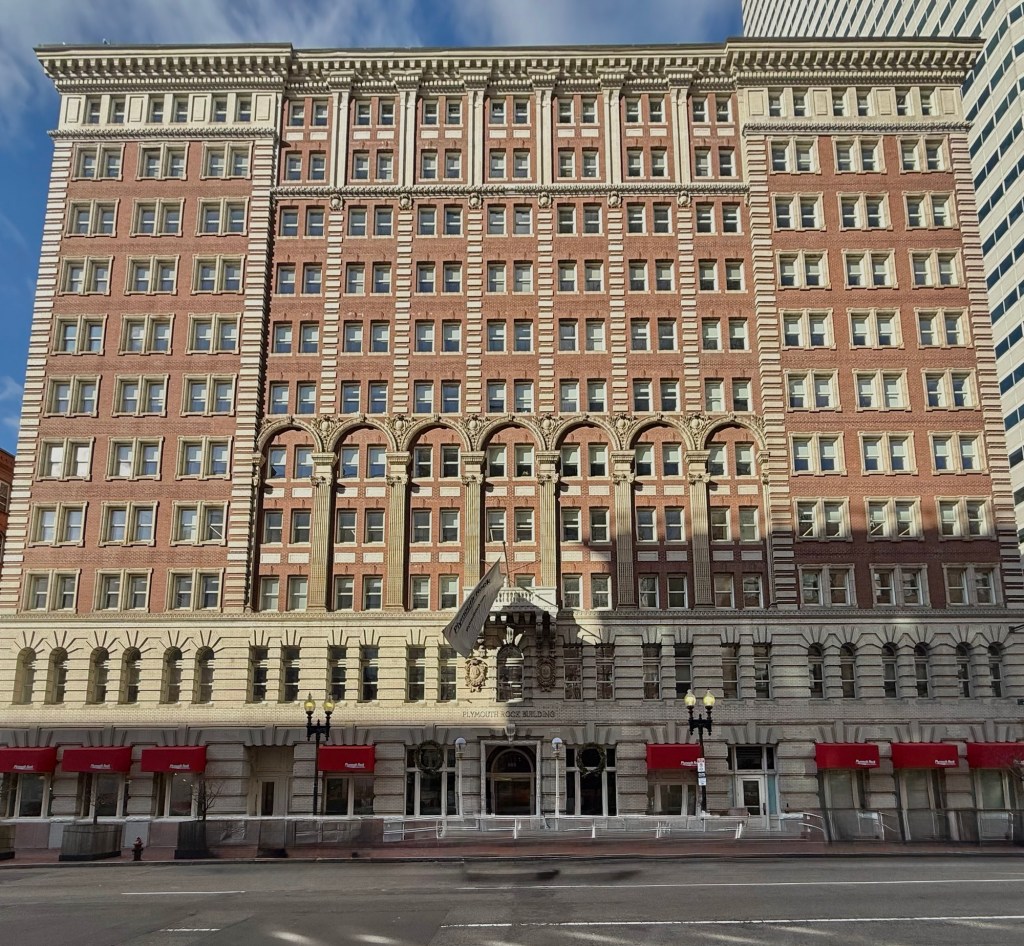
Hotel Essex – Plymouth Rock Building // 1900

The construction of a new South Station Terminal in 1899, prompted a development boom for the nearby area, which had for the previous decades been almost entirely mercantile and centered around the leather and woolen industries. Due to increased land values and an influx of travelers to the area, developers saw an opportunity to erect this building to serve as a hotel for visitors to Boston via South Station. Boston architect, Arthur H. Bowditch, furnished plans for this building in the Beaux Arts/Renaissance Revival style, with use of brick and limestone construction, ornate finishes at the façade including the fluted pilasters, arches and cartouches in the spandrels. The building was completed in 1900 and known as Hotel Essex and featured a long, storied history as a hotel until it closed in the second half of the 20th century. After years of deteriorating conditions, the building was adapted as the corporate offices for Plymouth Rock Assurance Corporation in 1982. The building was restored and has been known as the Plymouth Rock Building ever since.

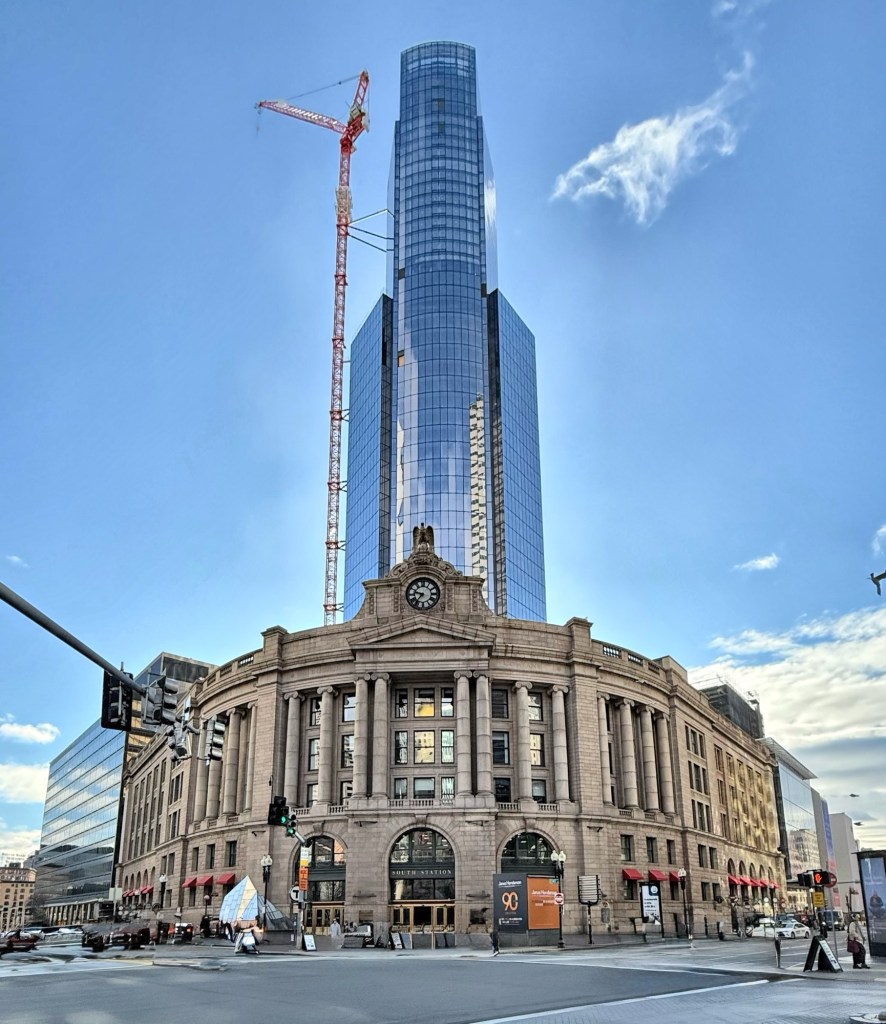
South Station // 1899

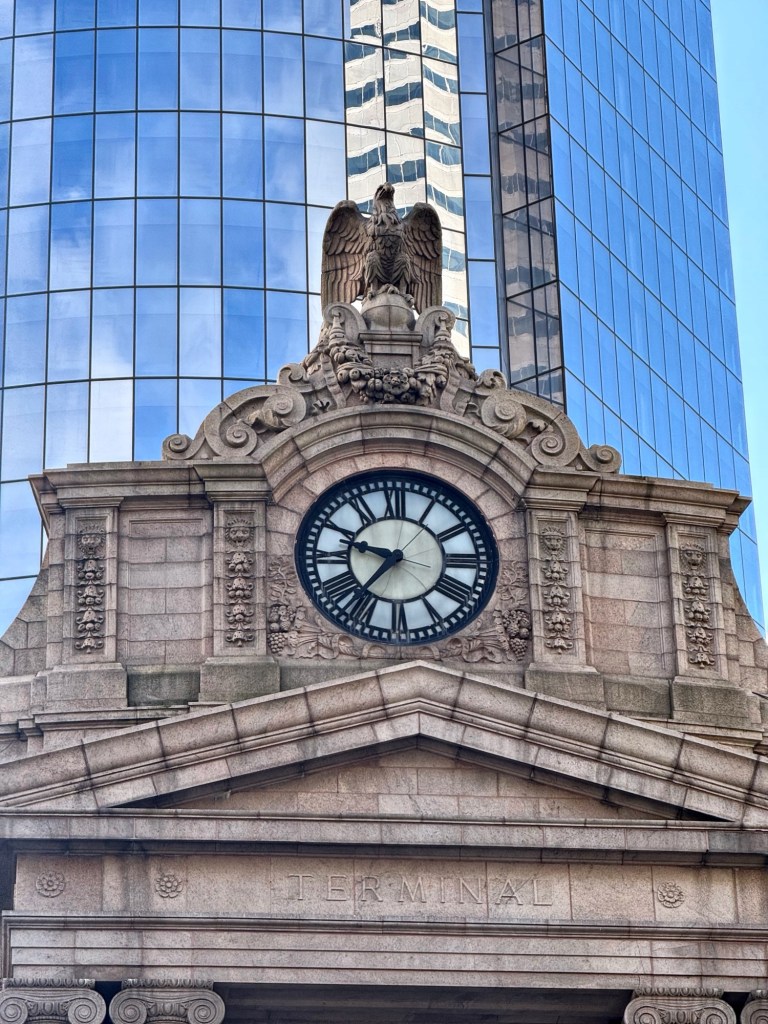
When the railroads serving Boston were first laid out and built, each line stopped at its own terminal which created a dysfunctional and cumbersome travel experience for those entering or leaving the city. The Boston Terminal Company, established in 1897, was charged with the task of consolidating service from the four terminals at a single terminal, a union station (similar to North Station), for routes south of the city. South Station was designed by architects were Shepley, Rutan and Coolidge of Boston and quickly became New England’s busiest transportation center. The five-story Classical Revival style station built of stone is an architectural landmark with three-story Ionic colonnade crowned by a clock surmounted by an eagle, stands above the triple-arched brick masonry lower level corner entrance. While the station handled 125,000 passengers each day during World War II, post-war passenger rail traffic declined in the US. South Station was sold to the Boston Redevelopment Authority in 1965 and (surprise!) they demolished portions of the building and later developed plans to demolish the rest of the station and replace it with a multi-use development including a new train and bus station with large parking garage. Luckily for everyone, the BRA failed in this endeavor and the building remained to the point where public transportation is again invested in and beloved and the building has since been restored. Recently, a glass “crown”, known as South Station Tower, a 51-story designed by Pelli, Clarke & Partners, with new office space, luxury residences, and a redesigned, arched interior concourse (which in my opinion, is the best part). The redevelopment is a push towards transit-oriented development and blends new and old in an innovative way.

What do you think of it?

Tarbell Building // 1896

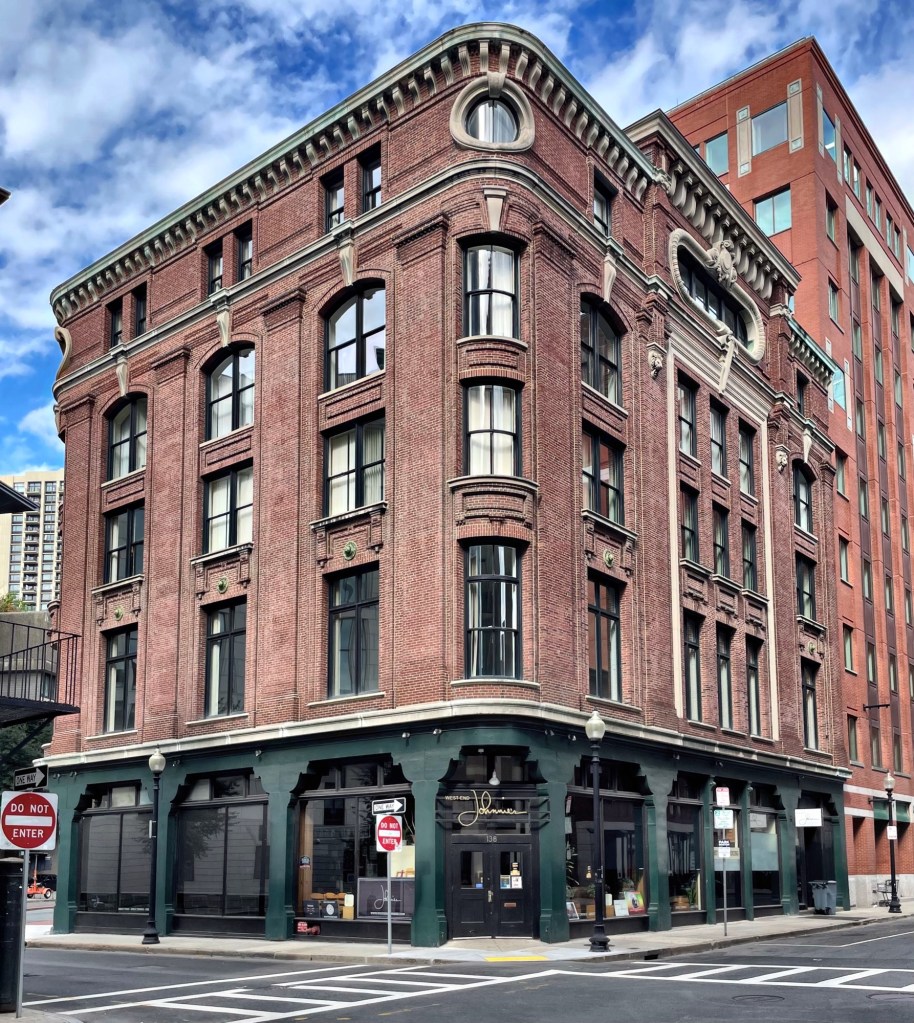
Similar to the Heywood Brothers & Wakefield Co. Building on Portland Street in the Bulfinch Triangle Historic District, the equally stunning building here was also designed by the same architect in a matching style. The building was constructed in 1896 by owner Catherine E. Tarbell , and the Boston branch of the National Casket Company moved in as tenants soon after its completion as part of its national expansion. The company would become the largest manufacturer and supplier of caskets in New England by 1906. The Tarbell building was designed by Stephen Codman in the Beaux-Arts style and is notable for its use of oxeye windows, rounded corners, and engaged pilastered facades. The company held its regional headquarters and sales offices from this building, which benefited from rail access for shipping caskets all over the region. The building is one of the finest examples of the Beaux Arts and Classical Revival styles in Boston.

William L. Lockhart Company Building // 1887

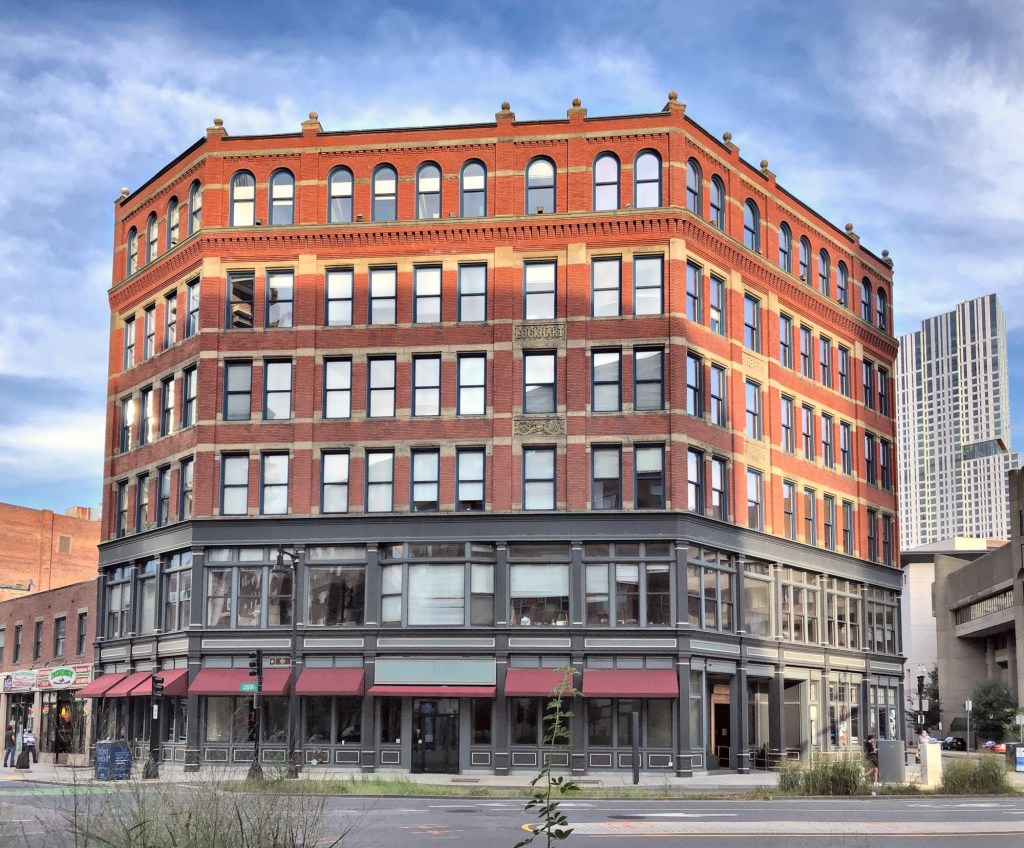
This six-story brick and sandstone building at Causeway and Staniford streets near North Station in Boston was built in 1887 as the headquarters and sales center for William L. Lockhart & Co., manufacturers and wholesale dealers of coffins, caskets, and undertakers’ supplies, which at the time was considered the largest establishment of its kind in New England. The company had its factory in East Cambridge and built this structure as offices and sales rooms. The building is an excellent example of the Romanesque Revival style, which is typified by the use of round arched windows at the top floor and the use of inlaid carved stone panels. Frederick Nason Footman a relatively unknown architect is said to have designed the building for the Lockhart Company, with the building serving as an important piece of the company’s portfolio. Shop space was created on the street level, with the company’s offices, salesrooms and casket hardware department occupying the second floor, show rooms on the third floor, shipping department on the fourth floor and storage on the fifth and sixth floors. While the adjacent parcels have been razed and are still vacant, this building serves as an important visual gateway into what was once the West End, a neighborhood that was almost entirely demolished during urban renewal.