Forest Hills Cemetery – Receiving Tomb // 1871

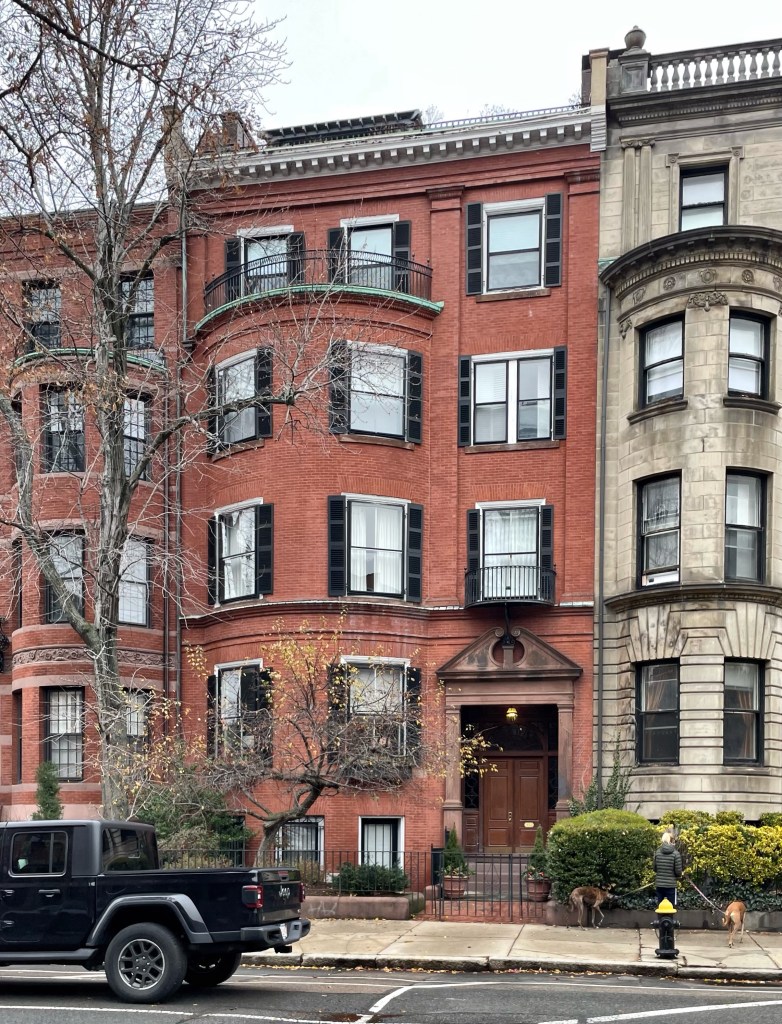
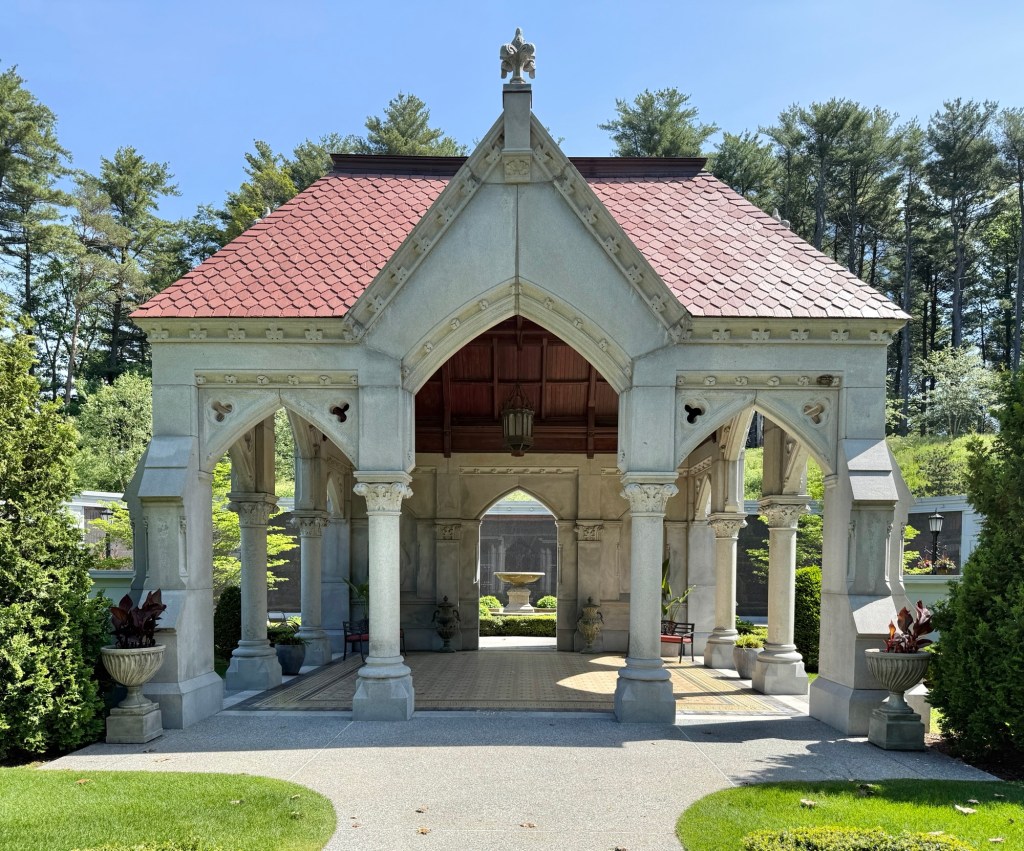
The Gothic Revival receiving tomb at Forest Hills Cemetery in Boston is located not far from the iconic entrance gate and chapel/offices. The structure was built in 1871 and designed by architects, Carl Fehmer and William R. Emerson in the Gothic style, a prevalent aesthetic that the overseers encouraged for the various 19th century buildings constructed on the grounds. Historically, the Gothic Revival structure served as the entrance to underground holding tombs for the temporary storage of bodies awaiting burial or relocation, typically stored when the ground was too frozen for burial. The structure features a granite structure with oak ceiling and painted tile flooring. A massive project began in 2016 to excavate and build a new Garden Mausoleum, built into the landscape with the restored Receiving Tomb serving as the focal point. The tomb portico was adapted as a gateway to an open-air courtyard flanked by walls set into the slope which contain internment chambers for burials, with a restored fountain in front and woman archer statue atop.
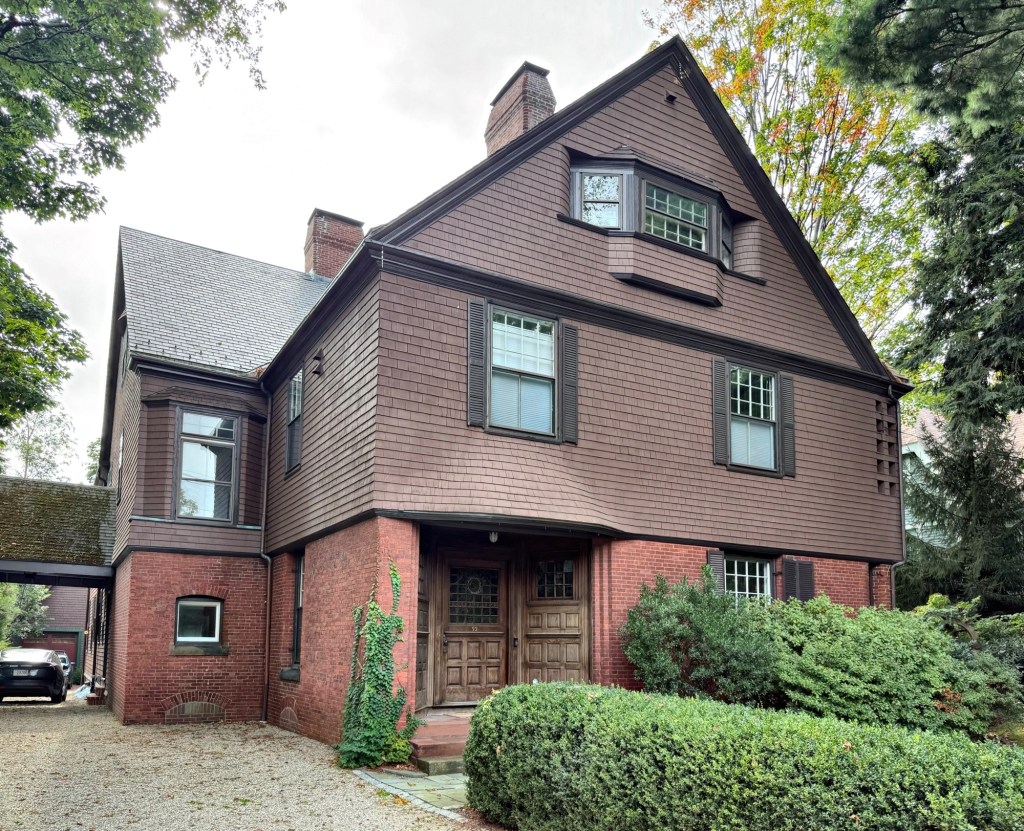
Dr. Tappan Eustis Francis House // 1879

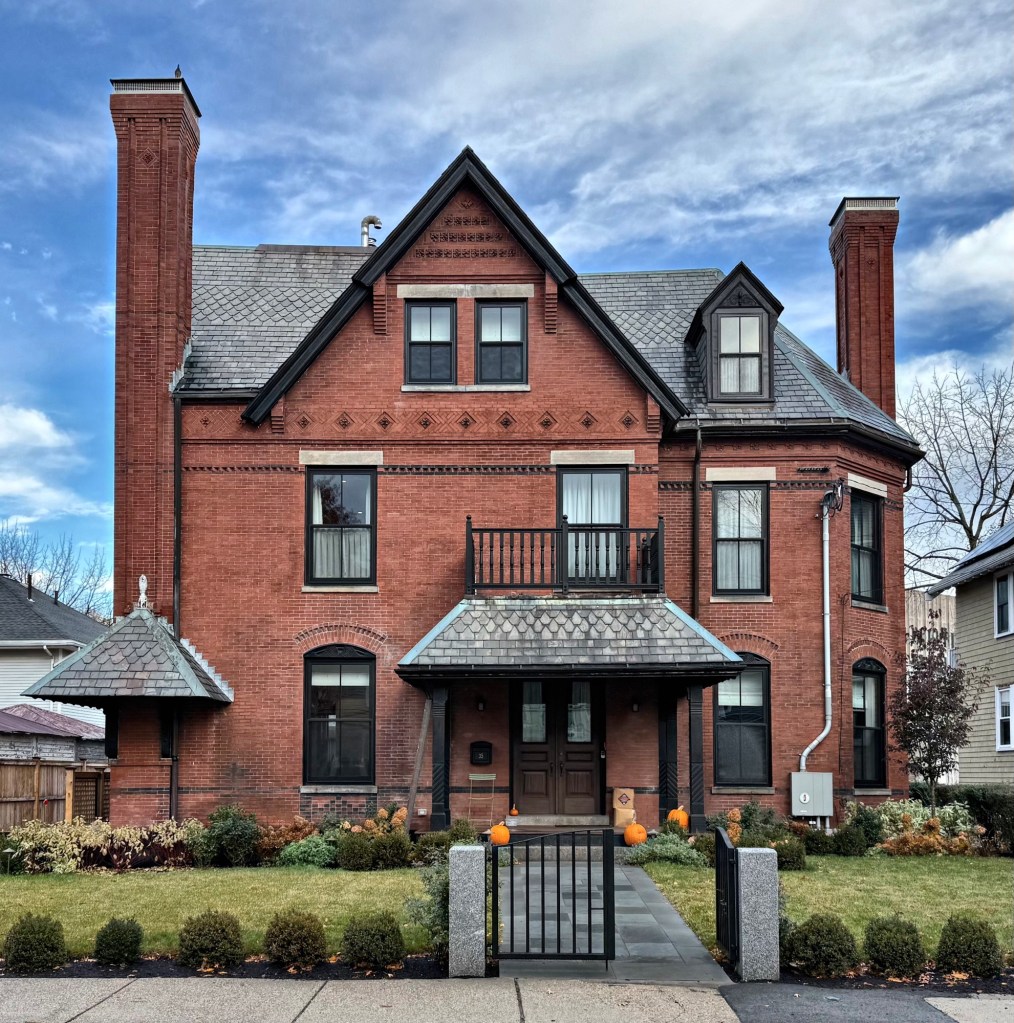
Located on Davis Avenue, a narrow residential street in Brookline Village, the Dr. Tappan Eustis Francis House is an unusual work by an architect that differs from the style they became best-known and sought after. Dr. Tappan Eustis Francis (1823-1909) graduated from Harvard College in 1844 and Harvard Medical School in 1847 and moved to Brookline where he practiced medicine for over 50 years. For his Brookline residence, Dr. Francis hired William Ralph Emerson, who has become best-known for his Shingle style designs and summer cottages that lined the New England coastline and in Boston suburbs, to furnish plans for his suburban residence. For Dr. Francis’ home, Emerson envisioned a brick house in the English Queen Anne style. The tall chimneys with panel brick designs, corbeled brick brackets and terra-cotta decorations in the gable peaks, and the massive slate-roofed entry porch are all stunning features on the house; but the most intriguing has to be the bracketed hood on the corner of the house which originally sheltered a wooden bench, as depicted in an 1879 drawing.

Loring-Sherburne House // 1883

One of the many great Queen Anne/Shingle style homes in Brookline is this residence at 92 High Street built for Thacher Loring (1844-1928), president and treasurer of the National Dock and Warehouse Company, of Boston, founded by his father, Elisha Thacher Loring. For their Brookline home, Mr. Loring hired architect, William Ralph Emerson, one of the great architects who mastered the Shingle style of architecture. The Loring Family lived here until the early 1900s, when they sold the property and moved to the Back Bay in Boston. The property was purchased by John Henry Sherburne (1877-1959), who lived here with his family for over sixty years. John Sherburne was an attorney, politician, and military officer who served during the Pancho Villa ExpeditionWorld War I, and World War II and attained the rank of brigadier general receiving numerous military awards, including the Silver Star and Purple Heart. During WWI, he commanded the U.S. Army’s first “negro” artillery battalion in France. After the war he testified before Congress about orders that pointlessly sent hundreds of U.S. soldiers from other units “over the top” to their deaths on the morning of November 11, 1918, when the armistice hour was already known. Following his World War I service, Sherburne advocated for civil rights for African Americans, including support for anti-lynching laws and from 1926 to 1931, he served on the board of trustees for Howard University. The Loring-Sherburne House is significant for its residents and for its architecture, including the use of brick and shingle siding, and the show-stopping recessed panel-wood entry with bulging shingles above.

Derby Townhouse // 1886

Hasket Derby (1835-1914), was the grandson of Elias Hasket Derby, a prominent trader in Salem, MA., who was thought at one time to be the richest man in the United States. Hasket married Sarah Mason and the family lived in Boston. Dr. Hasket Derby was a renowned opthamologist and had this townhouse built in the Back Bay of Boston in 1886. He hired architect William Ralph Emerson, who ditched his prototypical Shingle style for the urban townhouse in the Colonial Revival style. The townhouse exhibits a brownstone swans neck pediment at the entry, three-story rounded bow, dentilled cornice and brick pilasters framing the bays. Its an often overlooked house in Back Bay, but so very special.

St. Sylvia’s Catholic Church // 1881-1909

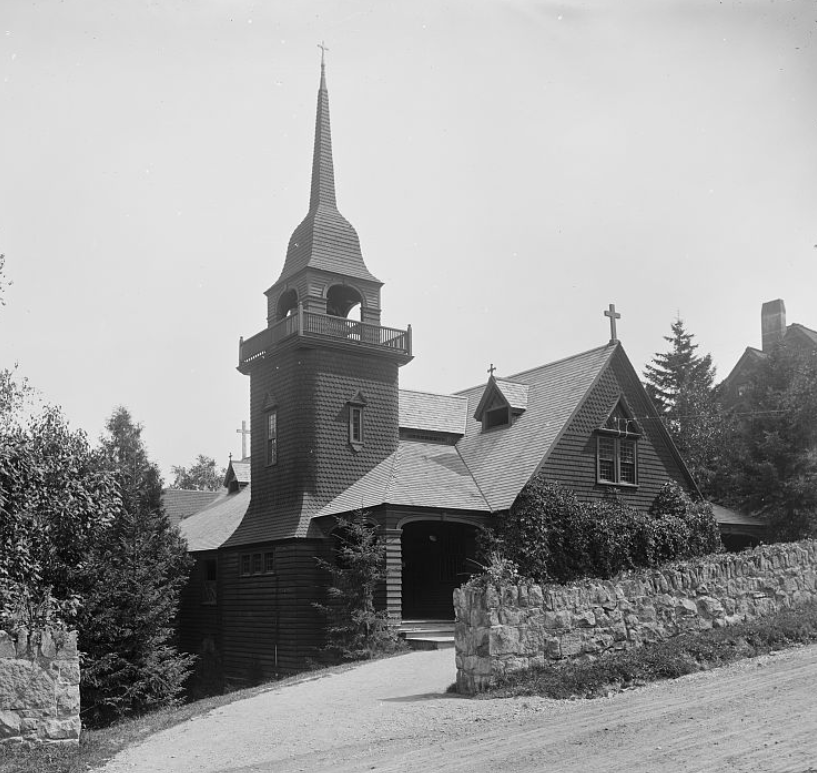
Photo in Detroit Publishing Co. Collection.

As wealthy citizens from cities like Boston, Philadelphia and New York, began building summer cottages on Mount Desert Island in Maine, an influx of carpenters and tradespeople from Ireland followed to construct and work on them. Realizing this, cottager DeGrasse Fox along with Brooks White of Philadelphia, donated land for a new Catholic church building. Maine architect, William Ralph Emerson, donated plans for the church. A masterpiece of Shingle style design, the church, which seated 300 people, was deemed too small for the growing village’s summer congregation. A new, stone church was built closer to town (featured previously). The spire and belfry resemble another church Emerson designed in Beverly, MA, St. Margaret’s Catholic Church. Sadly, St. Sylvia’s burned down in 1909.