Webber-Bouve Mansion // 1885

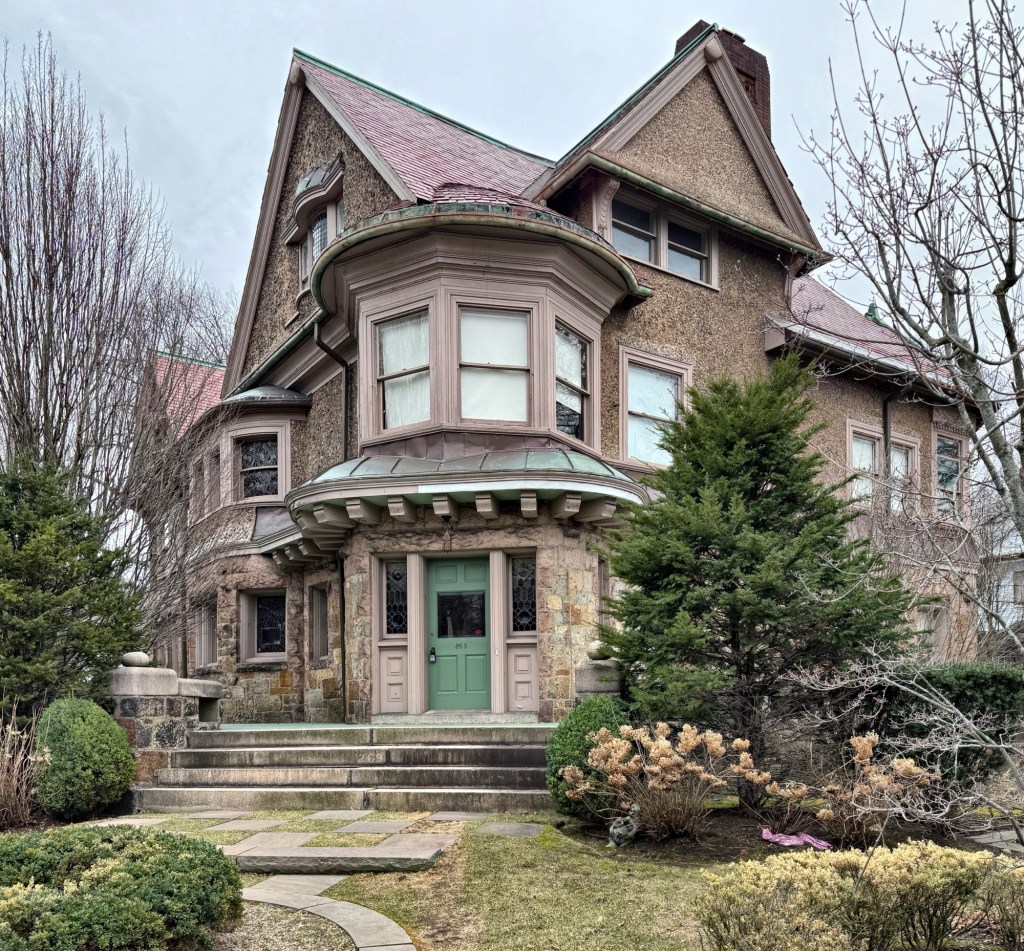
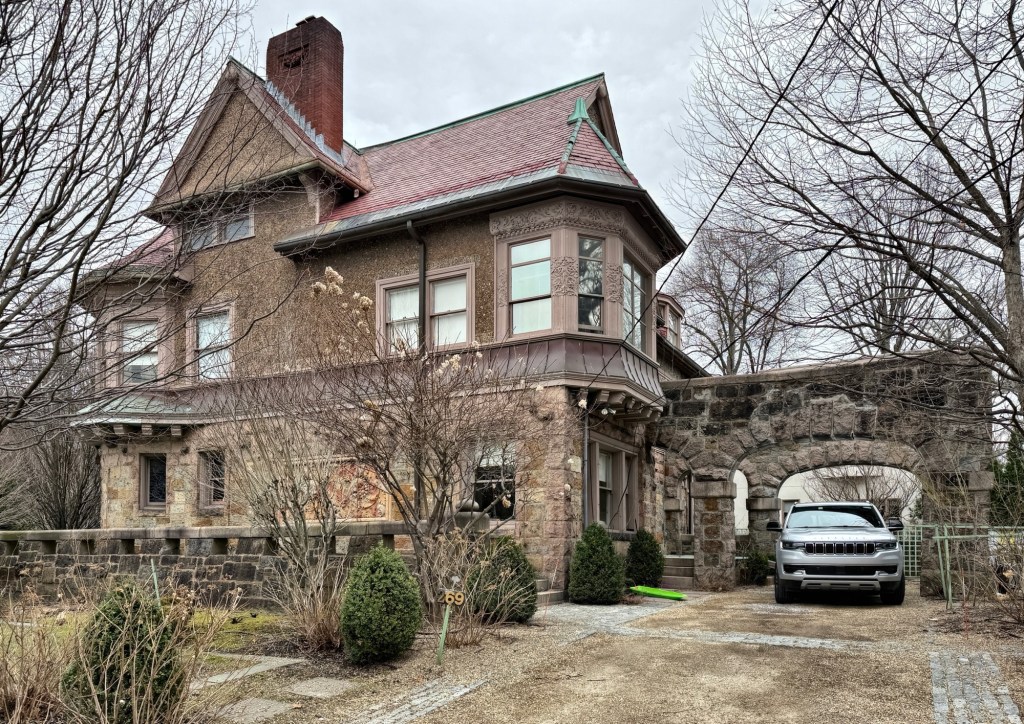
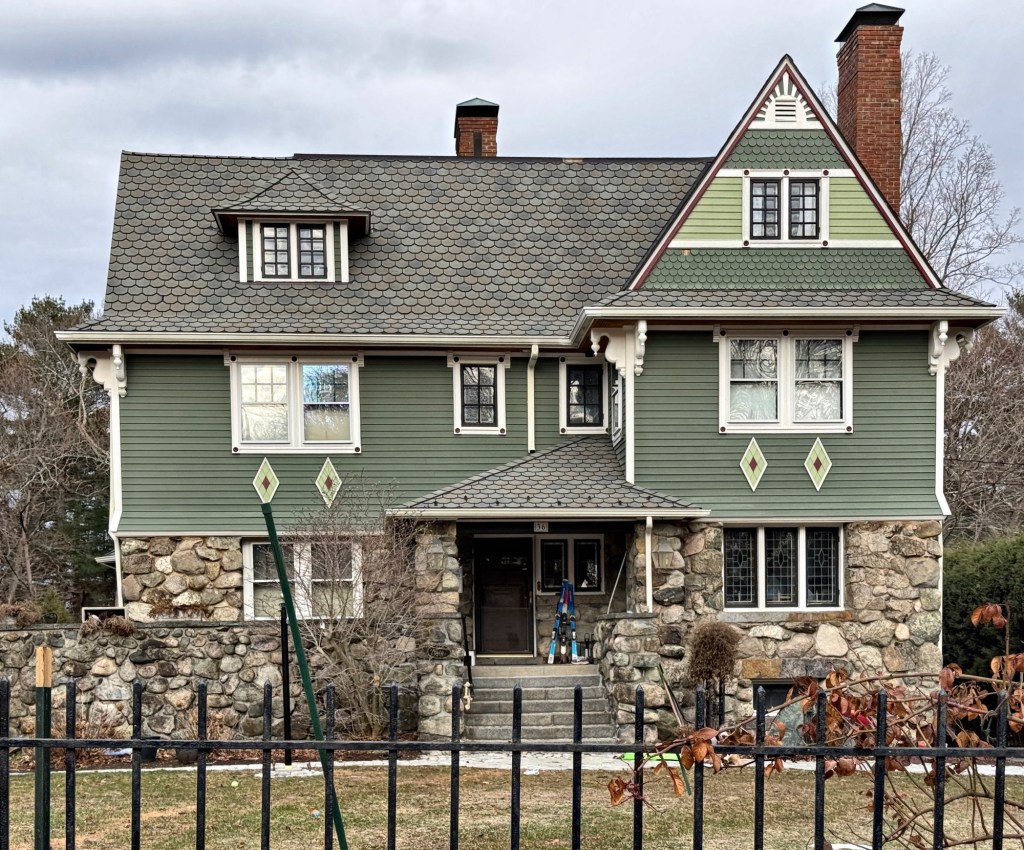
One of the most unique and truly great Victorian-era residences in Brookline, Massachusetts, can be found on Kent Street, an eclectic and fairly hidden mansion built of stucco, stone and terracotta. Built in 1885 by John Prescott Webber, a Maine lumber baron who moved to the Boston area and became a real estate magnate, the handsome residence was designed by architect, S. Edwin Tobey. The most important element of the structure is its surfacing material, with random and quarry-faced ashlar used on the first floor with roughcast stucco on the second level. Additional detailing includes the large brackets, irregular form and fenestration, massive bays, gables, stone porte-cochere, and carved terracotta details. The house was likely sold to George F. Bouve shortly after it was completed, and he remained the owner until his death in 1898. Mr. Bouve was a shoe and leather dealer and shoe manufacturer. The Webber-Bouve Mansion is one of those houses that the more you look at it, the more detail and unique features you notice. The historic stable was demolished in 1995 in exchange for a preservation restriction on the main house by the owners.

Houghton House – Yawkey Family Inn // 1890

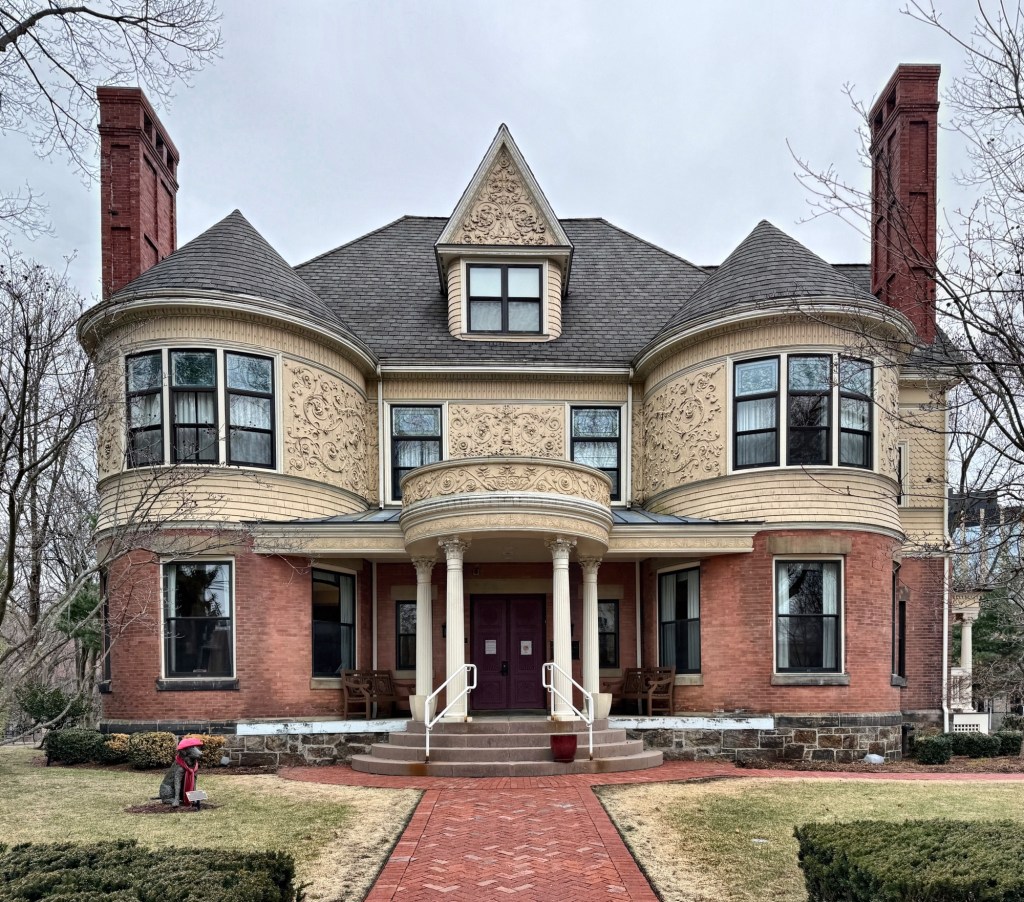
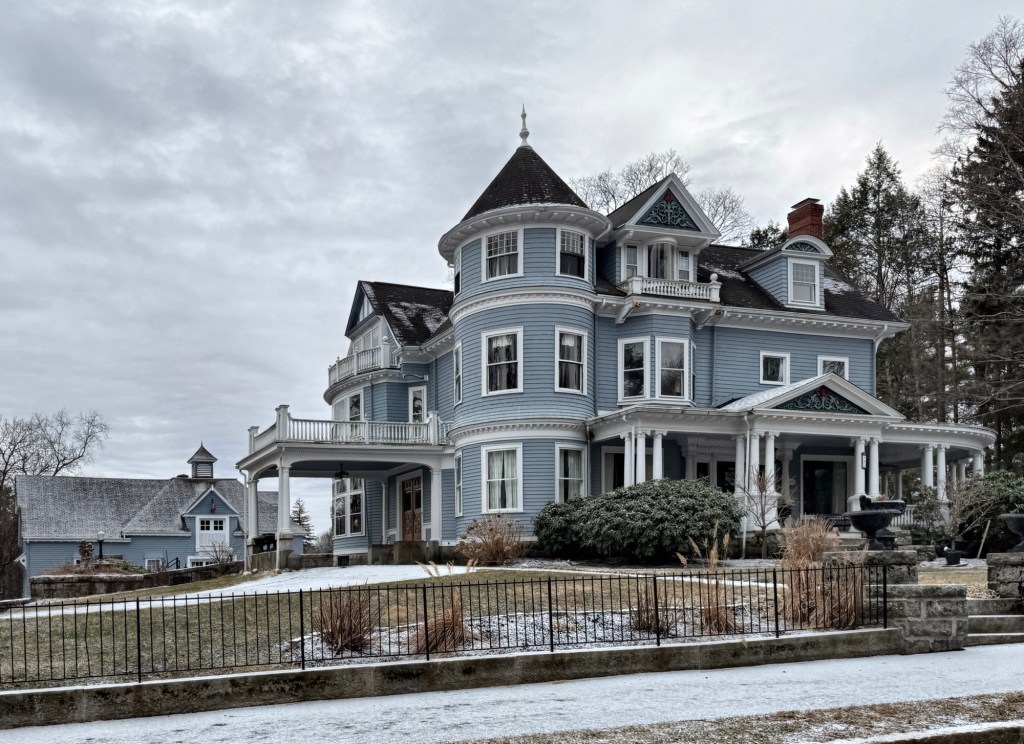
Built on the site of an earlier house at 241 Kent Street in Brookline, this grand, Queen Anne style house has seen a life as a single-family home, fraternity house, and ultimately, the Yawkey Family Inn, a temporary residence for patient families undergoing procedures and treatments at Boston Children’s Hospital. A landmark example of the Queen Anne architectural style, the handsome near-symmetrical residence has paired conical towers at the facade, a brick first floor, paneled chimneys, and elaborate carvings in the entry portico, second-story bays, wall surfaces and gabled dormer. Planning for the new mansion began in 1889 when owners, Harriet and Andrew Jackson Houghton, owner of the Vienna Brewery in Boston, hired architect, James Templeton Kelley, to furnish plans for their new suburban mansion. Sadly, Andrew Houghton died in 1892, shortly after the house was completed, and Harriet remained here until her death in 1925. After this, the property was sold to the Beta Upsilon Association for use as a Fraternity House for the Beta Theta Pi Fraternity of MIT and later as a fraternity house for a Northeastern University frat. In 2009, the property was purchased, renovated and expanded to the rear as the Yawkey Family Inn, ensuring its preservation and remaining as a quieter neighbor to the surrounding residents than its previous use.

George and Alice May House // 1883

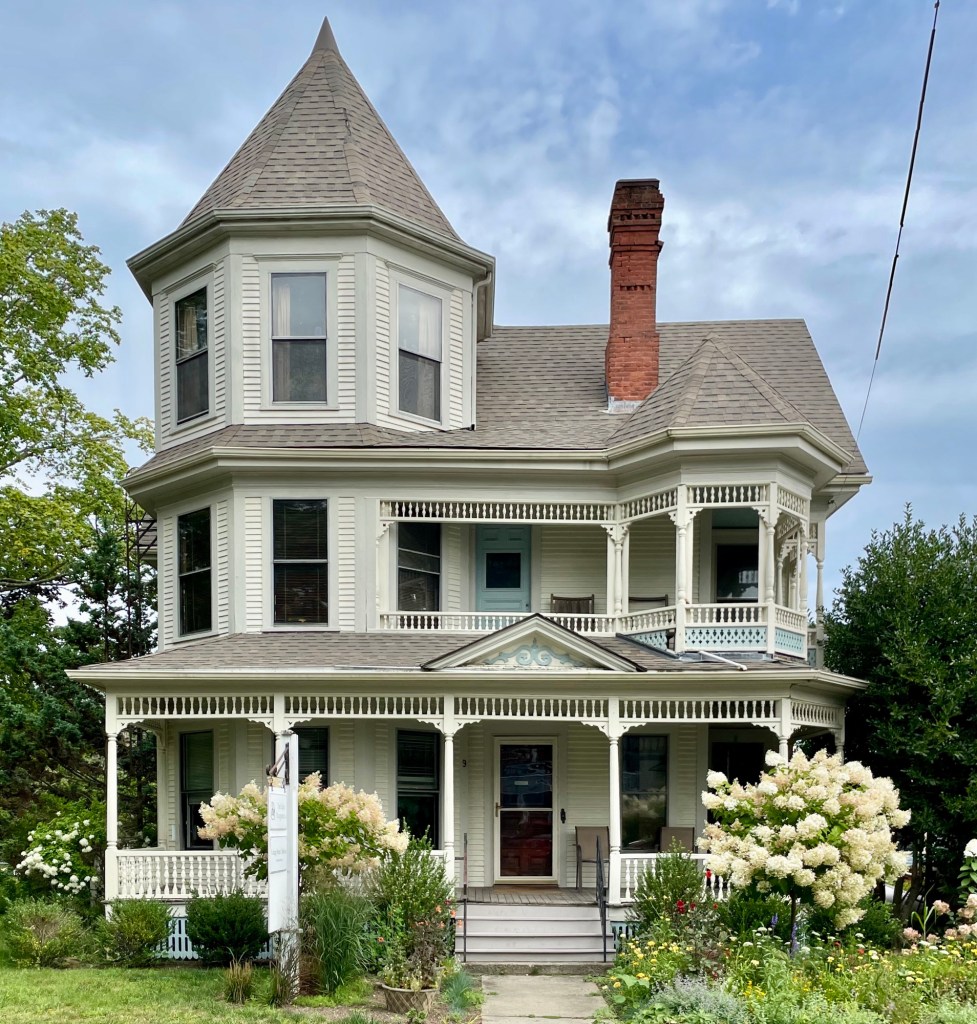
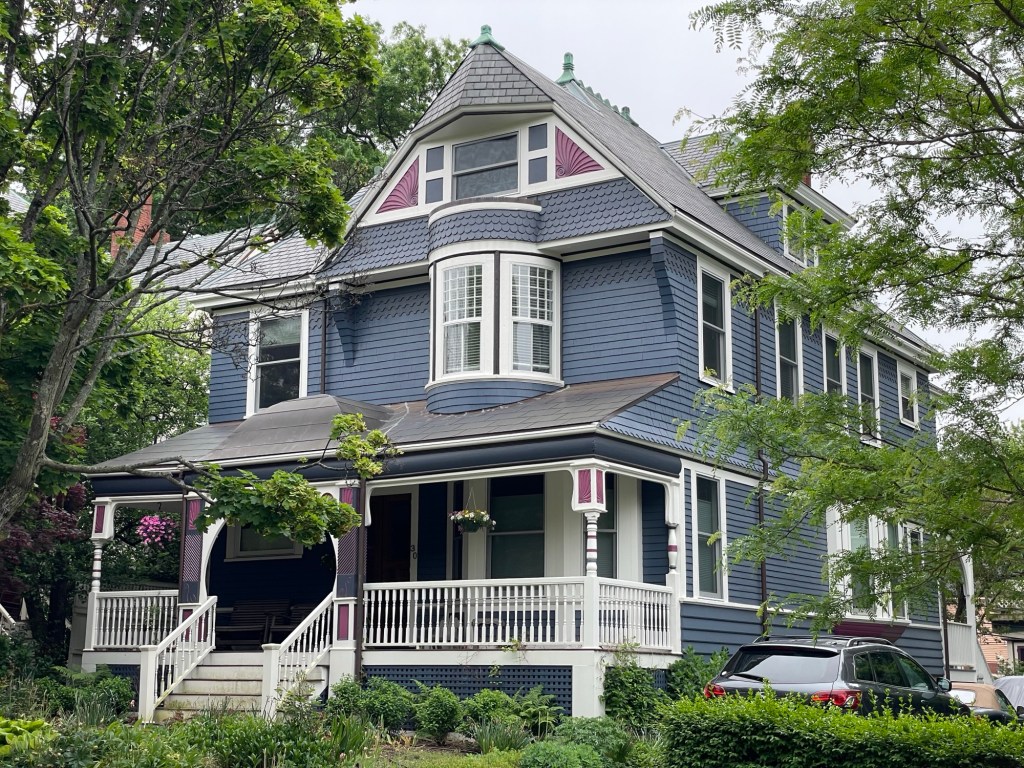
Built in 1883 for George Putnam May and his wife, Alice (Walworth) May, this Queen Anne style residence on Francis Street in Brookline, Massachusetts, contains all of the traits of the architectural style. George P. May was employed at the Walworth Manufacturing Company a plumbing pipes and equipment manufacturer founded by James J. Walworth, who was Alice May’s uncle. The property was subdivided on Alice’s fathers estate which fronts Kent Street nextdoor. I wonder if George wanted to live in the rear yard of his father-in-law! For their Brookline residence, the couple hired architect, S. Edwin Tobey, who paid great attention to detail. The May House features an asymmetrical plan, varied siding types, complex rooflines, and a corner tower with conical roof.

Potter-Leland House // c.1888

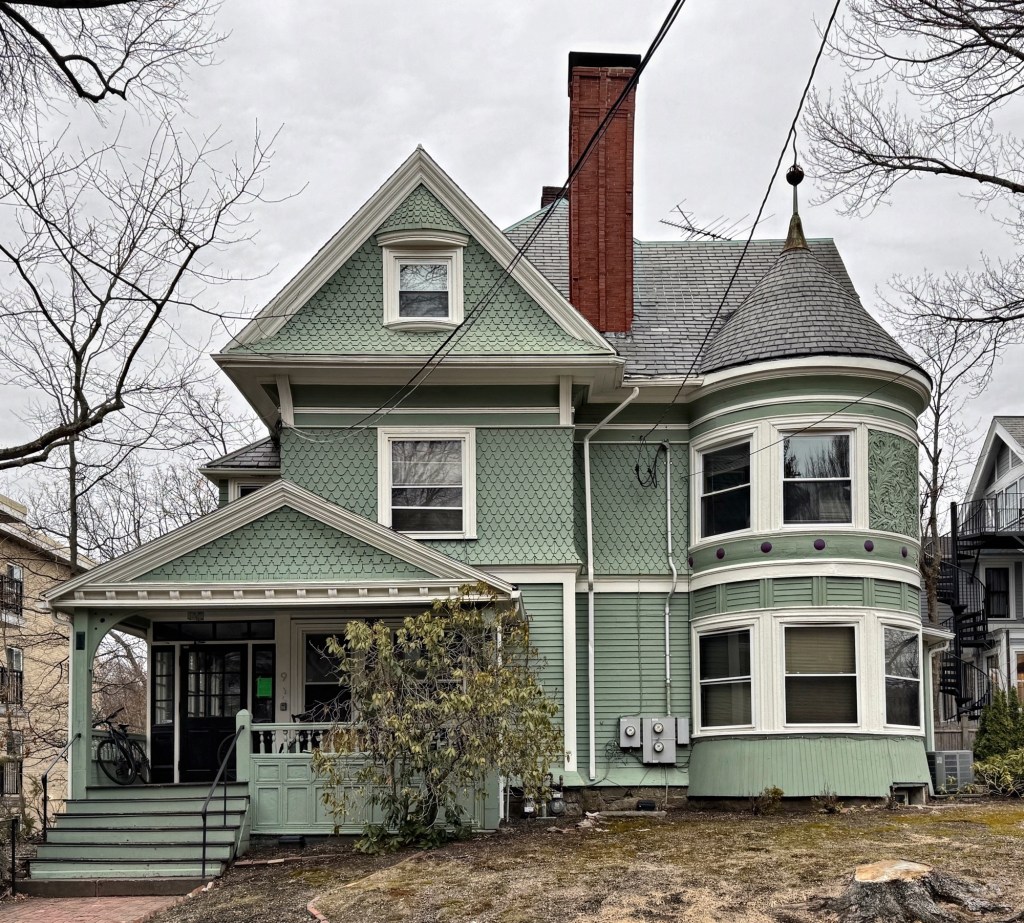
Francis Street in Brookline, Massachusetts, has some of the finest Queen Anne Victorian residences in the Boston area. This is the Potter-Leland House, built by 1888 by William Potter, a wealthy shoe manufacturer and businessman who developed rental housing in the neighborhood not far from his house on Kent Street. Various exterior wall textures, irregular massing, and turned posts on the front porch contribute to the Queen Anne character of this house, but the real showstopper is the rounded bay projection with three, 25-over-2 (yes you heard that right) curved sash windows! The property was later purchased by Herbert M. Leland, a broker.

Dr. Caroline Eliza Hastings House // 1890

A fine example of the Queen Anne style of architecture, this late 19th century residence in Sharon, Massachusetts, is equally significant for one of its owners, Dr. Caroline Hastings. Caroline Eliza Hastings (1841-1922) was born in Barre, Massachusetts, and after attending public schools there, would enroll at the New England Female Medical College (later absorbed into the Boston University Medical School), graduating with an MD degree in 1868. She conducted a private practice and additionally worked as an instructor at her alma mater. She was affiliated with the Talitha Cumi Home in Jamaica Plain, Boston, a medical facility run by women to treat and house unmarried mothers and their young children. Doctor Hastings was an amazing woman who also established and was president of Boston’s first women’s medical society, and while on the Boston School Committee, implemented the first free school lunch program for poor children in the country. In the early 20th century, Dr. Hastings and her husband, Charles Printer, purchased this house built in 1890 and moved here together, where they likely enjoyed retirement. Dr. Caroline E. Hastings died in 1922, and her Sharon home has been preserved by later owners and resembles the property when she resided here.

Timothy Quinn House // 1892

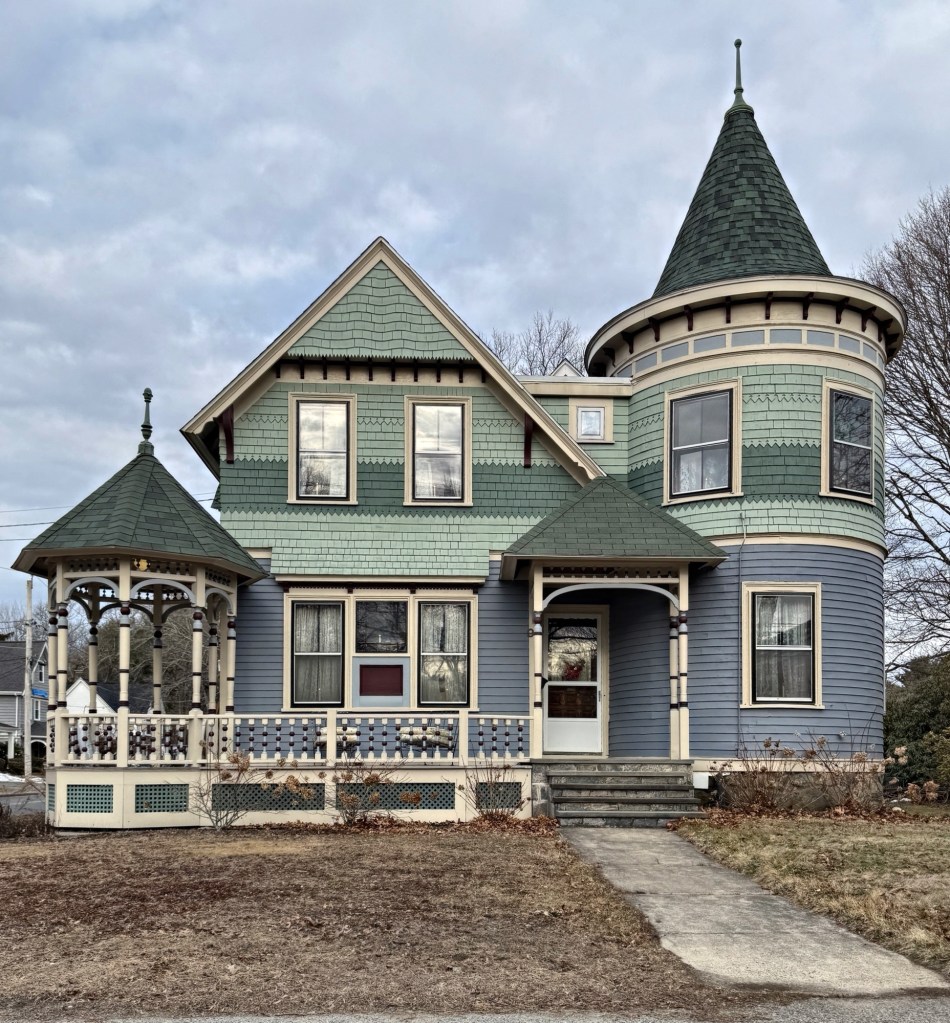
The Timothy Quinn House on South Main Street in Sharon, Massachusetts, is an extravagant example of the Queen Anne style that maintains its flourish and ornate details. The residence was built in 1892 for Timothy Francis Quinn (1863-1934), a first-generation Irish resident who owned and managed a shipping business with his brother, John. Timothy Quinn was active in local affairs and with the local Catholic church and historical society. After his death in 1934, the property was inherited by his wife, Elizabeth, and later by their daughter, Esther. Architecturally, the Quinn House has an irregular plan and features varied siding, brackets, a tower capped by a conical roof, and elaborate porch, all painted to highlight the many unique details. 

John G. Phillips House // 1901

The John G. Phillips House on Pleasant Street in Sharon, Massachusetts, is a playful and eclectic example of early 20th century residential architecture showcasing the blending of many styles into a single composition. The house was built in 1901 for John Goddard Phillips, who moved to Sharon from Boston to retire in this large home, and serve as President of the Sharon Historical Society. The house blends typical Queen Anne and Shingle style forms but with interesting brackets common in styles popular a half-century earlier.

Urncrest // c.1875

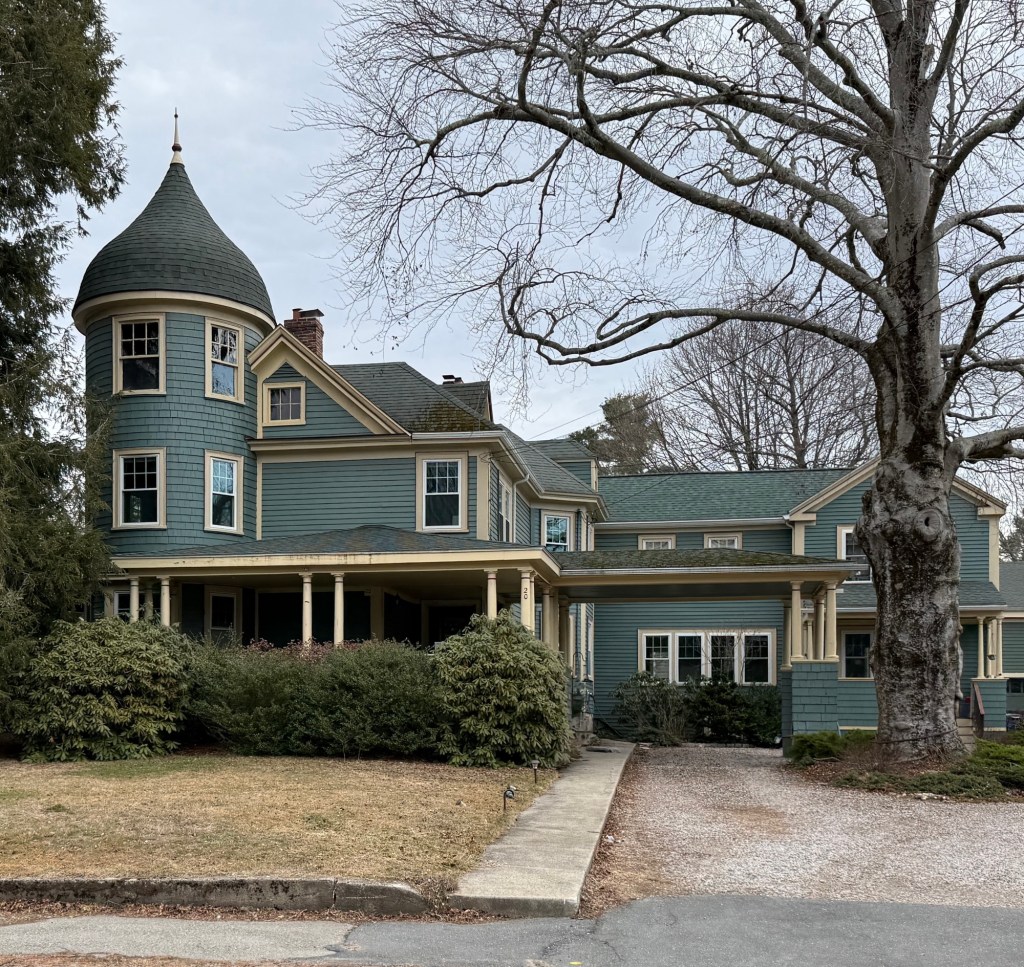
Located on Adin Street, a street of homes formerly owned by factory owners and managers in Hopedale, Massachusetts, you will find “Urncrest”, a stunning Queen Anne Victorian mansion. This home was originally built around 1875 for William Lapworth (1844-1937) an English-born weaving expert, who worked at Hopedale Elastics Co. and patented certain weaving processes for suspenders, boot webbing, and garters. Hopedale Elastics was absorbed by the Draper Corporation in 1890, and Lapworth “modernized” his home with profits from this sale. His formerly modest home was updated with a corner tower, large additions, wrap-around porch with porte cochere, and applied ornament. The detached carriage house was also expanded, where he added a coachman’s apartment.

Sunflower Castle // 1878

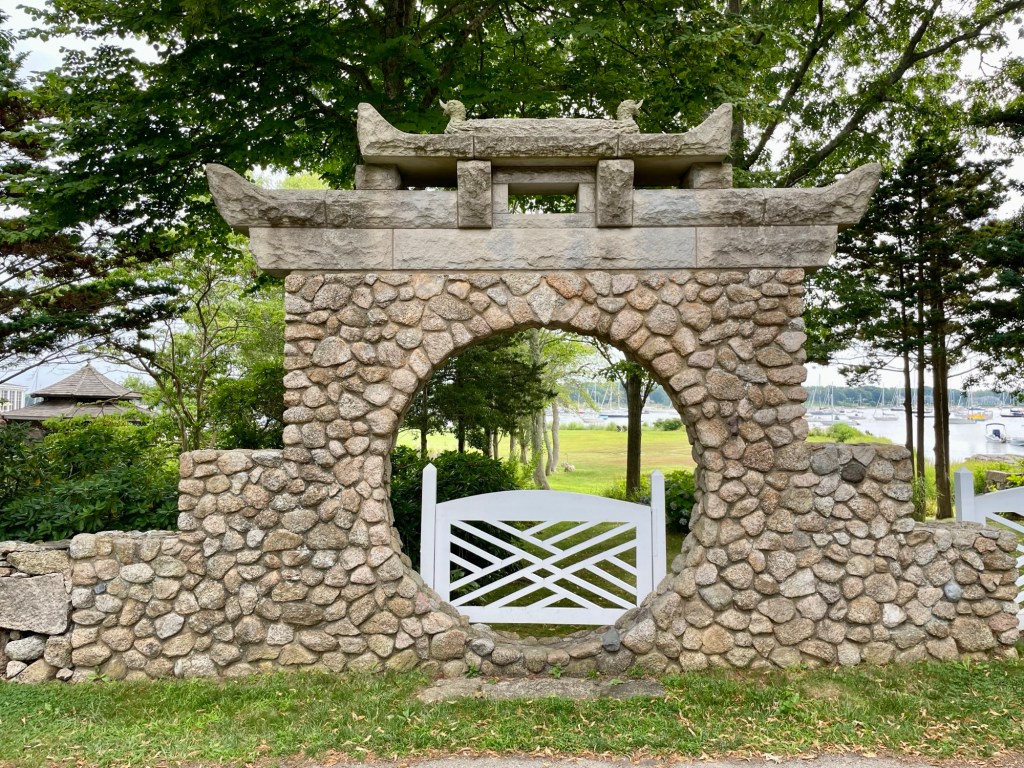
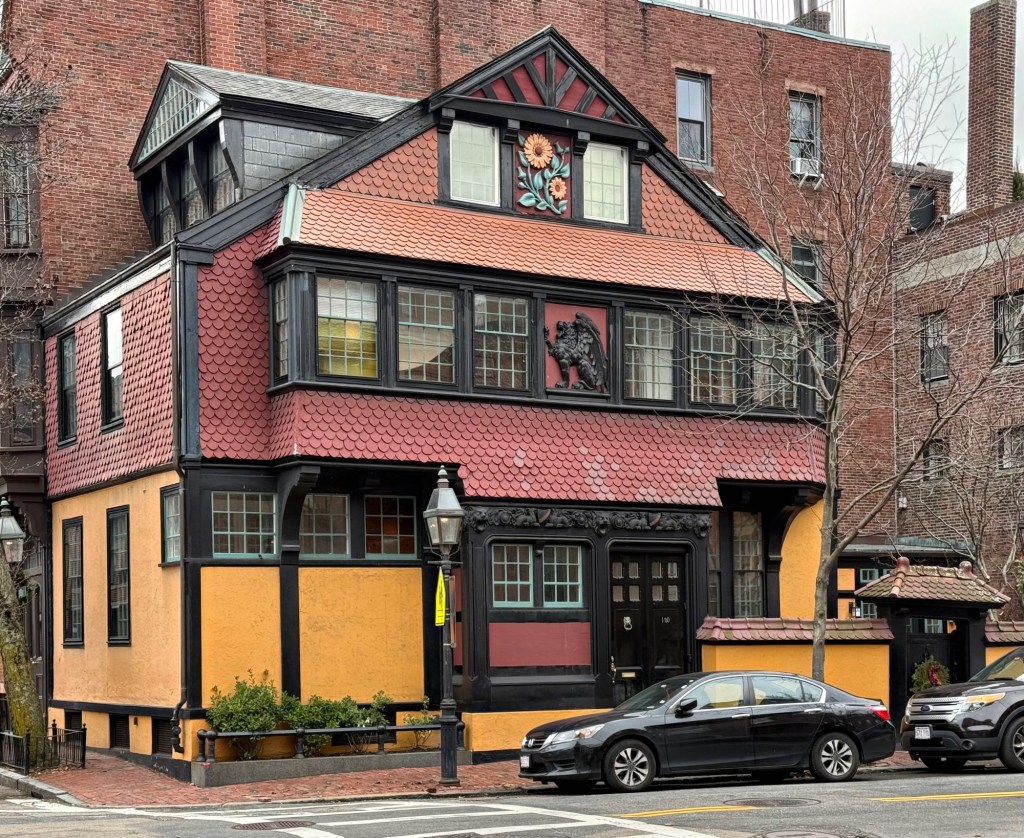
This absolutely unusual and enchanting cottage on Mount Vernon Street in Beacon Hill, Boston, was originally was constructed in the 1840s but completely altered decades later in its distinctive English Queen Anne style. In 1878, Frank Hill Smith, an artist and interior designer, worked with architect, Clarence Luce to renovate what was originally a two-story Greek Revival house into one of the most eclectic and unique residences in New England. The Sunflower Castle, a name reputedly coined by Oliver Wendell Holmes, features a yellow stucco first floor with the upper floors covered with red fish-scale shingles. Further detail includes the half-timbering, decorative panels depicting a gryffin and a sunflower in the gable, and carved wood frieze over the doorway. Clarence Luce was likely so inspired by this project, that he built an even more extravagant example of this house for Edward Stanwood in Brookline soon after. By 1903, the property was sold to the painter, Gertrude Beals Bourne and her husband, architect, Frank A. Bourne, who were both key players in the revival and gentrification of the Beacon Hill Flat neighborhood west of Charles Street in the early 20th century. The Sunflower Castle was used as their home and as an artist’s studio for the couple, with Frank adding the side garden wall with tile-roofed gateway to enclose a private open space. The property remains as a private residence.


Dr. Tappan Eustis Francis House // 1879

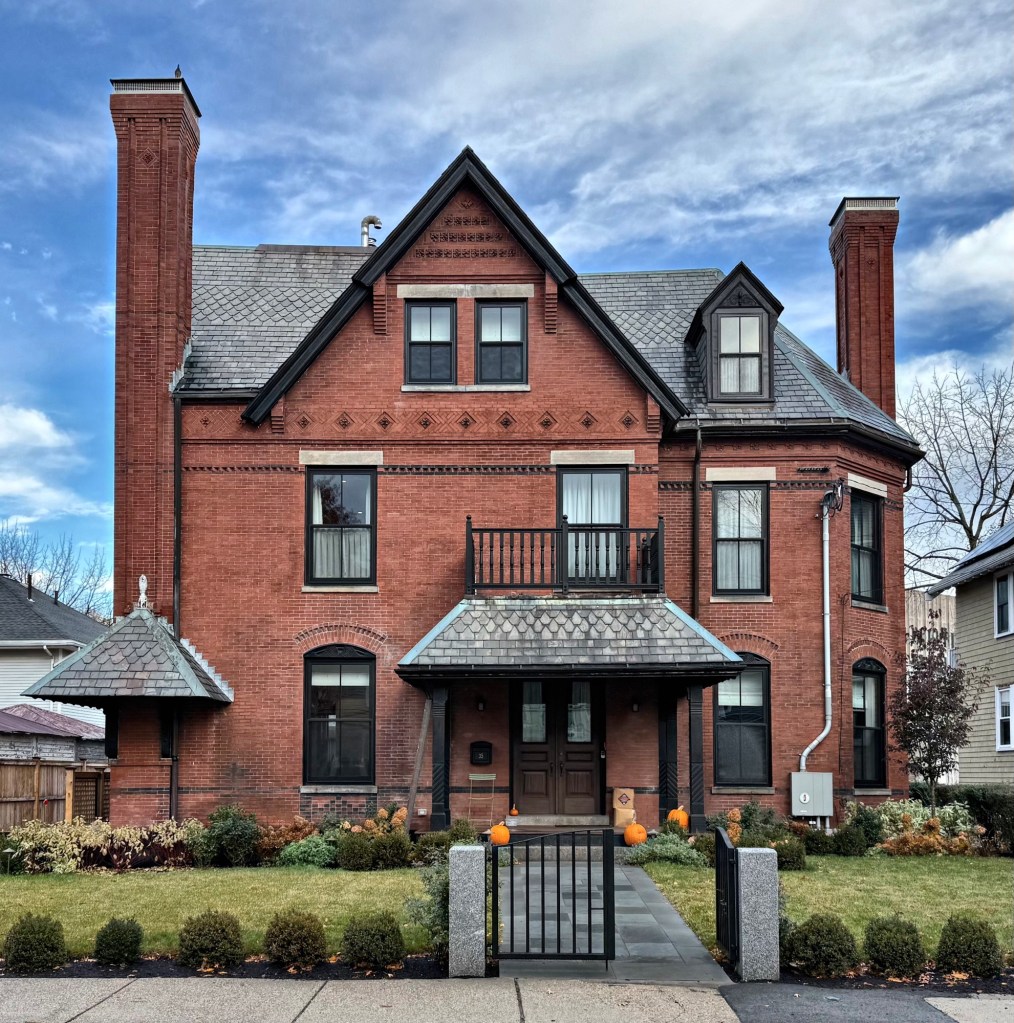
Located on Davis Avenue, a narrow residential street in Brookline Village, the Dr. Tappan Eustis Francis House is an unusual work by an architect that differs from the style they became best-known and sought after. Dr. Tappan Eustis Francis (1823-1909) graduated from Harvard College in 1844 and Harvard Medical School in 1847 and moved to Brookline where he practiced medicine for over 50 years. For his Brookline residence, Dr. Francis hired William Ralph Emerson, who has become best-known for his Shingle style designs and summer cottages that lined the New England coastline and in Boston suburbs, to furnish plans for his suburban residence. For Dr. Francis’ home, Emerson envisioned a brick house in the English Queen Anne style. The tall chimneys with panel brick designs, corbeled brick brackets and terra-cotta decorations in the gable peaks, and the massive slate-roofed entry porch are all stunning features on the house; but the most intriguing has to be the bracketed hood on the corner of the house which originally sheltered a wooden bench, as depicted in an 1879 drawing.

James H. Small House // c.1898

After the completion of the Wayland Railroad Depot in 1881, suburban development in Wayland Center increased, where the village saw dozens of large homes built in the late 19th and early 20th century. On Bow Road, the James H. Small House was built around 1898 by and for its namesake, who worked as a carpenter and builder in town. James Henry Small (1847-1913), while not a trained architect, built this home as a late example of the Queen Anne style, as the Colonial Revival style began to proliferate in the village, showing a changing of architectural taste. The James Small House consists of a main gable-front block with a side wing that includes a square tower. The use of clapboards, differing shingles, and diagonal sticks provide variety and texture to the house and serves as a unique contribution to the village which is largely dominated by rigid symmetry and vernacular of Colonial-era homes.

John E. Thayer Mansion // 1883

Photo from real estate listing.

A lesser-known residence built for a member of the wealthy Thayer Family is this stately Queen Anne mansion tucked away in South Lancaster, Massachusetts. The John E. Thayer Mansion was built in the 1880s for its namesake, John Eliot Thayer (1862-1933), who graduated from Harvard College in 1885 and engaged in business before becoming one of the world’s most prominent ornithologists. John began collecting and housed his collections in several wooden buildings close to his home in Lancaster, but when these became unsafe and crowded he built a beautiful brick building in 1903 nearby, opening it to the public as a museum a year later. John Thayer hired esteemed Boston architect, John Hubbard Sturgis, who was then working with his nephew, Richard Clipston Sturgis, to design the English Queen Anne style country mansion. The residence features a stone first floor with wood-frame above that is given half-timbering treatment, suggesting the English design. John Thayer’s country mansion was a short walk away from his twin brother, Bayard Thayer’s mansion, and his other brother, Eugene’s country house, both in Lancaster. The house remained in the Thayer family until the 1960s, and was recently sold to new owners. The interiors are some of the best preserved for a country estate I have seen and worthy of the Thayer name. 

Robbins House // c.1850

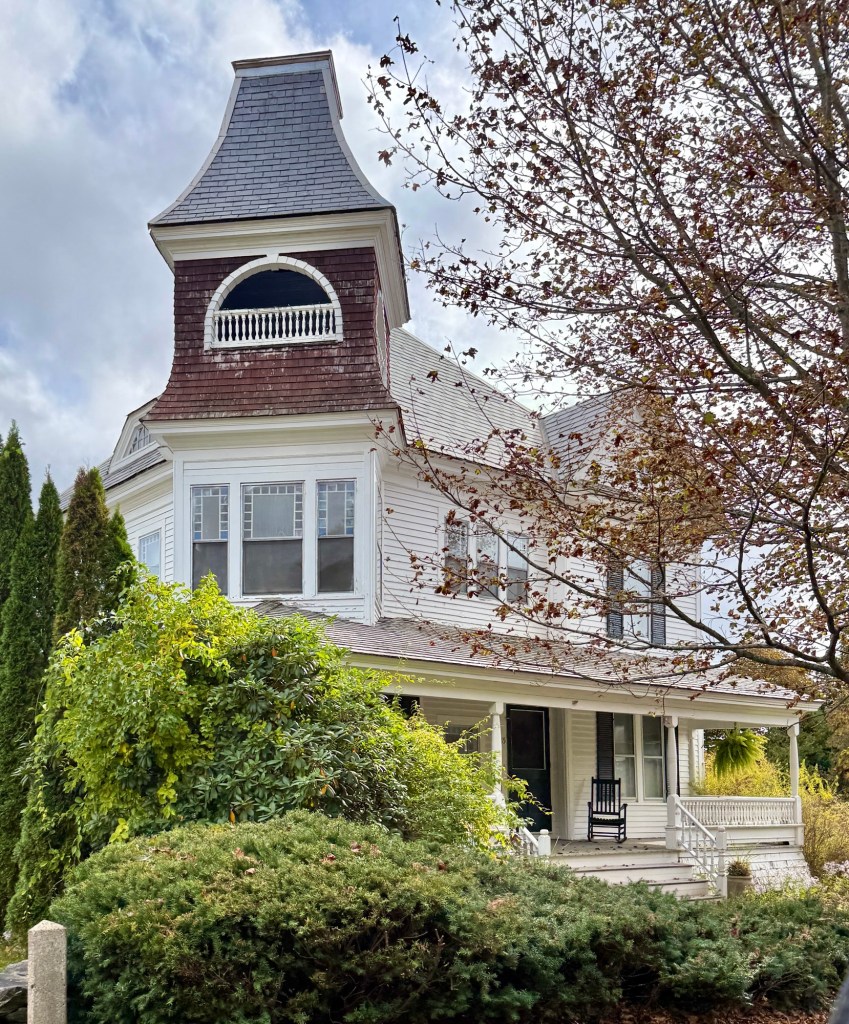
Originally built in the 1840s or 1850s, this stunning house on Main Street in Chester, Vermont, was “Victorianized” in the late 19th century through applied ornament, a tower, and porches. Historic maps show that this house was owned by Cyrus Robbins and his wife, who likely had the residence built in a vernacular example of the Greek Revival style, with a 2 1/2-story form with gable roof oriented towards the street. The corner pilasters remain as do the original facade windows with five on the first floor, three on the second, and a single window in the upper floor. By the late 1800s, the house was modernized with the addition of the wrap-around porch with decorative spindles and ornament and the octagonal turret with wood shingle conical roof. Today, the house is painted colors to highlight the Queen Anne appearance and details.

William Pollard House // 1899

This high-style and ornamental house in Chester, Vermont, ranks among the state’s best examples of the Queen Anne style. The residence was constructed in 1899 for William Pollard (1854-1941), a local businessman who owned a shirtwaist manufactory in town with his brother, who lived next door. The painted-lady Victorian house features an asymmetrical plan highlighted by a three-story octagonal corner tower that is surrounded by a wrap-around porch with a delicate spindled frieze. The use of accent colors in the paint scheme further highlight the millwork details on the residence, which have all been preserved for well over a century. 

Edward Stanwood House // 1880

The Edward Stanwood House at 76 High Street in Brookline, Massachusetts, is one of the finest and exuberant examples of the English Victorian Queen Anne style, notable for its varied wall textures and materials, unique form, and applied ornament. The house was built in 1879-1880 for Edward Stanwood, who was for many years the editor of the Boston Daily Advertiser, and a children’s magazine, The Youth’s Companion. The ornate residence was designed by Clarence Sumner Luce, with interiors by Thomas Dewing. The Stanwood House features a well-preserved exterior and period-appropriate paint scheme, highlighting the bas-relief sunflower ornament and gargoyles. Of particular note is the use of hung tile siding, overlaid to give the appearance of fish scales and the roof cresting.