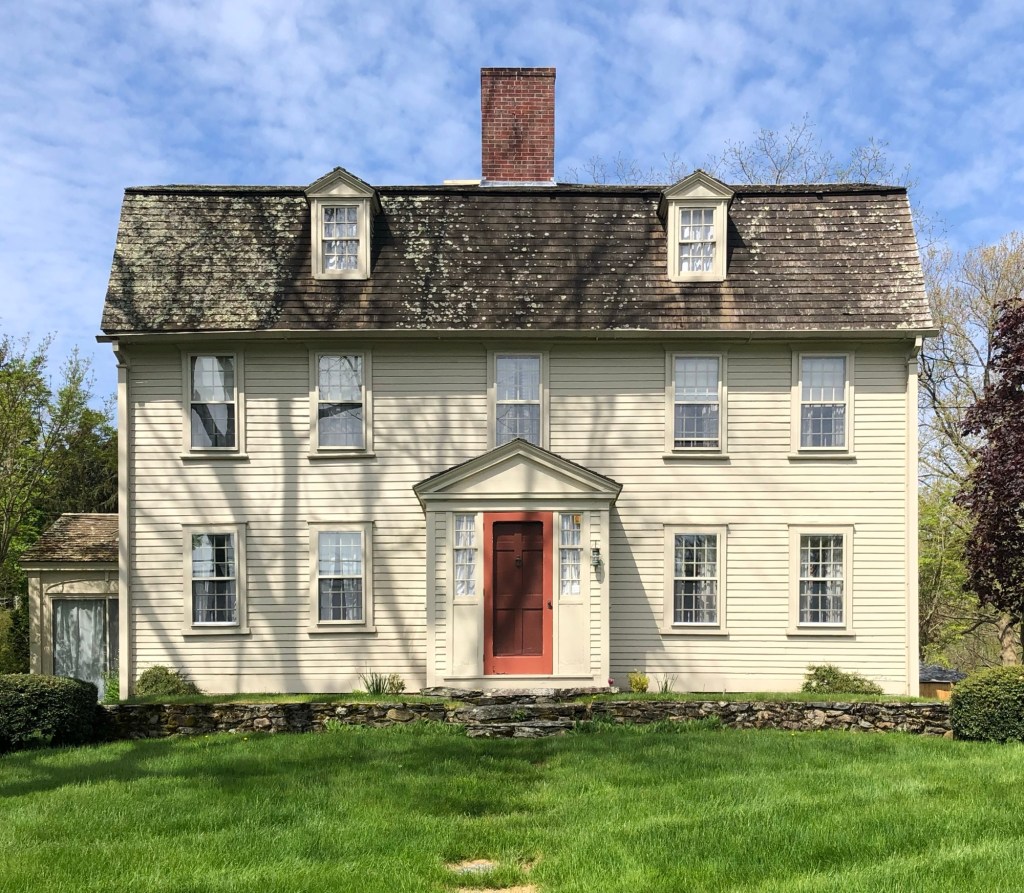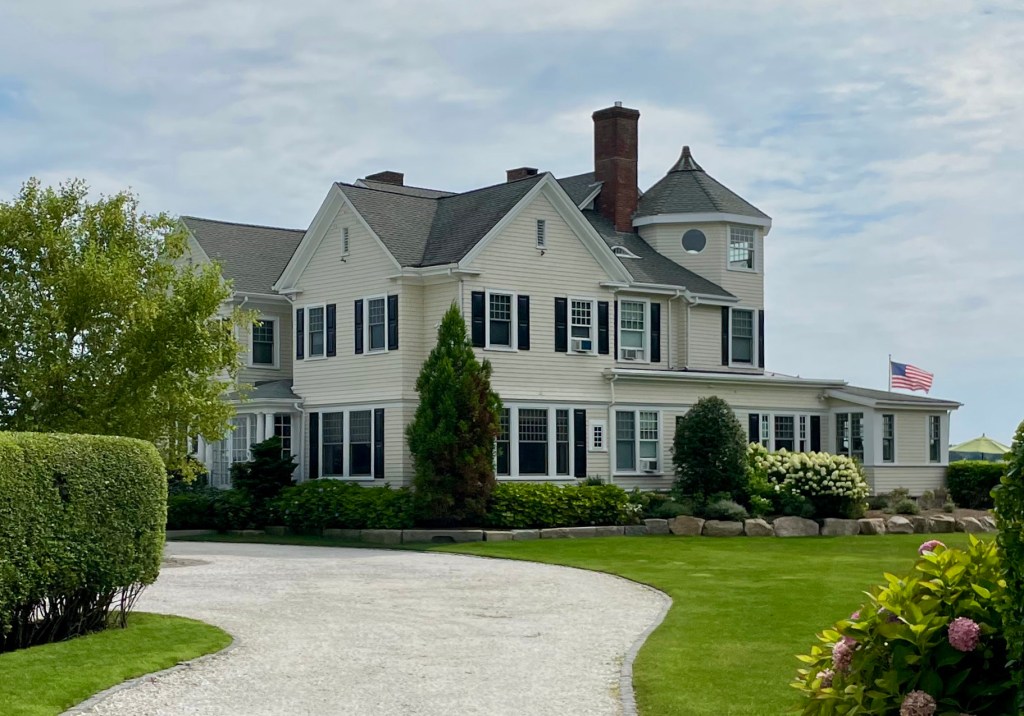
This large, gambrel-roofed Georgian house is located on Pearce Road, a winding road that runs the waterfront of the Cole River that spans between Swansea, Massachusetts, and Rhode Island. The house was owned by Captain John Brown (1675-1752) of the wealthy trading and slave-holding Brown Family which the prestigious Ivy League Brown University is named after. While extensive deed research of this home is not known, the property was mentioned in John Brown’s will of 1752 so it dates to at least 1750. It is possible that the house was expanded in the second half of the 18th century to its current form. The property remained in the Brown Family until 1911, and has been lovingly preserved by its successive owners.
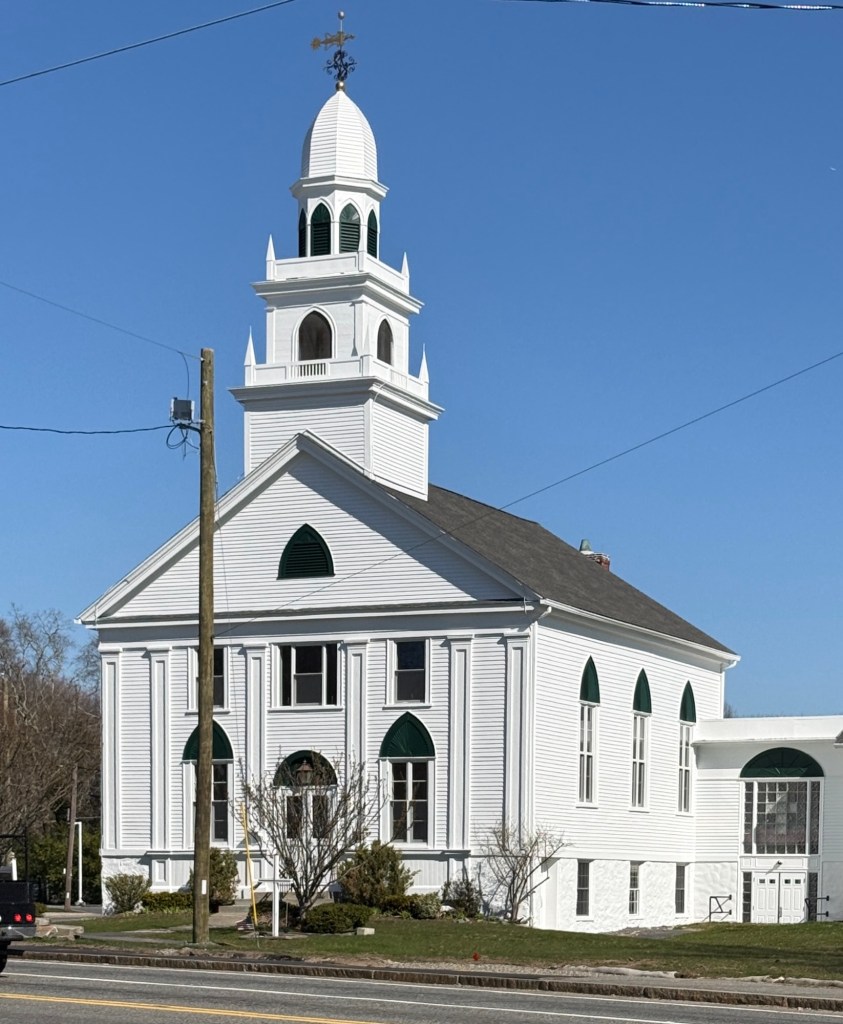
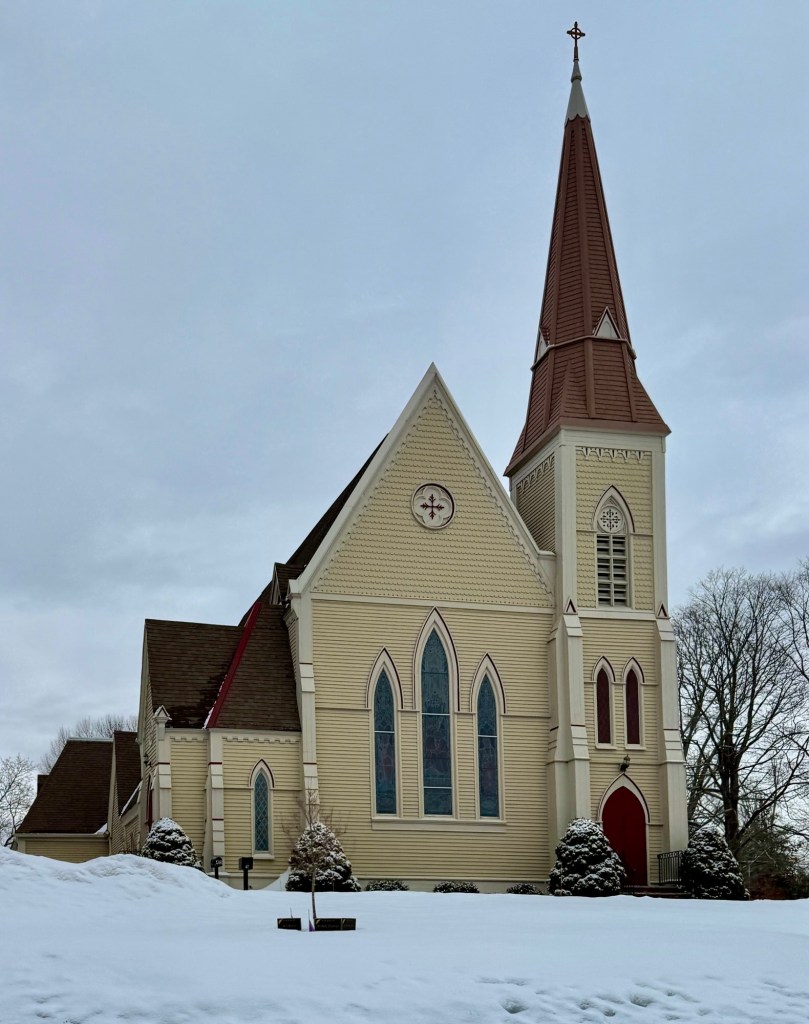
The United Church of Christ in Swansea, Massachusetts, was built in 1833 as the second building for the congregation which was originally organized in 1693. It is believed that this was the first church in New England to admit all Christians to membership regardless of their theological beliefs, as a United or Union church. The congregation’s first meetinghouse was built prior to 1719 and was replaced in 1833 when the current building was completed. The United Church of Christ in Swansea blends Greek and Gothic Revival styles with traditional wood-frame construction and gable roof with multi-stage steeple. The facade is adorned with pilasters and louvered lancet arches, showcasing the builder’s ability to pull from multiple architectural styles for the construction.
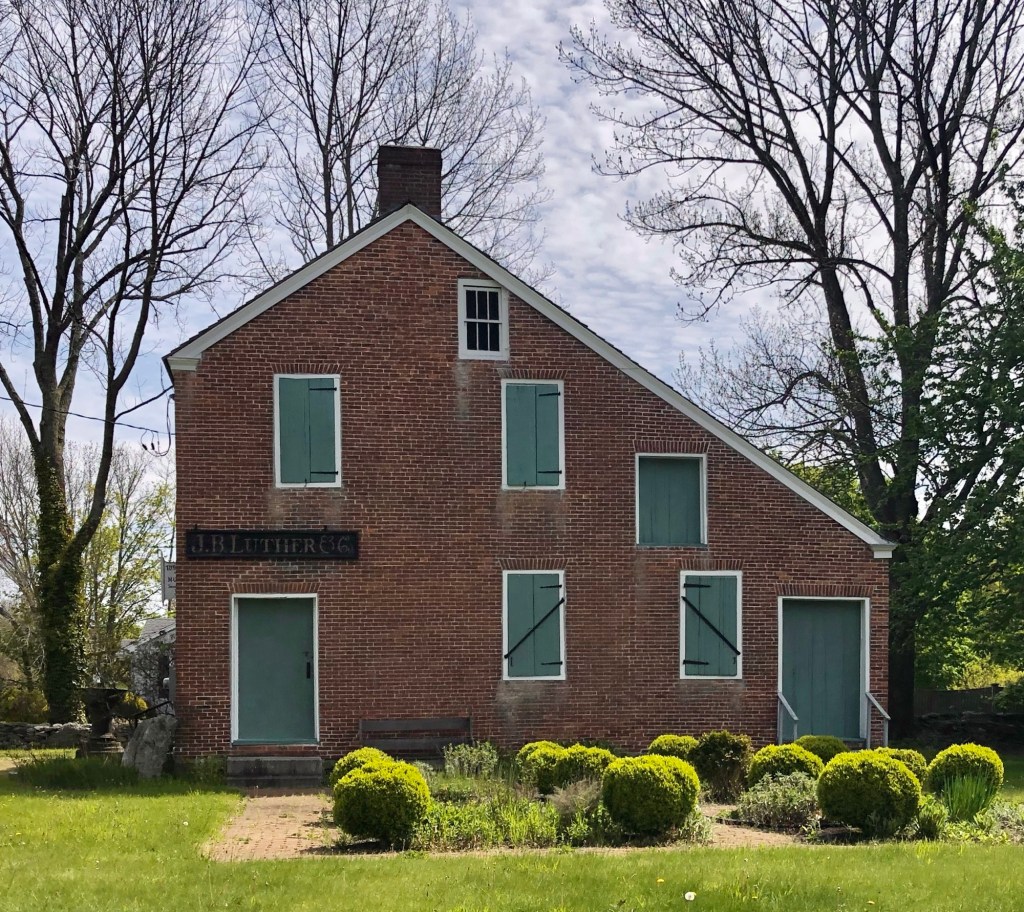
The Luther Store in Swansea, Massachusetts, is a historic commercial building constructed in 1815 and uncommon as a rare brick block with saltbox roof. The structure was built for John Brown Luther, and was operated by the Luther family as a store until 1903. The Luther’s Corner area was in the mid-19th century the economic center of Swansea, and Luther’s Store served as post office and library. The building was acquired in 1941 by the Swansea Historical Society, which now operates it as a local history museum following a restoration by Fall River architect, Maude Darling-Parlin.
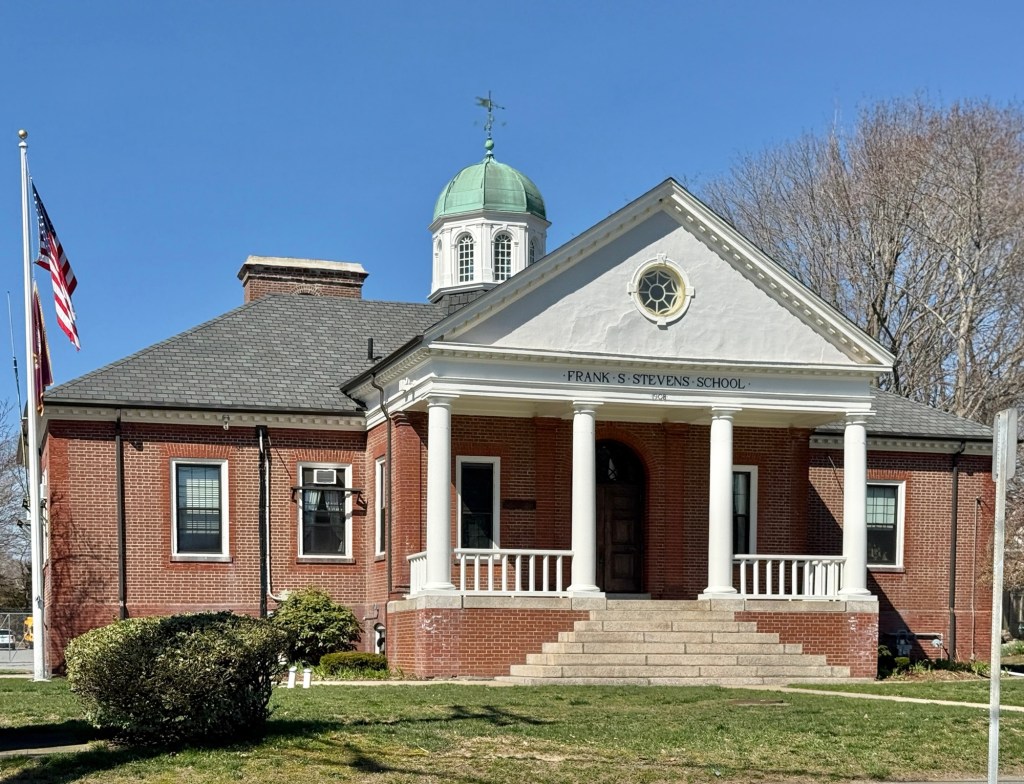
The Frank S. Stevens School in Swansea, Massachusetts, was one of a number of civic and institutional buildings donated to the small town by wealthy residents Frank and Elizabeth Stevens. Ten years after the death of her husband, Elizabeth Case Stevens retained her favorite architect, Henry Vaughan, to furnish plans for a new school building for the main village in her beloved town of Swansea, to be built in the memory of her late husband. Mr. Vaughan had already designed the town hall, library, and Episcopal church, and Mrs. Stevens thought it would be fitting for an architecturally appropriate public school to also be built in the quaint New England village. Neo-Classical in style, the one-story brick school building is distinguished for its full-height pedimented portico supported by classical Doric columns and a cupola atop the hipped roof. The school was eventually outgrown and is now the school administration building for the town’s three later public school buildings.
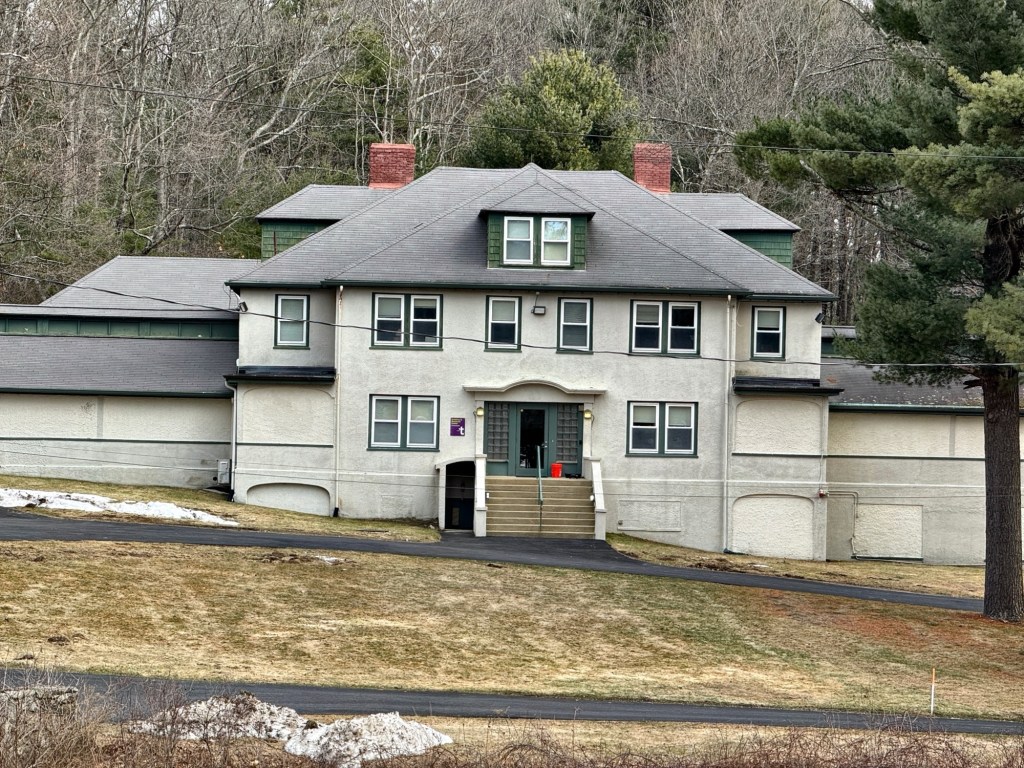
The old Sharon Sanatorium was built on former farmland in Sharon, Massachusetts, as a medical facility for the cure of pulmonary infectious diseases. The rural medical institution was designed in 1890 by the architectural firm of Longfellow, Alden and Harlow and completed a year later. The Sharon Sanatorium for Pulmonary Diseases opened formally in February 1891 with the purpose to provide affordable care for patients suffering from Tuberculosis and other pulmonary diseases. At the time, tuberculosis was a major health concern and treatment often included fresh air, so facilities such as this were designed with access to open air sleeping porches and forested surroundings. The Sharon Sanatorium was sited to catch the prevailing breezes on the side of Moose Hill, the second highest ascent between Boston and Providence. In 1916, the Sanatorium opened a Children’s Pavilion, which was reserved for children less than fourteen years of age suffering from tuberculosis. By 1938, the threat of tuberculosis was under control, and the Sanatorium began admitting patients suffering from arthritis and rheumatic fever until the facility closed in 1947. The Sanatorium integrated with the Boston Children’s Hospital in 1949 and soon after, the property was bought by Henry Plimpton Kendall (1878-1959), a wealthy entrepreneur and industrialist, for use as the Kendall Whaling Museum, showcasing his personal collection of paintings, prints, and tools of the whaling industry in New England. In 2001, the museum merged with the New Bedford Whaling Museum and today, the property is managed by the Trustees of Reservations as their Archives and Research Center.
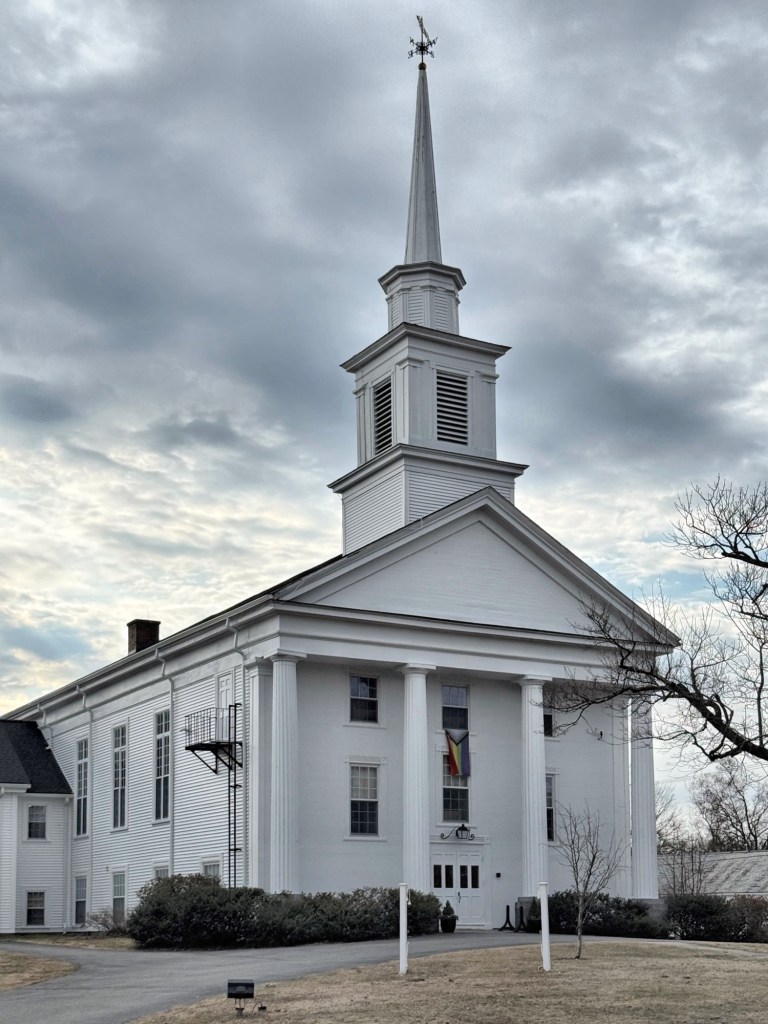
Sharon, Massachusetts, is a small suburban community south of Boston that is lesser known than its neighbors, but the community has some great old buildings! The Town of Sharon was originally part of a 1637 land grant given by the Dorchester Proprietors to encourage new settlement in areas southward. In 1726, the lands of the present towns of Sharon, Canton and Stoughton, were separated from Dorchester and called the Stoughton Territory. Settlers in present-day Sharon found it difficult to attend mandated church services centered around present-day Stoughton and petitioned the General Court in 1739 to set off as a separate precinct. The request was granted and the Second Precinct was established, and incorporated as Stoughtonham in 1765, changing its name in 1783 to Sharon, named after the Sharon Plain in Palestine. In 1813, the local congregationalists split due to theological differences and some formed a Unitarian church. The Congregationalists moved down the street and built a new church in 1822 which was destroyed by fire in 1838 and replaced a year later by this edifice. Built in 1839 the First Congregational Church of Sharon is a vernacular and well-preserved example of a Greek Revival church building in the Doric order with towering pilastered steeple, monumental portico supported by four fluted Doric columns, and flushboard siding. The Congregational Church retains an original bell cast by the The Revere Copper Company of nearby Canton.
Overlooking the Town Green in Wrentham, Massachusetts, the Trinity Episcopal Church of Wrentham stands as the town’s finest example of Victorian Gothic architecture and the community’s oldest Episcopal church. Episcopalians in Wrentham first began worshipping in 1863 and in less than ten years, quickly grew in numbers from just two members to so many that a church building was needed to house the congregation. The site on East Street was purchased and architect, Shepard S. Woodcock, was hired to furnish plans for the new building. Completed in 1872, the Victorian Gothic design features all of the hallmarks of the style, including the steeply pitched roof, pointed arch windows and entry doors, buttresses, and towering steeple.
The General Draper Memorial High School is one of the many civic and institutional buildings in Hopedale Village that were donated to the small industrial community by members of the wealthy Draper Family, who operated the Draper Corporation Factory in town. The school was built in 1927 on land donated to the Town by Princess Margaret Bonocompagni, the youngest child of the late William F. Draper, who married Prince Andrea Boncompagni of Italy in 1916. The marriage ended in divorce by 1924 and years later, she had no need for the family home in Hopedale, and bequeathed the site to the community for a new high school in memory of her late father. General William Franklin Draper (1842-1910) was a Civil War veteran who became a politician and managed the Draper company in Hopedale, where he built a massive mansion for his family. The mansion was demolished and replaced by this Colonial Revival style High School, designed by New Hampshire-based architect, Chase R. Whitcher, the handsome structure has since been expanded at the rear to service the growing student population in town.
Located on Adin Street, a street of homes formerly owned by factory owners and managers in Hopedale, Massachusetts, you will find “Urncrest”, a stunning Queen Anne Victorian mansion. This home was originally built around 1875 for William Lapworth (1844-1937) an English-born weaving expert, who worked at Hopedale Elastics Co. and patented certain weaving processes for suspenders, boot webbing, and garters. Hopedale Elastics was absorbed by the Draper Corporation in 1890, and Lapworth “modernized” his home with profits from this sale. His formerly modest home was updated with a corner tower, large additions, wrap-around porch with porte cochere, and applied ornament. The detached carriage house was also expanded, where he added a coachman’s apartment.
Hopedale’s Renaissance Revival Central Fire Station on Dutcher Street was designed by Milford architect, Robert Allen Cook, a favorite of the Draper Corporation, who had oversaw the design of the Draper Company Offices just five years earlier. Very similar in style and detailing to the Draper Offices, Cook created a fire station of brick and terra cotta with a monumental hose tower at the corner, all in the Renaissance Revival style. The building was largely funded by the company, who was by far the largest employer in town and had funded many municipal and institutional buildings in the community as part of the company town. As fire prevention was important for the Draper Corporation, they even funded some of the first fire trucks in Massachusetts, even for such a small community. The town has done a great job preserving this architectural landmark for over 100 years.