St. Mary’s Academy – Landmark Place Apartments // 1924

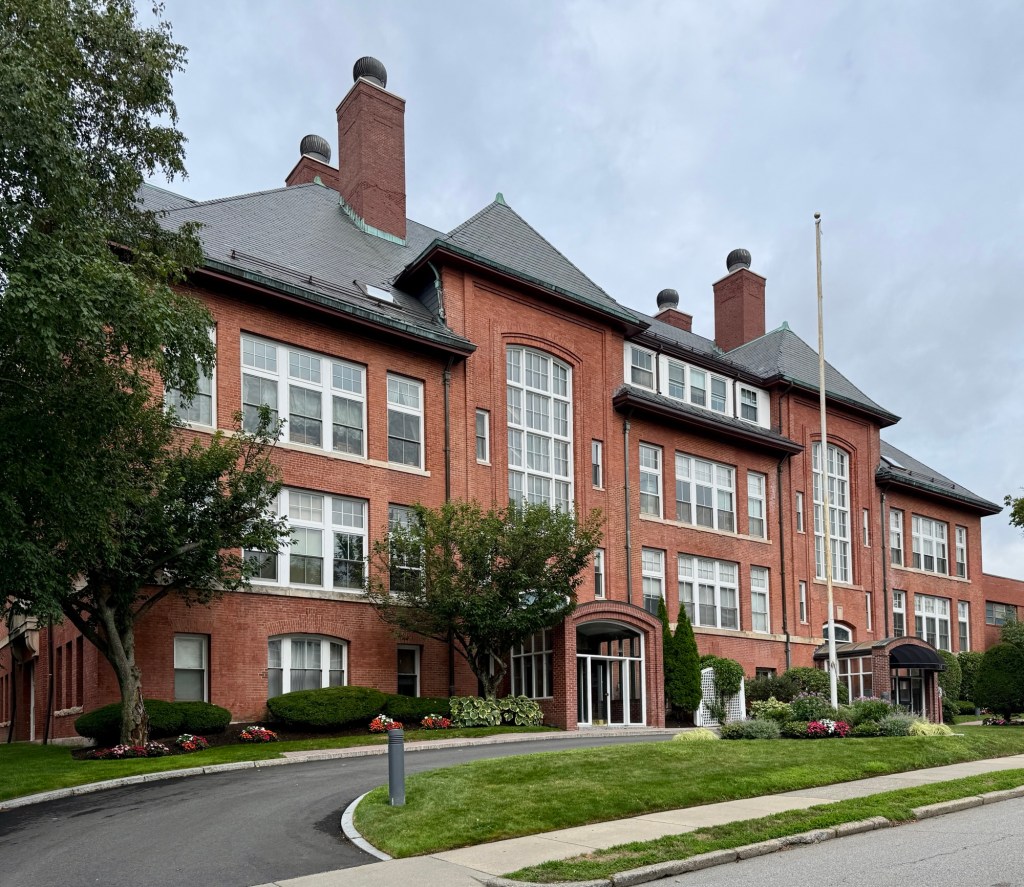
As the St. Mary of the Assumption Catholic Church of Milford expanded, the diocese determined that an academy building was warranted to educate the pupils affiliated with the growing congregation. In 1924, Massachusetts ecclesiastical architect, John W. Donohue was hired to furnish plans for a new parochial school building. The two-story Colonial/Classical Revival style edifice was constructed of brick with limestone trim and follows the form of many school buildings constructed in New England in the early decades of the 20th century. In 1954, the building became the St. Mary’s Catholic High School and it was expanded in 1962 with a Modern addition. When the two local Catholic churches merged schools in the 1970s, this building was sold to the Town of Milford, who converted it to use as a public middle school, a use that remained until a new middle school was built elsewhere in town. With its future uncertain, in 2018, the Town of Milford sold the school building to developers, who demolished the 1960s additions and constructed a new addition to the rear, converting the entire building into elderly housing named, Landmark Place Apartments. Adaptive reuse is a great way to build additional housing while retaining local history and meet sustainability goals!

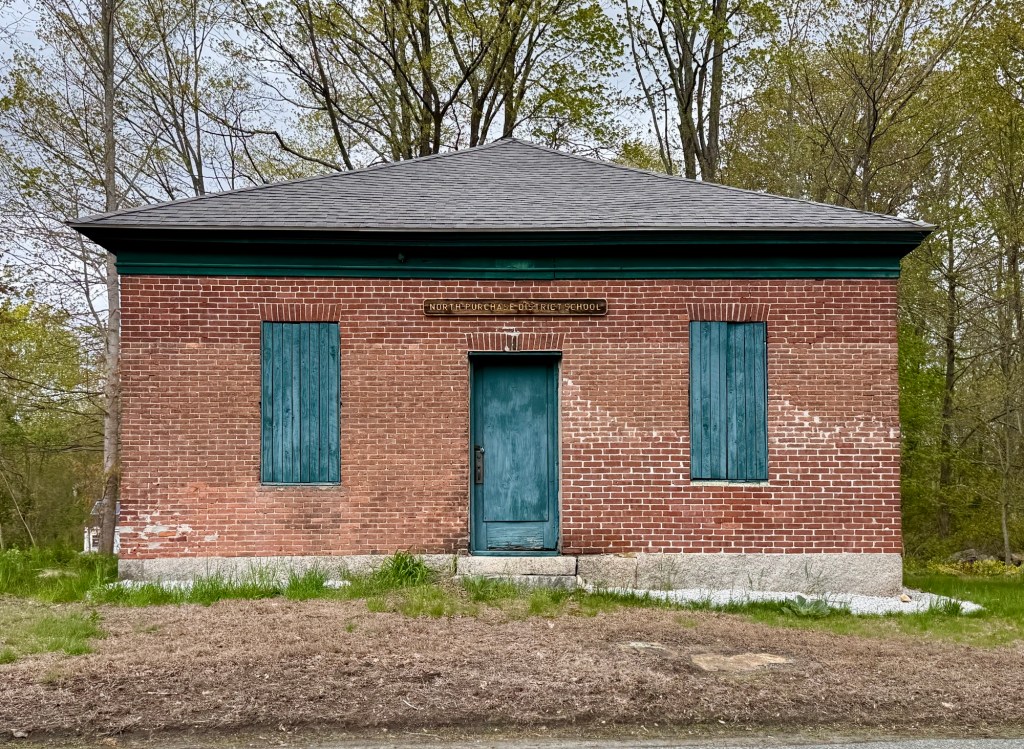
North Purchase District Schoolhouse // 1832

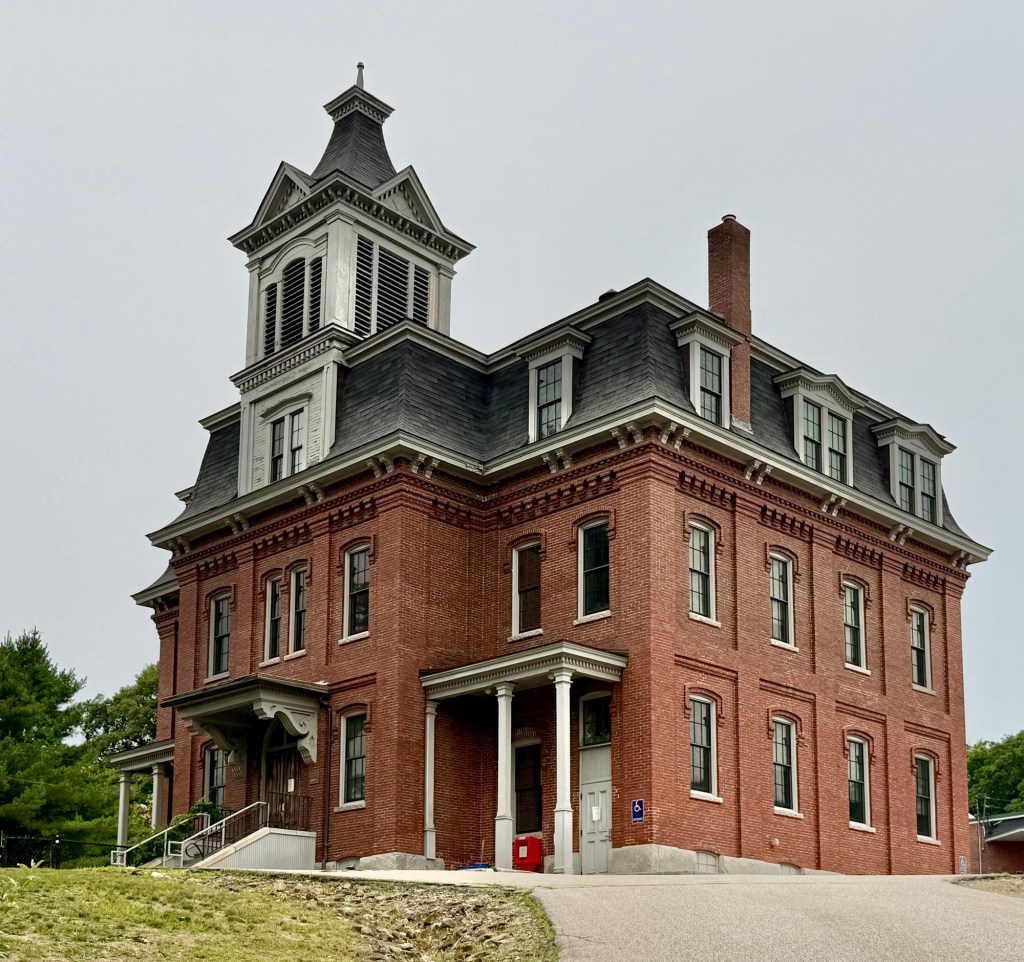
This single-story, hipped-roof, brick schoolhouse is approximately 30’x24′ in plan and was built in 1832 for the town of Milford, Massachusetts, as one of its district schoolhouses to serve the community. After Milford incorporated in 1780, the town was divided into school districts, where area pupils would attend one of six school buildings based on proximity to their primary residence. This brick building replaced an earlier school building which was lost following a fire in 1830. The town funded construction on this school at a cost of $524. The one-room school remained in use until the 1920s, until consolidated schools and accessibility due to bus and personal automobile made getting to a centralized school building, easier. The old North Purchase District School was briefly used as the North Purchase Community House, a center for area residents to socialize and provided space for local scout groups. The building has been boarded up since at least 2009 and its future looks uncertain.

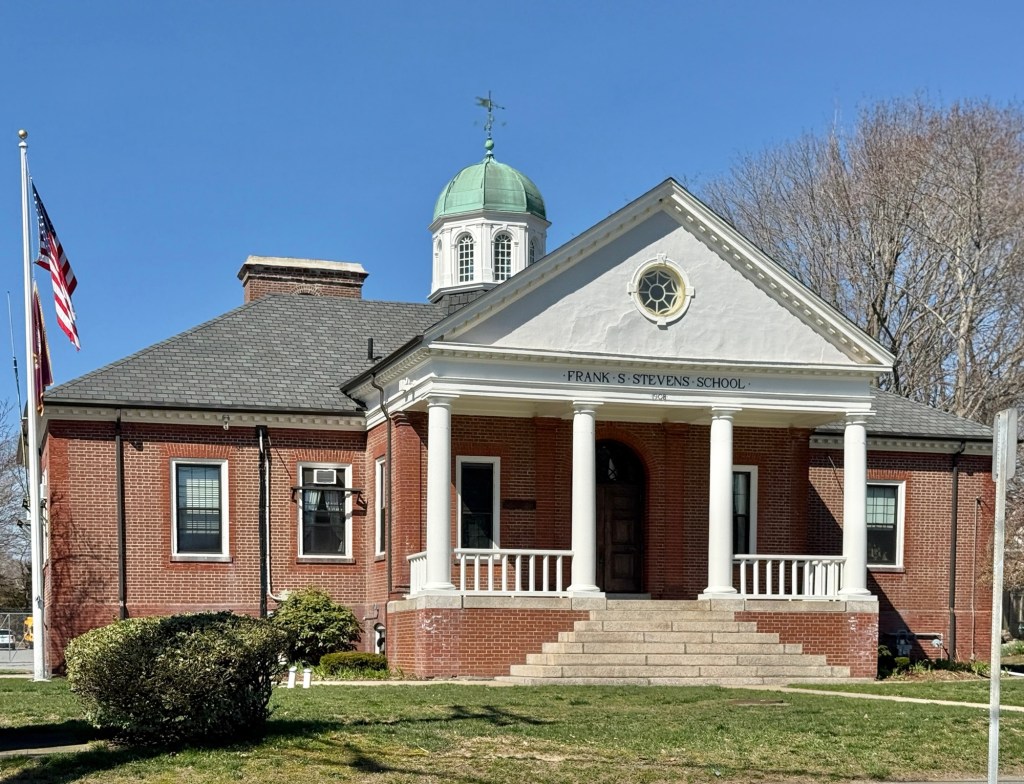
Frank S. Stevens School // 1908

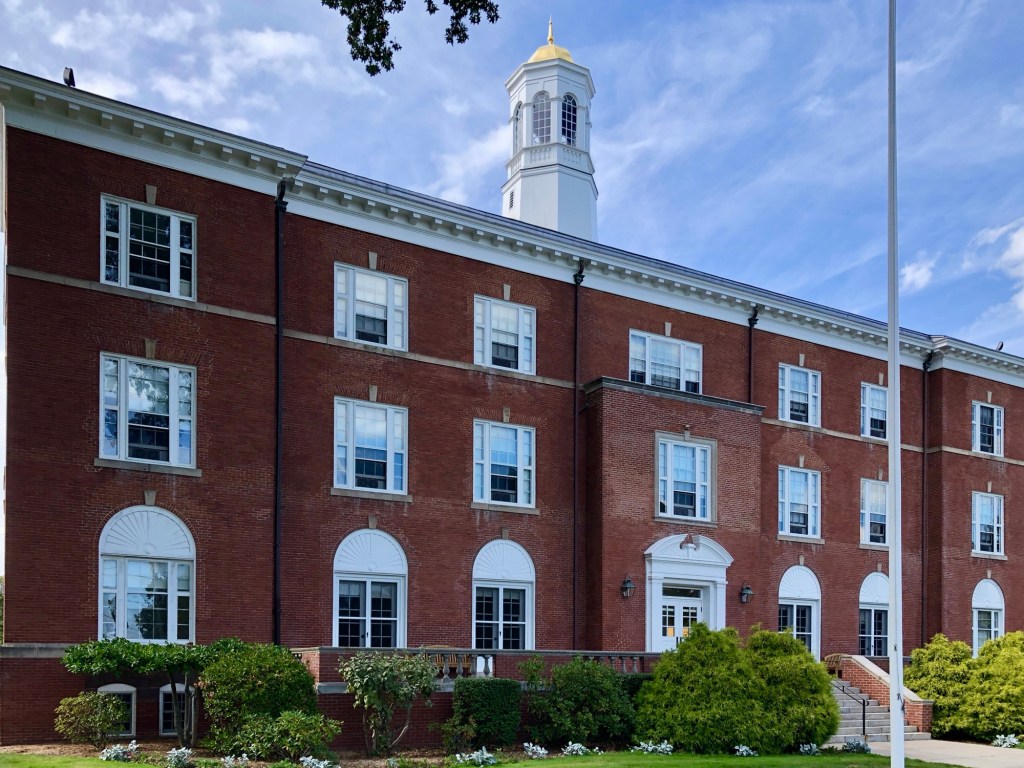
The Frank S. Stevens School in Swansea, Massachusetts, was one of a number of civic and institutional buildings donated to the small town by wealthy residents Frank and Elizabeth Stevens. Ten years after the death of her husband, Elizabeth Case Stevens retained her favorite architect, Henry Vaughan, to furnish plans for a new school building for the main village in her beloved town of Swansea, to be built in the memory of her late husband. Mr. Vaughan had already designed the town hall, library, and Episcopal church, and Mrs. Stevens thought it would be fitting for an architecturally appropriate public school to also be built in the quaint New England village. Neo-Classical in style, the one-story brick school building is distinguished for its full-height pedimented portico supported by classical Doric columns and a cupola atop the hipped roof. The school was eventually outgrown and is now the school administration building for the town’s three later public school buildings

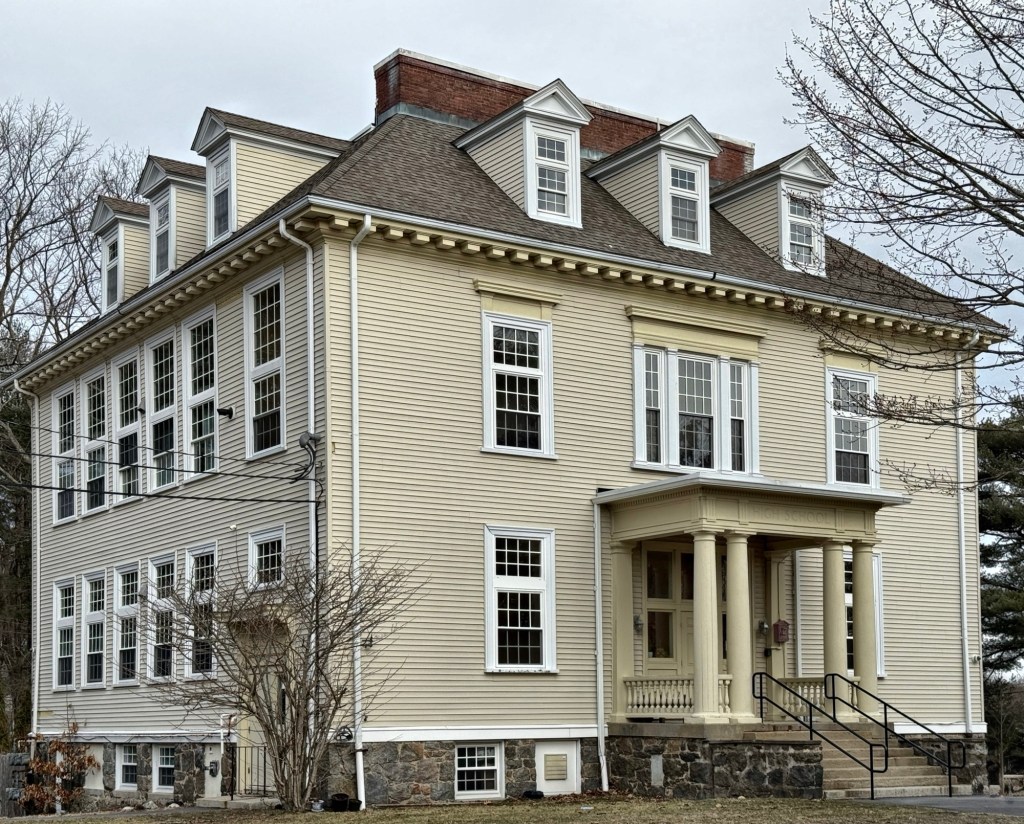
Former Pleasant Street High School // 1910

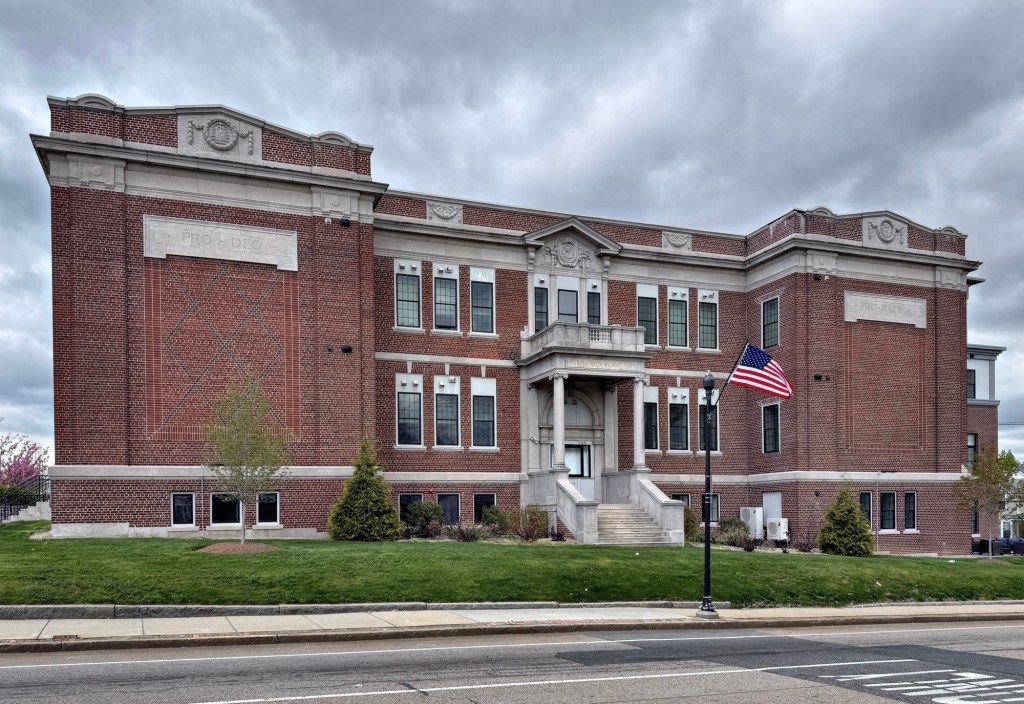
The former Pleasant Street High School in Sharon, Massachusetts, is an excellent example of early 20th century school architecture and adaptive reuse in a small Massachusetts town. The square, two-story, Colonial Revival style school building replaced an earlier school and was designed in 1910 by the firm of Adden & Parker. As with many communities, the school was outgrown and outdated after WWII and a new, consolidated high school was built in town. The former Pleasant Street school closed by 1981 and was subsequently converted to housing by the Sharon Housing Authority. The building is part of a local historic district, ensuring its preservation in perpetuity.

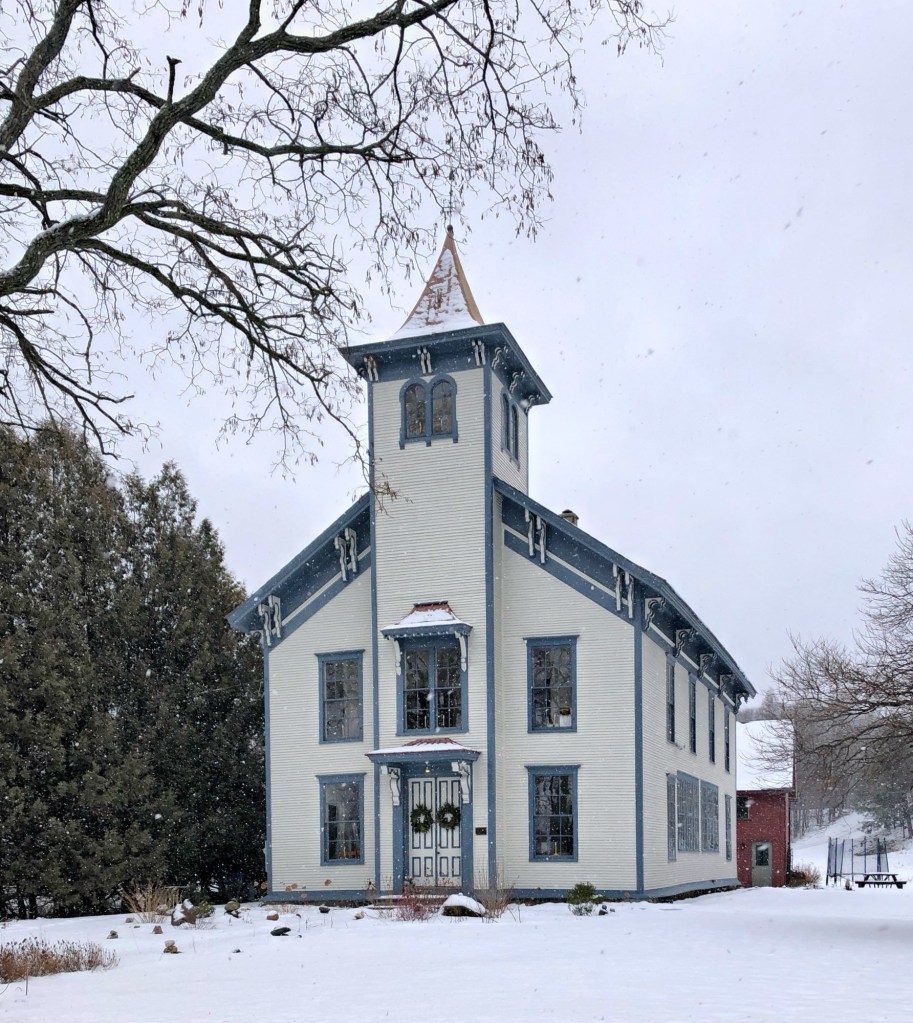
Jonesville Academy // 1868

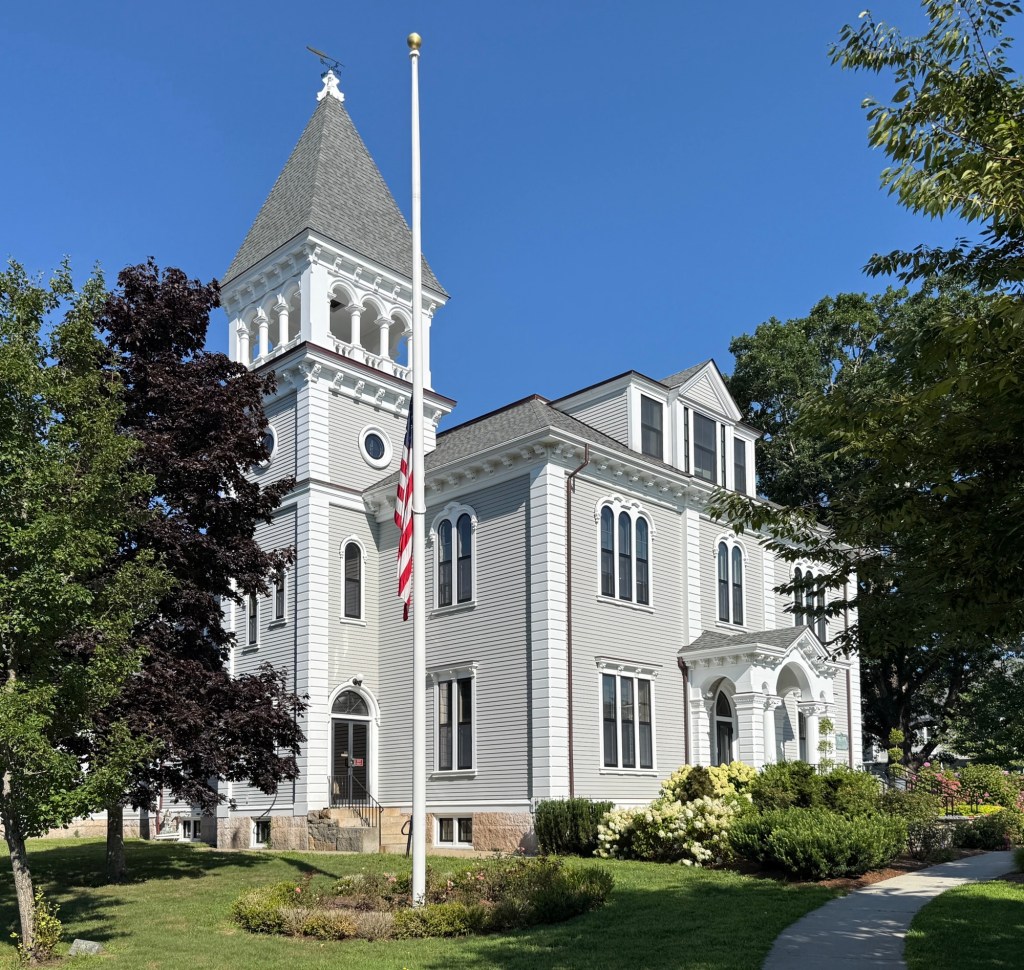
Jonesville Academy is a historic schoolhouse located in the village of Jonesville, in the town of Richmond, Vermont. The large, wooden schoolhouse was constructed around 1868 in the Italianate style with center entry tower, bracketed cornice, window and door hoods, and round arched windows, all hallmarks of the style. The building was constructed at the height of the area’s success as an industrial village, and operated as a high school and later as an elementary school until 1955, when schools in Richmond were consolidated. After the school closed, the building operated as a grange hall for a number of years until it reverted back to private ownership, and is today a single-family residence. 

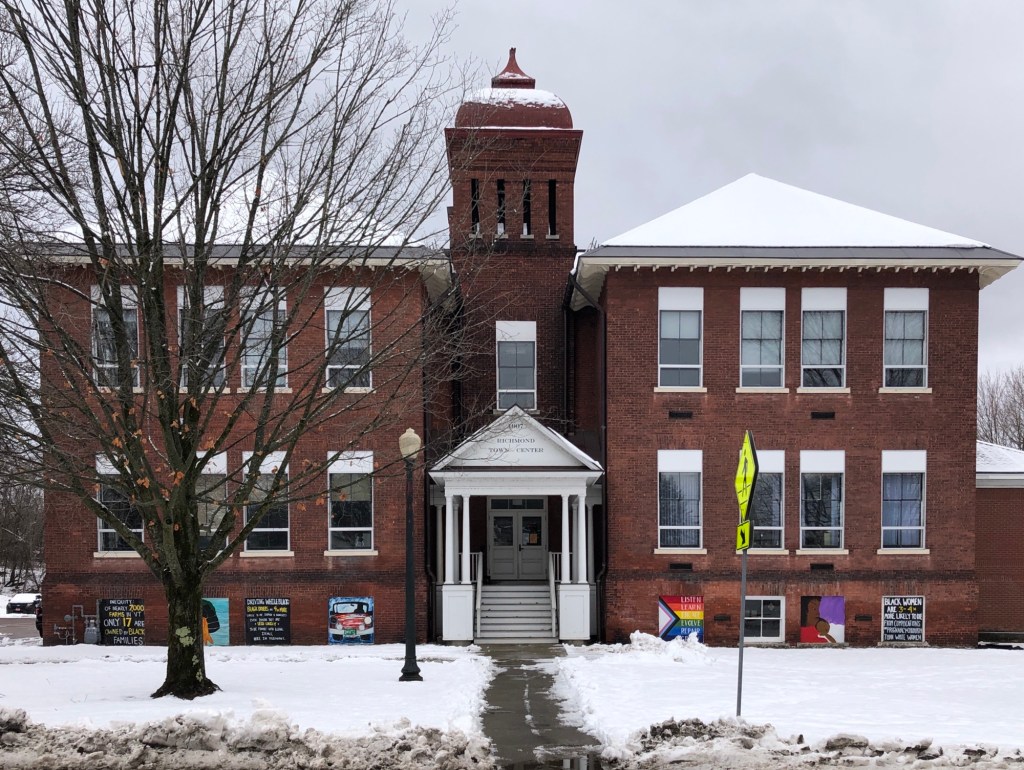
Former Richmond School // 1907

This handsome brick building is located in the historic downtown of Richmond, Vermont, and was built at a time of rapid growth of the small community. Pupils in the town of Richmond originally went to school in small, one-room rural schoolhouses, with the Richmond Academy serving the main village. The old academy building was constructed in 1868 and taught classes from elementary through high school. The building was outgrown as the town grew in the first decade of the 20th century, necessitating a new, larger schoolhouse for the main village. This new school was constructed in 1907, apparently just as the right side and tower, which was expanded with the left half four years later in 1911. Blending Craftsman and Romanesque styles, plans for the school were drawn up by Vermont architect, Frank Lyman Austin. Another rear addition in the 1950s was constructed to meet increased demand until the 1980s when a new elementary school was built in town. Since 1989, the former Richmond School has been home to Richmond town offices. The building, while altered, is an important landmark of the town, showcasing a blending of architectural styles popular in the early 20th century.

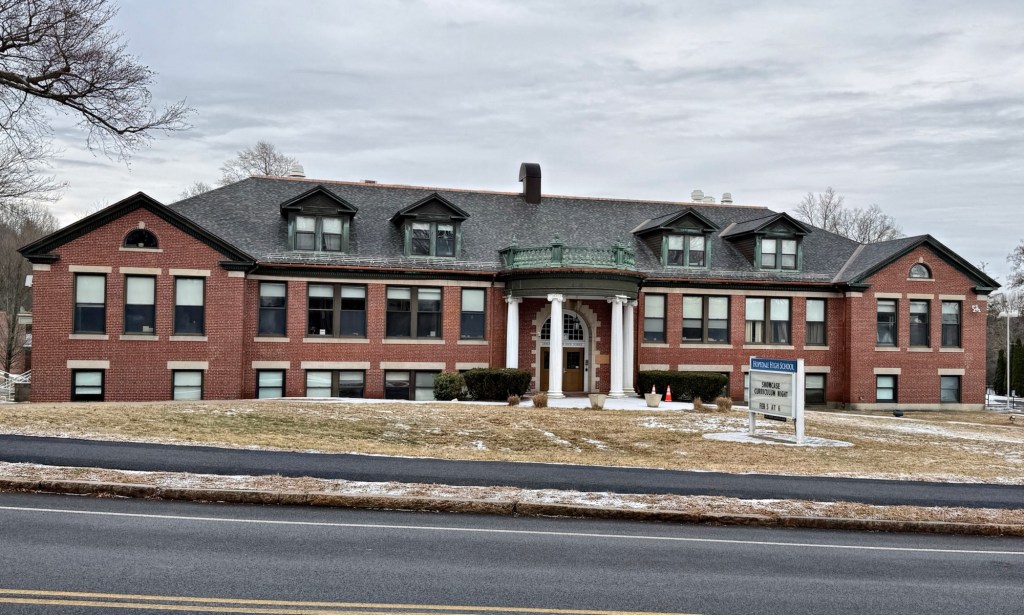
General Draper High School // 1927

The General Draper Memorial High School is one of the many civic and institutional buildings in Hopedale Village that were donated to the small industrial community by members of the wealthy Draper Family, who operated the Draper Corporation Factory in town. The school was built in 1927 on land donated to the Town by Princess Margaret Bonocompagni, the youngest child of the late William F. Draper, who married Prince Andrea Boncompagni of Italy in 1916. The marriage ended in divorce by 1924 and years later, she had no need for the family home in Hopedale, and bequeathed the site to the community for a new high school in memory of her late father. General William Franklin Draper (1842-1910) was a Civil War veteran who became a politician and managed the Draper company in Hopedale, where he built a massive mansion for his family. The mansion was demolished and replaced by this Colonial Revival style High School, designed by New Hampshire-based architect, Chase R. Whitcher, the handsome structure has since been expanded at the rear to service the growing student population in town.

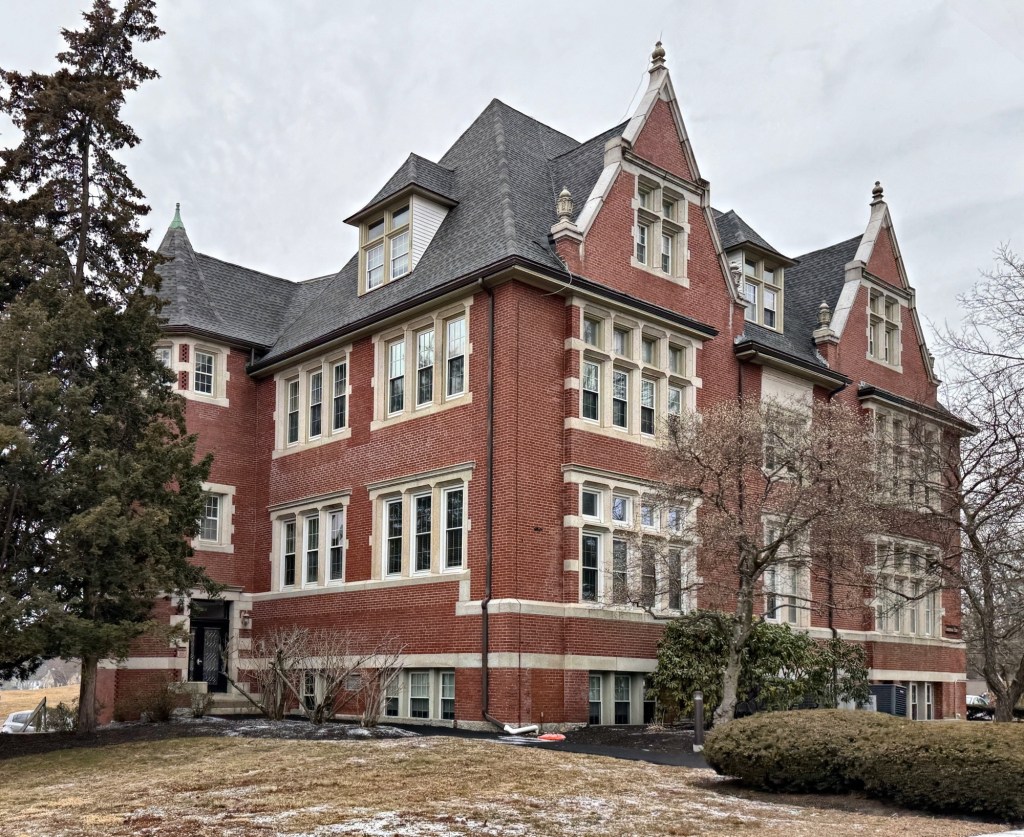
Dutcher Street Grammar School // 1897

The former Dutcher Street Grammar School in Hopedale, Massachusetts, is a great example of a Tudor Revival/Chateauesque style public school building that has been adaptively reused. Built in 1897, the Dutcher Street School was designed by Charles Howard Walker of the firm, Walker & Kimball, at a cost of $40,000. The school is built of red brick with granite trimmings and is one of the finest late-19th century school buildings in the state. The school closed in the late 20th century after the Draper Factory, the largest employer in town, closed in 1980. Instead of being demolished, the Dutcher Street School was renovated and given an addition to convert the building into condominiums, a great example of adaptive reuse!

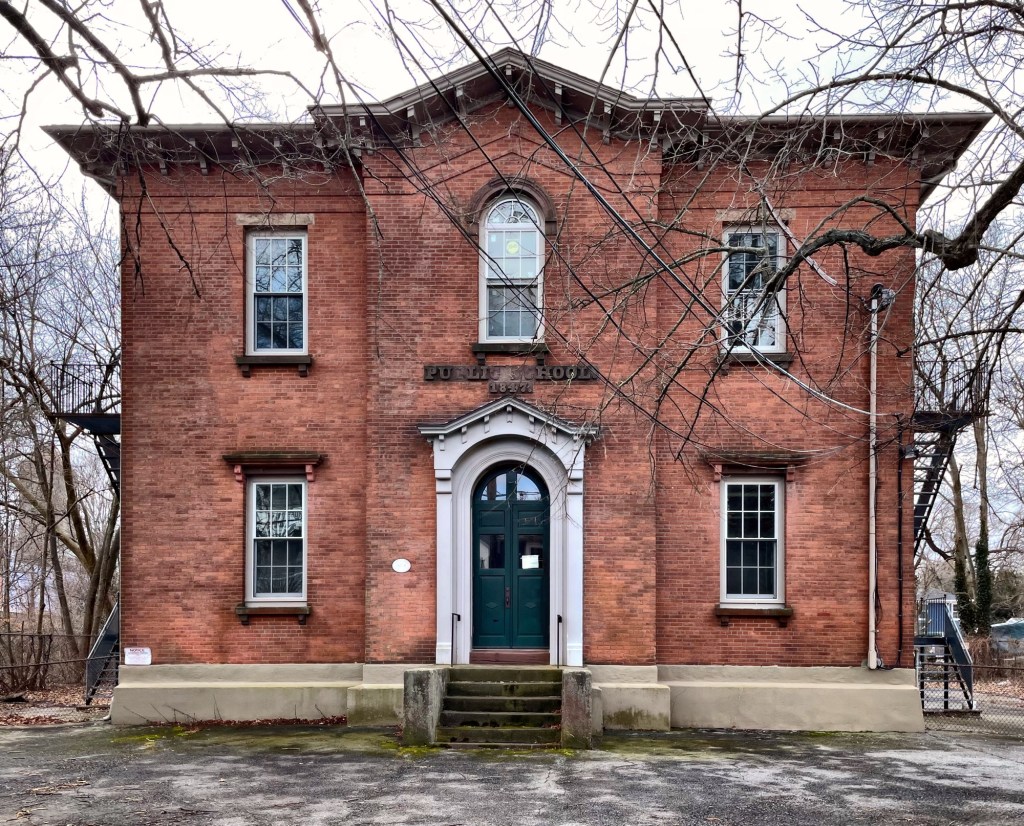
Liberty Street School // 1847

The Liberty Street School building in Warren, Rhode Island, was built in 1847 as only the third high school building constructed in the state, and is the oldest survivor of its style. Architect Thomas Alexander Tefft, one of the nation’s first professionally trained architects, designed the school when he was just 21 years old in the Italianate style, with a two-story form, center entrance set within a round-arched surround and a central projecting gable-end pavilion. The young architect would later take an excursion around Europe in the mid 1850s, but would fall ill with a fever in Florence, Italy and he died there in 1859. He was just 33 years old when he died. The Liberty Street School was remodelled as an elementary school at the turn of the 20th century and continued as a public school until the 1970s. The historically and architecturally significant building has sat vacant for years. The building is still owned by the Town of Warren, and after over decades of planning studies and proposals, the building remains vacant and deteriorating. What would you like to see as the future of the Tefft-designed Liberty Street School?

Joyce Street School // 1903

Built in 1903, the Joyce Street School in Warren, Rhode Island, is an excellent example of an early 20th century public school building constructed in the Colonial Revival style. To keep up with a growing population town officials hired architect, Albert Humes, to furnish plans for a new primary school on a lot behind the Town Hall. The handsome school is constructed of brick with a stone foundation and trim of marble and granite with a projecting entrance pavilion, and segmental-arch windows at the second floor. In 1940, the Joyce Street School became a grammar school to house grades 5 to 8, and the building was completely renovated in 1950. The Building was decommissioned as a school in the mid-1970s and later went through a $2.5 million renovation with an addition at the rear to house the Central Fire Station and the Police Department in the former school, a use that remains today.

Hall Memorial School, South Willington // 1922

Located in South Willington, Connecticut, this Colonial Revival style school building was built to serve the mill village pupils, many of whom were first- and second-generation Americans who immigrated to the area to work at the local mill. In his will, William Henry Hall (1867-1922), the son of industrialist Gardiner Hall Jr., who established the business under his name, donated funds to the community to erect a new, suitable school building for the village. Beyond his work at his family’s business, William H. Hall served in the Connecticut House of Representatives in 1893–1897 and again in 1905, 1909, and 1911, and he was generous with his money throughout his life and in his will. For the Hall Memorial School, his heirs selected architect, Harry L. Sprague of Springfield, Massachusetts, who designed the one-story school built of brick and limestone trim and a tall, pedimented portico at the entry supported by four tuscan columns. The school has seen additions, but it retains much of its architectural integrity in the over 100 years of use as a public school.

Cochituate School // 1910

The Cochituate School in Wayland, MA, was built in 1910 to educate the Cochituate Village’s growing student population. The industrial village was dominated by shoe manufacturing with workers largely consisting of first- and second-generation European immigrants who moved to New England for work. Boston architect, Willard P. Adden, designed the school, which replaced an earlier schoolhouse on the site that was outgrown. The two-story, brick school was expanded following WWII, when a long rear ell with classrooms and a cafeteria was designed by Perry, Shaw & Hepburn. In the 1990s, the old Cochituate School was renovated and converted to senior housing administered by the Wayland Housing Authority.

Old Wayland High School // 1855

In 1854, at the annual Town Meeting at Wayland, residents voted to build the community’s first High School, this structure, which was completed in 1855. The roughly square building is Italianate in style with the round arched windows and bracketed cornice, but with some holdover features common in Greek Revival architecture, including the tall pilasters dividing the bays, and projecting portico supported by square paneled columns. A few years after opening, the new High School was so underused, the local grammar school held some classes here. By the 1880s, high school students were sent to school outside of town. As the town population began to increase and the size of the student body necessitated a new high school. The town considered repair of this building, which had suffered from neglect, or construction of a new building. In the end, money was appropriated to build a new High and Grammar School in 1896. The town had the first school moved slightly on the town lot to allow space for the new, second school, and sold the 1850s schoolhouse to the local chapter of the Independent Order of Odd Fellows, known as Pequod Lodge. The second high school was demolished in 1978, over a decade after the present High School was built by The Architect’s Collaborative (TAC). In 1978, the Old Wayland High School was sold to the neighboring Trinitarian Church and has been used for administrative purposes and church meetings.

Lancaster Central School // 1904

Located across the Town Common from the iconic Bulfinch Church in Lancaster, Massachusetts, this handsome 1904 Colonial/Classical Revival style school building was designed in response to its neighbors and Colonial context of the town of Lancaster. At a Town Meeting in 1903, a local building committee determined that “Bulfinch Colonial” would be the best style for the architecture for a new high school that would be built in the town center, with Herbert Dudley Hale, selected as the architect for the planned two-story brick building. The Center School had been used continuously as a public school until 2001, when it outlived its utility as school facility in town, which was vacated for years until grant funding and a restoration of the building, now known as the Prescott Building, for Town Offices, including the Lancaster Historical Commission. The facade is dominated by its seven-bay symmetrical façade featuring brick
corner quoins, double-door entrance, and two-story white-painted brick pilasters framing the entrance and “supporting” the pediment that contains the town crest in high-relief.

Chester Academy – Chester Historical Society // 1884

The town of Chester, Vermont, is one of the best small towns in the state for architecture lovers! Don’t believe me? I will prove it in this upcoming series. Located in Chester Village, the town’s center, this handsome brick building set off the main street, was built in 1884 as the town’s high school, replacing an 1814 private academy formerly on the site. The private academy closed in 1881, and the building was sold to the town, who by 1884, demolished the original structure and erected the current Italianate style building. The building served as the town high school until 1911, when a new high school was constructed nearby. The elementary and junior high school operated from here until the 1950s, when a modern school was constructed in town. Since 1950, the former academy building has been used by the Chester Art Guild, and currently is leased from the Town by the Chester Historical Society. The structure retains its architectural character down to the segmental arched windows and cupola.