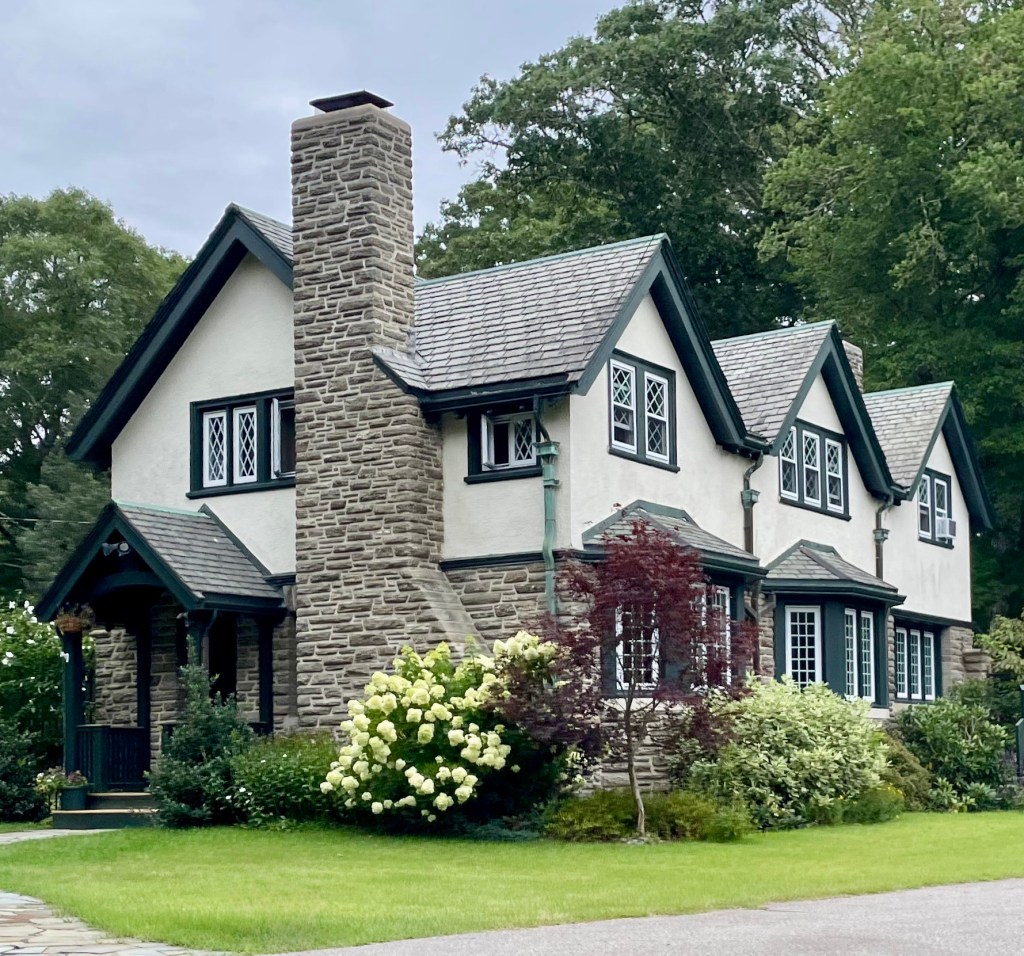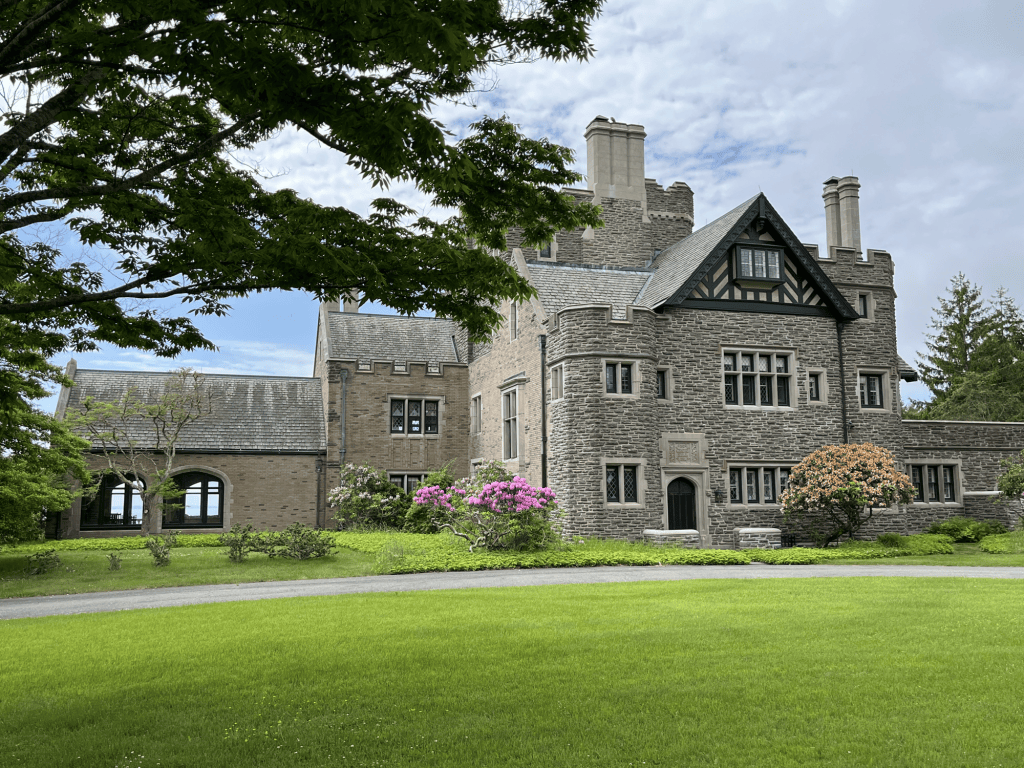
Charles Smith House // 1914

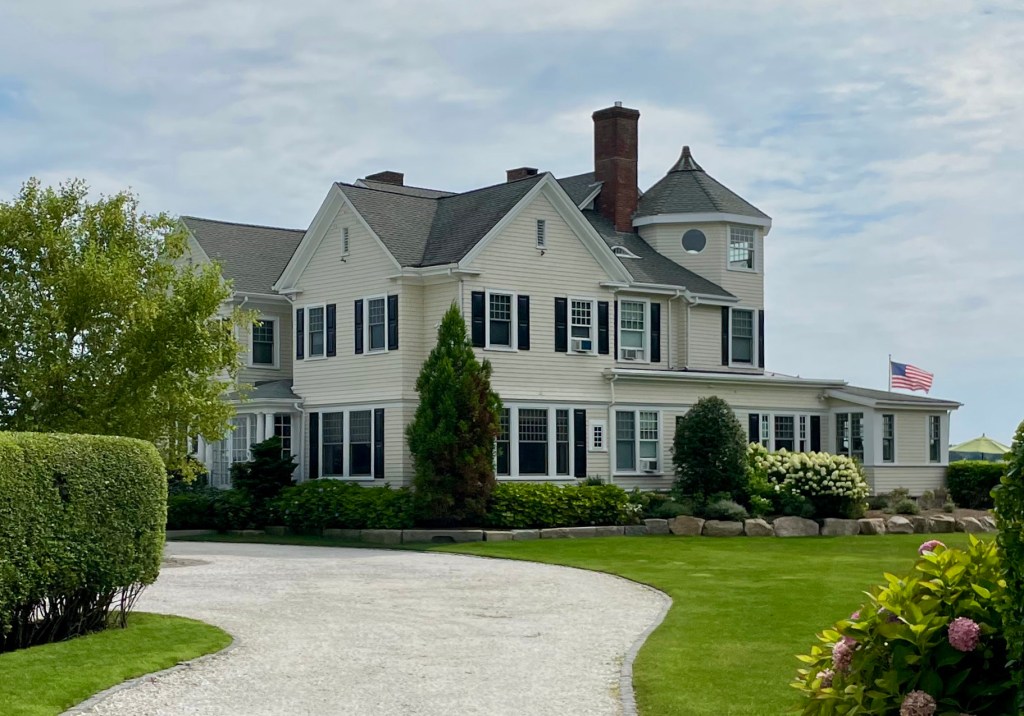
The neighborhood of Touisset in Swansea, Massachusetts overlooks Mount Hope Bay and was largely developed in the early 1900s by Fall River real estate dealer Jacob Fash who worked with local architect, Edward I. Marvell to lay out house lots and likely design houses for middle-class residents. One of the more fashionable houses on the waterfront is this residence, built in 1914 for Charles Smith, an inventor who patented rollers and machinery to lay gold-leaf. Soon after moving into this house, he filed for bankruptcy and the house was sold at auction to William R. Randall of Providence. The house can be categorized as an example of the Arts and Crafts style with elements of Tudor Revival and Spanish Colonial Revival styles, all reaching their height of popularity in the early 20th century. The use of stucco walls, stone porches and red terracotta roofing tiles enhances its curb appeal.

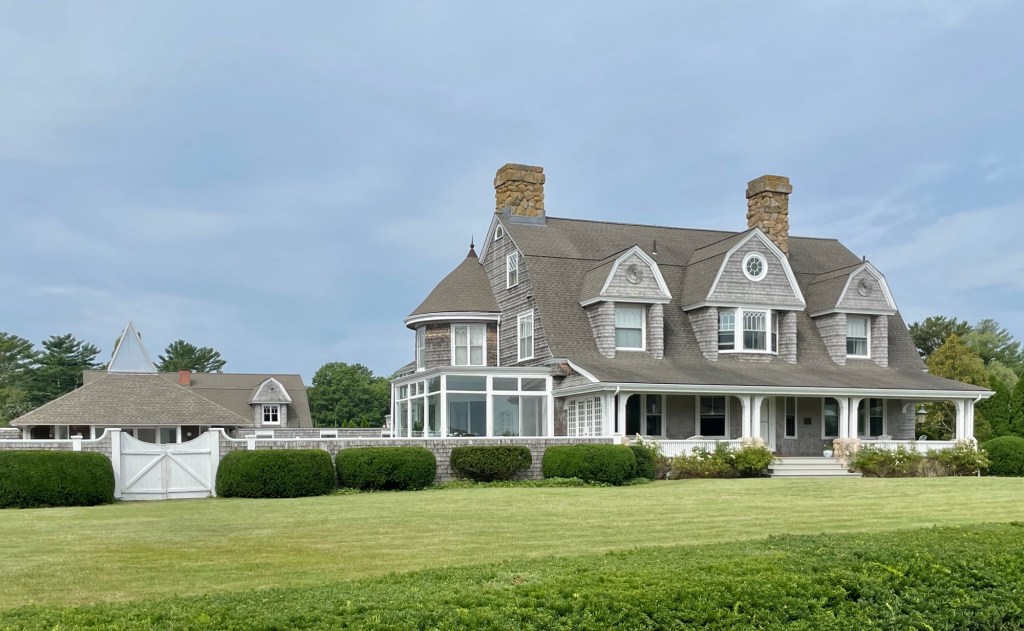
Brown Homestead // c.1750

This large, gambrel-roofed Georgian house is located on Pearce Road, a winding road that runs the waterfront of the Cole River that spans between Swansea, Massachusetts, and Rhode Island. The house was owned by Captain John Brown (1675-1752) of the wealthy trading and slave-holding Brown Family which the prestigious Ivy League Brown University is named after. While extensive deed research of this home is not known, the property was mentioned in John Brown’s will of 1752 so it dates to at least 1750. It is possible that the house was expanded in the second half of the 18th century to its current form. The property remained in the Brown Family until 1911, and has been lovingly preserved by its successive owners.

United Church of Christ, Swansea // 1833

The United Church of Christ in Swansea, Massachusetts, was built in 1833 as the second building for the congregation which was originally organized in 1693. It is believed that this was the first church in New England to admit all Christians to membership regardless of their theological beliefs, as a United or Union church. The congregation’s first meetinghouse was built prior to 1719 and was replaced in 1833 when the current building was completed. The United Church of Christ in Swansea blends Greek and Gothic Revival styles with traditional wood-frame construction and gable roof with multi-stage steeple. The facade is adorned with pilasters and louvered lancet arches, showcasing the builder’s ability to pull from multiple architectural styles for the construction.

Luther Store // 1815

The Luther Store in Swansea, Massachusetts, is a historic commercial building constructed in 1815 and uncommon as a rare brick block with saltbox roof. The structure was built for John Brown Luther, and was operated by the Luther family as a store until 1903. The Luther’s Corner area was in the mid-19th century the economic center of Swansea, and Luther’s Store served as post office and library. The building was acquired in 1941 by the Swansea Historical Society, which now operates it as a local history museum following a restoration by Fall River architect, Maude Darling-Parlin.

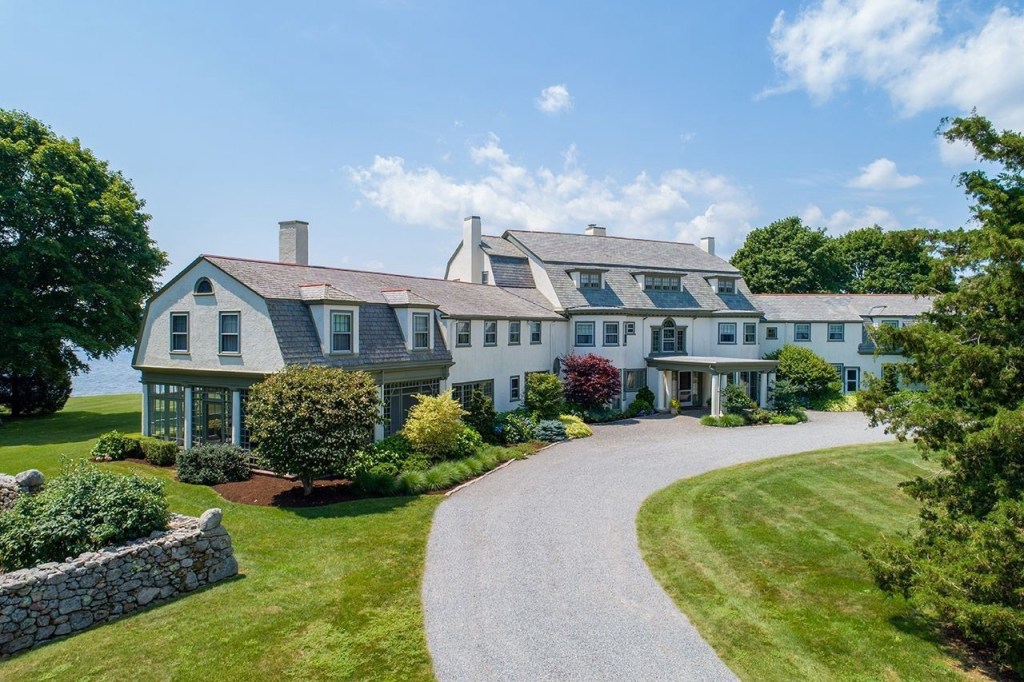
Francis Gardner House // 1903

This house on Gardner’s Neck Road in Swansea, Massachusetts, was designed in 1903 by Fall River-based architect, Edward I. Marvell, for Francis L. Gardner, a descendant of the Gardners for whom Gardner’s Neck is named. Francis Gardner’s father, Leland, was a successful market gardner who farmed locally with the use of greenhouses, shipping fresh produce and other goods to Fall River and transportation to other nearby cities. This business continued under his sons, Francis and Chester until about 1925, when they began selling land on Gardner’s Neck for development. Francis’ house is an excellent early 20th century residence that blends multiple styles popular at the turn of the 20th century in a square form.

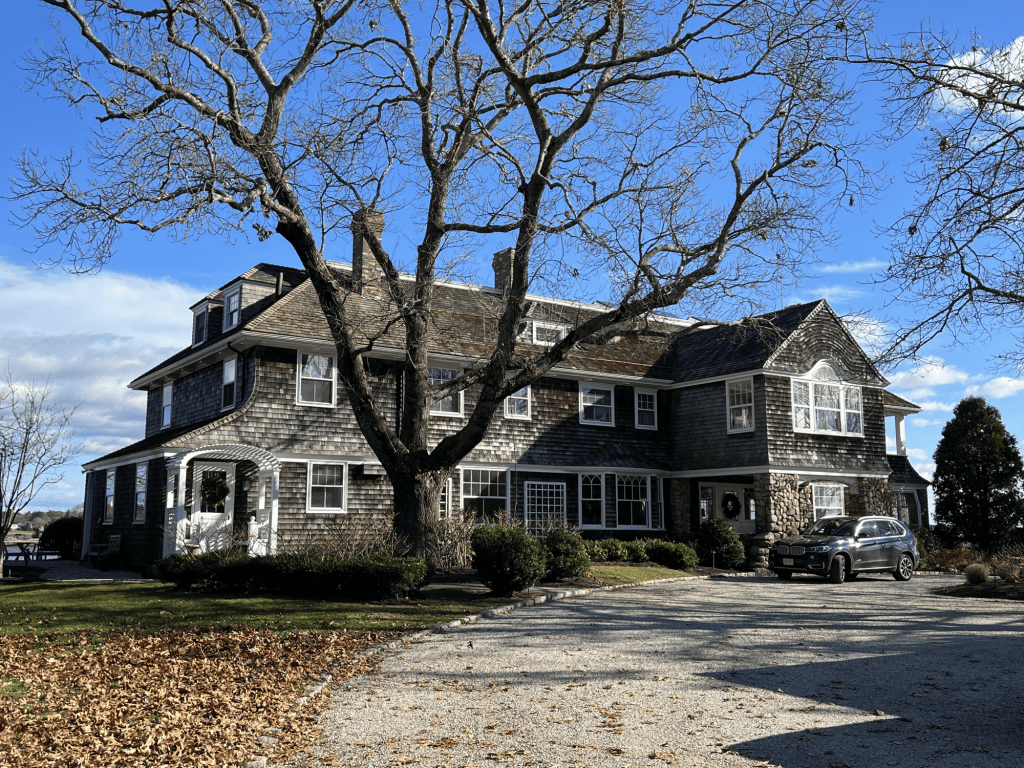
Barney-Sturtevant House // c.1805

This large mansion in Swansea, Massachusetts, was constructed in the early 1800s for Mason Barney, a shipyard owner, likely by his own shipwrights. Barneyville, formerly known as “Bungtown” in the early 1770s, was a bustling village in Swansea where young men worked from sunup to sundown sawing, filing, shaping, boring, and fastening planks and timbers together for the Barney Shipyard. The shipyard was founded in the 1770s by Jonathan Barney, a prominent boat builder in New England established the shipyard in the 1770s. The Barney Shipyard saw its greatest success under Barney’s son, Mason, in the early 18th century. When Mason Barney (1782-1868) inherited his father’s shipyard, he also had this house built for his family, just a stone’s throw from the shipyard where he could oversee the many ships built and sailed down the river to Warren, Rhode Island, for fitting. By the early 20th century, the shipyard had already closed and this property was purchased by Lorenzo P. Sturtevant, a jeweler who completely updated the old Barney House in the Colonial Revival style, adding the entry porch and oversized dormers. By the end of the 20th century and early 21st, the house was abandoned and decaying until a few years ago when new owners renovated the old Barney-Sturtevant Mansion back to a livable home.

Christ Church, Swansea // 1900

Designed in the mode of a traditional English country church, the Christ Church of Swansea is among the finest Neo-Gothic Revival edifices in New England and evokes a sense of history and tradition despite only being built in 1900. The church was funded by benefactors, Frank Shaw Stevens and Elizabeth Case Stevens, who lived down the street in the town’s largest mansion. After the death of her husband Frank, Elizabeth began a large gifting campaign to the Town of Swansea, and funded the construction of the town’s library, school, and this church (they had already funded the 1891 Town Hall). For the village church, Elizabeth hired their friend, and renowned English-born architect, Henry Vaughan, who designed the building with heavy granite walls, lancet windows and a facade dominated by an entry tower with rounded corner all capped by battlements. The Christ Church of Swansea resembles an old Medieval English church but in a New England village, amazing work as always Mr. Vaughan!

Frank S. Stevens School // 1908

The Frank S. Stevens School in Swansea, Massachusetts, was one of a number of civic and institutional buildings donated to the small town by wealthy residents Frank and Elizabeth Stevens. Ten years after the death of her husband, Elizabeth Case Stevens retained her favorite architect, Henry Vaughan, to furnish plans for a new school building for the main village in her beloved town of Swansea, to be built in the memory of her late husband. Mr. Vaughan had already designed the town hall, library, and Episcopal church, and Mrs. Stevens thought it would be fitting for an architecturally appropriate public school to also be built in the quaint New England village. Neo-Classical in style, the one-story brick school building is distinguished for its full-height pedimented portico supported by classical Doric columns and a cupola atop the hipped roof. The school was eventually outgrown and is now the school administration building for the town’s three later public school buildings

Dr. James L. Wellington House // c.1823

The Wellington House at 72 Main Street in Swansea, Massachusetts, is an early 19th century Federal period residence that was “modernized” in the mid-19th century into its current form. It is unclear who the original owner of the residence was, but the property was acquired by Julia and James Birch in the 1850s as they built their Italianate style mansion next-door. They modified this cottage in the Italianate style to match their home and likely rented the property to Dr. James Lloyd Wellington (1818-1916), a Harvard-educated doctor who split his time between Swansea and Cambridge. The house was later donated to the Town and rented for years with profits going to the Public Library, until it sold and was restored by area residents, with the proceeds for the sale funding the library as well.

Swansea Town Hall // 1891

The Swansea Town Hall in Swansea, Massachusetts, is one of the most unusual and architecturally eclectic town hall buildings in New England, and was a gift to the community from a wealthy resident. Built in 1891 from plans by Boston architect, James Merrill Brown, the building is constructed of randomly laid rubblestone with brownstone trim with a massive pyrammidal slate roof and offset turret and tower containing a historic clock. The building was the gift of benefactors, Frank Shaw Stevens and Elizabeth Case Stevens, who lived down the street in the town’s largest mansion. The Stevens’ donated the building with the stipulation that the building was to be available to every and any religious society desiring to hold funeral services there and to also provide space for a public library. The town obliged. The space was outgrown and the Stevens’ would later donate the town’s public library next door and a church, that also held funeral services for the community. The building has been home to the Town Hall since 1891.