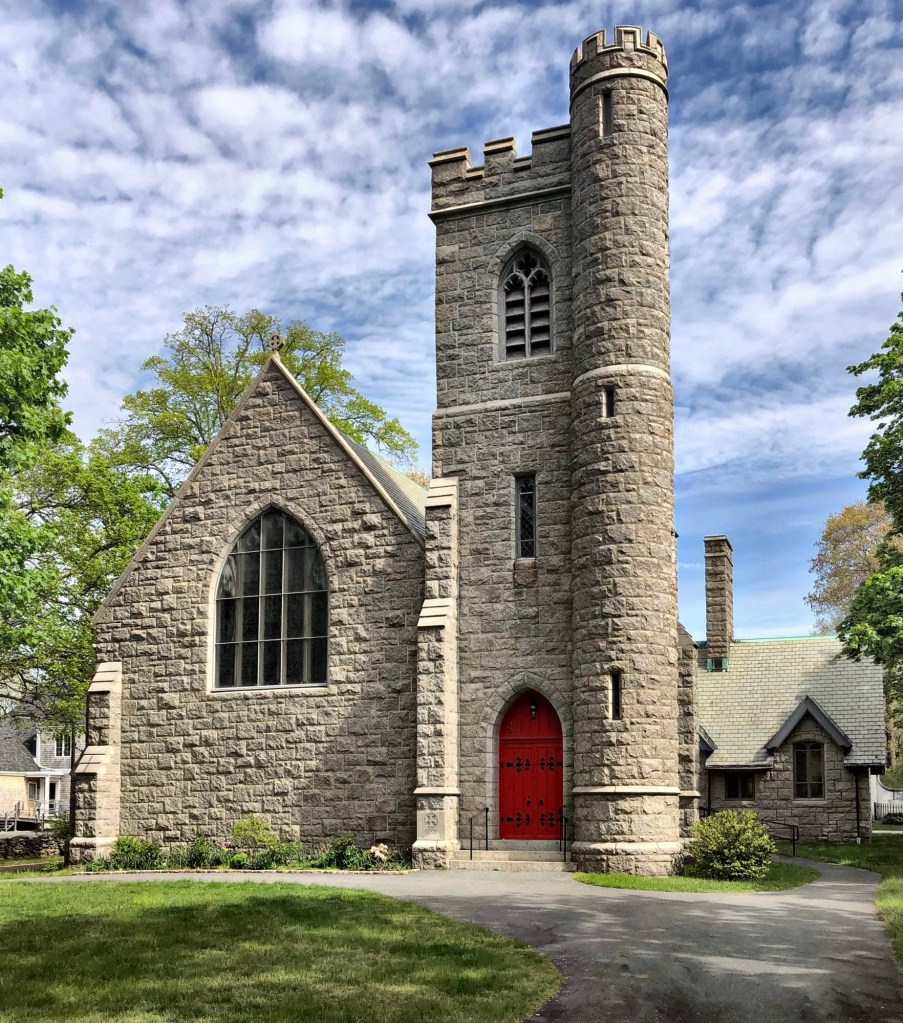
Christ Church, Swansea // 1900

Designed in the mode of a traditional English country church, the Christ Church of Swansea is among the finest Neo-Gothic Revival edifices in New England and evokes a sense of history and tradition despite only being built in 1900. The church was funded by benefactors, Frank Shaw Stevens and Elizabeth Case Stevens, who lived down the street in the town’s largest mansion. After the death of her husband Frank, Elizabeth began a large gifting campaign to the Town of Swansea, and funded the construction of the town’s library, school, and this church (they had already funded the 1891 Town Hall). For the village church, Elizabeth hired their friend, and renowned English-born architect, Henry Vaughan, who designed the building with heavy granite walls, lancet windows and a facade dominated by an entry tower with rounded corner all capped by battlements. The Christ Church of Swansea resembles an old Medieval English church but in a New England village, amazing work as always Mr. Vaughan!

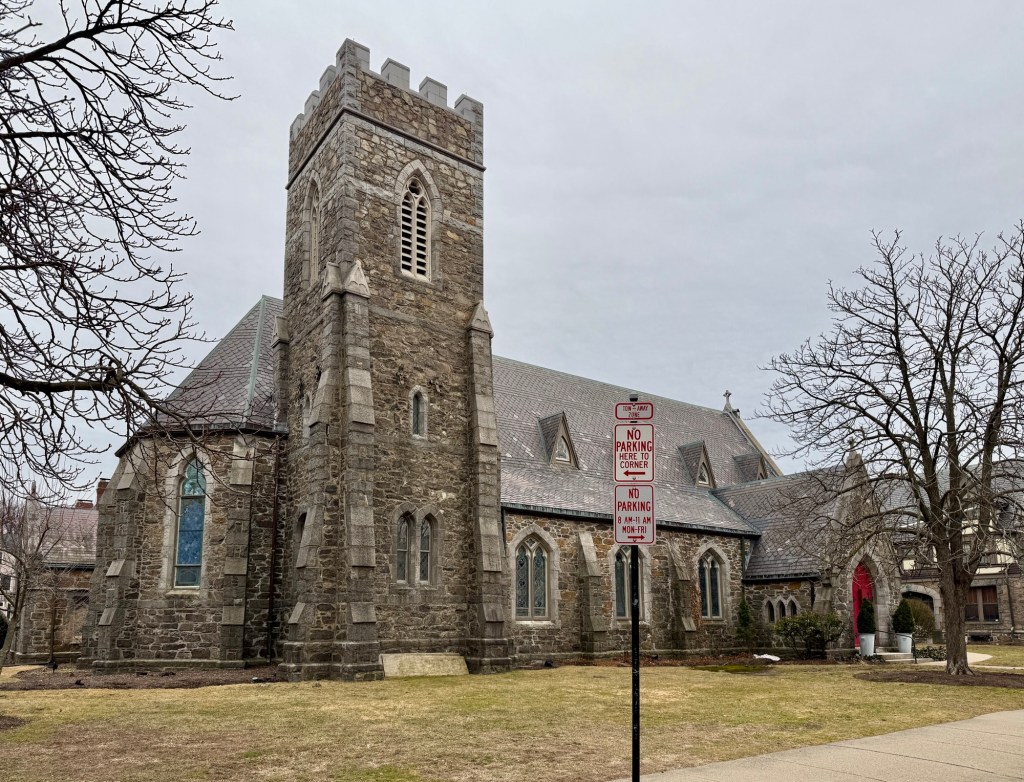
Church of Our Saviour, Brookline // 1868

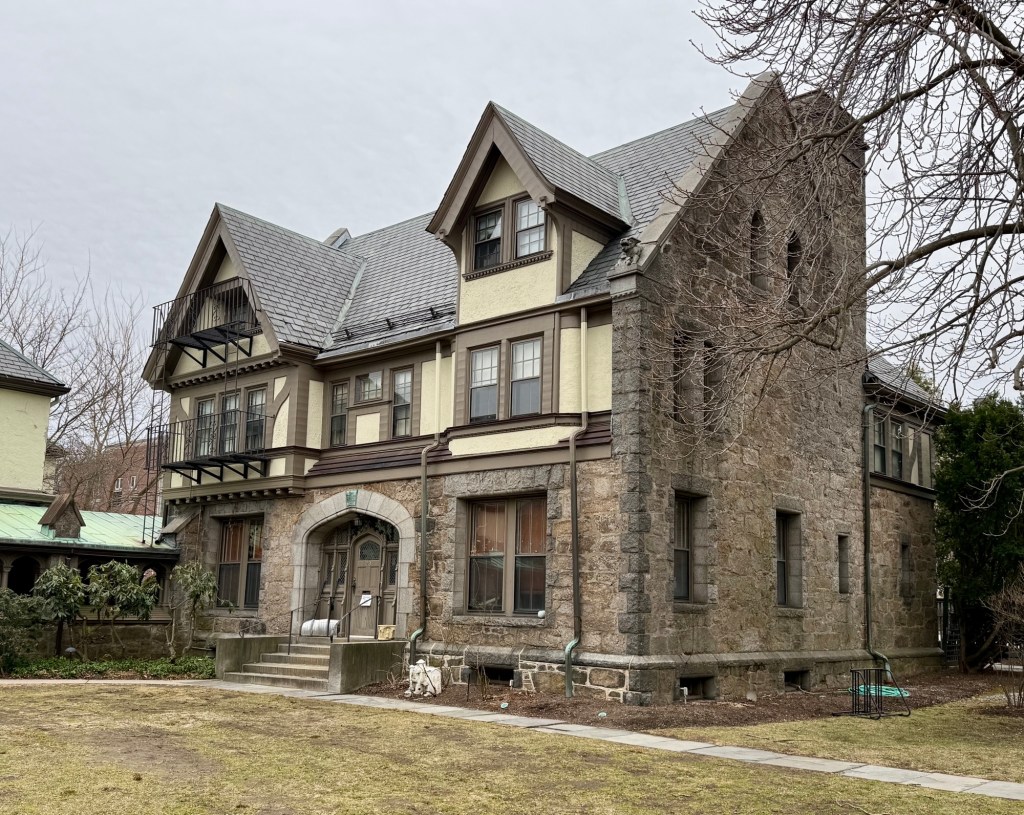
The Church of Our Saviour of Brookline, Massachusetts, is an architecturally and historically significant church complex in the Longwood neighborhood that has ties to those who established this neighborhood into what it is today. The church was built in 1868 by the brothers Amos and William Lawrence, in honour of their father, Amos Lawrence. The church was established by twelve established Boston-area families who wanted to grow the Episcopal diocese in the area. They hired architect, Alexander Rice Esty, who designed the building in the Gothic style, and it was completed in February 1868. The church was expanded numerous times with a transept chapel designed by the firm Sturgis and Cabot (1893) to the memory of Sarah Appleton Lawrence (wife of Amos A. Lawrence); a parish hall designed by the firm of Cabot and Chandler (1880); and a rectory, designed by architect Arthur Rotch (1886). The church remains an active congregation and is lovingly preserved by the congregants.

Rectory

St. John’s Episcopal Church of Sharon // 1902

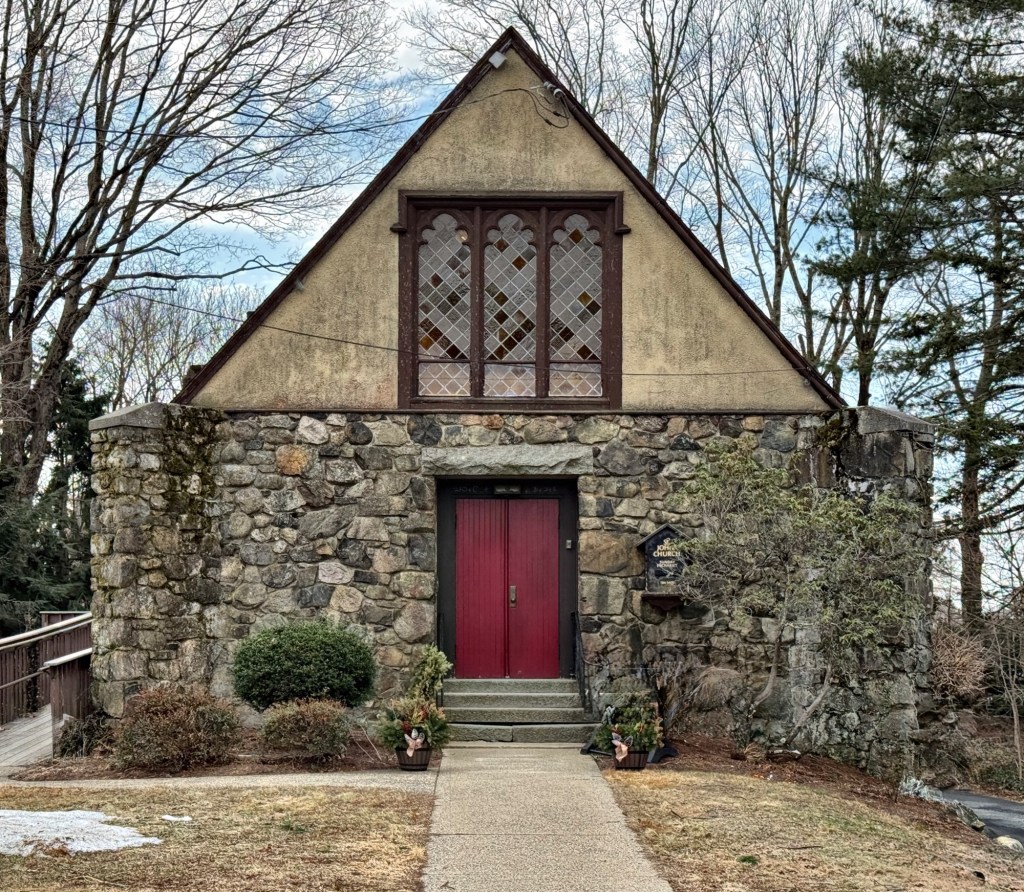
The small yet architecturally significant St. John’s Episcopal Church in Sharon, Massachusetts, was built in 1902 from plans by one of the premier ecclesiastical architects of the early 20th century. Episcopalians in Sharon began demanding their own house of worship in the late 19th century, and by the turn of the century, had funding to erect their own chapel. Boston-based architect, Ralph Adams Cram, of the firm Cram, Goodhue & Ferguson, designed the building, which fits within the scale of the residential neighborhood it is located within. St. John’s is an example of Neo-Gothic Revival architecture, a style which Cram became known for, with a fieldstone base, three feet thick, and stucco gabled facade above with tripartite windows with diamond-cut colored glass. The chapel was expanded at the rear, but maintains its rustic charm at the street.

St. Paul’s Episcopal Church, New Haven // 1829

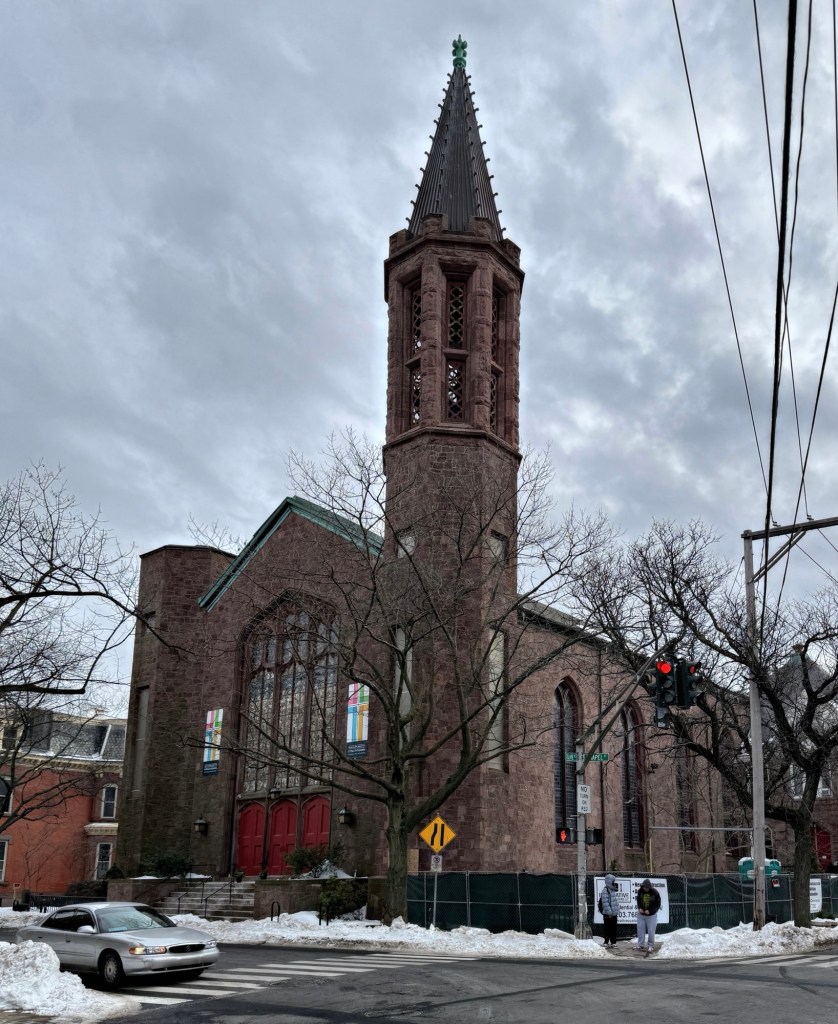
Built beginning in 1829, St. Paul’s Episcopal Church on Chapel Street in Wooster Square, New Haven, Connecticut, was one of the first churches in the nation built in the Gothic Revival style and a visual entrance to the iconic neighborhood. Constructed from local brownstone, the design of the building is attributed to a partnership between master builder and contractor, Sidney Mason Stone, and Sherman Croswell, son of the congregation’s pastor, Rev. Harry Croswell, who possibly consulted with architect, Ithiel Town. St. Paul’s is said to be the first attributed work of Sidney Mason Stone, who went on to build and design over 100 churches, homes, and buildings all over the region. The church originally featured two end towers were built of wood but were ambitiously removed in 1893 to be replaced with stone belfries, which was likely the original design. Sadly, funding ran out and only one tower was rebuilt of stone, leaving the lopsided single-tower look today.

Trinity Episcopal Church of Wrentham // 1872

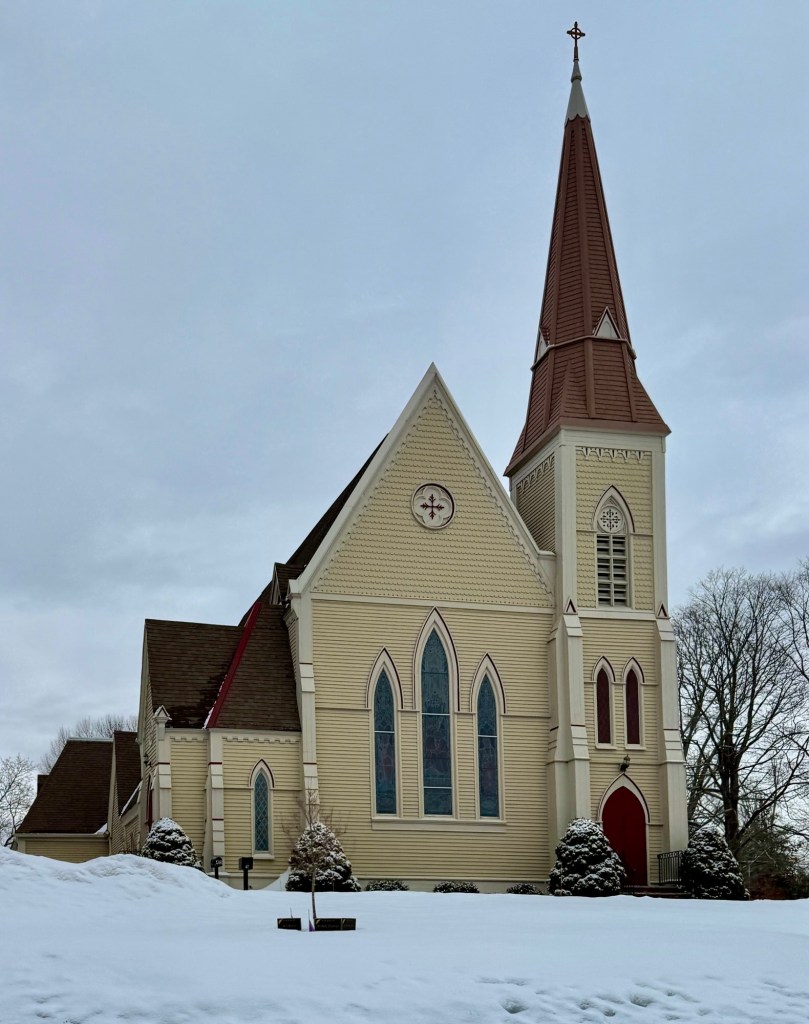
Overlooking the Town Green in Wrentham, Massachusetts, the Trinity Episcopal Church of Wrentham stands as the town’s finest example of Victorian Gothic architecture and the community’s oldest Episcopal church. Episcopalians in Wrentham first began worshipping in 1863 and in less than ten years, quickly grew in numbers from just two members to so many that a church building was needed to house the congregation. The site on East Street was purchased and architect, Shepard S. Woodcock, was hired to furnish plans for the new building. Completed in 1872, the Victorian Gothic design features all of the hallmarks of the style, including the steeply pitched roof, pointed arch windows and entry doors, buttresses, and towering steeple.

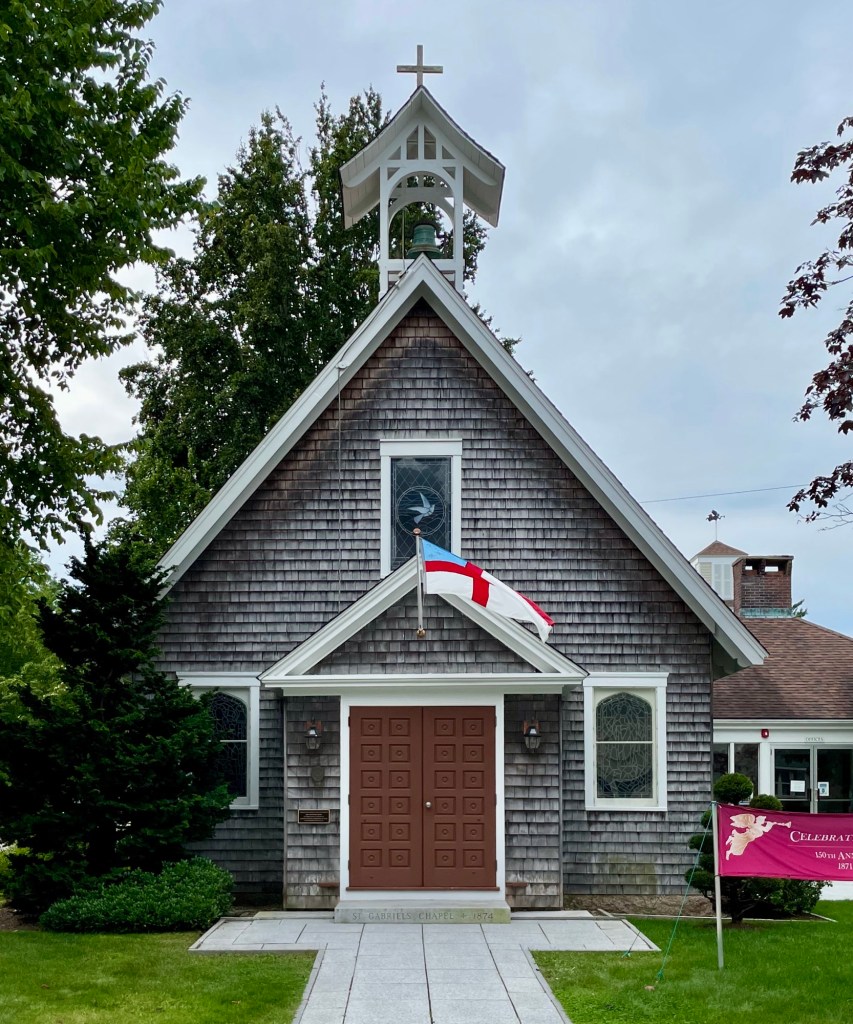
St. Mark’s Chapel, Warren // c.1853

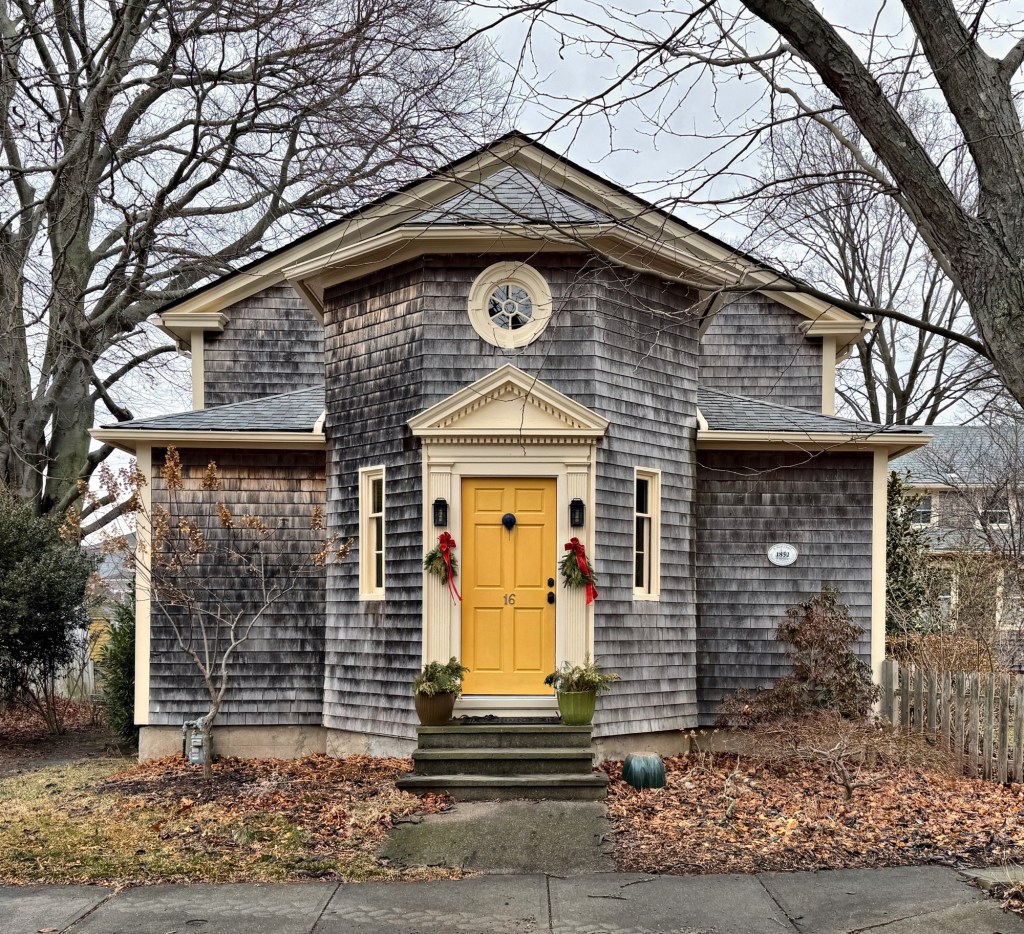
This charming shingled building on School Street in Warren, Rhode Island, was built around 1853 as a chapel for the accompanying St. Mark’s Episcopal Church a stone’s throw away on Lyndon Street. The chapel was originally constructed on the same lot as the church, but in 1863, was moved to its present location and rotated to face the street. The formerly plain chapel would be expanded in 1900, where a rear addition perpendicular to the main building was added, a new octagonal entry on the facade, and the entire building clad with cedar shingles. The chapel remained in use as a sunday school and for smaller services and later as a parish house. In 2012, the building was sold by the congregation and has since been a residence, which preserves the important architecture of the chapel while supplying much needed housing for the community. Oh how I love adaptive reuse!

St. Mark’s Episcopal Church // 1829

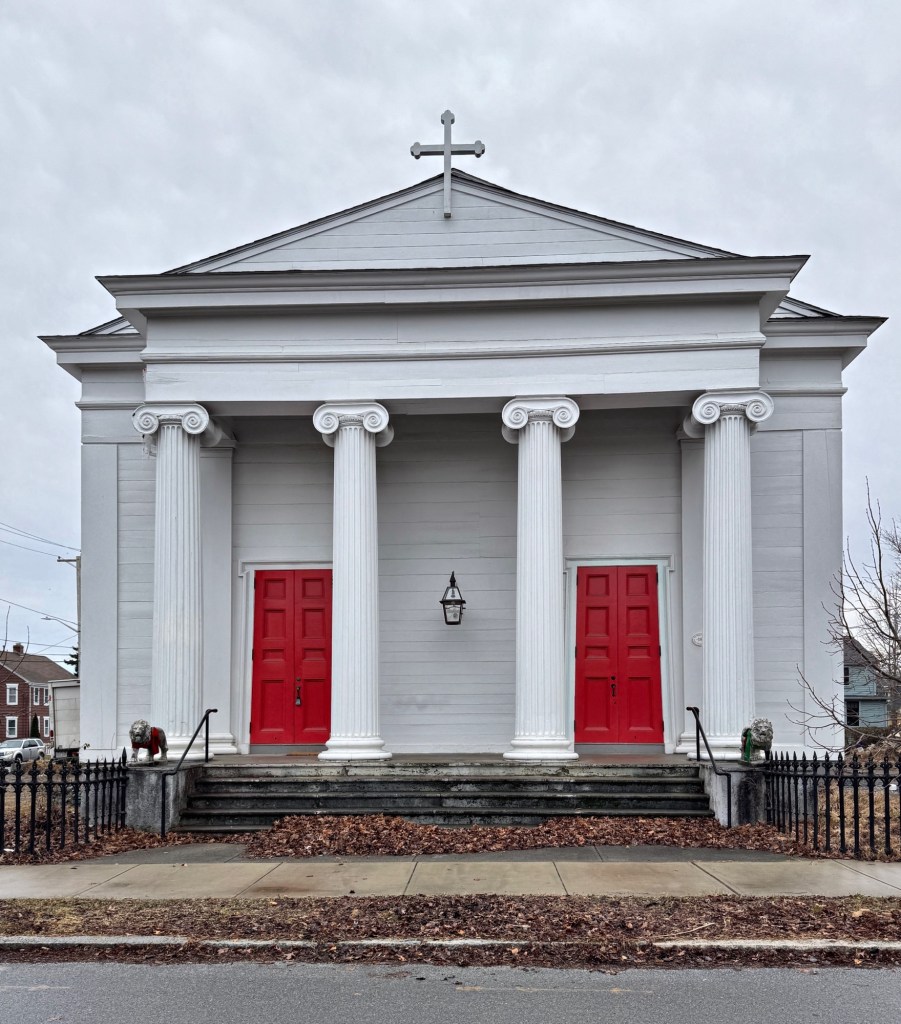
St. Mark’s Episcopal Church in Warren, Rhode Island, is a small, yet architecturally significant building that was one of the first examples of the Greek Revival style in the community. The episcopal church was formed in Warren in 1828, with members originally meeting in Cole’s Hotel while this site and construction completed on their new house of worship. The well-connected congregation hired architect, Russell Warren, who had just completed the Westminster Arcade, a landmark in the Greek Revival style, in Downtown Providence. Distinguished by its beautiful four columned Ionic portico and canted door frames, the church also originally had a square tower and parapet, which were removed following the 1938 hurricane, and replaced with a simple pediment. The parish closed in 2010 and the diocese sold the building in 2012 to private owners, who converted it about ten years ago into a residence, but retained the historic stained glass windows and character of the building. The entire site today (2026) is being renovated with what appears to be a modern addition on the side (not pictured). Hopefully the architecture of this landmark will be preserved.

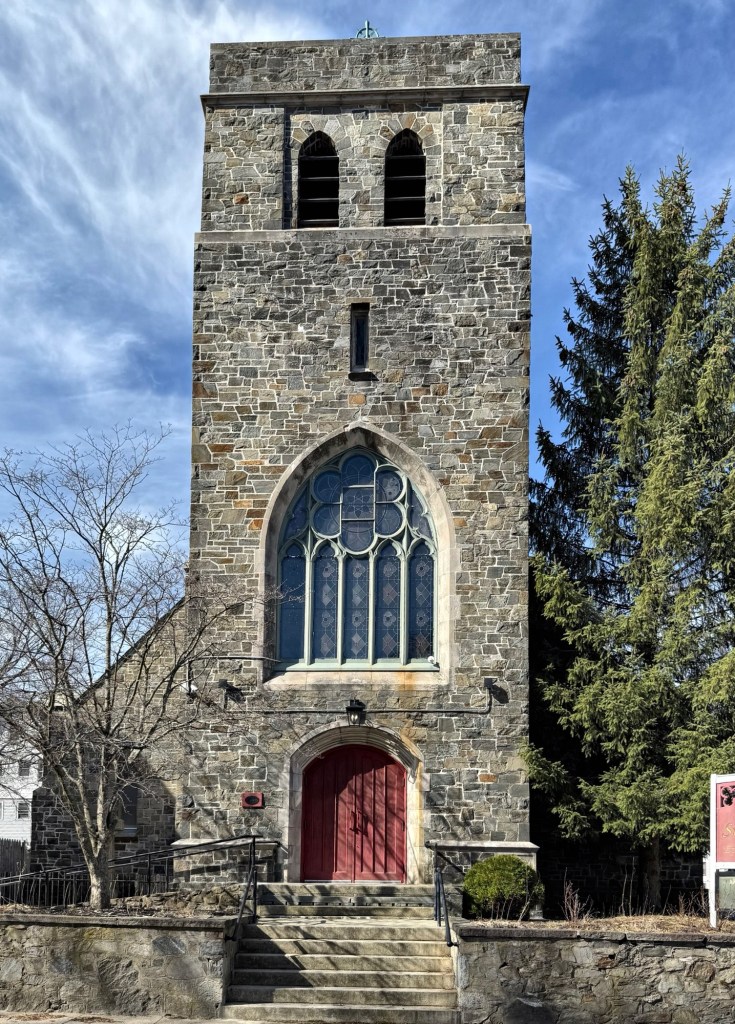
Immanuel St. James Episcopal Church // 1843

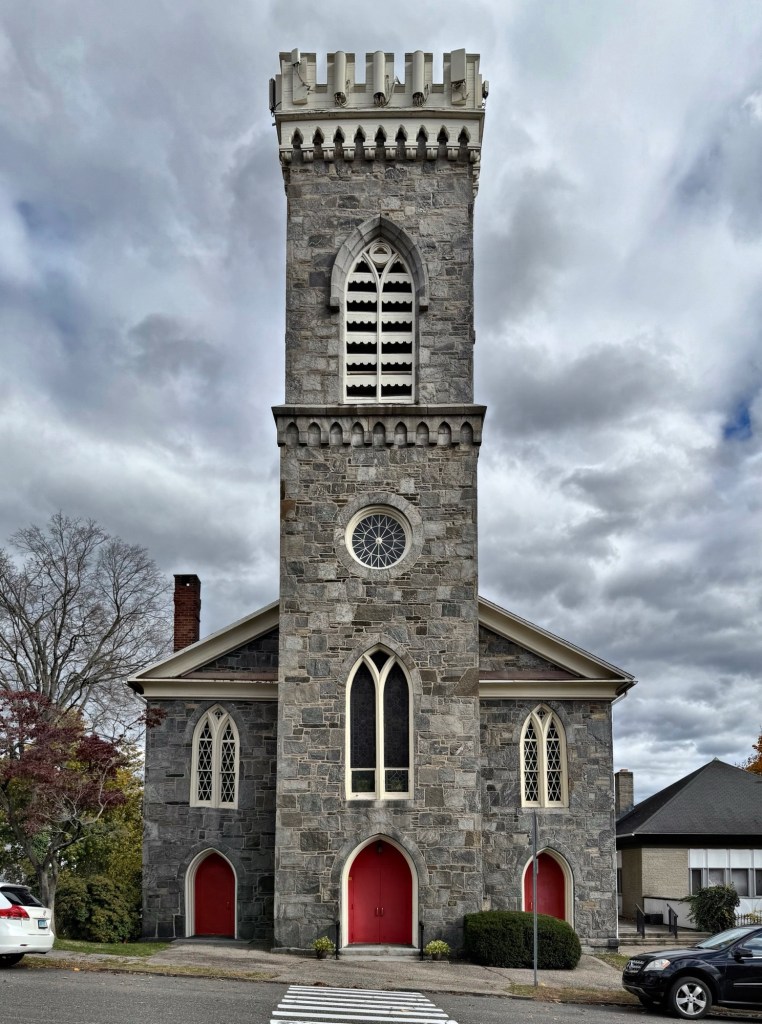
The Gothic Revival style Immanuel St. James Episcopal Church of Derby is a landmark example of the style in this part of Connecticut and serves as the eastern anchor to the Birmingham Green in town. The church dates to 1843 and was built by The stone church was was built by stonemason, Harvey Johnson and Nelson Hinman, a carpenter. The land for the church was donated by Sheldon Smith and Anson G. Phelps, wealthy industrialists in town. The building originally had a wooden steeple, which was replaced by the present stone belfry in 1853. The church merged with another area congregation, which together, have preserved this significant structure, though the communications antennae on the battlements on the belfry is unfortunate.

Old St. Stephen’s Church – Barker Playhouse // 1840

The old St. Stephen’s Episcopal Church in Providence’s Fox Point neighborhood is an architecturally distinctive Greek Revival style church building located on charming Benefit Street. The church had its beginnings in 1839, when the newly established congregation called on 29-year-old Francis Vinton to serve as their first pastor. The congregation funded this small church which broke ground in 1840, and before it was completed, Rev. Vinton resigned as Rector. The building, built of stone and covered in stucco, once had a spire and belfry above the main entrance. The congregation grew over the next decade and it was soon realized that a larger and more central church should be built for members, many of whom were wealthy residents with mansions surrounding Brown College. In 1860, the parish purchased a lot on George Street, and hired architect, Richard Upjohn to design the new church in the Gothic style. For reasons of location, and possibly social class, twenty-two men and women remained here at the less fashionable church and formed a new parish, the Church of the Saviour. The smaller, mission church with its stucco walls, remained until the property was sold in 1932 to house the Barker Playhouse, reputed to be the oldest continuously operating little theatre in the United States.


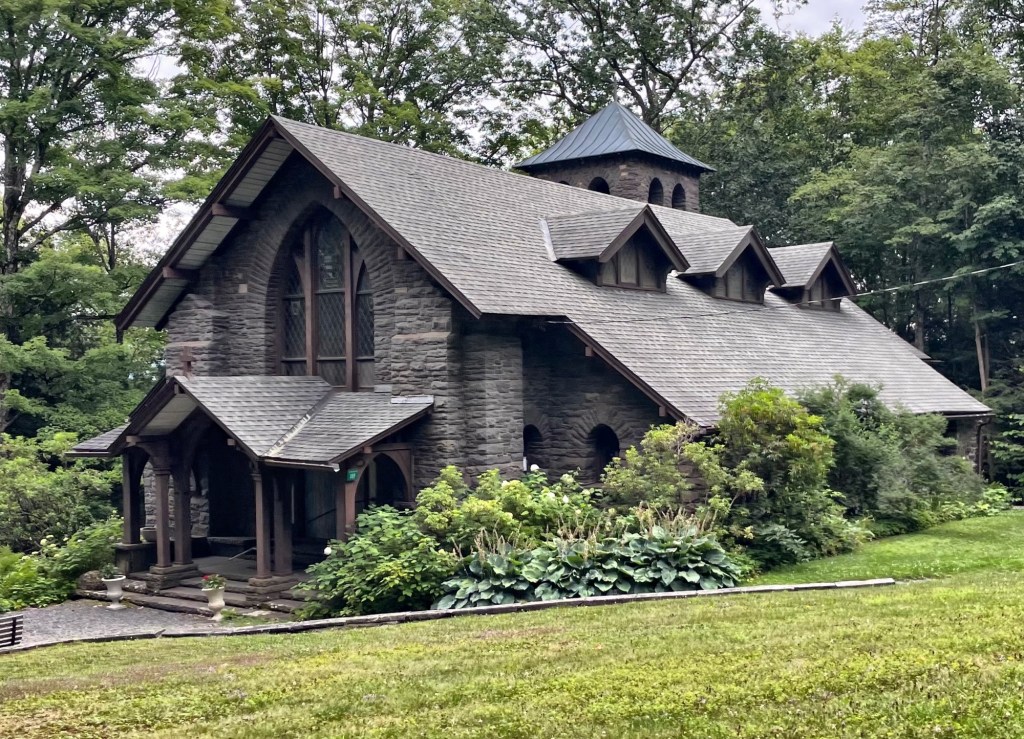
All Souls Church, Onteora Park // 1894

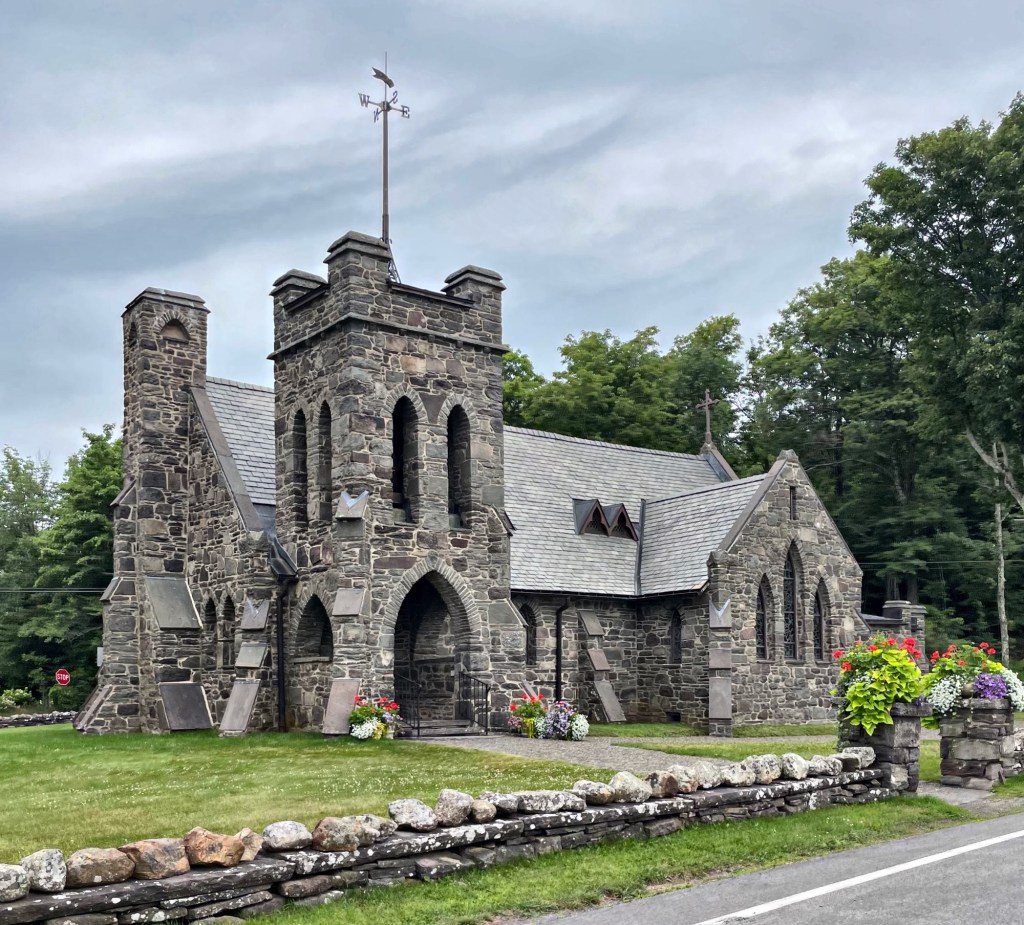
Onteora Park is one of many notable summer colonies in the Catskill Mountains that were developed in the late 19th and early 20th century. Onteora Park is located in Hunter, New York, and is comprised of a development of over 100 residential properties along with club buildings and the All Souls Church. The development of Onteora Park is largely credited to Ms. Candace (Thurber) Wheeler, one of America’s first woman interior and textile designers and co-founder of the Society of Decorative Art in New York City. In 1883, she and her wealthy brother, Francis Beattie Thurber, purchased land here with sweeping views of the Catskill Mountains, and built two summer houses for their respective families. By 1887, Candace Wheeler and her sister-in-law, Jeannette (Mrs. Francis B.) Thurber, decided to expand and develop their property as a vacation community of like-minded people dedicated to the arts. Years after the first cottages were built, Candace asked her son, Dunham Walker, an architect, to furnish designs for a community summer chapel. After the site had been secured, Canadian architect (and summer resident of Onteora) George Agnew Reid, was asked to put Mr. Wheeler’s plan into acceptable form and to supervise construction. The original wooden church was changed over to stone, all in a Victorian Gothic style. By 1910, the building was enlarged with the addition of the chancel and addition of transepts and possibly the square bell tower. At this time, the church was also electrified. Today, the church is lovingly maintained and open for the summer season and special ceremonies.