Church of Our Saviour, Brookline // 1868

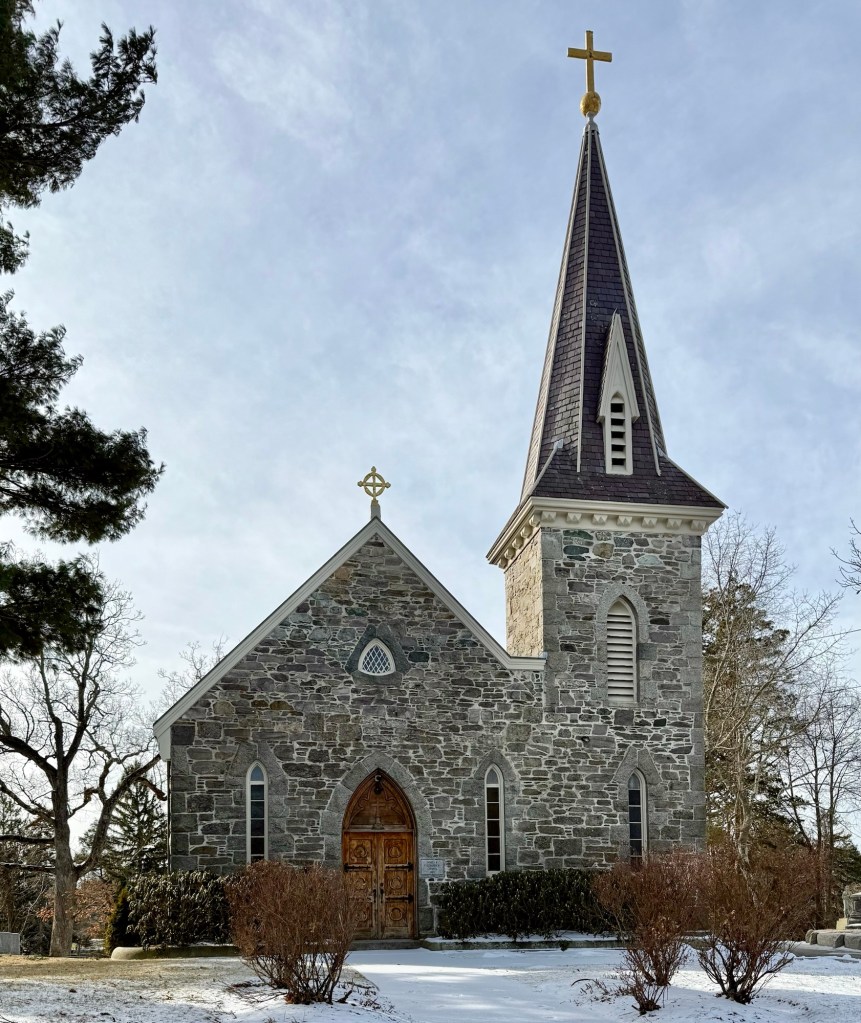
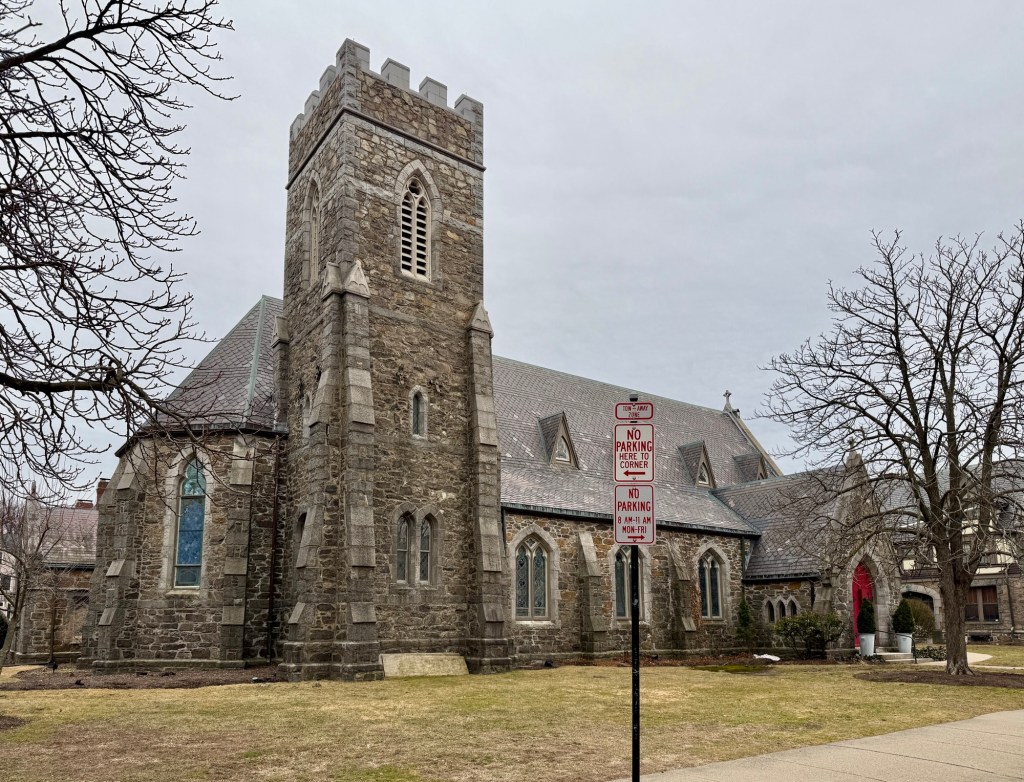
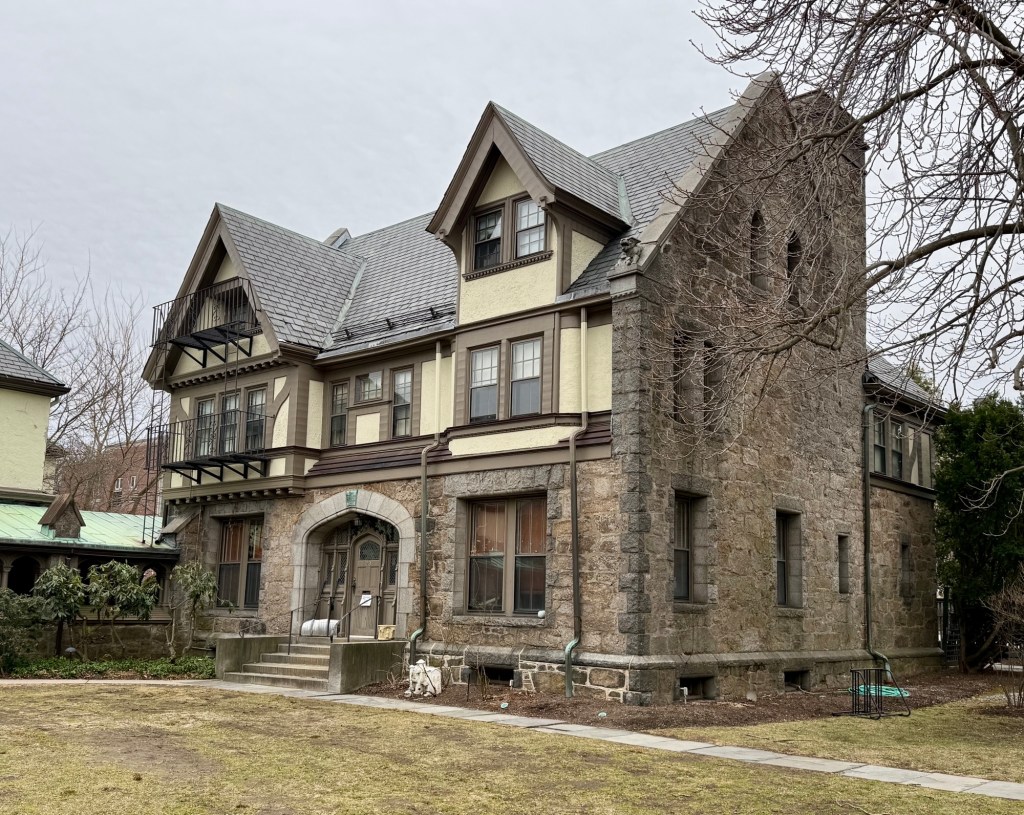
The Church of Our Saviour of Brookline, Massachusetts, is an architecturally and historically significant church complex in the Longwood neighborhood that has ties to those who established this neighborhood into what it is today. The church was built in 1868 by the brothers Amos and William Lawrence, in honour of their father, Amos Lawrence. The church was established by twelve established Boston-area families who wanted to grow the Episcopal diocese in the area. They hired architect, Alexander Rice Esty, who designed the building in the Gothic style, and it was completed in February 1868. The church was expanded numerous times with a transept chapel designed by the firm Sturgis and Cabot (1893) to the memory of Sarah Appleton Lawrence (wife of Amos A. Lawrence); a parish hall designed by the firm of Cabot and Chandler (1880); and a rectory, designed by architect Arthur Rotch (1886). The church remains an active congregation and is lovingly preserved by the congregants.
Rectory

Sears Chapel, Longwood // 1860

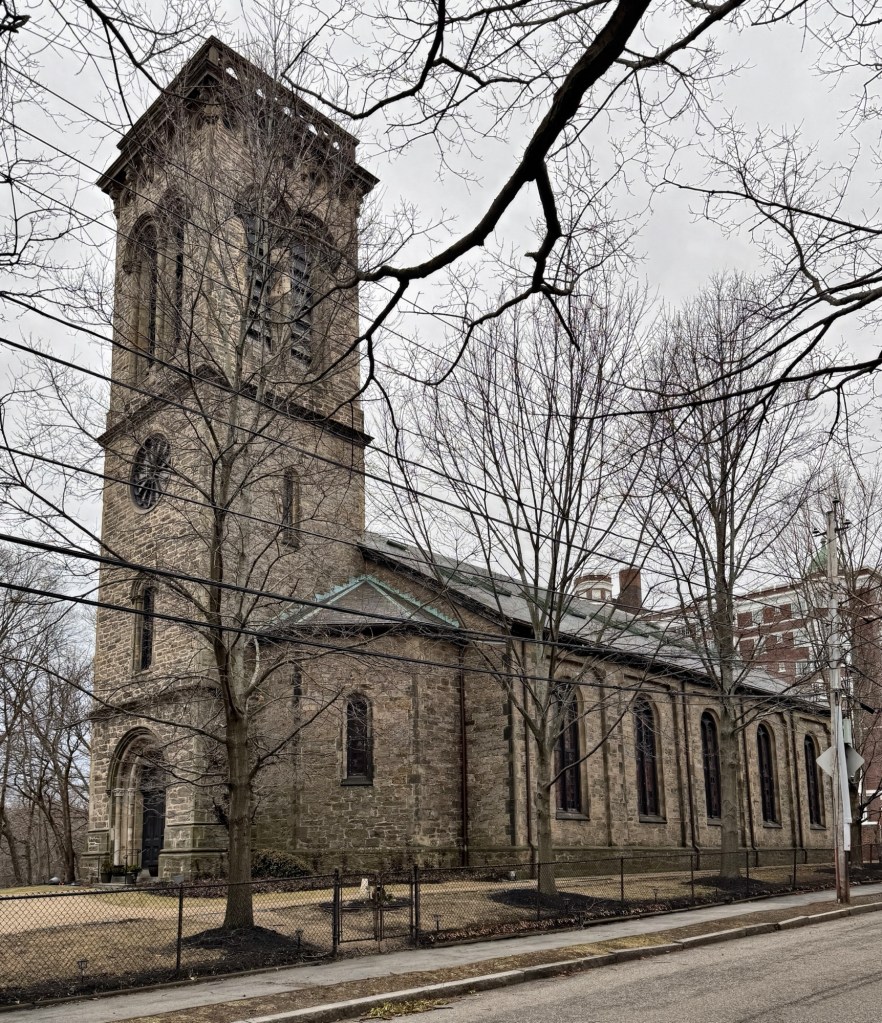
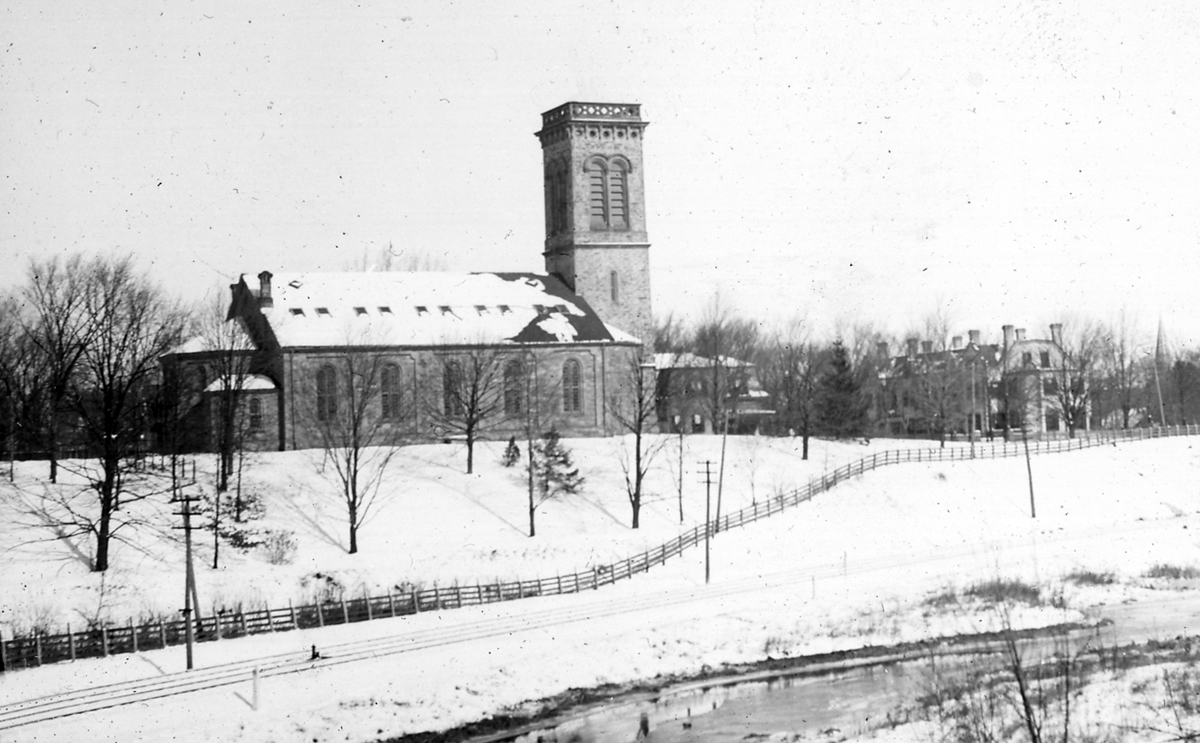
Christ’s Church in Longwood, better known as Sears Chapel, is among the finest ecclesiastical buildings in Brookline and commands its site on a rise overlooking the Muddy River, now the Riverway in the Emerald Necklace park system. The area presently known as Longwood was originally marshland with a few farms until the building of the Mill Dam road out of Boston in 1821 that improved access to Brookline, which opened up its connectivity and development potential. Wealthy Boston businessman, David Sears (1787-1871) recognized this, and began buying the low-lying pasturelands in Brookline near the Boston border. By 1830, some squares were laid out and development began in the Cottage Farm and Longwood sections. He, with associates, began building country estates for friends and family to escape the crowded conditions of Boston. He is said to have named his neighborhood “Longwood”, after Napoleon’s estate on St. Helena where he spent his days in exile. An avid amateur horticulturist, Sears planted some 14,000 trees, many of them imported from Europe, in the course of developing his land. In keeping with his faith, Sears built this house of worship, Christ’s Church, which is said to have been modeled after St. Peter’s in Colchester England, likely giving Colchester Street, where Sears Chapel is located, its name. The Romanesque style church was designed by Boston architect, Arthur Gilman, who designed the building suitable for the Sears Family crypt which is underneath the structure and the burial site of many of the family. The congregation remains active to this day who maintain the significant structure and its many historic stained glass windows.

Second Unitarian Church of Brookline – Temple Sinai // 1916

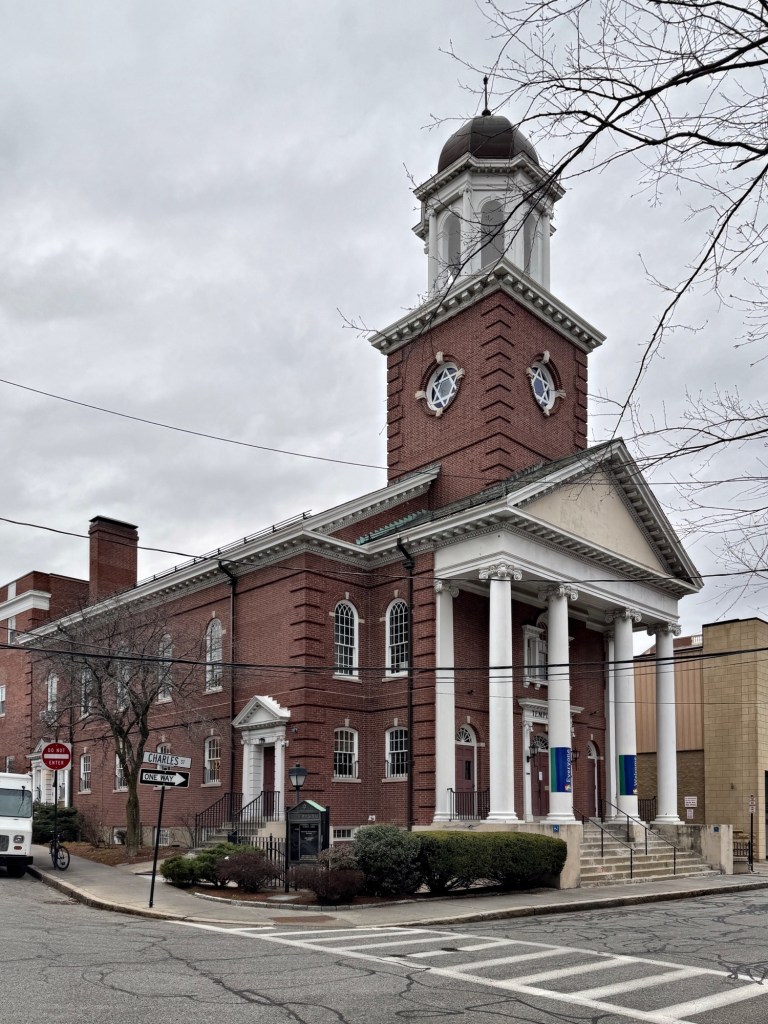
An excellent example of an early 20th century church designed in the Colonial Revival style, the former Second Unitarian Church of Brookline (now Temple Sinai), was built when much of the surrounding neighborhood was developed and as a result, is tucked away off main streets, creating a unique viewshed for passersby. Brookline’s second Unitarian Church was formed in 1896, with the congregation holding its first meetings at Sears Chapel in the Longwood neighborhood nearby. Decades later, the Second Unitarian Society was urged to find another place for its congregation as the Longwood church wanted full access of their building. The Unitarians purchased a lot of land adjacent to their Parish House in Coolidge Corner (no longer standing) and gathered funds to hire architect, Edwin J. Lewis Jr., who is said to have designed the new edifice as a contemporary take on Christ Church in Alexandria, Virginia. The church features a monumental portico supported by four Ionic columns, round arched windows, and a center tower that (at the time) was surmounted by a golden dome, visible for miles. Since 1944, the former church has been home to Temple Sinai, a reform synagogue that was established in 1939. The Jewish congregation here has maintained the building making slight changes to meet its needs. 

St. Mary of the Assumption Catholic Church, Brookline Village // 1880

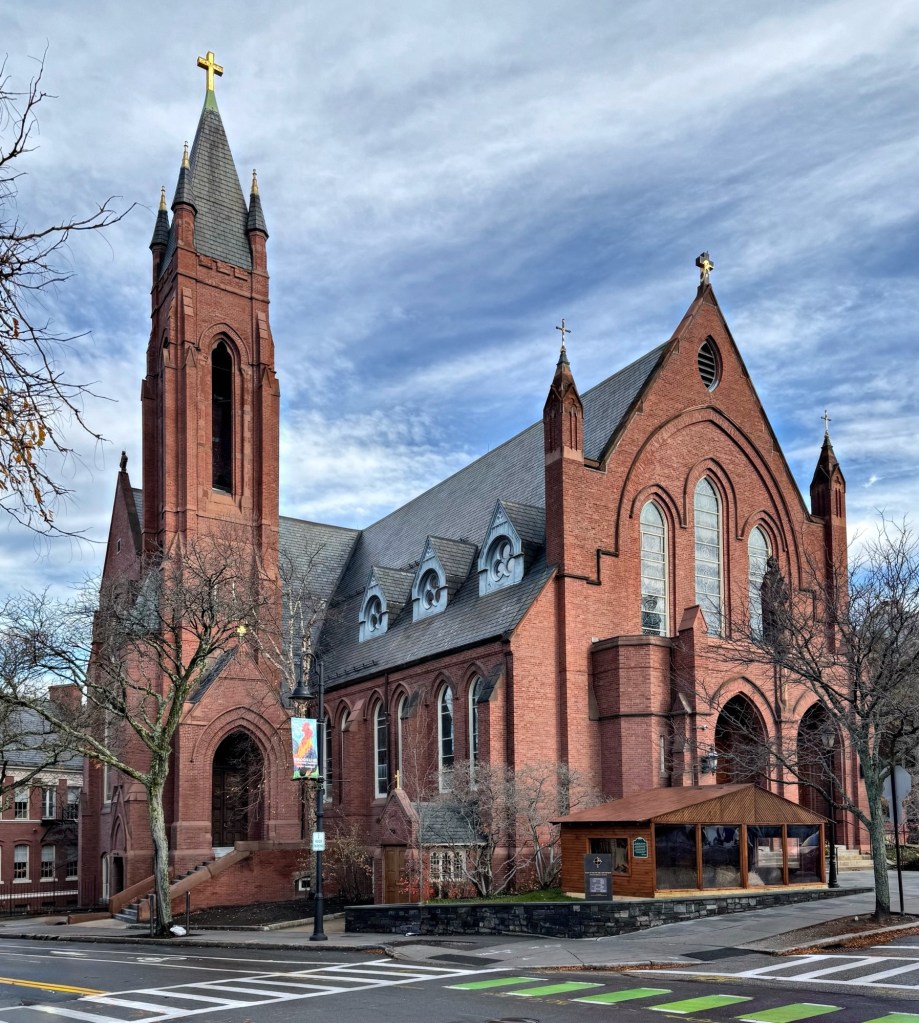
St. Mary of the Assumption church was the first Catholic Church established in Brookline, Massachusetts, in 1852 when a congregation of Catholics began to congregate to worship together at the old Lyceum Hall. The congregation primarily consisted of Irish immigrants who settled in Brookline, where they often found work at the many large estates and building the new branch railroad in town, but desired a true house of worship close to their homes. By 1853, a modest wood-frame Gothic Revival style church was built in the Village, but was quickly outgrown. In 1873, the pastor of the congregation, Irish-born Rev. Lawrence Morris (1845-1900) began purchasing land at the corner of Harvard Street and Linden Place to establish a new church, large enough to comfortably fit the congregation and various church-related buildings. In 1880, the firm of Peabody & Stearns was hired to furnish plans for the Victorian Gothic edifice in brick and brownstone. Although the church was designed in 1880, it was not dedicated until 1886, and at this time, Pope Leo XIII sent a chalice to the Parish in honor of the completion of this church, the first in America to be named Saint Mary of the Assumption.

Saint Lawrence Catholic Church // 1896

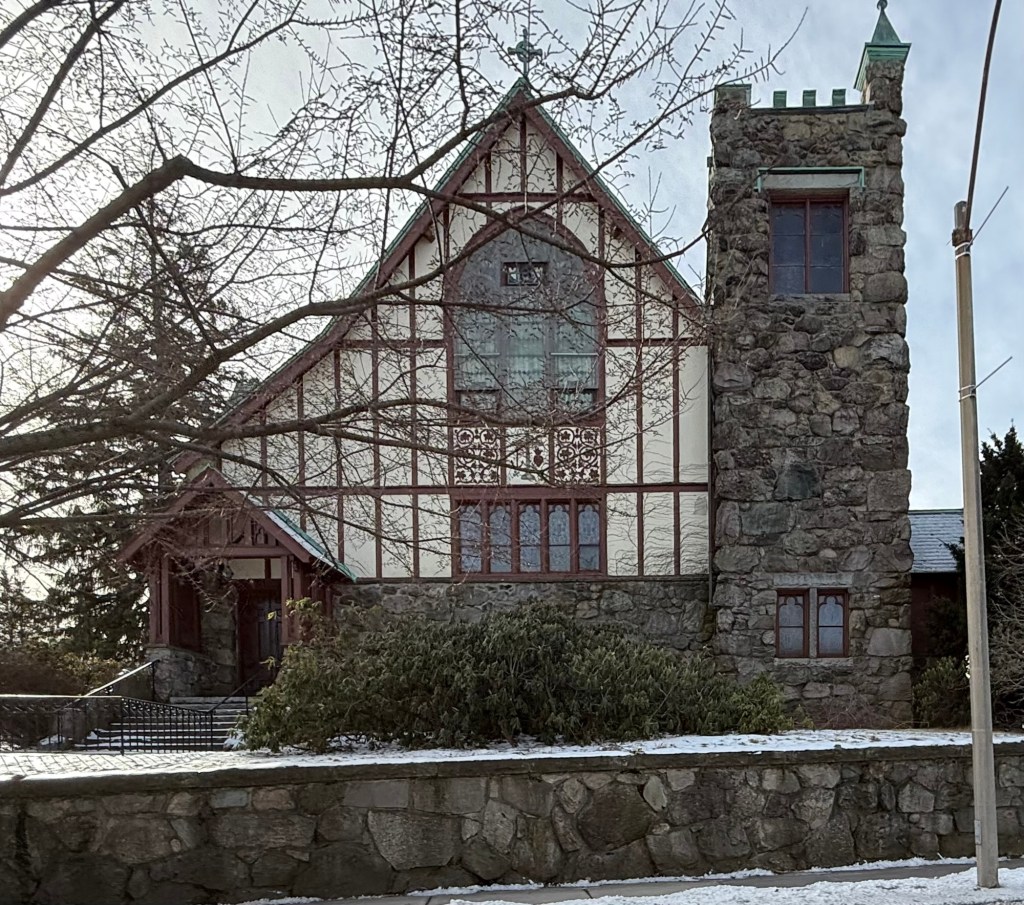
The parish known today as Infant Jesus-St. Lawrence Church was established in 1898, two years after its original chapel building – shown here – was erected to serve as a mission church of St. Mary of the Assumption in Brookline Village. The St. Lawrence Church was built in 1896 on Boylston Street in the Chestnut Hill/South Brookline area of the town, built to serve a more local, well-off population in the area. The church (and the adjacent rectory) was designed by Franz Joseph Untersee, a Swiss-American architect, and Brookline resident, who designed many Roman Catholic churches throughout the eastern part of United States. The Neo-Gothic church building is built of wood and stone with stucco and applied half timbering. Besides the large stained glass window and applied ornament, the church is notable for its square, irregularly-laid granite tower with crenelation. The church remains active in the community and very-well preserved inside and out.

Holyhood Cemetery Chapel // 1857

Holyhood Cemetery in Brookline, Massachusetts, was laid out in 1857 under the direction of Father Joseph M. Finotti, pastor of Assumption Parish , which included Brookline and Brighton. The cemetery reflects the mid-19th century influence of the Rural Cemetery movement and the romantic landscape cemetery planning begun at Cambridge’s Mount Auburn Cemetery in the 1830’s. A plan of the cemetery was drawn up by Shedd & Edson and published in August 1857. It shows curvilinear avenues and paths named after former bishops of Boston and Biblical figures. All were welcome to be buried except those who “died in a state of Drunkenness, Duel, or by self-destruction, unbaptized, non-Catholic, or otherwise opposed to the Catholic Church.” In the 1857 Shedd & Edson plan for Holyhood Catholic Cemetery, a chapel was located at the center on the hill shown in a small drawing on the edge of the plan. Known as St. Joseph’s Chapel, the stone building was designed by Patrick Keely, the successful and influential New York architect of many mid-19th century Catholic churches. The chapel would be dedicated in 1862. Decades later, a cemetery office was planned and built across Heath Street from the cemetery gates, but was demolished sometime in the 20th century. The cemetery grew and it along with the mid-19th century chapel, has been lovingly maintained to this day.  

St. Paul’s Episcopal Church, Brookline // 1852

The St. Paul’s Episcopal Church of Brookline, Massachusetts is an architecturally and historically significant landmark to the area. The congregation was established in 1849, and within months, in May 1850, the corporation, which was made up of wealthy Boston-area residents, accepted an offer from Augustus Aspinwall of a building lot to erect a church. Esteemed ecclesiastical architect, Richard Upjohn, the architect of Trinity Church in New York, was hired to design the church in Brookline of the same, Gothic style. The wealth of the congregation was evident by the consistent expansions of the complex, to include a chapel, rectory, parish house, and other expansions to those buildings. St. Paul’s Church is the oldest religious structure in Brookline, and almost was lost when the sanctuary was devastated by fire in 1976, leaving only its exterior walls and two stained glass windows. The congregation rebuilt the interiors and the building remains well-preserved at its exterior, built of Roxbury Puddingstone.