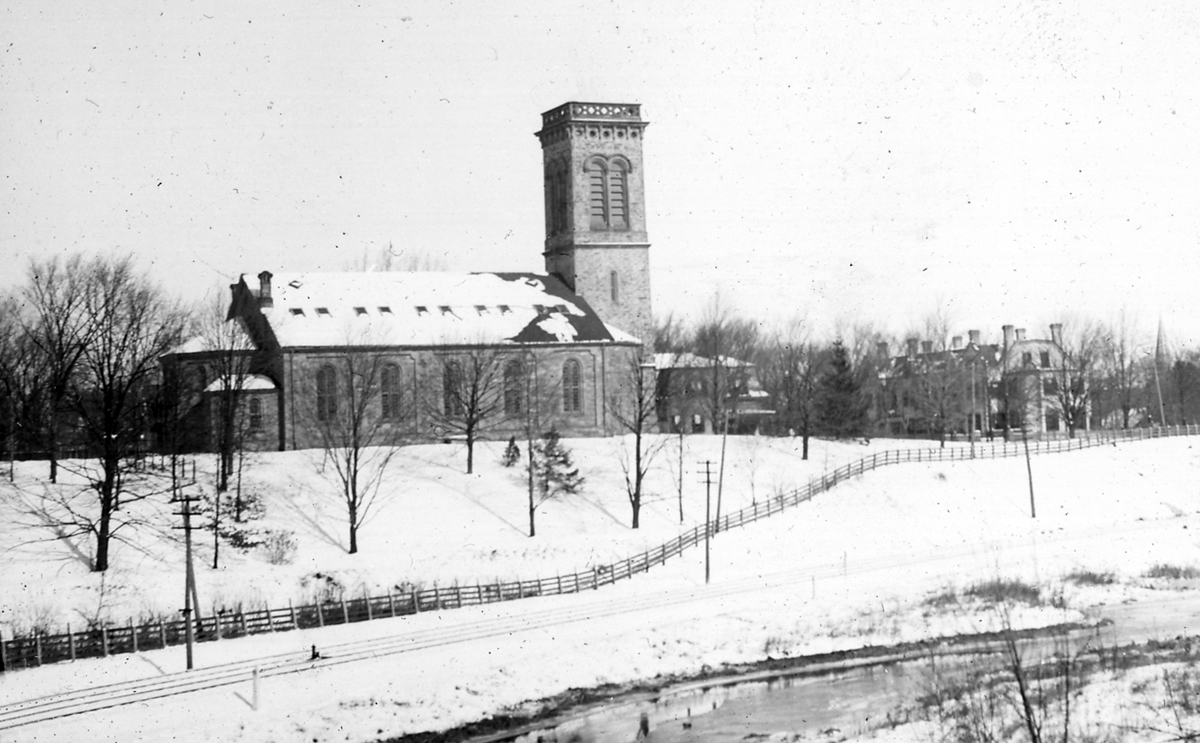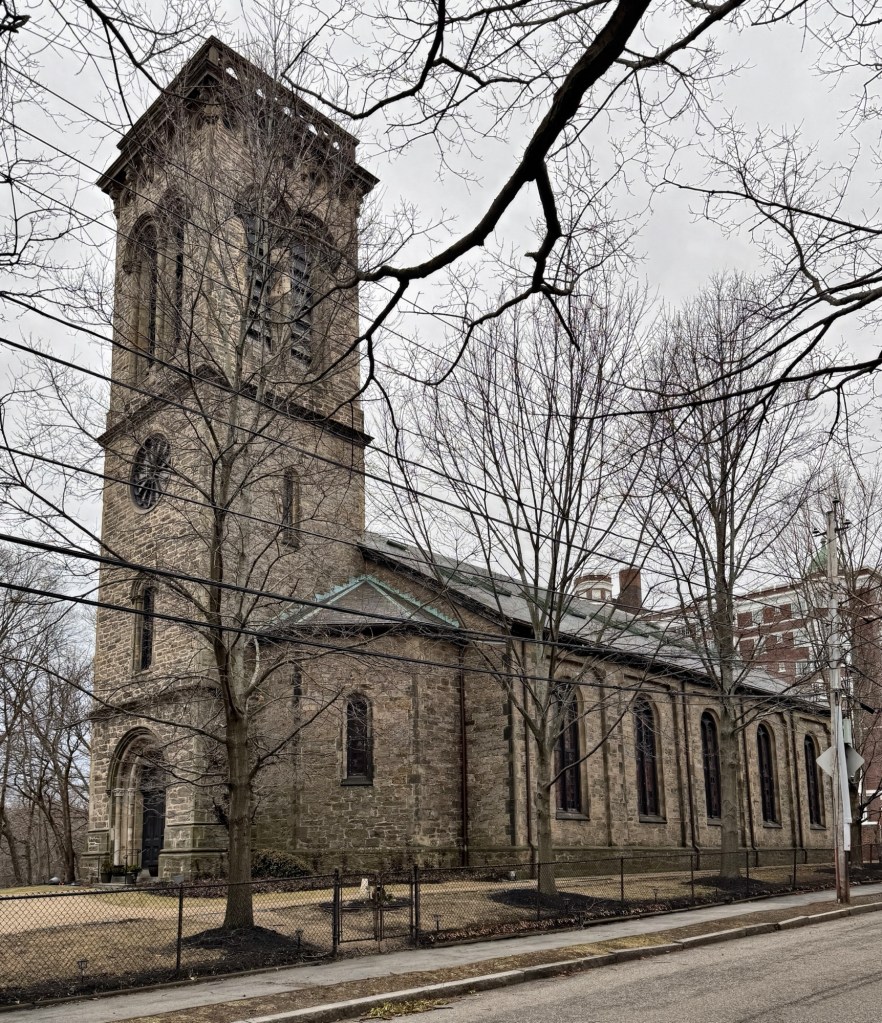
Sears Chapel, Longwood // 1860

Christ’s Church in Longwood, better known as Sears Chapel, is among the finest ecclesiastical buildings in Brookline and commands its site on a rise overlooking the Muddy River, now the Riverway in the Emerald Necklace park system. The area presently known as Longwood was originally marshland with a few farms until the building of the Mill Dam road out of Boston in 1821 that improved access to Brookline, which opened up its connectivity and development potential. Wealthy Boston businessman, David Sears (1787-1871) recognized this, and began buying the low-lying pasturelands in Brookline near the Boston border. By 1830, some squares were laid out and development began in the Cottage Farm and Longwood sections. He, with associates, began building country estates for friends and family to escape the crowded conditions of Boston. He is said to have named his neighborhood “Longwood”, after Napoleon’s estate on St. Helena where he spent his days in exile. An avid amateur horticulturist, Sears planted some 14,000 trees, many of them imported from Europe, in the course of developing his land. In keeping with his faith, Sears built this house of worship, Christ’s Church, which is said to have been modeled after St. Peter’s in Colchester England, likely giving Colchester Street, where Sears Chapel is located, its name. The Romanesque style church was designed by Boston architect, Arthur Gilman, who designed the building suitable for the Sears Family crypt which is underneath the structure and the burial site of many of the family. The congregation remains active to this day who maintain the significant structure and its many historic stained glass windows.
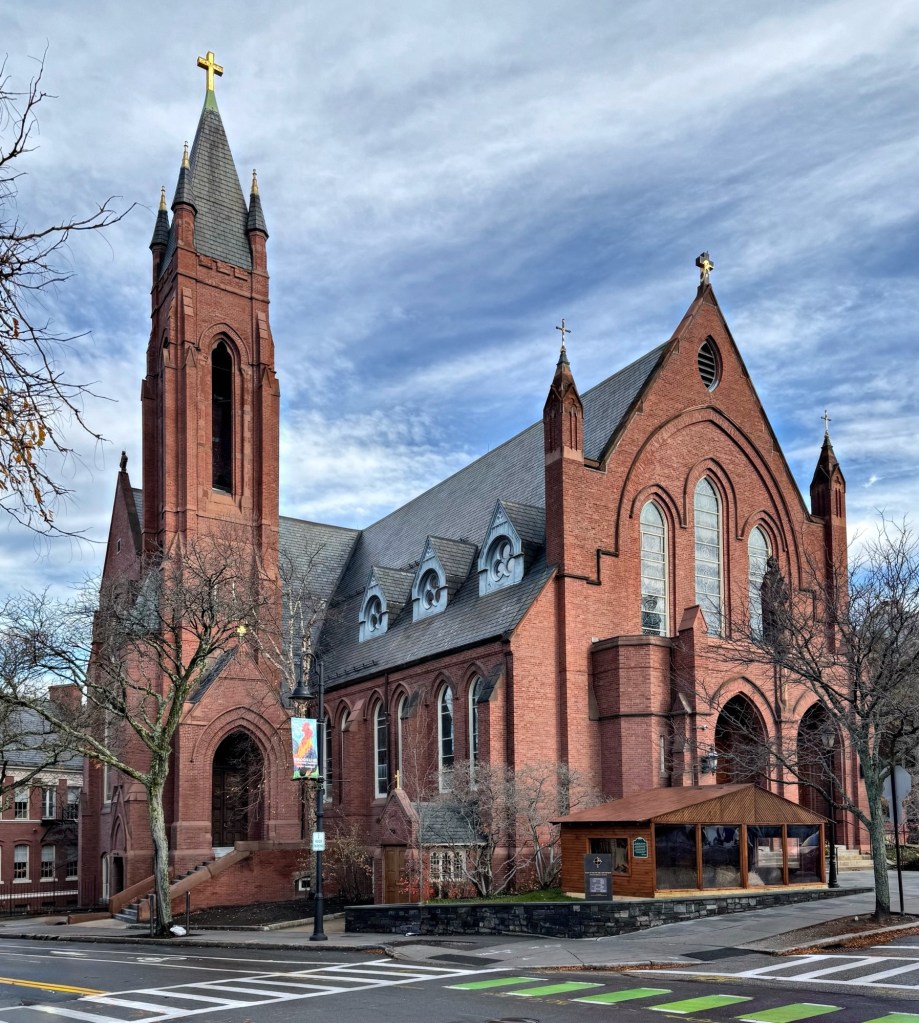
St. Mary of the Assumption Catholic Church, Brookline Village // 1880

St. Mary of the Assumption church was the first Catholic Church established in Brookline, Massachusetts, in 1852 when a congregation of Catholics began to congregate to worship together at the old Lyceum Hall. The congregation primarily consisted of Irish immigrants who settled in Brookline, where they often found work at the many large estates and building the new branch railroad in town, but desired a true house of worship close to their homes. By 1853, a modest wood-frame Gothic Revival style church was built in the Village, but was quickly outgrown. In 1873, the pastor of the congregation, Irish-born Rev. Lawrence Morris (1845-1900) began purchasing land at the corner of Harvard Street and Linden Place to establish a new church, large enough to comfortably fit the congregation and various church-related buildings. In 1880, the firm of Peabody & Stearns was hired to furnish plans for the Victorian Gothic edifice in brick and brownstone. Although the church was designed in 1880, it was not dedicated until 1886, and at this time, Pope Leo XIII sent a chalice to the Parish in honor of the completion of this church, the first in America to be named Saint Mary of the Assumption.

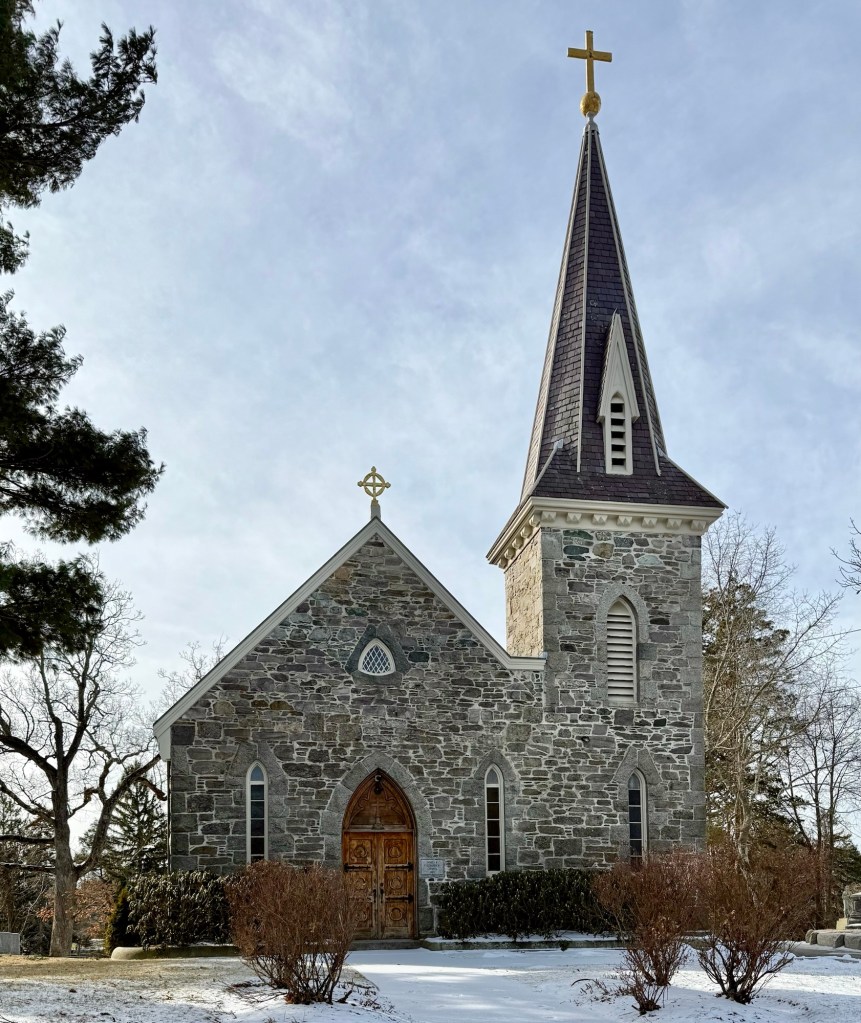
Holyhood Cemetery Chapel // 1857

Holyhood Cemetery in Brookline, Massachusetts, was laid out in 1857 under the direction of Father Joseph M. Finotti, pastor of Assumption Parish , which included Brookline and Brighton. The cemetery reflects the mid-19th century influence of the Rural Cemetery movement and the romantic landscape cemetery planning begun at Cambridge’s Mount Auburn Cemetery in the 1830’s. A plan of the cemetery was drawn up by Shedd & Edson and published in August 1857. It shows curvilinear avenues and paths named after former bishops of Boston and Biblical figures. All were welcome to be buried except those who “died in a state of Drunkenness, Duel, or by self-destruction, unbaptized, non-Catholic, or otherwise opposed to the Catholic Church.” In the 1857 Shedd & Edson plan for Holyhood Catholic Cemetery, a chapel was located at the center on the hill shown in a small drawing on the edge of the plan. Known as St. Joseph’s Chapel, the stone building was designed by Patrick Keely, the successful and influential New York architect of many mid-19th century Catholic churches. The chapel would be dedicated in 1862. Decades later, a cemetery office was planned and built across Heath Street from the cemetery gates, but was demolished sometime in the 20th century. The cemetery grew and it along with the mid-19th century chapel, has been lovingly maintained to this day.  

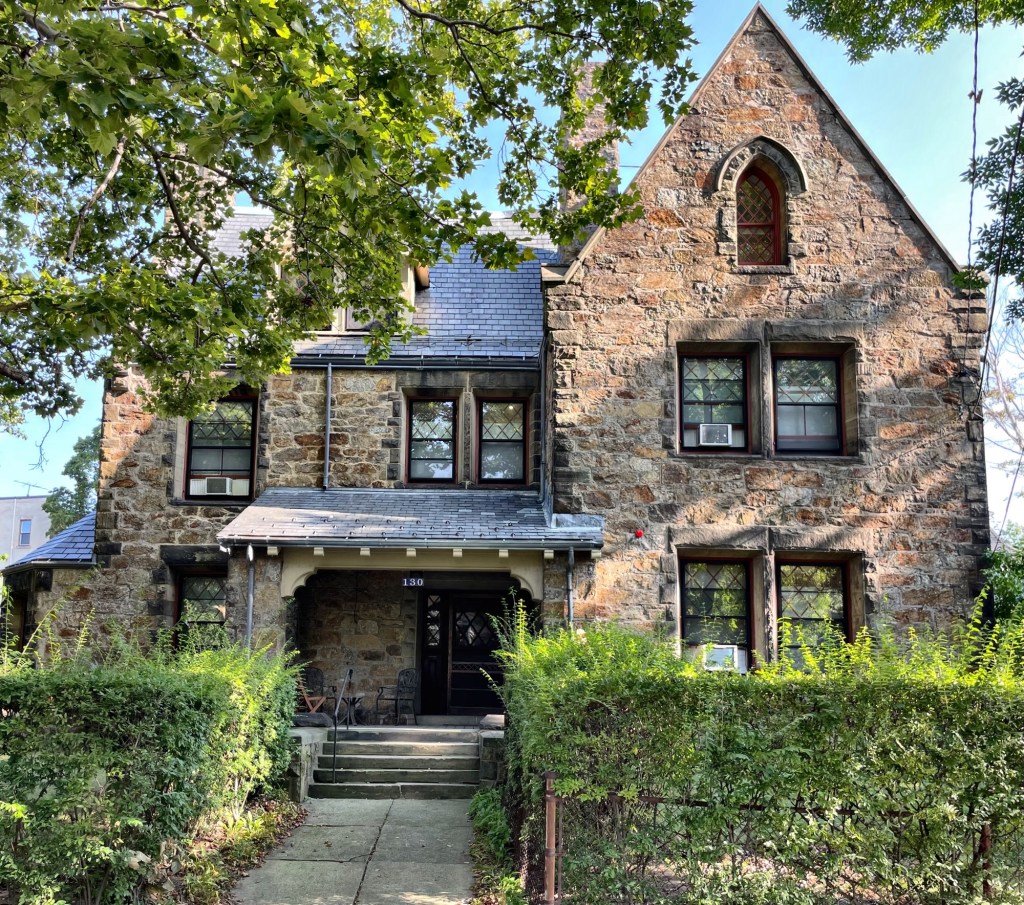
St. Paul’s Church Rectory // 1886

Located next door to the St. Paul’s Episcopal Church in Brookline, Massachusetts, the church’s rectory is equally stunning and compliments the 1850s Gothic church. The Rectory was built in 1886 from plans by Boston architects, Peabody & Stearns, in harmony with the architecture of the Church, with masonry walls of Brighton puddingstone with Nova Scotia freestone trimmings. The Rectory’s architectural style, is somewhat Jacobethan/Tudor due to the pitch of the roof, elbows on the parapet wall, diamond panes in the sashes of the windows, and projecting bay window on the second floor.

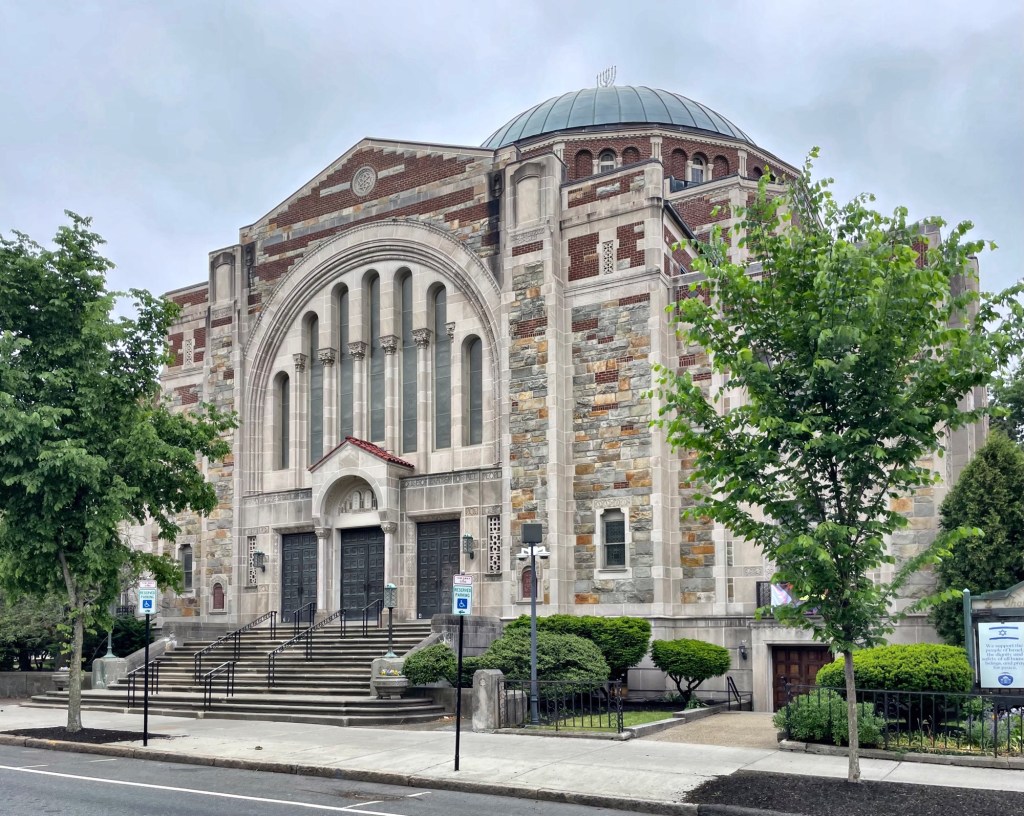
Temple Ohabei Shalom // 1927

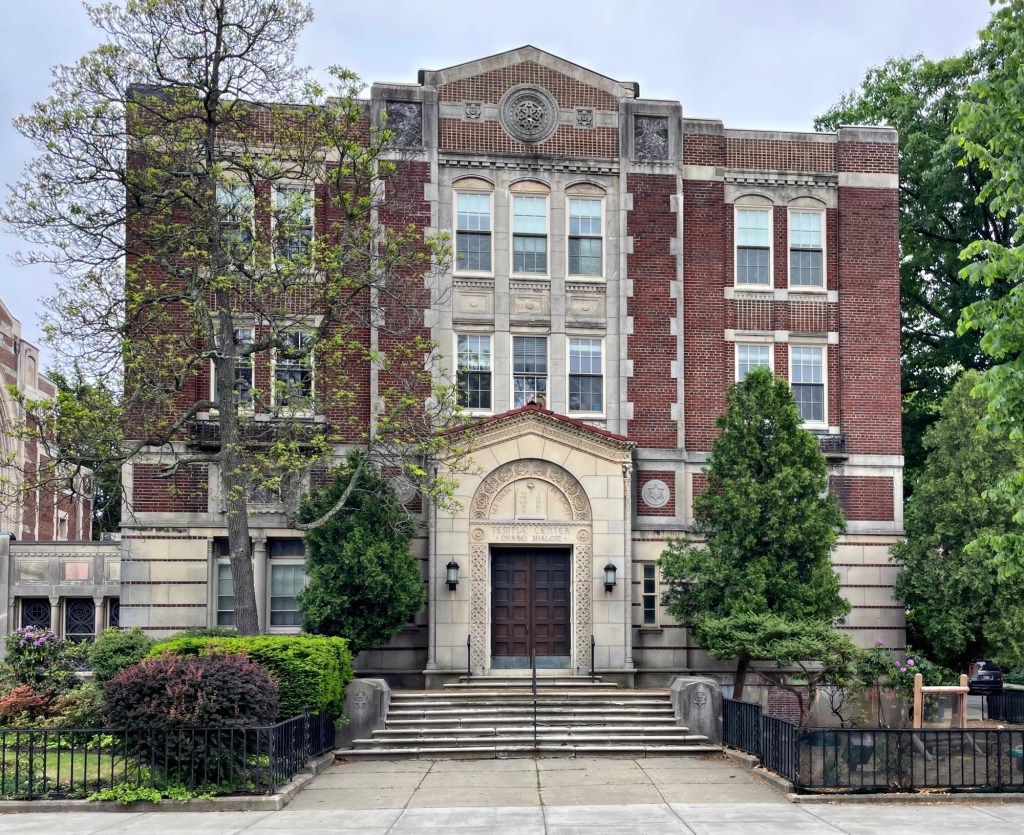
The congregation of Ohabei Shalom is the oldest jewish congregation in the greater Boston area and the second oldest in New England. It was formed in 1843 and was the first formal congregation in Boston. After a smaller space, they purchased the former South Congregational Unitarian Church on Union Park Street in the South End of Boston. The congregation split over ideological differences and the decision was made for one half of the congregation to build a new temple in Brookline, where many of the members began to move to. Land on Beacon Street, just west of the Longwood section of Brookline was purchased in 1921, and it would be four years until a temple center (now the hebrew school) was built in 1925. The larger temple was built just after on the corner of Beacon and Kent streets in Brookline from plans by Clarence Blackall, a noted architect in the area. With its lively use of polychromatic masonry and Byzantine ornament, all surmounted by a great copper dome, the congregation boasts the most architecturally outstanding synagogue in the Boston region and it has been maintained well for the almost 100 years since it was built.

School Building