Christ Church, Swansea // 1900

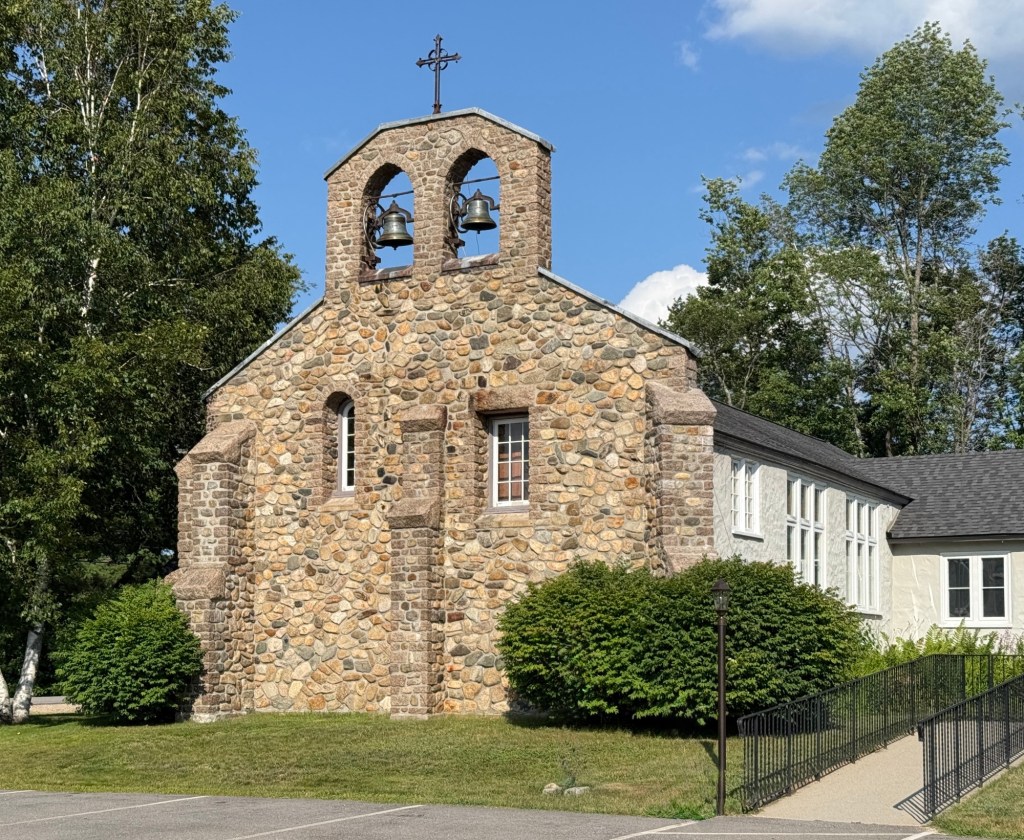
Designed in the mode of a traditional English country church, the Christ Church of Swansea is among the finest Neo-Gothic Revival edifices in New England and evokes a sense of history and tradition despite only being built in 1900. The church was funded by benefactors, Frank Shaw Stevens and Elizabeth Case Stevens, who lived down the street in the town’s largest mansion. After the death of her husband Frank, Elizabeth began a large gifting campaign to the Town of Swansea, and funded the construction of the town’s library, school, and this church (they had already funded the 1891 Town Hall). For the village church, Elizabeth hired their friend, and renowned English-born architect, Henry Vaughan, who designed the building with heavy granite walls, lancet windows and a facade dominated by an entry tower with rounded corner all capped by battlements. The Christ Church of Swansea resembles an old Medieval English church but in a New England village, amazing work as always Mr. Vaughan!

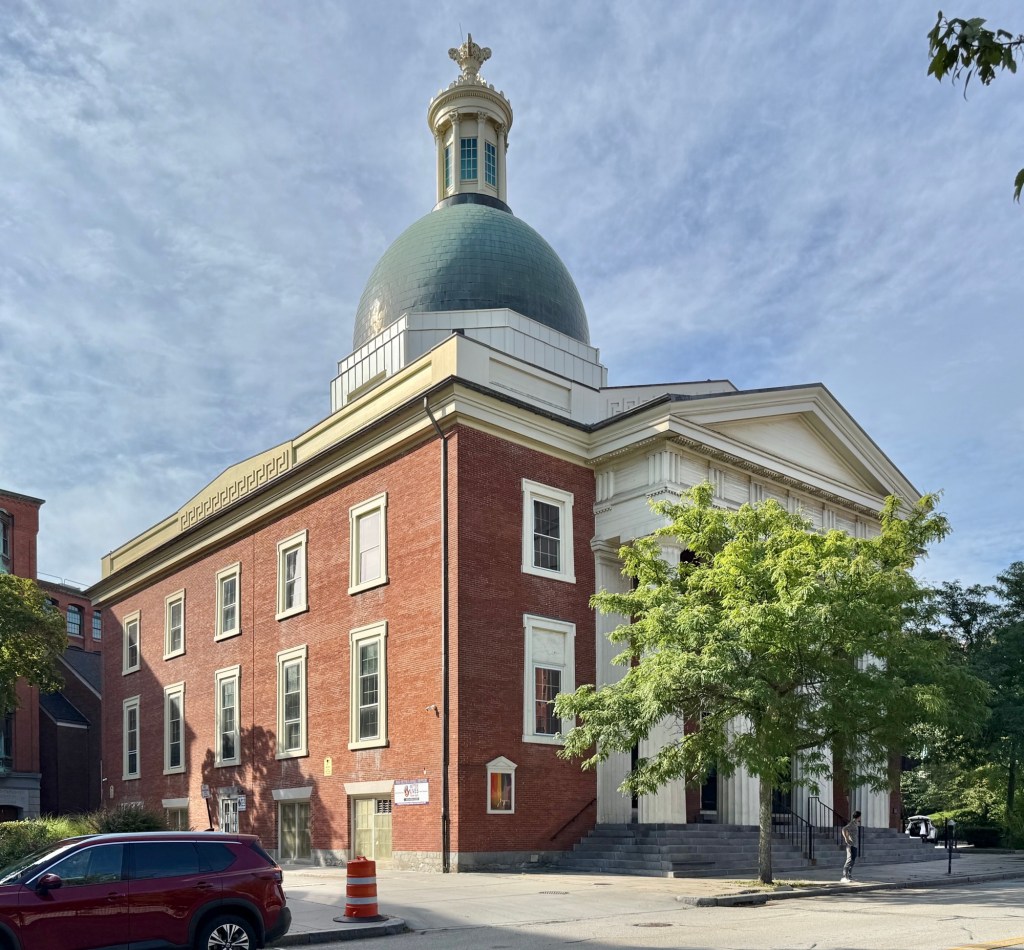
First Baptist Church of Swansea // 1848

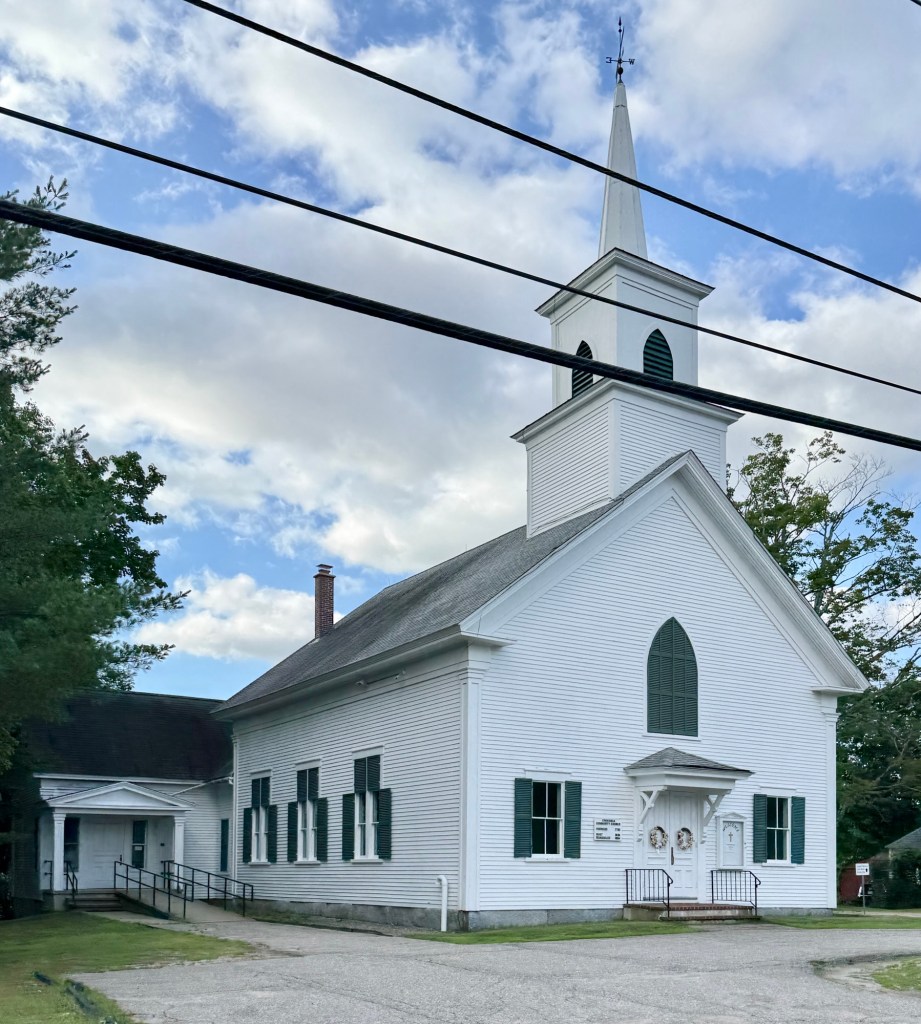
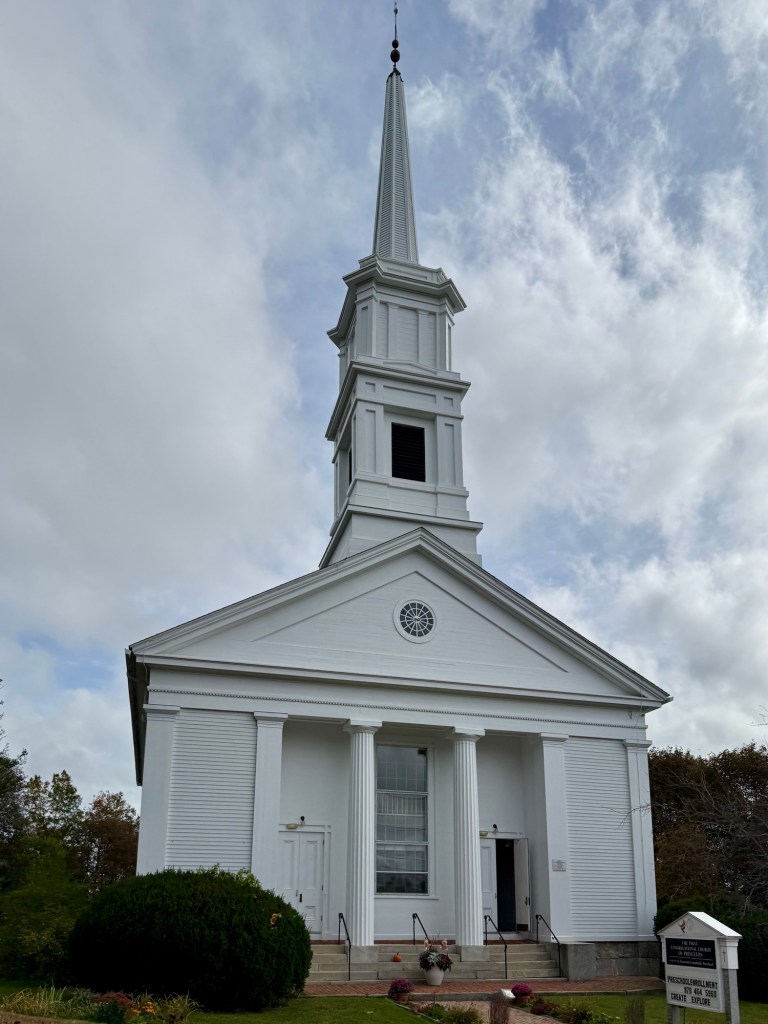
The First Baptist Church of Swansea may look like a traditional, Greek Revival style church from the 1840s, a common form and style found in nearly every community in New England, but the church is home to the oldest Baptist congregation in the Commonwealth of Massachusetts and is the fourth oldest in the United States! The church (and town’s name) was founded by Reverend John Myles (c. 1621–1683), a Baptist minister who immigrated to present-day Swansea from Swansea in Wales, who was a founder of the earliest recorded Baptist churches in Wales. During the King Philip’s War, Reverend Myles fled from the fighting to Boston and pastored the new First Baptist Church in Boston. The present Greek Revival structure, the fifth of the congregation, was built under the direction of the English-born Reverend J. J. Thatcher, pastor of the church from 1846 to 1854. The vernacular Greek Revival church features a pedimented facade with pilasters dividing the bays, and a square belfry.

Sears Chapel, Longwood // 1860

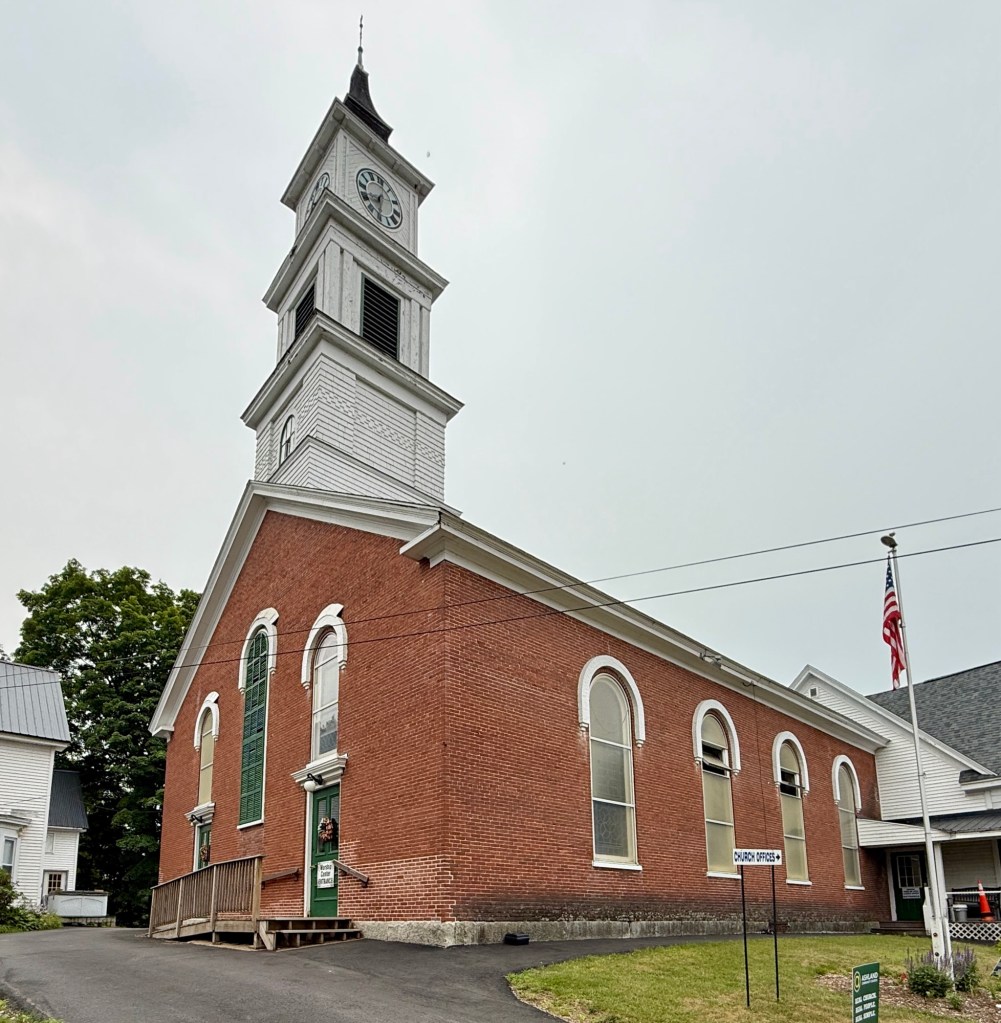
Christ’s Church in Longwood, better known as Sears Chapel, is among the finest ecclesiastical buildings in Brookline and commands its site on a rise overlooking the Muddy River, now the Riverway in the Emerald Necklace park system. The area presently known as Longwood was originally marshland with a few farms until the building of the Mill Dam road out of Boston in 1821 that improved access to Brookline, which opened up its connectivity and development potential. Wealthy Boston businessman, David Sears (1787-1871) recognized this, and began buying the low-lying pasturelands in Brookline near the Boston border. By 1830, some squares were laid out and development began in the Cottage Farm and Longwood sections. He, with associates, began building country estates for friends and family to escape the crowded conditions of Boston. He is said to have named his neighborhood “Longwood”, after Napoleon’s estate on St. Helena where he spent his days in exile. An avid amateur horticulturist, Sears planted some 14,000 trees, many of them imported from Europe, in the course of developing his land. In keeping with his faith, Sears built this house of worship, Christ’s Church, which is said to have been modeled after St. Peter’s in Colchester England, likely giving Colchester Street, where Sears Chapel is located, its name. The Romanesque style church was designed by Boston architect, Arthur Gilman, who designed the building suitable for the Sears Family crypt which is underneath the structure and the burial site of many of the family. The congregation remains active to this day who maintain the significant structure and its many historic stained glass windows.

St. John’s Episcopal Church of Sharon // 1902

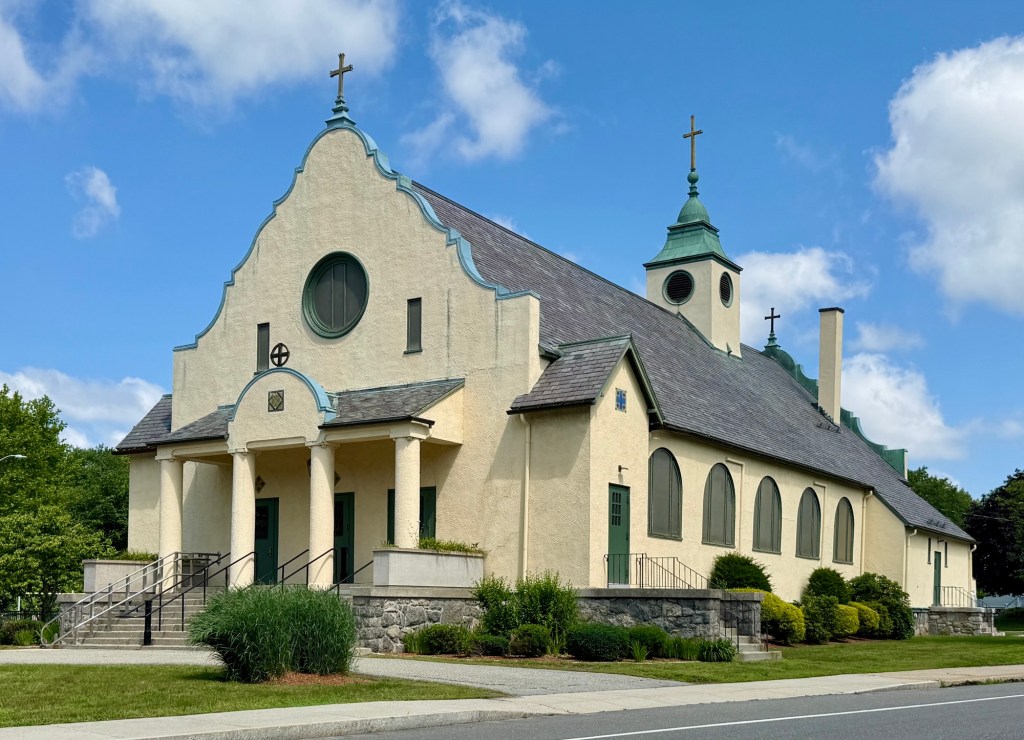
The small yet architecturally significant St. John’s Episcopal Church in Sharon, Massachusetts, was built in 1902 from plans by one of the premier ecclesiastical architects of the early 20th century. Episcopalians in Sharon began demanding their own house of worship in the late 19th century, and by the turn of the century, had funding to erect their own chapel. Boston-based architect, Ralph Adams Cram, of the firm Cram, Goodhue & Ferguson, designed the building, which fits within the scale of the residential neighborhood it is located within. St. John’s is an example of Neo-Gothic Revival architecture, a style which Cram became known for, with a fieldstone base, three feet thick, and stucco gabled facade above with tripartite windows with diamond-cut colored glass. The chapel was expanded at the rear, but maintains its rustic charm at the street.

Unitarian Church of Sharon // 1842

Sharon, Massachusetts, is a small suburban community south of Boston that is lesser known than its neighbors, but the community has some great old buildings! The Town of Sharon was originally part of a 1637 land grant given by the Dorchester Proprietors to encourage new settlement in areas southward. In 1726, the lands of the present towns of Sharon, Canton and Stoughton, were separated from Dorchester and called the Stoughton Territory. Settlers in present-day Sharon found it difficult to attend mandated church services centered around present-day Stoughton and petitioned the General Court in 1739 to set off as a separate precinct. The request was granted and the Second Precinct was established, and incorporated as Stoughtonham in 1765, changing its name in 1783 to Sharon, named after the Sharon Plain in Palestine. In 1813, the local congregationalists split due to theological differences and formed a Unitarian church. The Congregationalists moved and built a new church and the Unitarians remained on this site, but the larger building was too large for their needs. They demolished the original building and constructed this church in 1842, which somewhat resembles the 1839 Congregational Church of Sharon a stone’s throw away. Like its neighbor, the Unitarian Church too retains an original bell cast by the The Revere Copper Company of nearby Canton.

First Congregational Church of Sharon // 1839

Sharon, Massachusetts, is a small suburban community south of Boston that is lesser known than its neighbors, but the community has some great old buildings! The Town of Sharon was originally part of a 1637 land grant given by the Dorchester Proprietors to encourage new settlement in areas southward. In 1726, the lands of the present towns of Sharon, Canton and Stoughton, were separated from Dorchester and called the Stoughton Territory. Settlers in present-day Sharon found it difficult to attend mandated church services centered around present-day Stoughton and petitioned the General Court in 1739 to set off as a separate precinct. The request was granted and the Second Precinct was established, and incorporated as Stoughtonham in 1765, changing its name in 1783 to Sharon, named after the Sharon Plain in Palestine. In 1813, the local congregationalists split due to theological differences and some formed a Unitarian church. The Congregationalists moved down the street and built a new church in 1822 which was destroyed by fire in 1838 and replaced a year later by this edifice. Built in 1839 the First Congregational Church of Sharon is a vernacular and well-preserved example of a Greek Revival church building in the Doric order with towering pilastered steeple, monumental portico supported by four fluted Doric columns, and flushboard siding. The Congregational Church retains an original bell cast by the The Revere Copper Company of nearby Canton.

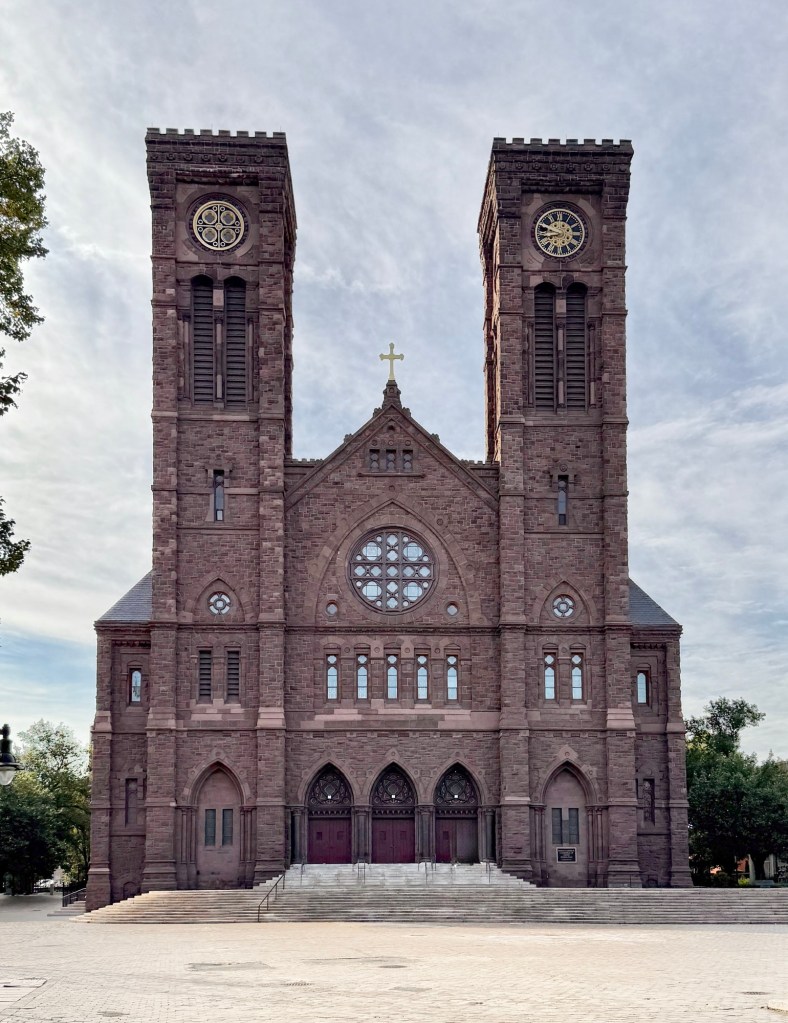
Former St. Casimir’s Church // 1872

Built in 1872, this Victorian Gothic style church on Greene Street in the Wooster Square area of New Haven, Connecticut, has had a varied history that tells the full story of its neighborhood. The church was originally constructed as the Davenport Congregational Church and was designed by New Haven architect, Rufus G. Russell, who formerly worked many years for Henry Austin, the city’s leading architect, before opening his own firm. In the early 20th century, the neighborhood demographics shifted to a more diverse area of recently arriving immigrants who worked in nearby industry and the edifice was occupied by an Italian Baptist church. 1927, the church was purchased by a local Lithuanian congregation, who re-established the building as the St. Casimir Catholic Church. For nearly 100 years, the church remained an active use anchoring the iconic Wooster Square park until the congregation closed, leaving the building’s fate unclear. Luckily, developers purchased the property, which is located within a local historic district, and converted the church into residential units.

Trinity Episcopal Church of Wrentham // 1872

Overlooking the Town Green in Wrentham, Massachusetts, the Trinity Episcopal Church of Wrentham stands as the town’s finest example of Victorian Gothic architecture and the community’s oldest Episcopal church. Episcopalians in Wrentham first began worshipping in 1863 and in less than ten years, quickly grew in numbers from just two members to so many that a church building was needed to house the congregation. The site on East Street was purchased and architect, Shepard S. Woodcock, was hired to furnish plans for the new building. Completed in 1872, the Victorian Gothic design features all of the hallmarks of the style, including the steeply pitched roof, pointed arch windows and entry doors, buttresses, and towering steeple.

Wrentham Congregational Church // 1834

The Wrentham Congregational Church is the oldest house of worship in the suburban community, and the fourth consecutive meetinghouse for the congregation at the town center that was originally established in 1692. The frontier town grew slowly as a largely agricultural community and three houses of worship were built nearby the town common until 1833, when it was decided that a church worthy of its historic congregation be built. It is not clear who designed the Greek Revival church, but timbers were transported to town in 1834 for the new edifice which was completed that year. Over the following century, the church was expanded and modernized, all-the-while retaining its historic character. The four-stage steeple toppled during the New England Hurricane of 1938, and was rebuilt. The congregation remains active in the community and is a visual landmark at the town center.

Hopedale Unitarian Church // 1898

The Hopedale Unitarian Church, also known as the Draper Memorial Church, is located in the former industrial village of Hopedale, Massachusetts, and is one of the finest examples of the Neo-Gothic style in the state. The church was funded by brothers George Albert and Eben S. Draper of the Draper Corporation, the largest employer in town, offering to build the new edifice as a memorial to their parents, George and Hannah Draper. The church replaced an earlier, wood-frame church, built on the site in 1860 by supporters of Adin Ballou, a founder of the Hopedale Community, a utopian community that eventually failed. The Drapers hired Boston architect, Edwin J. Lewis, an active Unitarian who had designed several churches around New England by this time. His plan was “English Gothic of the Perpendicular period” made of Milford granite with Indiana limestone trimmings and a roof of green slate. At the interior, roof trusses were left exposed “as in the old English Parish churches” with oak finishes and flooring and memorial stained glass windows by prominent artists. The church remains a visual and historical landmark for the community with an active congregation who preserve the significant building.