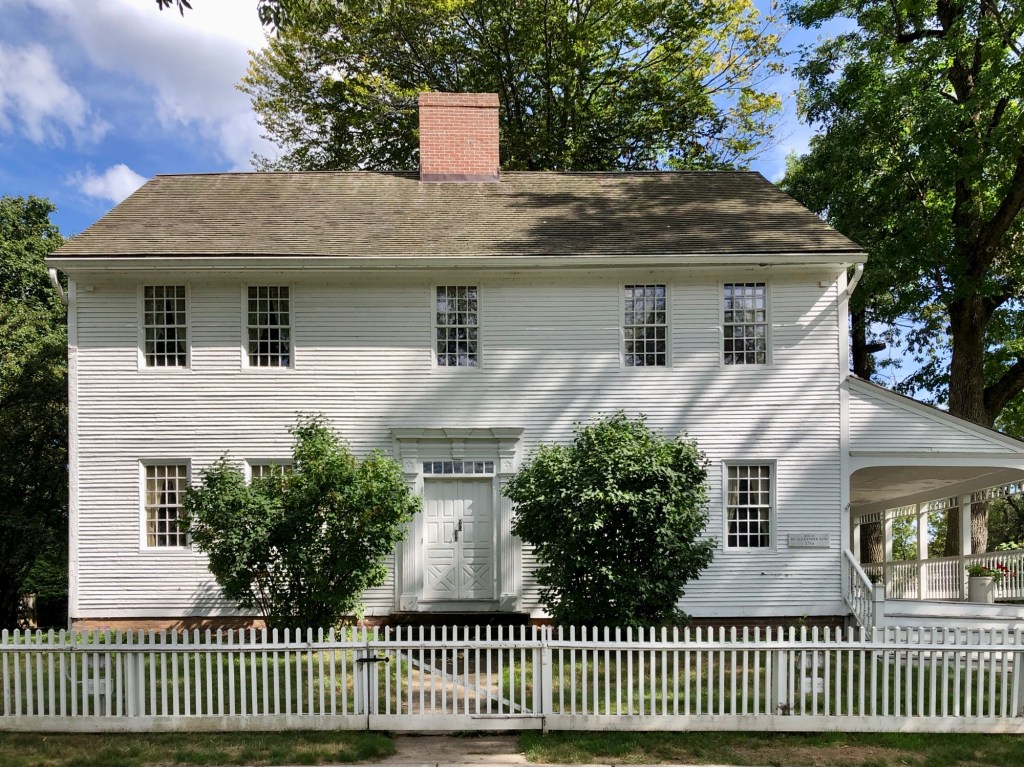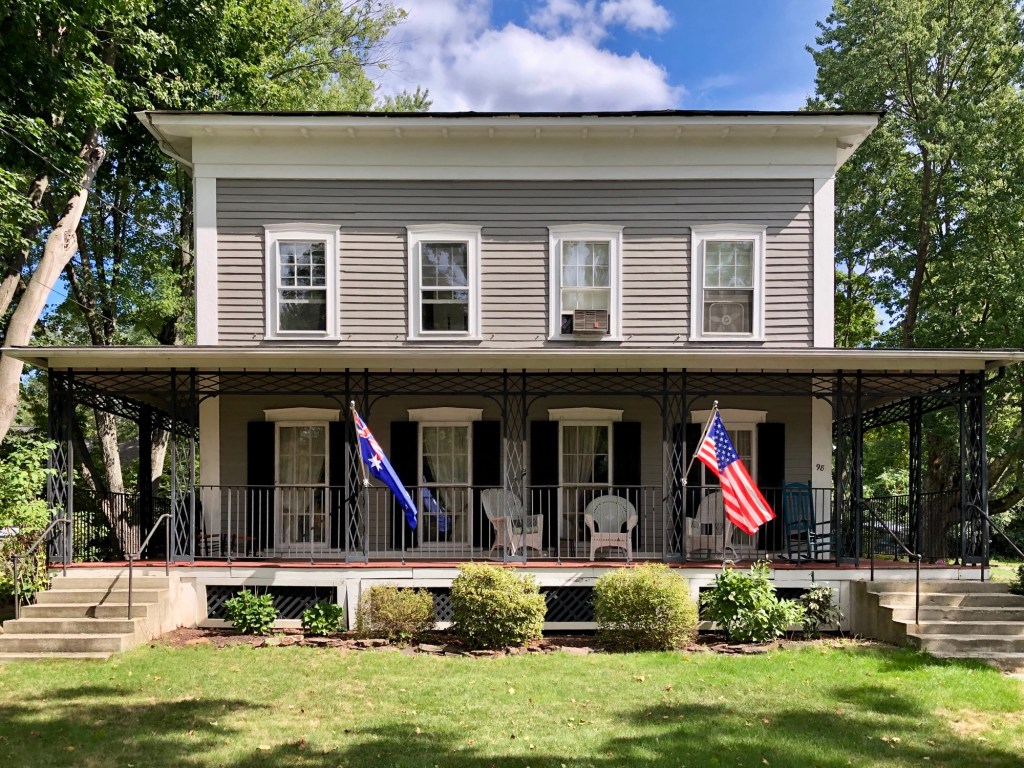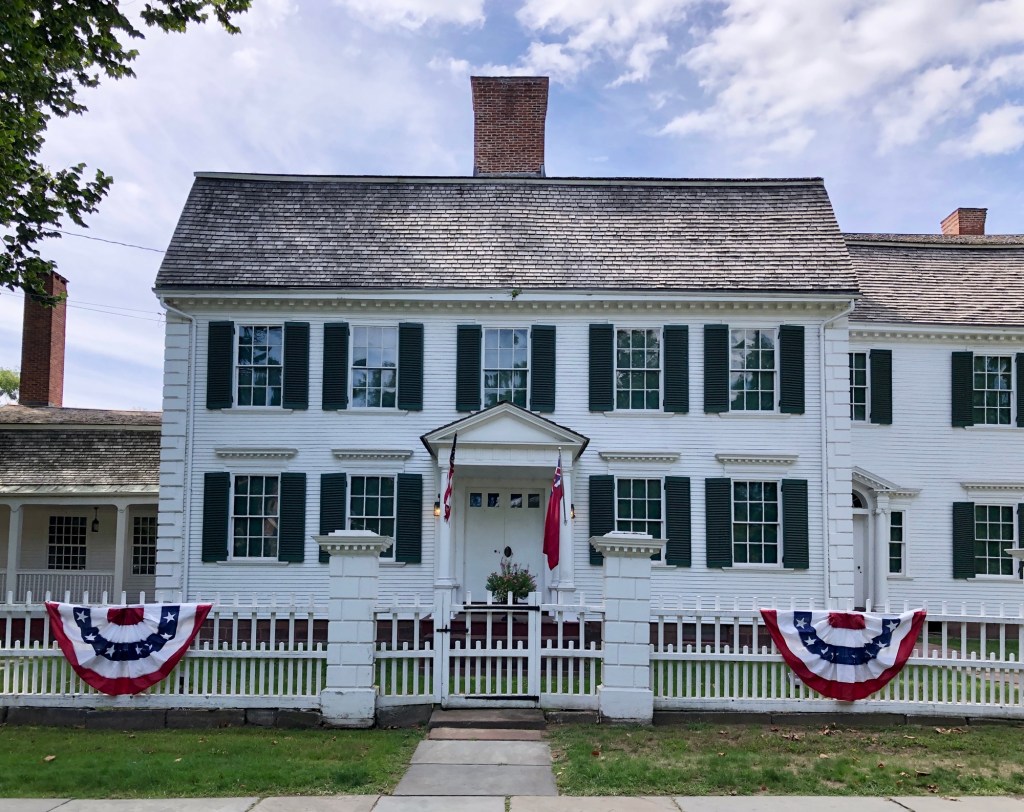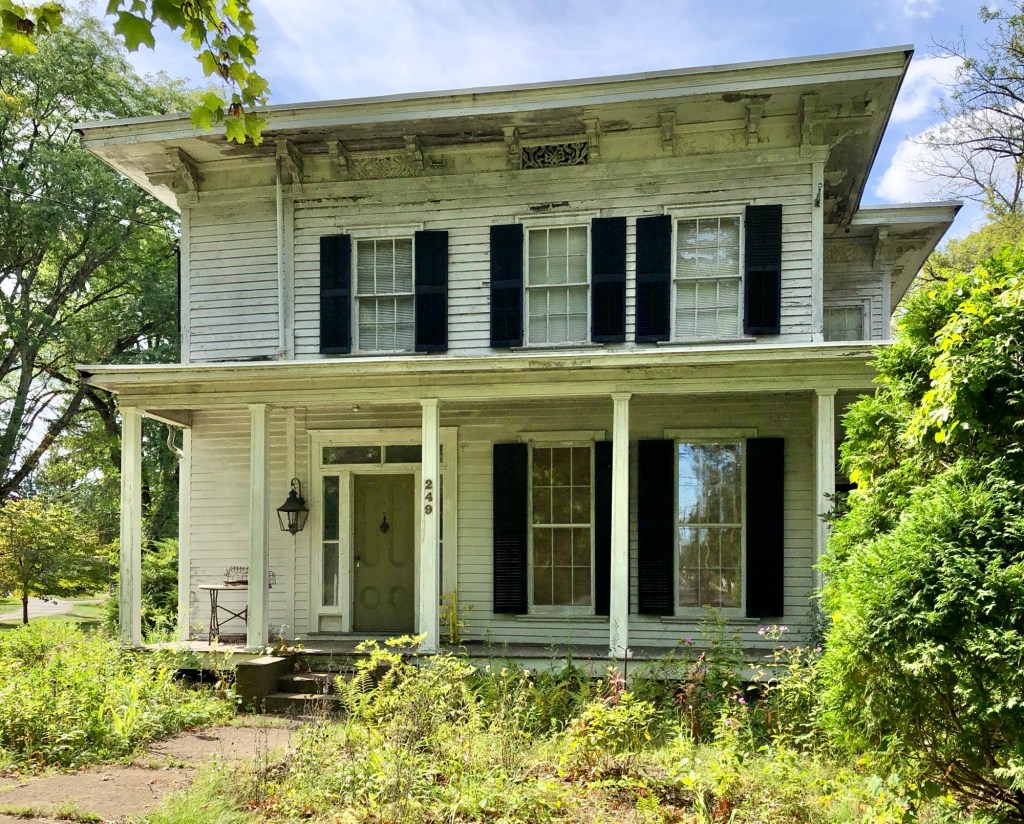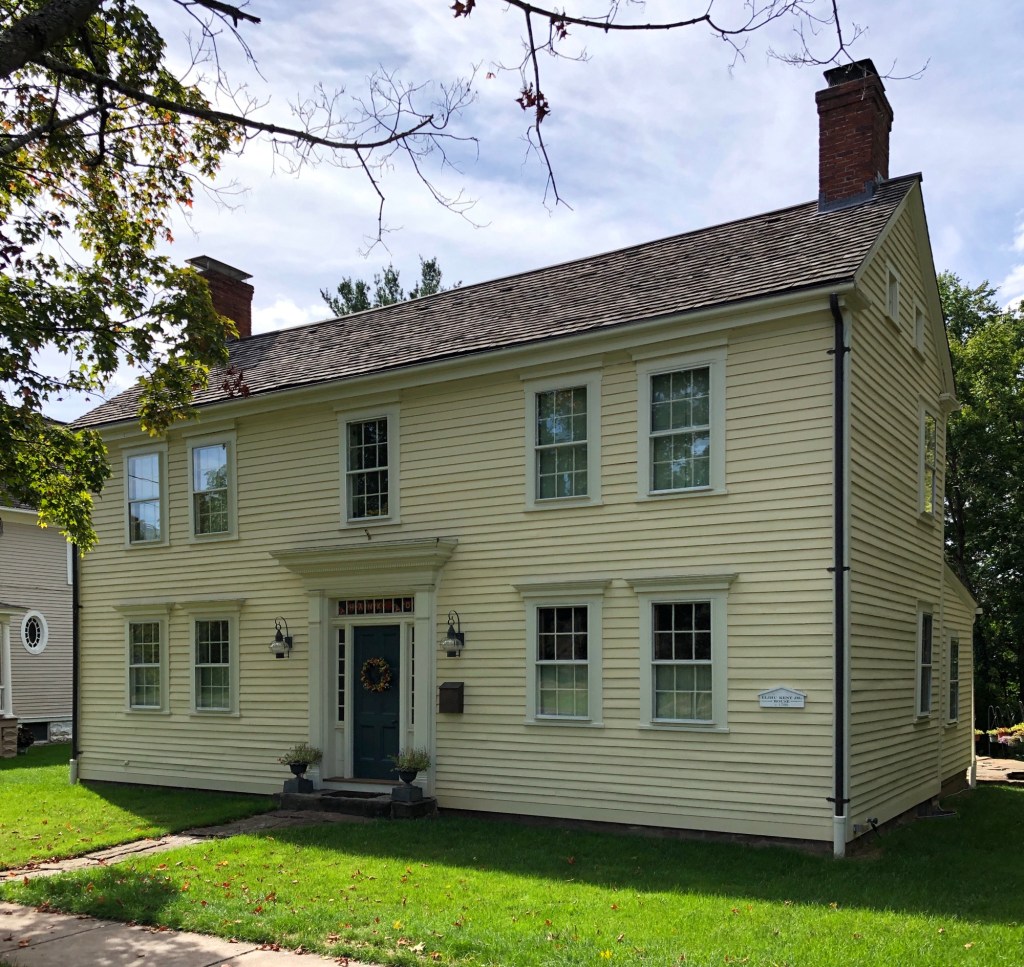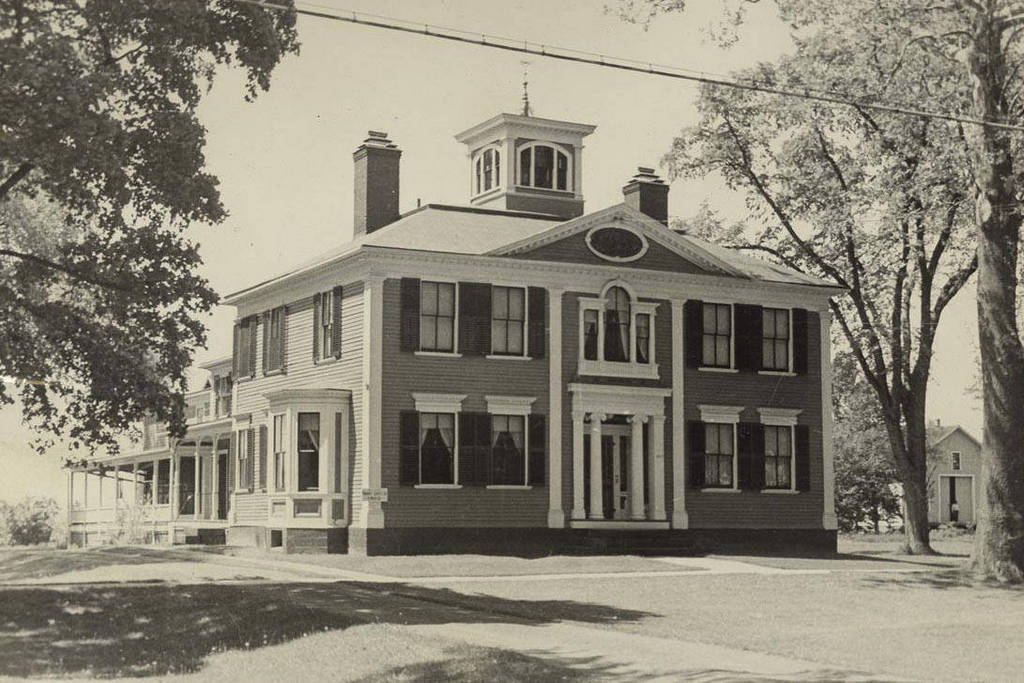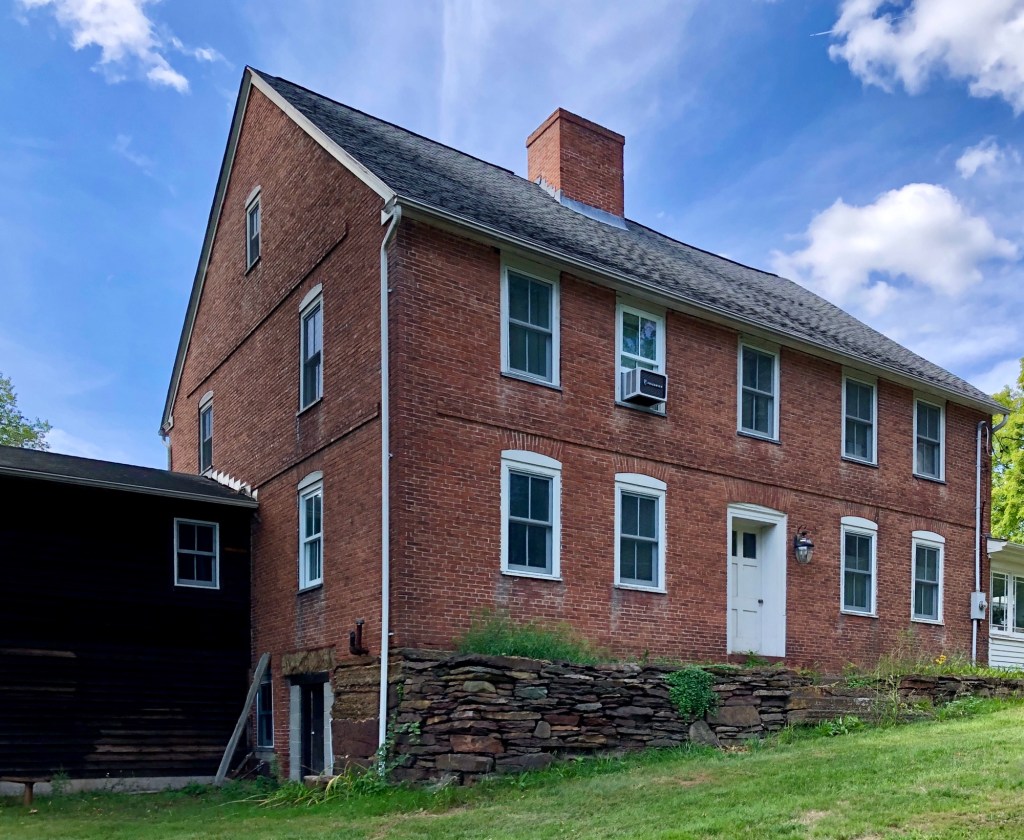
Phelps-Hatheway House // c.1762

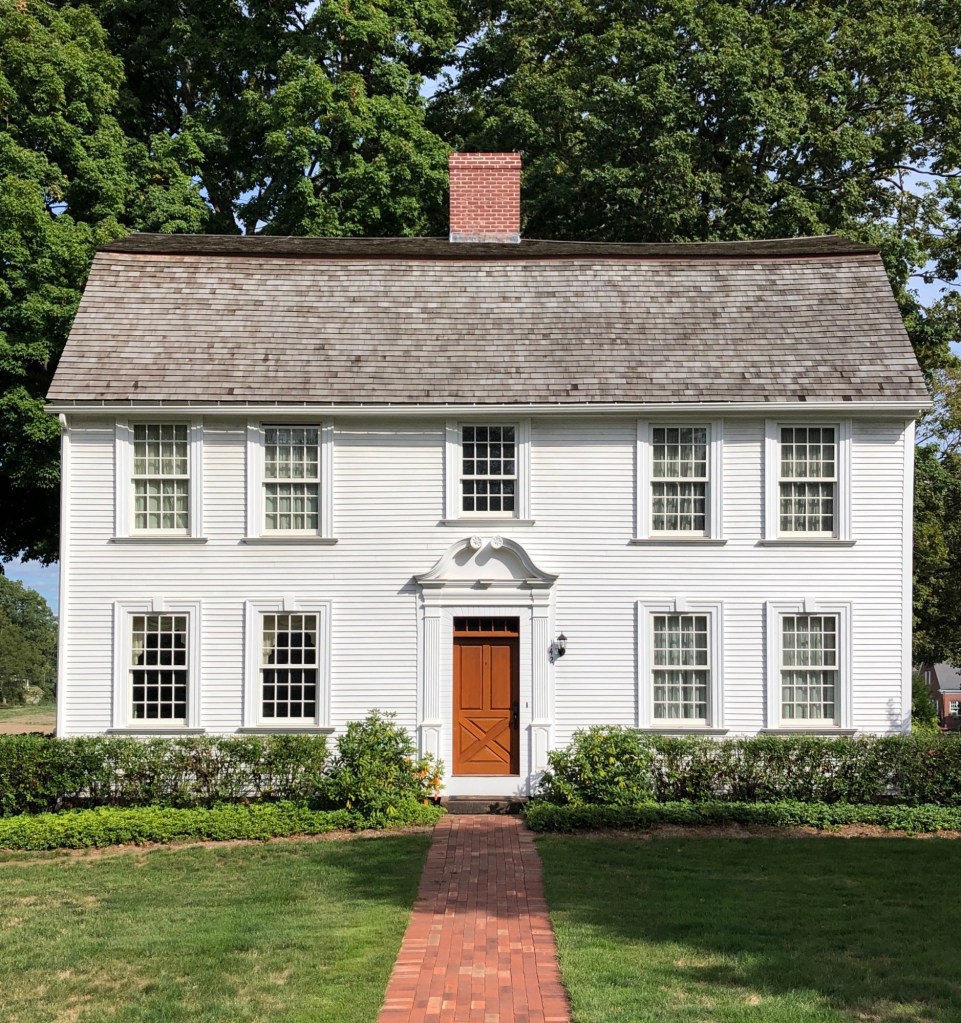
Set back from tree-lined Main Street in Suffield, the Phelps-Hatheway House is but one of many handsome eighteenth and nineteenth century homes in the town. The house began construction sometime between 1732-1762 as a modest gable-roof Georgian home built by Abraham Burbank. In 1788, the home was purchased by Oliver Phelps. at the beginning of the Revolutionary War, Phelps joined the Continental Army and fought in the Battle of Lexington. He left service in 1777 and, relying on his experience as a merchant, became Massachusetts Superintendent of Purchases of Army Supplies, a Deputy Commissary of the Continental Army. He was introduced to Robert Morris, the great financier of Revolutionary times. He supplied troops and received commendation from George Washington for his efforts. After the war ended, he became a prominent businessman and was elected to the Massachusetts Senate in 1785 and served on the Governor’s council in 1786 (Suffield was still a part of Massachusetts at this point).

Upon returning, Phelps hired architect Asher Benjamin (when he was in his early 20s!) to redesign the home into a gambrel roof mansion and construct numerous additions to make the house a suitable home for a wealthy, sophisticated man such as himself. Phelps was a principal in the Phelps and Gorham Purchase of six million acres of land in upstate New York, making him one of the nation’s largest landowners. Phelps lived here until 1802, when he moved to Canandaigua, New York, to more closely oversee the development and sale of his holdings. Phelps or his heirs sold the house, which was purchased by Asahel Hatheway and it remained in the Hatheway family for a century. It is now owned by Connecticut Landmarks and operates as a house museum.

Charles Loomis House // 1862

This home was built for Charles Loomis of the Loomis Family, who made their fortune in the tobacco farming and rolling industry in Suffield, Connecticut. Charles F. Loomis used his tobacco money to have this asymmetrical Italianate Villa constructed in 1862. The home features a prominent three-story tower capped with iron cresting, broad overhanging eaves with brackets and some stickwork, and a gorgeous door with arched transom and sidelights. There are almost too many architectural details to list. What is your favorite?

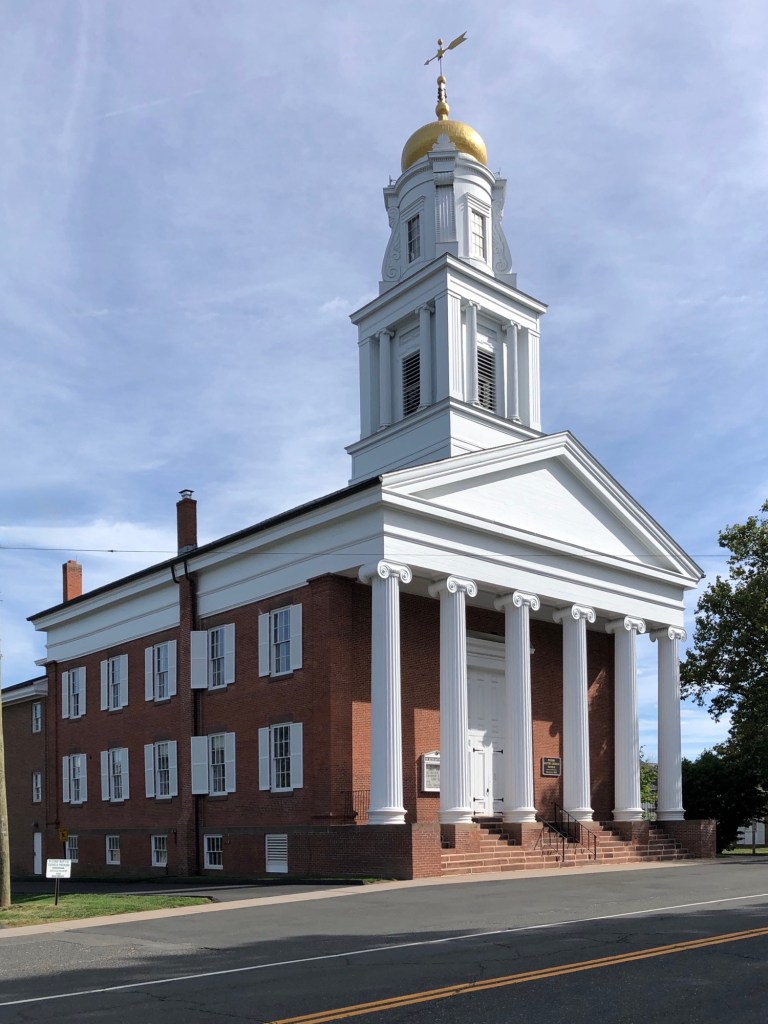
Second Baptist Church, Suffield // 1840

In early New England, the Congregational Church had a near monopoly on churches. Congregational churches had lost much of its hold on its members and on government by 1725. Eventually, some of its ministers decided a religious revival was needed, creating the emergence of new Baptist and Methodist churches all over the region. Baptists erected a church in West Suffield, far from the town center, which began to rapidly develop in the early 19th century. In 1805, they petitioned to create a second Baptist church, and succeeded. By 1840, the members collected funds to erect this stunning Greek Revival church on Main Street. The congregation hired architect Henry Sykes, who had trained under Chauncey Shepherd of Springfield, Mass and Ithiel Town of New Haven, clearly learning a lot on church design.

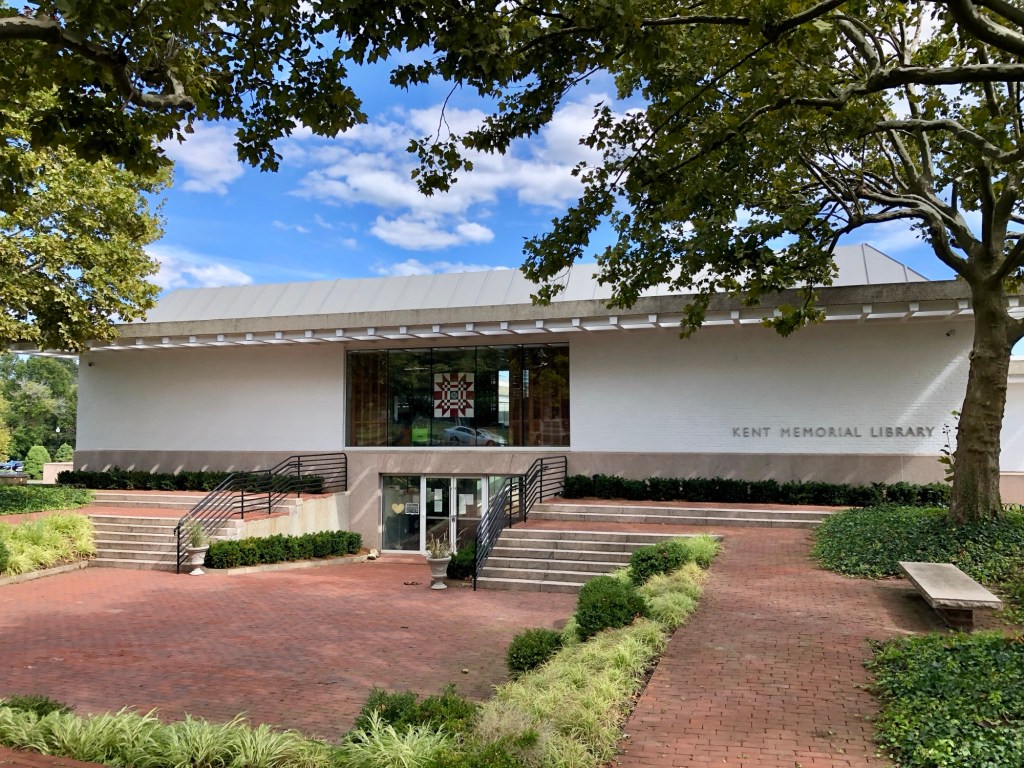
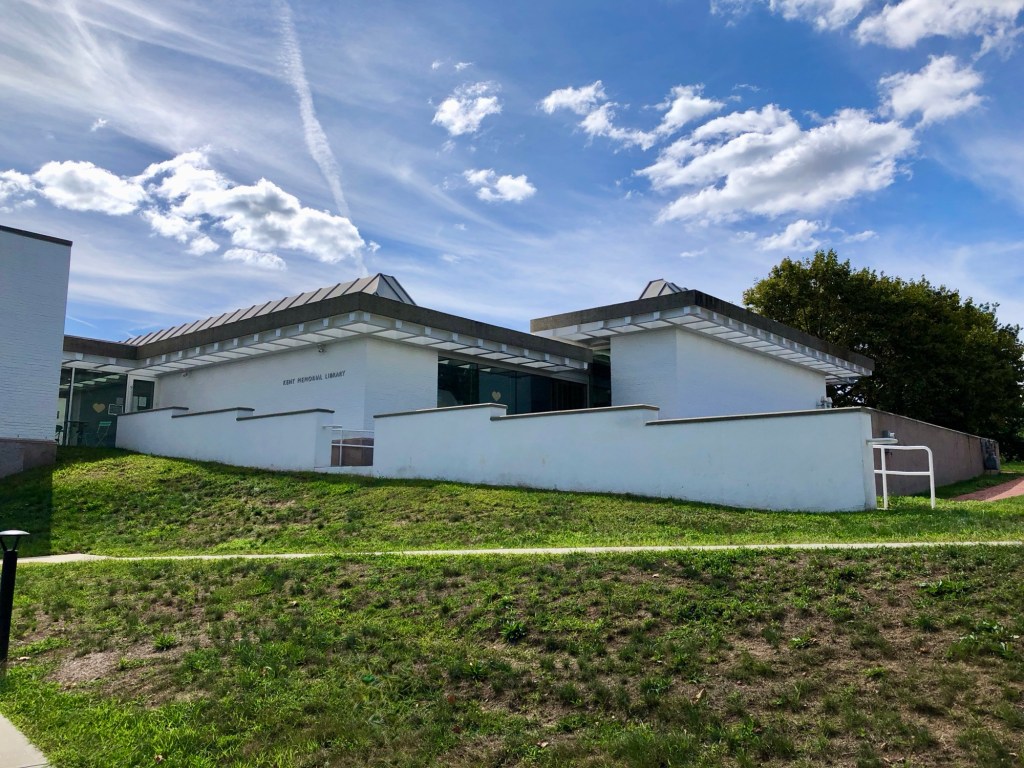
New Kent Memorial Library // 1972

Between 1900 and 1970, the town of Suffield doubled its population, and the 1899 public library was outgrown. The city gathered funds to construct a new library, knowing that the endowment for the day-to-day operations of the library by Sidney Kent, in memory of his parents, would transfer to a new building as long as the name carried with it. The town hired Warren Platner, an architect, interior designer and furniture designer, based out of New Haven. Platner designed the Modern library with a concrete frame, faced with pink stone and white painted brick above, surrounds a central garden court. The flat coffered concrete roof and overhanging concrete project outwards over the terraced exterior courtyards. The interior is on five floor levels connected by gradual ramps with no stairs inside (at least at the time of construction). The town proposed a plan to demolish the library in 2008, replacing it with a larger library, but it was voted down by residents, saving (what is believed to be) the only free-standing Platner building remaining in the country.

Gay Mansion // 1795

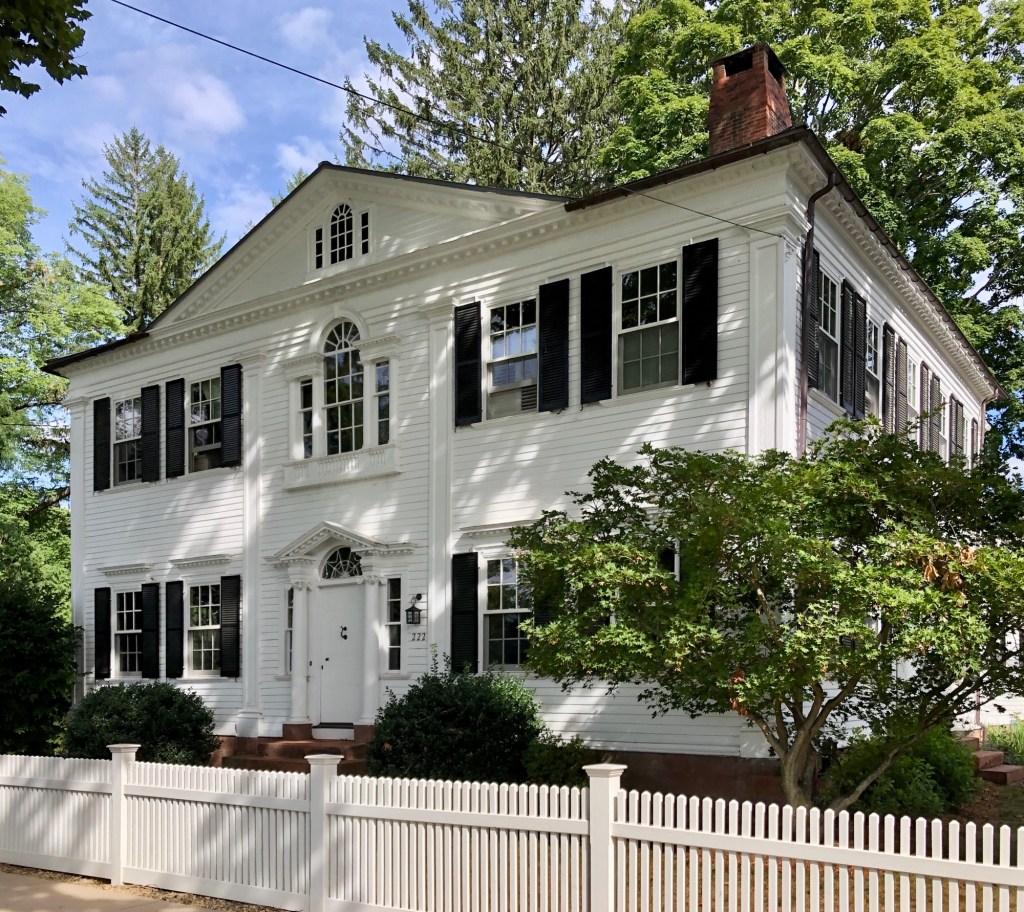
In 1795, Ebenezer King bought 26 acres of land on Main Street in Suffield, Connecticut for the development of his own house. He at the time was in the height of his prosperity and was estimated of having a net worth of $100,000. He eventually sold his property in 1811 to William Gay, who was a leading lawyer in Hartford County, and the postmaster of Suffield, actually running the town’s post office out of this home for over 30 years. The home is currently owned by Suffield Academy as the headmaster’s home. It is an excellent example of Federal style architecture and features two Palladian windows!

Alexander King House // 1764

Located on the idyllic Main Street of Suffield, Connecticut, the Alexander King House stands as a well-preserved example of a high-style Georgian home. Alexander King (1737-1802) is a prominent figure in Suffield’s history. He was a graduate of Yale, and later practiced medicine in town, as well as serving as Selectman and Town Clerk for almost thirty years. He was also a Justice of the Peace, Representative to the Assembly, participant in agitation against British colonialism, and delegate to the Connecticut Ratifying Convention of 1788, when the state ratified the U.S Constitution. The home eventually was acquired by the Suffield Historical Society, who operate the home as a house museum and holds exhibits on the town’s rich history.

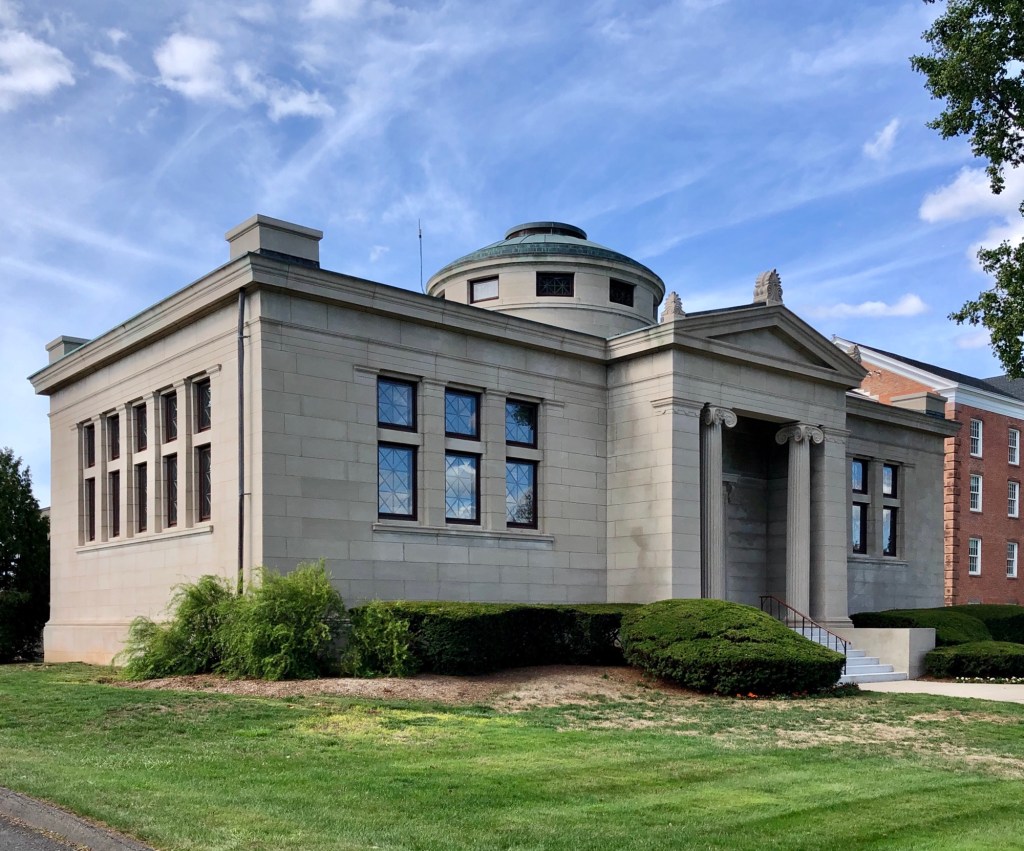
Old Kent Memorial Library // 1899

In 1897, Sidney A. Kent, a Suffield native, graduate of Suffield Academy and successful Chicago businessman sought to build a $35,000 library as a memorial to his parents in his home town. Land was purchased from the academy, demolishing a significant academic building, and the new Kent Memorial Library erected. Kent hired architectural giant Daniel Burnham (architect of the famous Flatiron Building in Manhattan) who also designed Kent’s home in Chicago. It sat on the site of land purchased by the first Kent ancestor in Suffield. Sidney Kent furnished nearly 7000 books and periodicals and left an endowment of $25,000. The building was dedicated on November l, 1899. It was eventually outgrown and a new building was constructed across the street.

John W. Loomis House // 1740

This stunning home on Main Street in Suffield, CT was apparently built in 1740. By the 1840s, it was purchased by John Wells Loomis, and altered to fit the then-fashionable Greek Revival style, replacing the center chimney with two chimneys, adding pilasters and a Greek Revival entry. John Loomis was the head of the Loomis family which made a fortune in the tobacco industry in Suffield, rolling and shipping products as far away as California. Before his death, John Loomis built his son George a house nearby, knowing that his son would carry on the business, which he did until a couple years after his father’s death when he sold the business and moved to New Haven.

Bryon Loomis House // c.1850

This Italianate mansion was built around 1850 for Byron Loomis (1831-1896) possibly as a gift from his father Neland. Neland Loomis was the brother of John Loomis, and was part of the wealthy tobacco farming family who later packaged, rolled, and shipped tobacco from Suffield all over the country. The home is a large Italianate mansion is in the symmetrical form and covered with flush board siding. The low sloped roof with broad overhanging eaves is topped with a large belvedere. The home is somewhat difficult to photograph due to large bushes in front.

Thaddeus Leavitt Jr. House // 1800

One of the (many) grand homes on Main Street in Suffield is this Federal style home built in 1800 for a 21-year-old Thaddeus Leavitt. Like his father, Thaddeus was a merchant with a store in Suffield, and was known by the title Colonel, meaning he probably served in the local militia after the Revolutionary War. Immediately after the home was completed, Thaddeus got married and moved into the home with his new wife, Jemima Loomis. They lived happily in their mansion until Thaddeus’ death in 1828 and his wife’s death in 1846. The home was altered in the 1850s with Italianate features including a belvedere and bay windows, which lasted into the 20th century. The home was recently restored back close to original conditions with the removal of the belvedere at the roof.

Dr. Asaph Bissell House // c.1835

Dr. Asaph Bissell was born into the wealthy Bissell family which started here when John Bissell, the progenitor of the family in America, came from Somerset, England, and landed in Plymouth, Massachusetts, in 1628. He became one of the settlers of Windsor, CT. His descendant, Asaph Bissell became one of Yale’s earliest medical graduates. Dr. Bissell, a member of the school’s second class, practiced in Suffield, often making house calls from his home right on Main Street. The house is Greek Revival in style with a stunning fan light in the pediment, echoing the Federal style.

Williston Saddle Shop // 1776

Before the invention of the automobile, horses cluttered American streets. Every town would have a saddle shop with a skilled leatherworker who would manufacture saddles, bags, stirrups and other equestrian gear. In Suffield, Connecticut, a man named Consider Williston had a shop built to make and sell saddles. According to the sign on the building, it was built in 1776, which is odd as Consider Williston fought in the Revolutionary War at that same time. The building was eventually converted to a private home and was listed for sale, with images showing the stunning Colonial era wood beams and floors.

First Church of Christ, Suffield // 1869

Located adjacent to the Town Common, the First Church of Christ in Suffield showcases the grandiose architecture seen in many churches after the Civil War in New England. This brick edifice is the fifth in the history of the church which dates back to around 1680. The church was designed by local architect John C. Mead, who designed many churches in the region. The church is a blending of Italianate and Romanesque Revival styles and originally featured a tall spire and secondary tower. In 1938, the New England Hurricane destroyed the tall spire (a similar event occurred to many New England Churches, including Old North in Boston). Even without the steeple, the church remains as a great architectural treasure in town.

Moses Rowe House // 1767

One of the older homes on Main Street in Suffield CT, the Moses Rowe House was built in 1767 and exemplifies the architectural history of town. The house was constructed as a two-story Georgian home with minimal detailing, as the family home of Moses Rowe (1733-1799), his wife, and nine children. According to historical maps of the area, the home appears to have been purchased by Horace Sheldon, who in the 1830s modified the home in the Greek Revival style, increasing the height of the home, adding side porches and the entablature at the roofline.

Dr. Aretus Rising House // 1854

Dr. Aretus Rising was born in Suffield, CT in 1801, part of one of the oldest families in town who settled here. His father was a farmer of modest means who could not afford the ability to let his eight children attend school routinely as he needed help on the family farm. He eventually moved to Western MA where he graduated the Berkshire Medical School in 1826, soon after opening a practice in Florida, NY before moving back to Massachusetts. He operated a doctors office in Suffield starting in 1845, running it until 1871, stopping due to poor health and failing sight. He lived most of his later years in this modest Italianate home. The house features broad overhanging eaves and a porch supported by stunning lattice columns.