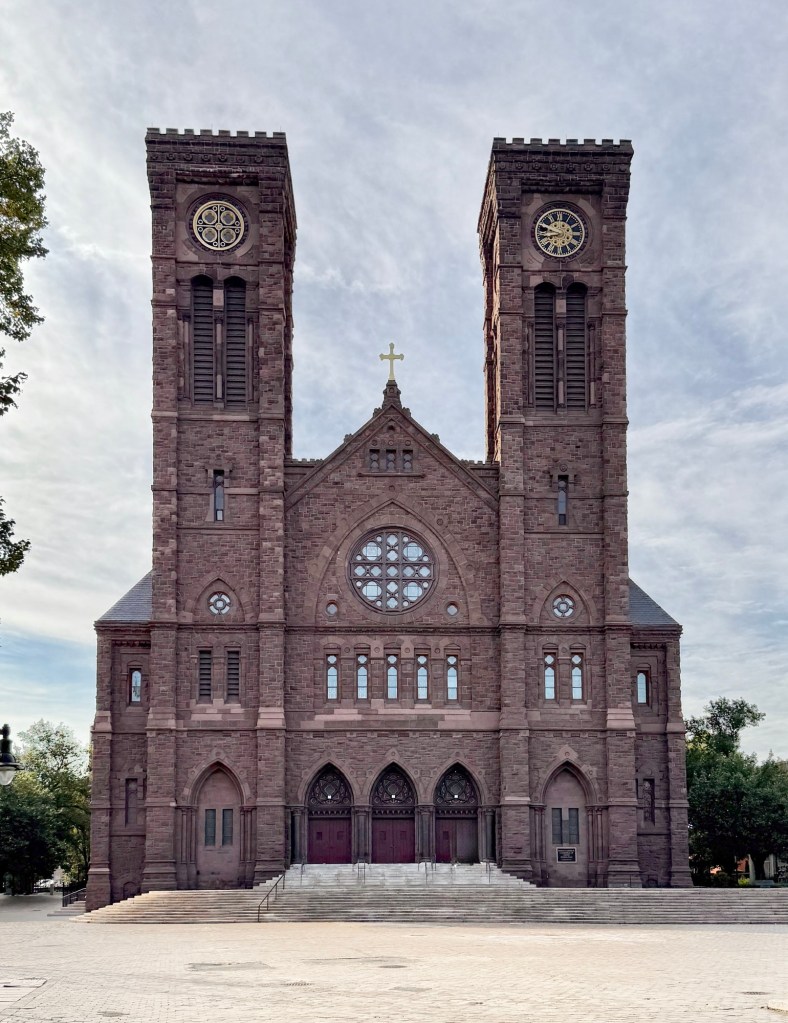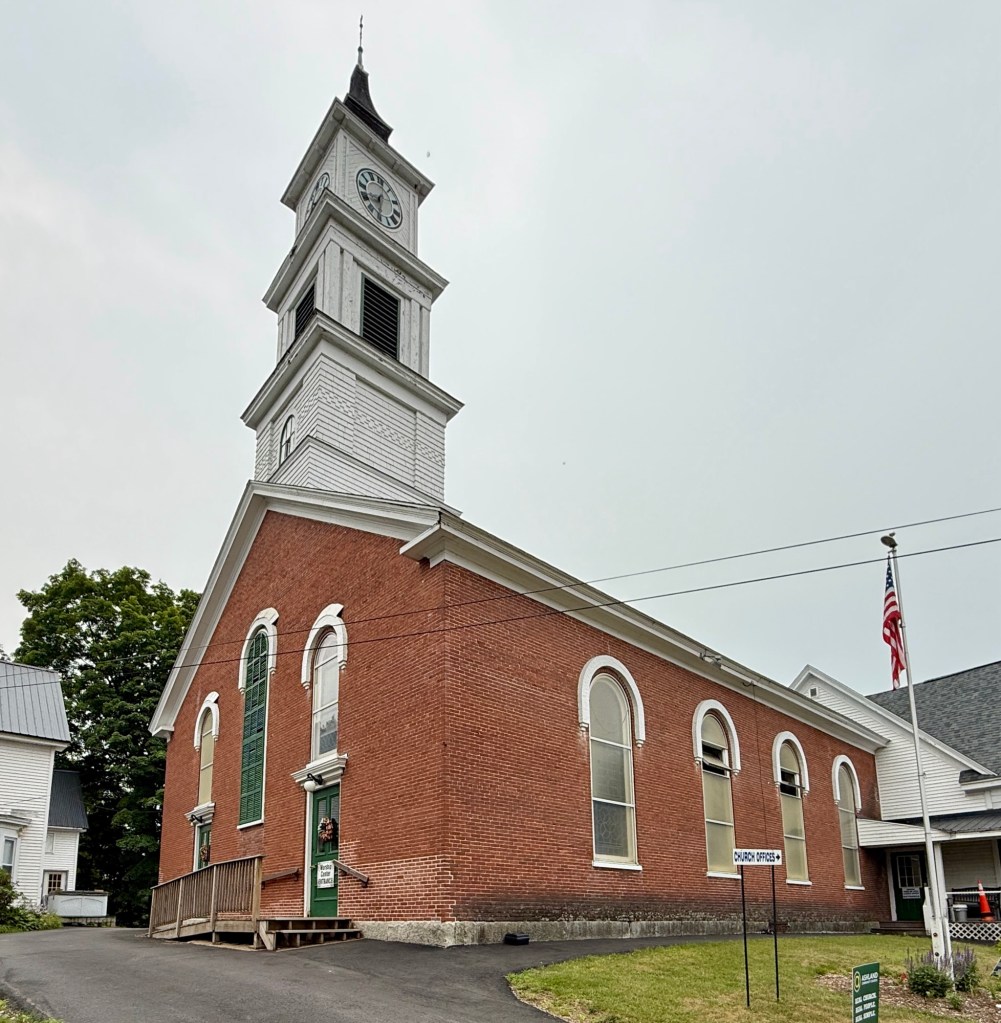
Former Central Congregational Church – Memorial Hall, RISD // 1853

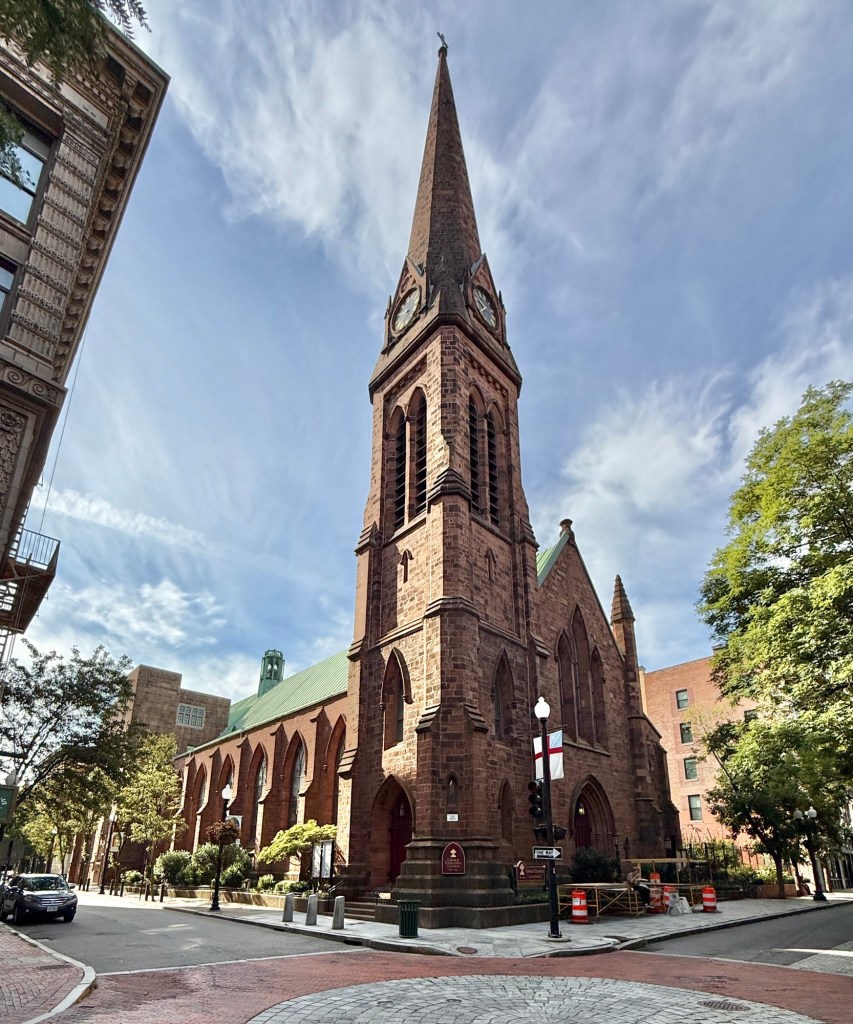
An early example of the Romanesque Revival style, the former Central Congregational Church on Benefit Street in Providence’s East Side is architecturally significant as one of the remaining designs by architect, Thomas Tefft and built from 1853-1856. Thomas A. Tefft (1826-1859) was one of the nation’s first professionally trained architects and was a master of Rundbogenstil, a German-branch of the Romanesque style until his untimely death in Italy when he was just 33. When this church was completed in 1856, Tefft was just thirty years old. The brownstone facade is adorned by triple-arched entrances and corbelling. The congregation grew and decades later, acquired a site in the neighborhood for a larger, Carrere and Hastings-designed church, vacating this building in 1893. The Rhode Island School of Design (RISD) purchased this former church in 1902 following a donation by Eliza Radeke and her brothers who named the building Memorial Hall. The firm of Hoppin and Ely was hired to update the former church for use by the college, which primarily took place on the interior. The original pair of tall bell towers were damaged during the 1938 hurricane and later were removed in 1950, truncating the verticality of this great Tefft-designed building, but she still shines! Memorial Hall has been incorporated into the RISD Museum.

South Swansea Union Church // 1916

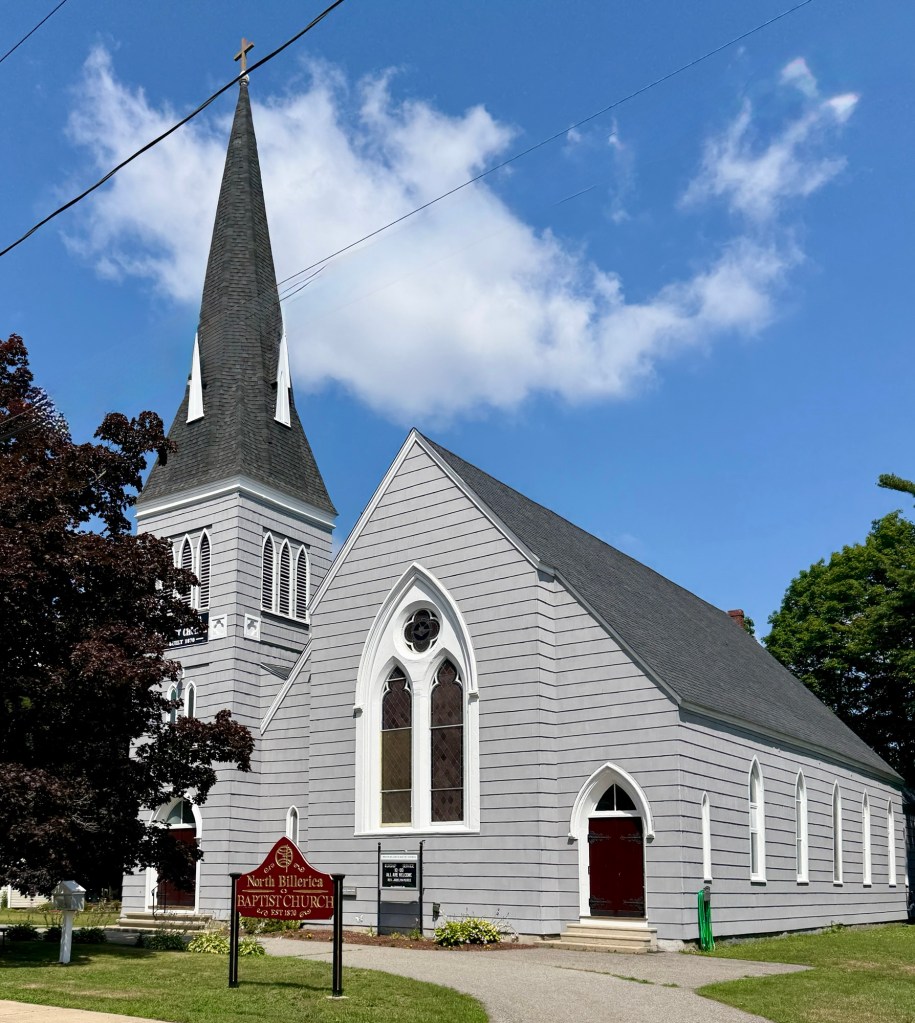
The South Swansea Union Church on Gardner’s Neck in Swansea, Massachusetts, is an excellent example of a seaside New England church that blends architectural styles in a unique composition. The church was built in 1916 years after development of the Neck began in earnest as a partnership between local congregations and the South Swansea Sunday School. The new church became a union church for multiple congregations to have a shared house of worship as well as a space for sunday school for area pupils. The building that features elements of Shingle and Neo-Gothic Revival styles, was built by William L. Hunt & Son and now houses the South Swansea Baptist Church.

Christ Church, Swansea // 1900

Designed in the mode of a traditional English country church, the Christ Church of Swansea is among the finest Neo-Gothic Revival edifices in New England and evokes a sense of history and tradition despite only being built in 1900. The church was funded by benefactors, Frank Shaw Stevens and Elizabeth Case Stevens, who lived down the street in the town’s largest mansion. After the death of her husband Frank, Elizabeth began a large gifting campaign to the Town of Swansea, and funded the construction of the town’s library, school, and this church (they had already funded the 1891 Town Hall). For the village church, Elizabeth hired their friend, and renowned English-born architect, Henry Vaughan, who designed the building with heavy granite walls, lancet windows and a facade dominated by an entry tower with rounded corner all capped by battlements. The Christ Church of Swansea resembles an old Medieval English church but in a New England village, amazing work as always Mr. Vaughan!

First Baptist Church of Swansea // 1848

The First Baptist Church of Swansea may look like a traditional, Greek Revival style church from the 1840s, a common form and style found in nearly every community in New England, but the church is home to the oldest Baptist congregation in the Commonwealth of Massachusetts and is the fourth oldest in the United States! The church (and town’s name) was founded by Reverend John Myles (c. 1621–1683), a Baptist minister who immigrated to present-day Swansea from Swansea in Wales, who was a founder of the earliest recorded Baptist churches in Wales. During the King Philip’s War, Reverend Myles fled from the fighting to Boston and pastored the new First Baptist Church in Boston. The present Greek Revival structure, the fifth of the congregation, was built under the direction of the English-born Reverend J. J. Thatcher, pastor of the church from 1846 to 1854. The vernacular Greek Revival church features a pedimented facade with pilasters dividing the bays, and a square belfry.

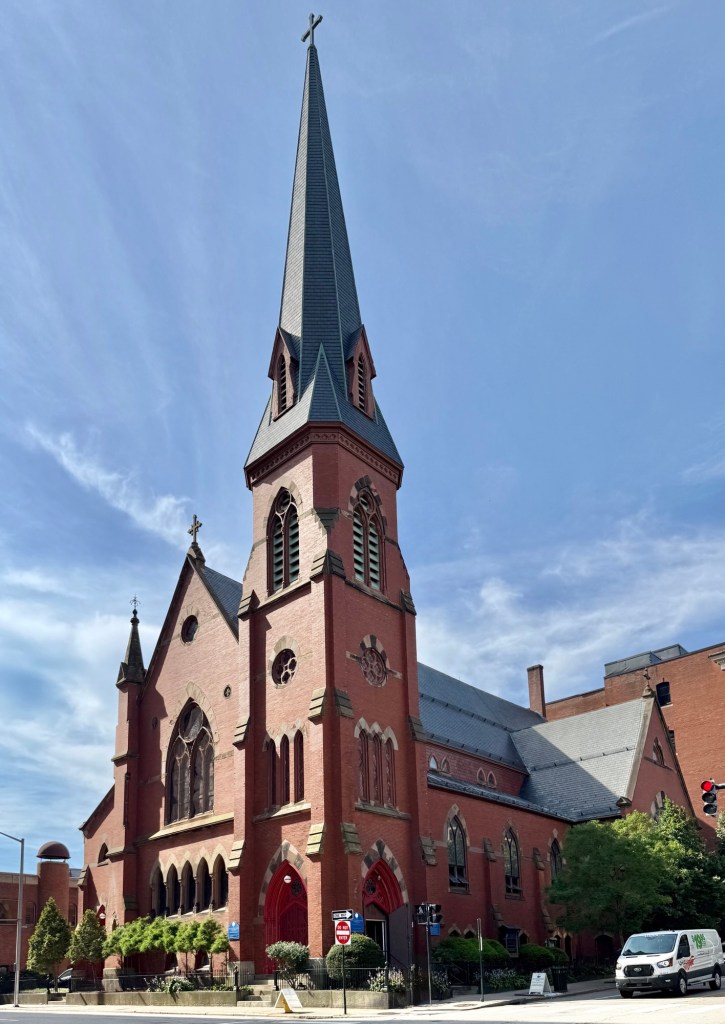
Church of Our Saviour, Brookline // 1868

The Church of Our Saviour of Brookline, Massachusetts, is an architecturally and historically significant church complex in the Longwood neighborhood that has ties to those who established this neighborhood into what it is today. The church was built in 1868 by the brothers Amos and William Lawrence, in honour of their father, Amos Lawrence. The church was established by twelve established Boston-area families who wanted to grow the Episcopal diocese in the area. They hired architect, Alexander Rice Esty, who designed the building in the Gothic style, and it was completed in February 1868. The church was expanded numerous times with a transept chapel designed by the firm Sturgis and Cabot (1893) to the memory of Sarah Appleton Lawrence (wife of Amos A. Lawrence); a parish hall designed by the firm of Cabot and Chandler (1880); and a rectory, designed by architect Arthur Rotch (1886). The church remains an active congregation and is lovingly preserved by the congregants.

Rectory

Sears Chapel, Longwood // 1860

Christ’s Church in Longwood, better known as Sears Chapel, is among the finest ecclesiastical buildings in Brookline and commands its site on a rise overlooking the Muddy River, now the Riverway in the Emerald Necklace park system. The area presently known as Longwood was originally marshland with a few farms until the building of the Mill Dam road out of Boston in 1821 that improved access to Brookline, which opened up its connectivity and development potential. Wealthy Boston businessman, David Sears (1787-1871) recognized this, and began buying the low-lying pasturelands in Brookline near the Boston border. By 1830, some squares were laid out and development began in the Cottage Farm and Longwood sections. He, with associates, began building country estates for friends and family to escape the crowded conditions of Boston. He is said to have named his neighborhood “Longwood”, after Napoleon’s estate on St. Helena where he spent his days in exile. An avid amateur horticulturist, Sears planted some 14,000 trees, many of them imported from Europe, in the course of developing his land. In keeping with his faith, Sears built this house of worship, Christ’s Church, which is said to have been modeled after St. Peter’s in Colchester England, likely giving Colchester Street, where Sears Chapel is located, its name. The Romanesque style church was designed by Boston architect, Arthur Gilman, who designed the building suitable for the Sears Family crypt which is underneath the structure and the burial site of many of the family. The congregation remains active to this day who maintain the significant structure and its many historic stained glass windows.

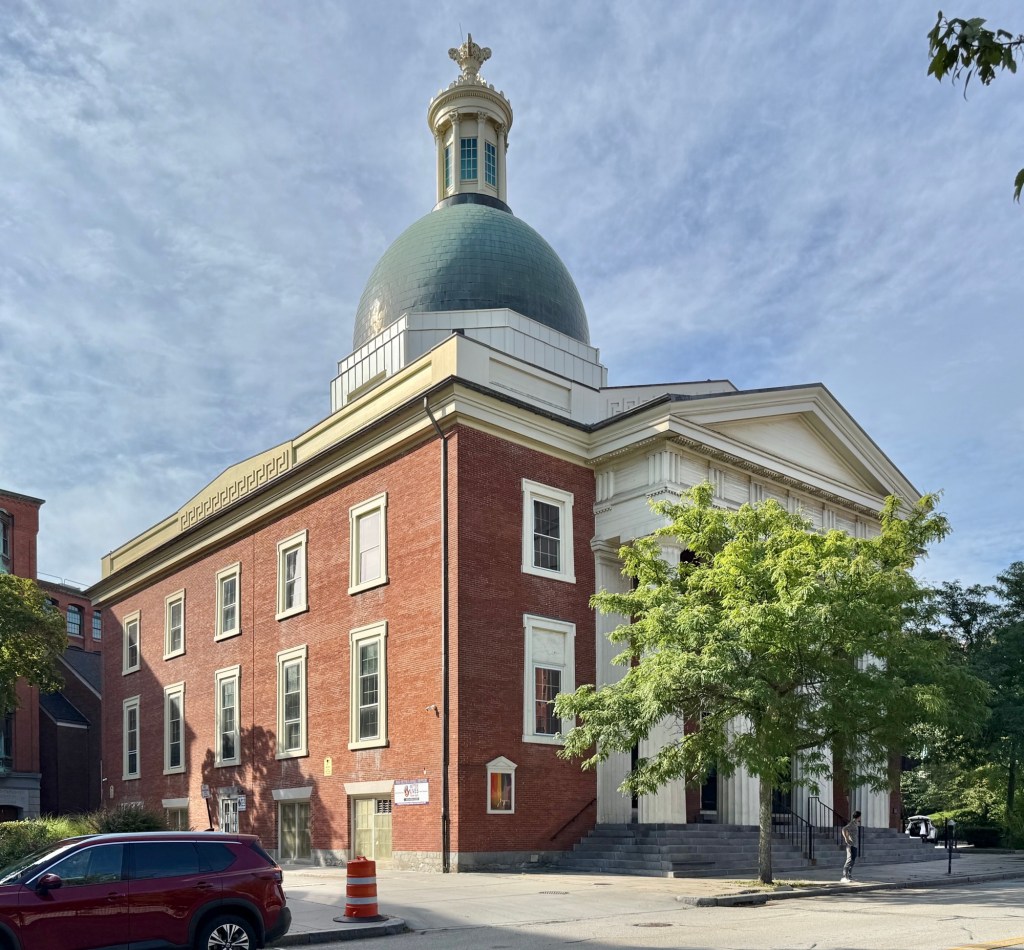
Second Unitarian Church of Brookline – Temple Sinai // 1916

An excellent example of an early 20th century church designed in the Colonial Revival style, the former Second Unitarian Church of Brookline (now Temple Sinai), was built when much of the surrounding neighborhood was developed and as a result, is tucked away off main streets, creating a unique viewshed for passersby. Brookline’s second Unitarian Church was formed in 1896, with the congregation holding its first meetings at Sears Chapel in the Longwood neighborhood nearby. Decades later, the Second Unitarian Society was urged to find another place for its congregation as the Longwood church wanted full access of their building. The Unitarians purchased a lot of land adjacent to their Parish House in Coolidge Corner (no longer standing) and gathered funds to hire architect, Edwin J. Lewis Jr., who is said to have designed the new edifice as a contemporary take on Christ Church in Alexandria, Virginia. The church features a monumental portico supported by four Ionic columns, round arched windows, and a center tower that (at the time) was surmounted by a golden dome, visible for miles. Since 1944, the former church has been home to Temple Sinai, a reform synagogue that was established in 1939. The Jewish congregation here has maintained the building making slight changes to meet its needs. 

St. John’s Episcopal Church of Sharon // 1902

The small yet architecturally significant St. John’s Episcopal Church in Sharon, Massachusetts, was built in 1902 from plans by one of the premier ecclesiastical architects of the early 20th century. Episcopalians in Sharon began demanding their own house of worship in the late 19th century, and by the turn of the century, had funding to erect their own chapel. Boston-based architect, Ralph Adams Cram, of the firm Cram, Goodhue & Ferguson, designed the building, which fits within the scale of the residential neighborhood it is located within. St. John’s is an example of Neo-Gothic Revival architecture, a style which Cram became known for, with a fieldstone base, three feet thick, and stucco gabled facade above with tripartite windows with diamond-cut colored glass. The chapel was expanded at the rear, but maintains its rustic charm at the street.

Unitarian Church of Sharon // 1842

Sharon, Massachusetts, is a small suburban community south of Boston that is lesser known than its neighbors, but the community has some great old buildings! The Town of Sharon was originally part of a 1637 land grant given by the Dorchester Proprietors to encourage new settlement in areas southward. In 1726, the lands of the present towns of Sharon, Canton and Stoughton, were separated from Dorchester and called the Stoughton Territory. Settlers in present-day Sharon found it difficult to attend mandated church services centered around present-day Stoughton and petitioned the General Court in 1739 to set off as a separate precinct. The request was granted and the Second Precinct was established, and incorporated as Stoughtonham in 1765, changing its name in 1783 to Sharon, named after the Sharon Plain in Palestine. In 1813, the local congregationalists split due to theological differences and formed a Unitarian church. The Congregationalists moved and built a new church and the Unitarians remained on this site, but the larger building was too large for their needs. They demolished the original building and constructed this church in 1842, which somewhat resembles the 1839 Congregational Church of Sharon a stone’s throw away. Like its neighbor, the Unitarian Church too retains an original bell cast by the The Revere Copper Company of nearby Canton.

First Congregational Church of Sharon // 1839

Sharon, Massachusetts, is a small suburban community south of Boston that is lesser known than its neighbors, but the community has some great old buildings! The Town of Sharon was originally part of a 1637 land grant given by the Dorchester Proprietors to encourage new settlement in areas southward. In 1726, the lands of the present towns of Sharon, Canton and Stoughton, were separated from Dorchester and called the Stoughton Territory. Settlers in present-day Sharon found it difficult to attend mandated church services centered around present-day Stoughton and petitioned the General Court in 1739 to set off as a separate precinct. The request was granted and the Second Precinct was established, and incorporated as Stoughtonham in 1765, changing its name in 1783 to Sharon, named after the Sharon Plain in Palestine. In 1813, the local congregationalists split due to theological differences and some formed a Unitarian church. The Congregationalists moved down the street and built a new church in 1822 which was destroyed by fire in 1838 and replaced a year later by this edifice. Built in 1839 the First Congregational Church of Sharon is a vernacular and well-preserved example of a Greek Revival church building in the Doric order with towering pilastered steeple, monumental portico supported by four fluted Doric columns, and flushboard siding. The Congregational Church retains an original bell cast by the The Revere Copper Company of nearby Canton.