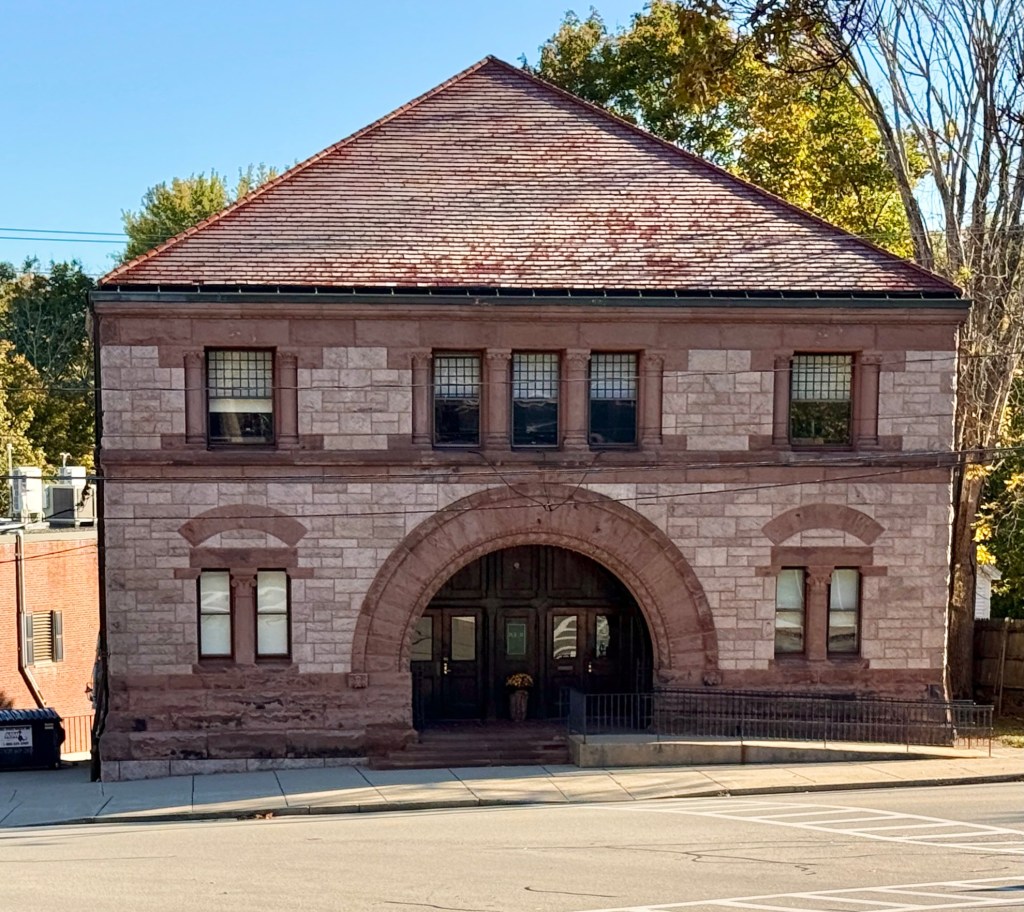
North Easton Savings Bank and Post Office // 1904

Located across the street from the iconic Oakes Ames Memorial Hall and the Ames Free Library, the North Easton Savings Bank and Post Office building perfectly compliments the Richardsonian Romanesque enclave found in the village, but it was not designed by the renowned architect whom the style is named after. The building was constructed in 1904 from plans by the firm of Shepley, Rutan and Coolidge, a Boston-based firm that grew out of Henry Hobson Richardson’s practice after his death in 1886. For this building, which served as a bank and local post office, the firm employed many of the hallmarks of the Richardsonian Romanesque style, just in a refined, less elaborate style. The building has walls of rough-faced granite ashlar blocks with brownstone trim and engaged columns. The three-bay front façade contains the centered entrance, recessed within a wide brownstone arch in the signature Richardsonian manner. The bank moved out of the building in the 1960s, and the building has served as professional offices ever-since, and is a contributing resource in the iconic enclave of buildings in North Easton.
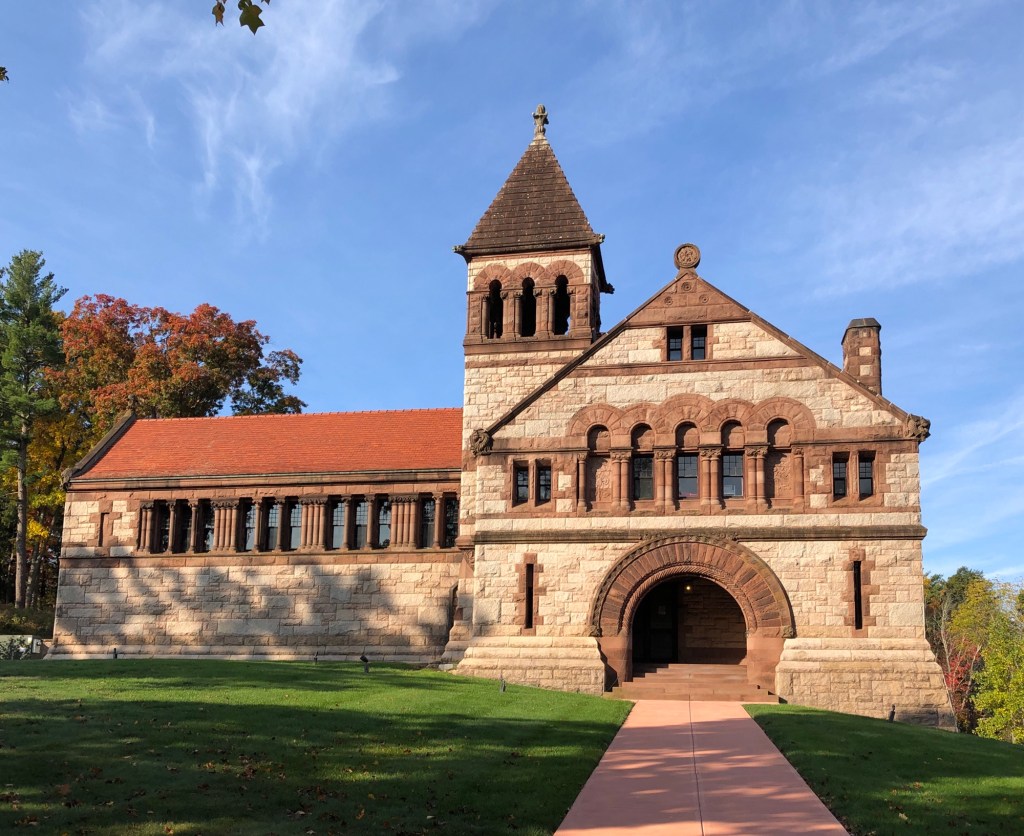
Ames Free Library // 1879

One of the most architecturally significant library buildings in the United States, the Ames Free Library in the small town of Easton, Massachusetts, is a landmark example of the Richardsonian Romanesque style designed by its namesake, Henry Hobson Richardson. The library in the village of North Easton was funded as part of the will of Oliver Ames Jr., who left $50,000 for the construction of a library for his native town. The request was carried out by Ames’ children, Frederick Lothrop Ames and Helen Angier Ames, who hired Henry Hobson Richardson to design the new structure. Richardson had recently completed the Trinity Church in Boston and was designing a library in Woburn at the time the Ames Family first commissioned him to put Easton on the map. Richardson would later design four other buildings in Easton for members of the Ames Family, including the Oakes Ames Memorial Building next door to the library. The Ames family also contracted architect Stanford White for the fireplace in the reading room and sculptor Augustus Saint-Gaudens for the decorative medallions of the library’s benefactor. Construction started on the library in 1878 and it was completed in 1879, but the library did not open until 1883, possibly due to cost overruns. Essentially rectangular in plan, the Ames Library features three main masses: a longitudinal block; a stair tower with a pyramidal roof; and larger gable entry projection. The library is built of ashlar granite blocks and brownstone trim, which frames the openings. Over fifty years after the library was completed, the 1931 children’s wing was added onto the rear. The gift of Fanny Holt Ames, the addition was designed by Shepley, Rutan, and Coolidge, who continued Richardson’s architectural firm upon his death in 1886. The addition of brick showcases how materiality and certain design changes can effectively showcase the evolution of a building without detracting from its original design and integrity.

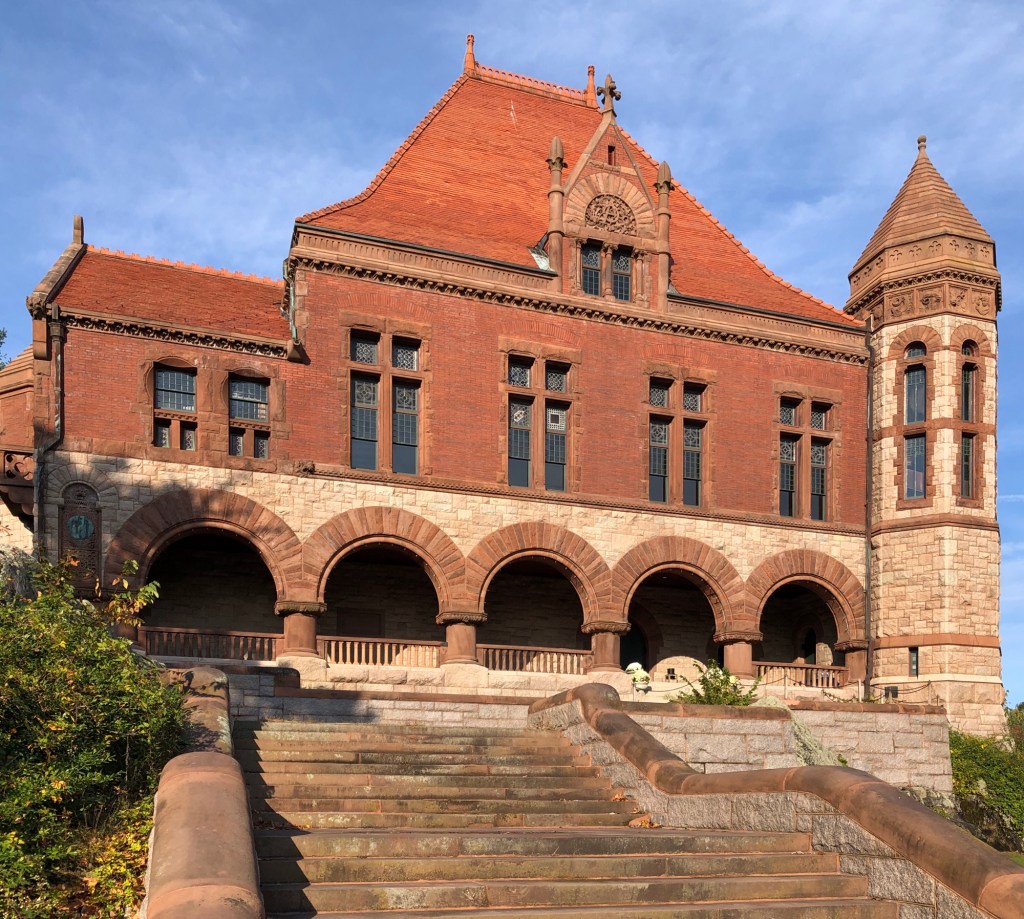
Oakes Ames Memorial Hall // 1881

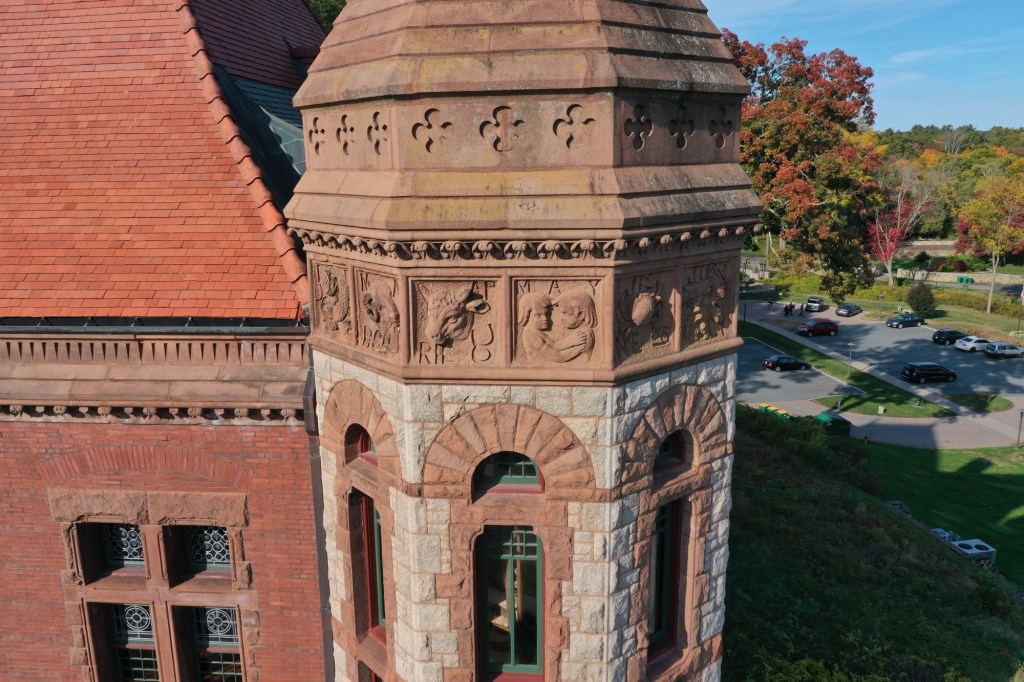
Located in the center of North Easton, Massachusetts, the landmark Oakes Ames Memorial Hall is the work of famed architect, Henry Hobson Richardson, and among one of the finest of his buildings. In 1879, the children of Oakes Ames (1804-1873), an extremely wealthy businessman, industrialist and congressman from Easton, commissioned the great American architect to design a Memorial Hall as a tribute to their father. Richardson, the architect of Boston’s beloved Trinity Church in Copley Square, responded with this picturesque masterpiece in his eponymous Richardsonian Romanesque architectural style, with walls of rusticated granite that are articulated with contrasting brownstone at the arches, window and door surrounds, and deep band courses. The Ames Memorial Hall is sited atop a rocky outcropping with the building accessed by a grand brownstone stair and landscaping designed by Frederick Law Olmsted. The building is relatively square in form and features a prominent corner tower, an arcaded entry of five massive arches on squat columns, and a steeply peaked roof finished in red terracotta. Often overlooked, the frieze at the top of the tower is lined with ornamental carvings of the signs of the Zodiac in brownstone. The building was provided to the Town of Easton by the Ames Family “for all the ordinary purposes of a town hall”, but it was never used for its intended purpose as the town hall, and has mainly served as a meeting space for groups and events. The Town of Easton does a commendable job preserving these nationally significant Richardson-designed landmarks for all to enjoy.

Merchants Bank Building // 1857

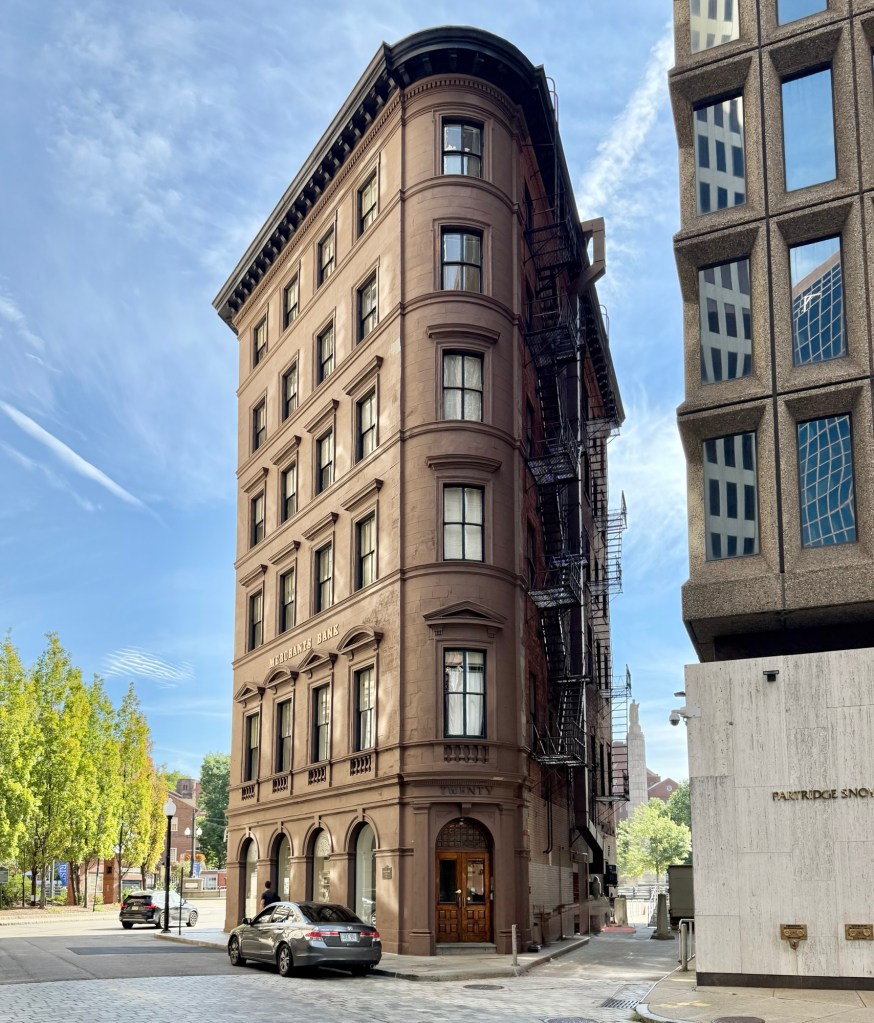
The Merchants Bank Building on Westminster Street at the edge of Downtown Providence, is a rare surviving mid-19th century commercial block that survived periods of commercialization, urban renewal and eventual rebirth of this iconic New England city. The Italianate style, six-story flatiron building is sheathed in brownstone and was designed by architects Alpheus C. Morse and Clifton A. Hall as one of the first buildings in Providence’s financial district, which today is comprised of much larger modern skyscrapers. The handsome structure was built for the Merchants Bank, a financial institution that had been organized in February 1818 and was reorganized as a national bank in 1865. Royal C. Taft, governor of Rhode Island, was president of the bank for forty years, from 1868 to 1908. In May 1926 the Merchants National Bank merged with the Providence National Bank, with the combined institution taking the name of the Providence National Bank, but they moved into this building until they completed a new building in 1930. Since then, the building has been home to professional offices, and remains a well-preserved early banking building in Providence.

Former Central Congregational Church – Memorial Hall, RISD // 1853

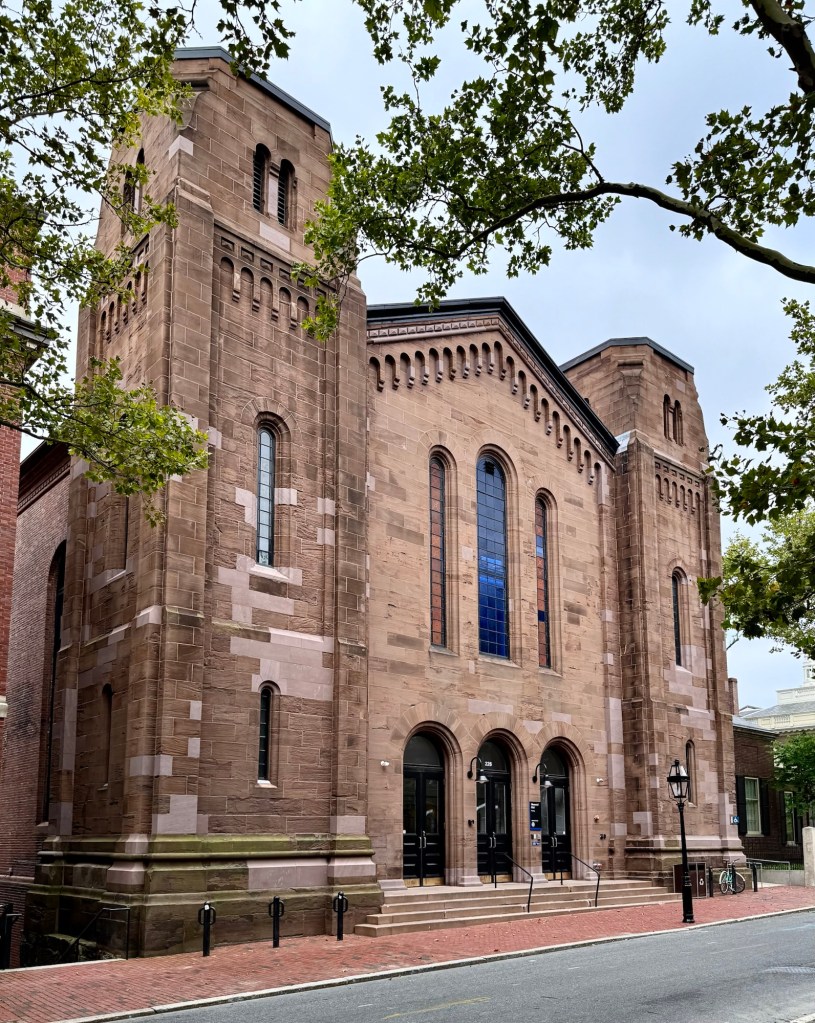
An early example of the Romanesque Revival style, the former Central Congregational Church on Benefit Street in Providence’s East Side is architecturally significant as one of the remaining designs by architect, Thomas Tefft and built from 1853-1856. Thomas A. Tefft (1826-1859) was one of the nation’s first professionally trained architects and was a master of Rundbogenstil, a German-branch of the Romanesque style until his untimely death in Italy when he was just 33. When this church was completed in 1856, Tefft was just thirty years old. The brownstone facade is adorned by triple-arched entrances and corbelling. The congregation grew and decades later, acquired a site in the neighborhood for a larger, Carrere and Hastings-designed church, vacating this building in 1893. The Rhode Island School of Design (RISD) purchased this former church in 1902 following a donation by Eliza Radeke and her brothers who named the building Memorial Hall. The firm of Hoppin and Ely was hired to update the former church for use by the college, which primarily took place on the interior. The original pair of tall bell towers were damaged during the 1938 hurricane and later were removed in 1950, truncating the verticality of this great Tefft-designed building, but she still shines! Memorial Hall has been incorporated into the RISD campus and houses studio spaces.

Baker-Byrd House // 1888

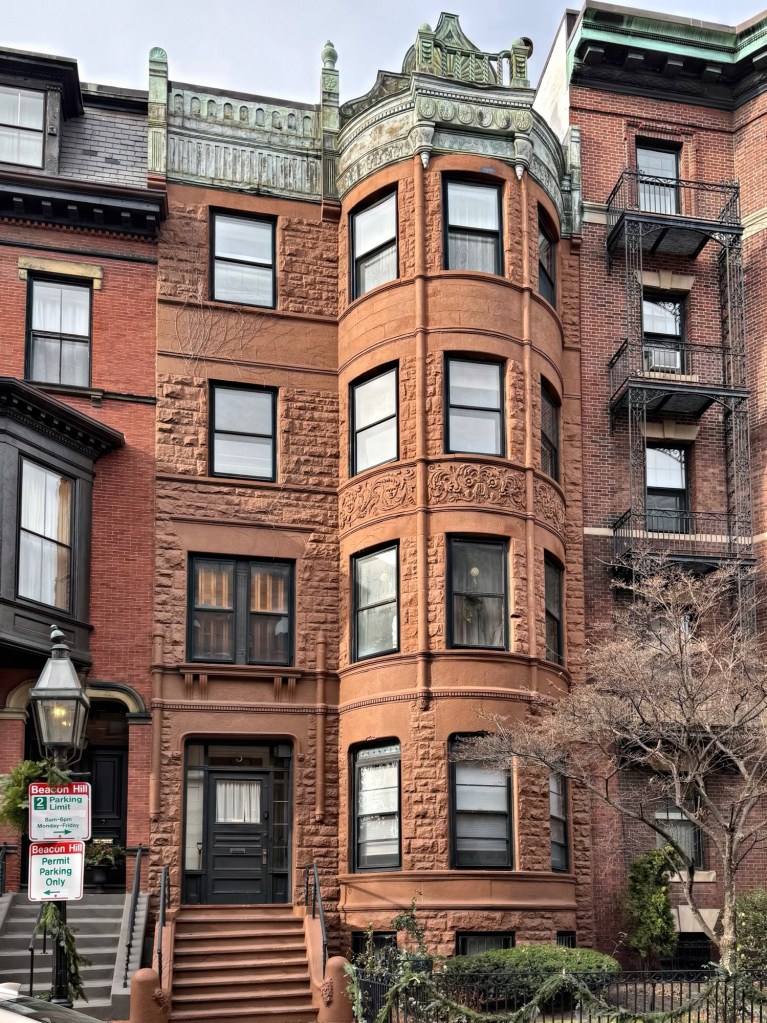
Located on Brimmer Street in Beacon Hill, this handsome residence is constructed of rough-faced brownstone laid in a random ashlar pattern and is among the most unique in a neighborhood known for brick townhouses. Decorative treatment includes a stone band that is carved with foliate and faces, colonettes that rise along the facade at the bay, and an ornate molded copper entablature and parapet at the roof. The residence dates to 1888 and was built for Seth R. Baker, a Boston real estate developer at the end of the 19th century. It can be inferred that the building was designed by architect, Ernest N. Boyden, as Baker hired Boyden as architect for a half-dozen other apartment buildings between 1888-1890. Antoino Xavier, a Portuguese-born mason is listed as the builder. In the 1910s, the property was purchased by Marie Ames Byrd, wife of polar explorer Richard A. Byrd, who lived a few houses away at 9 Brimmer Street. She rented the four apartments to boarders through the 1930s.


Ashby Public Library // 1902

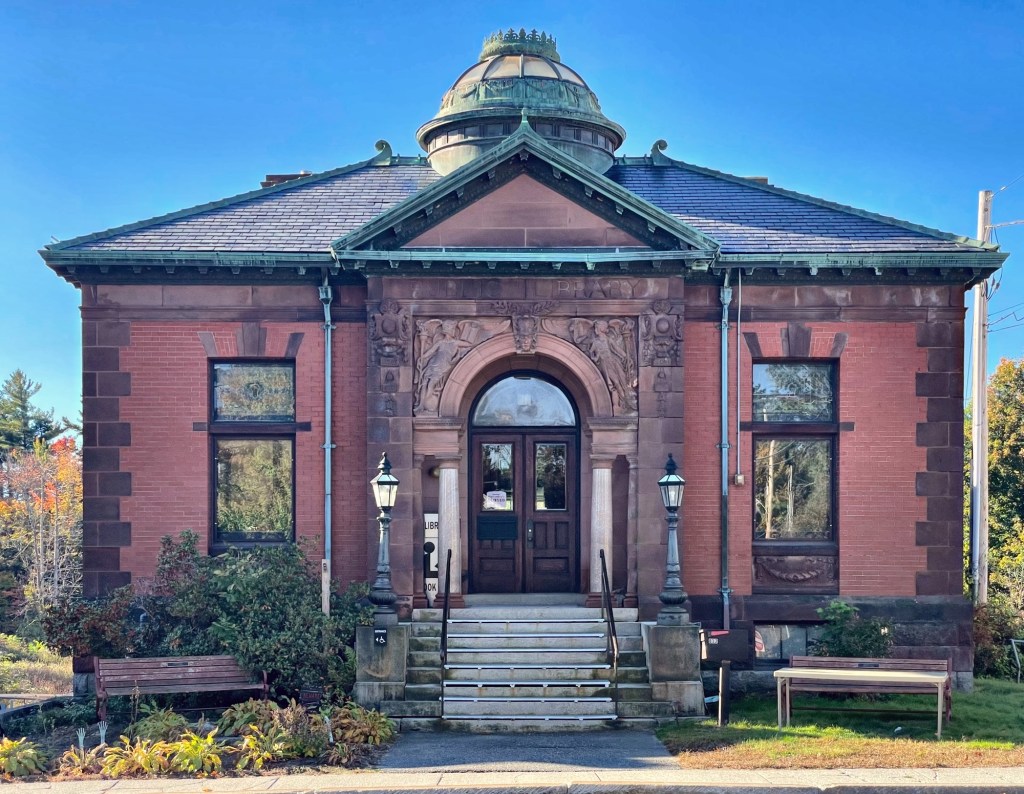
The Ashby Public Library in Ashby, Massachusetts, was built in 1902, completely funded by a donation from Edwin Chapman (1841-1915) who lived across the street from the new library. Mr. Chapman was raised in Ashby and became a wealthy Boston-area merchant in the meat trade by the late 19th century. Before this library was built, the town’s library collection was housed in the Wyman Tavern. The building was designed by architect Henry M. Francis in the Neoclassical style with Romanesque detail in brick and brownstone to make the building fireproof. The library was added onto in the rear in 2006 by The Galante Architecture Studio, which is recessed and mostly visible from the rear parking area. The addition is Modern in style to distinguish itself from the main library building.