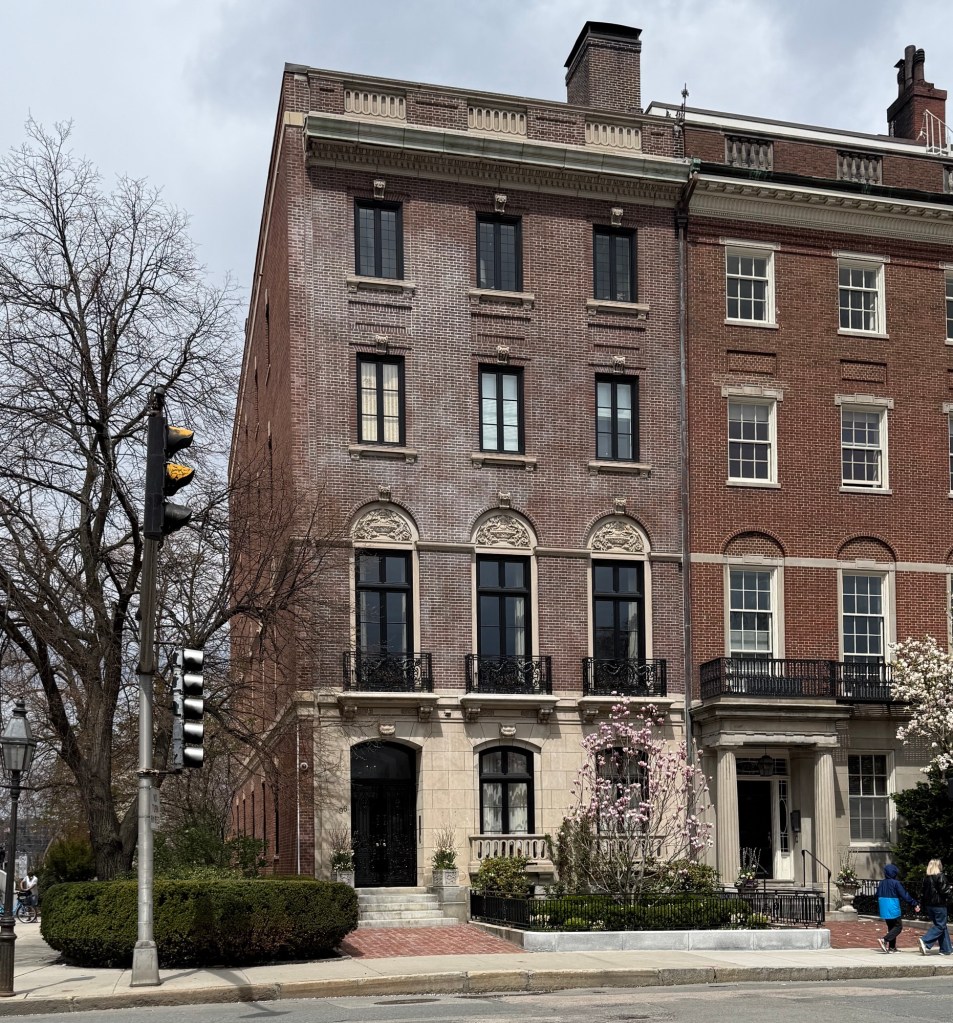
Amy Gore Iasigi Townhouse // 1906

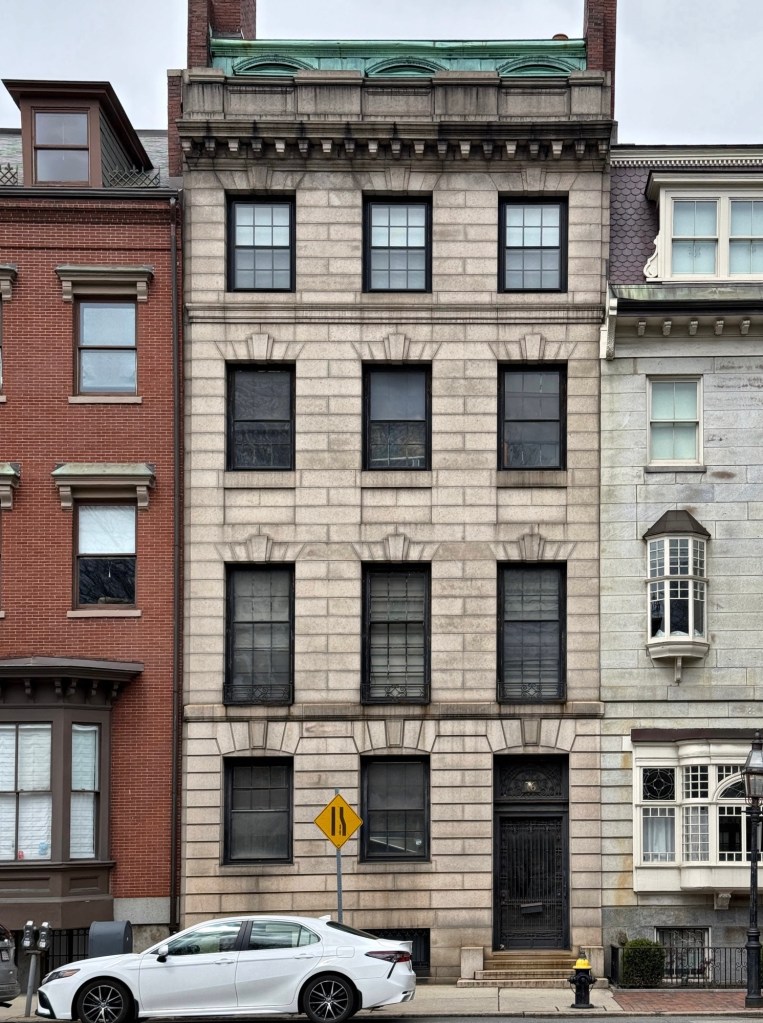
This granite-faced townhouse at 76 Beacon Street in Beacon Hill was built in 1906, and was designed as an early 20th century continuation of the Asher Benjamin-designed row of granite-faced townhomes to its east, built in 1829. The handsome residence was built in 1906, when Amy Gore Iasigi, the widow of merchant and statesman, Oscar Iasigi (1846-1884), purchased the site a year prior and hired architect, A. W. Longfellow, to design a new townhouse for the site. Ms. Iasigi resided here with her daughter, Nora Iasigi Bullitt, who with her mother, helped establish of a manual training school for girls in Lenox and Stockbridge, Massachusetts. Nora was also a prize-winning sculptor, having studied under Daniel Chester French. As a woman of exceptional means, Amy G. Iasigi had seven domestic servants maintain her city mansion and carriage house on Byron Street. After her death in 1927, the proeprty was owned and occupied by wool merchant Robert Hooper Stevenson. The relatively modest Iasigi Townhouse’s granite facade is of a slightly different color than the 1820s granite townhouses nextdoor, importantly distinguishing it from its neighbors, and it also features flared granite lintels with pronounced keystones.

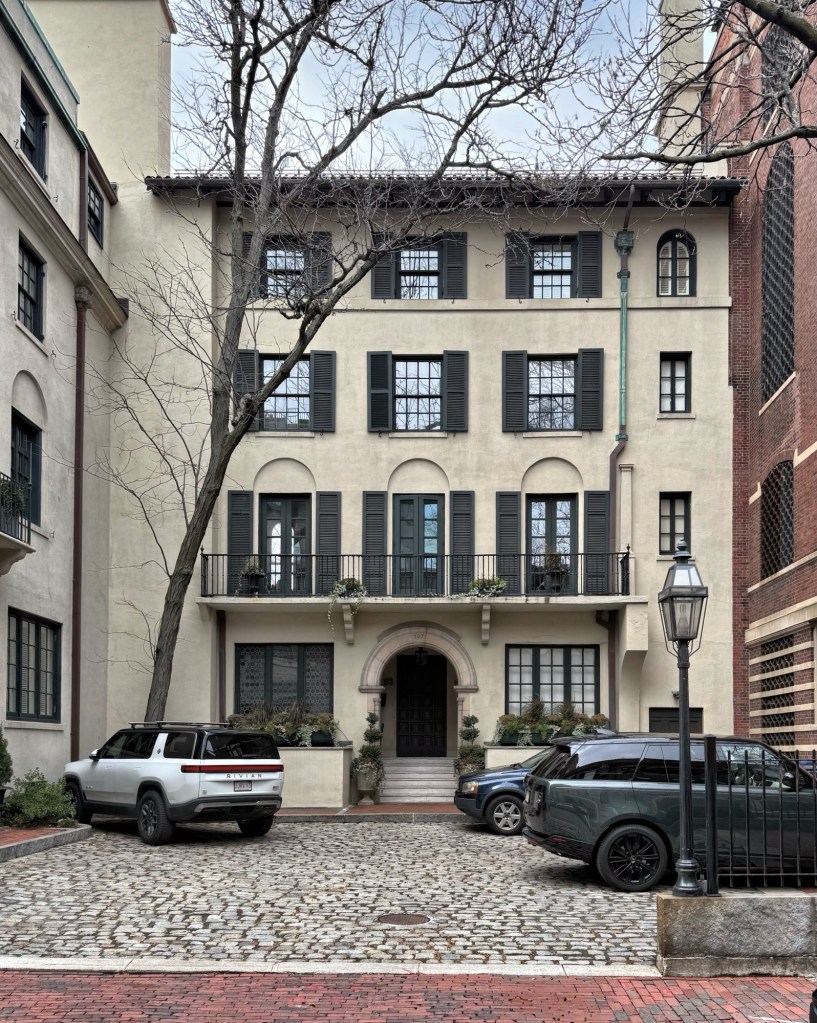
Chestnut Street Rowhouses // 1917

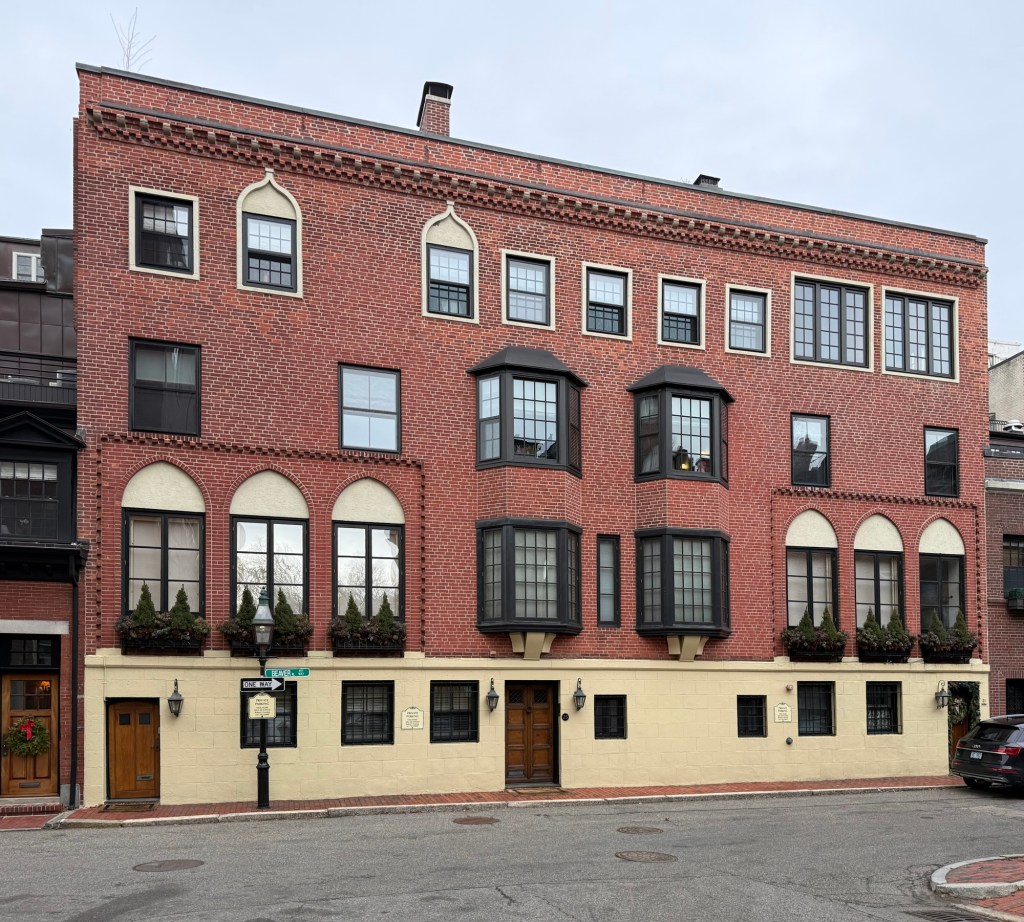
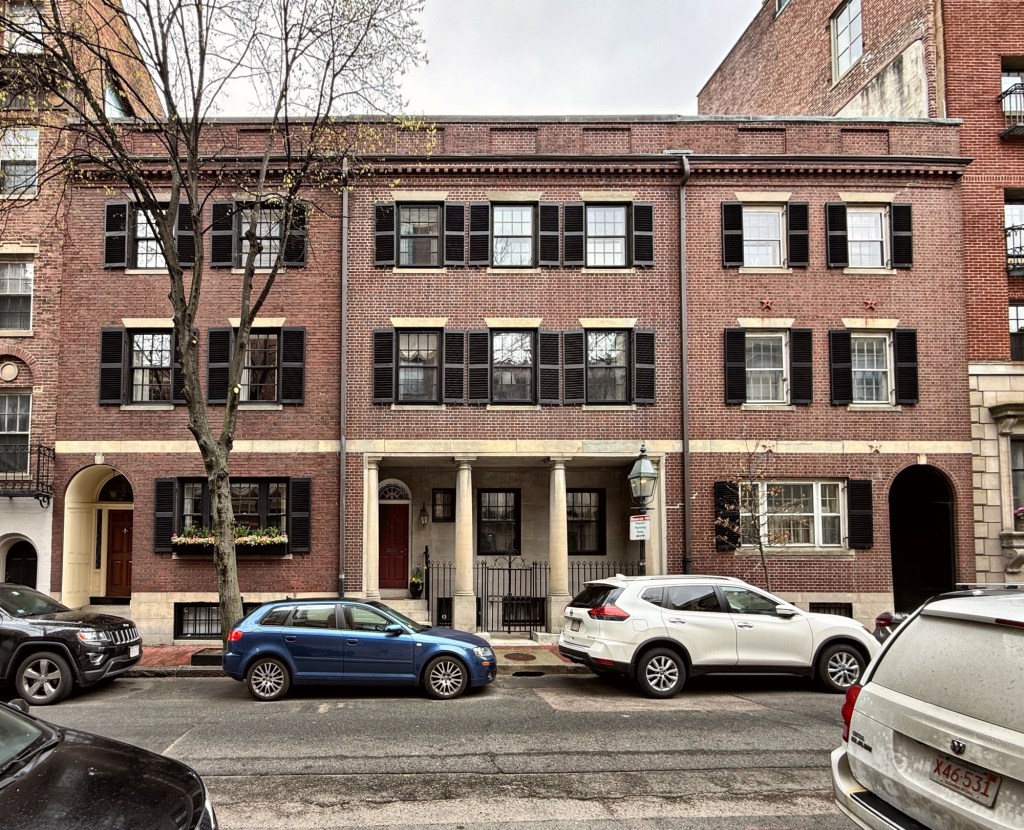
Similar to the Brimmer Street Terrace development nearby, this set of three rowhouses on Chestnut Street on the Flat of Beacon Hill, is an excellently designed development of residences as a collection rather than individually designed townhomes. The Chestnut Street Rowhouses replaced a stable formerly on the site, and were designed by the architectural firm of Richardson, Barott & Richardson, made up of Philip Richardson, Chauncey Edgar Barott, and Frederic Leopold William Richardson. Philip and Frederic Richardson were sons of architect Henry Hobson Richardson, but they did not reach the same level of notoriety as their late father, and charted their own course. The rowhouses read as a single composition with a unique center section flanked by two matching wings. The center house has a three bay front façade with the first-story clad in limestone which is all recessed and supported by Doric columns.

Mason-Fitz House // 1829

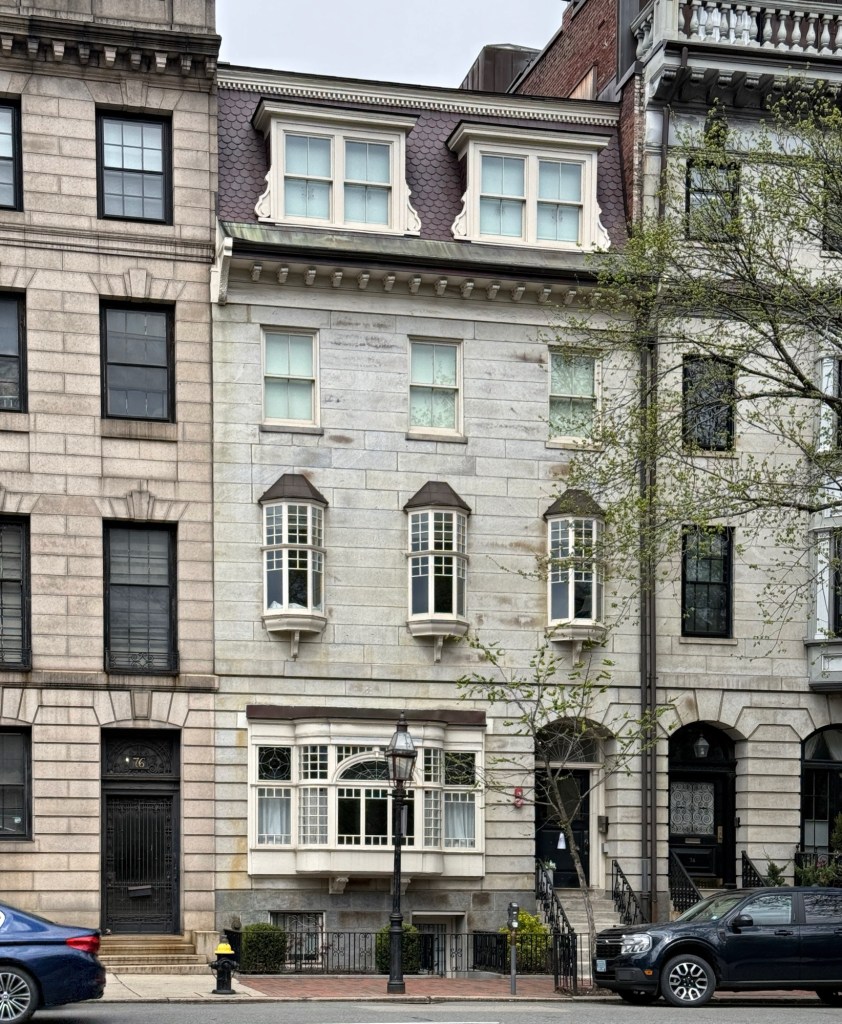
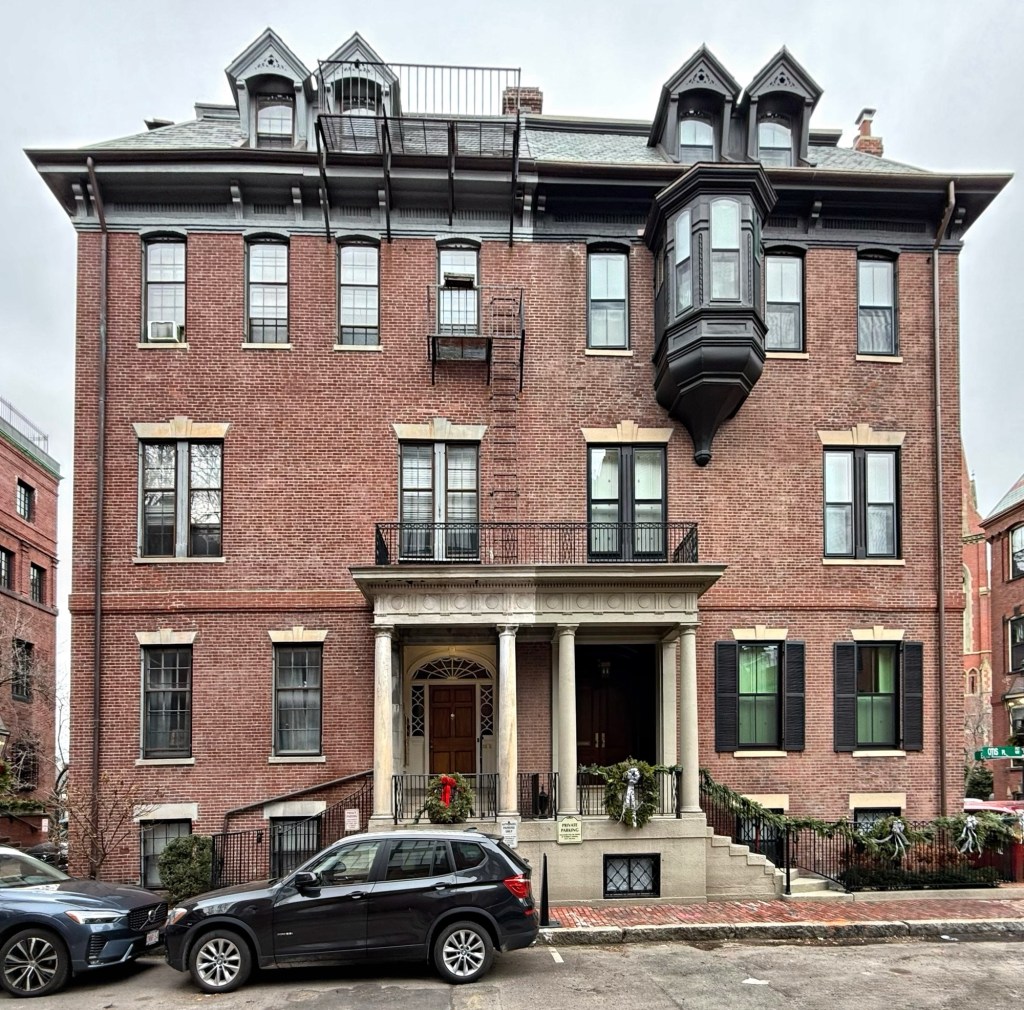
One of six attached houses townhouses between 70-75 Beacon Street, this stately granite-faced residence was built concurrently with its neighbors in 1828 on speculation for the Mount Vernon Proprietors, a group of wealthy Boston businessmen who helped develop Beacon Hill into the posh, architecturally significant neighborhood it is today. The Mount Vernon Proprietors knew how important Beacon Street was as the entry into the neighborhood, and thus, hired Boston’s premier architectAsher Benjamin, to design the row. When completed, all of the houses were identical, but throughout the 19th and 20th centuries, they all deviated from the original design, some gaining additional floors, others adding bay windows, but all together form a cohesive and architecturally significant span of houses. Completed in 1829, the residence at 75 Beacon Street is known as the Mason-Fitz House and was originally owned by Jonathan Mason (1756-1831), a U.S. Congressman and U.S. Senator, and later inherited by his son, William Powell Mason (1791-1867), who engaged in real estate. It was likely William Mason who added the mansard roof in the late 1850s or 1860s, but the main unique detailing of the residence occurred in 1889 when newlyweds, Henrietta G. and Walter Scott Fitz hired the popular architectural firm of Little & Browneto reconfigure the front of the house in the Colonial Revival style. Little & Browne added the rather fanciful, oriel windows on the facade, which include the three, small hipped-roof oriels on the second story and larger projecting oriel on the first floor with fanlight and leaded glass. Cambridge architect, Edward T. P. Graham later purchased the residence and petitioned to convert the single-family house into eight apartments, but was denied, later converting the residence into four units. Today, the Mason-Fitz House is broken up into two larger condominium units. 

David Sears Mansion – Greek Consulate // 1911

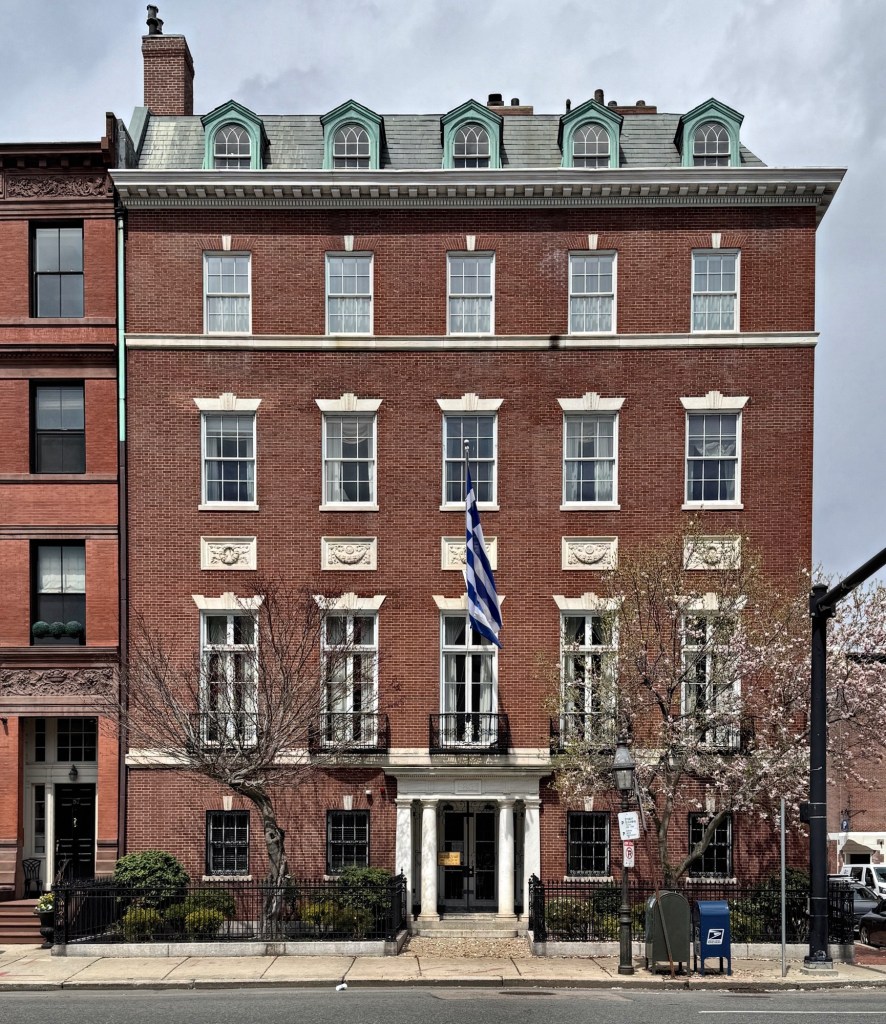
The David Sears Mansion (now the Greek Consulate) at 86 Beacon Street in Boston, is a large, architecturally significant example of a mansion built in Beacon Hill in the early 20th century for a member of a prominent local family. In 1910, Dr. Henry Francis Sears (1862-1942), who had inherited his father’s property on this site, that included two townhouses and a double-stable at the rear, demolished the two houses and built a new mansion on the double lot. The architectural firm of Wheelwright & Haven was hired to furnish plans, which resulted in the symmetrical, four-story mansion with fifth floor mansard punctuated by dormers. The brick structure is trimmed with marble, including at the entry portico, keystones and headers at the windows, and the ornamental panels between the second and third floors in alternating wreath and swag motifs. In the 1920 census, Henry F. Sears lived here with his wife Jean, their four children, his older brother David Sears, and nine domestic servants. After Dr. Sears’ death in 1942, the property was conveyed to the Charlotte Cushman Club of Boston, a boarding house for touring actresses needing respectable, inexpensive, safe lodgings as single women performers were unwelcome in many hotels. In the 1950s, the property became the Katherine Gibbs School, a satellite campus of the higher education institution founded by Katharine Gibbs with the goal to provide educational opportunities to women, eventually becoming Gibbs College. The most-recent chapter of the mansion’s history began in 1993 when the building became home to the Consulate General of Greece in Boston, with the consulate occupying the first two floors of the interior, with condominium units above.

Burnham Townhouse – Engineer’s Clubhouse // 1911

Located at the boundary of the Beacon Hill and Back Bay neighborhoods, this prominent townhouse on a corner lot at Beacon Street and Mugar Way was built in 1911, replacing an 1840s townhouse of the same form. The Colonial Revival style townhouse was built for Henry D. and Johanna H. Burnham from plans by the architectural firm of Wheelwright, Haven & Hoyt. Henry Burnham was the son of cotton broker, John Appleton Burnham and was in the real estate business. Henry and Johanna lived at 96 Beacon Street through at least 1938. The house was bought by the Engineer’s Club, a social and professional organization, in 1947. In the 1950s, the formerly mid-block townhouse suddenly became a corner lot with the construction of Storrow Drive, its off ramp as Mugar Way, and the addition of the Fielder Footbridge connecting Beacon Hill to the Esplanade. The Engineer’s Club took over renovations at the interior, which were done to adapt the former single-family residence for clubhouse functions, including a large banquet hall. In the 1960s, the property was acquired by Emerson College and used it as a college center and cafeteria until the early 2000s when it was converted into condominiums by Grassi Design Group, adding new openings to the formerly solid brick side wall.

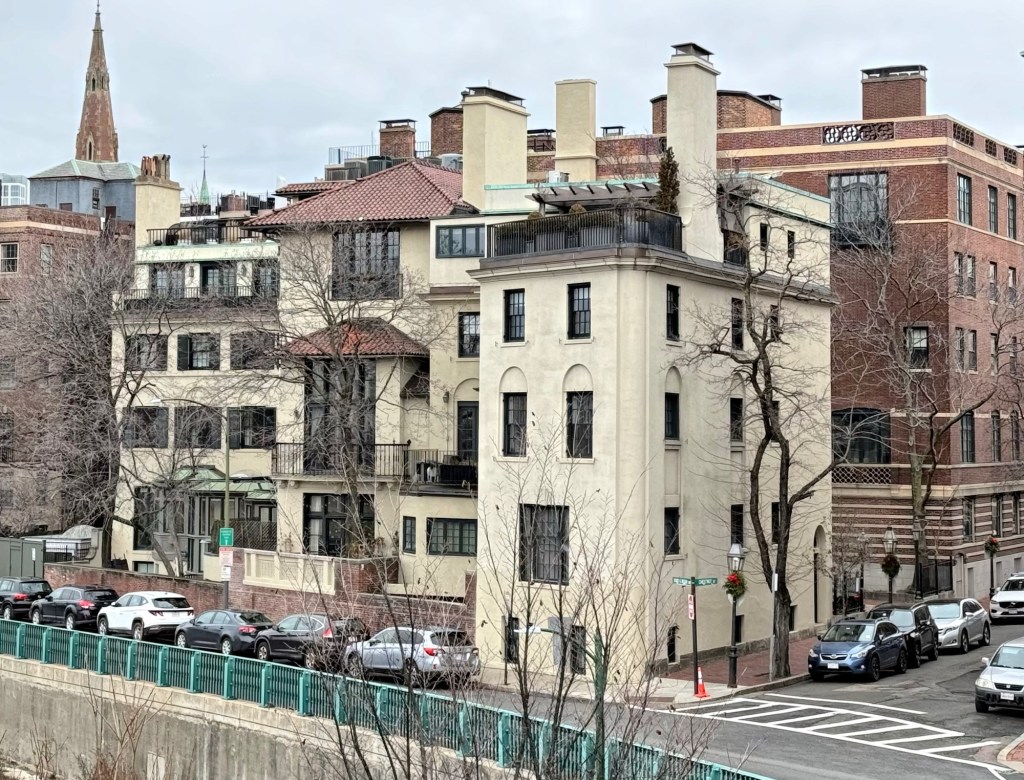
Miss Grace Nichols House // 1913

Located at the western end of Chestnut Street in the Flat of Beacon Hill, you will find this stucco residence, one of the finest mansions in Boston. The four-story residence with two entrances is built of brick and covered with stucco and was constructed for Miss Grace Nichols (1874-1944), the daughter of John Howard Nichols, who worked for John Lowell Gardner (the husband of Isabella Stewart Gardner) as a merchant transporting goods between Boston and Chinese markets, before overseeing mills. As a single woman, Grace inherited much of her parents wealth upon their deaths, and in 1913, hired architect, William Chester Chase, to design her Beacon Hill home in the Italian Renaissance Revival style, similar to Isabella Stewart Gardner’s Fenway Court mansion (1903). Grace Nichols married Richard Pearson Strong, a Harvard professor and medical researcher, in 1936 and the couple lived here with servants until their deaths in 1944 and 1948 respectively. After their death, the building was either purchased by or willed to the Boston Society of Natural History and the New England Museum of Natural History, which moved out of their Berkeley Street location in 1946. The Nichols Mansion served as the new Boston Museum of Science until 1951, when the new and current museum was built between Boston and Cambridge. Today, the former Nichols mansion is five condominium units, with owners having one of the most enchanting and unique properties in the exclusive Beacon Hill neighborhood.

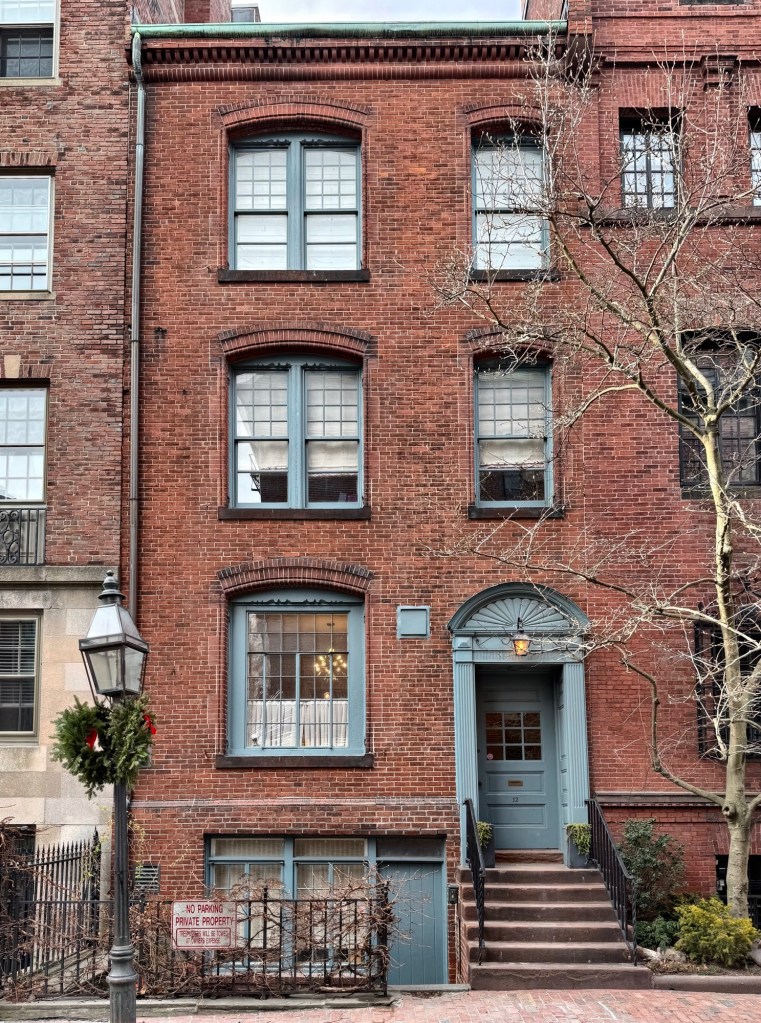
Elizabeth G. Evans – Edward A. Filene House // 1883

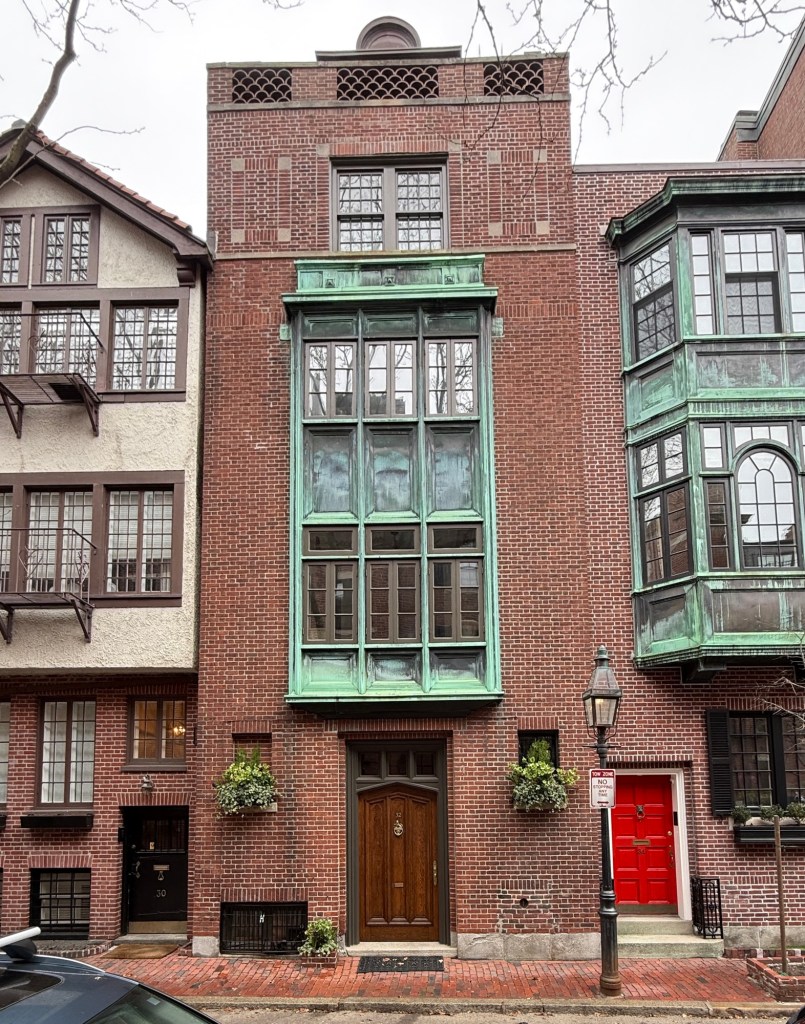
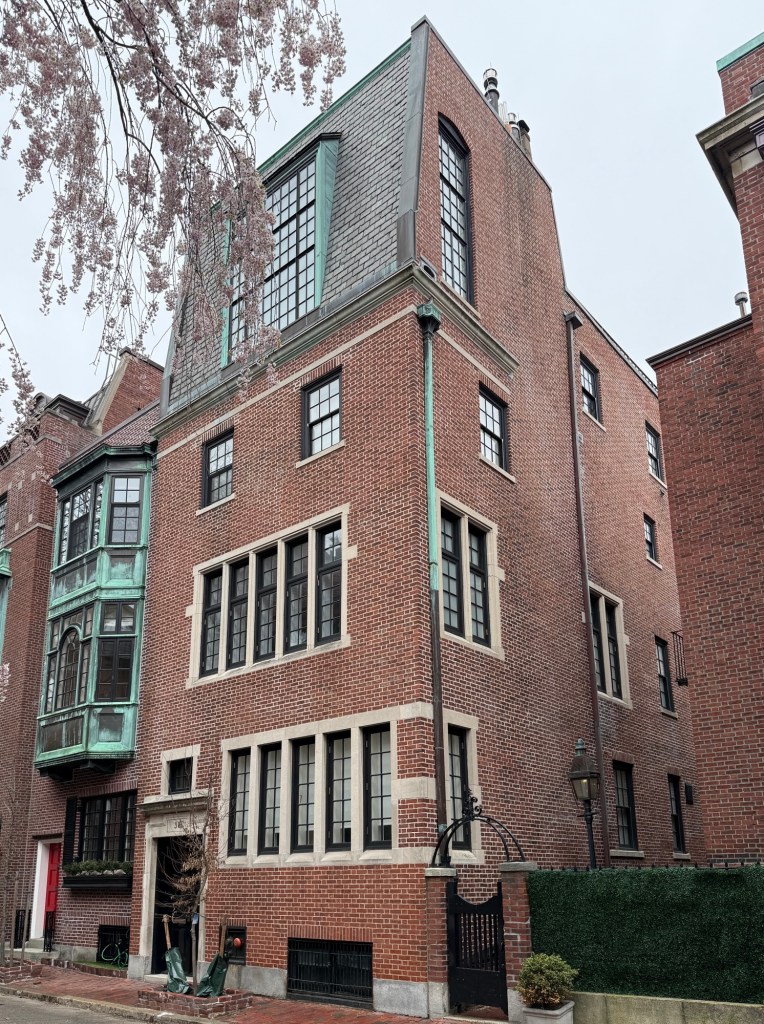
This unique brick house at 12 Otis Place in Beacon Hill was built in 1883 by the architect, Carl Fehmer for attorney Glendower Evans and his wife, Elizabeth Gardiner. Mr. Evans died in 1886 of Hodgkin’s Disease at just 30 years of age. His widow, Elizabeth Glendower Evans (1856-1937) was greatly influenced by her husband during their brief marriage, even taking her husband’s first name as her middle name after his death. Elizabeth Glendower Evans became a prominent social activist, studying child labor conditions in the South and took up the cause of women’s suffrage and the associated problems of tenements and factory work arising from disenfranchisement in the late 19th and early 20th centuries. In 1915 Evans served as a delegate to the International Congress of Women at the Hague. She was the first National Organizer of the Woman’s Peace Party. From 1920 until 1937 she served as a national director of the American Civil Liberties Union. In the 1910s, Elizabeth sold the home to Edward Albert Filene (1860-1937), who, together with his younger brother Abraham Lincoln Filene, reorganized his father’s department store into “William Filene’s Sons Company”, which would later become Filene’s. He was a supporter of credit unions to help ordinary American workers to access loans at reasonable rates and allow workers to save their money so that when hard times hit, they were prepared.

William and Octavia Apthorp Mansion // 1885

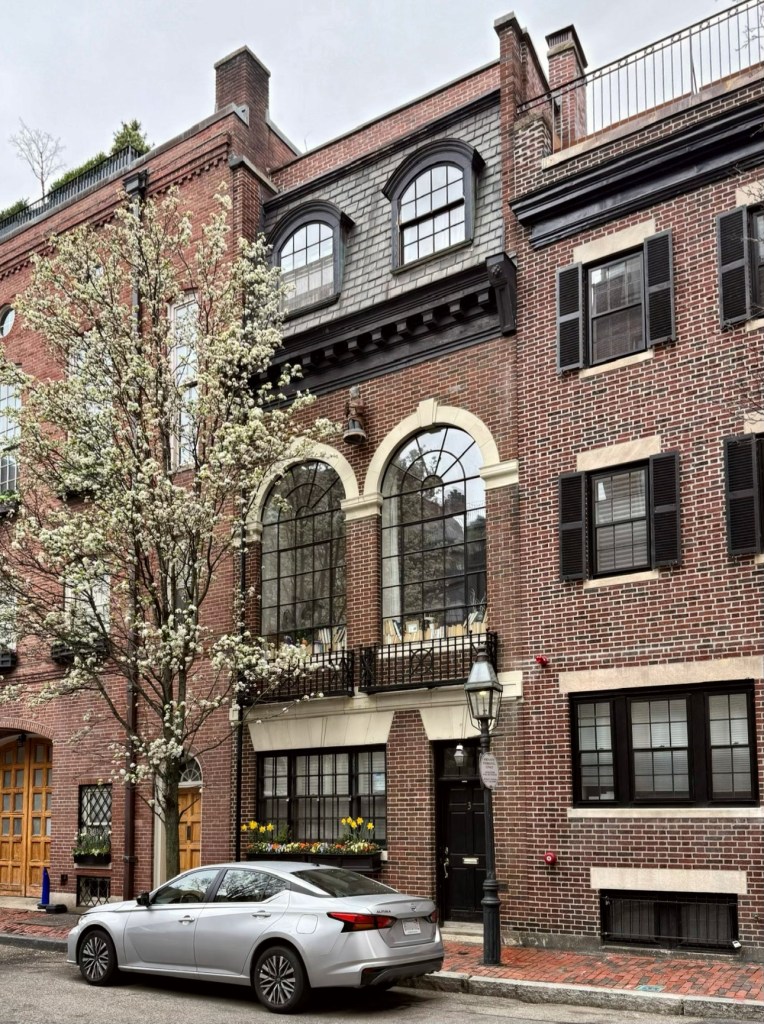
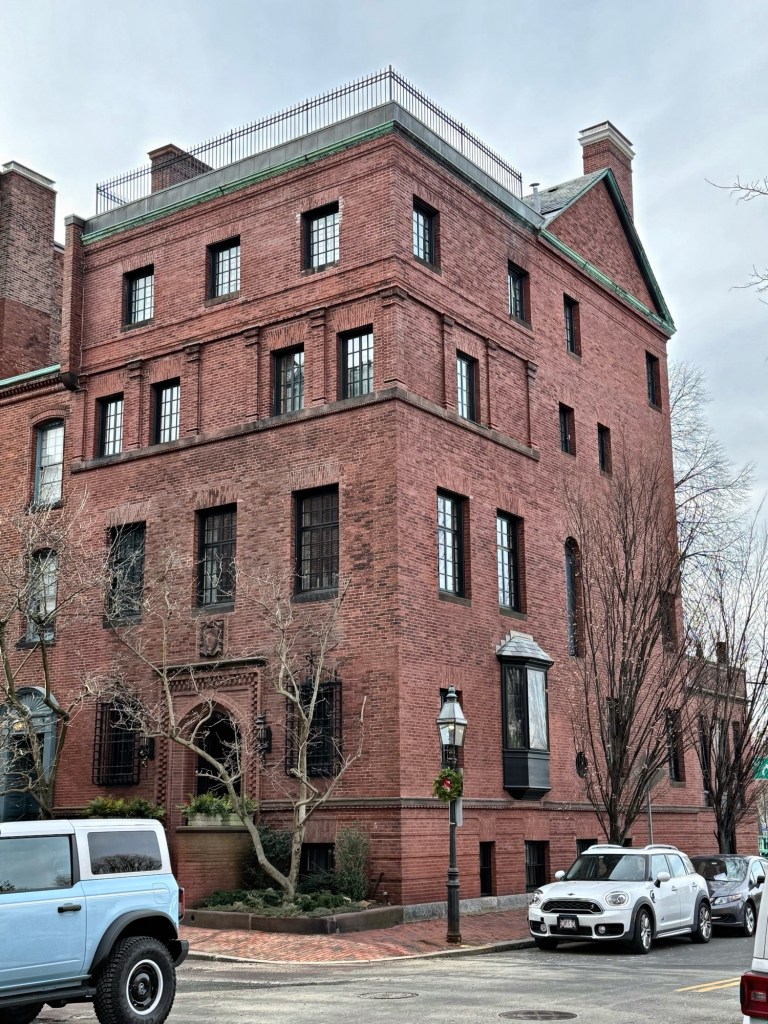
This unique four-story brick townhouse on Otis Place in Beacon Hill, Boston, was built in 1885 by the architectural firm of Rotch & Tilden for Mrs. Octavia L. Apthorp and her husband, William F. Apthorp. Elevated on a tall brick basement, the exterior of the house is richly detailed with masonry decoration in what has become known as the “panel brick” style; with an elaborate brick entrance archway, paneled pilasters at the third floor, and vertical brick lintels above the windows. Over the ground floor windows near the entrance, iron grates with spear-like finials give the design a Medieval/English Queen Anne presence. William F. Apthorp was the only son of Robert Apthorp, a prominent Boston attorney and abolitionist who lived across the street at 2 Otis Place. William was a pianist and teacher at the New England Conservatory of Music and writer who married Octavia (sometimes spelled Octavie) Loir Iasigi in 1876, she was also from a well-connected Beacon Hill family.

Pickering-Apthorp Houses // 1870

These two near-identical townhouses at 1 & 2 Otis Place in Beacon Hill are significant architecturally and as they are bounded by four streets. The unique lots were created when Otis Place was laid out on made land in 1869 and were built the following year as an identical pair sharing a party wall and with their front facades facing south on Otis Place. The two residences were designed by the firm of Ware and Van Brunt, who blendedSecond Empire and Victorian Gothic styles with gothic arched windows, bracketed cornices, slate mansard roof, and later Colonial Revival porticos added in 1916 by architect, Frank A. Bourne. No. 1 Otis Place (right side with the oriel bay window) was first owned by Henry G. Pickering, a dealer in engines and machinery at the height of New England’s industrial revolution. No. 2 Otis Place (left with later fanlight entry), was originally owned by Robert E. Apthorp, an attorney and realtor, who decades earlier, was an active member of the Boston Vigilance Committee, the group established to harbor and assist fugitives from slavery after the passage of the Fugitive Slave Act in September 1850.

Mrs. Martin’s School – Jenks & Gaugengigl Studio // 1872

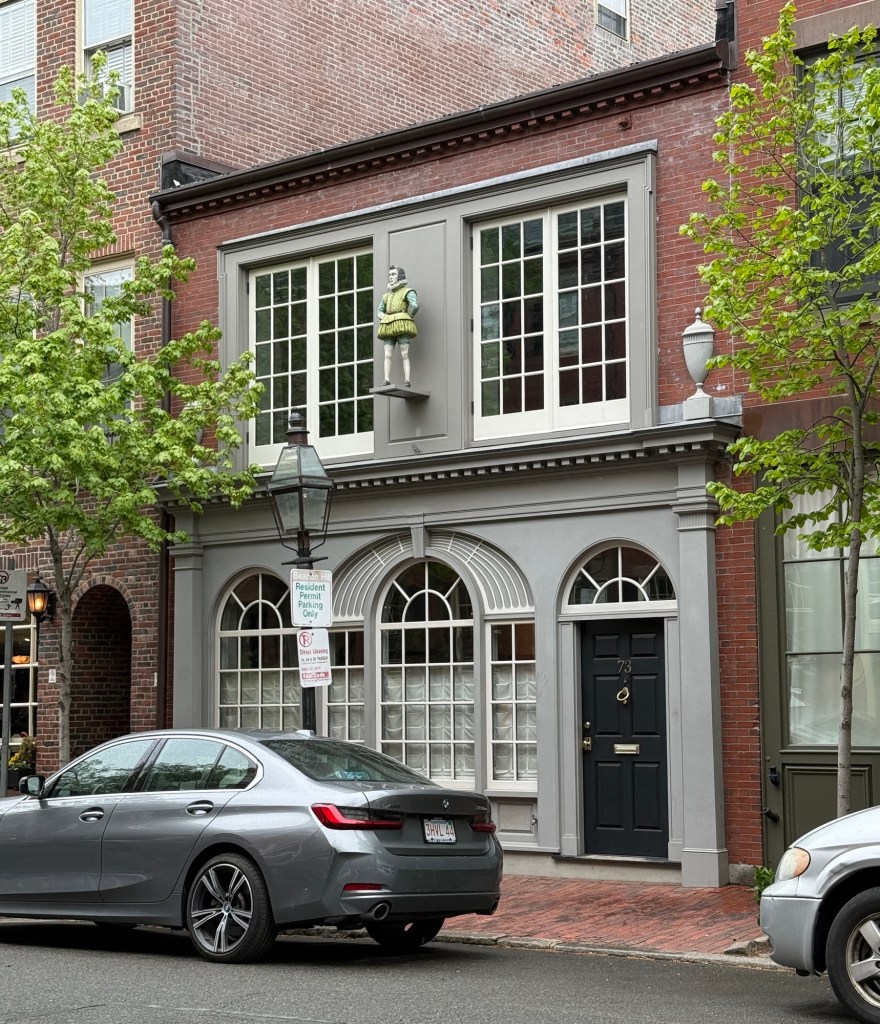
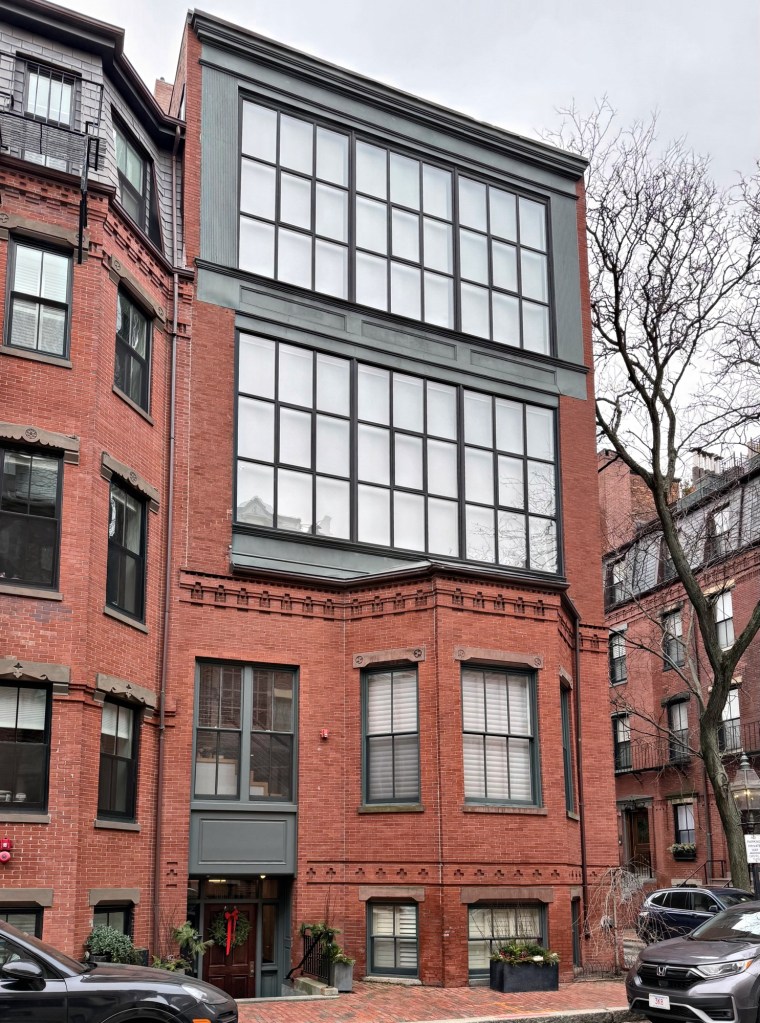
This unique three-story building on Otis Place in Beacon Hill, Boston, was actually constructed in 1872 by owner/architect, Abel C. Martin (1831-1879) as a school run by his wife, Clara Barnes Martin (1838-1886). Clara B. Martin was born in Maine to Phineas Barnes, a prominent publisher in Portland, who educated his daughter at the best schools. She in turn, became a writer and educator herself, writing a book about Mount Desert Island in Maine and publishing articles in national papers, along with operating a school in this building, designed and owned by her husband as they lived next door. After Clara died in 1886, the property was sold by the Martin heirs and in 1895, renovated into artist studios with two floors of large windows to provide natural light for the work inside. The building was owned and operated as artist studios by Ignatz M. Gaugengigl (1855-1932), a Bavarian-born artist who spent most of his professional life in Boston and was a prominent member of The Boston School, and Phoebe Jenks (1847 – 1907), a portrait painter who divided her career between New York and Boston. The building, while heavily altered, showcases the history of the Beacon Hill Flat neighborhood, which, during the late 19th and early 20th centuries, became a popular place for artists and Bohemians, who renovated existing houses and stables in the Arts and Crafts, neo-Federal and other fashionable styles into loft spaces and studios. The 1895 renovation was undertaken by architect, Edgar Allen Poe Newcomb, who was the nephew of sculptor, Thomas Ball, likely providing him insight into the design of artist studios.