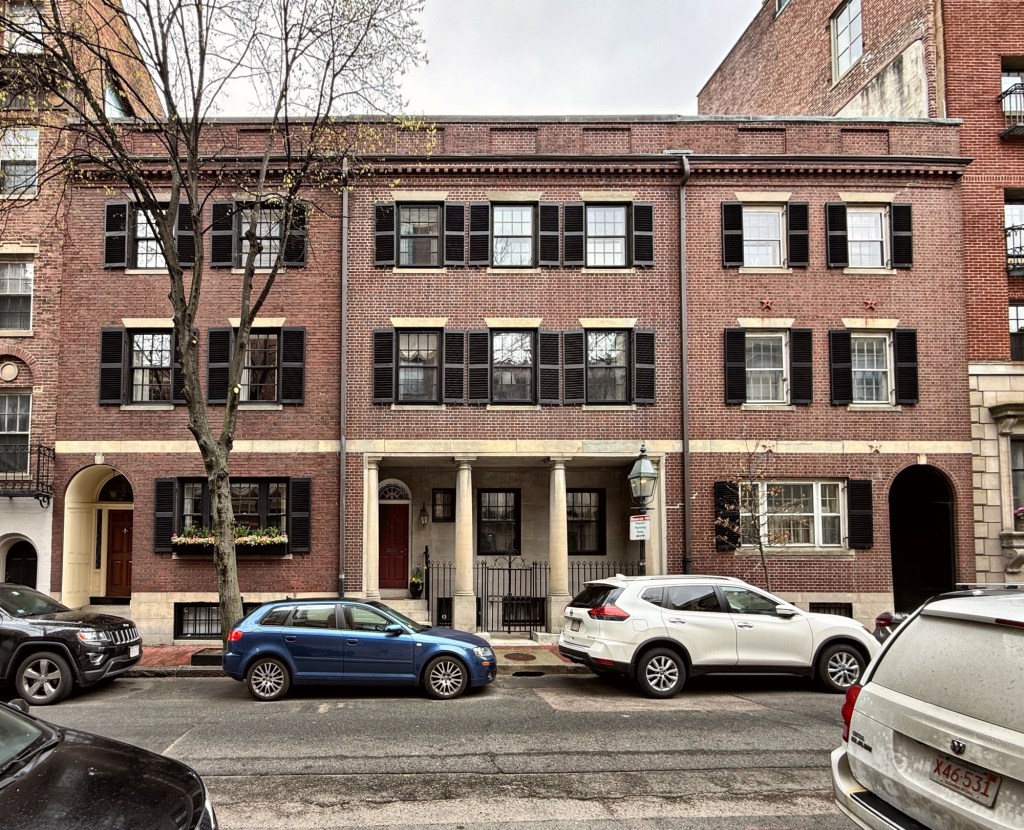
Chestnut Street Rowhouses // 1917

Similar to the Brimmer Street Terrace development nearby, this set of three rowhouses on Chestnut Street on the Flat of Beacon Hill, is an excellently designed development of residences as a collection rather than individually designed townhomes. The Chestnut Street Rowhouses replaced a stable formerly on the site, and were designed by the architectural firm of Richardson, Barott & Richardson, made up of Philip Richardson, Chauncey Edgar Barott, and Frederic Leopold William Richardson. Philip and Frederic Richardson were sons of architect Henry Hobson Richardson, but they did not reach the same level of notoriety as their late father, and charted their own course. The rowhouses read as a single composition with a unique center section flanked by two matching wings. The center house has a three bay front façade with the first-story clad in limestone which is all recessed and supported by Doric columns.
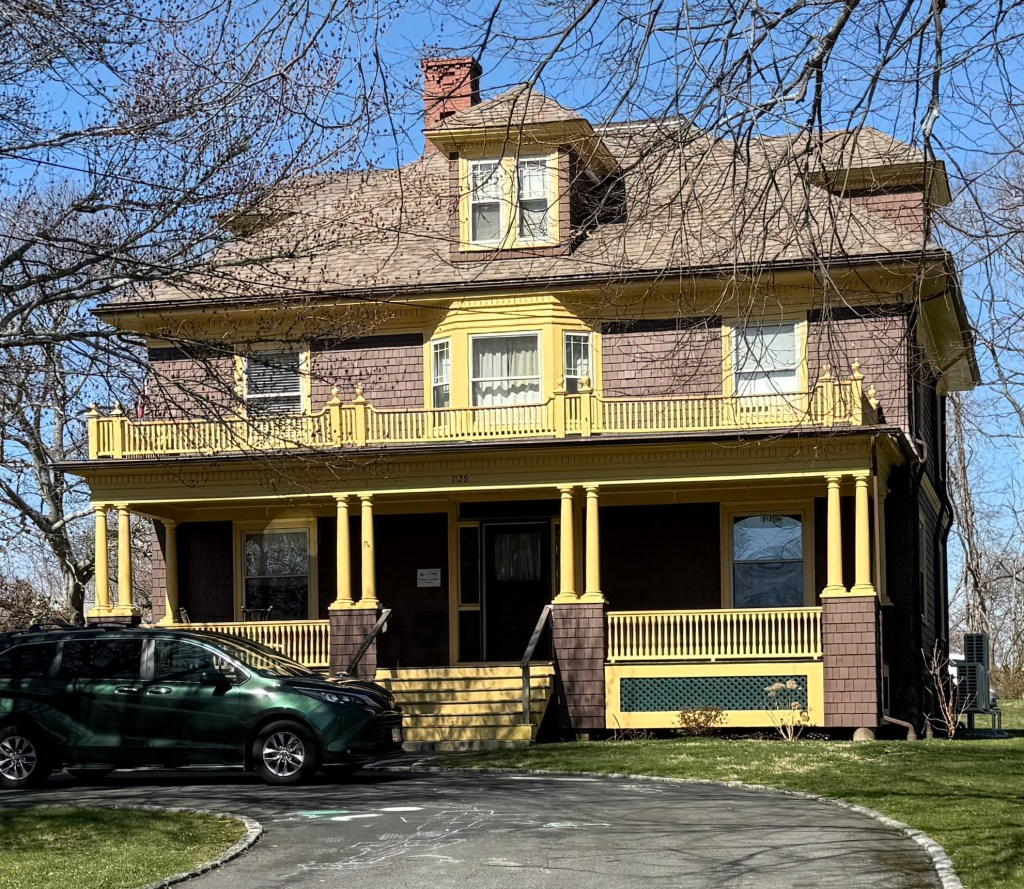
Francis Gardner House // 1903

This house on Gardner’s Neck Road in Swansea, Massachusetts, was designed in 1903 by Fall River-based architect, Edward I. Marvell, for Francis L. Gardner, a descendant of the Gardners for whom Gardner’s Neck is named. Francis Gardner’s father, Leland, was a successful market gardner who farmed locally with the use of greenhouses, shipping fresh produce and other goods to Fall River and transportation to other nearby cities. This business continued under his sons, Francis and Chester until about 1925, when they began selling land on Gardner’s Neck for development. Francis’ house is an excellent early 20th century residence that blends multiple styles popular at the turn of the 20th century in a square form.

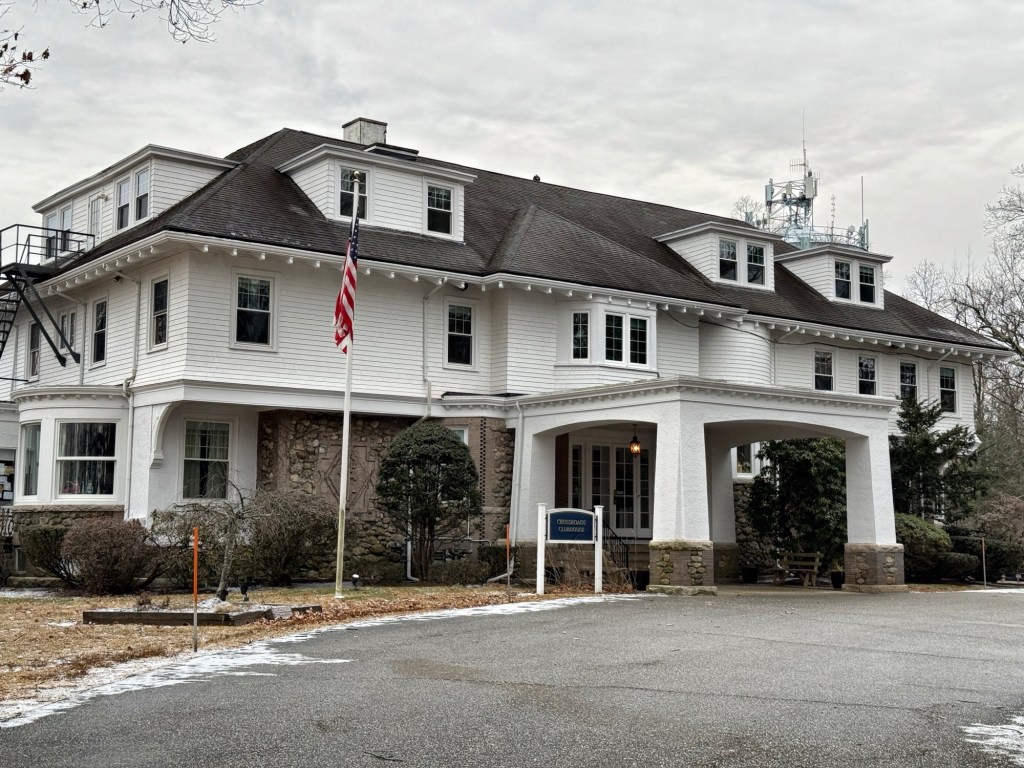
The Larches // 1910

George Otis Draper (1867-1923) was born in Hopedale and attended MIT to prepare to help run the extremely successful family business, the Draper Corporation in town, which was experiencing a period of rapid growth and expansion of factories. With his position at the company, his wealth afforded him the ability to build a massive country estate known as The Larches. The shingled Colonial Revival style home featured a massive crenelated tower and appeared like a castle in the countryside. George O. Draper sold this home to his aunt Hannah Thwing Draper Osgood in 1909, and within a month, the home burned to the ground. She began construction on the “new Larches“, a shingled mansion with a stunning blending of Colonial Revival and Craftsman styles. The home was likely designed by Robert Allen Cook, who was based out of nearby Milford, MA. The property today is run by Crossroads Clubhouse, an employment and recovery center that offers people with mental health conditions opportunities to achieve their full potential.

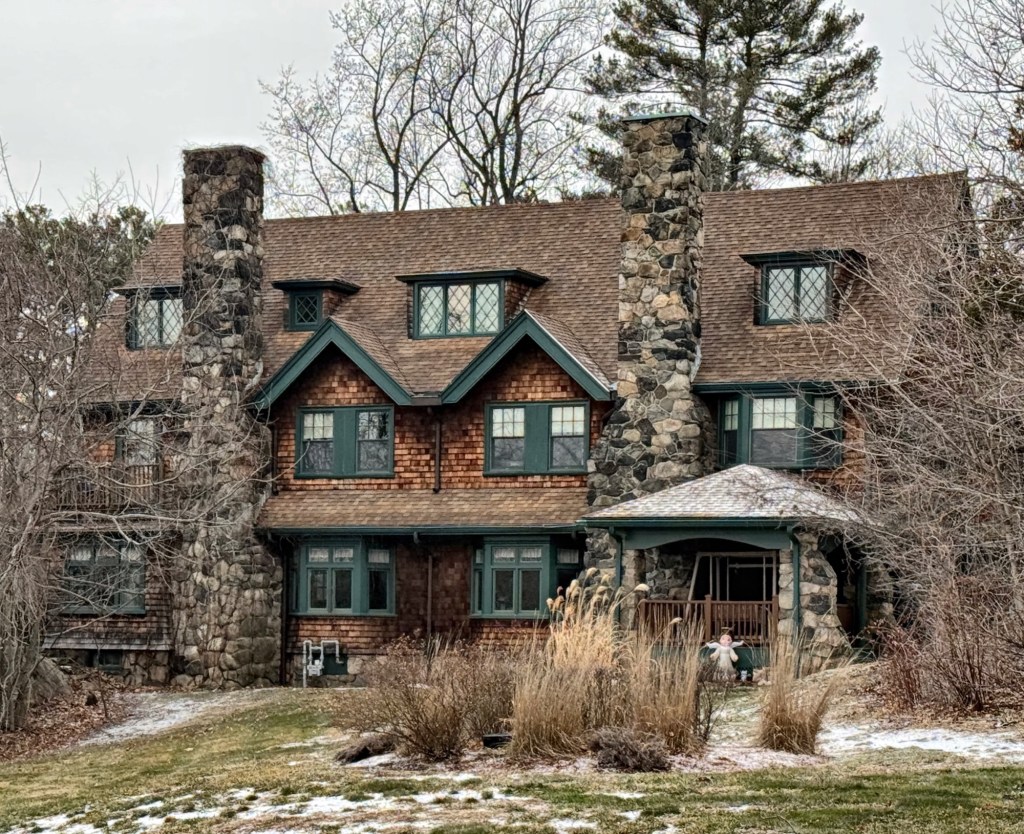
Frank J. Dutcher House // 1904

Located on Adin Street in Hopedale, this excellent turn-of-the-century mansion was built for Frank Jerome Dutcher, a manufacturer who worked for his father’s company before selling it to the Draper Corporation, later becoming a wealthy salesman. Blending Shingle, Queen Anne, and Arts and Crafts styles, the Frank J. Dutcher home sits atop a rock ledge and was designed by architect, Robert Allen Cook, who designed other buildings in town for the Draper Corporation and community, behind his original home that burned in 1903. The home features two massive fieldstone chimneys, shingled siding, and a series of dormers and bays that provide a rich dialogue along the long street-facing facade. In the mid-20th century, the property became a nursing home, known as Oakledge Manor. The building was recently bank-owned and it is unclear if the building was converted back to a single-family home, or remains a housing facility.

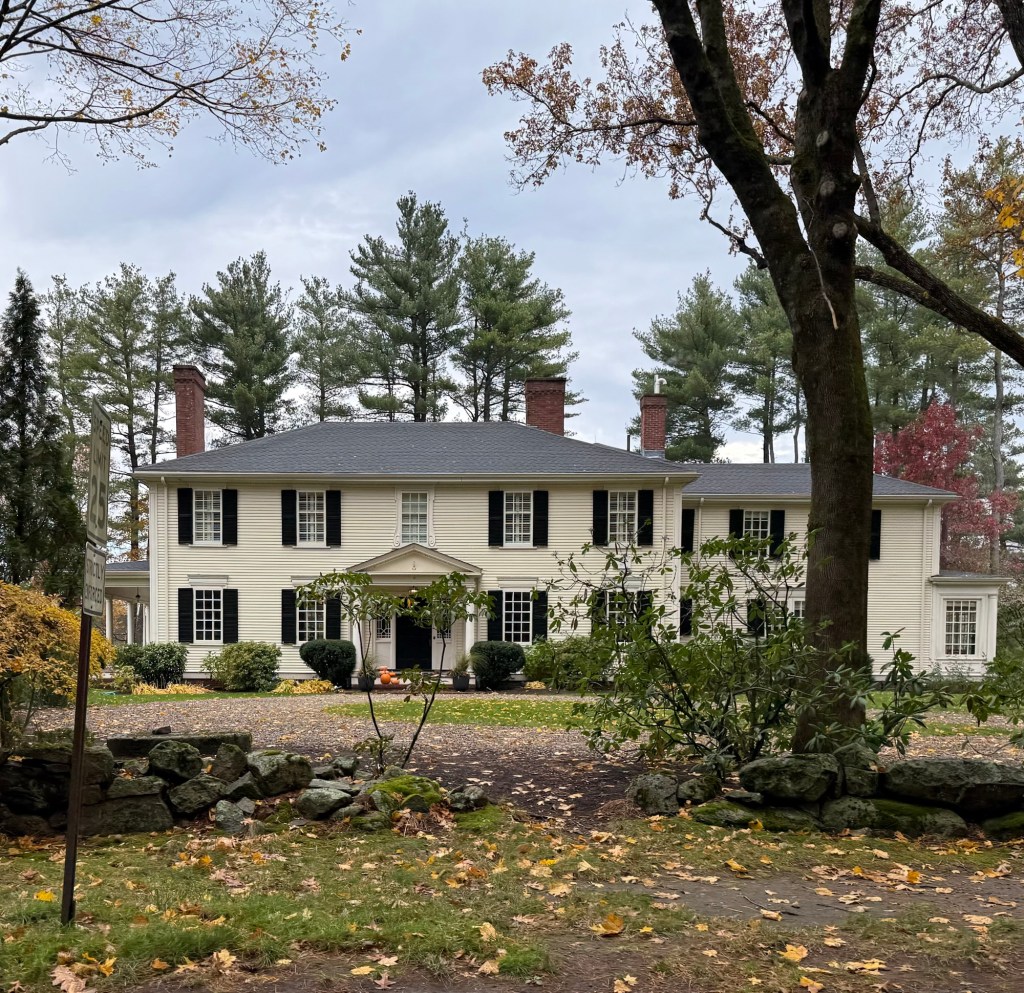
Isaac Gleason House // 1805

Built in 1805 by Isaac Gleason (Glezen), this Federal style mansion was later expanded in the early 20th century in the Colonial Revival style as Wayland became more of a wealthy Boston suburb. Located on the appropriately named Glezen Lane, this house was constructed for Isaac Glezen (1769-1843), who farmed the land here. Other family members built homes nearby. As Wayland shifted from rural community to a wealthy Boston suburb in the early 20th century, the property was purchased by Charles Ashley Hardy and his wife, Alice. The couple would sell the property in 1918, which comprised of 89-acres of land and a chauffeur’s residence, was purchased by Albert H. Beck, a New York banker. The property was later subdivided and consists of many other large, single-family homes.

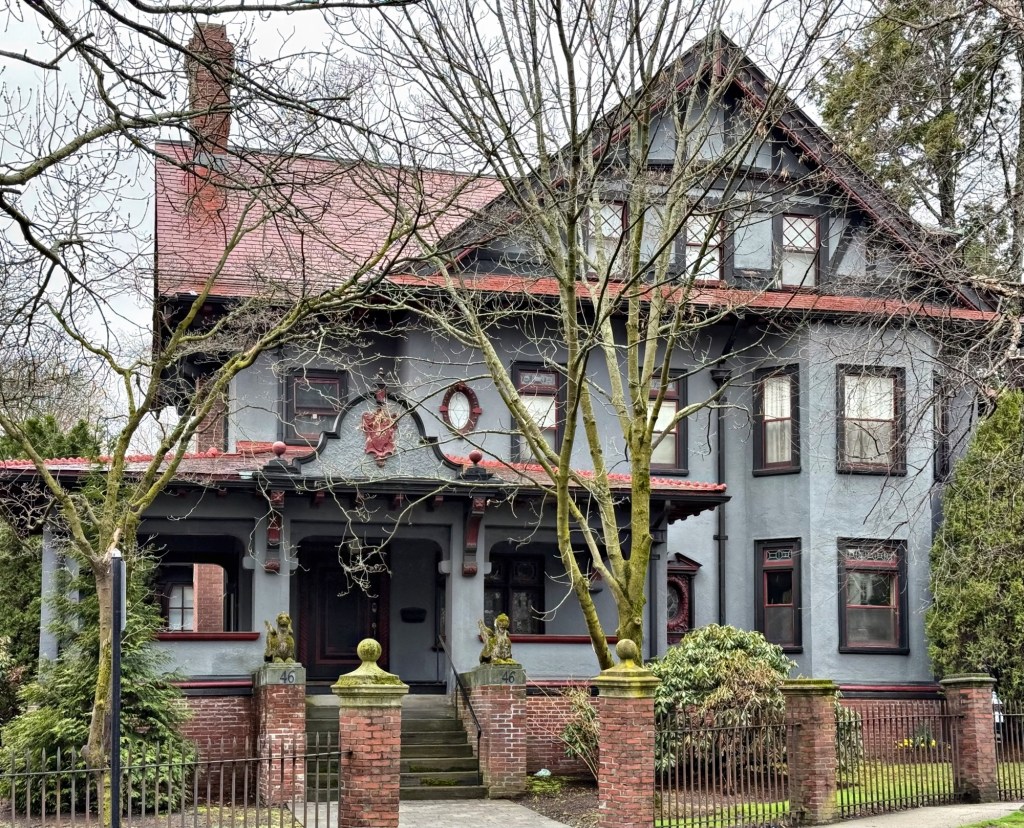
Hugh G. Brown House // 1905

Eclectic houses of the late 19th and early 20th centuries are my favorite as they showcase how architects of the time blend features and break the strict mold of academic styles. This example is found in the Cottage Farm neighborhood of Brookline and dates to 1905. Designed by relatively unknown architect, Alfred Lyman Darrow, who studied at MIT, before opening his own practice. The house was first owned by Hugh G. Brown, who founded the Brown’s News Company and the Hotel & Railroad News Company. The house exhibits half-timbering in the gable ends and decorative corbelled chimneys that derive from the Tudor Revival; the front porch parapet appears to derive from the Spanish Mission style; along with stucco siding and unique windows typical of the Arts and Crafts movement.

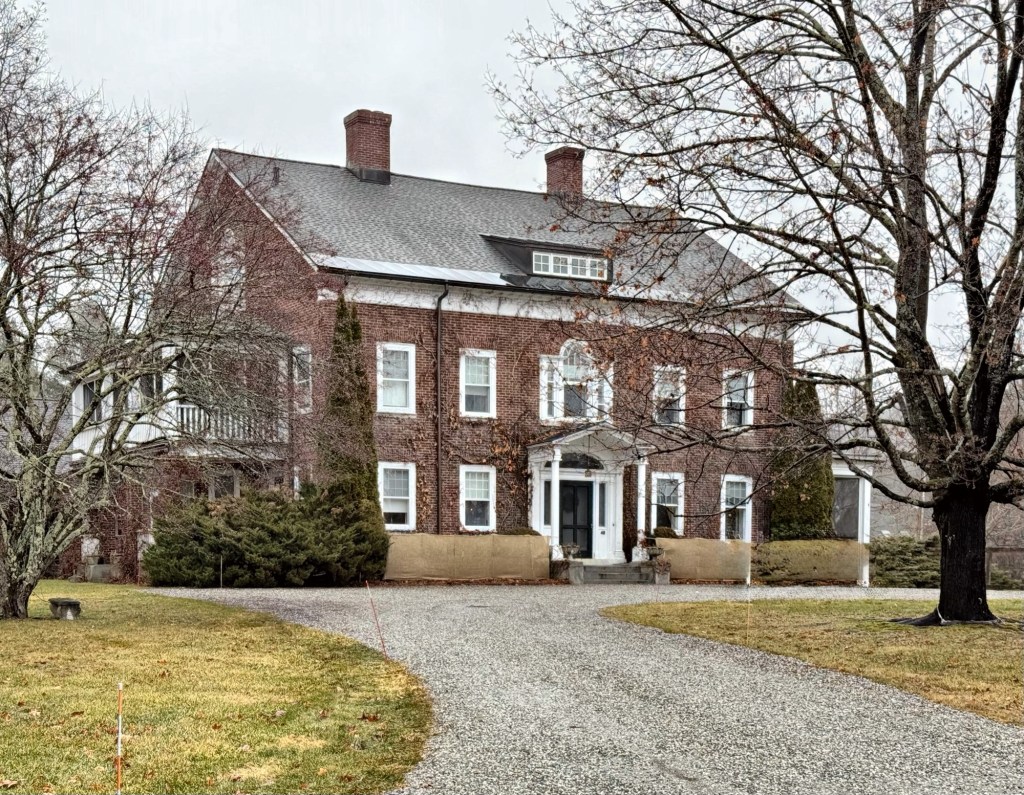
John E. Calhoun House // c.1912

This site, in the heart of Cornwall village, was once occupied by an early 19th century Federal style residence, built by the wealthy Pierce family in town. The Pierces’ large home was acquired by John E. Calhoun (1859-1940), a successful New York businessman, who retreated to his father’s hometown for summers away from the city. In 1911, a fire destroyed the home, which was wood-frame construction. This event mobilized Mr. Calhoun, who was untrained but interested in architecture, to begin planning a new summer residence, but of fireproof construction. Calhoun is said to have designed (and funded) the town’s library just years before, and modeled his home in line with the Colonial-era residences in the village, just larger and of brick. From the 1950s through the 1990s, the house was occupied by the headmaster and administration of the local Marvelwood School, but was re-established as a private home, a use that remains today.

Wilkinson House // 1908

Waban Village in Newton, Massachusetts has dozens of amazing examples of early 20th century residential architecture, possibly the best collection in the Boston area! This Arts and Crafts style residence was built around 1908 for William and Delia Wilkinson the former of the two owned the William H. Wilkinson Company, which manufactured oiling devices and oil cups for steam engines. Delia, his wife, owned their family home under her name. The home is an excellent example of the Craftsman style, with stucco siding, thick rounded column supporting the inset porch, oh and that catslide roof!!