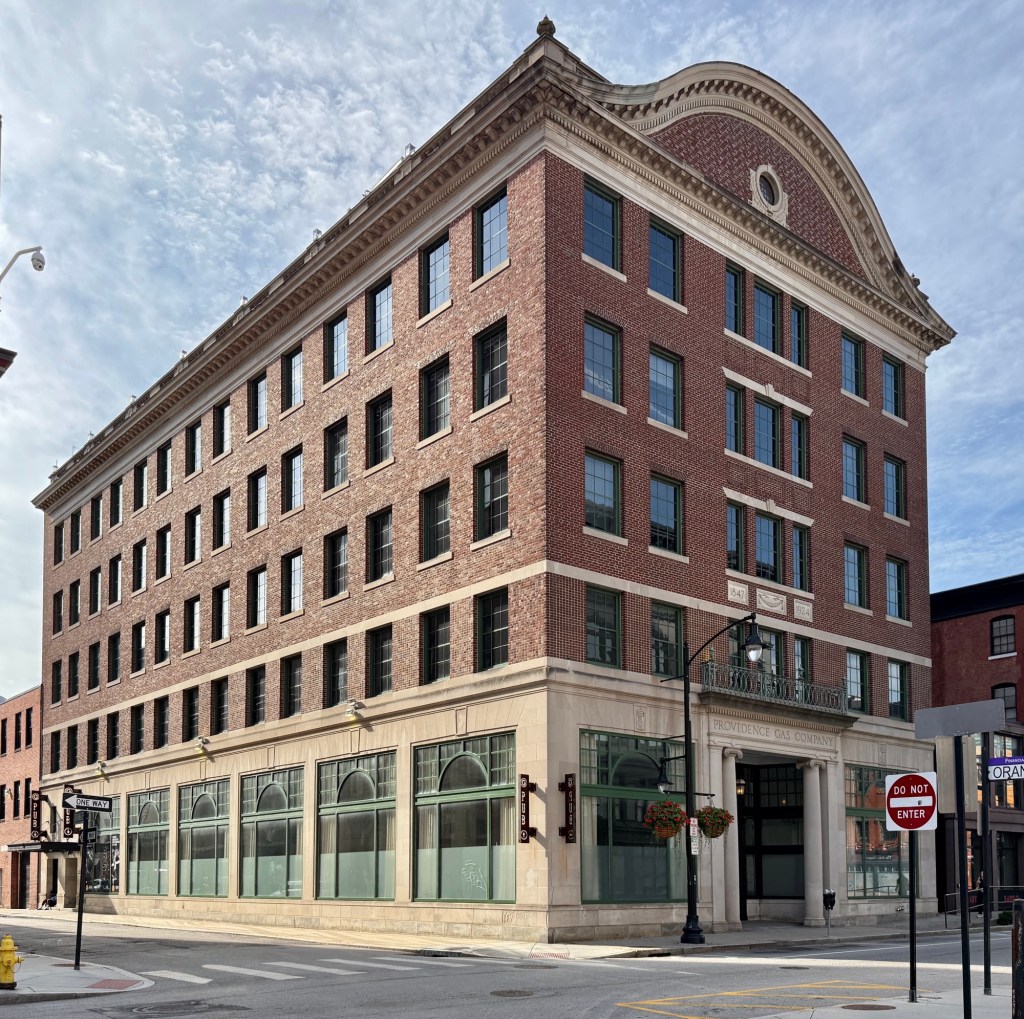
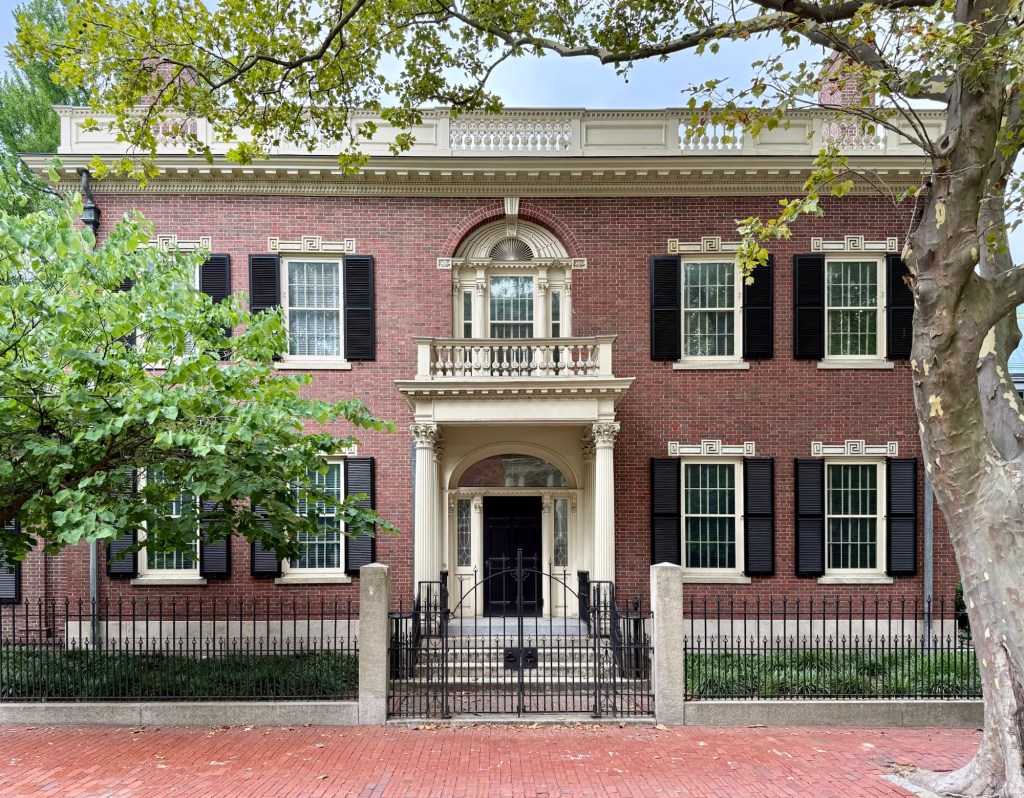
One of the unsung architectural landmarks in Downtown Providence, Rhode Island, can be found on Weybosset Street. The Providence Gas Company Building at 100 Weybosset Street was built in 1924 as the headquarters and offices for the Providence Gas Company, which provided services to a rapidly growing New England city. The architects, Clarke & Howe, used local precedence in their design, modeling the building as a commercial version of the 1774 Joseph Brown House on South Main Street, with its iconic ogee gable at the roof. Beyond its own ogee gable, the Gas Company building retains its columned entry and symmetrical facades. The building was converted into housing with a pub and rooftop restaurant.
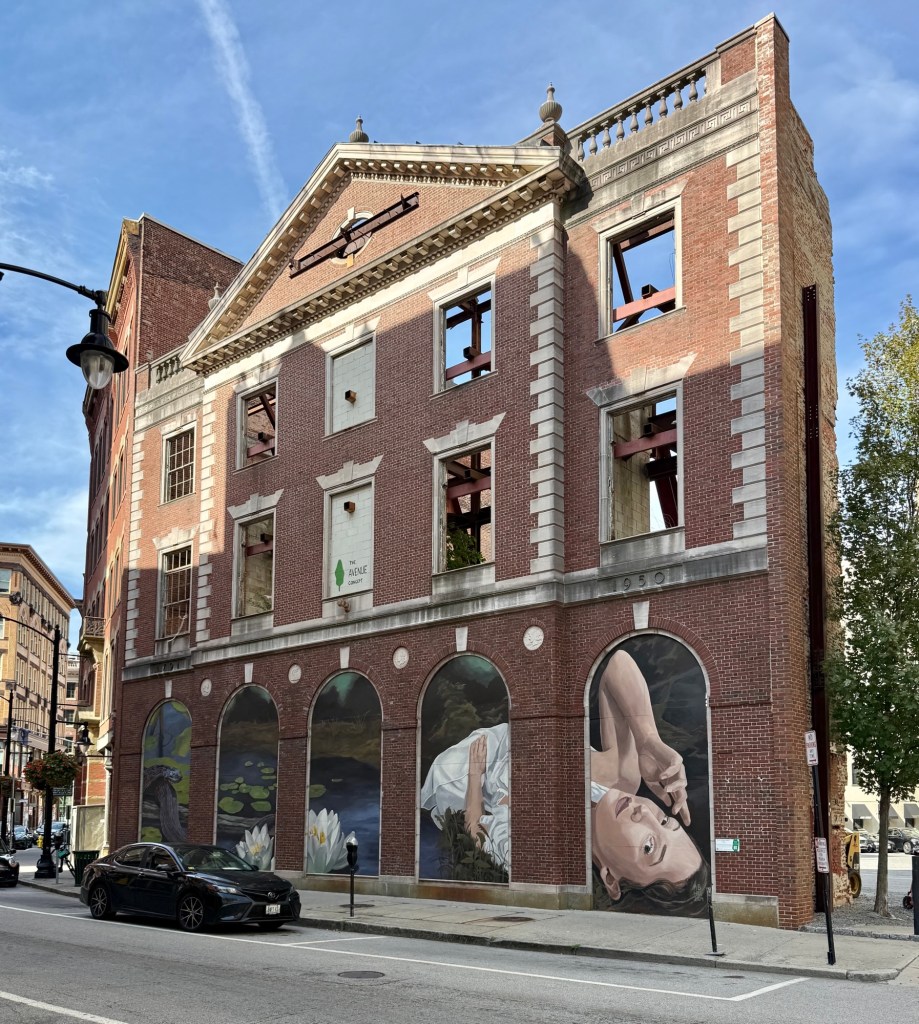
On Weybosset Street in Downtown Providence, stands the facade of a building that tells the story of the city. The Providence National Bank originally opened in 1791 as one of just five banks in the country. The longtime home of the institution, the 1774 Joseph Brown House was outgrown and following a merger with the Merchants National Bank, the company elected to build a new headquarters. Constructed in 1929 on the site of the old Lyceum Building on Westminster Street, the Providence National Bank Building was designed by the local firm Howe & Church in a stately Colonial Revival style. The bank merged with the Union Trust and again expanded its facilities with a 1951 addition with frontage on Weybosset Street, the last remaining piece of the structure. Designed in the Colonial Revival style, the Weybosset elevation is five bays wide with a projecting central pavilion, quoined corners, and splayed keystone window lintels beneath a broad entablature. The bank itself passed through several names and owners over the decades, but the building’s real trouble began in 2005, when the Westminster Street portion was razed to clear the way for a proposed condominium tower that was never built, leaving behind a surface parking lot. Only the Weybosset Street facade survived, propped up on rusting steel beams for years and nearly slated for demolition in 2009 before preservation advocates and the Mayor’s office intervened. The site is a reminder to disallow demolition until a financed and permitted project is approved.
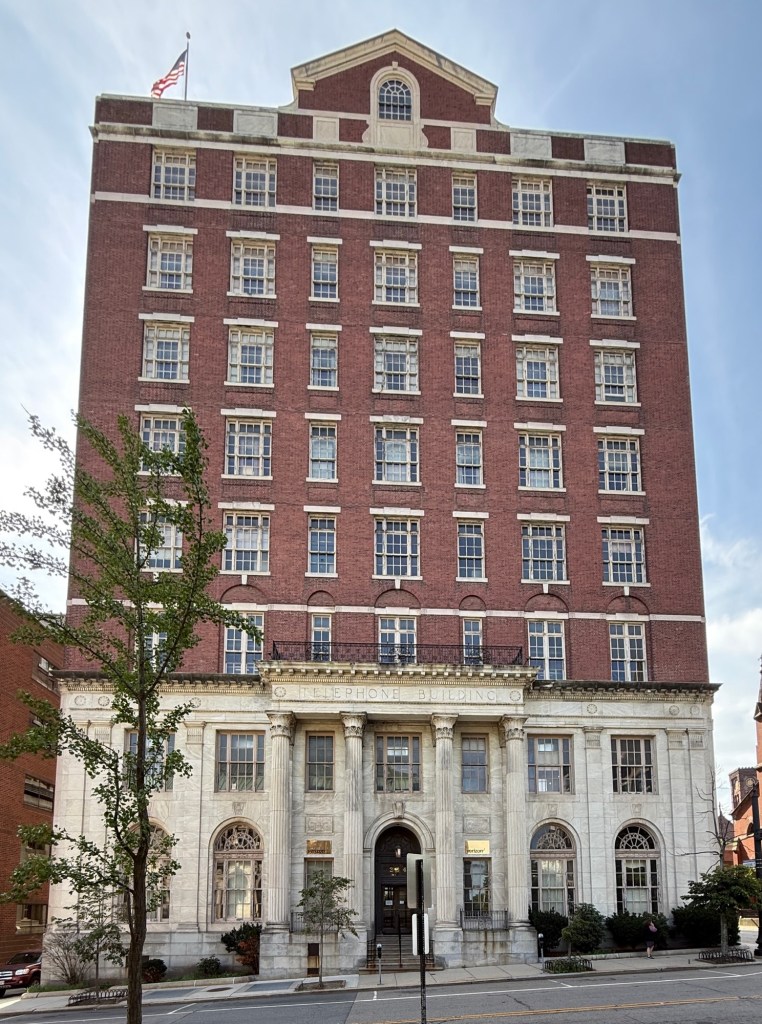
Despite the expansion of its Union Street building ten years earlier, by WWI, the growth of the Providence Telephone Company had made its original building inadequate. In 1916, the company began construction on its new Telephone Building at the corner of Washington and Greene streets. The 8-story, Colonial Revival style structure was designed by the Providence architectural firm of Clarke & Howe. The building is steel-frame and largely clad with red brick besides the arcaded first two stories in marble. At the roofline, a center gable projects above the cornice, likely in the 1950s renovation when the elevator headhouse was built on the roof. The building was again expanded in 1971 by a utilitarian addition that does not relate to its original design beyond the use of brick. The building is now home to the regional office of Verizon New England.
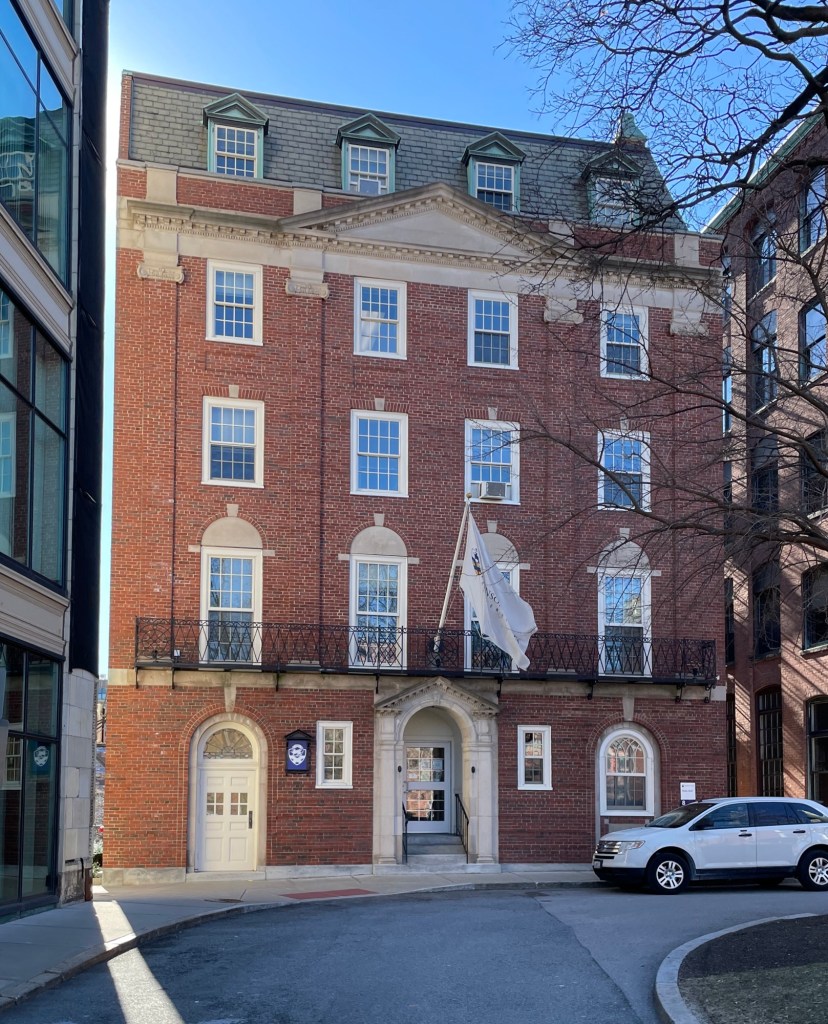
Tucked away behind Abbott Park, a small green in Downtown Providence, the Plantations Club has stood for 100 years as one of the city’s finest examples of Colonial Revival architecture and was long a vital women’s club organization. This Georgian Revival brick building was designed by the firm of Andrews, Jones, Briscoe & Whitmore, of Boston for the Providence Plantation Club, a women’s social organization founded in 1916. The club was a success, starting with about 150 members and it reached more than 1,300 members, just one year after its inception. As the only female architect of the society, Frances E. Henley got involved in promoting the Club in terms of its visuals and interior design of the building, working closely with the architects. Ms. Henley was the first woman to study architecture at the Rhode Island School of Design and the first woman to independently practice architecture in Rhode Island. When the club no longer needed such a building, Johnson & Wales University acquired the building in 1962, and since then, it has been known as Wales Hall, housing a variety of offices and services.
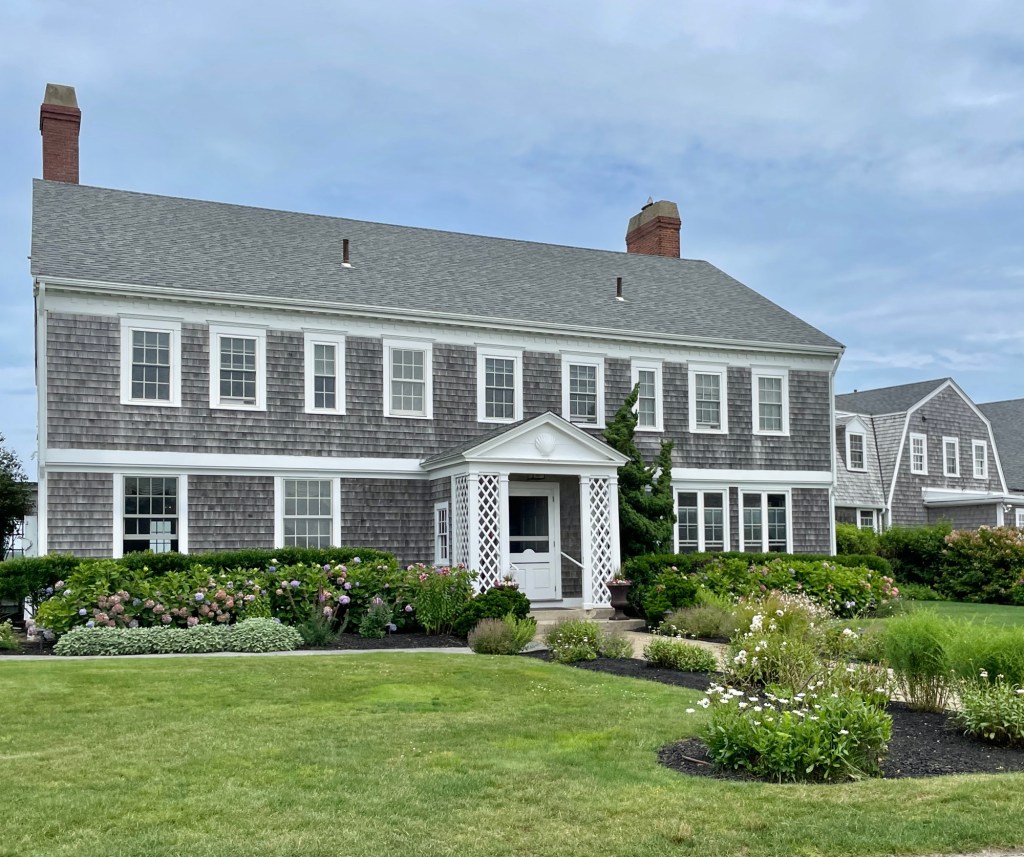
Across Sippican Harbor from the town village of Marion, Massachusetts, the Kittansett Club property provides some of the best views and recreation in town. The Kittansett Club was founded by a group of members of the Beverly Yacht Club in 1922, who at the time held some recreational uses on the tip of this peninsula, known as Butler’s Point. Kittansett was derived from two Native American words, “Kittan,” said to mean “sea,” and “Sett,” said to be a common word-ending for “near”, roughly translating to “near the sea”. The wealthy group of men who developed the peninsula with assistance from the Olmsted Brothers, landscape architects, totaling over 180 acres, a substantial portion was leased to the golf club while approximately 16 house lots were retained for those fronting the cost, to members of the club to help defer the expenses of developing the course. In 1925, the Kittansett Club undertook the construction of what became known as the “Winter House,” (the current clubhouse) which was a winterized building with heating and plumbing. The Colonial Revival building is sited so elegantly at the tip of Butler’s Point, looking out at Buzzards Bay. The buildings and grounds were heavily damaged by the Hurricane of 1938 and the property would soon after serve America’s defensive interests during World War II, when all of Butler’s Point was taken over by a Coast Artillery Unit. More than 100 G.l.s were billeted in Winter House. Today, the exclusive club is open to members and private events.
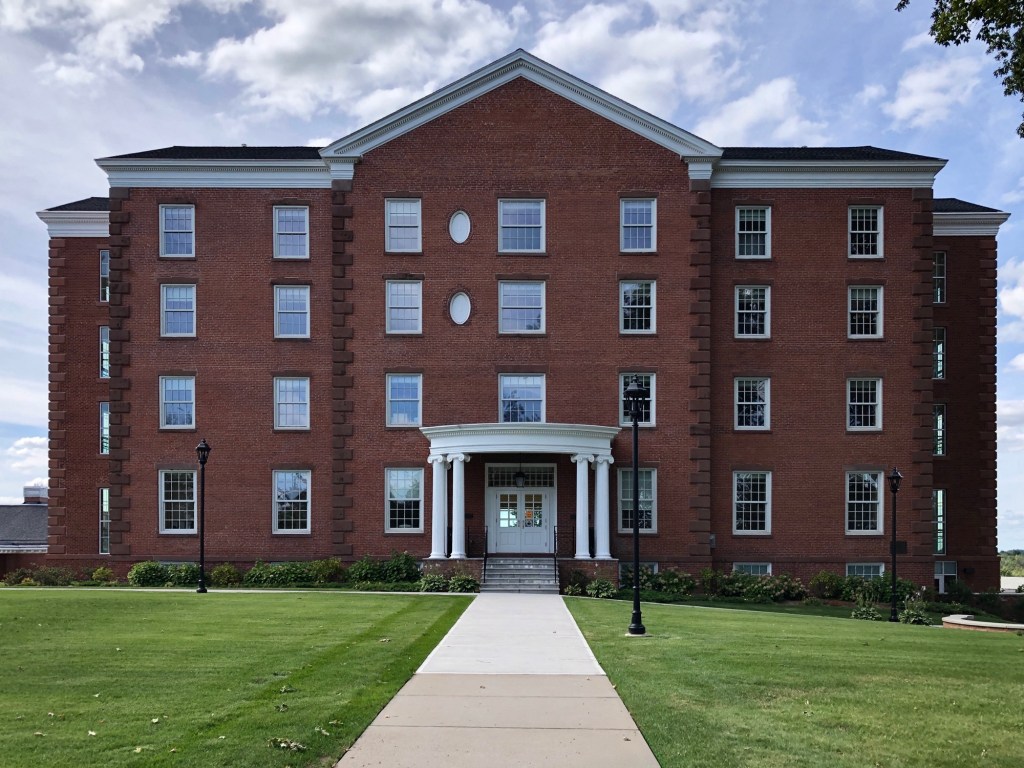
Initially established in 1833 as the Connecticut Literary Institute and later renamed Suffield Academy in 1937, the institution was founded with the mission to educate young men for the Baptist ministry. As the Connecticut Literary Institute was the only high school in Suffield, the town tax dollars paid for local students to attend. Originally built for the Institute in 1854, this large brick academic building was designed in the Italianate style with brackets and decorative brickwork at the cornice until about a century later when the school redesigned its campus in the Colonial Revival style. The Memorial Building was stripped down of pomp and renovated into its present appearance, but it maintains its historic form and fenestration.
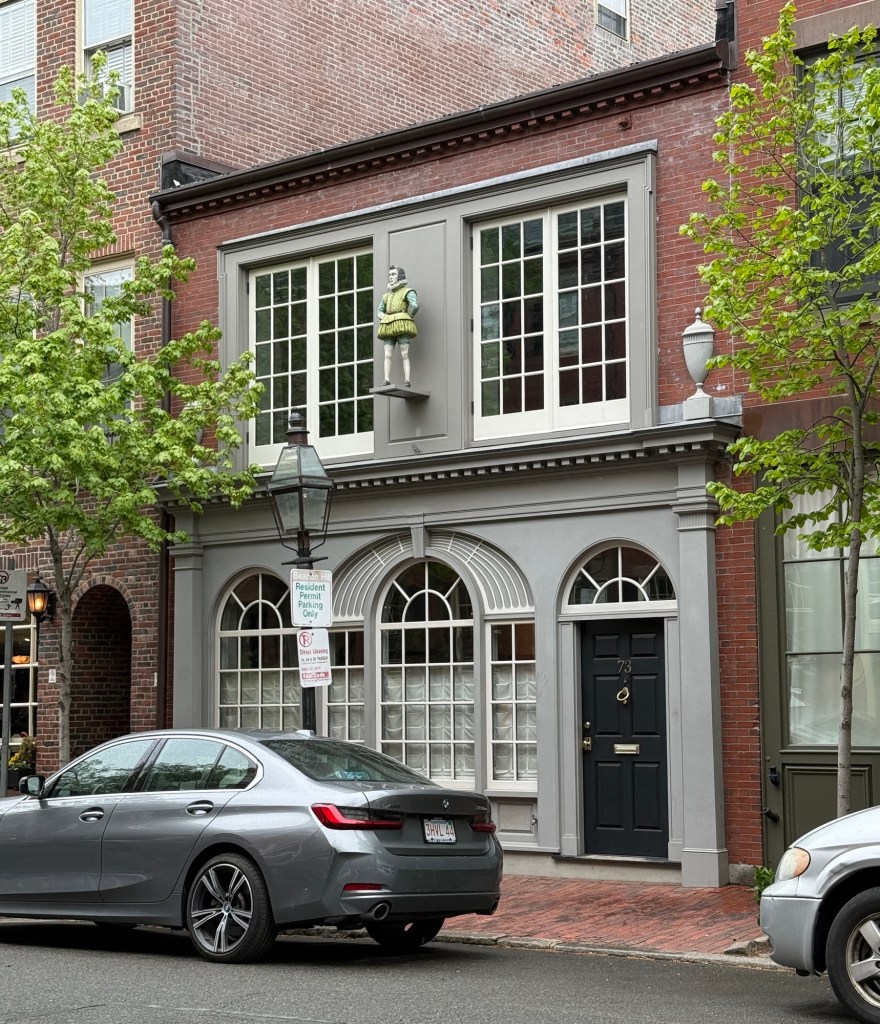
One of the many charming buildings on the Flat of Beacon Hill can be found here at 73 Chestnut Street, which has long been one of my favorites when strolling in the neighborhood. The building was constructed around 1895, replacing a wooden stable on the site, and appears to have been built as a stable and converted soon-after to commercial use. In 1917, the building was leased to tradespeople, and included a plumbing shop and cabinetmaker, but as the area gentrified after WWI, the building was purchased by Israel Sack, an antique dealer as his new store. Israel Sack was born in Lithuania and emigrated to the United States, first working as a cabinetmaker and later becoming an instrumental force in the antiques world, where he assisted with developing the private collections of Henry Ford, Henry Francis du Pont, Ima Hogg, and other leading collectors and supplying the Americana collections of many major museums. A year prior to buying and renovating this building, in 1924, Sack purchased the Robert “King” Hooper House in Marblehead, Massachusetts, and turned the 18th-century mansion into a showroom for his antiques. Israel Sack gave the building at 73 Chestnut Street its distinctive Colonial Revival facade with its urn finials and Bullfinch-eque Federal Revival storefront. Later operators of antique stores within the building include: Louis D. Prince and Stephen Score, until recently when it was converted to a residence, with the owners removing bright blue paint from the brick and restored the facade, down to the iconic wooden statuette on the second story.
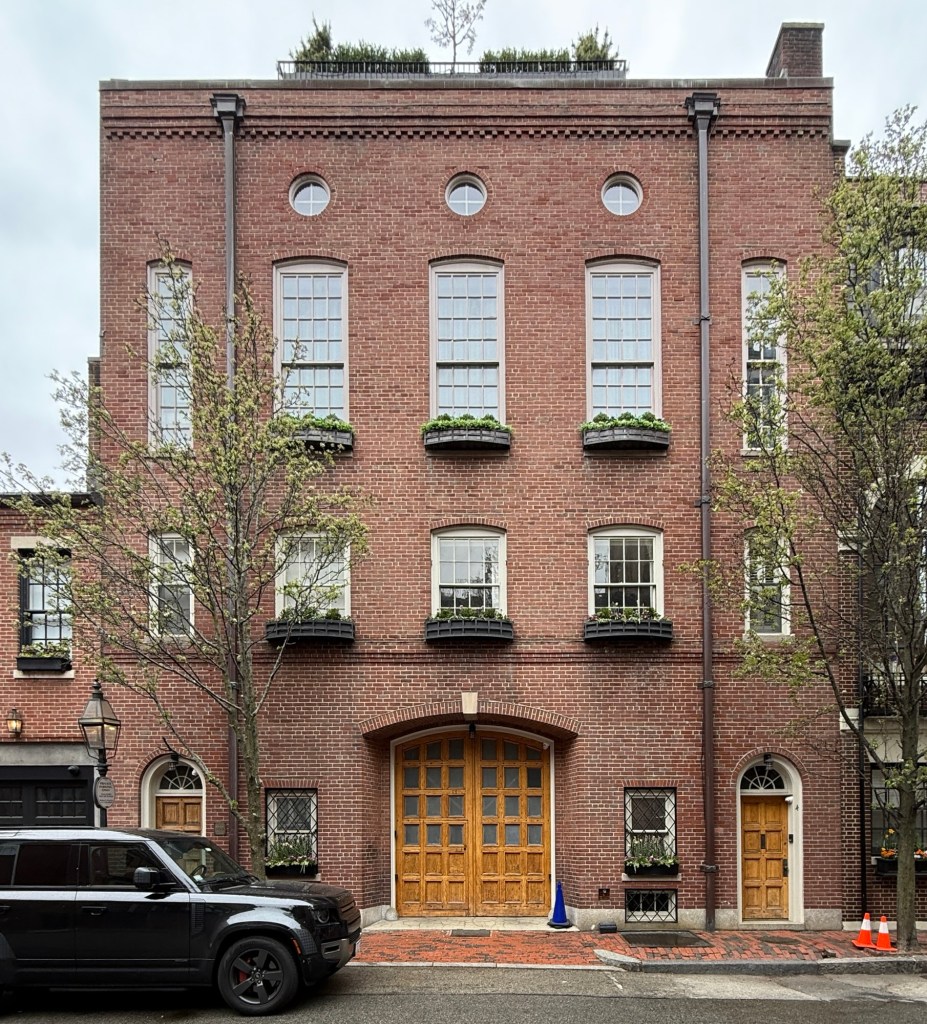
In 1929, Eleonora R. Sears (1881-1968), a tennis champion and great-great-great granddaughter of President Thomas Jefferson, had a 19th century stable she inherited from her late father, demolished and replaced with this stunning residence with garage on Byron Street in Boston’s Beacon Hill neighborhood. The present three-story building was designed by Henry Forbes Bigelow, who lived a few blocks away in his own mansion, as a unique Colonial Revival style building with symmetrical facade. Eleonora Sears was one of the first American women to drive an automobile and fly a plane and lived here with her chauffeur when she was not at one of her other properties. After Eleonora died in 1968, her Beacon Hill residence was converted into condominiums, while the facade retains its architectural features when built nearly 100 years ago.
Although the Pendleton House on Benefit Street in Providence, gives the appearance of a domestic residence, it was actually built for the purpose of displaying the once private collections of Charles L. Pendleton (1846-1904), which were given to the RISD Museum in 1904. Pendleton’s bequest, which included American and European furniture, silver, glass, ceramics, textiles, and paintings, came with the stipulation that the collection remain intact and on display in a suitable building for the benefit of the public. The stipulation occurred just before Mr. Pendleton’s death in 1904 and the Rhode Island School of Design immediately hired the local architect, Edmund Willson of the local firm of Stone, Carpenter and Willson, to furnish plans for a wing to the museum. Willson was an expert in the Colonial Revival style and sought to make the private collection of the Pendleton House befitting of a grand Providence mansion. It was Willson’s last major commission before his death. The building is crafted in a refined Colonial Revival style with symmetrical facade, traditional fenestration and Palladian motif, but is beefed up internally for is museum use with brick walls over a fireproof, reinforced concrete frame. The RISD museum has continually grown over the subsequent decades with wings connecting the Pendleton House with more contemporary buildings, all-the-while retaining the residential scale of Benefit Street in this iconic structure.
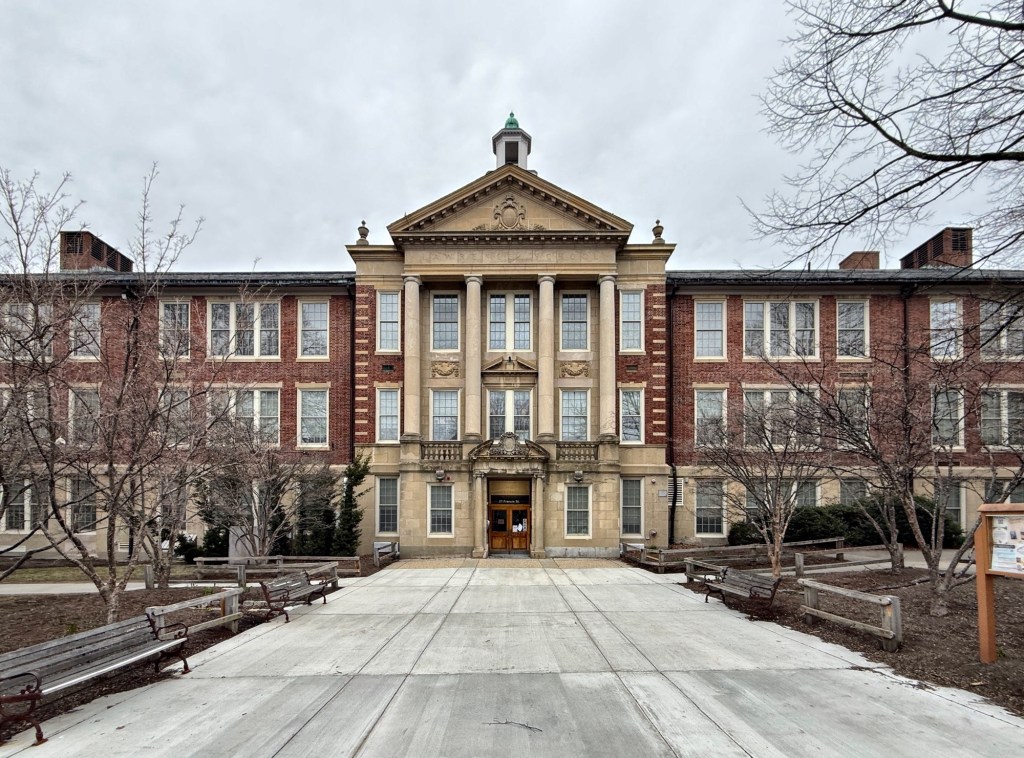
The Lawrence School in Brookline, Massachusetts, is a stunning example of a public school building built in the interwar period in the Colonial Revival architectural style. Constructed in 1929, the building replaced an earlier, Stick/Queen Anne style school designed by the firm of Peabody & Stearns. The school is named after Amos A. Lawrence (1814-1886) a prominent local landowner in Brookline. When the earlier school building was outgrown and deemed obsolete, planning began for a new, modern school building for the community. The new Lawrence School was designed by R. Clipston Sturgis a notable local architect who specialized in the Colonial Revival style, and opened in September 1930. The handsome brick building is in the form of a long rectangular block with two perpendicular wings at each end. At the center of the main block is the principal entrance with its columned portico on a projecting pavilion all in cast stone, a cheaper alternative that resembles limestone.
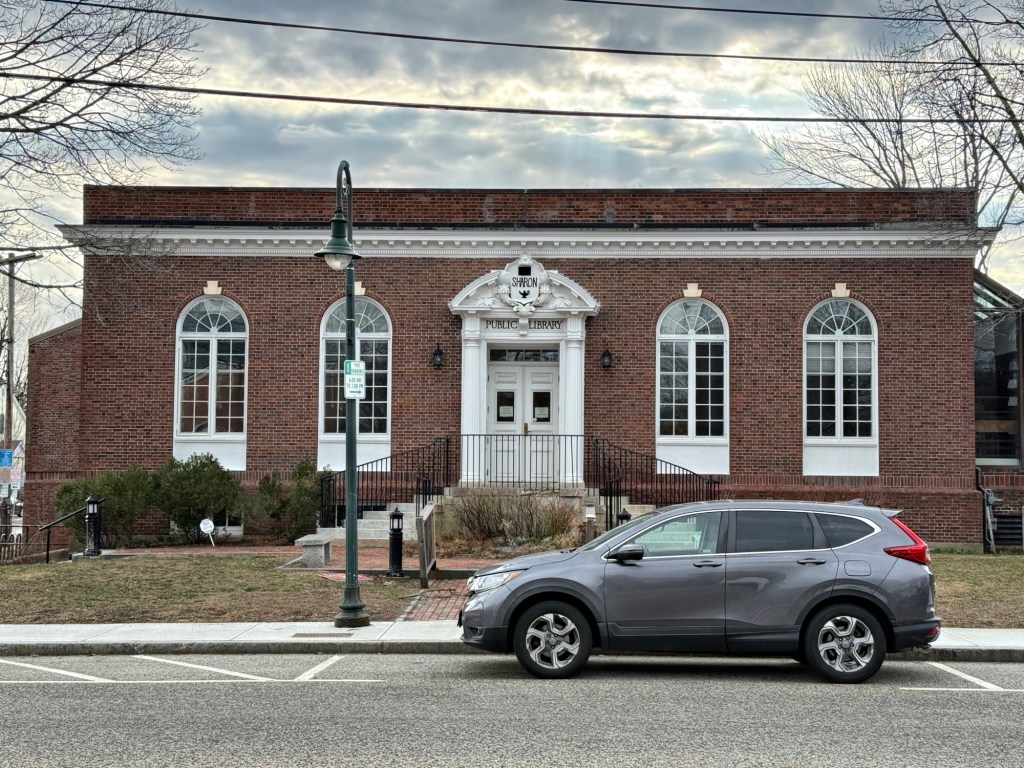
Built with funds donated by Andrew Carnegie as part of his push to expand access to libraries and books to millions of Americans, the former Sharon Public Library in Sharon, Massachusetts, stands as a great example of an early 20th century library built in the Colonial Revival style. Planning for a public library in the town of Sharon began in the 1870s when the town voted to appropriate money gained from charging dog licenses into a fund for a free public library. Additional funds were later added and a collection was set aside in the old Town Hall where the library occupied two rooms. By the 1910s, the circulation and use grew to a point that a new, purpose-built library was needed for the community, but funding was short and Sharon did not have any major benefactors to fund its library like so many other communities in New England at the time. As a result, an application is made to Andrew Carnegie for assistance. Months later, the sum of $10,000 was offered for the planning and construction of the library, costing the community nothing. Boston architectC. Howard Walker was selected to furnish plans for the Sharon Library, which was such a success that the building would be featured in numerous architectural publications after completion. The former Sharon Public Library remains one of a large number of Carnegie Libraries in New England and was subsequently expanded by rear additions in the late 20th century before a new library nearby was completed in 2025. It is not clear what will become of the 1914 library, but it remains in great condition and a lasting landmark on the town’s Main Street.
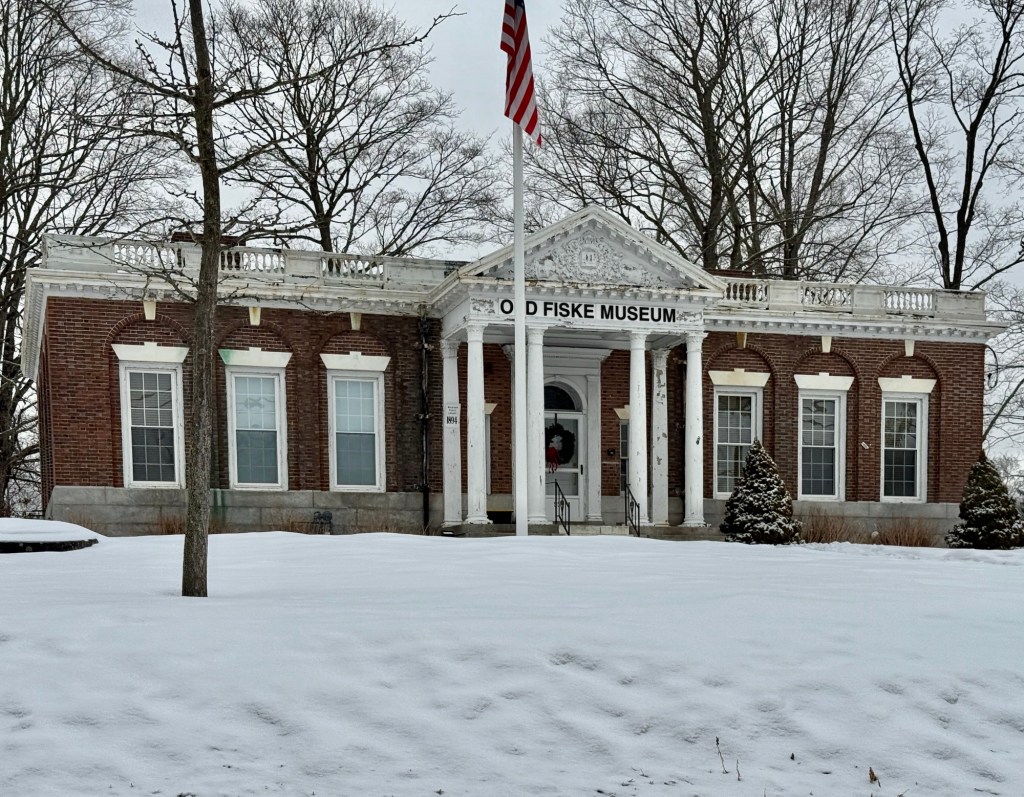
The former Fiske Public Library building in Wrentham, Massachusetts, is an excellent example of a civic building in the Colonial Revival style. The building was funded and dedicated in the memory of the late Josiah Jones Fiske, a Wrentham-born lawyer and businessman, by his heirs. The family selected plans by Boston architect, William York Peters, who designed the building with a symmetrical facade with central projecting portico supported by Corinthian columns, and tall windows set within slightly recessed arches. The library was eventually outgrown, and instead of building an addition, the town decided to build a contemporary library elsewhere. Now, the former library is home to the Wrentham Historical Commission and the Wrentham Arts and Cultural Commission as the Old Fiske Museum, where the commissions feature local artifacts, art, and showcase the town’s ever-changing history and culture.
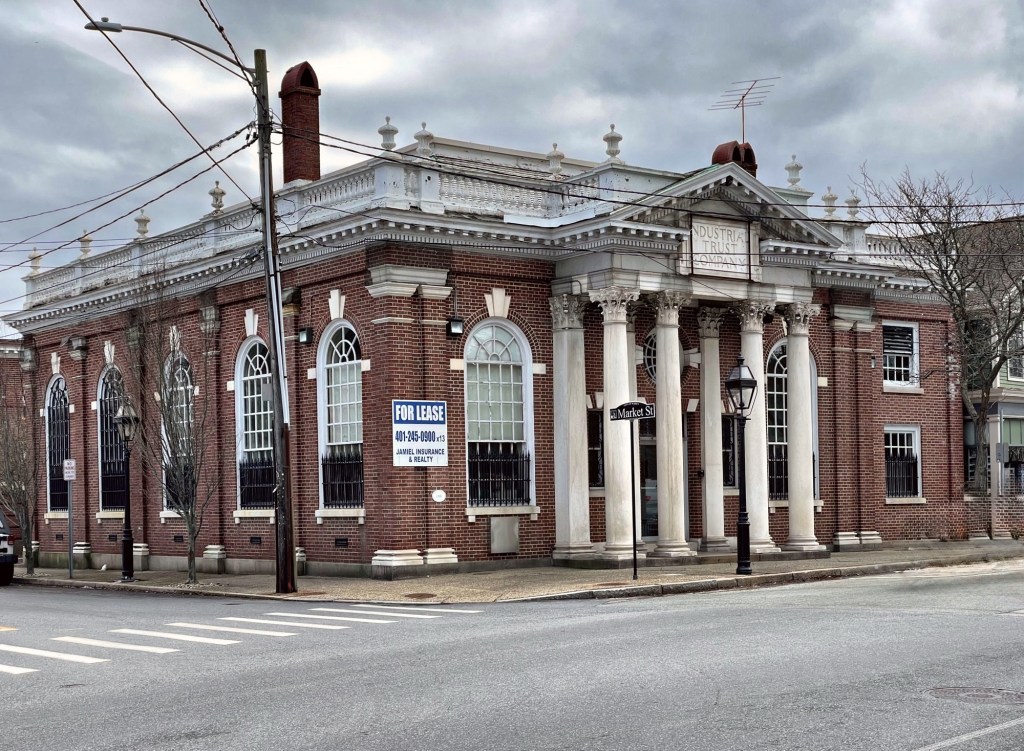
This monumental Georgian Revival bank building on Main Street in Warren, Rhode Island, and is one of the finest buildings of the style in the entire state. The Warren Industrial Trust in 1906 hired Edmund R. Willson of the Providence architectural firm of Stone, Carpenter & Willson to design the bank for the town after it had absorbed the town’s multiple banks, under one roof. It would be one of his final commissions before his death. On the facade, four Corinthian columns support a dentilled pediment over the entrance with the red brick walls enlivened with arched windows, oversized keystones, and pilasters with contrasting capitals and bases. The building shows that Colonial Revival architecture, while often seen as a refined, classical style, can be festive and ornate.
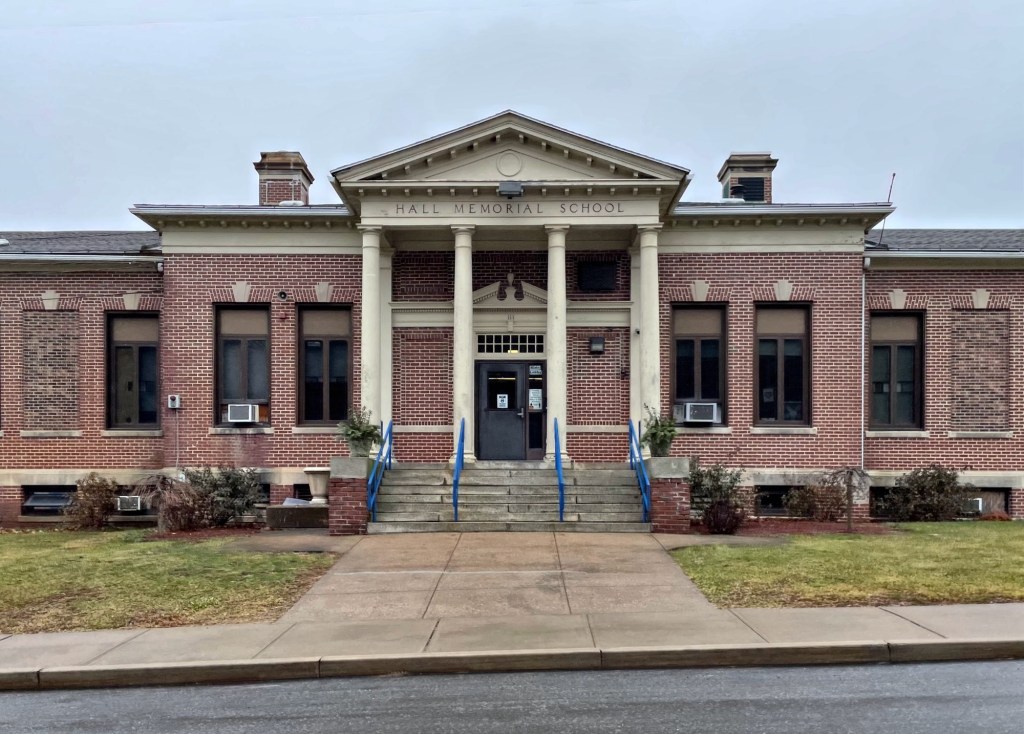
Located in South Willington, Connecticut, this Colonial Revival style school building was built to serve the mill village pupils, many of whom were first- and second-generation Americans who immigrated to the area to work at the local mill. In his will, William Henry Hall (1867-1922), the son of industrialist Gardiner Hall Jr., who established the business under his name, donated funds to the community to erect a new, suitable school building for the village. Beyond his work at his family’s business, William H. Hall served in the Connecticut House of Representatives in 1893–1897 and again in 1905, 1909, and 1911, and he was generous with his money throughout his life and in his will. For the Hall Memorial School, his heirs selected architect, Harry L. Sprague of Springfield, Massachusetts, who designed the one-story school built of brick and limestone trim and a tall, pedimented portico at the entry supported by four tuscan columns. The school has seen additions, but it retains much of its architectural integrity in the over 100 years of use as a public school.
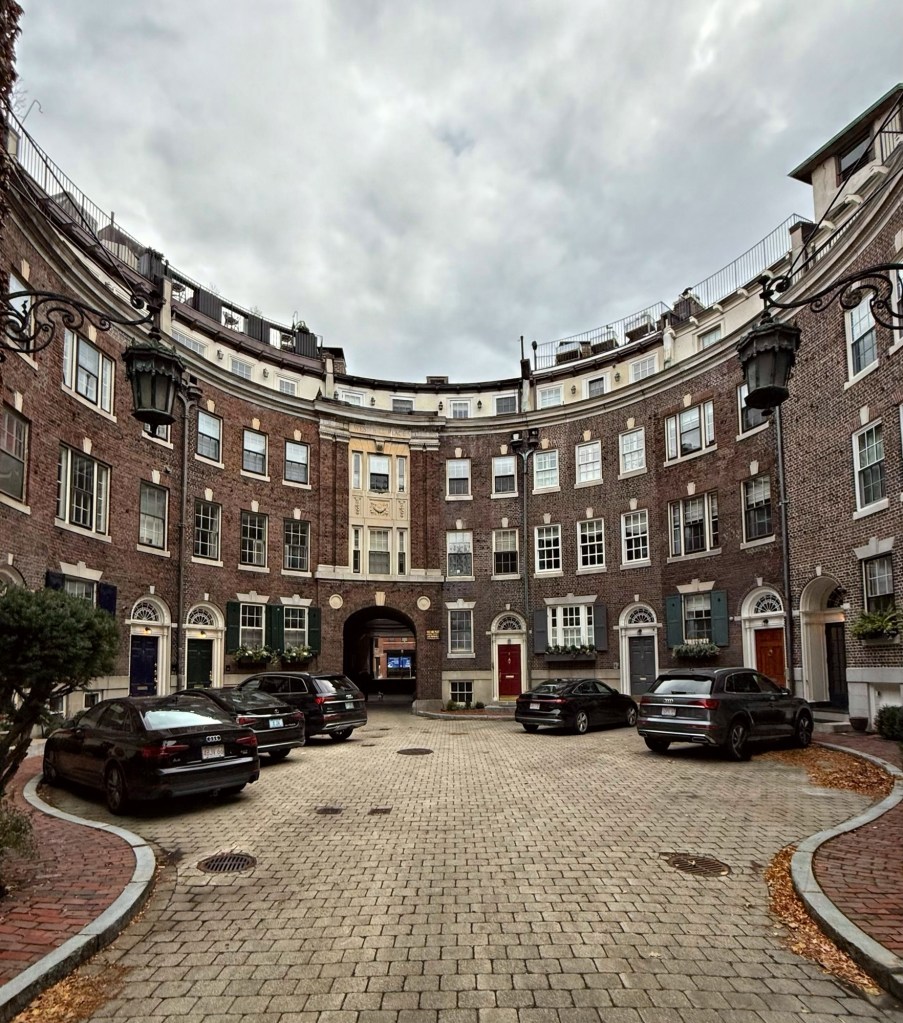
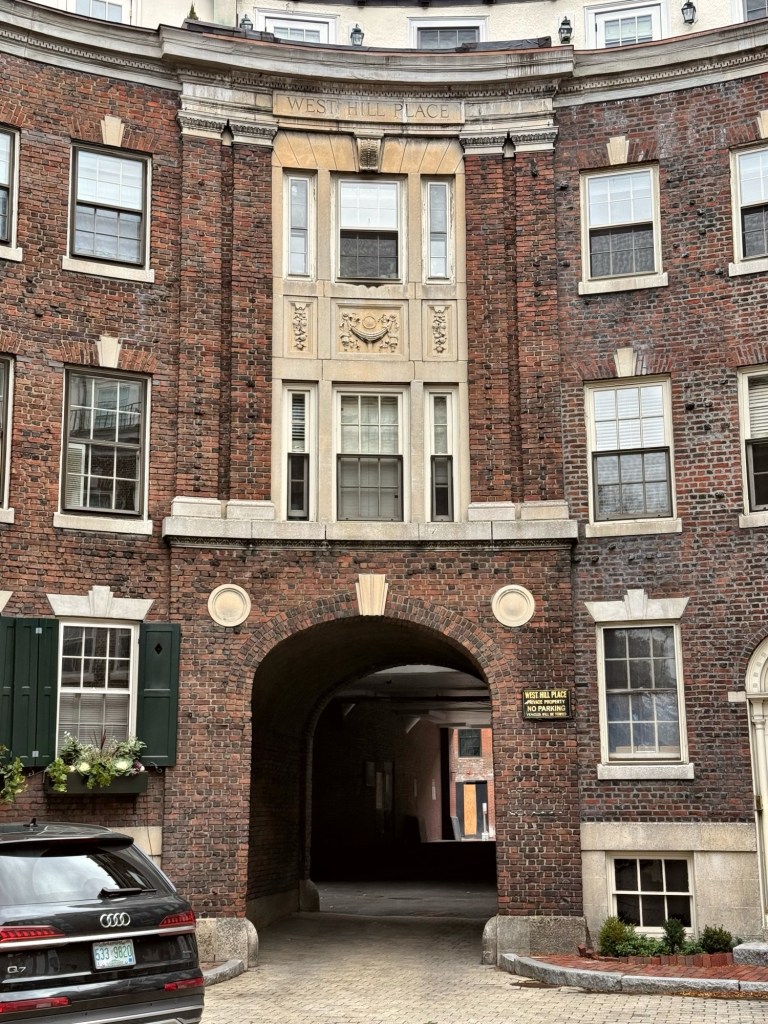
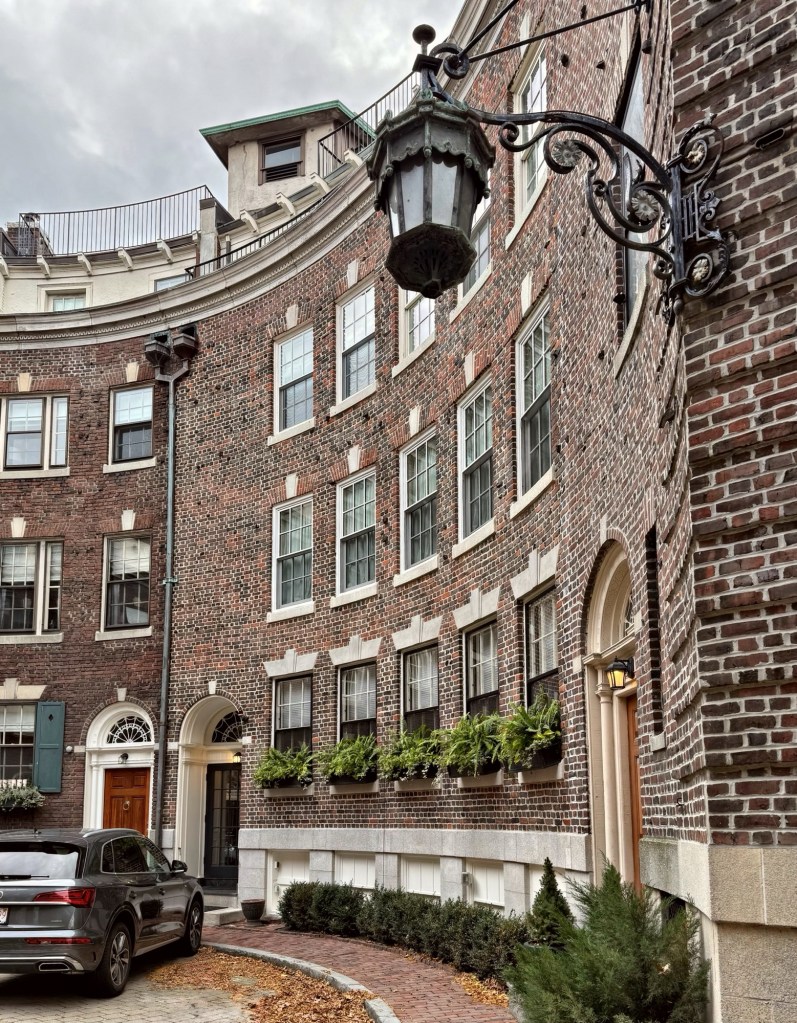
West Hill Place is a small development in Beacon Hill that feels like it was transported to Boston from London! The group of 14 four-story brick townhouses that comprise West Hill Place were built on the site of a gas holder in 1916. The Georgian Revival style development was designed by the firm of Coolidge and Carlson, who aligned six of the townhomes to face west on the Charles River Embankment and arranged the remaining eight residences around a circular court. The development was inspired by Charles River Square, located to its south and built six years prior. The driveway extends off what is today Storrow Drive, with a second exit set within an arched passageway that connects through the Charles Street garage, which was built later. The dark brick with cast stone trim works elegantly with the curving facades facing the courtyard, many of which are adorned with arched doorways and the original iron lanterns. The development has been harmed by the creation of Storrow Drive in the 1950s, but it remains one of the most unique and picturesque enclaves in New England.