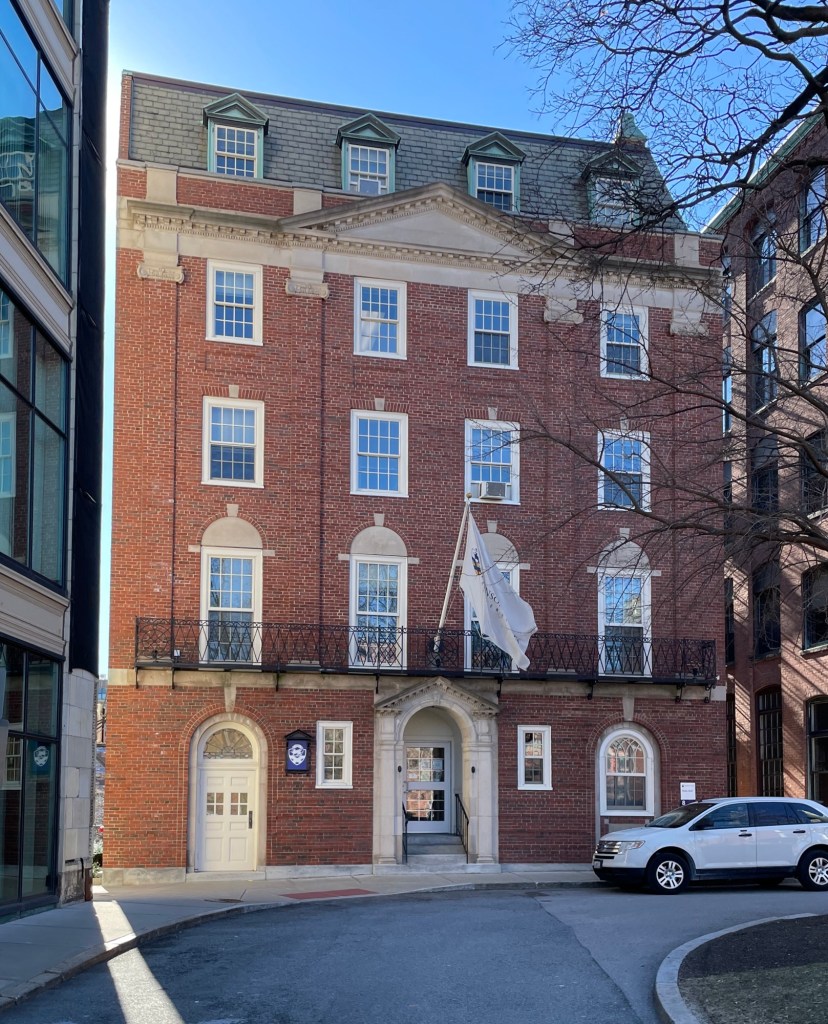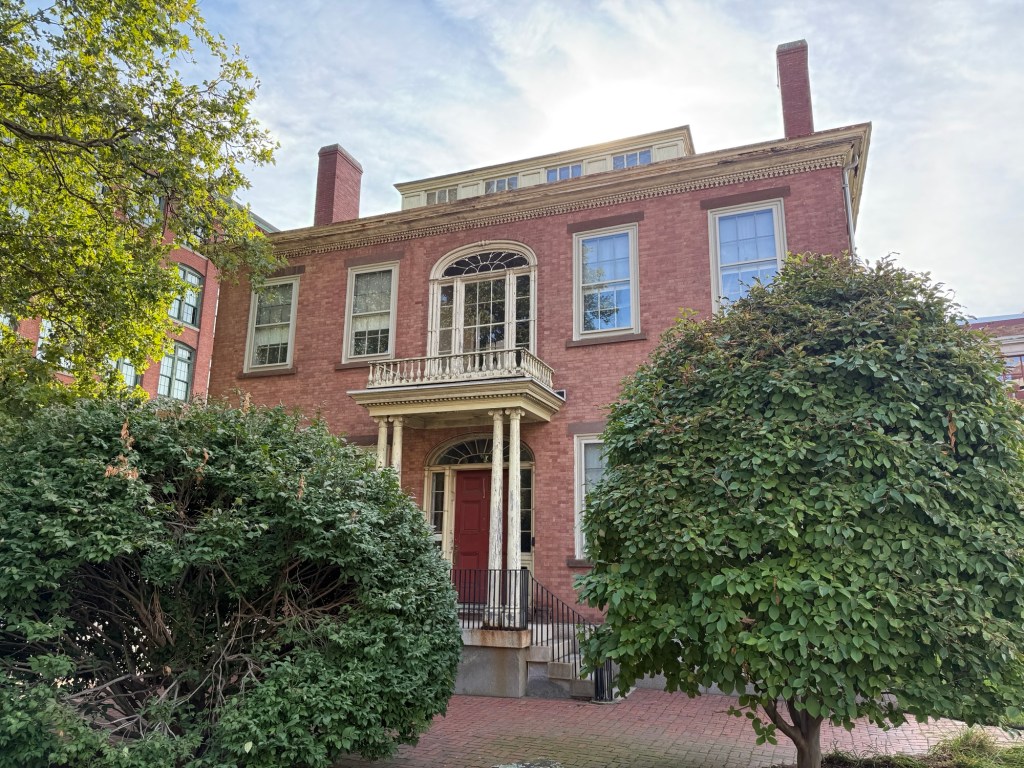
Deacon Edward Taylor House // 1786

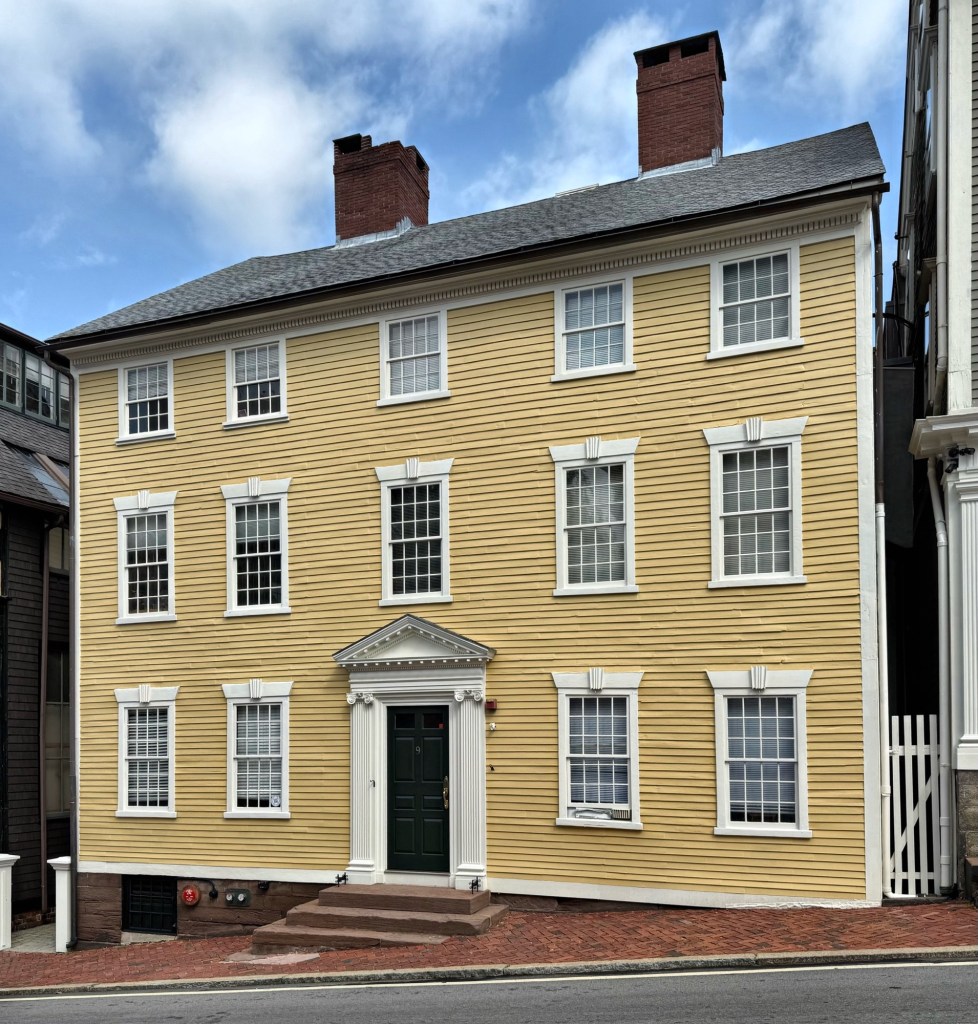
The oldest building on the iconic Thomas Street in Providence, Rhode Island, is the Deacon Edward Taylor House, a stunning early Federal residence built into the sloping site. The property was developed in 1786 for Edward Taylor, a chaise maker who had a shop on Main Street, also serving as a Deacon of the nearby church. Edward had bought out his brother’s half of the property and had this home built for his family. With its three-story symmetrical, five-bay facade, the house features a stately pedimented entry and flared lintels all atop a brownstone foundation. The property passed through many hands in the 19th and early 20th centuries until 1961, when it was purchased by the Providence Art Club as part of their multi-building campus.

Seril Dodge House // 1791

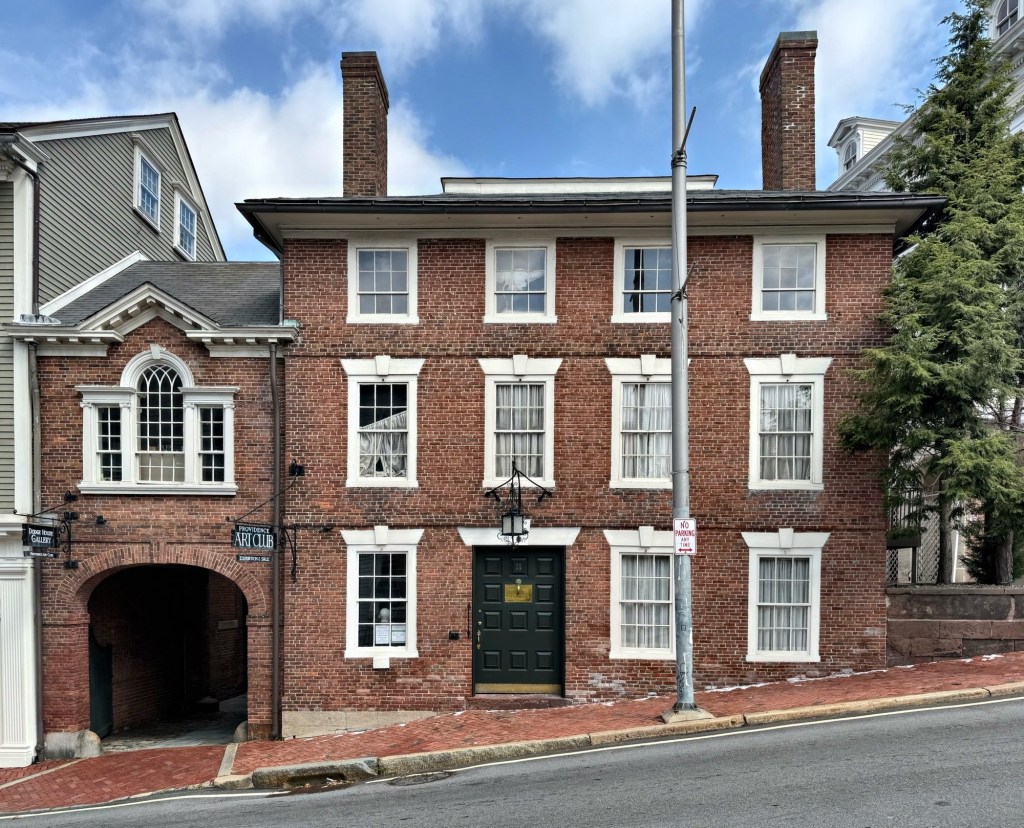
Years after Seril Dodge (1759-1802), a silversmith and clockmaker, built a house in 1786 on present-day Thomas Street in Providence’s East Side, he sold the property to the Brown Family and built this stately Federal period home next-door. Built in 1791, this three-story, side-hall brick house features belt courses above the first and second stories, a hipped roof, and flared lintels over the windows and doorway. After less than a decade, Seril Dodge moved back to his hometown of Pomfret, Connecticut, and sold this property to Moses Brown, who gifted the property to his son, Obadiah. Obadiah Brown (1771-1822) was a member of the Quaker faith and was a member of the Society of the Abolition of Slavery providing local jobs for free Blacks and sponsoring them in any legal disputes. Additionally, he helped secure the freedom of enslaved Africans who escaped to the north. This property was leased to the Providence Art Club in 1886 and acquired by the organization in 1906. Under the ownership of the Art Club, the side arcaded carriage entrance was added, likely designed by Stone, Carpenter and Willson, in conjunction with their 1906 renovation to the adjoining Dodge-Brown House. Today the building is known as the “Club House” and is home to the organization’s cafe, with an its intimate bar, and two exhibition spaces that are open to the public.

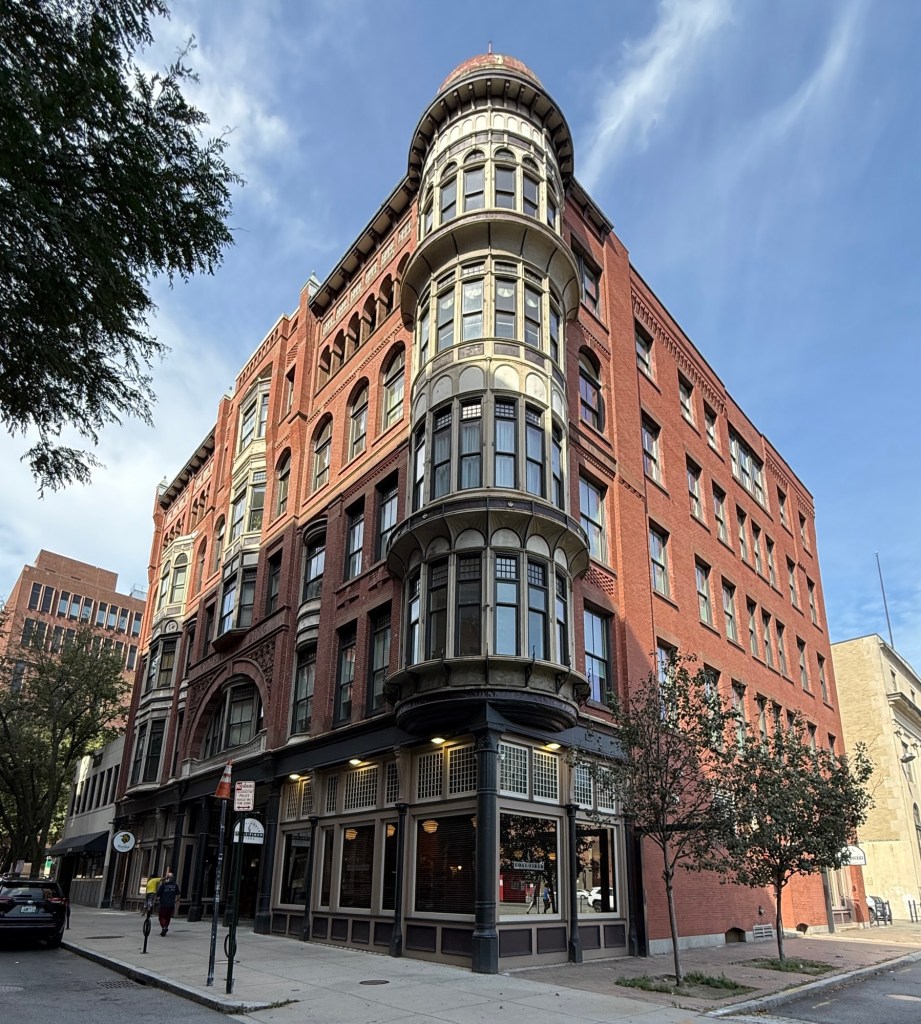
Dodge-Brown House // 1786

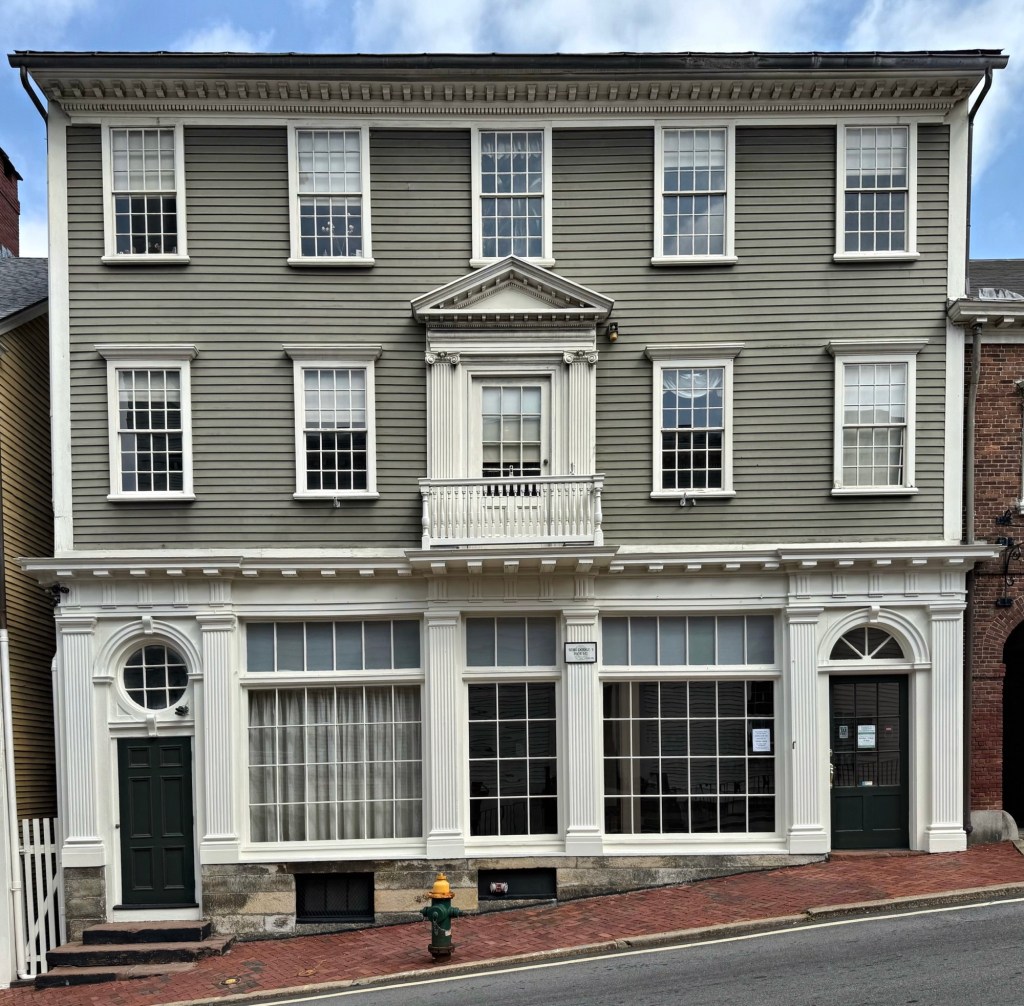
The Dodge-Brown House on Thomas Street in Providence, Rhode Island, was built in 1786 by Seril Dodge (1759-1802), a silversmith and clockmaker. Seril Dodge was a middle-class resident who did well in Providence circles, as an artisan and shop keeper. The house was originally a two-story residence with central entrance that was raised up in the early 20th century to facilitate a new storefront. Seril Dodge and his family only lived here briefly before moving to a brick house next door. Dodge sold the property to Nicholas Brown II (1769-1841) who rented the home to his stepmother, Avis Binney Brown, who became the widow of one of Providence’s richest men, Nicholas Sr. It continued to stay in Brown family hands through the nineteenth century, but only as an investment. The house was raised one story above street level in 1906, when the handsome Colonial revival storefront was installed from plans by the firm of Stone, Carpenter and Willson. The original front door with elaborate pedimented and pilastered enframement is now a door to a small second floor balcony. Since 1919, the Providence Art Club has owned the building, who for years had the ground retail space occupied as an art store, but now contains a club gallery.

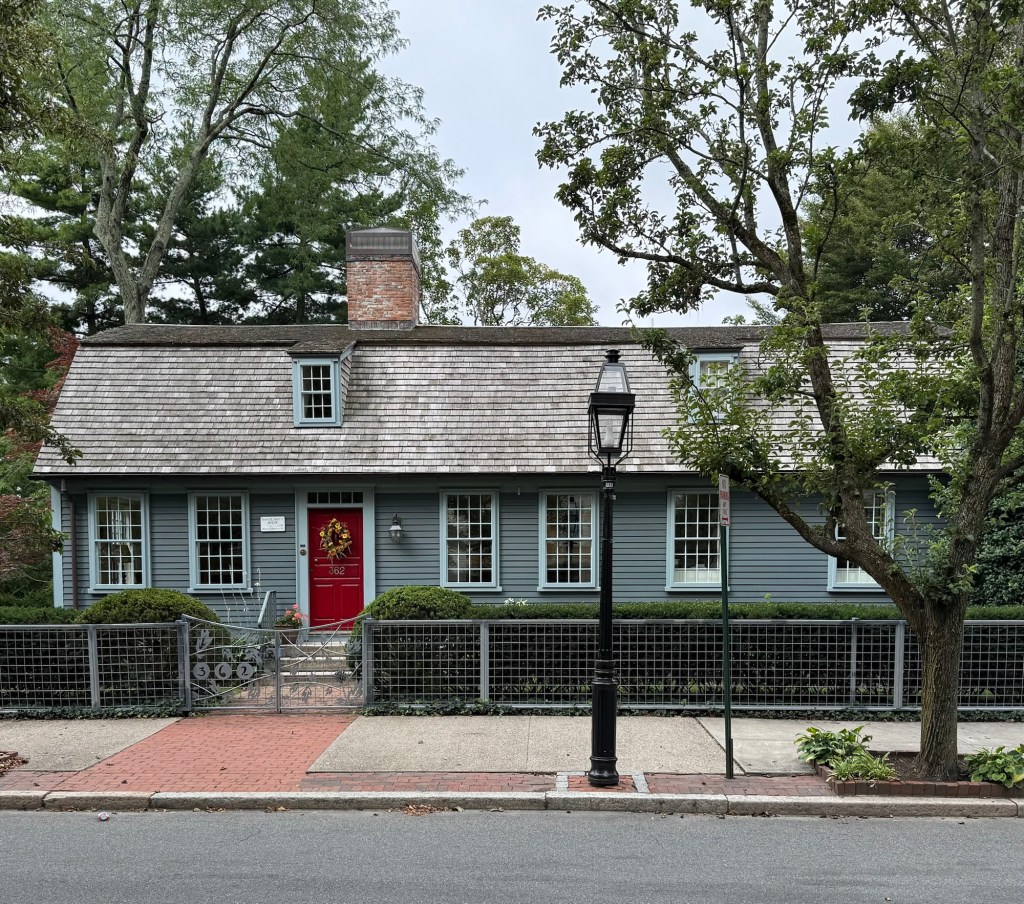
Daniel Smith House // c.1750

The Daniel Smith House at 362 Benefit Street in Providence, Rhode Island, stands out in the neighborhood as an uncommon gambrel-roofed Georgian-era residence, but it was not built here! The home was built by about 1750 for Daniel Smith, and may possibly date to around 1725 a year after he was deeded land from his father and the same year he married his wife, Dorcas Harris. If the home does indeed date to around 1725, it would likely be the oldest extant house in Providence! The home was originally located across town on Chalkstone Avenue, and moved to the present site on Benefit Street in 1982 to save it from institutional expansion by Roger Williams Hospital. The hospital set a date to demolish the farmhouse, then covered in asbestos siding, and offered the building for free to someone who could move it off the site. After tense weeks and a nearing deadline, Angela Brown Fischer, a real estate executive, agreed to pay the costs to move the building across town to a site on Benefit Street, where it remains today. The home was put back together and restored by Newport-based architect, Richard Long, who worked as principal architect for the Restoration Foundation of Newport before opening a private architectural practice. What a great preservation success story!

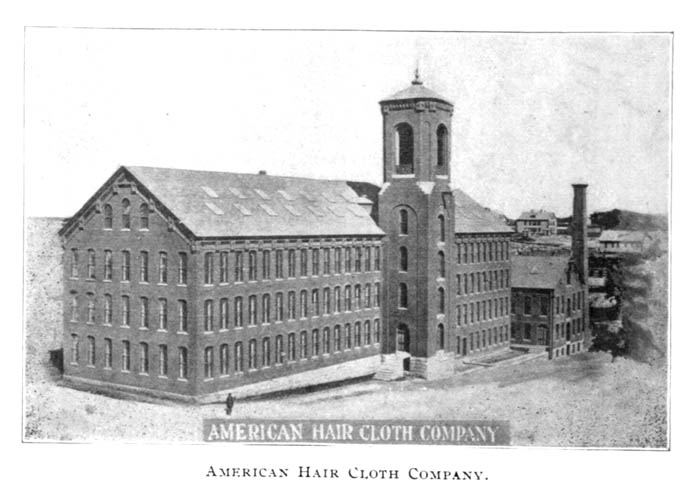
Pawtucket Hair Cloth Mill //1864

Despite its name, this handsome mill structure, known as the Pawtucket Hair Cloth Mill, is actually located in Central Falls, Rhode Island. The building, located on Roosevelt Avenue on the banks of the Blackstone River, is a great example of a Civil War-era mill, built for one of the many wool and cloth companies in New England. Begun in a small factory across the street in 1856, this business became successful after the acquisition of patents for weaving haircloth (most of the raw material for which originally came from Russian horse markets) for upholstery, crinolines, and inner linings. The company is said to have once been the largest producer of haircloth in the world. The Italianate style mill stands pretty much as built, besides the tower that has lost its low pyramidal cap. The building was one of the first commissions by great Rhode Island architect, William Walker, who was just 34 at the time of designing this large, and complicated structure.

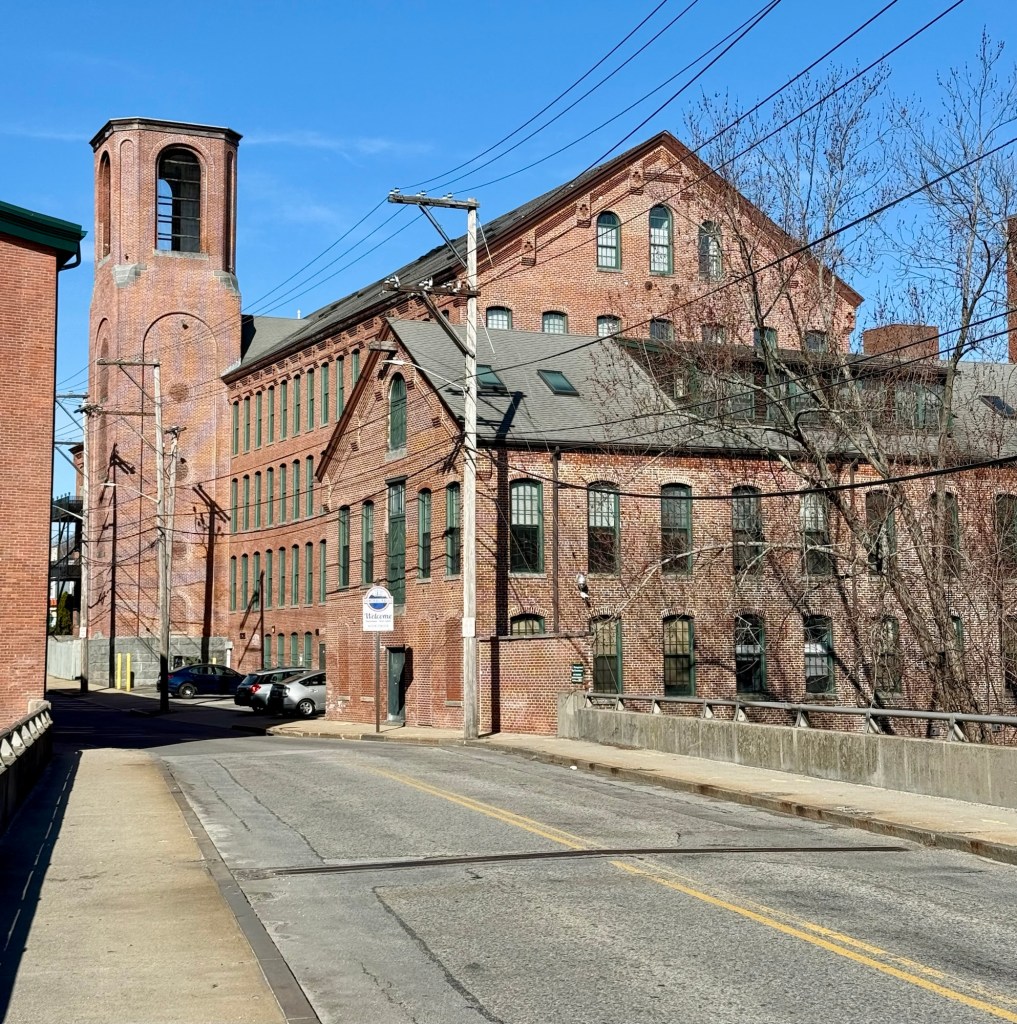
Kennedy-Stafford Mill // 1825

One of the oldest mills in Central Falls, Rhode Island, is this four-story brick building constructed in 1825 is important as one of the earliest extant brick mills in Rhode Island, at a time when such buildings were shifting from wood construction to fire-proof brick or stone construction. Built on one of the first industrial sites in the city, along the Blackstone River, the mill was originally constructed for a John Kennedy as a cotton manufactory. The complex was purchased and expanded in the 1860s by the Stafford Manufacturing Company, who built a new dam on the river and extension to the 1825 building. The structure features a five-story square end tower with freight doors, and a monitor roof which runs the span of the original 1825 building, terminating where the Stafford Company addition begins. Originally, canals flowed directly under the building, powering the building and three mills downstream, but they were filled in by 1965. Elizabeth Webbing started in the Kennedy/Stafford mill buildings in 1933. After over 70 years of making cloth straps used for seat belts, dog collars, luggage straps and more, it ceased operations in March of 2001. The complex, which included 19 nearby mill buildings, was split up and sold off. In 2007 work began on converting the former mill to residential use with the first phase of the project opening to tenants in 2009. It’s another great example of adaptive reuse into housing, the best type of project!

George M. Thornton House // c.1870

One of the finest homes in Central Falls, Rhode Island, is this eclectic Victorian residence on Clay Street. The home was seemingly built around 1870 and modified by the end of the 19th century by later owner, George Mumford Thornton (1850-1916). Mr. Thornton was an industrialist who was elected as one of the first aldermen when Central Falls incorporated in 1895. The well-preserved house features varied siding, a rounded corner tower with spiral-columned porch and conical roof, and original multi-light sash windows. What a spectacular home.

Pawtucket-Central Falls Station // 1916

The Pawtucket-Central Falls Railroad Station is a crumbling relic of a time once dominated by rail travel. This architectural landmark spans the border of the cities of Pawtucket and Central Falls, along with the tracks of the former New York, New Haven and Hartford Railroad and is one of the more unique buildings in Rhode Island. The station opened in 1916 to replace separate stations in the two cities from plans by F.W. Mellor, architect for the New Haven Railroad with Norcross Brothers of Worcester facilitating the construction over a structural steel base spanning the tracks. As many as 140 trains per day once passed under this station, but in 1959, it closed. The building was purchased by a private owner and plans failed to materialize for decades, leaving us with a crumbling masterpiece in architecture and engineering. In 2007, the lot was partially developed with the addition of a suburban, soulless CVS store and parking lot, which today, directly abuts the station. In 2023, a new Pawtucket/Central Falls station opened nearby, which has brought new calls to demolish this building, with people actively seeking grants to fund the estimated $10 Million dollar demolition.

Samuel B. Conant House // 1895

Built in 1895 for Samuel Conant, president of a Pawtucket printing firm, this stately residence is one of the finest Colonial Revival houses in Central Falls, Rhode Island. Designed by the Providence architectural firm of Stone, Carpenter & Willson, the house is brick on the first floor with clapboard siding above. The Contant house has a gambrel roof punctuated by several gable dormers. The main facade has two symmetrical round bays, which rise to the roof and are topped by low balustrades. A single-story porch extends between the center points of these bays, and is also topped by a low balustrade. Recognized for its architectural grandeur (inside and out), the house was individually listed on the National Register of Historic Places. The Conant House is now used as a nursing home and while the transition to this new use has required a number of interior alterations, these changes have been made with sympathy for the character of the house and many of them are reversible.

St. George’s Episcopal Church, Central Falls // 1922

Tucked away in the middle of a residential neighborhood in the dense city of Central Falls, Rhode Island, this Neo-Gothic style church more closely resembles an English country church than one typically found in a dense, industrial city. This is the St. George’s Episcopal Church, located at the corner of Central and Clinton streets, and built for the local Episcopal congregation there in 1922. The church was designed by the Rhode Island architectural firm of Clarke & Howe and is built of rough-faced stone with limestone trim. The highlight of the design is the large central tower with lancet, stained glass window, and belfry.