Charles Shepard House // 1824

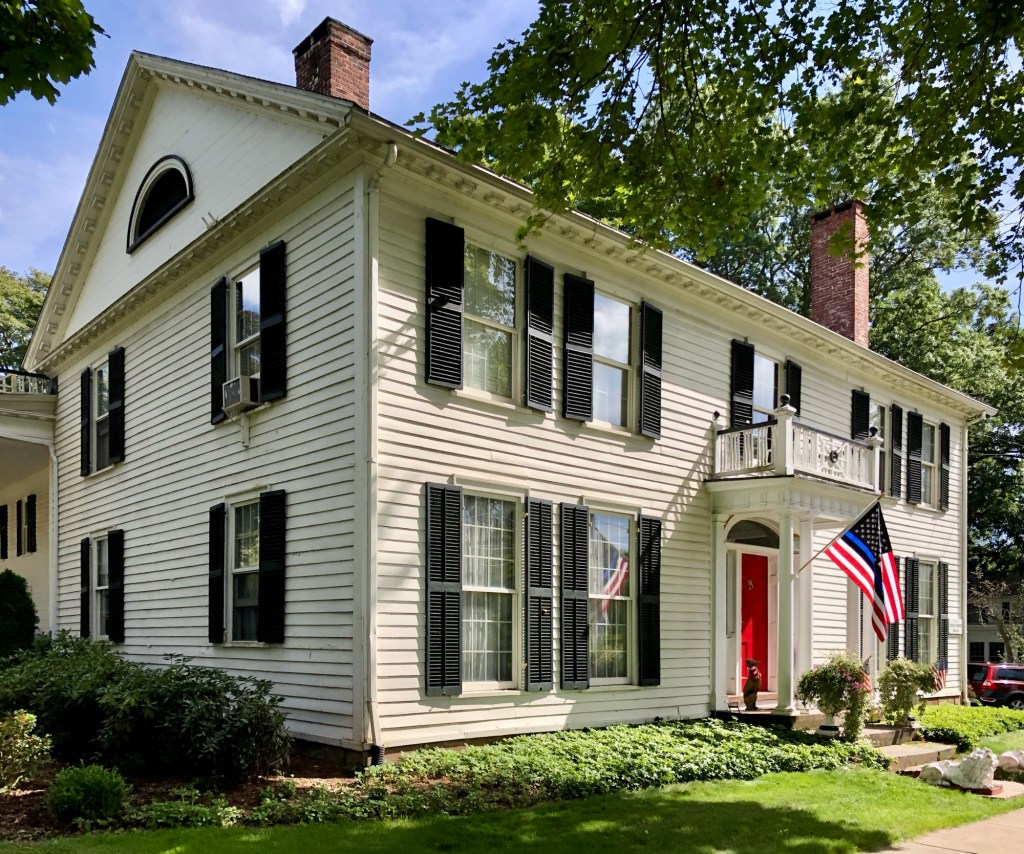
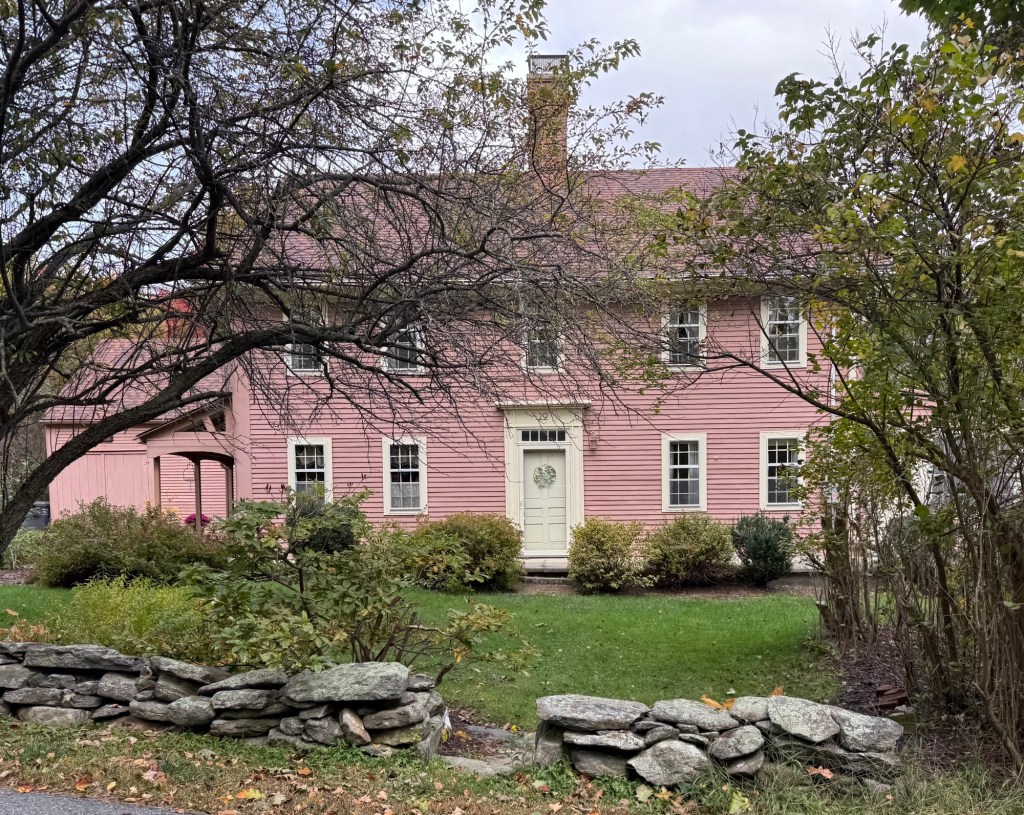
The Charles Shepard House on Main Street in Suffield, Connecticut, is a stately and well-proportioned Federal period residence that contributes to the iconic streetscape of historic homes that have been lovingly preserved by centuries of ownership. The residence was built in 1824 for newlyweds Charles Shepard (1792-1867) and Cordelia King of the wealthy local King Family of Suffield. Charles was a local attorney who practiced in town for a few years until he moved to Hartford following the death of Cordelia in 1825, soon after this house was completed. The large residence was later owned by William Henry Fuller a local businessman and politician. The house features larger first-floor double-hung windows, fan motifs in the flushboarded gable ends, dentilled cornice, and early 20th century rear addition and entry portico on the facade.

West Suffield Academy Hall // 1855

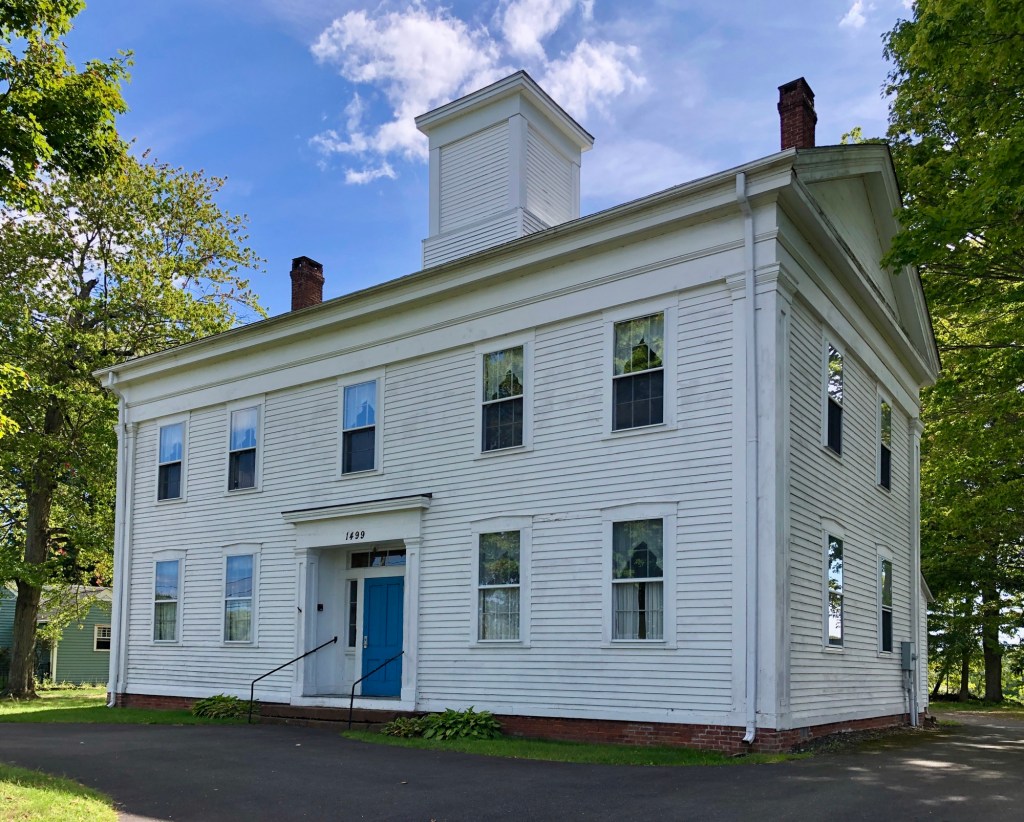
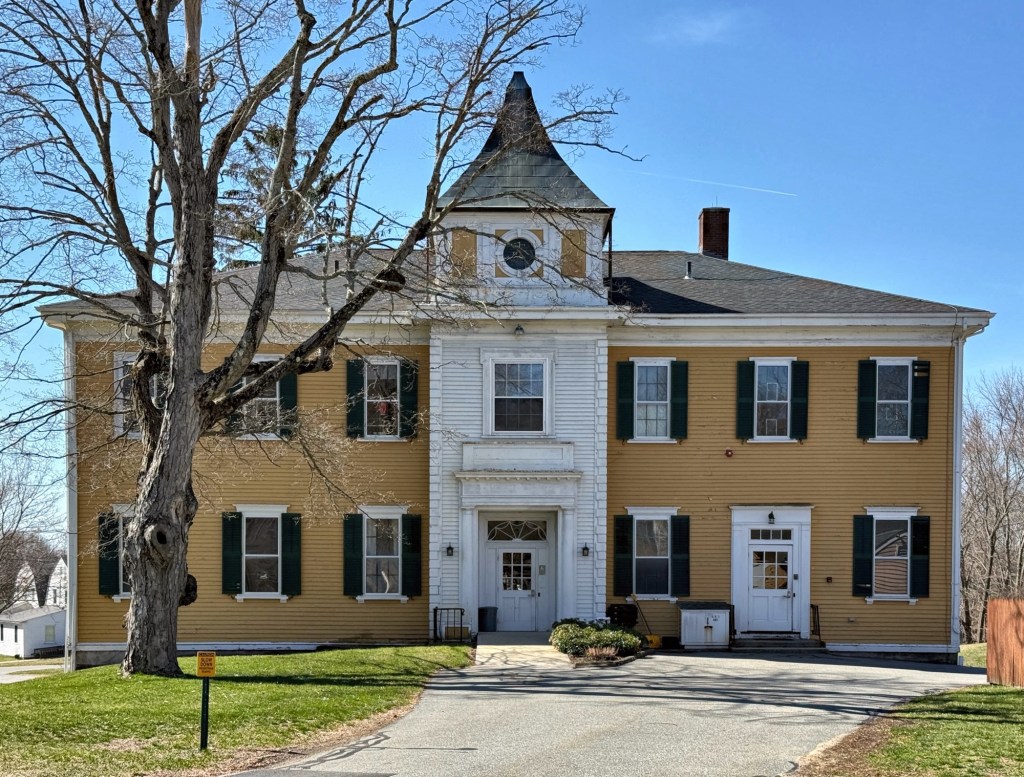
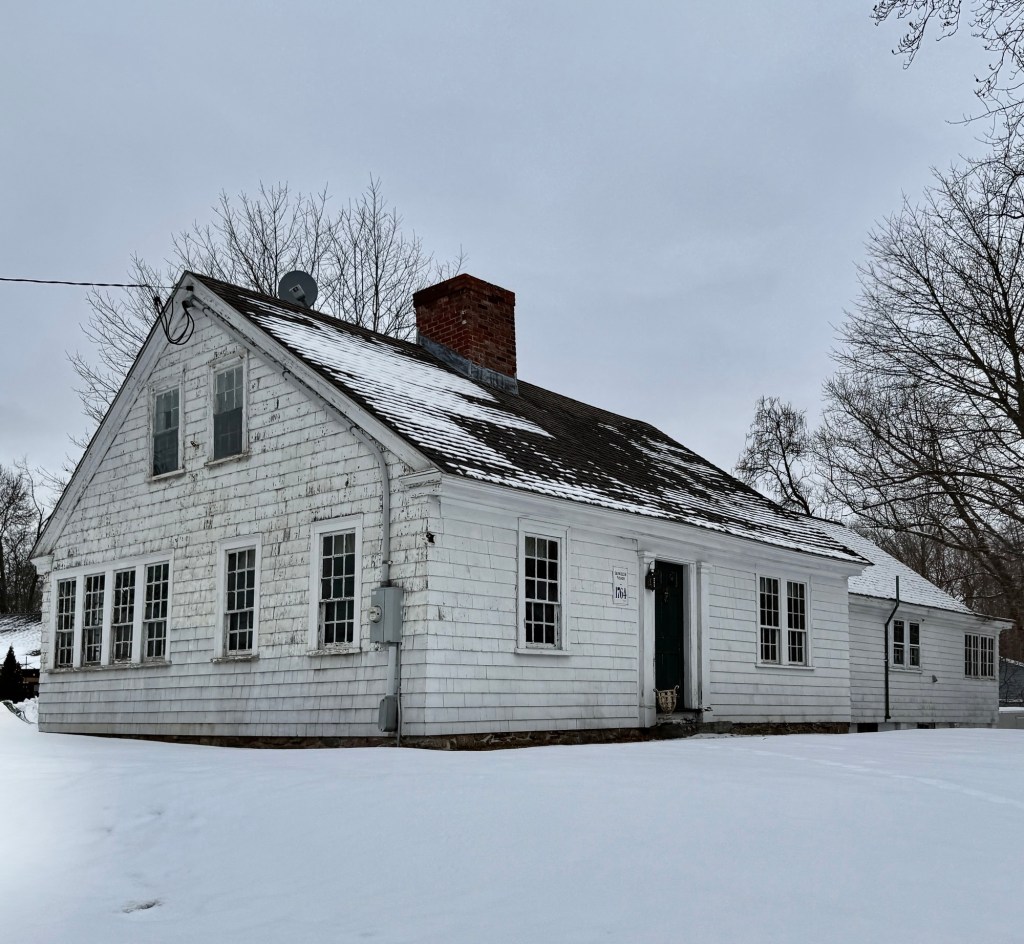
Built in 1855 as the West Suffield Village school, Academy Hall served as one of Suffield’s public school buildings until 1913, when consolidated schools were built in town. Like in many New England communities, the old, wood-frame school building was repurposed, and due to the large agricultural community in Suffield (it was a major grower and exporter of tobacco), the old Academy Hall was occupied by the local Grange club, a social organization that encouraged families to band together to promote the economic and political well-being of the community and agriculture. The handsome structure is owned by the non-profit West Suffield Village Improvement Association, and as of April 2026, the building is leased to the Suffield Historical Society, and is available for events. The structure features a Classical door surround, corner pilasters, entablature, and a large square cupola at the gable roof.

Milmore Memorial, ‘Death and the Sculptor’ // 1889

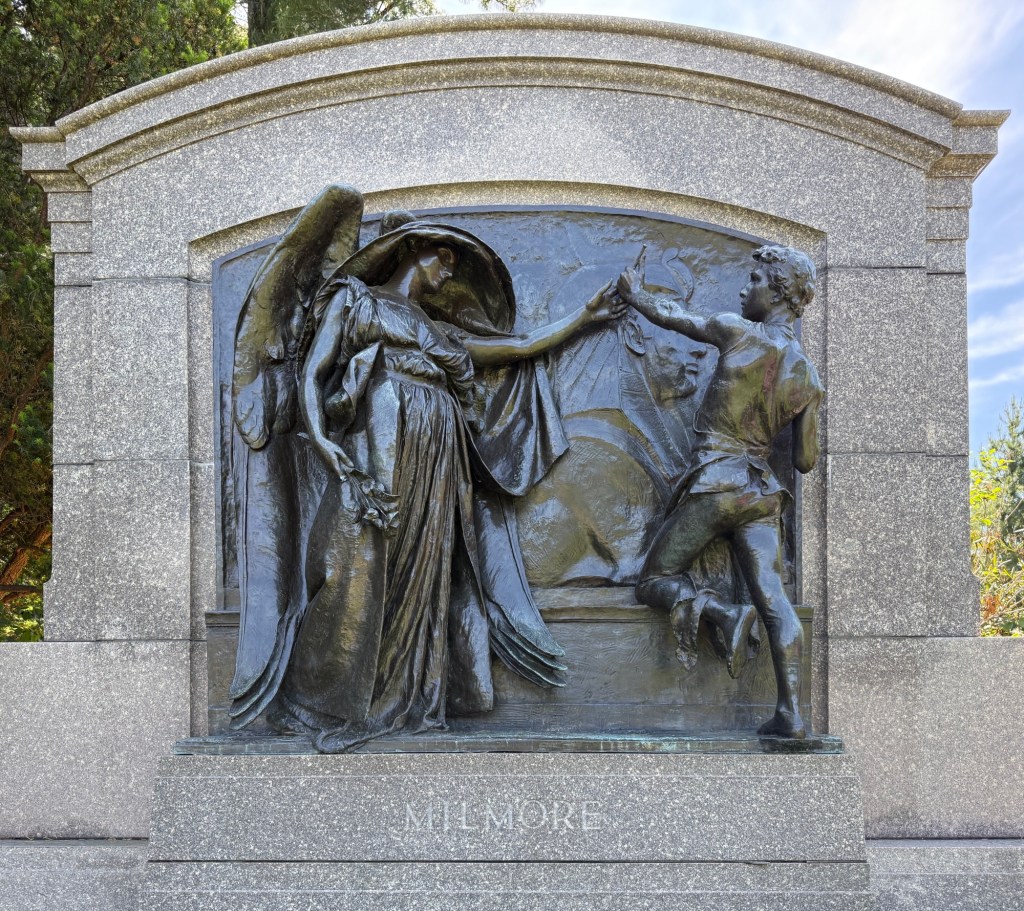
The haunting yet beautiful monument, “Death and the Sculptor” in Forest Hills Cemetery is quite possibly my favorite piece of sculptural art and a gentle reminder to not take life for granted. Commissioned in 1889 and dedicated in 1893, the bronze monument was designed by Daniel Chester French, a sculptor best known for his 1920 monumental statue of Abraham Lincoln at the Lincoln Memorial, to memorialize sculptor, Martin Milmore and his brother Joseph, a stone-cutter. Rather than portraying death as frightening or violent, French depicts a serene winged figure gently staying the hand of a young sculptor at work, suggesting a peaceful transition from earthly labor to eternal rest. The sculpture’s quiet grace, emotional depth, and masterful craftsmanship have made it a landmark of American memorial art, inviting visitors to reflect on mortality, creativity, and the enduring power of beauty in the face of loss. To tie the work to its subjects, the young sculptor is carving a Sphynx, modeled after the 1873 sculpture the brothers worked on together that is located at Mount Auburn Cemetery in Cambridge. A marble version of the work can also be found at the Metropolitan Museum of Art in New York, carved in 1917 by the Piccirilli Brothers.

Forest Hills Cemetery – Louis Mieusset Memorial, “Boy in the Boat” // 1886

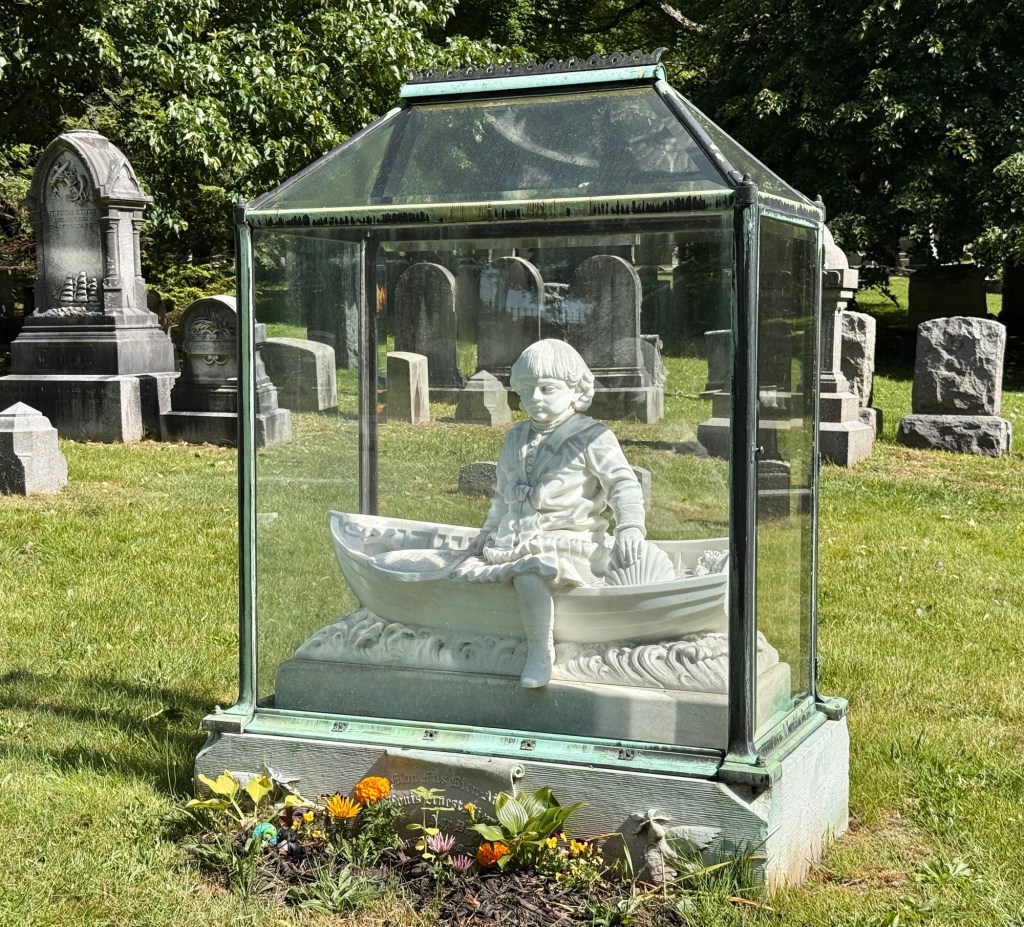
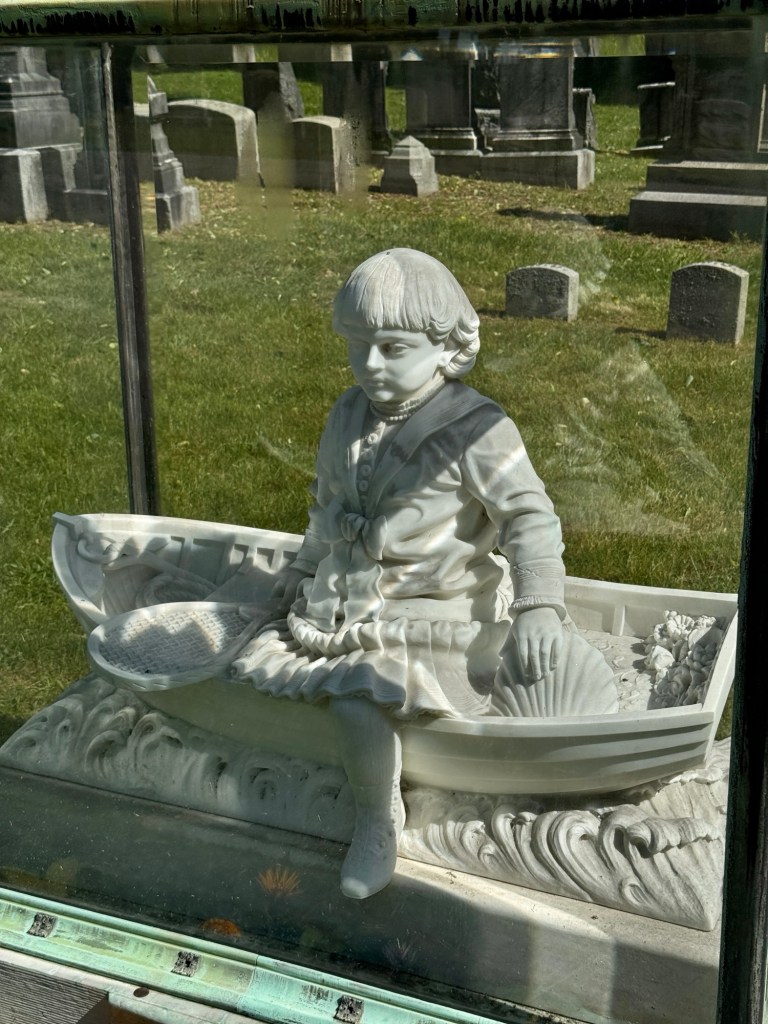
Louis Ernest Mieusset (1881-1886), just shy of his fifth birthday, died of Scarlet Fever and nephritis. His mother, Madame Louise Mieusset, took every penny she had saved for her son’s education and put it towards a commission of a funerary sculpture, depicting her late son’s playful spirit. The memorial of four-year-old Louis Mieusset is marked by a brilliant white marble figure depicting the young boy in a boat with a tennis racket in one hand and a shell in another. Marble was popular during the mid-19th century but it was understood that marble was too soft to stand up well outdoors, so it was additionally enclosed in a bronze and glass vitrine to protect it from acid rain and staining. Carved into the base, it states, “MY ONLY AND DARLING CHILD…A MOTHER’S TRIBUTE OF AFFECTION”. Madame Mieusset worked as a hat-maker in Boston, and after the death of her son, she struggled financially to support herself between frequent visits to mourn her son, even decades after his death. Louise planned to be buried next to her son, but died penniless in 1936. As she did not leave funds for burial in Forest Hills Cemetery, her body was buried in a pauper’s lot, until (legend says) Boston Mayor James Curley paid her burial expenses, funding the relocation of her body, allowing for her eternal rest with her late son Louis.

A similar monument, known as the “Girl in the Glass” is also found at Forest Hills.

Milford Armory // 1912 

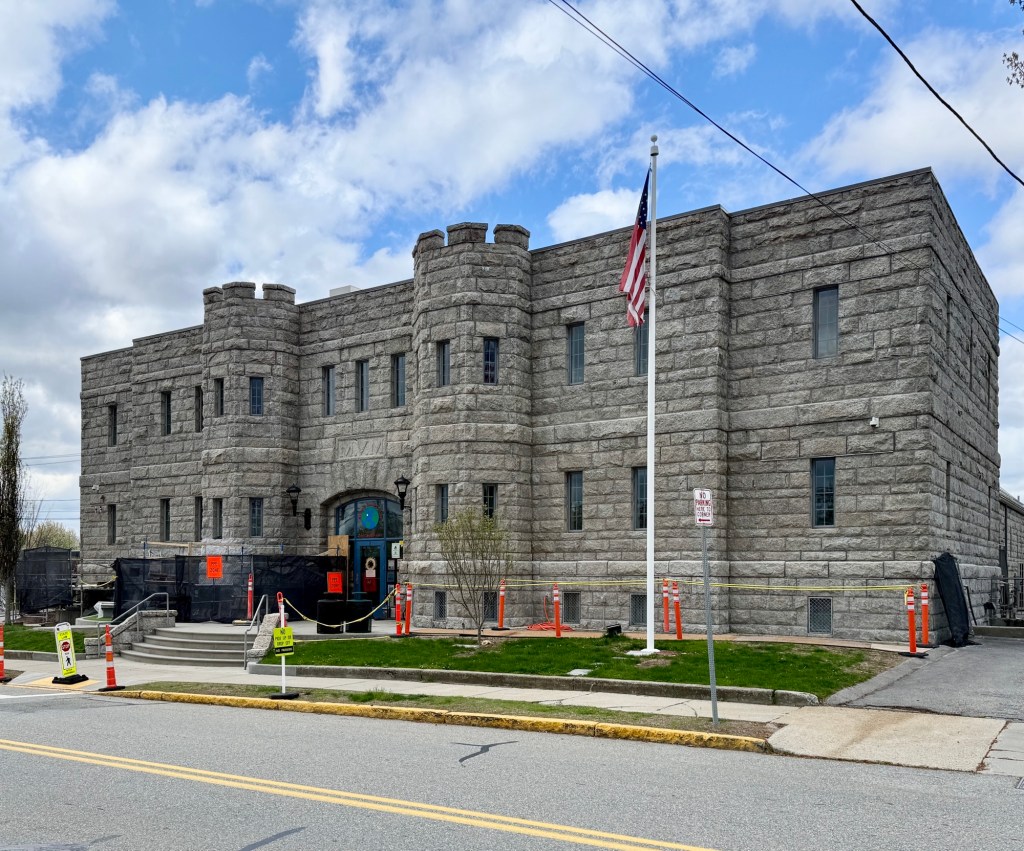
A source of local pride, the Milford Armory building on Pearl Street in Milford, Massachusetts, is an architectural landmark in the community and shows how adaptive reuse can give old buildings new life. The structure was completed in 1912 and constructed of locally quarried and cut Milford granite, a pinkish-grey granite that covers an area of approximately 39 square miles, centered around present-day Milford. Between the Civil War and WWII, the town of Milford became famous for its “pink” granite as a building material, with over 1,000 men laboring in dozens of quarries supplying the stone for some of America’s most iconic buildings including: the Boston Public LibraryWorcester City Hall, as well as the original Penn Station and Natural History Museum in New York, among many others. Besides being built of local granite, the Armory was also designed by local architect, Wendell T. Phillips, who followed nationwide trends designing the building like a fortified Medieval castle with crenellated towers, with long and narrow windows recessed, emulating the slit windows used in similar medieval structures. Like in many communities all over the country, the need to store firearms and major National Guard trainings declined with some being demolished, others sitting vacant, and others like the Milford Armory, seeing new life. The Milford Armory was slated for closure in 2002 and was ultimately saved when the Town of Milford and the National Guard struck a deal to initially rent the building for a Youth Center and gymnasium and share the space with the Guard.  The armory was home to the popular Youth Center, which needed gym space not available anywhere else. The building was ultimately purchased by the town and underwent a massive restoration, being rededicated as the Milford Youth Center in 2016

Bayard Thayer House – Hampshire House // 1911

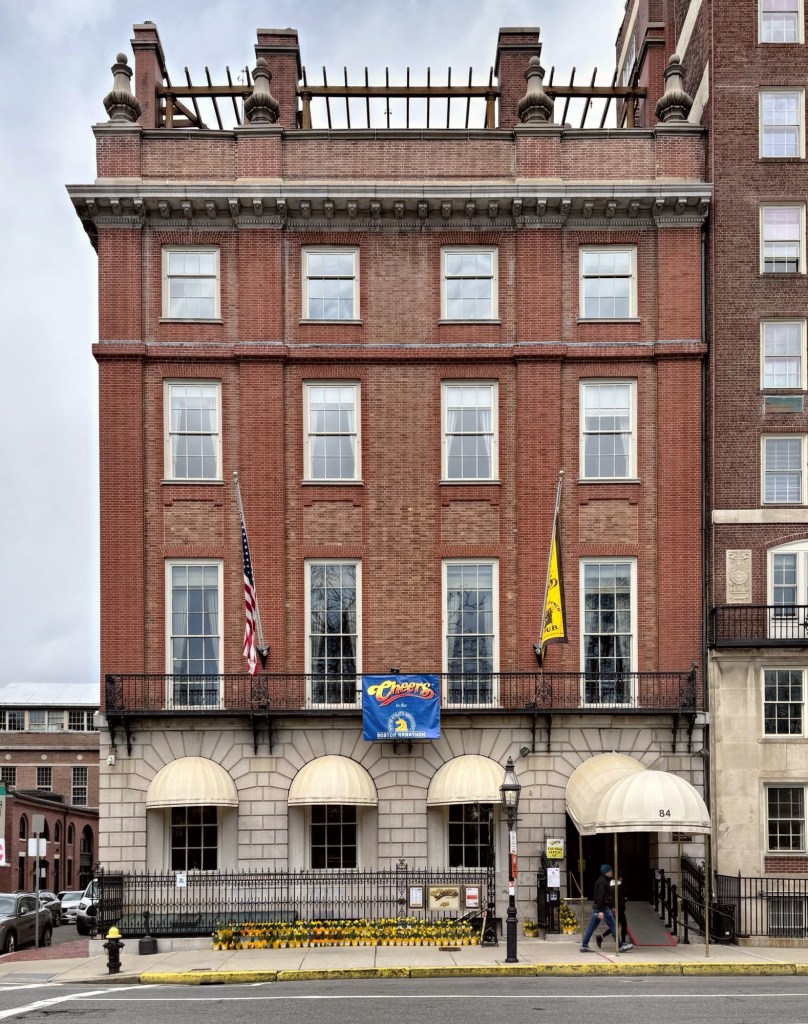
This iconic building at 84 Beacon Street in Boston’s Beacon Hill neighborhood, is best-known for its bar, which in 1982, became world-famous as the locale for the bar in the television sitcom Cheers, one of the most-watched programs in television history; but its history begins earlier. This five-story building was constructed in 1911 as a mansion for Bayard Thayer (1862-1916), who split his time between Boston and his country estate in his home-town of Lancaster, Massachusetts. Thayer hired architect, Ogden Codman Jr., a favorite designer of Boston and New York high-society, to design his Boston mansion, which is an expressive and overscaled example of a Colonial Revival style townhouse. Bayard Thayer died in 1916 and his widow, Ruth Simpkins Thayer, lived here with her granddaughter, Ruth, and nine domestic servants. After Ruth Thayer’s death in 1941, the property was conveyed to the Colonial Properties Trust in 1944, operating the building as a small luxury apartment hotel. From this point on, the hotel became known as Hampshire House. In about 1969, the basement space in the Hampshire House opened as the Bull & Finch Pub, which later became the inspiration of the iconic sitcom Cheers. Pictures of the exterior of the building were used in the show’s credits and scene changes, and the interior was faithfully replicated from the set in Hollywood, where the show was actually filmed. The Bull & Finch Pub has permanently been renamed Cheers Pub and visited by many who wish to visit the place where “everybody knows your name”.

Birch-Stevens Mansion // 1855

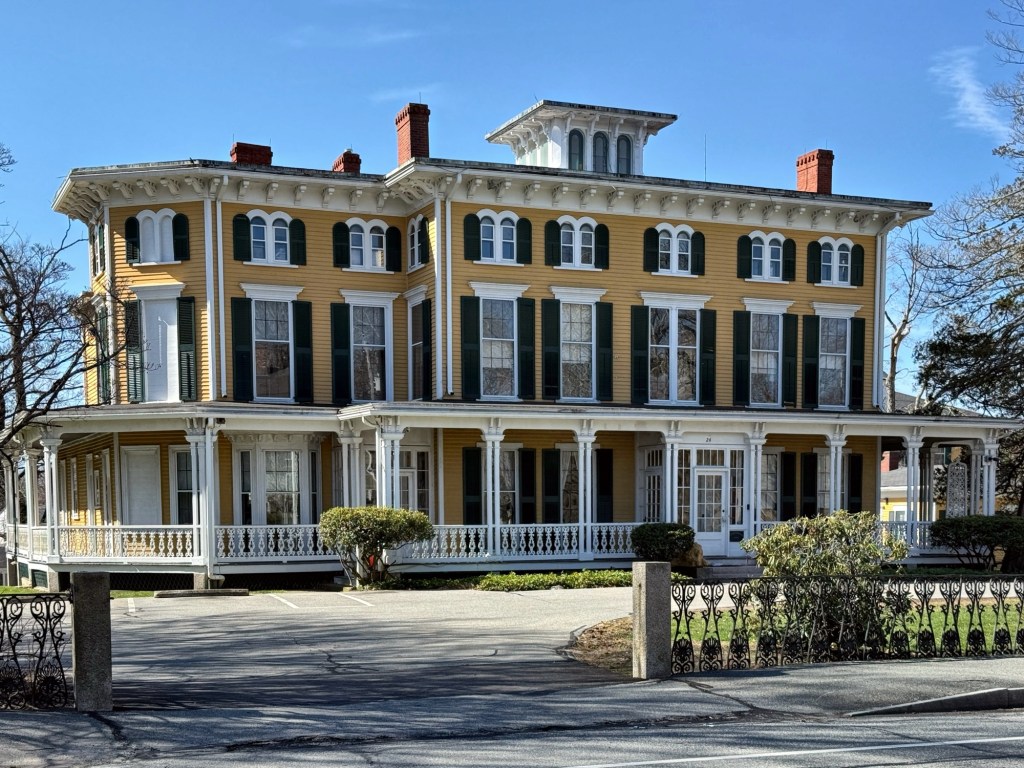
Built in 1855, the Birch-Stevens Mansion of Swansea, Massachusetts, is a grand Italianate style residence distinguished by its low hipped roof with belvedere, broad overhanging eaves with brackets, paired arched windows, and expansive wrap-around porch, all of a scale not commonly found in such a small community. The residence was built for James Birch and overseen by his new bride, Julia Chace. Before construction on the home, James Birch (1828-1857), not a wealthy man, worked as a stagecoach driver in Providence. His bride-to-be desired a large mansion in her native Swansea, equipped with servants and all the finer things of life. Since this dream was not attainable in his present circumstances, Birch, an enterprising 21 year old, decided to join the Gold Rush in California to make his fortune. In California, James became a stagecoach line entrepreneur and founder of the California Stage Company, the largest stage line in California in the 1850s. James made a fortune and returned to his wife in Swansea bringing money for her to begin constructing their grand mansion. James left again, this time establishing the San Antonio -San Diego Mail Line, the first transcontinental mail route in the United States. In 1857, while heading home, James sailed from San Francisco to Panama, took a train across the Isthmus, and sailed for New York on the steamer SS Central America. During the voyage, his ship was struck by a hurricane and later sunk. Many survivors clung to pieces of the ship’s wreckage for days with many dying to exposure or were swept away to their deaths, like James. He was just 28 years old. Back in Swansea, Julia was heartbroken but remarried her late-husband’s business partner, Frank Shaw Stevens, an equally successful businessman. Julia died in 1871, and Frank married a younger Elizabeth Case. The couple resided in this mansion for decades and donated substantially to their community, including funding the Town Hall, Public Library, Episcopal Church, and local public schools. In her will, Elizabeth Case Stevens bequeathed the large mansion in 1837 to the Frank S. Stevens Home for Boys which began as a boy’s orphanage. The organization remains to this day with an expanded mission, and maintain the sprawling estate and its various outbuildings, including the historic stable and farm structures.

Wrentham State School // 1910

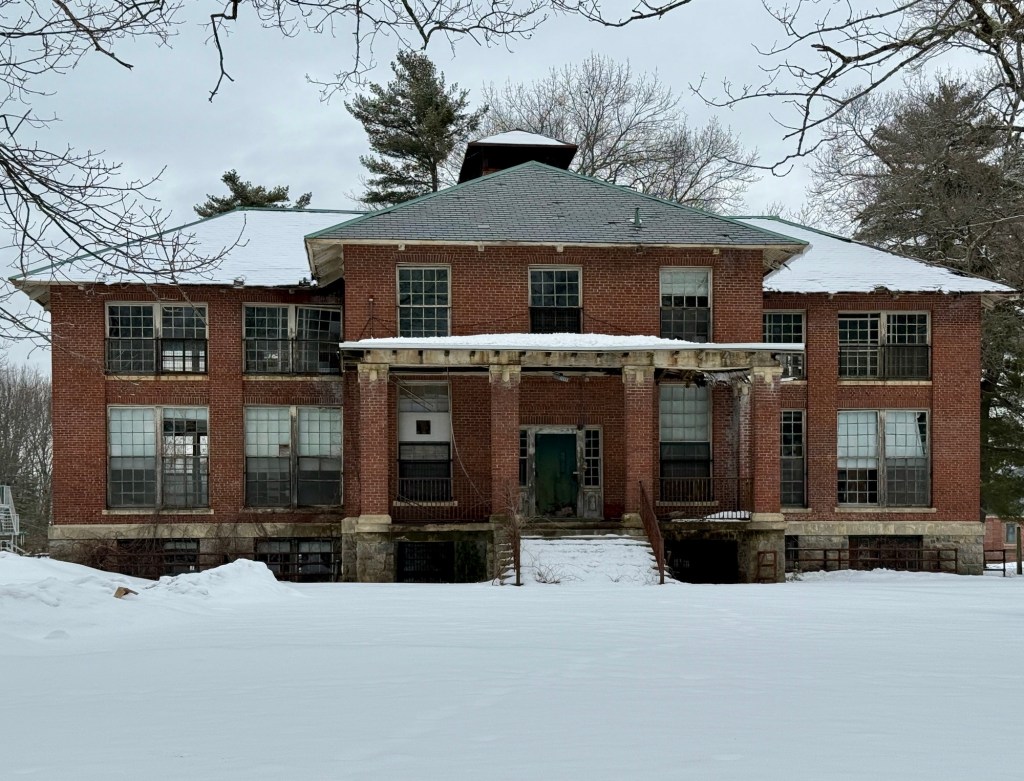
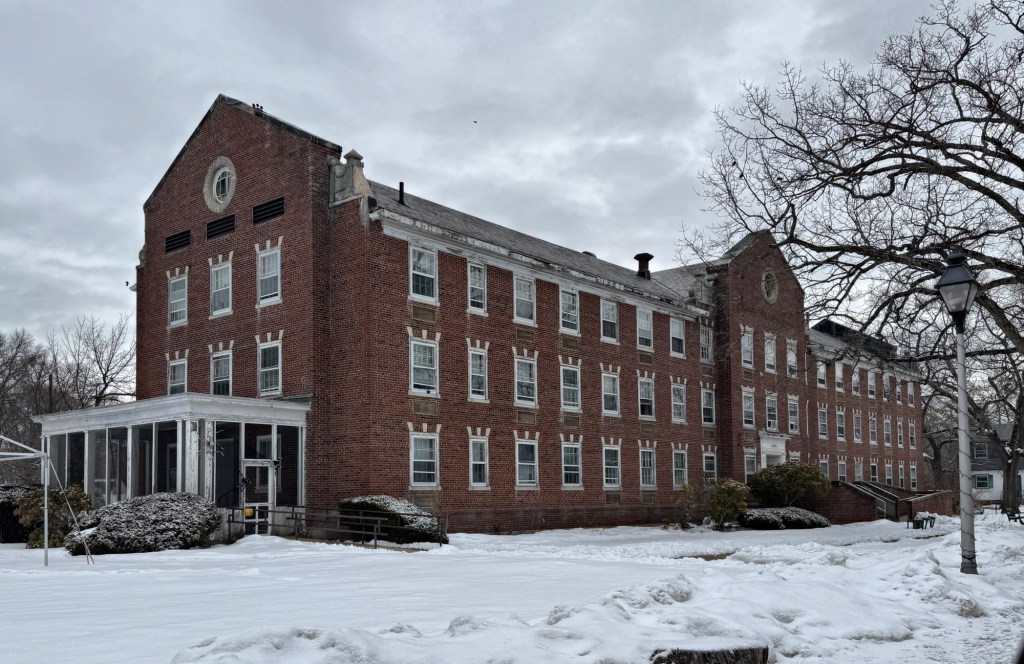
The Wrentham State School (also known as the Wrentham State Hospital) was authorized in 1906 as a school for the “feeble-minded”, and the campus is comprised of a few dozen buildings largely from the early to mid 20th century. The school was founded to house and treat developmentally disabled children and was the first in the state of Massachusetts to employ a standardized plan for wards and employee housing. A site occupied by farmhouses just north of Wrentham Center was selected and purchased by the Commonwealth of Massachusetts. The school officially opened in 1910 and brick structures were built to house students and workers. In its first year, 217 pupils were admitted to the facility, roughly half boys and girls. A majority of the early ward buildings were constructed in the early years of the school, with most designed by the Boston architectural firm of Kendall, Taylor & Stevens, who also designed many other similar facilities around the country in the early 20th century. Most buildings are examples of the Arts & Crafts and Colonial Revival styles built of brick. Today, the campus is comprised of roughly half, deteriorating historic buildings and half are used as part of the Wrentham Developmental Center, which continues the important (and under-funded) work of treating psychiatric and developmental disorders of patients.

Ebenezer Fisher House // c.1764

This historic Georgian-era house at 677 South Street in Wrentham, Massachusetts, is one of the town’s most historic and unaltered dwellings. Dating to about 1764, the Georgian Cape farmhouse replaced an earlier house formerly owned by Dr. Cornelius Kollock, the town doctor and later purchased by Ebenezer Fisher. The home is said to have burned and was replaced by the present building around 1764. It is unclear if the original 17th century home was largely rebuilt or if the existing house now was built from the ground up. The home has historically (and even today) been known as the Wampum House, said to have been named after “Wrentham’s last Indian.” This claim highlights a common but harmful misconception that no Indigenous peoples survived colonization and its impacts in New England. However, the name Wampum’s Corner and the Wampum House remain. The house is today owned by the Wrentham Historical Commission, and operates as a historic house museum, though is suffering from some deferred maintenance. It would be important for the community to fully document the home’s history, namesake, and tell a more complete and accurate history of this historic house.

Warren Masonic Temple-Washington Lodge No.3 // 1796

Located next door to the Randall House (last post) on Baker Street in Warren, Rhode Island, this early building has some history! Constructed in 1796 by the Washington Association, Inc., this two-story Federal period building is an architectural and historic landmark in the immensely beautiful town of Warren. The elongated building is fairly plain in plan, but is adorned by corner quoins, elaborate pedimented entries, ornate cornice, and (now filled) ocular windows in the gable ends. It is believed that many of the timbers used in the building are oak beams that were formerly part of the British Frigate Juno and other ships which were sunk in Newport harbor during the American Revolution. Brother Sylvester Child, a member of the building committee purchased the old ships and floated the timbers up Narragansett Bay and into the Warren River and his shipyard at the base of Miller and Baker streets. The rib cuts in the oak plate beams can clearly be seen in the curvature of the ceiling in the lodge room.The Lodge was likely built by local carpenters using Asher Benjamin’s plan books for the detailing and was utilized as the Warren Town Hall and the Warren Academy, a private school, in the early 1800’s with meeting space for the local masonic lodge. The building has lost its original cupola at the roof, and its principal interior meeting room was redone in 1914 with elaborate murals by the Rhode Island artist Max Muller, some of which in Egyptian depictions.

South Lancaster Engine House // 1888

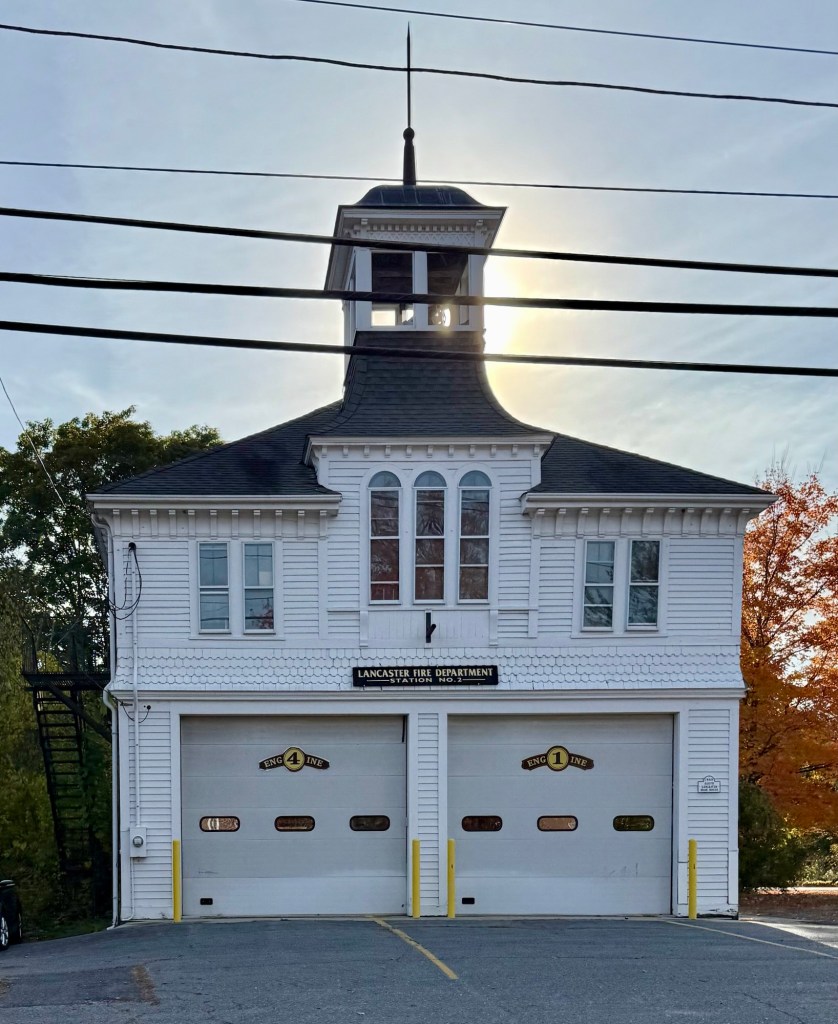
The South Lancaster Engine House is located in the village of South Lancaster, Massachusetts, and is one of the town’s three remaining historic fire stations and the oldest that remains in use by the local fire department. At the Town Meeting of June 18, 1887, it was decided that $3, 500 would be expended to build a station for the Fire Department in South Lancaster. Construction began in 1887, and was completed in March of 1888 from plans by architect, C.A. Woodruff. The station housed horse-drawn wagons, including one sleigh, and featured a bell in the belfry to call attention to the public. The station appears much like it did when built in 1888, besides the bright white paint color and the modification of the engine doors for the new, larger fire trucks. 

Providence County Courthouse // 1926

S. Main Street Elevation

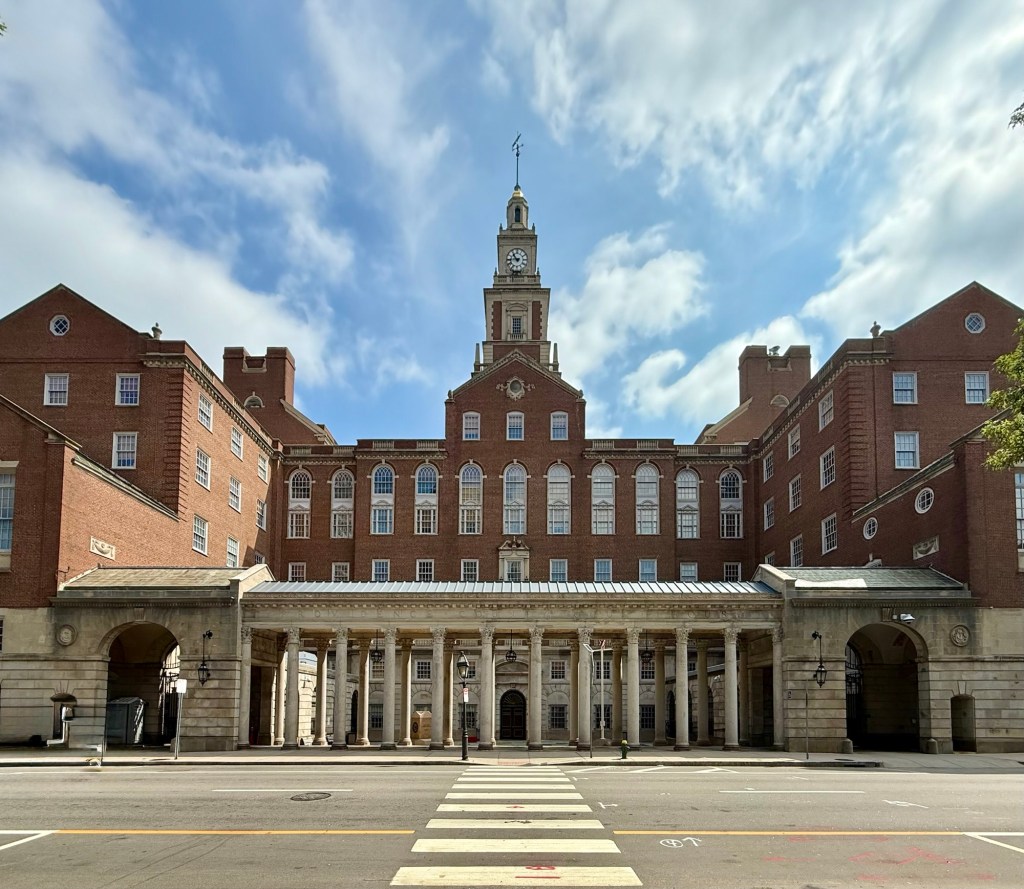
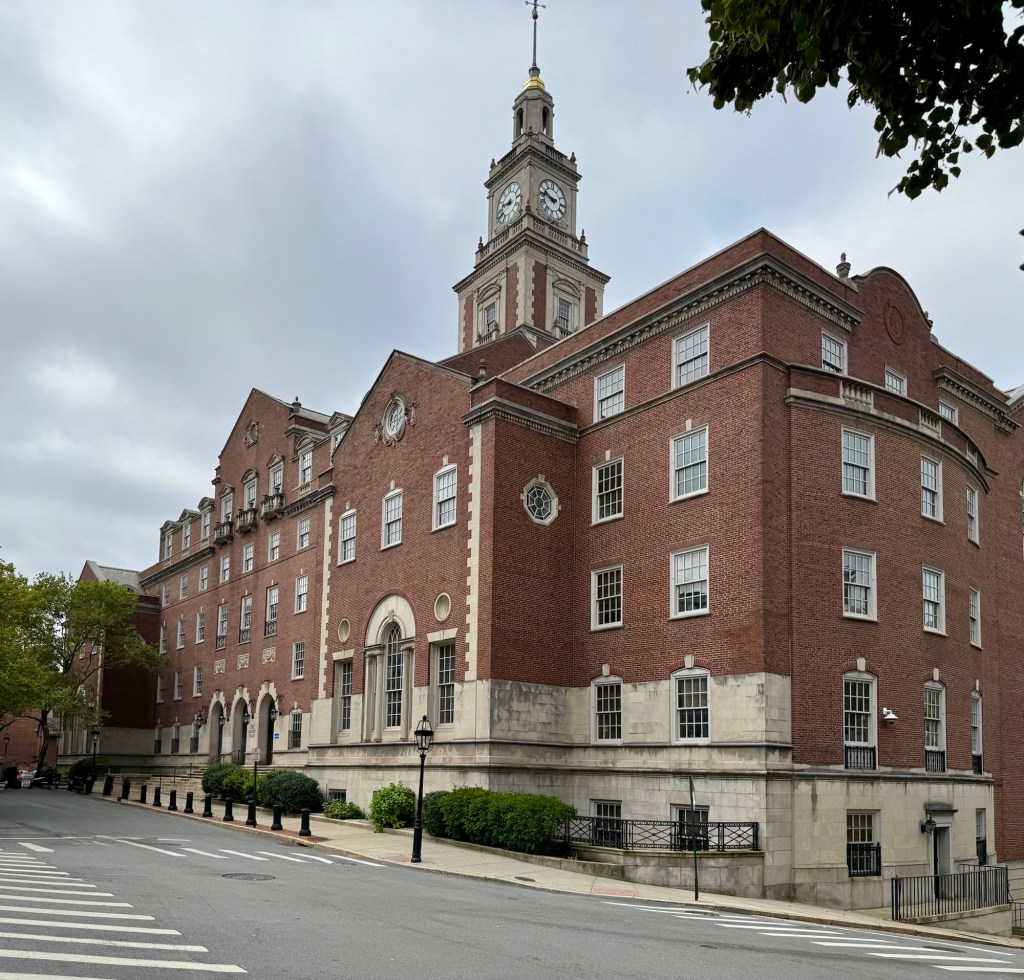
The Providence County Courthouse complex occupies an entire city block running between Benefit Street and South Main Street and while of immense scale, is broken up into more human-scaled wings and masses that make the building one of the finest and contextual designs in a city full of amazing architecture. The courthouse here replaced the first courthouse, a stunning palace of justice designed by Stone & Carpenter in the High Victorian Gothic style, that was completed in 1877. The old courthouse was soon outgrown and a larger building was planned following WWI. The present courthouse was built between 1926 and 1930 following a design by Jackson, Robertson & Adams in the Georgian Revival style, fitting of its context amongst some of the finest Colonial-era houses and buildings in New England. The building today contains the Rhode Island Supreme Court, Providence County Superior Court, and the local trial court. The South Main Street facade is my favorite with the Guastavino tile roof entry and stunning colonnade at the street level. A multi-stage clocktower emerges from the center of the building, at a height of 216-feet, making the courthouse the 11th tallest building in Providence.

Benefit Street Elevation

Dr. Benjamin L. Noyes House and Vault // 1903

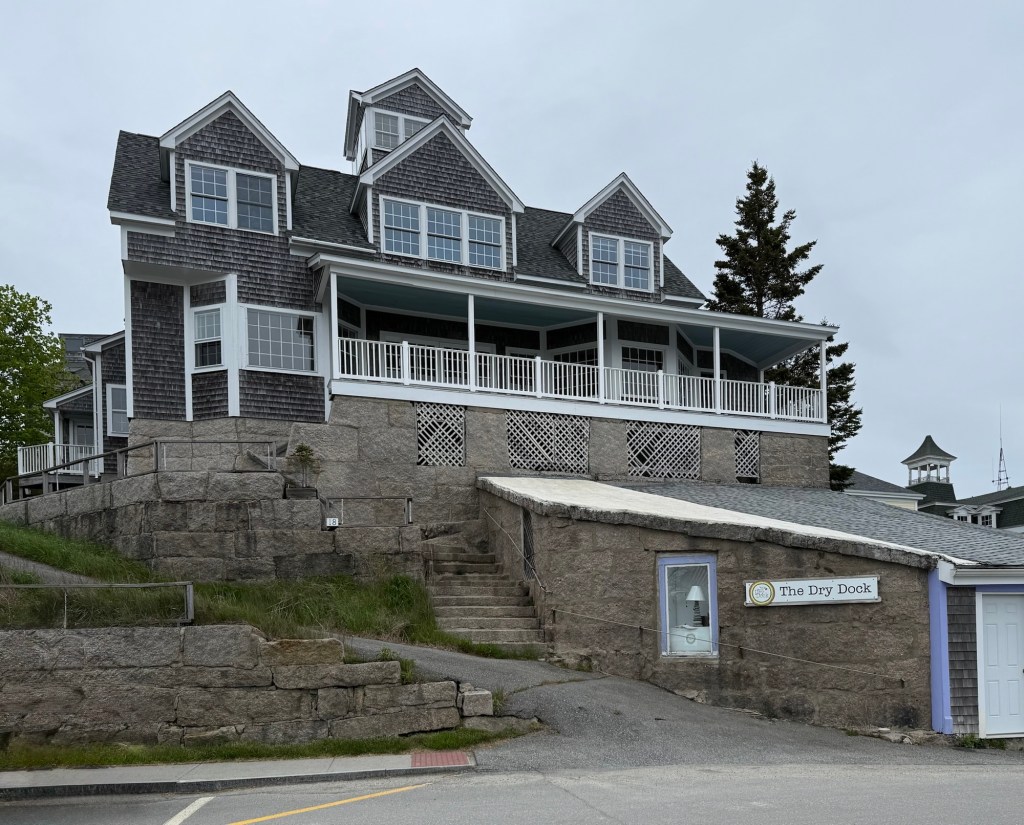
Benjamin Lake Noyes (1870-1945) was born in Lisbon Falls, Maine, but grew up on Grand Manan, New Brunswick, Canada. He worked at his father’s hardware store before entering Bowdoin Medical College. After graduating, he moved to Stonington, Maine, to work as a physician. Here, he met his wife, Linnie Howard, and they married in 1899. In 1903, the couple had a large Queen Anne style house built on a bluff, overlooking the Stonington Harbor. Dr. Noyes was a physician, surgeon, occultist, inventor, surveyor and antiquarian, who took interest in genealogy and local history in his spare time. By the time of his death Dr. Noyes had completed 100 volumes of material on island history and genealogies of its people. To house his massive collection, he constructed a fire-proof vault of local granite at the base of his home opened his record collection to the public known as the Penobscot Bay Archives. After his death in 1945, much of the collection was sent to the local historical society for preservation. A fire in 1981 destroyed much of the house except the first floor and the granite, fire-proof building, and the upper floors of the Noyes house were rebuilt.

Prudence Crandall’s School for Young Ladies and Little Misses of Color // c.1805

Built c.1805 for Elisha Payne, this architecturally distinguished Federal style mansion in Canturbury, Connecticut is one of the most significant buildings in the state, not only for its architecture but historical significance. In 1831, a young white woman, Prudence Crandall, was asked to open a boarding school for girls in Canterbury. She purchased this mansion and began operations for the school, which was attended by many wealthy girls in town. In 1832, Ms. Crandall was approached by a young Black girl who worked as a servant in town, named Sarah Harris, asking to attend the school. Encouraged by conversations with both Harris and Maria Davis, a Black woman who worked for Crandall and shared copies of the abolitionist newspaper The Liberator with her, Crandall agreed to admit Harris. Almost immediately, residents protested the school’s admission of a Black girl and parents threatened to withdraw their students, Crandall undeterred, closed her school and reopened in 1833, solely for Black and Brown students. Young girls traveled from several states to attend the school. The legislature of Connecticut responded by passing the “Black Law,” which prevented out-of-state Black and Brown people from attending school in Connecticut towns without local town approval. Crandall was arrested, spent one night in jail, and faced three court trials before the case was dismissed. In September 1834, a nighttime mob of men attacked the house, smashing the windows, leading Crandall to close the school out of fear for her students as no protections were afforded to them. These events made national and international news in the 1830s and galvanized the burgeoning abolitionist movement. Crandall would later marry and left Connecticut, never to return. For her vision and brave actions at this school, Prudence Crandall is Connecticut’s official state heroine and the house was designated a National Historic Landmark in 1991.

Edward Waldo House // c.1715

The Edward Waldo House in Scotland, Connecticut, is a vernacular Georgian house with saltbox roof and wings which from its erection about 1715 until 1971 was owned by members of the Waldo family. Edward Waldo (1684-1767) purchased land here along the Shetucket River in 1702 and by 1715, erected this house. The saltbox house which Edward Waldo built was one of the first houses in the town of Scotland and would remain in successive generations of the family for centuries. The house was the birthplace of Samuel Lovett Waldo (1783-1861), a portraitist who was a founder of the National Academy of Design as well as Daniel Waldo, chaplain of Congress, 1856-1858, and was one of seven Revolutionary War veterans who, having survived into the age of photography, were featured in the 1864 book The Last Men of the Revolution. The last Waldo owner, Miss Ruth Waldo died in1975. She insured the preservation of her family homestead by bequeathing the house, its contents, and about 15 acres of land to the Antiquarian & Landmarks Society of Connecticut Inc. and the surrounding acreage to the Connecticut Forest and Park Association, creating an enduring legacy for centuries to come. The house, set amongst a quiet country road, is evocative of early days in Scotland, Connecticut, and is one of the finest-preserved Colonial homes in this part of the state.