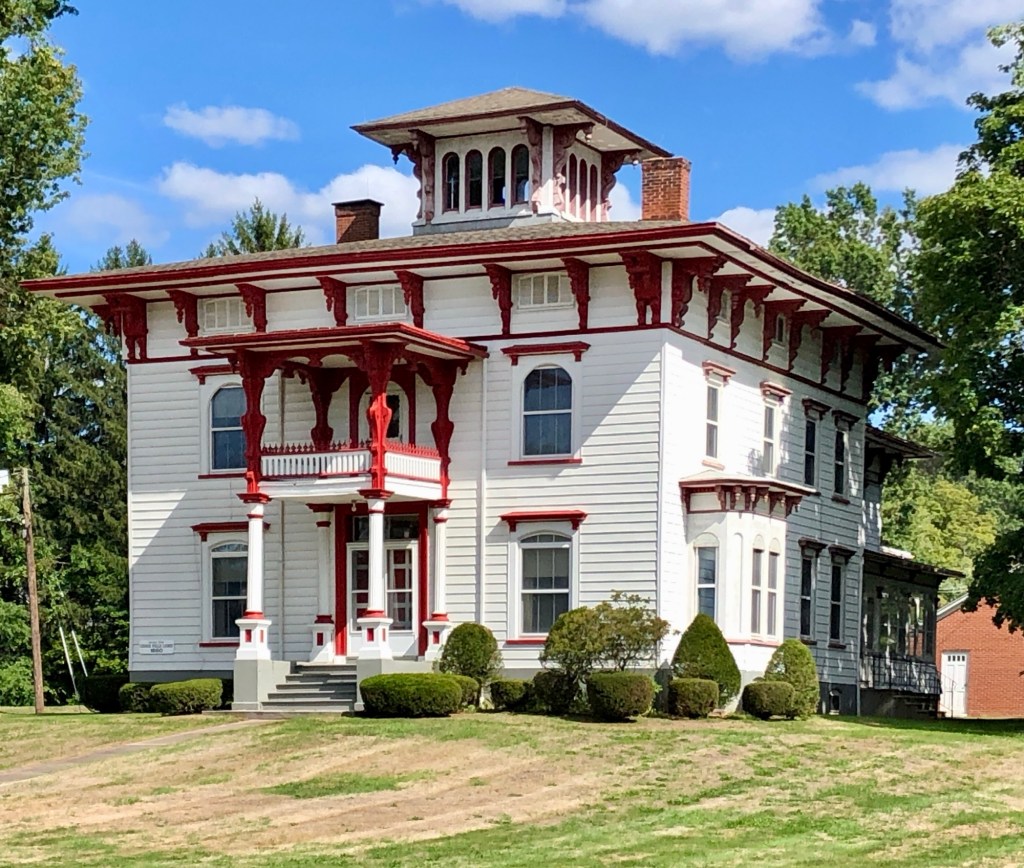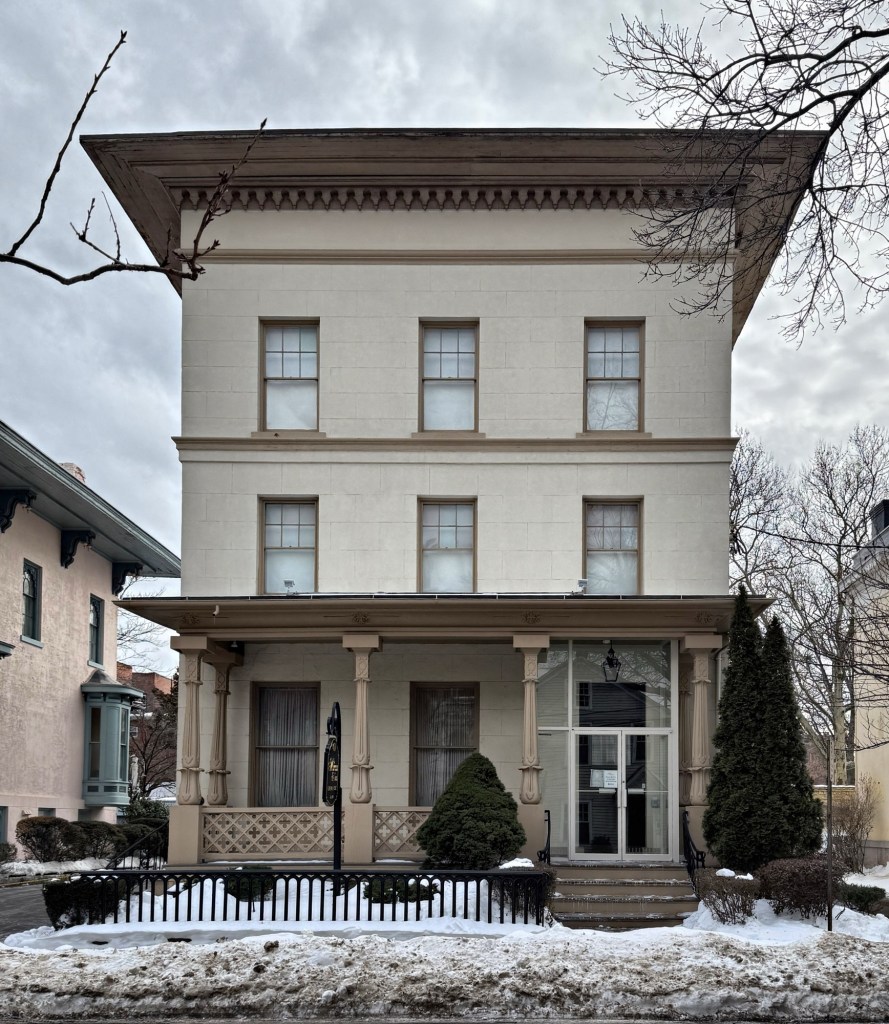
This large Italianate style residence on Main Street in Suffield, Connecticut, was built in 1860 by John Wells Loomis for his son, George. George ran a cigar shop in a separate building on the lot, selling rolled cigars from tobacco that his business harvested and rolled. The mansion features a belvedere atop the low sloped hip roof with broad overhanging eaves. George was set to run the family business after his father, George. In 1881, two years after his father’s death, George Loomis sold the tobacco business founded by his father and moved to New Haven. In 1912, Polish residents bought the house, and it became the rectory for St. Joseph Church.
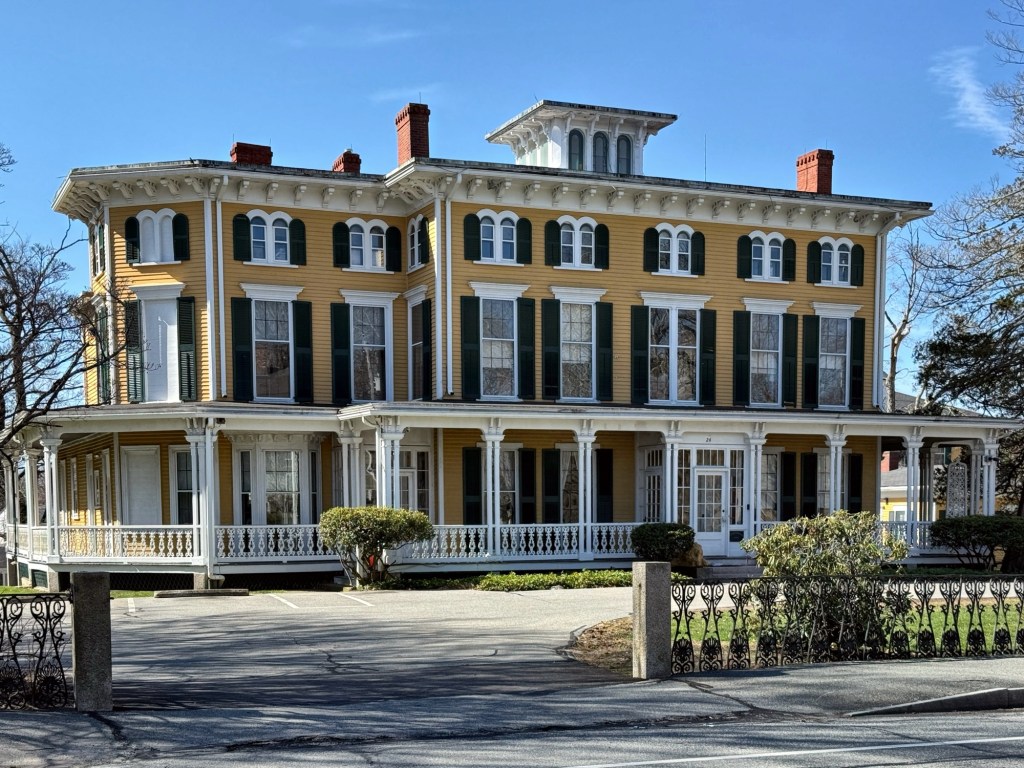
Built in 1855, the Birch-Stevens Mansion of Swansea, Massachusetts, is a grand Italianate style residence distinguished by its low hipped roof with belvedere, broad overhanging eaves with brackets, paired arched windows, and expansive wrap-around porch, all of a scale not commonly found in such a small community. The residence was built for James Birch and overseen by his new bride, Julia Chace. Before construction on the home, James Birch (1828-1857), not a wealthy man, worked as a stagecoach driver in Providence. His bride-to-be desired a large mansion in her native Swansea, equipped with servants and all the finer things of life. Since this dream was not attainable in his present circumstances, Birch, an enterprising 21 year old, decided to join the Gold Rush in California to make his fortune. In California, James became a stagecoach line entrepreneur and founder of the California Stage Company, the largest stage line in California in the 1850s. James made a fortune and returned to his wife in Swansea bringing money for her to begin constructing their grand mansion. James left again, this time establishing the San Antonio -San Diego Mail Line, the first transcontinental mail route in the United States. In 1857, while heading home, James sailed from San Francisco to Panama, took a train across the Isthmus, and sailed for New York on the steamer SS Central America. During the voyage, his ship was struck by a hurricane and later sunk. Many survivors clung to pieces of the ship’s wreckage for days with many dying to exposure or were swept away to their deaths, like James. He was just 28 years old. Back in Swansea, Julia was heartbroken but remarried her late-husband’s business partner, Frank Shaw Stevens, an equally successful businessman. Julia died in 1871, and Frank married a younger Elizabeth Case. The couple resided in this mansion for decades and donated substantially to their community, including funding the Town Hall, Public Library, Episcopal Church, and local public schools. In her will, Elizabeth Case Stevens bequeathed the large mansion in 1837 to the Frank S. Stevens Home for Boys which began as a boy’s orphanage. The organization remains to this day with an expanded mission, and maintain the sprawling estate and its various outbuildings, including the historic stable and farm structures.
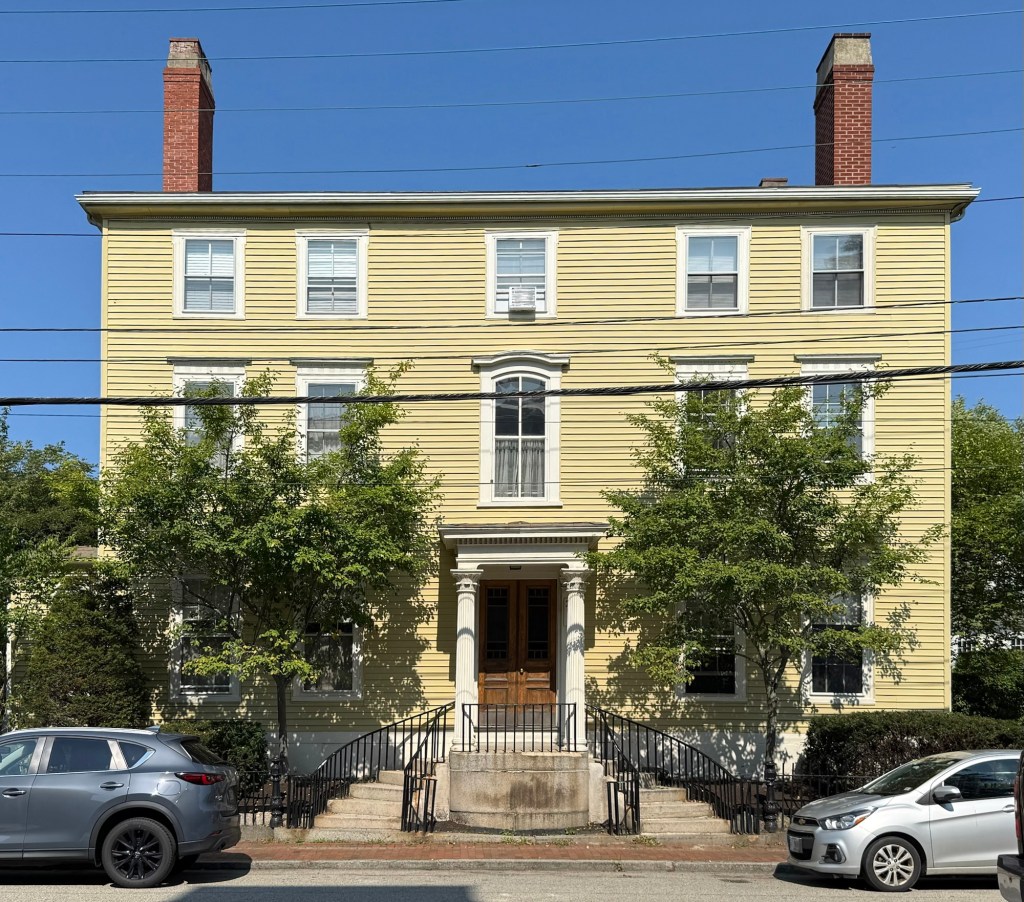
The oddly proportioned James E. English House stands on Chapel Street in New Haven’s Wooster Square neighborhood and remains one of the most interesting mid-19th century residences in the city. Built in 1845 for James Edward English (1812-1890), a prominent businessman who later became Governor of Connecticut and U.S. Senator. James English started his career as a carpenter and expanded to open the English & Welch Lumber Company. He was a savvy businessman and helped restructure the New Haven Clock Company into one of the largest clock manufacturers in the region. From his success, he purchased property in the new fashionable Wooster Square district and moved into this residence which was designed by architect, Henry Austin, who designed many other homes in the neighborhood. English got engaged in politics and served as the 43rd and 45th Governor of Connecticut and later as a U.S. Senator (1870-1871). Upon returning to Connecticut, James English continued his lumber business and with his own product, expanded his Wooster Square home, vertically. In the mid-1870s, the house, which was originally two stories, was given a third floor, creating the strong vertical proportions we see now. Today, the James E. English House operates as the Maresca & Sons Funeral Home, one of the many prominent Italian-American-owned businesses that helped revitalize the neighborhood in the 20th century.
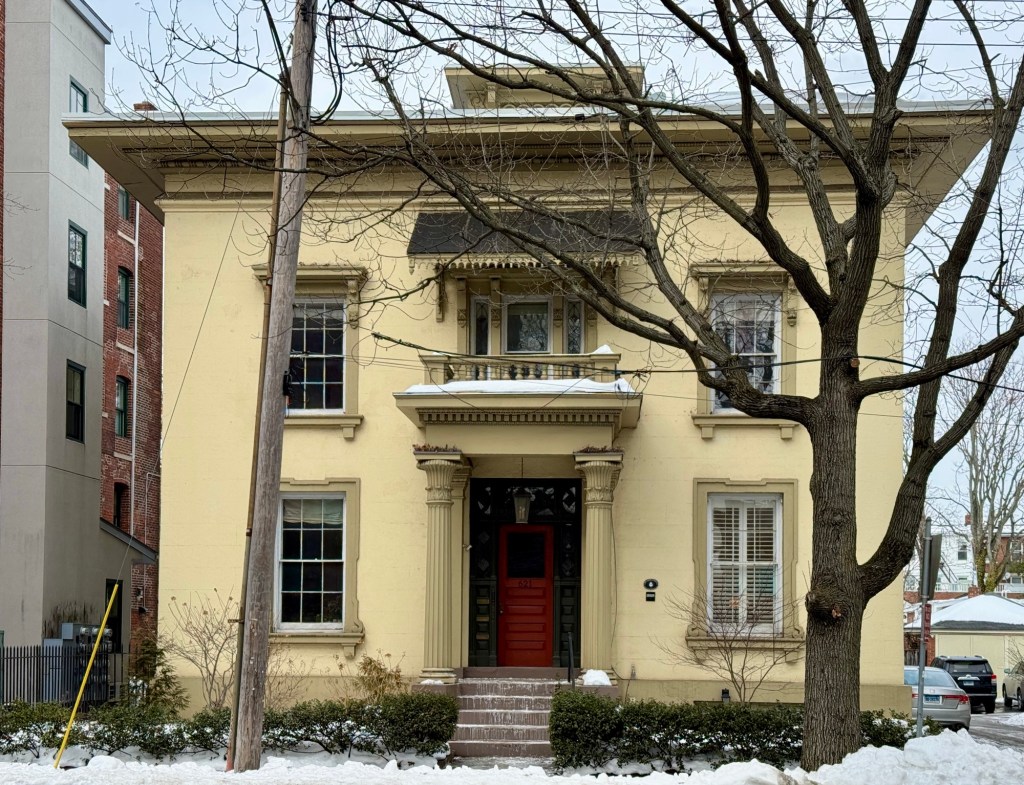
Nelson Hotchkiss was a New Haven lumber dealer and developer in the Wooster Square district and had this stately home on Chapel Street built for his family. While the architect is not confirmed, it is probable that the residence (along with neighboring homes also developed by Hotchkiss) was the work of Henry Austin, who partnered with Hotchkiss on developments in New Haven and Trenton, New Jersey. The Nelson Hotchkiss House was built in 1850 and is an excellent example of Italianate style with boxy form, broad overhanging eaves, brick walls covered with stucco and Austin’s signature Greek Doric columns with fluted shafts and foliate capitals. The house maintains a window hood over the upper floor window with delicate carved wood bargeboard.
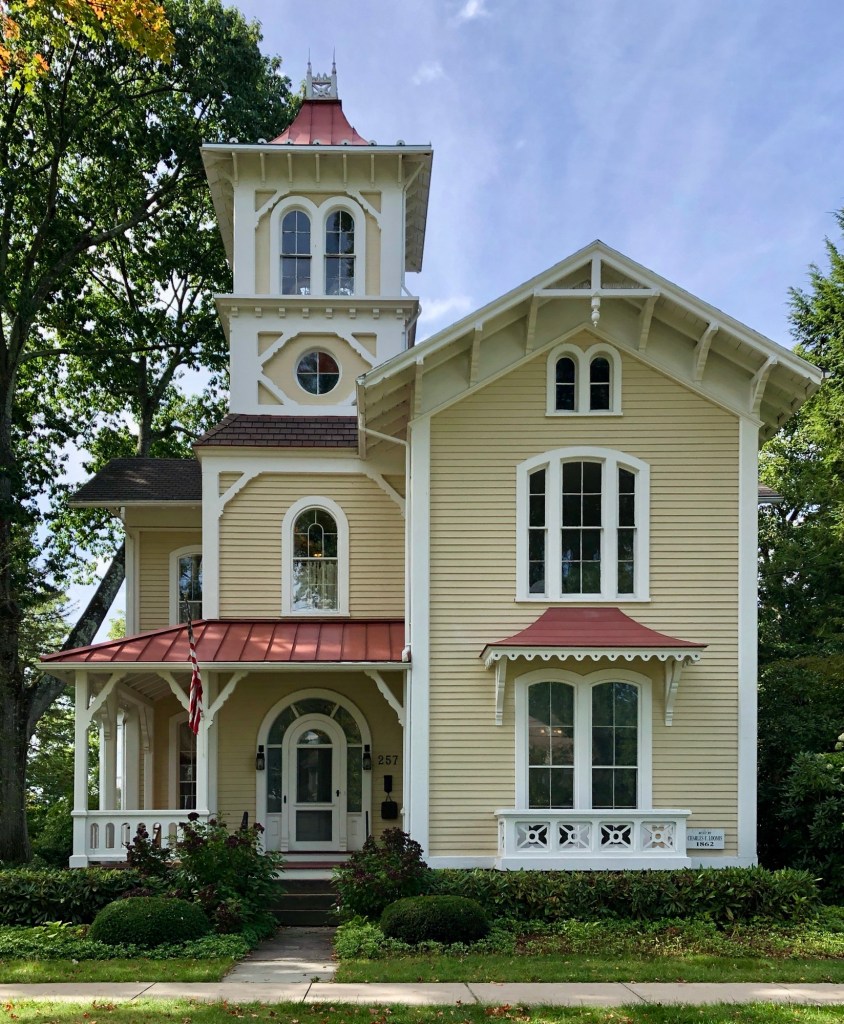
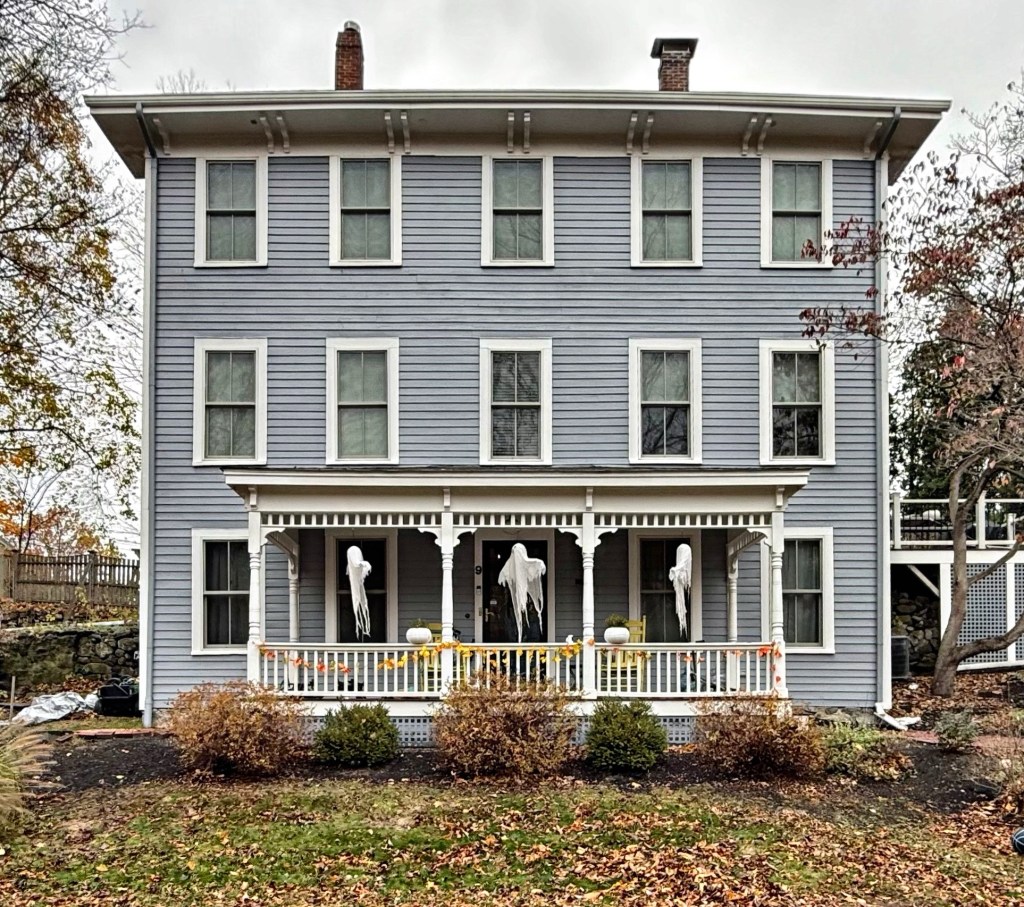
This unique residence in Wayland, Massachusetts, is tucked away on Corman’s Lane, a dead-end street near Snake Brook, a small stream leading into Lake Cochituate. The house was built around 1870 for George William Risley (1836-1913), a shoe manufacturer and Civil War veteran who settled in Cochituate Village and ran a factory there. Risley was active in town affairs and served as Selectman in 1872, the year in which the annual meeting authorized the selectmen to petition the General Court for Cochituate to separate from Wayland. The petition was ultimately never was filed and Cochituate remains a part of Wayland. The Risley House has five bays and a shallow side gable roof with broad, overhanging eaves supported by brackets. A central porch runs along part of the facade and has intricate turned posts and spindlework. The home remains in great shape and is evocative of mid-late 19th century industrial housing built for factory managers.
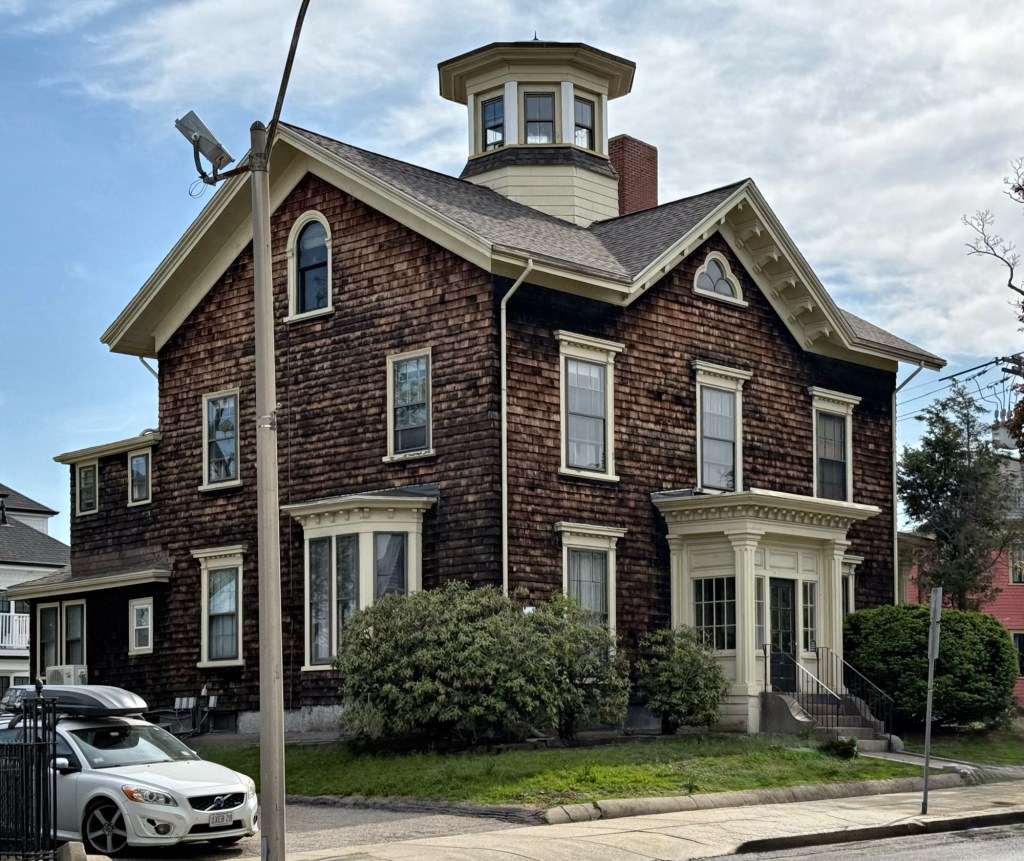
Built in the 1850s, the Samuel and Susan Gaut Houseon Highland Avenue in Somerville, Massachusetts, is one of the finest examples of a symmetrical, three-bay, Italianate style house in the city. Samuel Norton Gaut (1816-1891) worked as a baker with shops in downtown Boston, and married Susan Dutton (1824-1892), the daughter of a wealthy shipbuilder in Newburyport. The Gaut House was listed on the National Register of Historic Places for its architectural significance as an intact example of a gabled Italianate style home. Special details include the brackets in the gable, trefoil window in the peak, and the octagonal cupola at the roof. Early 20th century alterations include the shingle siding, replacement windows, and enclosed portico, but neither truly detract from the beautiful home.
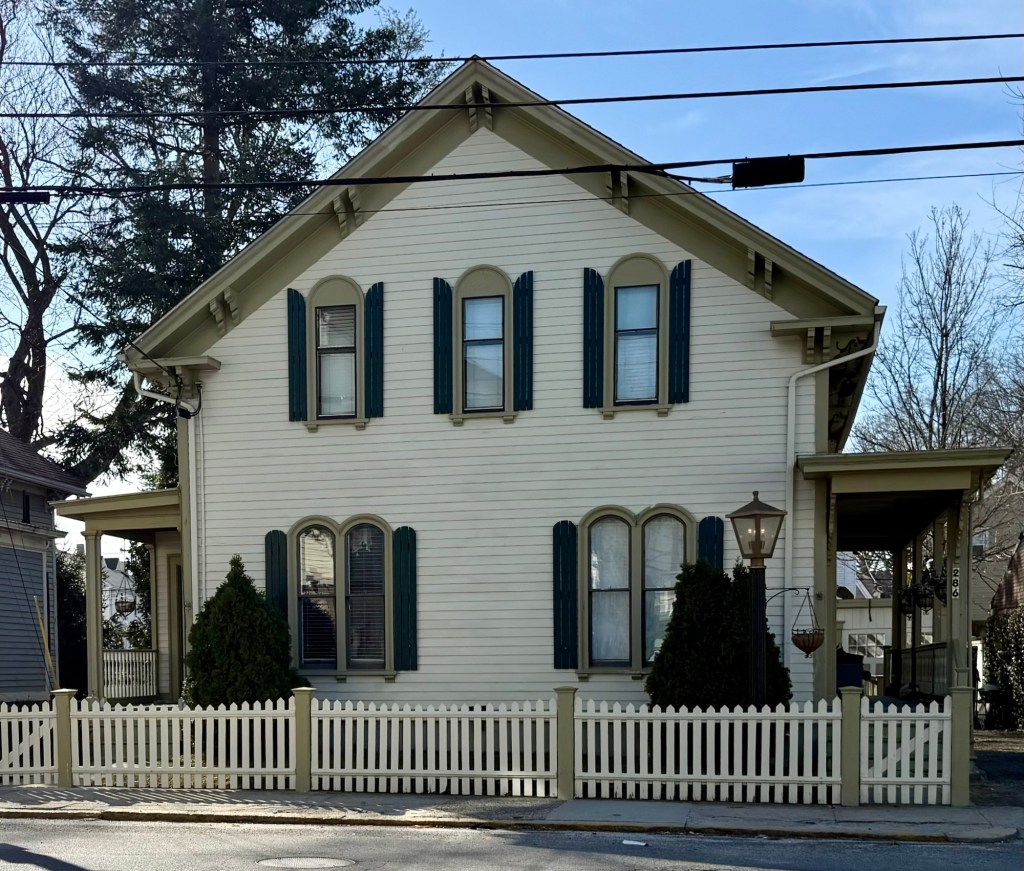
This modest, Italianate style house was built around 1860 by a carpenter and builder as his own residence. Nathan S. Horton (1819-1916) was a busy builder in Central Falls, Rhode Island in the mid-late 19th century as the population boomed along with the industrial growth and wealth that the city saw. For his own residence, Horton built this two-story wood-frame house with side entrances and porches, paired brackets in the eaves, and arched top windows, all commonly found in the Italianate style, popular around the time of the Civil War. Mr. Horton lived to his late 90s and likely remained in this home until his death.
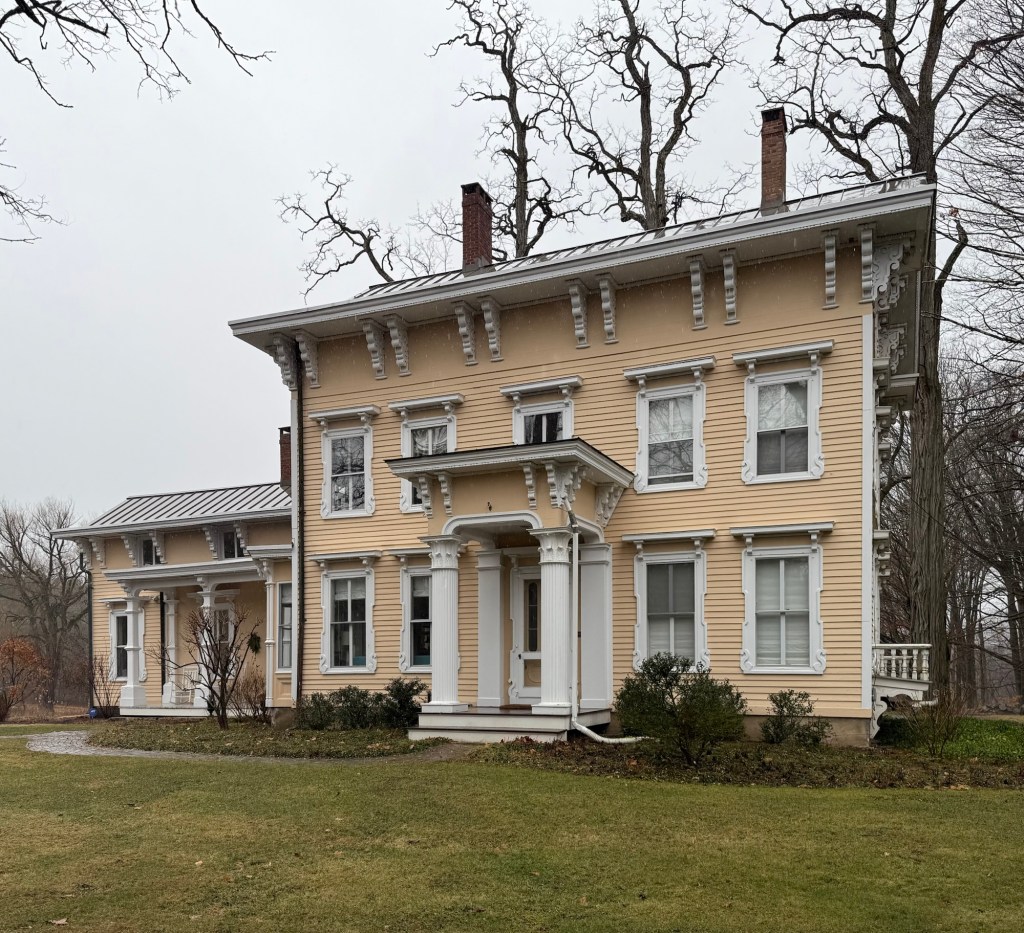
The Major General John Sedgwick House is located in Cornwall Hollow, Connecticut, and stands out as one of the finest residences in this part of the state in a rural setting. The house was built by 1860 for General John Sedgwick (1813-1864), who was born in a house standing on this site, which had been built by his grandfather, a veteran of the Revolutionary War. In 1859, the Sedgwick family homestead burned to the ground. Sedgwick, then already well established in his military career, took leave to oversee construction of its replacement. This house was built, apparently on the foundation of the old house, in 1859–60. The work was done by Cyrus Marsh, a local builder, in the Italianate style with decorative brackets, window mouldings, hoods, and a large columned entry portico. Major General Sedgwick was active in many campaigns, and during the American Civil War, he was killed by a sharpshooter at the 1864 Battle of Spotsylvania Court House, he was the Union Army’s highest-ranking casualty of the war and never got to reside in his Cornwall home.
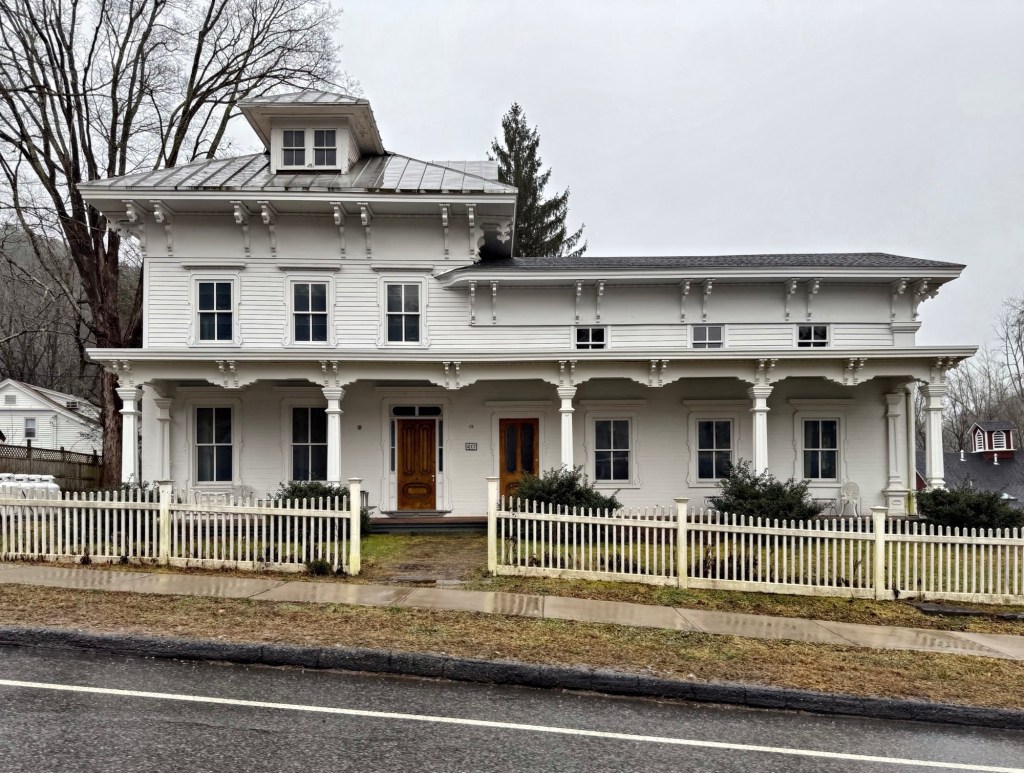
This large, Italianate style mansion is located at 417 Sharon-Goshen Turnpike, the main street through West Cornwall Village, Connecticut. The house was built around 1860 for Stephen Foster (c.1816-1863) a merchant and railroad contractor who had constructed a portion of the Housatonic Line railroad near West Cornwall. He and his wife, Helen, previously lived in a Greek Revival style house across the road until they moved into this stately residence. Mr. Foster would not get to enjoy his mansion long as he died in 1863. Helen Foster remained at the home until her death in 1875. The high-style Italianate residence was likely built by master-carpenter C. W. Marsh, and features all the hallmarks of the style: overhanging eaves with decorative brackets, elaborate window and door moulding, two-over-two windows, and a shallow hipped roof with dormer.
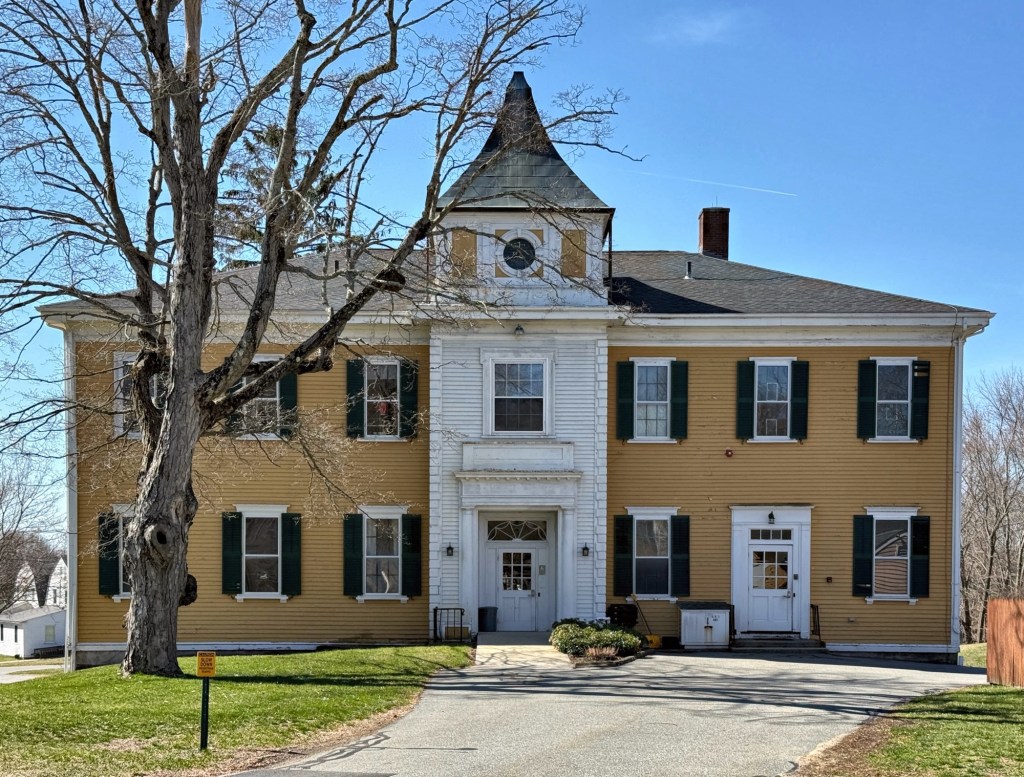
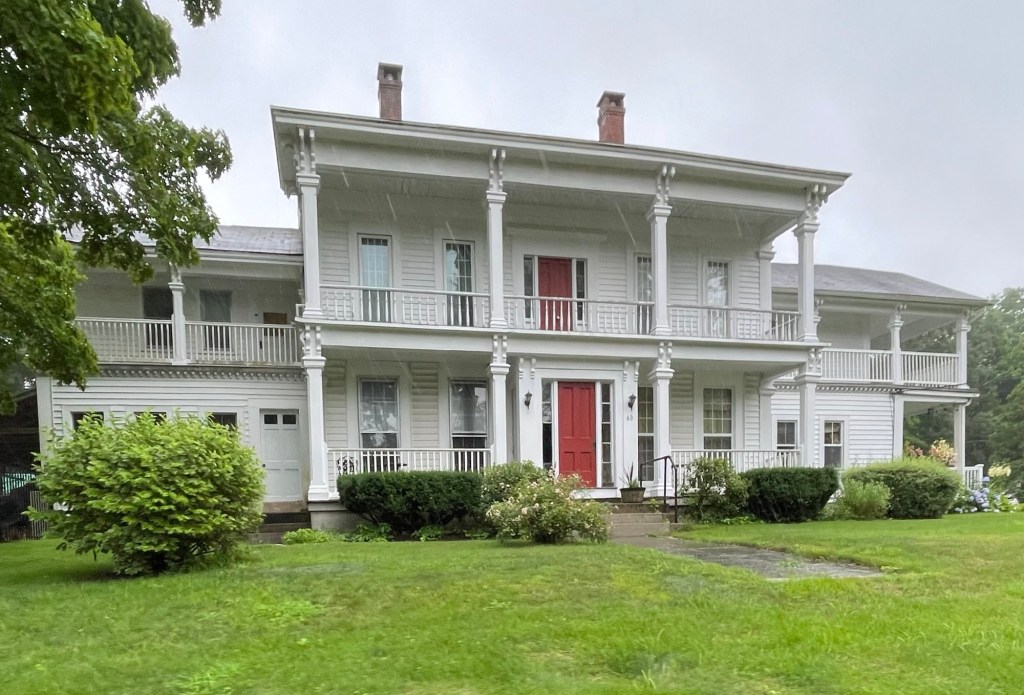
This handsome Italianate style house is located on Dog Hill Road in Killingly Center, Connecticut. The house appears to date to the years just before the Civil War and historic maps show that the property was owned by Harris Sayles, a co-owner of the large woolen mill in nearby Dayville. The home was built for Harris and his wife, Phebe. The house stands out for its two-tiered gallery of porches with large chamfered posts and paired brackets and has some Classical corner pilasters and door surrounds noting the transitional period from Classical Greek Revival style to the romantic Italianate style.
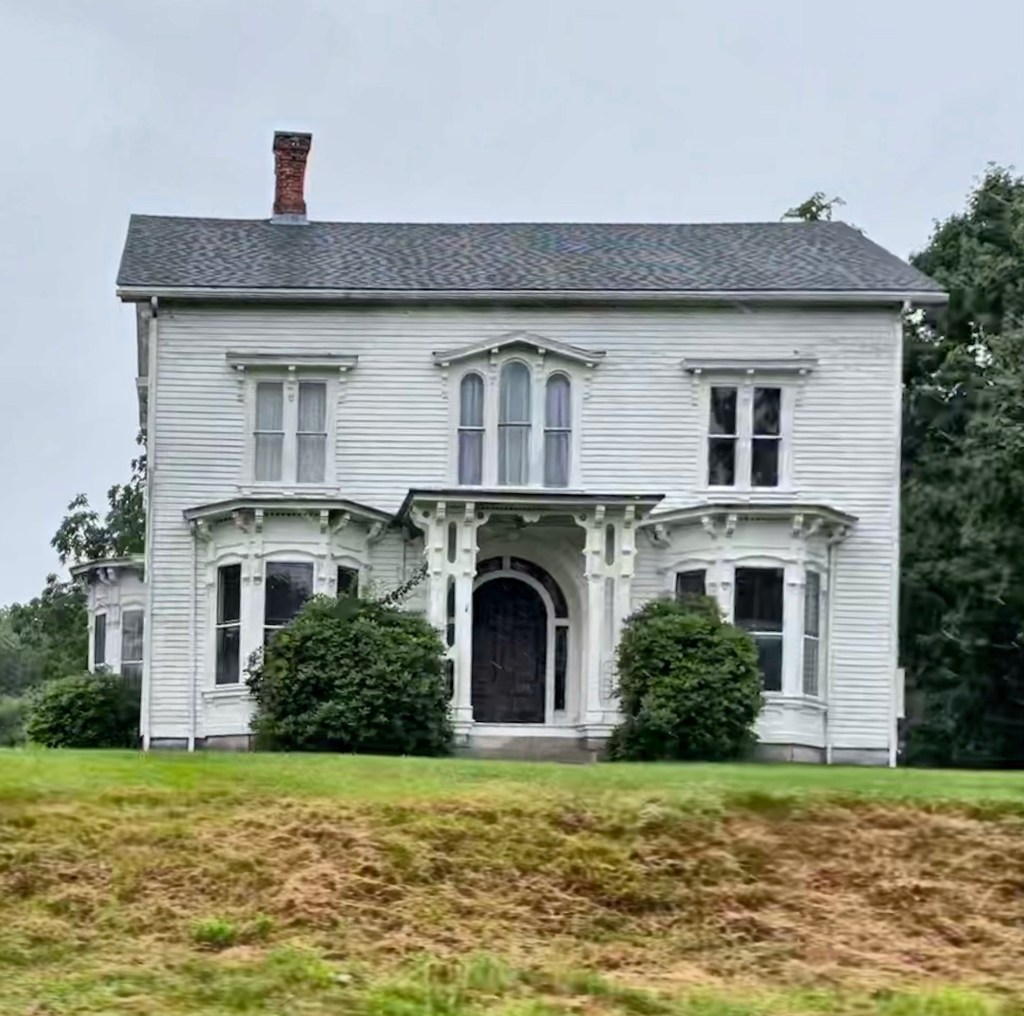
In 1865, Warren Potter, a Rhode Island-based manufacturer, built this Italianate style mansion in the Dayville section of Killingly, Connecticut for his family. Potter was employed at the Sayles Woolen Mill in a manager role and clearly did well for himself to afford such a home. Characteristic of the style, the Potter mansion features bracketed eaves and window lintels and round-arched tripartite windows over the center entrance. At the entry, the original round-arched doorway with glazed surround has survived in good condition and is a showstopper!