Swansea Town Hall // 1891

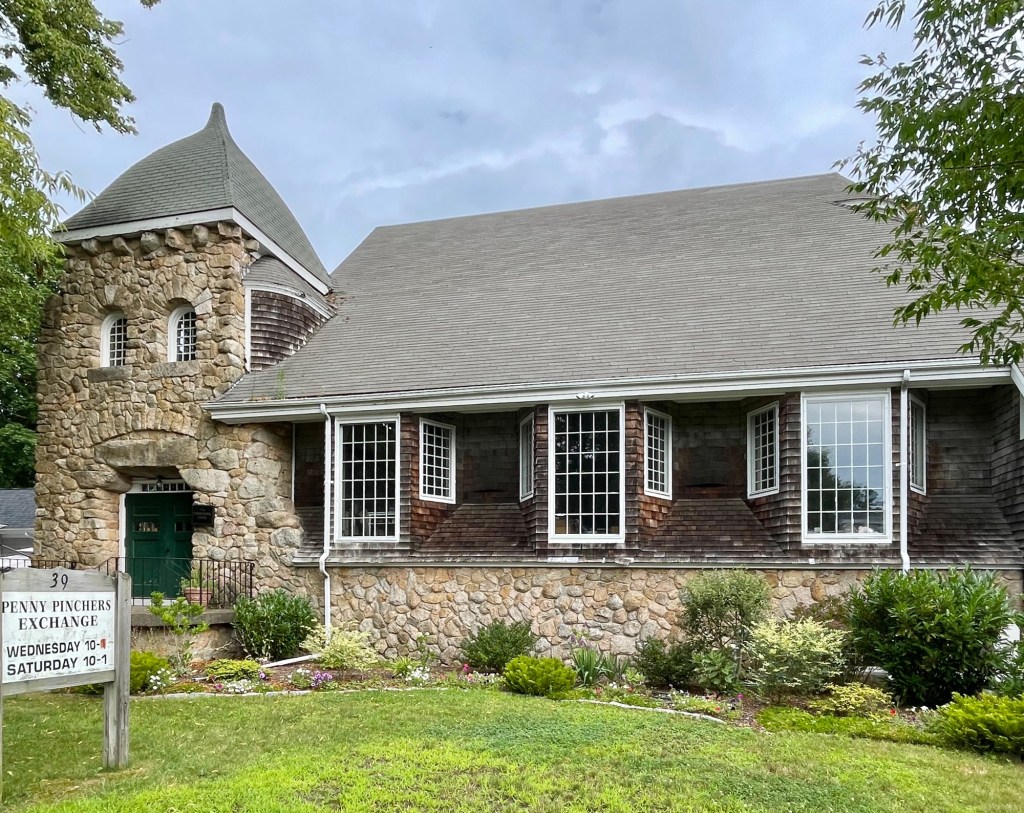
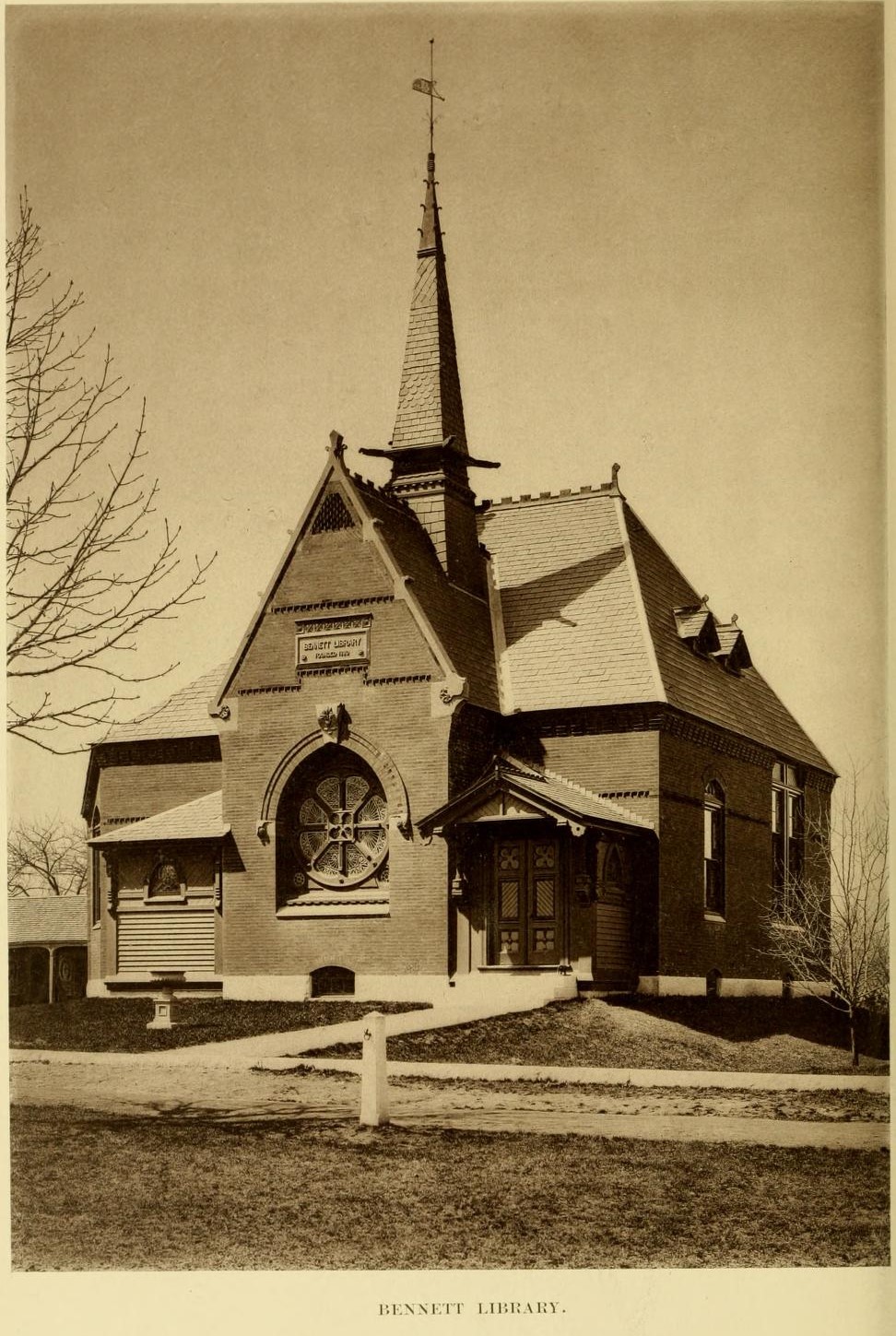
The Swansea Town Hall in Swansea, Massachusetts, is one of the most unusual and architecturally eclectic town hall buildings in New England, and was a gift to the community from a wealthy resident. Built in 1891 from plans by Boston architect, James Merrill Brown, the building is constructed of randomly laid rubblestone with brownstone trim with a massive pyrammidal slate roof and offset turret and tower containing a historic clock. The building was the gift of benefactors, Frank Shaw Stevens and Elizabeth Case Stevens, who lived down the street in the town’s largest mansion. The Stevens’ donated the building with the stipulation that the building was to be available to every and any religious society desiring to hold funeral services there and to also provide space for a public library. The town obliged. The space was outgrown and the Stevens’ would later donate the town’s public library next door and a church, that also held funeral services for the community. The building has been home to the Town Hall since 1891.

Amos Lawrence Rowhouses // c.1877

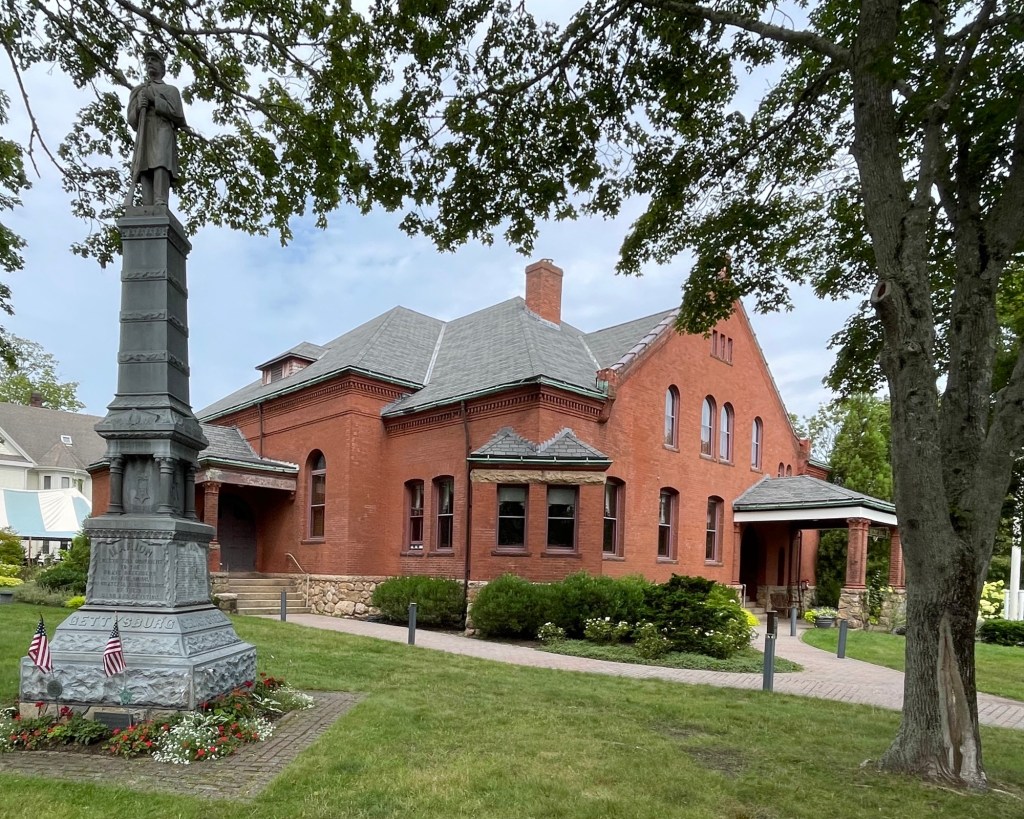
53-61 Monmouth Street

Amos A. Lawrence (1814-1886), a wealthy Boston merchant, owned land holdings in the present-day Longwood neighborhood of Brookline, just over the Muddy River from Boston, and developed the area into a wealthy and high-quality suburb. Lots were laid and Lawrence hired civil engineer, Ernest Bowditch, to plat for multiple sets of distinctive rowhouses surrounding a small green mall, which was later named Monmouth Court. Once the property was laid out, Amos Lawrence hired the Boston architects, J. Pickering Putnam and George T. Tilden, to design rowhouses for rental income. George Tilden was previously employed at the firm of Ware & Van Brunt, a firm that mastered and popularized the panel brick style in the Boston area in the 1870s and 1880s, and he clearly built upon this expertise for the rows for Amos Lawrence in Brookline. All four rows of houses are distinctive, yet compliment eachother stylistically with projecting bays. intricate brickwork, complex rooflines with dormers, and applied ornament. These two rows on the western side of Monmouth Court at 53-61 Monmouth Street and 19-27 Monmouth Court, were also likely the work of Putnam and Tilden, who practiced jointly for a couple years but published their work separately. Stylistically, the two Monmouth Street rows appear to be of the same architect, George Tilden with identical tilework and elements, and the two Monmouth Court rows as the work of Putnam with polychromatic segmental arches over the windows.

19-27 Monmouth Court

Potter-Leland House // c.1888

Francis Street in Brookline, Massachusetts, has some of the finest Queen Anne Victorian residences in the Boston area. This is the Potter-Leland House, built by 1888 by William Potter, a wealthy shoe manufacturer and businessman who developed rental housing in the neighborhood not far from his house on Kent Street. Various exterior wall textures, irregular massing, and turned posts on the front porch contribute to the Queen Anne character of this house, but the real showstopper is the rounded bay projection with three, 25-over-2 (yes you heard that right) curved sash windows! The property was later purchased by Herbert M. Leland, a broker.

James W. Clapp House // c.1869

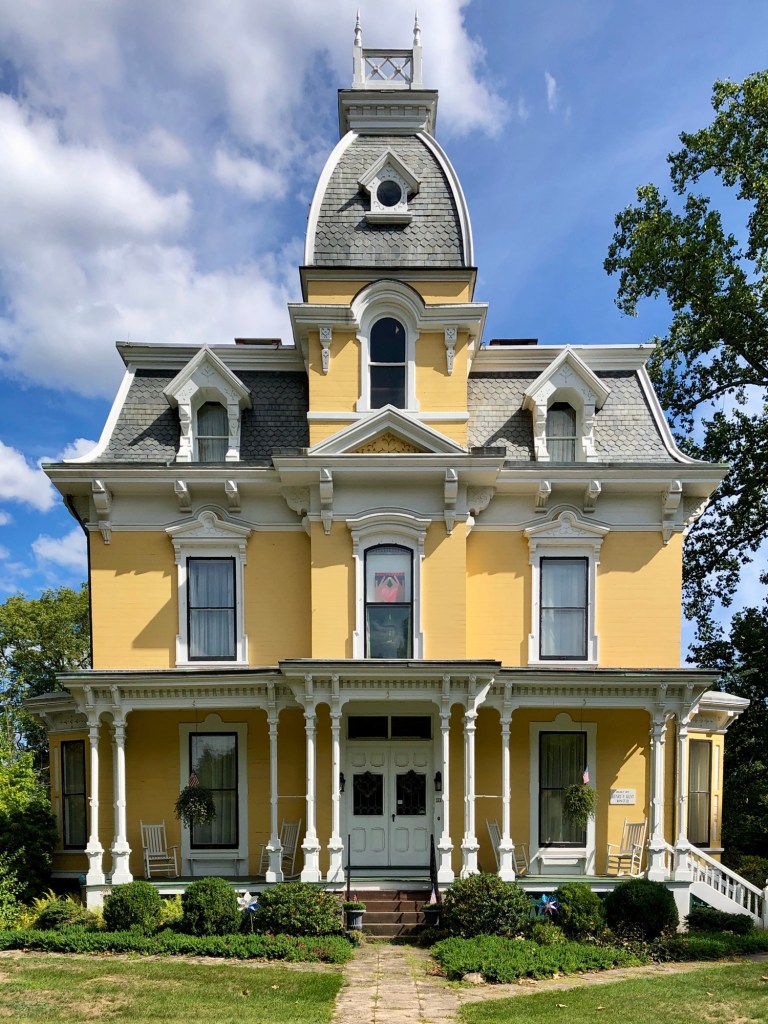
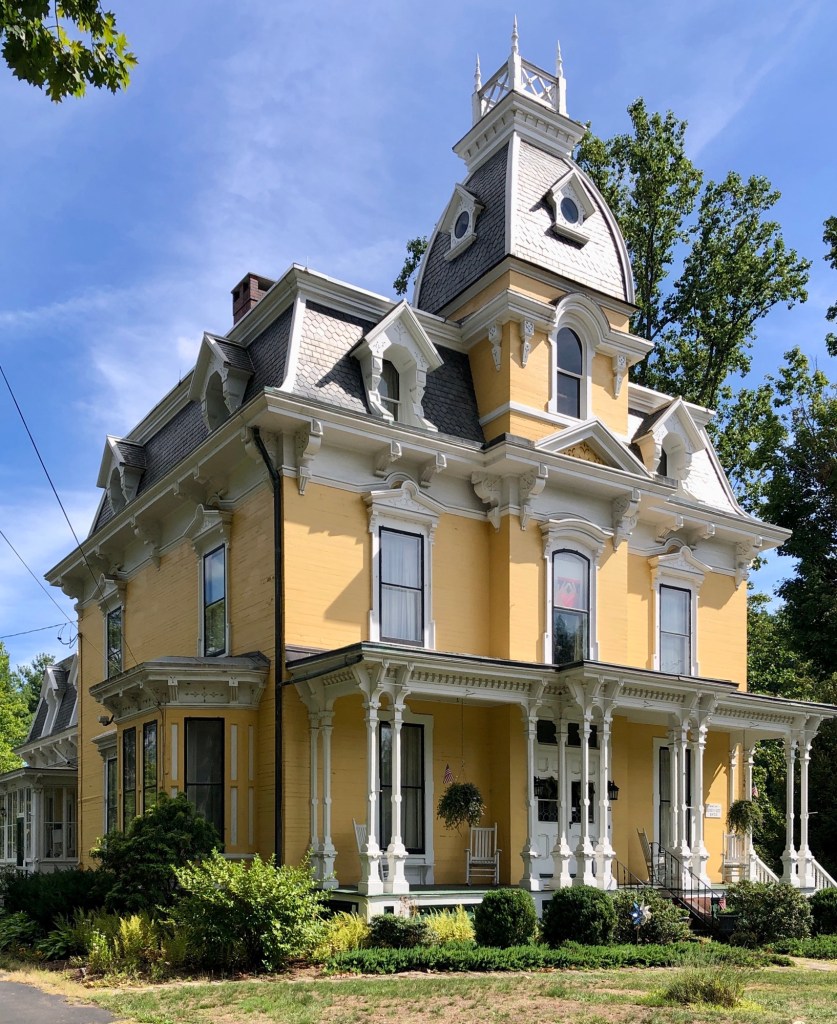
In 1868, James Wilkinson Clapp (1847-1931) married Eliza Tuckerman and they soon after moved into this large Victorian-era house on St. Paul Street in Brookline. James was the second son of Otis Clapp, a politician, publisher, and promoter of homeopathy. Otis Clapp operated a large homeopathic pharmacy, Otis Clapp & Son, which continued as a business after his death, evolving to encompass different areas of medical technology. It was one of the oldest-operating pharmaceutical manufacturers in the United States by the time it was acquired by Medique in 2008. James Clapp was also a medical doctor and at the young age of 22, acquired a house lot here on St. Paul Street and had this large Second Empire style residence built for his family. Dr. James W. Clapp worked as a pharmacist and taught courses at the Boston University School of Medicine. He spent summers at his gentleman’s farm in Bolton, Massachusetts, until his death in 1931. The Clapp House was later used as a doctor’s residence and office and a nursing home, suffering from neglect, but was ultimately restored in the early 21st century.

Dr. Caroline Eliza Hastings House // 1890

A fine example of the Queen Anne style of architecture, this late 19th century residence in Sharon, Massachusetts, is equally significant for one of its owners, Dr. Caroline Hastings. Caroline Eliza Hastings (1841-1922) was born in Barre, Massachusetts, and after attending public schools there, would enroll at the New England Female Medical College (later absorbed into the Boston University Medical School), graduating with an MD degree in 1868. She conducted a private practice and additionally worked as an instructor at her alma mater. She was affiliated with the Talitha Cumi Home in Jamaica Plain, Boston, a medical facility run by women to treat and house unmarried mothers and their young children. Doctor Hastings was an amazing woman who also established and was president of Boston’s first women’s medical society, and while on the Boston School Committee, implemented the first free school lunch program for poor children in the country. In the early 20th century, Dr. Hastings and her husband, Charles Printer, purchased this house built in 1890 and moved here together, where they likely enjoyed retirement. Dr. Caroline E. Hastings died in 1922, and her Sharon home has been preserved by later owners and resembles the property when she resided here.

Stoneholm Manor // 1865

Stoneholm Manor is a historic estate tucked away in Sharon, Massachusetts, that remains one of the finest examples of a Second Empire style mansion and carriage house built of stone in New England. Stoneholm was built in 1865 for Horace Augustus Lothrop (1828-1898) within a year of his marriage to second wife, Sarah Gorham Swain. Horace A. Lothrop was a manufacturer and businessman with factories in Sharon and nearby towns and he invented innovative tools like hoes and wooden shanks for foot support in shoes and boots. He was also engaged in politics, serving in the state legislature and on the local school board. His country estate in Sharon is unique for its construction of locally quarried rock-face granite walls, fine mansard roof with cupola, and matching L-shaped carriage house, all in great condition. Stoneholm was listed on the National Register of Historic Places and remains a private residence.

George P. Lawrence Summer House // 1897

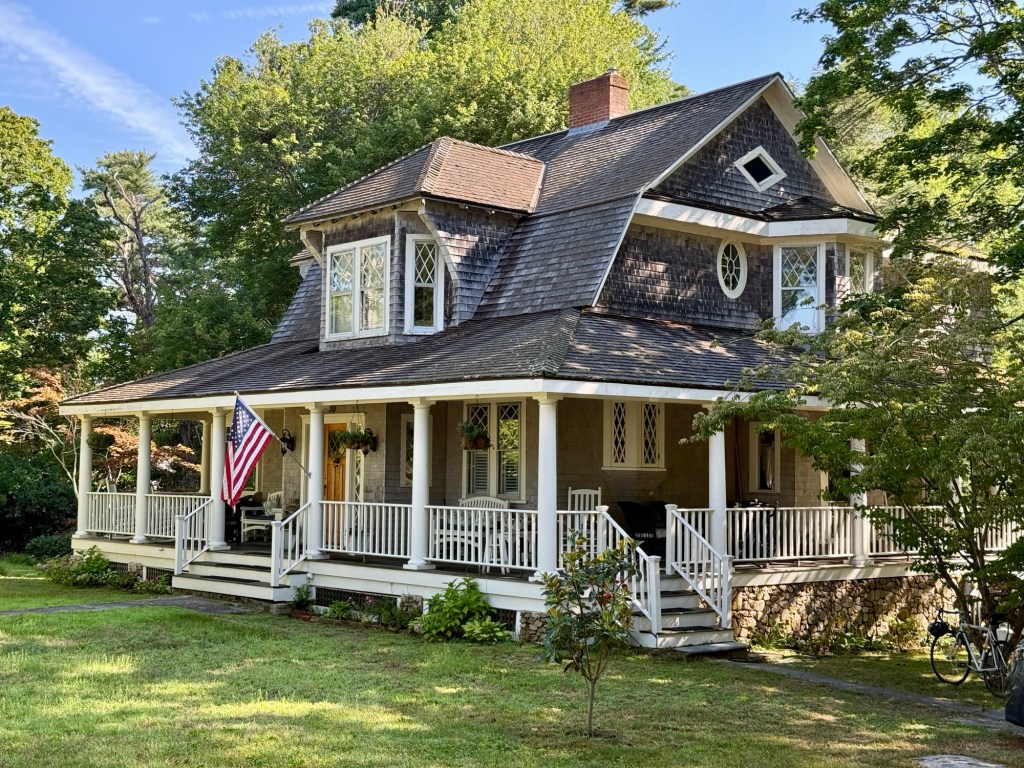
On the eastern shore of Lake Massapoag in Sharon, Massachusetts, the George P. Lawrence Summer House is an excellent and rare preserved example of a late 19th century Victorian summer house in the suburban town. The residence was built in 1897 for George Pelton Lawrence (1859-1917) and his wife, Belle, as a summer retreat from their primary residence in North Adams in Western Massachusetts. George P. Lawrence was an attorney who was appointed as a district court judge before entering the political arena where he became a state senator. The couple spent summers at this beautiful Shingle/Colonial Revival style residence until Congressman Lawrence’s death in 1917. On November 21, 1917, Lawrence jumped out of his eighth-floor New York City window at the Hotel Belmont , committing suicide. In his room, he left a note saying that he “could not stand the pressure anymore”. The Sharon property remained in the family until the 1940s and has been modernized, while maintaining its character. 

Timothy Quinn House // 1892

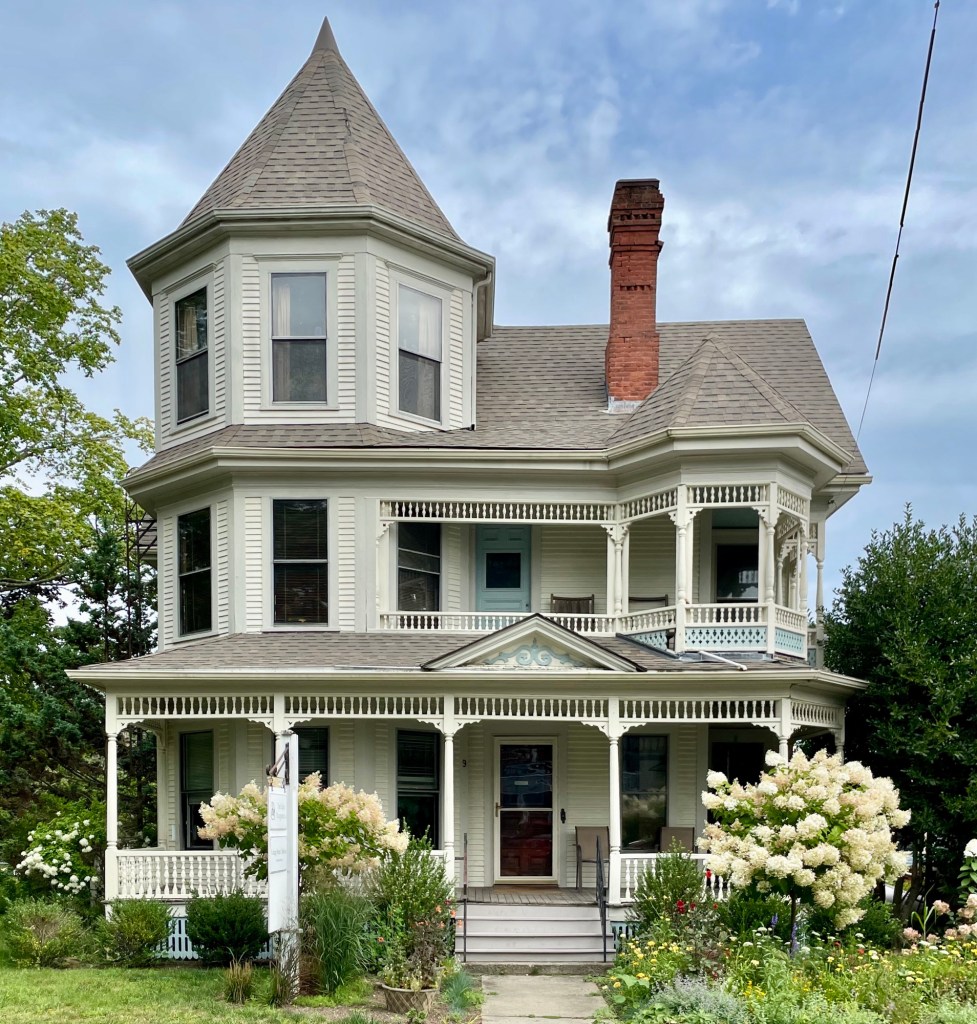
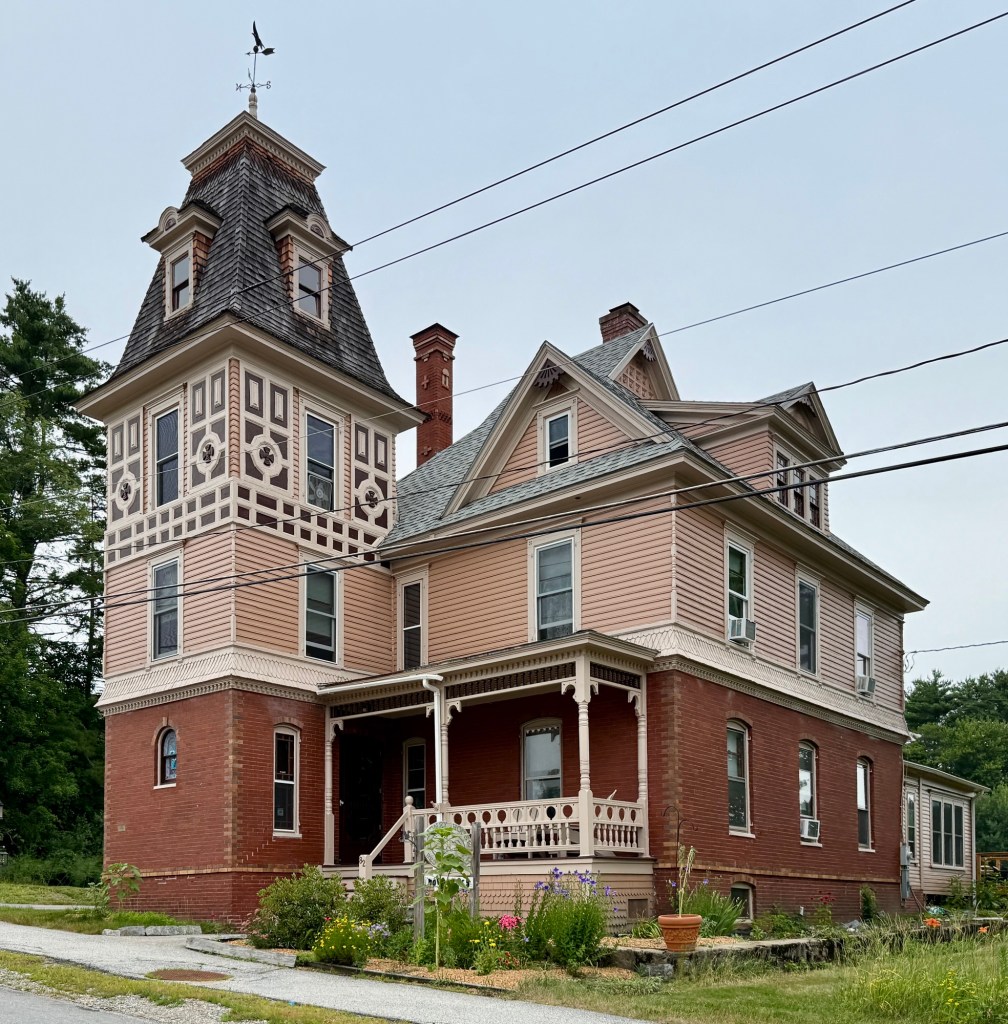
The Timothy Quinn House on South Main Street in Sharon, Massachusetts, is an extravagant example of the Queen Anne style that maintains its flourish and ornate details. The residence was built in 1892 for Timothy Francis Quinn (1863-1934), a first-generation Irish resident who owned and managed a shipping business with his brother, John. Timothy Quinn was active in local affairs and with the local Catholic church and historical society. After his death in 1934, the property was inherited by his wife, Elizabeth, and later by their daughter, Esther. Architecturally, the Quinn House has an irregular plan and features varied siding, brackets, a tower capped by a conical roof, and elaborate porch, all painted to highlight the many unique details. 

John G. Phillips House // 1901

The John G. Phillips House on Pleasant Street in Sharon, Massachusetts, is a playful and eclectic example of early 20th century residential architecture showcasing the blending of many styles into a single composition. The house was built in 1901 for John Goddard Phillips, who moved to Sharon from Boston to retire in this large home, and serve as President of the Sharon Historical Society. The house blends typical Queen Anne and Shingle style forms but with interesting brackets common in styles popular a half-century earlier.

Max Adler House // 1879

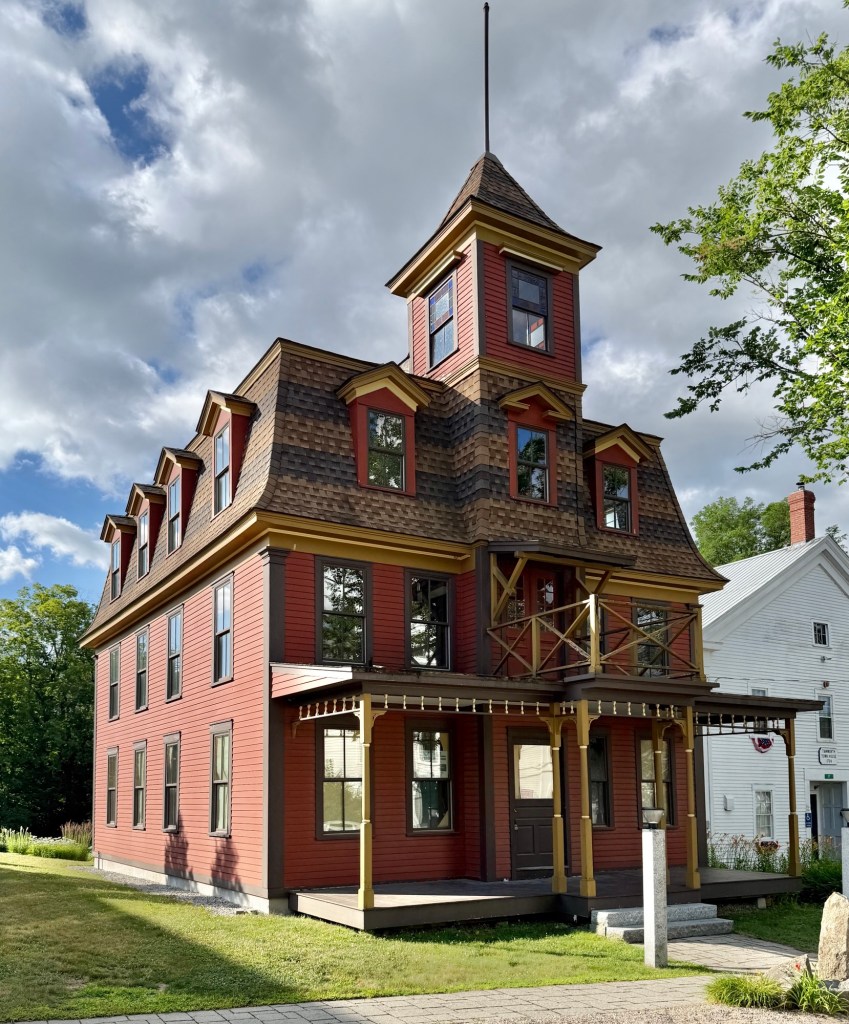
The Max Adler House on Greene Street in New Haven’s Wooster Square neighborhood is a flamboyant example of Victorian-era residential architecture that is hard to classify as an architectural style. The residence was constructed in 1879 for Max Adler (1841-1916) a German-born Jewish immigrant who grew up in New Haven and became a leader in industry at a young age. Max founded the Strouse & Adler Corset Company, which is said to be the first corset factory in the United States. The company did very well and he was able to erect this residence overlooking Wooster Square park for his family. Architecturally, the house has a mansard style roof, a feature of the Second Empire style; applied stickwork in the wooden bays, porch and dormers, a feature of the Stick style; and embroidered panel brickwork and terra cotta, elements of the emerging Queen Anne style. The Adler House has been lovingly preserved and is one of New Haven’s finest Victorian-era residences.