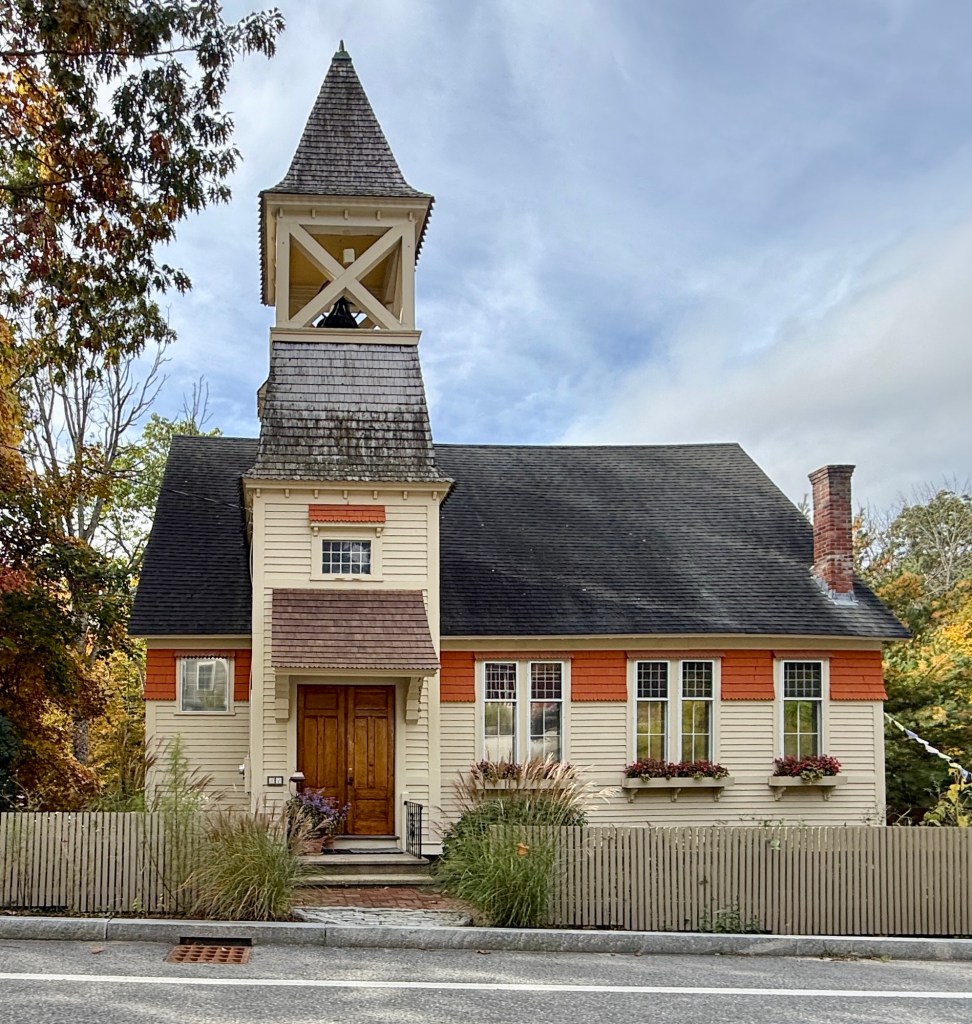
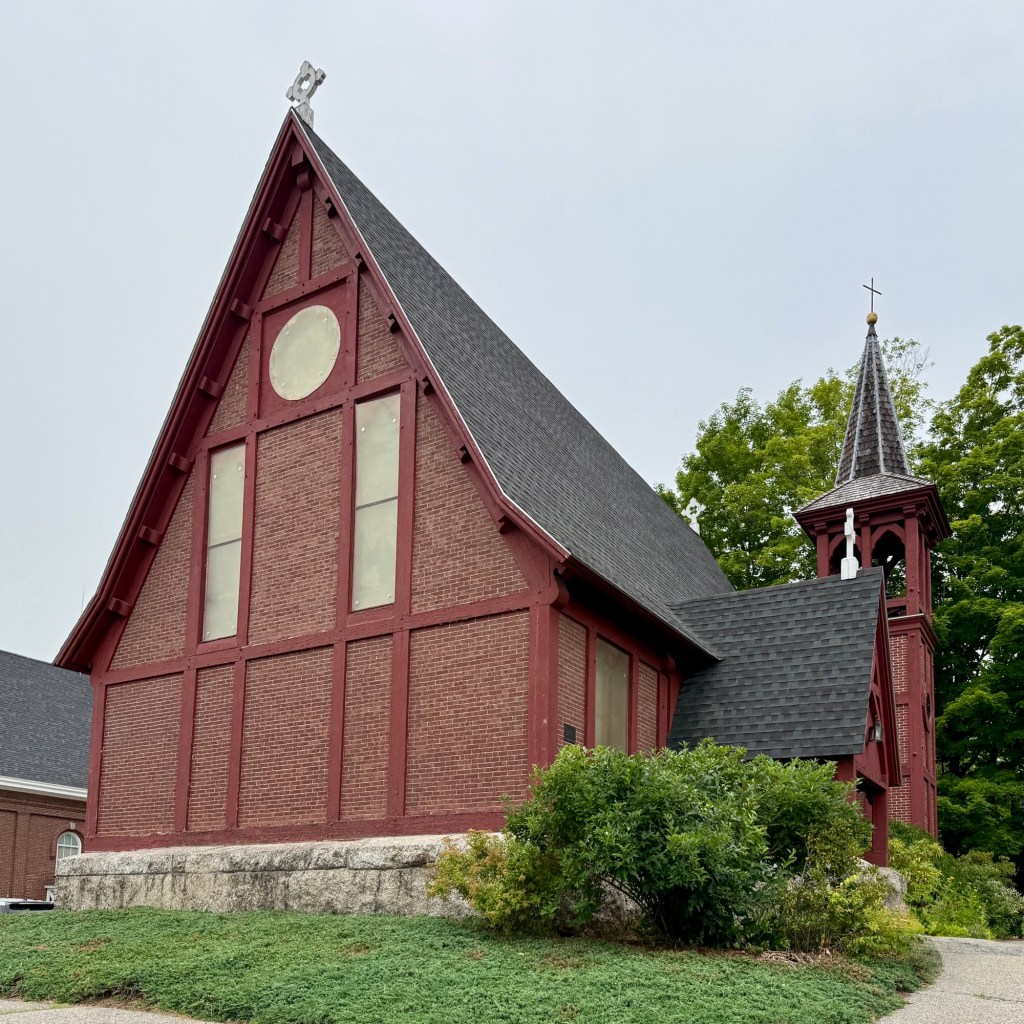
In the 1880s, members of the First Congregational Church of Princeton, Massachusetts, who lived in the area of East Princeton Village, petitioned their minister Reverend Archibald Love, to consider the possibility of building a small church to accommodate them. Prior to this, members had to travel over three miles every week and sermon, to the Town Center, where the Congregational Church was located. Reverend Love permitted the erection of a small Congregational Chapel in East Princeton, which broke ground on Main Street in 1885. The Queen Anne style chapel features a steeply pitched roof, offset entrance set within a tower with a belfry above, and bands of decorative shingles breaking up the massing of the building. Services in the East Princeton Chapel ceased in 1960 and the chapel was sold by the congregation and was converted to a private residence, while retaining its unique architectural quality.
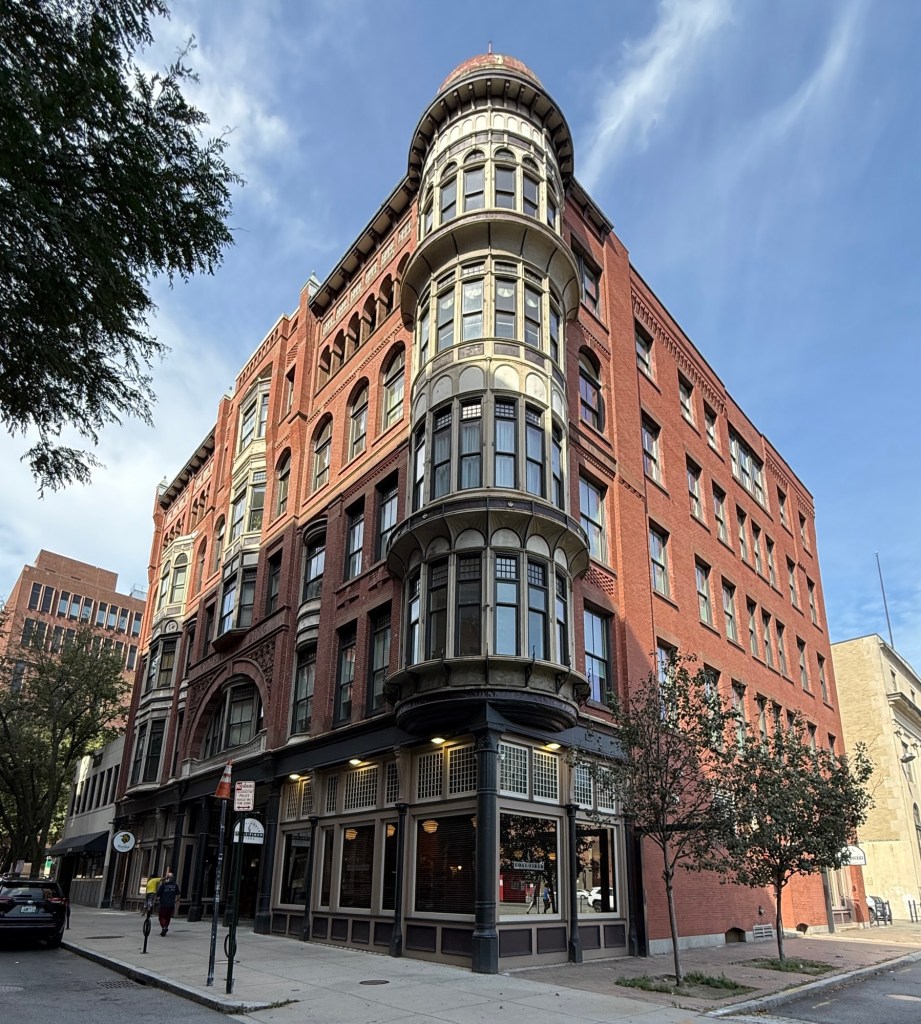
The Conrad Building on Westminster Street in Downtown Providence is an ornate and over-the-top masterpiece designed by one of the city’s premier architectural firms for an eccentric owner. Erected by Jerothmul Bowers Barnaby (1830-1889), a self made millionaire, commonly known as “Rhode Island’s Clothing Prince” who owned manufacturing plants for clothing throughout the city, the building was named after his son-in-law, John H. Conrad. Owner, J. B. Barnaby, lived in an eclectic mansion on Broadway, known as Barnaby’s Castle, which was designed by the firm of Stone, Carpenter & Willson, like this commercial block built as an investment in 1885. Originally used for professional offices, the structure had long been occupied as artist and photography studios on the upper floors. Eclectic in style, the Conrad Building blends Queen Anne, Romanesque Revival, and Moorish Revival styles into a single composition, with a four-story cast-iron tower at the corner capped by a Moorish ogival dome, panel brickwork, round arched windows and recessed openings, projecting bays, cast-iron storefronts, and an oversized arch with its name, “Conrad Building”, ornamental carvings, and the initials “J. B.” for its owner, all completed in brownstone.
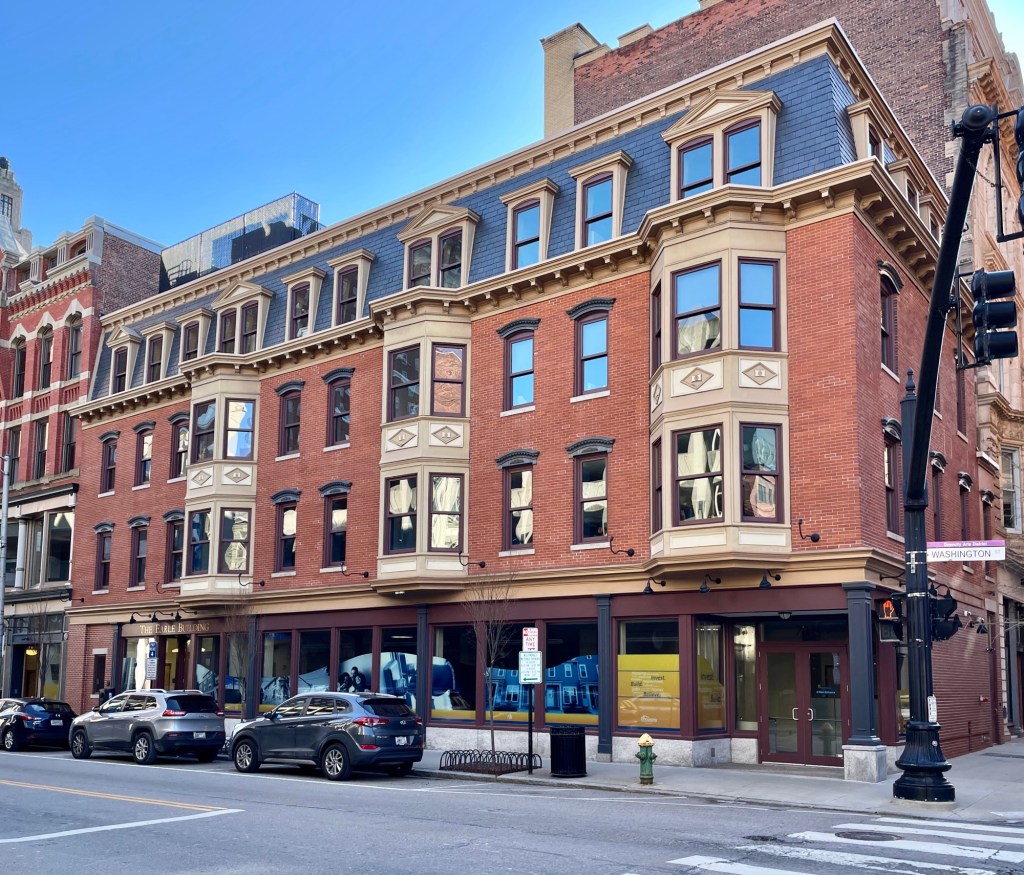
A very late example of a Second Empire style commercial block, the Earle Building on Washington Street in Downtown Providence stands as a handsome addition to the urban environment with its human scale and high-quality design. The building is said to have been built by William H. Earle with retail storefronts at the street with offices above. William Earle was a partner in the company, Earle & Prew, an express mailing company (similar to Fedex today). The relatively simple massing is broken up by two-story projecting oriel bays.
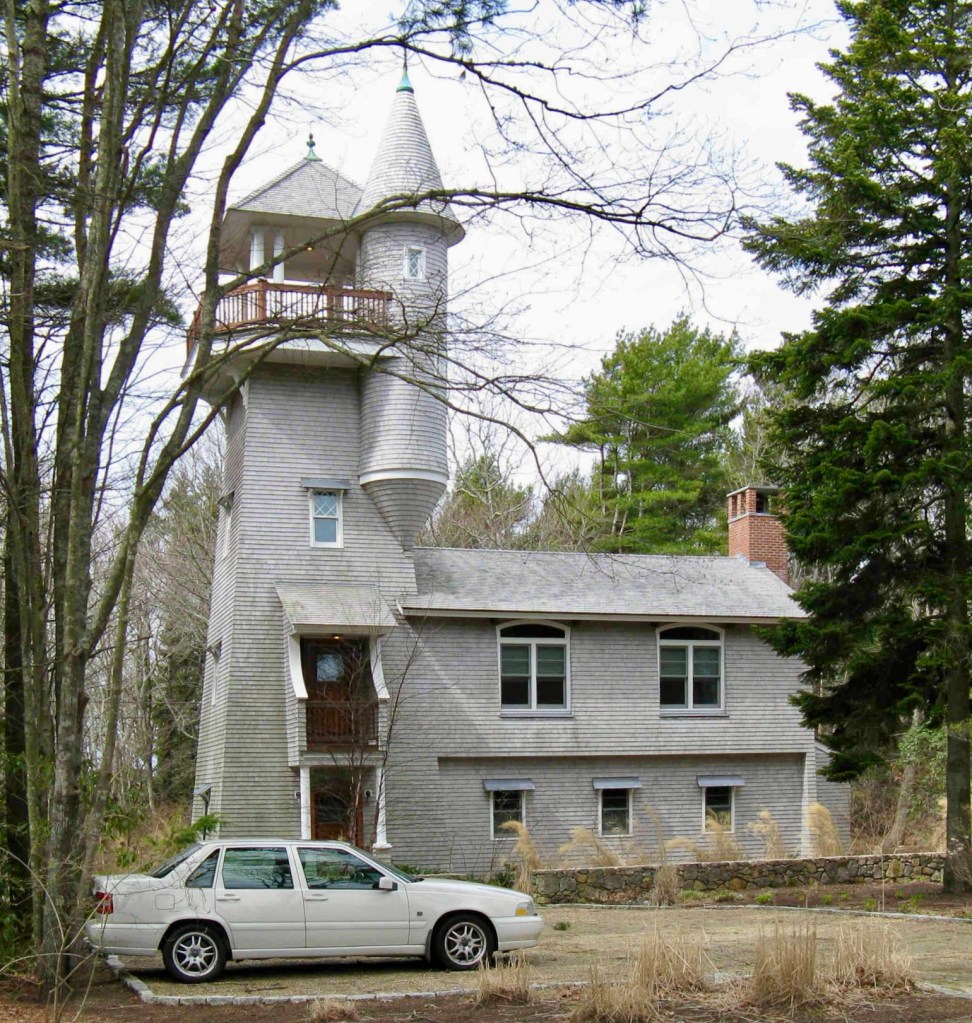
At the tip of Converse Point, a peninsula in Marion, Massachusetts, jutting into Buzzards Bay, a once great estate was built at the turn of the 20th century as the community saw many wealthy summer cottages built. One of these owners was Harry Elisha Converse (1863-1920), who purchased land here in 1898 and razed earlier cottages to build The Moorings Estate. Harry E. Converse was President of the Converse Rubber Company, which produced winterized rubber-soled shoes and boots and later shifted to make footwear for the military, and is today known simply as Converse, the internationally known footwear and apparel company. In 1902, Converse hired architect, Tristam Griffin to design his new summer “cottage”, the Moorings, which was said to be the largest residence in Buzzards Bay at the time and rivaled the size of many area hotels. Part of the estate included a carriage house, cottages for family and friends, and this building, which was constructed as a bell tower and observatory near the entrance of the property that provided sweeping views of the grounds and surrounding coast. The 40-foot tower was designed in the Shingle style like the main house and featured a one-ton bell at the top. It was eventually connected to electricity and later provided a fire alarm for the entire estate. After the death of Harry E. Converse in 1920, the property was conveyed to three of his children, who subdivided the property which became too much to maintain as a summer home. The former observatory was acquired by Parker Converse and later converted into a residence, by him or his son, Courtland Converse. The unique structure is a lasting remnant of what was once the largest estate in this part of Massachusetts.
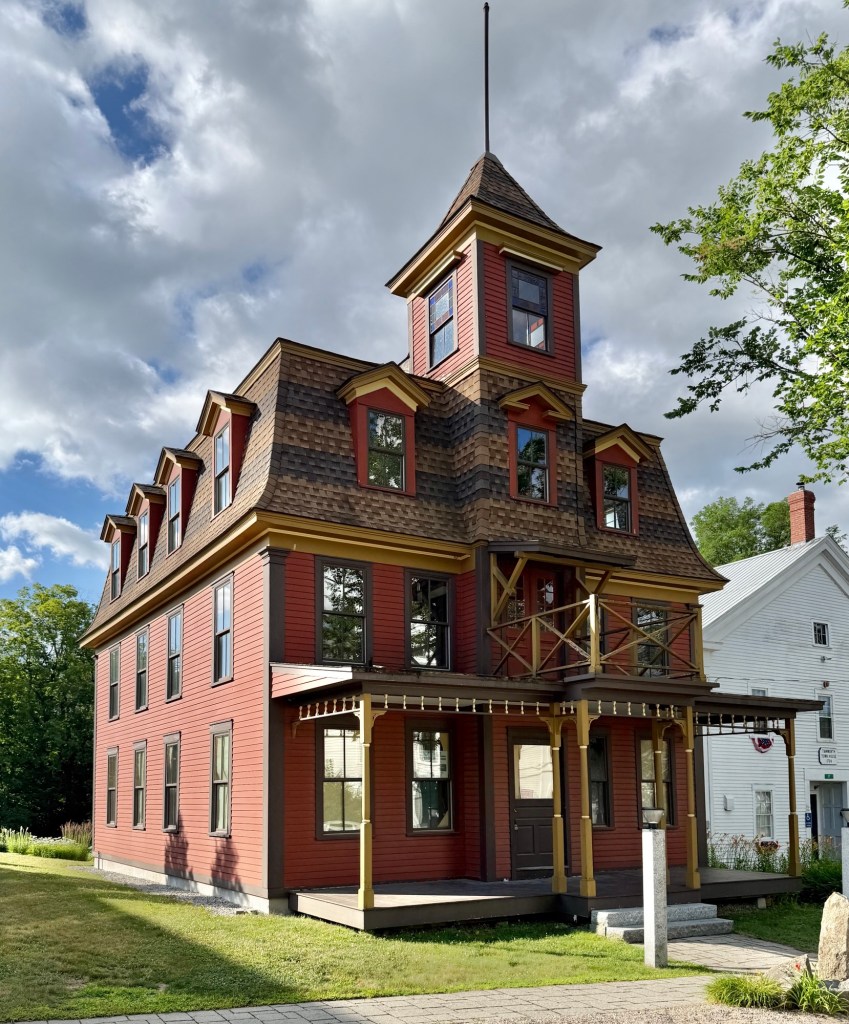
This charming building on the picturesque Main Street of Tamworth, New Hampshire, was originally built as a residence around the time of the marriage of owners, Nicholas and Abbie Varney. Nicholas Varney (1833-1900) was listed in the Census as a carpenter and likely constructed his own home here in Tamworth. The once Italianate style residence was modified later in the 19th century with the addition of the two-story tower in the Queen Anne style. After Nicholas’ death in 1900, the home was converted to a store and was known as the Pollard’s Store. Today, the building is occupied by a local bakery.
The architecturally distinctive Tamworth Inn, sits in the center of Tamworth Village, New Hampshire, and is now home to one of the most innovative and experimental distilleries in the country. The inn got its start in 1888, when owner Arthur Elliot Wiggin (1842-1913) saw the seasonal demand for lodging every summer to this region of New Hampshire, and completely expanded and renovated his Gothic Revival style home into a Second Empire style inn. Arthur Wiggin grew up in Tamworth and trained as a carpenter and likely oversaw the design and construction of his inn, originally called the Wiggin House but renamed Tamworth Inn by the 1890s. Wiggin eventually went bankrupt and by the 1930s, the inn was owned by hotelkeepers Fred Chesley and Violette Huntress of Boston who managed a hotel there and the Tamworth Inn during summers. Fred Huntress was an avid sports fan and ran an athletic gym, called the Tamworth Garden, which was built from a converted 19th century barn. In 1931, he sold the Tamworth Garden to Francis Cleveland as the first home of the Barnstormers Theatre. The property was more recently purchased by the Tamworth Distilling & Mercantile, who demolished about half of the inn, preserving the end structure as part of their Tamworth property. The old barn, which was once the Tamworth Garden is also restored and today serves as the company’s barrelhouse.
The Rufus Underhill House in Billerica, Massachusetts, is an excellent example of the eclectic nature of residential architecture seen in the United States during the Victorian period following the conclusion of the Civil War. Without a clear distinguishing style, the house stands out for its unique form, architectural details, lancet windows and side four-story tower, all with paint colors to highlight and accentuate its distinctive features. The house and accompanying stable were built around 1870 for Rufus K. Underhill (1819-1894) and his wife, Deborah, as a place to spend their retirement. Rufus Underhill was born in Chester, NH and worked as a blacksmith, later establishing the Underhill Edged Tool Co. in Nashua later expanding to sales in Boston.
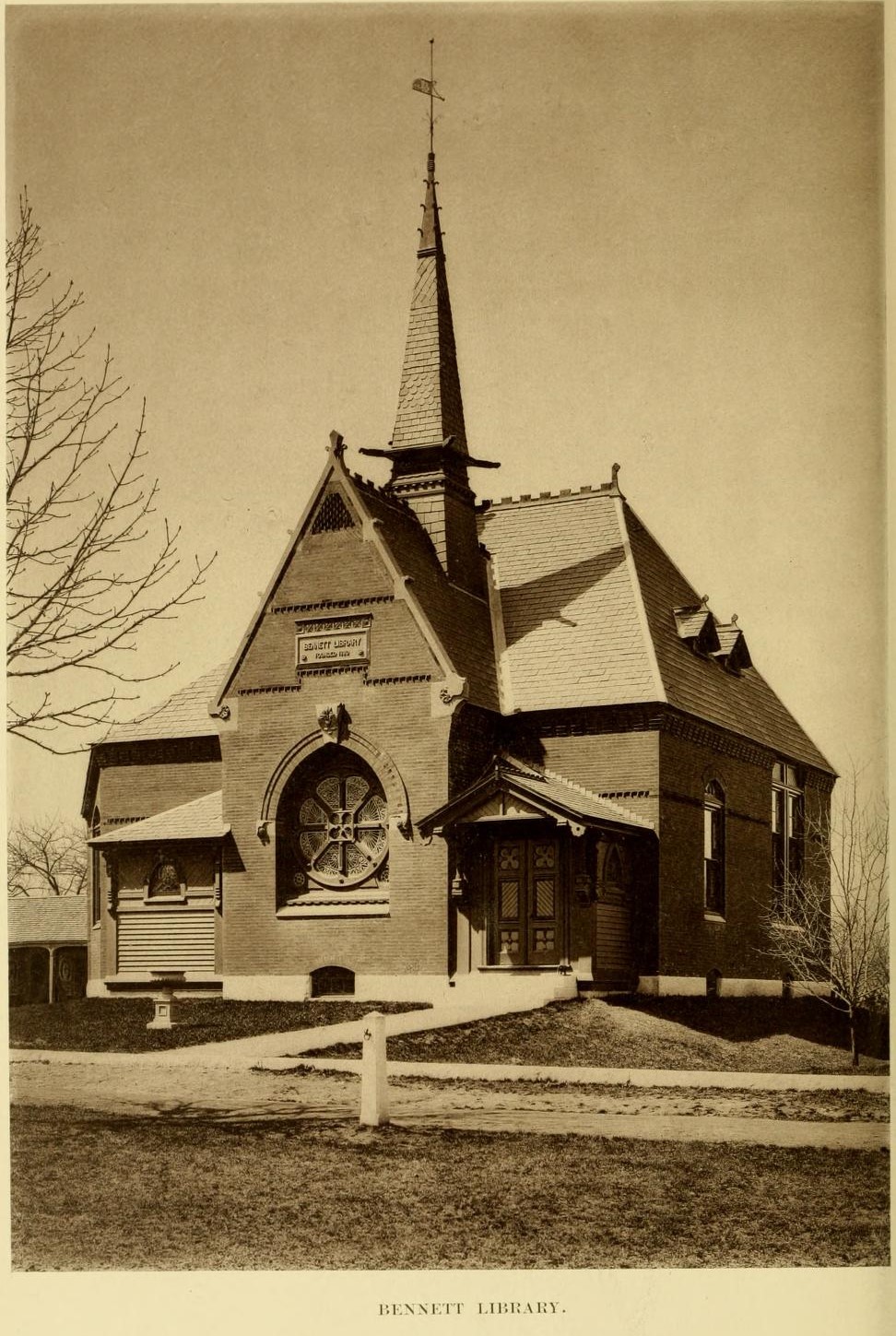
In the late 19th century, Eleanor Richardson Bennett (1794-1891), the widow of Joshua Bennett (1793-1865), bequeathed funds to erect the first purpose-built public library building in her hometown of Billerica, Massachusetts. A private members library known as the Social Library, was formed in Billerica in 1772, but Ms. Bennett wished to gift the town a public facility of learning in memory of her late husband, a prominent landowner in the West End of Boston and one of the richest men in Middlesex County. Eleanor Bennett hired the Boston firm of Rotch & Tilden, to design the new library building overlooking the Town Common. Completed in 1881, the Victorian Gothic library is built of brick with limestone trim, and features a large rose stained glass window, intricate terracotta and wooden detailing, and a slate hipped roof with a pointed spire. The library was eventually outgrown and the facility relocated to a new building, and again to the former Town Hall building in 2000. The former Bennett Library is still owned and maintained by the town as an event space available for rent. The building has been restored through Community Preservation Act funding.
This iconic Boston building is threatened with demolition!
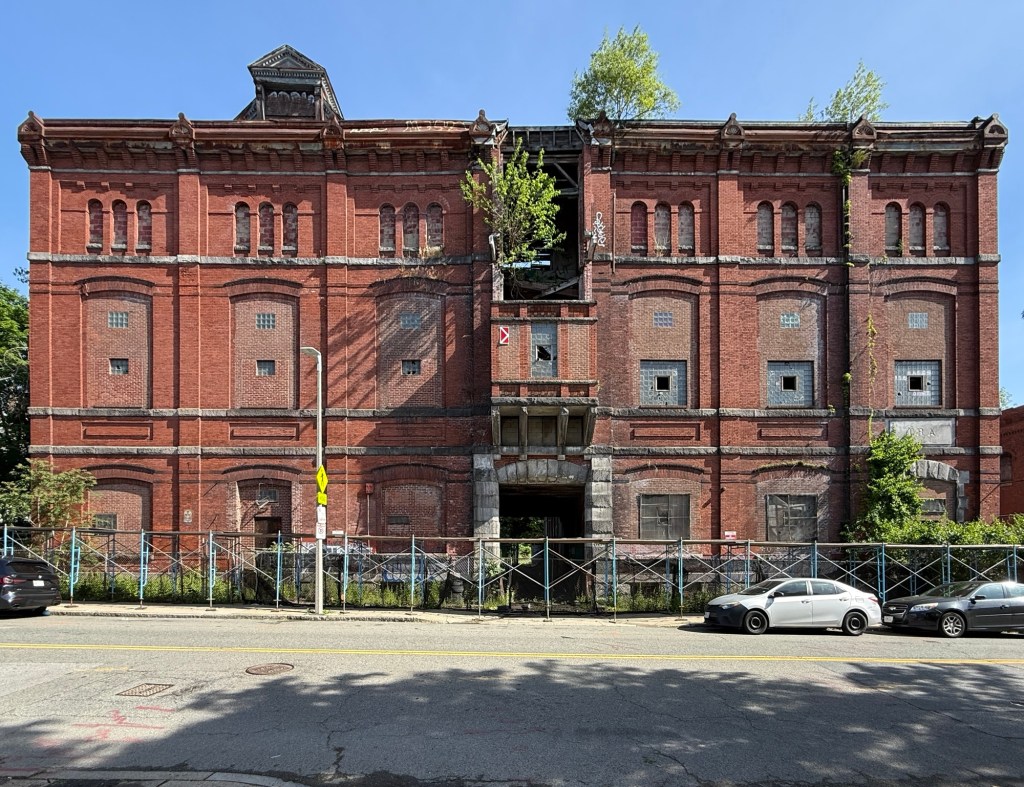
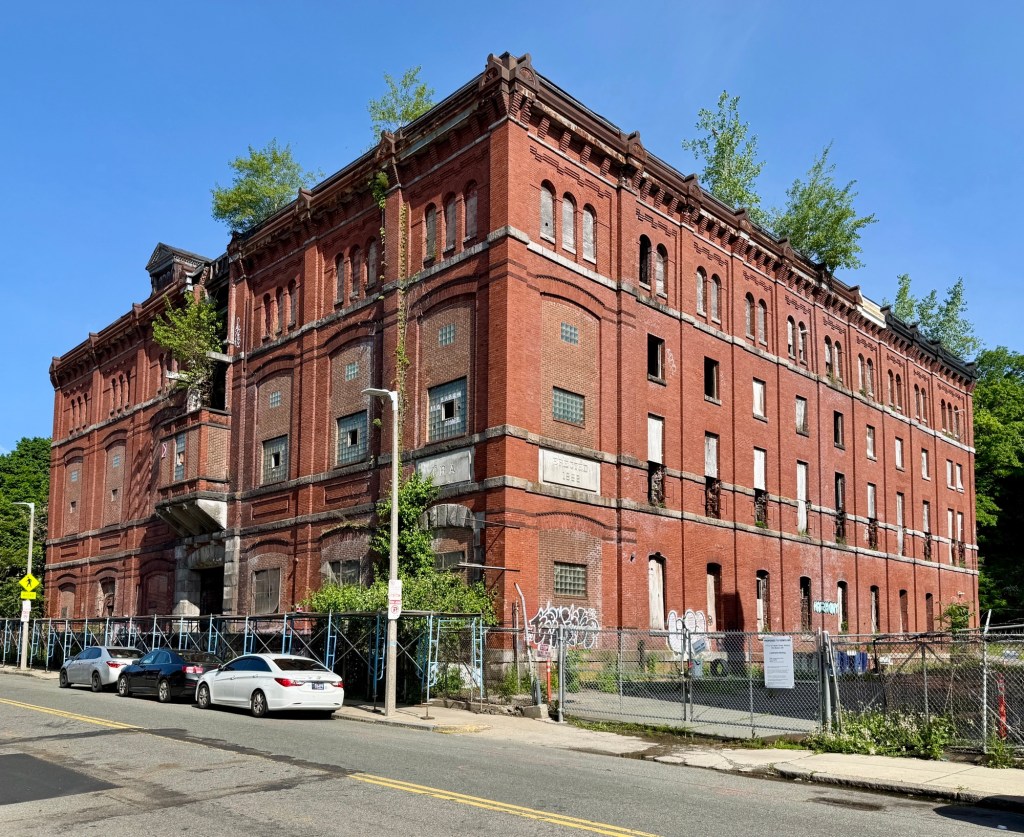
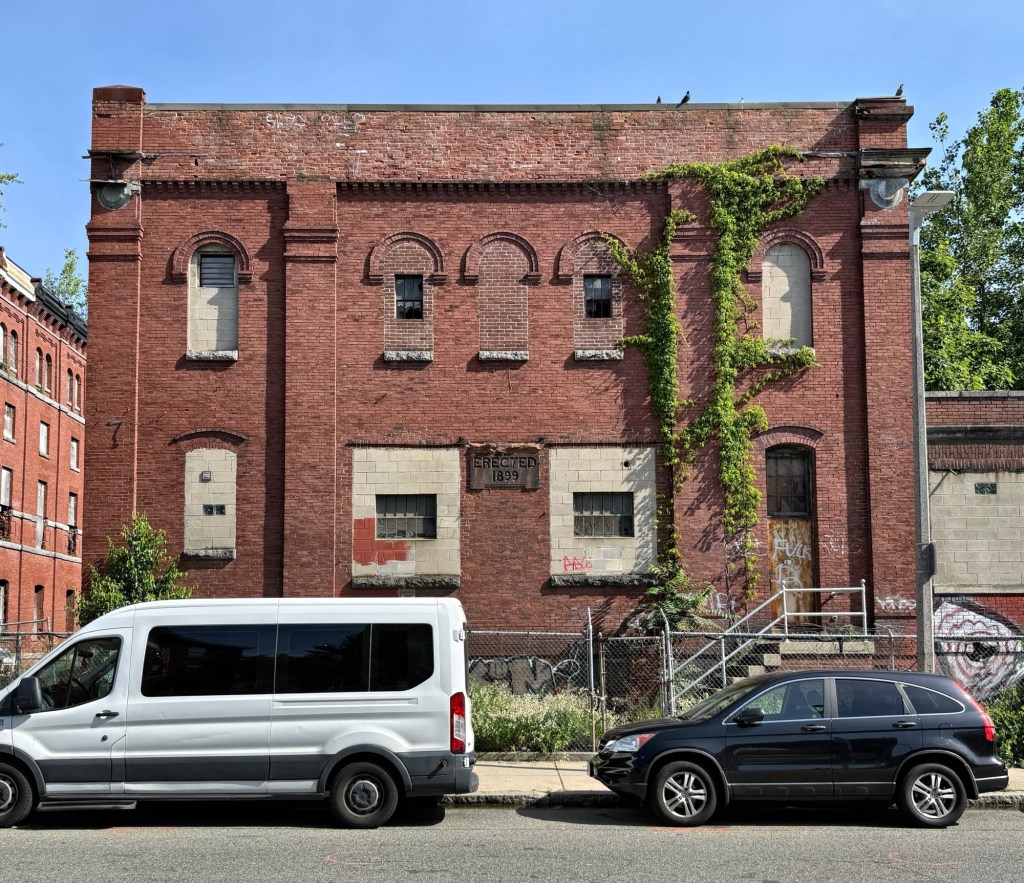
The clock is ticking for the Alley/Eblana Brewery, a historically and architecturally significant building in Boston’s Mission Hill neighborhood. Located on Heath Street, the historic Alley Brewery, also known as the Eblana Brewery, stands as a striking reminder of the city’s once-thriving brewing industry. Founded by Irish immigrant John R. Alley (1822-1888) in the mid-1880s, the brewery produced the popular Eblana Irish Ale, a name derived from the ancient term for Dublin, reflecting Alley’s heritage and the strong Irish influence in the area. John Alley previously co-owned the Highland Spring Brewery nearby, but founded a brewery in his own name in 1885. For his brewery, Alley hired Philadelphia architect Otto C. Wolf, who was the nation’s premier brewery architect and engineer in the late 19th and early 20th centuries. The four-story complex was built in 1886 and showcased some of the most advanced brewing technology of its era while displaying an impressive blend of brick and granite craftsmanship. Its distinctive façade features a dramatic central bay, granite-trimmed arches, rough-faced stone braces, wrought-iron gates, and carved stone plaques bearing Alley’s initials and the date of construction. After John’s death in 1888, the business continued under the ownership of his two sons, Frederick and George. The brothers in 1899, added the adjacent bottling and refrigeration building, which employs similar architectural features and materials to the main brewery. Brewing here ceased with Prohibition and the structure later served a variety of manufacturing uses, when during the 1960s, many windows were filled with brick. The Alley-Eblana Brewery remains one of Boston’s most architecturally significant surviving brewery buildings, embodying Boston’s rich industrial and ethnic heritage, but it is threatened. Developers have owned the building since 2013 and have done nothing to preserve or even maintain the structure, making it a case of demolition by neglect. They are requesting to demolish both structures, but the demolition has been delayed 90-days through the Boston Landmarks Commission Demolition Delay review process. If you want to see the building repurposed and saved, reach out to the Boston Landmarks Commission and advocate for its adaptive reuse, which would provide housing and maintain a significant architectural landmark for the community.
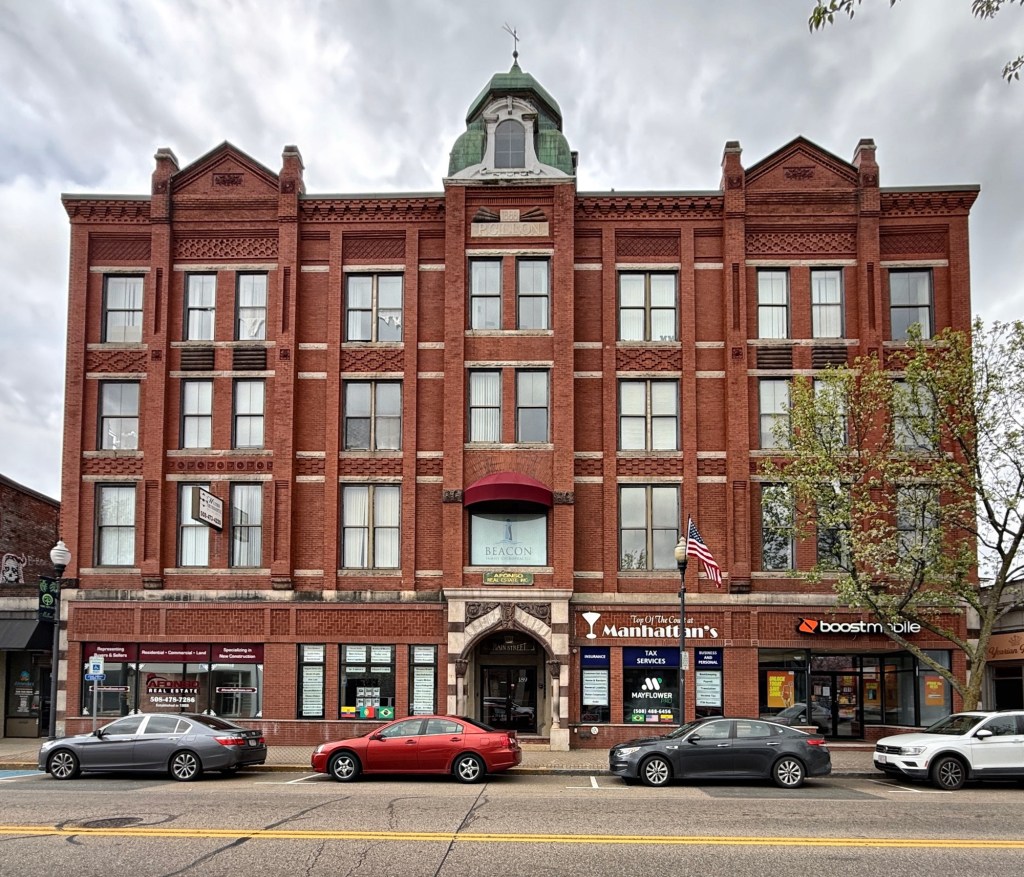
Located on Main Street in Milford, Massachusetts, the stately Gillon Block is one of the town’s finest buildings and an excellent example of eclectic, late Victorian commercial architecture. The block was erected in 1888-9 for owner Patrick Gillon (1843-1899), who inherited his late-father’s distillery and bottling business in Milford, and designed by local architect Rinaldo V. Carey. The panel brick facade is divided into seven sections with a central projecting section topped by a tower capped by a copper onion dome. The four-story block included retail space at the ground floor with offices and meeting halls on the upper stories, rented to tenants and organizations.
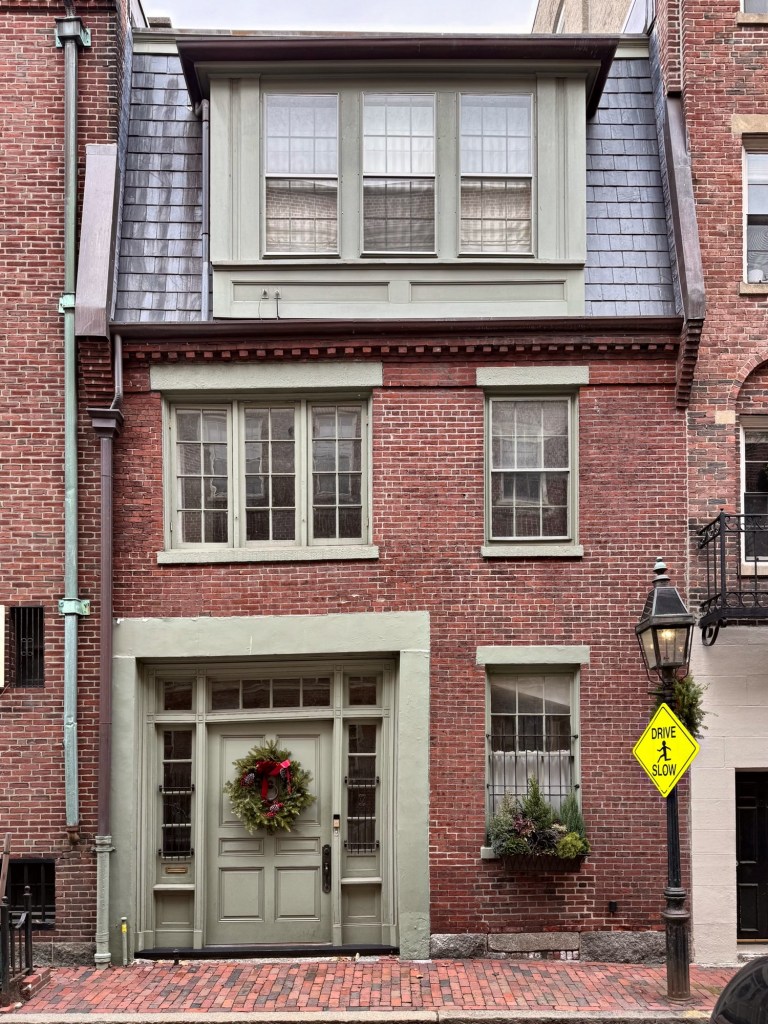
The early ownership is murky, but by the 1870s, this two-story with mansard roof stable was owned by a “Nathan Thayer”, either Nathaniel Thayer Jr. or Nathaniel Thayer III of Lancaster, who also retained city residences in Boston. The building features two portals on the first-floor that originated as doorways, the wider on the left for horses and a carriage, and the smaller for access to residential space for the stable-keeper and likely a hay loft over the carriage door. After the turn of the 20th century, the Flat of Beacon Hill gentrified into an exclusive enclave of residences, antiques shops, and artist studios and the former Thayer Stable was purchased by Frederick Oakes Houghton, an agent for transatlantic steamers. Houghton rented the building to an amateur theatrical group who organized as the Toy Theatre, that was founded in 1911 to present plays that had not been presented professionally in Boston. The founding group consisted of the usual, artistic, high society types, and had seating for 129 with no standing room. Houghton hired architect, Harold Symmes Graves, to convert the building into its theater use, enclosing the former carriage door and hay loft with multi-light windows, and creating a larger space inside for productions. The Toy Theatre did very well (due in part to its membership of upper-class Boston residents) and a new, purpose-built Toy Theatre was built in the Back Bay by 1914. In 1917, the former stable and theatre was purchased by Richard B. Platt, a musician and music teacher, and converted to a residence, a use that has remained ever since.
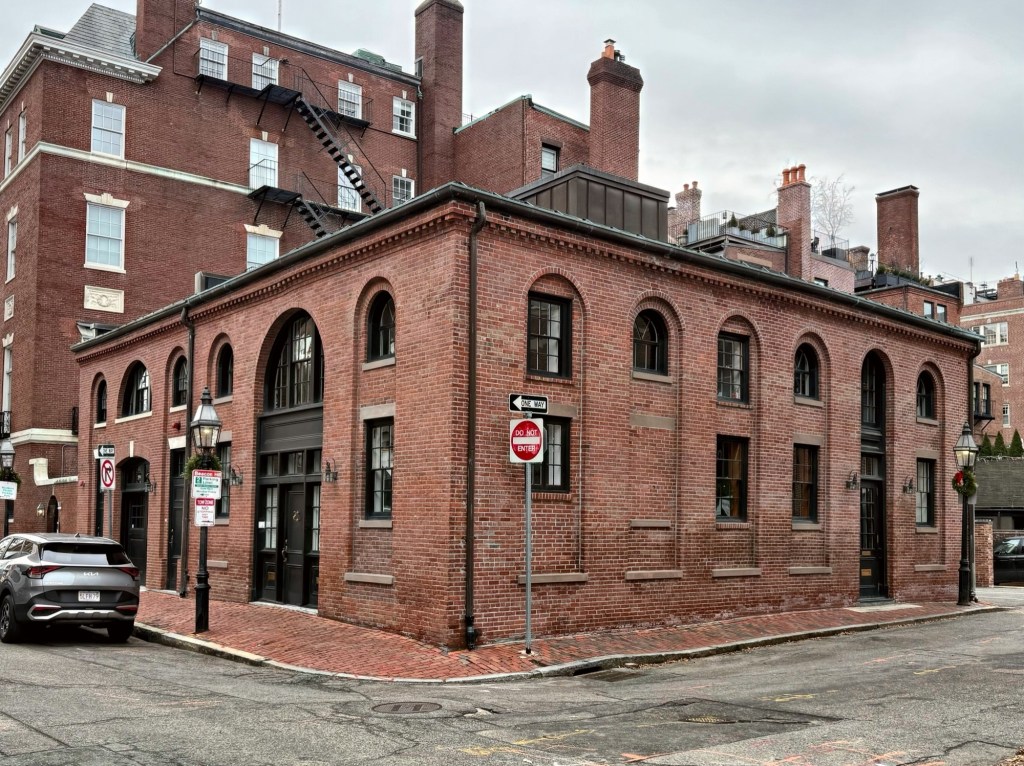
Located behind the David Sears Mansion (now Greek Consulate) on Beacon Street, this handsome utilitarian structure fronts Brimmer Street in Beacon Hill and predates the building it adjoins. The two stables and attached caretaker’s residence was built around 1856 for David Sears, who lived farther down Beacon Street, but also owned other buildings on the street which fronted the Public Garden. He built this stable in the Flat of Beacon Hill, an area west of Charles Street in what Samuel Eliot Morrison coined, “the horsey end of town” for its prevalence of stables and carriage houses. The architect is not known, but the handsome structure features bays of shallow, recessed brick arches and brick dentil courses, showing the importance of good design even for uses such as a stable. The building later became space for furniture storage and an ancillary apartment to the adjacent mansion, until 1957, when the it was acquired by the Vincent Club, a women’s organization with the mission of raising money for the Vincent Memorial Hospital whose mission was to treat the “diseases of women.” Even though the Vincent Hospital merged with Mass. General Hospital in 1988, the Vincent Club remains in this former stable as its home-base and continues to carry out its mission to advance the field of women’s healthcare.
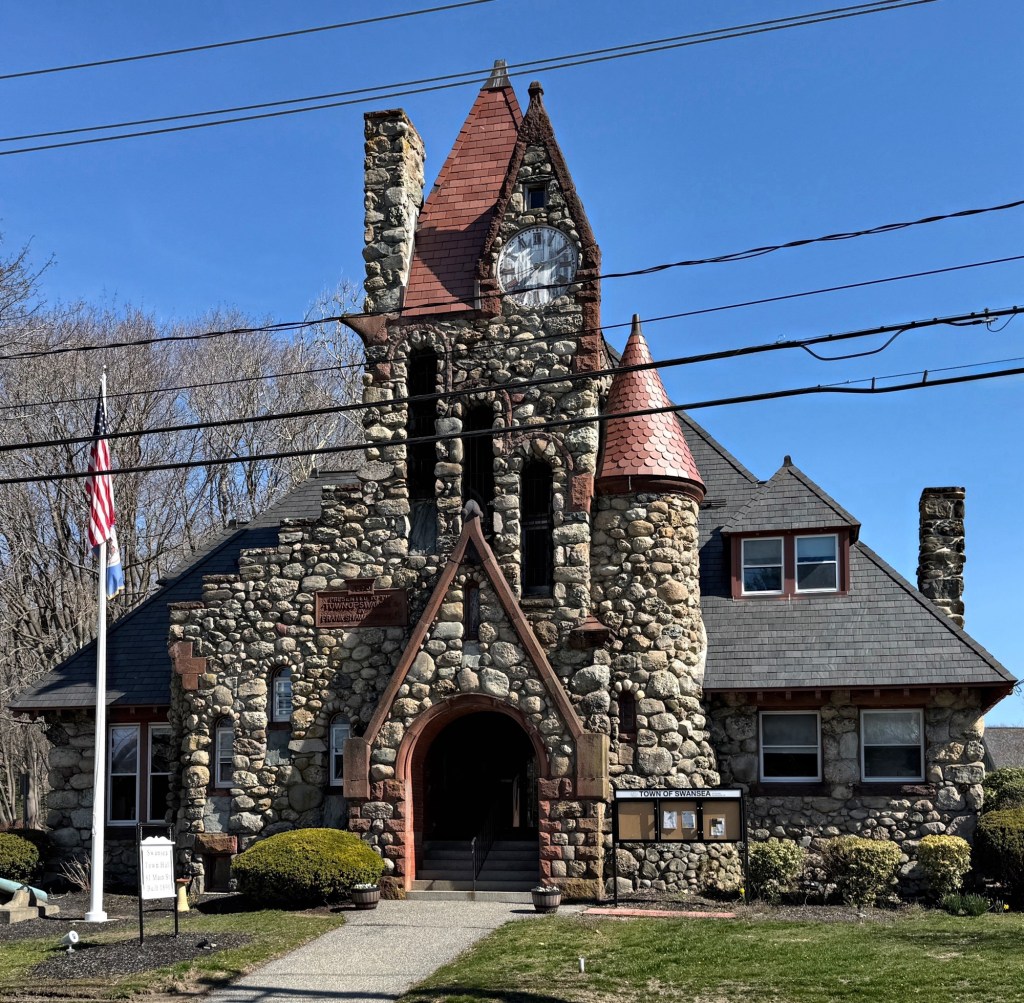
The Swansea Town Hall in Swansea, Massachusetts, is one of the most unusual and architecturally eclectic town hall buildings in New England, and was a gift to the community from a wealthy resident. Built in 1891 from plans by Boston architect, James Merrill Brown, the building is constructed of randomly laid rubblestone with brownstone trim with a massive pyrammidal slate roof and offset turret and tower containing a historic clock. The building was the gift of benefactors, Frank Shaw Stevens and Elizabeth Case Stevens, who lived down the street in the town’s largest mansion. The Stevens’ donated the building with the stipulation that the building was to be available to every and any religious society desiring to hold funeral services there and to also provide space for a public library. The town obliged. The space was outgrown and the Stevens’ would later donate the town’s public library next door and a church, that also held funeral services for the community. The building has been home to the Town Hall since 1891.
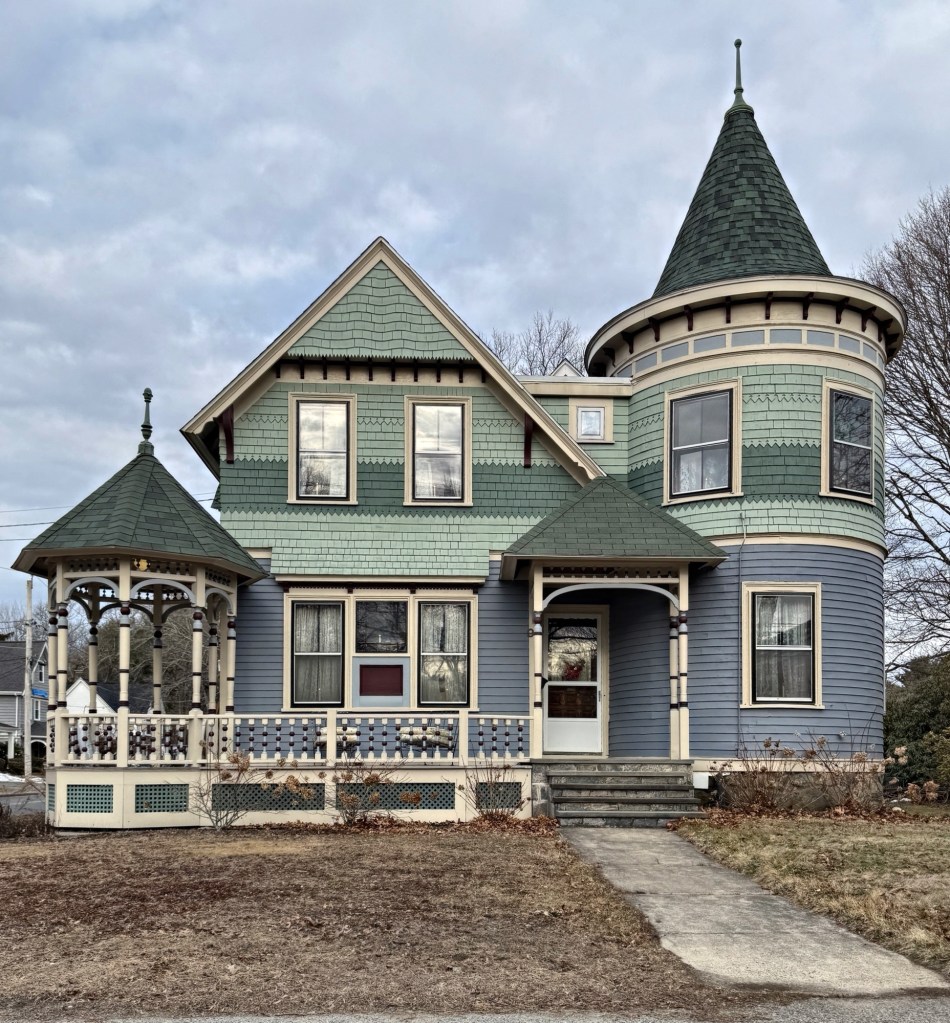
The Timothy Quinn House on South Main Street in Sharon, Massachusetts, is an extravagant example of the Queen Anne style that maintains its flourish and ornate details. The residence was built in 1892 for Timothy Francis Quinn (1863-1934), a first-generation Irish resident who owned and managed a shipping business with his brother, John. Timothy Quinn was active in local affairs and with the local Catholic church and historical society. After his death in 1934, the property was inherited by his wife, Elizabeth, and later by their daughter, Esther. Architecturally, the Quinn House has an irregular plan and features varied siding, brackets, a tower capped by a conical roof, and elaborate porch, all painted to highlight the many unique details.