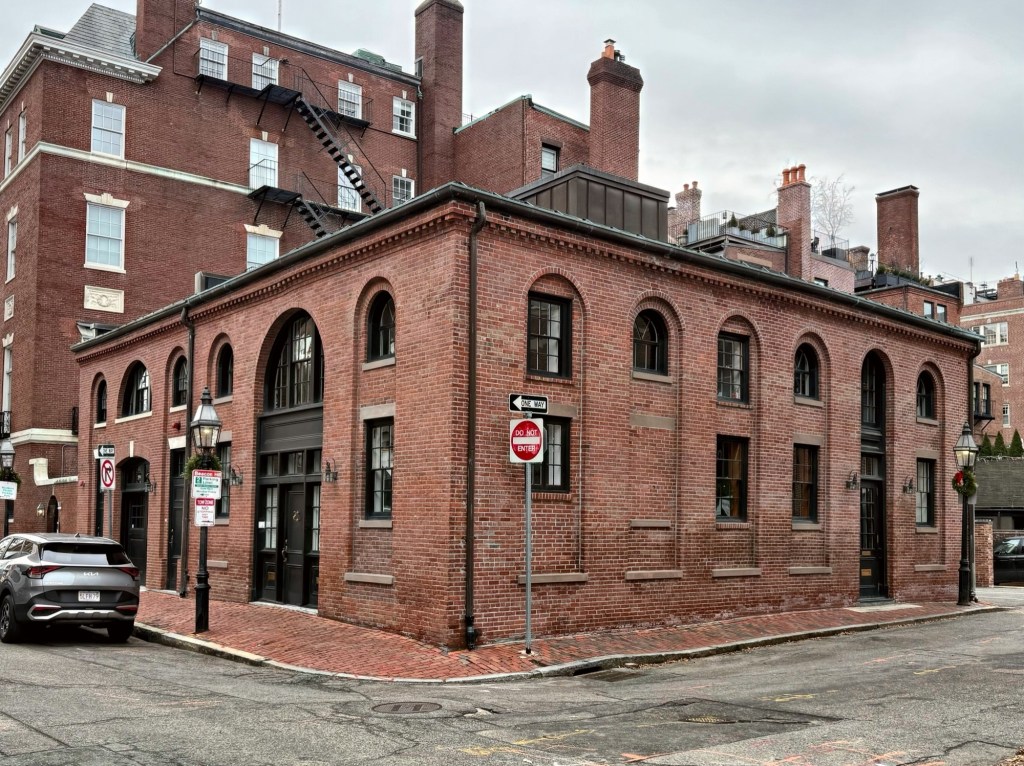
Sears Stable – The Vincent Clubhouse // c.1856

Located behind the David Sears Mansion (now Greek Consulate) on Beacon Street, this handsome utilitarian structure fronts Brimmer Street in Beacon Hill and predates the building it adjoins. The two stables and attached caretaker’s residence was built around 1856 for David Sears, who lived farther down Beacon Street, but also owned other buildings on the street which fronted the Public Garden. He built this stable in the Flat of Beacon Hill, an area west of Charles Street in what Samuel Eliot Morrison coined, “the horsey end of town” for its prevalence of stables and carriage houses. The architect is not known, but the handsome structure features bays of shallow, recessed brick arches and brick dentil courses, showing the importance of good design even for uses such as a stable. The building later became space for furniture storage and an ancillary apartment to the adjacent mansion, until 1957, when the it was acquired by the Vincent Club, a women’s organization with the mission of raising money for the Vincent Memorial Hospital whose mission was to treat the “diseases of women.” Even though the Vincent Hospital merged with Mass. General Hospital in 1988, the Vincent Club remains in this former stable as its home-base and continues to carry out its mission to advance the field of women’s healthcare.
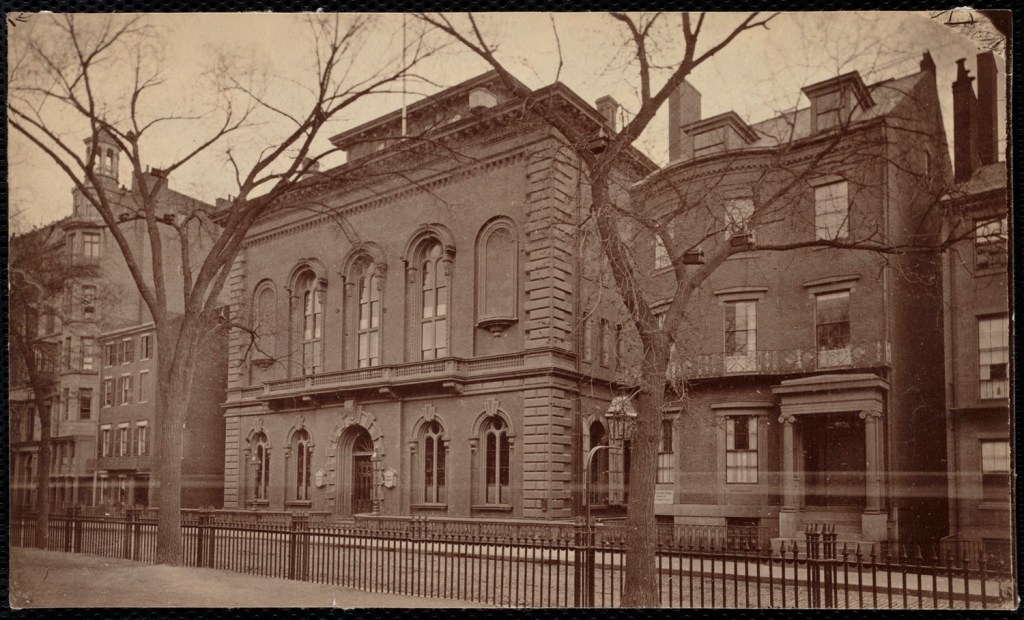
Old Boston Public Library // 1855-1898

Courtesy of BPL collections.

Established in 1848, the Boston Public Library was the first large, free municipal library in the United States. The Boston Public Library’s first building of its own was a converted former schoolhouse located on Mason Street that opened to the public in 1854. As soon as the library occupied the building, it was apparent that the amount of visitors and collections could not effectively be held in the cramped quarters. Planning began almost immediately for it’s first purpose-built library. Less than a year later, in December 1854, library commissioners were authorized to purchase a lot and fund the construction of the new library. A desirable building lot on Boylston Street, opposite the Boston Common, was purchased and a public invitation for proposals from architects was held. The requirements for the building included: a library hall with alcoves capable of containing on fixed shelves at least 200,000 volumes, a general reading room with ample accommodations at tables for at least 150 readers, a ladies reading room, an adjacent library room for the arrangement of 20,000 books “most constantly demanded for circulation,” and quarters for the Trustees and Librarian. The facade was to be of brick, with stone dressing”. The selected design by architect, Charles Kirk Kirby, was for this handsome Italianate style building which took nearly three years to build, opening in September 1858. Twenty years later, as the library outgrew that space, the Trustees asked the state legislature for a plot in the newly filled Back Bay, and planning began on the McKim Building, built in 1895 down Boylston Street. This building, the first purpose-built Boston Public Library building, was demolished in 1898, and replaced by the ten-story Colonial Theater Building. It stood just 40 years.

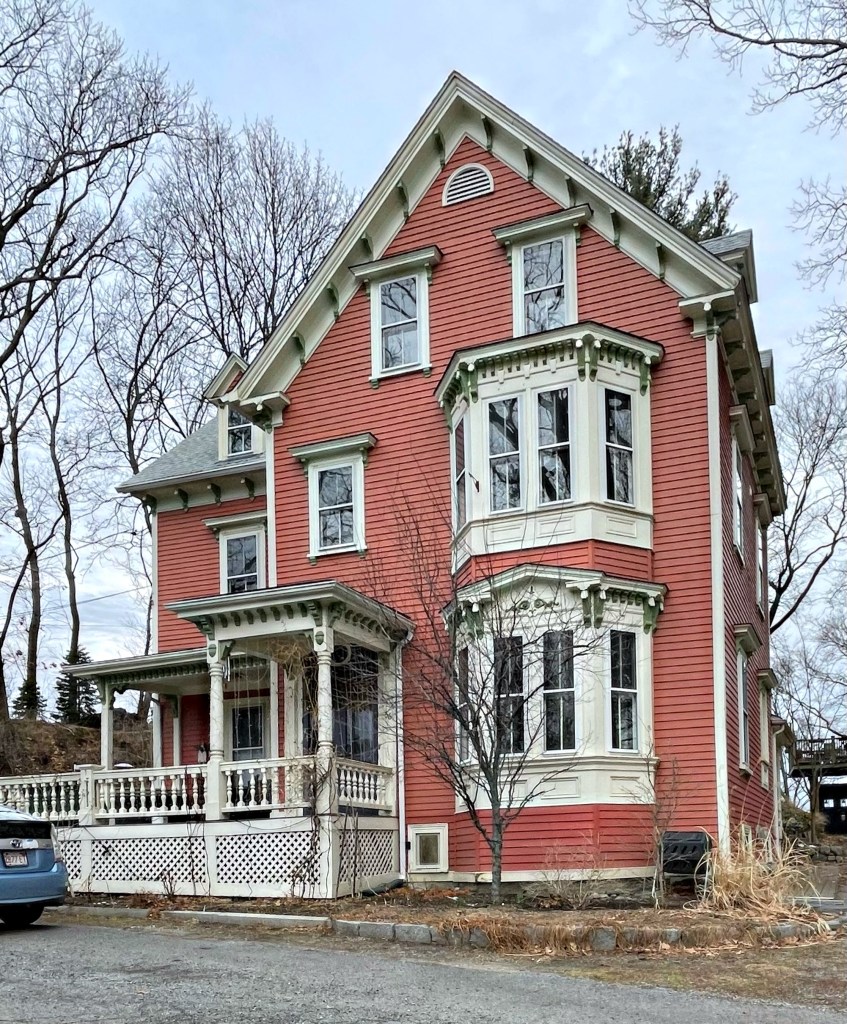
Edward Moulton House // c.1870

This stunning Italianate style home in the Forest Hills area of Jamaica Plain, Boston, sits directly adjacent to Forest Hills Cemetery, one of the finest examples of a rural cemetery in America. This house dates to the mid-19th century and maps show it was built on land owned by Isaac Cary, who built homes on this hill. By the 1880s, the property seems to have been acquired by the cemetery, or they gave financial assistance to Edward Everett Moulton, who worked as an Assistant Clerk at the cemetery. Edward lived in this house seemingly until his death in 1927. Since then, the home stands as one of the best-preserved in the area and is a testament to stewards of these significant old homes.