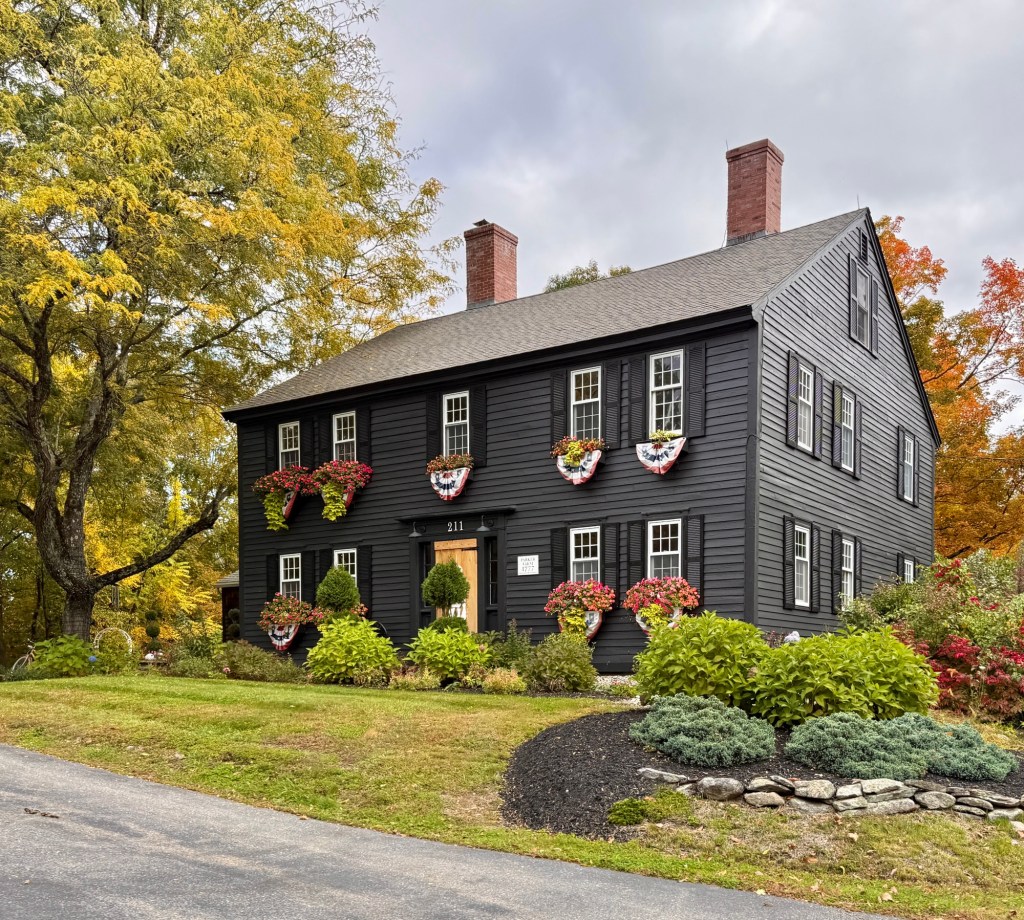
The enchanting town of Princeton, Massachusetts, was incorporated in 1759, created out of land that was previously part of nearby Rutland. The town was named after Rev. Thomas Prince, a prominent clergyman, scholar and historian. Known as the Parker Farmhouse, this Georgian-era residence in Princeton dates to 1777, when Thomas Parker (1727-1799) of Lexington, purchased farmland here and began constructing the family homestead soon-after. Thomas resided in the home with his wife, Jane, and their only child, Ebenezer Parker (1750-1839). The Parker’s laid out a family cemetery near the homestead, now known as West Sterling Cemetery, where many generations of the family are buried. Thomas and Ebenezer seem to have run the homestead as a tavern by the late 18th century. The farmhouse remained in the family for generations, and maintains much of its original character.
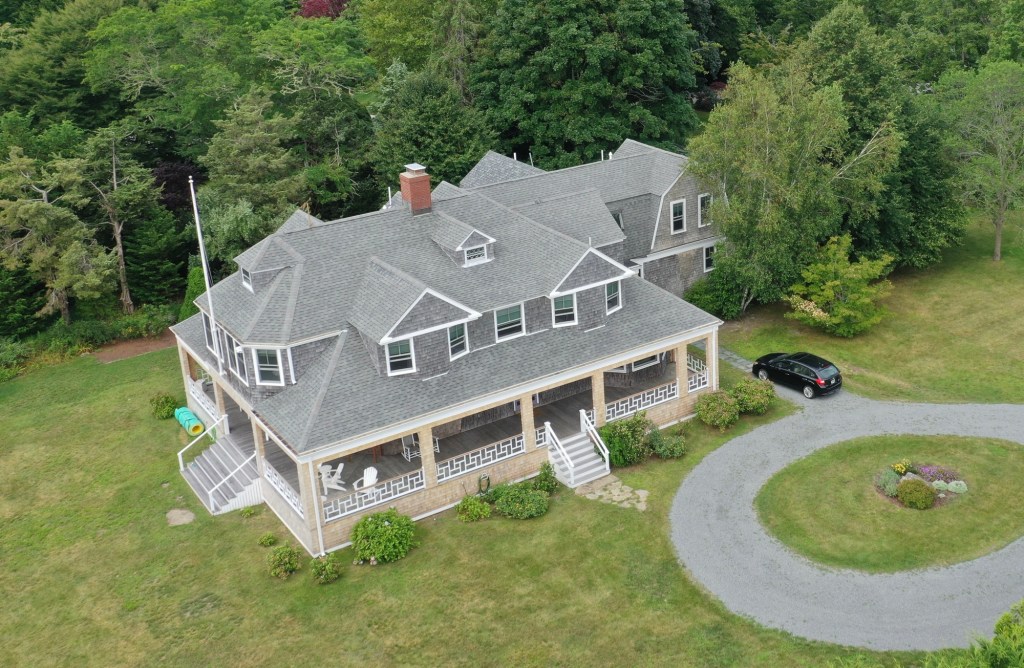
One of the many beautiful late 19th century shingled “cottages” overlooking Sippican Harbor in Marion, Massachusetts, Point Rock Cottage stands out not only for its siting on the waterfront, but also for its preservation. As any good summer cottage must have a name, Point Rock Cottage derives its name from its location overlooking the rocky coast and Sippican Harbor on the tip of the village. The Shingle style cottage was built for David W. Lewis (1833-1915) of Boston, who purchased the land in 1893 and had the house built soon after. Lewis began his career in the retail shoe business in Vermont until he enlisted in the Union Army in 1862, serving in the 9th Vermont Volunteer Regiment. Lewis rose to the rank of major and saw action in several major campaigns of the war. After the war, David Lewis married Elizabeth T. Willett and they moved to Hyde Park in Boston where he shifted professions and became a dealer in building materials, which he saw immediate success as many Boston areas saw development in the late 19th and early 20th centuries. The architect is not presently known, but it is probable that the cottage was designed by William Gibbons Preston or Charles Allerton Coolidge, both Boston architects who designed many of Marion’s summer homes and both of whom summered in Marion themselves. Architecturally, the residence is a blending of Shingle and Arts and Crafts styles with the low-pitched roof and continuous shingled cottage encircled by a one-story integrated porch supported by wood shingle clad rectangular posts with a Chinese-fret work railing.
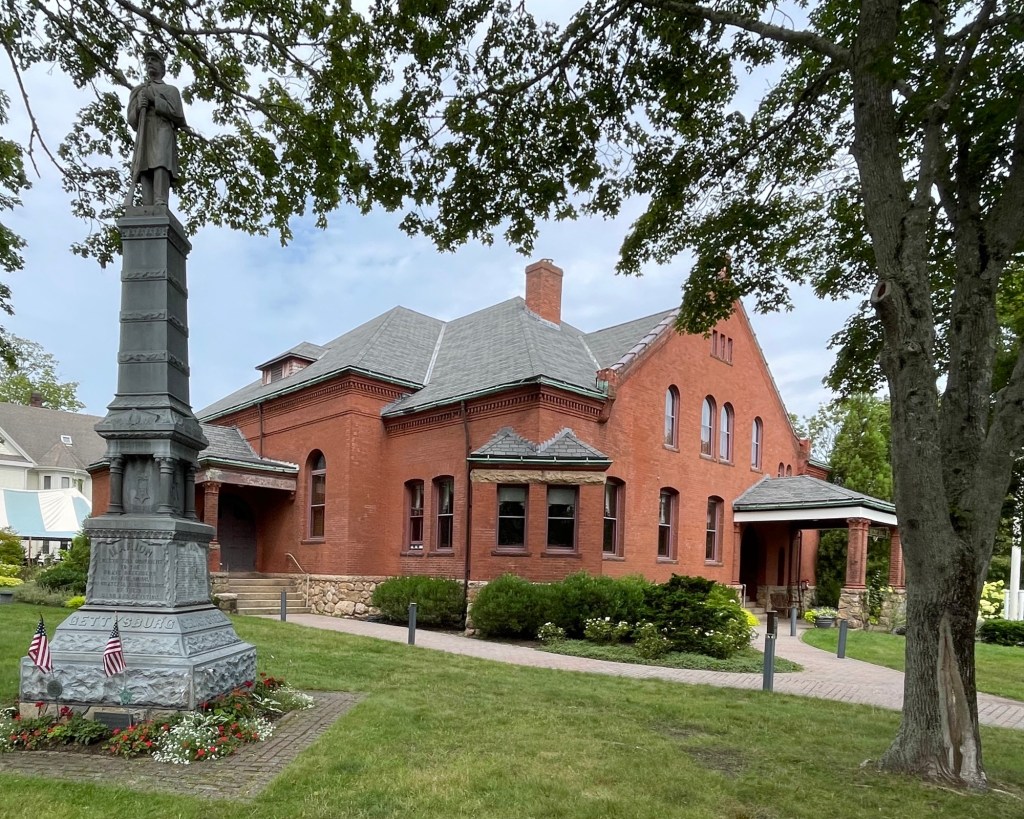
Tucked into the heart of Wharf Village in the ever-charming coastal community of Marion, Massachusetts, the Marion Music Hall has been a cornerstone of small-town cultural life since 1891. The Music Hall was largely the vision and will of the town’s great benefactor, Ms. Elizabeth Taber who sought to use her late husband’s vast fortune to benefit her community in her later years. In her will, Ms. Taber left funds for a proper “lecture and music hall” and the $23,000 commission went to her friend, architect, William Gibbons Preston. The building is one of a few examples of brick construction in the village and stands out for its detail with the round arched windows and solid massing in the Romanesque Revival style with terracotta trim to add visual interest in the design. The result is a structure both stately and welcoming, with its handsome façade anchoring a lawn that would later be adorned by the cast-iron Soldiers Monument in 1894. More than 130 years on, the Hall still hosts the town’s committee meetings, concerts, weddings, and community gatherings, standing as a living piece of Marion’s Gilded Age generosity and a quiet architectural gem of the South Coast of Massachusetts.
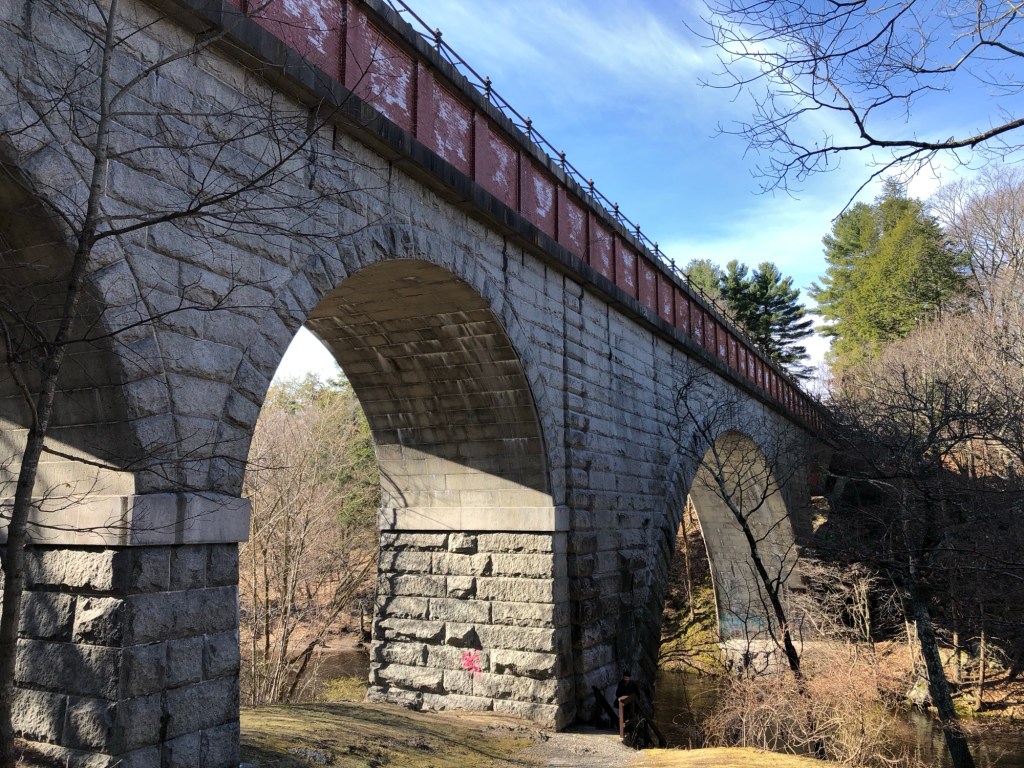
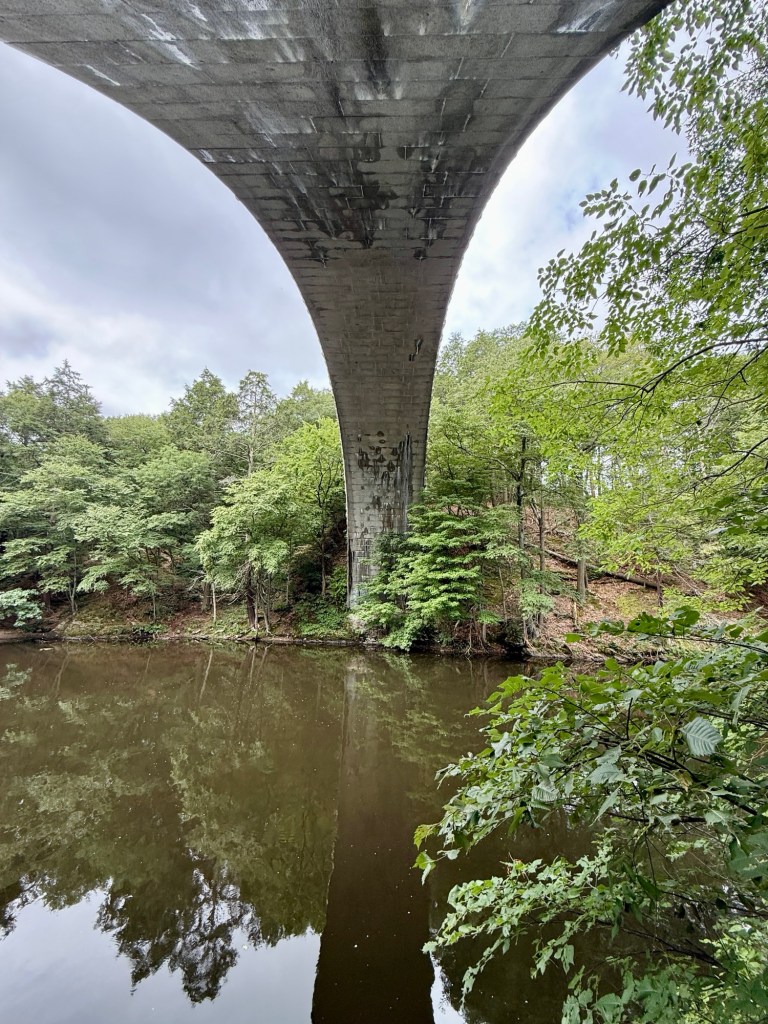
Rapid population growth in the Boston area strained the already overburdened water supply capacity in the second half of the nineteenth century, and engineers and city officials struggled to find solutions. In 1872, the Boston City Engineer proposed a plan to draw water from the Sudbury River in Framingham nearly 19 miles to the Chestnut Hill reservoir to be distributed to homes and businesses all over Boston. The aqueduct was initially designed to carry 80 million gallons of water per day but the route faced one big issue, how to allow the water to travel over the Charles River. The solution was what became Echo Bridge, a 475-foot-long bridge that carries the brick-lined aqueduct over seven powerful granite arches, which is the longest crossing of the Charles River. When completed in 1877, the seventh and largest arch, which spans the Charles River, is said to be the second longest span in the United States when completed. Originally named the Charles River Bridge, the structure was later known as Echo Bridge because of its unusual acoustical properties when standing underneath the largest arch. Today the Sudbury aqueduct system is not in full use and serves only as a standby, in case of a breakdown in the water supply presently being received from the Quabbin Reservoir located in the center of the state. In 1895, the Echo Bridge became the centerpiece of Hemlock Gorge, one of the first reservations in the newly created Boston Metropolitan Park System for its scenery and sheer beauty. Echo Bridge remains one of the most unique places to visit in the Boston area, and retains much of its original details, down to the BWW (Boston Water Works) insignia on the rails.
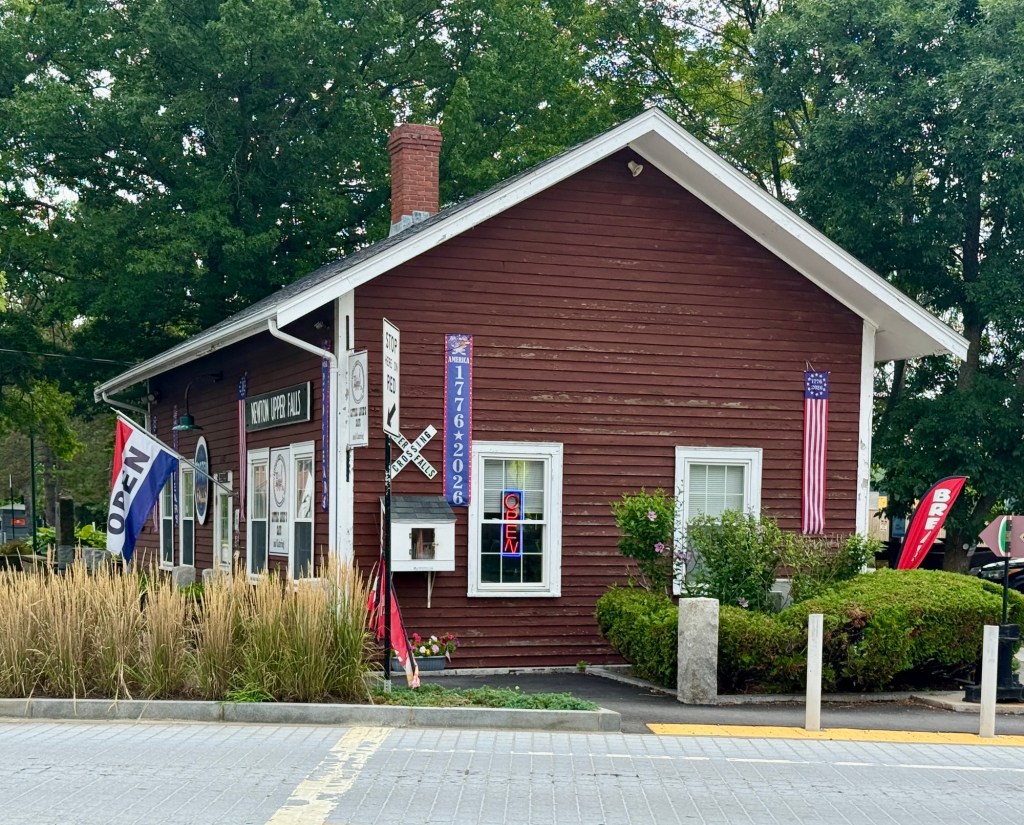
When the short-lived Charles River Railroad opened in 1852, first connecting the Boston and Worcester Railroad in Brookline to Newton’s Upper Falls village, the small community here saw immediate prosperity and turned into a thriving industrial village. In 1847, a petition was filed with the Legislature of Massachusetts to build a rail line linking greater Boston to the Rhode Island border. While a more direct route was easier, Otis Pettee (1795-1853), who owned an iron foundry called Pettee Works where he manufactured cotton machinery, seems to have been the principal promoter for the line to pass through the village of his factory. Pettee died soon-after the line was finished, but his persistence for this track served two additional benefits. Firstly, it opened up development into other Newton villages for early suburban development, and secondly, it served as a major line to bring gravel from Needham to fill the Back Bay, opening that iconic Boston neighborhood to development. The Upper Falls Depot dates to about the time that the initial line opened in 1852 and is a typical, vernacular train depot in New England from this period. The Charles River Railroad merged with the New York and Boston Railroad in 1855 and was later sold to the Boston and Albany Railroad. Following the near death of the railroad system in the United States in the latter half of the 20th century, much of the former Charles River Railroad today has survived despite the abandonment of much of the rest of the former New York and New England Railroad lines. This section is currently a part of the D-Branch of the MBTA’s Green Line.
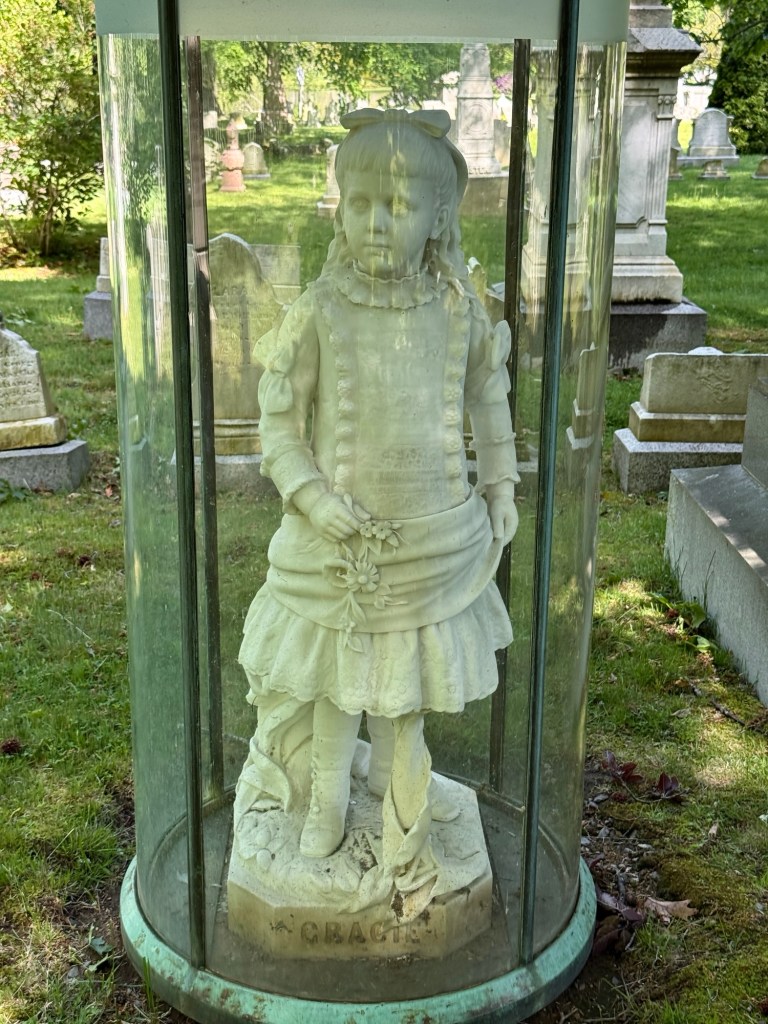
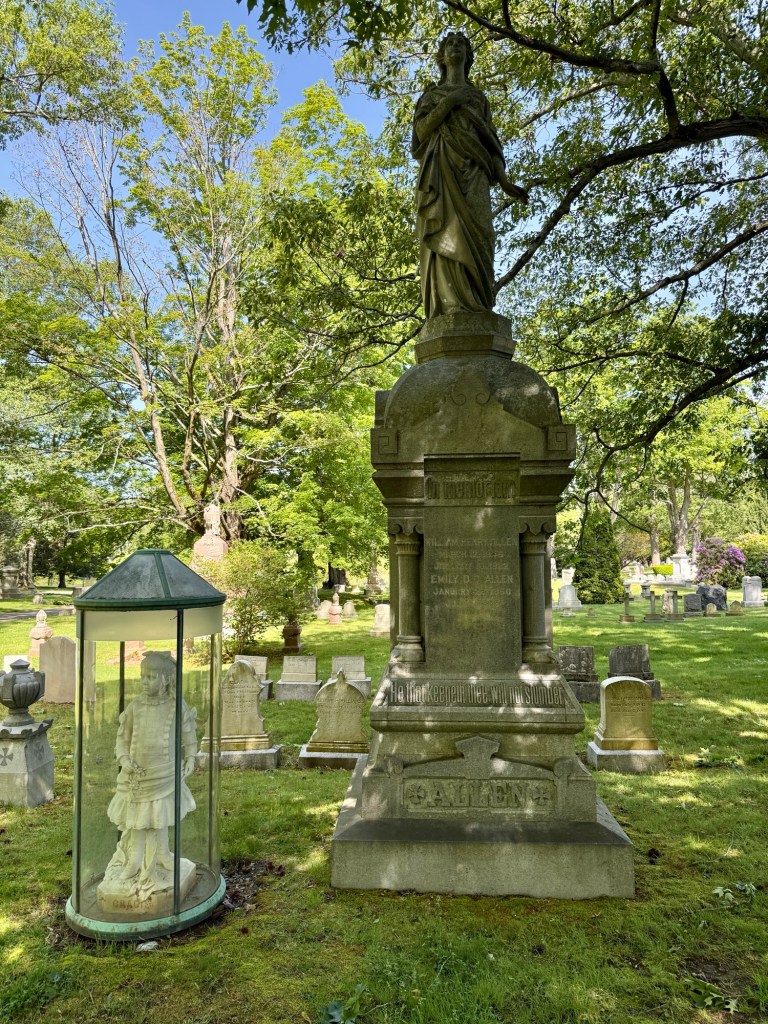
Similar to the story of Louis Mieusset, the “boy in the boat” at Forest Hills Cemetery, the memorial of Grace Sherwood Allen stands as a testament to parent’s ever-lasting love of their children. “Gracie” Allen (1876-1880) was born in Boston, the only daughter of William H. and Emily Jones Allen. She died several months prior to her fifth birthday from whooping cough and was later immortalized by sculptor Sydney H. Morse, who depicted the young girl in a buttoned dress, boots and bow-tied hair. In her hand are drooping flowers, the petals of which have begun to fall, showing her life fading. The life-size white marble sculpture is covered in a bronze and glass vitrine, to protect the fragile stone from acid rain, which would stain and weather the delicate monument.
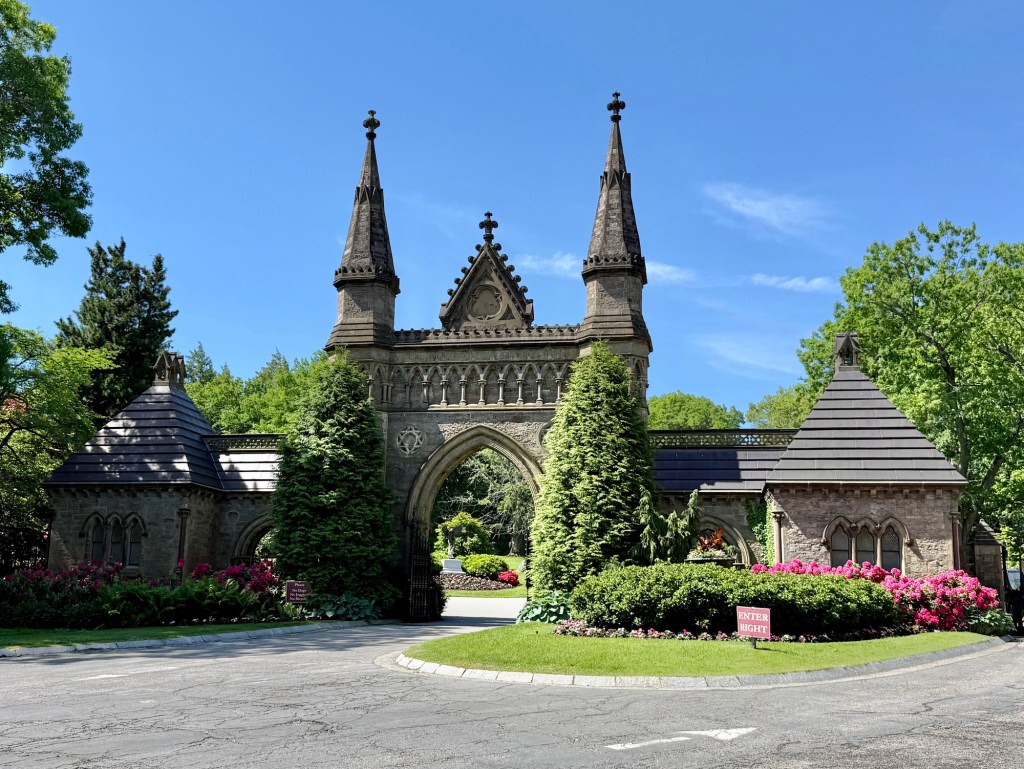
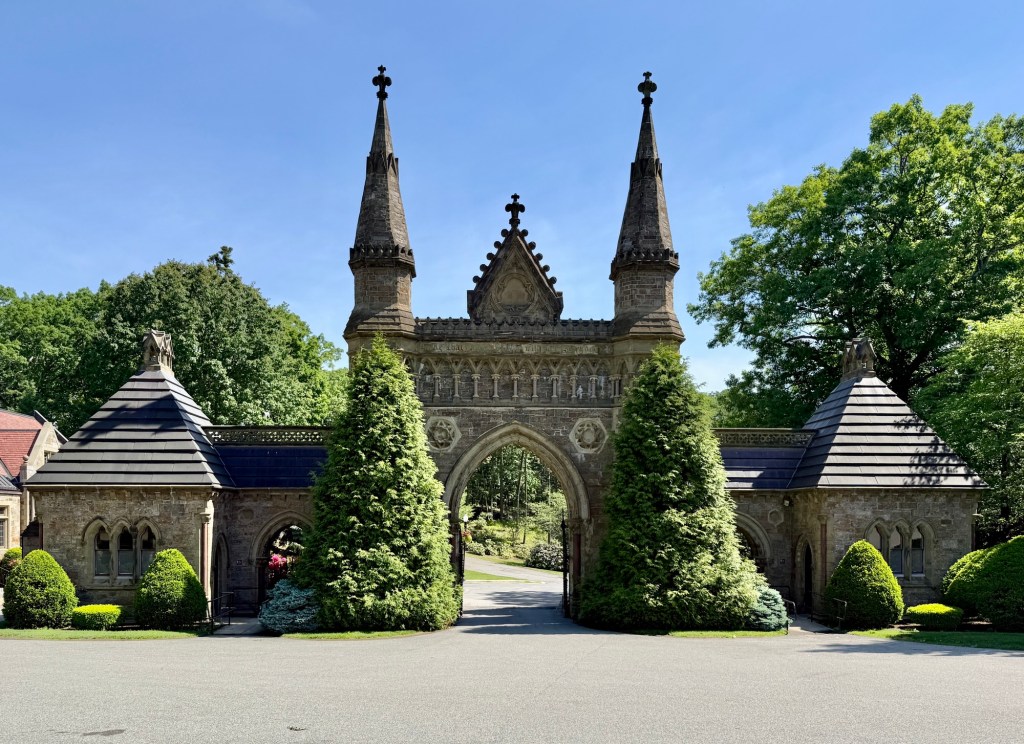
Forest Hills Cemetery in Boston was established in 1848 in the rural cemetery tradition, which followed Mount Auburn Cemetery, established in 1831 in nearby Cambridge and Watertown. The site was a municipal cemetery in Roxbury until it was annexed into Boston in 1868, becoming a private, non-denominational burial place for the who’s who of the area. The cemetery was envisioned by Henry A. S. Dearborn, who was the mayor of Roxbury in 1847 and first president of the Massachusetts Horticulture Society, who had also been instrumental in creating Mount Auburn. Since its creation in 1848, Forest Hills has grown from its original 72 acres to a total of approximately 250 acres today and is known for the rich topography and vegetation, dotted by thousands of beautiful monuments to the deceased and some iconic architectural landmarks tucked away in its winding paths. Forest Hills Cemetery was located on this site due to its varied natural features, which included hills, valleys and lakes, which together were preserved to enhance the experience of those visiting nearly 200 years later. The site’s topography consists of a series of geological drumlins of Roxbury puddingstone, an important material that was used in building projects all over the region (and for some of the buildings and monuments in Forest Hills).
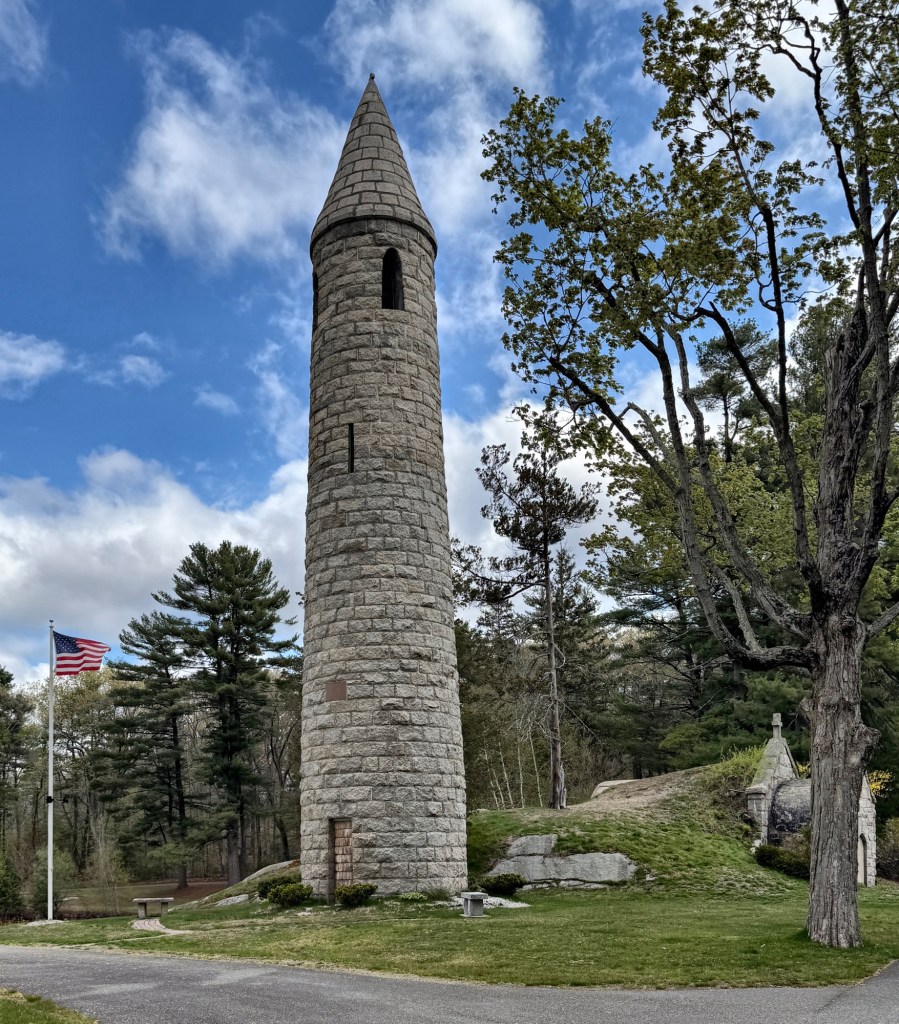
Thought to be the only example of an Irish Round Tower in the United States, the obscure Irish Round Tower in the St. Mary’s Catholic Cemetery in Milford, Massachusetts, stands as a piece of local history and an architectural landmark. The tower was envisioned by Father Patrick Cuddihy (1809-1898), the pastor of the St. Mary of the Assumption Catholic Church of Milford, who was born in County Tipperary, Ireland, and oversaw a largely Irish-born congregation here in the States. In 1893, Father Cuddihy sought to expand the existing St. Mary’s Cemetery which had been running out of space for the ever-growing Catholic population of Milford. For the cemetery, he envisioned an Irish Round Tower as a symbol of the Emerald Isle, his land of birth and that of most of his parishioners. Irish Round Towers were historically used in Ireland as bell towers, but for the cemetery in Milford, it would serve the purpose of beautification of the new grounds of the cemetery. Local workers began construction on the tower in 1894. Constructed of locally quarried Milford granite, the tower stands 73.5′ with a conical roof and walls two feet thick. The Milford tower is said to have been modeled after the tower on Devenish Island in Ireland and stands just 10 feet shorter than its inspiration.
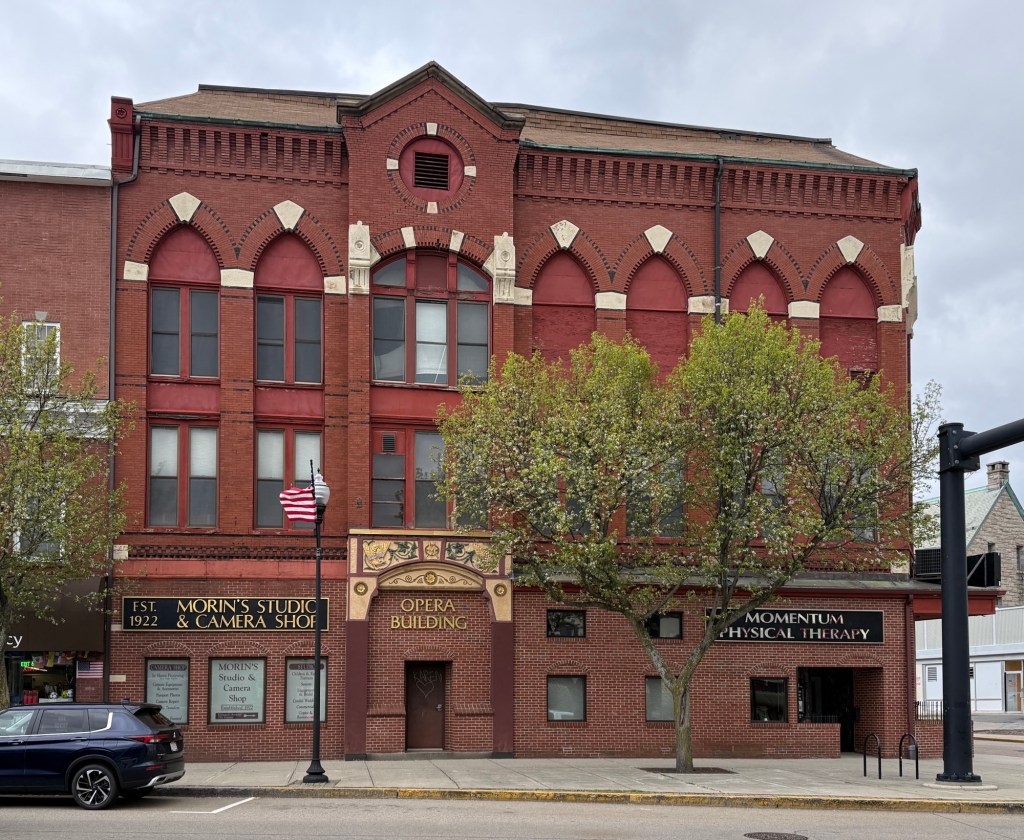
While altered, the Milford Opera House Block on Main Street, stands as one of the architecturally distinctive and significant 19th century buildings in Milford, Massachusetts. As the town prospered in the decades following the Civil War, and wealthy residents, including William F. Draper, an executive with the Draper Corporation in nearby Hopedale, sought to use their wealth to improve their community. In 1880, planning began to erect an opera house building, which would bring the arts to the community, and after months of discussion and planning, funding and a site on Main Street was secured. Architect, Frederick Swasey was hired by the association, who furnished plans for the Victorian Gothic building to contain five retail stores on the ground floor with an auditorium above capable of seating 1,100. The building suffered from a fire in 1912 and use as an opera house ceased and starting in the 1920s and the building began showing moving pictures. Later in the 20th century, the building was altered with the storefronts enclosed, windows on upper stories changed, iron cresting at the roof and clock face removed, but the building still retains its ornate entrance and is an important landmark on the town’s Main Street.
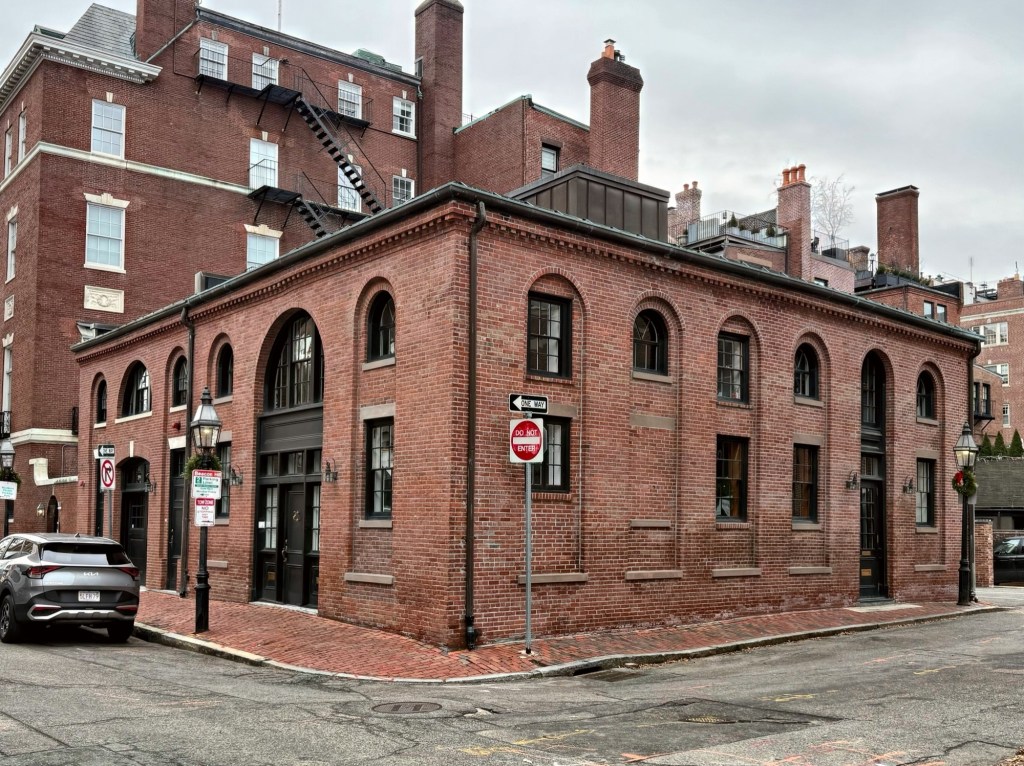
Located behind the David Sears Mansion (now Greek Consulate) on Beacon Street, this handsome utilitarian structure fronts Brimmer Street in Beacon Hill and predates the building it adjoins. The two stables and attached caretaker’s residence was built around 1856 for David Sears, who lived farther down Beacon Street, but also owned other buildings on the street which fronted the Public Garden. He built this stable in the Flat of Beacon Hill, an area west of Charles Street in what Samuel Eliot Morrison coined, “the horsey end of town” for its prevalence of stables and carriage houses. The architect is not known, but the handsome structure features bays of shallow, recessed brick arches and brick dentil courses, showing the importance of good design even for uses such as a stable. The building later became space for furniture storage and an ancillary apartment to the adjacent mansion, until 1957, when the it was acquired by the Vincent Club, a women’s organization with the mission of raising money for the Vincent Memorial Hospital whose mission was to treat the “diseases of women.” Even though the Vincent Hospital merged with Mass. General Hospital in 1988, the Vincent Club remains in this former stable as its home-base and continues to carry out its mission to advance the field of women’s healthcare.
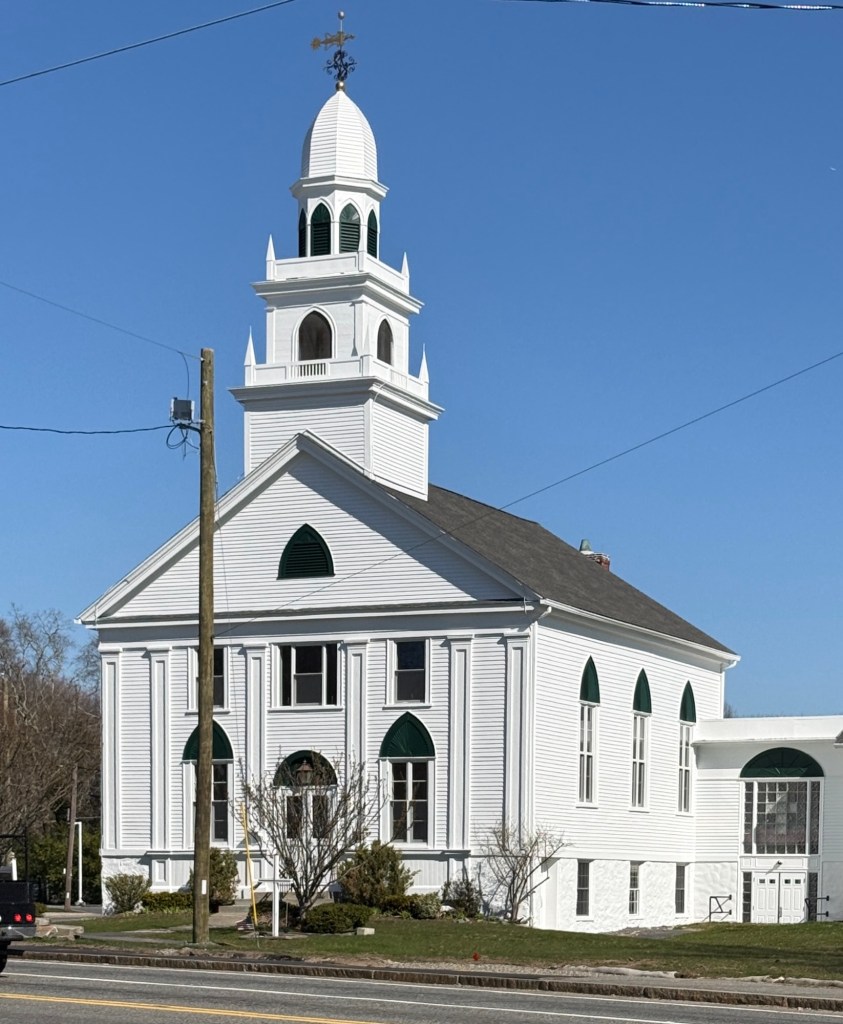
The United Church of Christ in Swansea, Massachusetts, was built in 1833 as the second building for the congregation which was originally organized in 1693. It is believed that this was the first church in New England to admit all Christians to membership regardless of their theological beliefs, as a United or Union church. The congregation’s first meetinghouse was built prior to 1719 and was replaced in 1833 when the current building was completed. The United Church of Christ in Swansea blends Greek and Gothic Revival styles with traditional wood-frame construction and gable roof with multi-stage steeple. The facade is adorned with pilasters and louvered lancet arches, showcasing the builder’s ability to pull from multiple architectural styles for the construction.
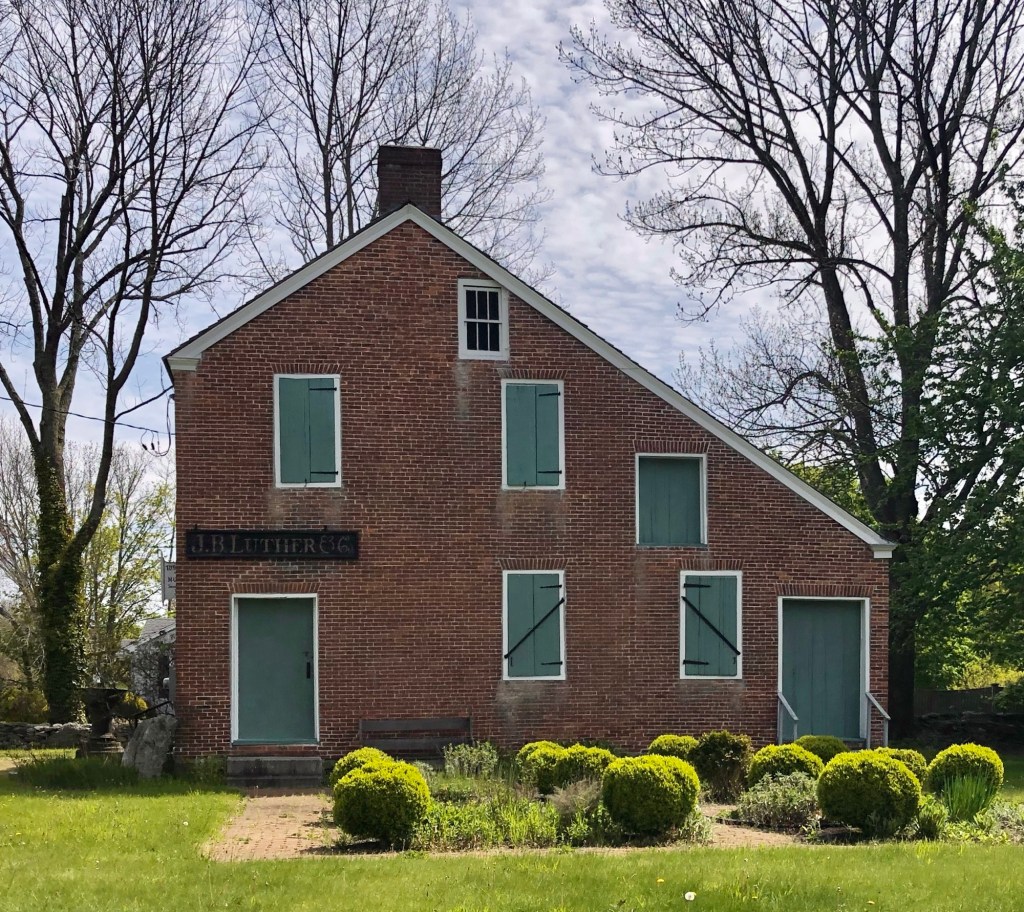
The Luther Store in Swansea, Massachusetts, is a historic commercial building constructed in 1815 and uncommon as a rare brick block with saltbox roof. The structure was built for John Brown Luther, and was operated by the Luther family as a store until 1903. The Luther’s Corner area was in the mid-19th century the economic center of Swansea, and Luther’s Store served as post office and library. The building was acquired in 1941 by the Swansea Historical Society, which now operates it as a local history museum following a restoration by Fall River architect, Maude Darling-Parlin.
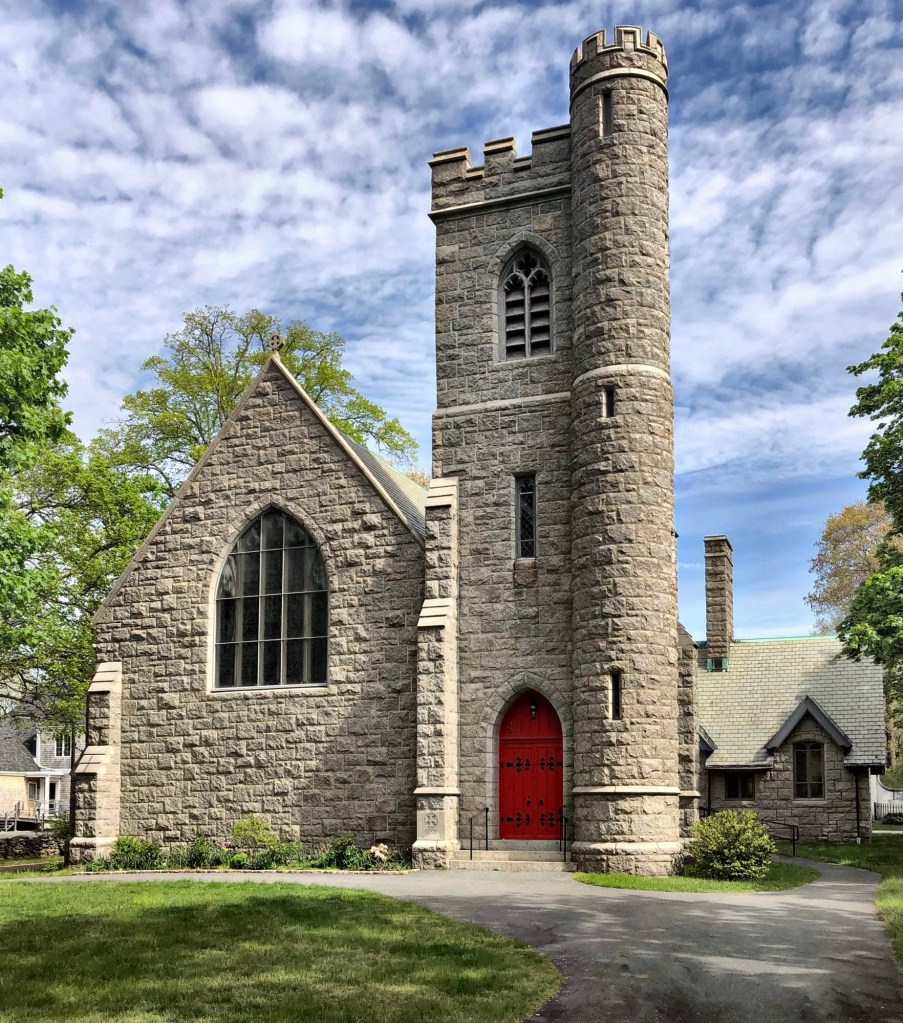
Designed in the mode of a traditional English country church, the Christ Church of Swansea is among the finest Neo-Gothic Revival edifices in New England and evokes a sense of history and tradition despite only being built in 1900. The church was funded by benefactors, Frank Shaw Stevens and Elizabeth Case Stevens, who lived down the street in the town’s largest mansion. After the death of her husband Frank, Elizabeth began a large gifting campaign to the Town of Swansea, and funded the construction of the town’s library, school, and this church (they had already funded the 1891 Town Hall). For the village church, Elizabeth hired their friend, and renowned English-born architect, Henry Vaughan, who designed the building with heavy granite walls, lancet windows and a facade dominated by an entry tower with rounded corner all capped by battlements. The Christ Church of Swansea resembles an old Medieval English church but in a New England village, amazing work as always Mr. Vaughan!
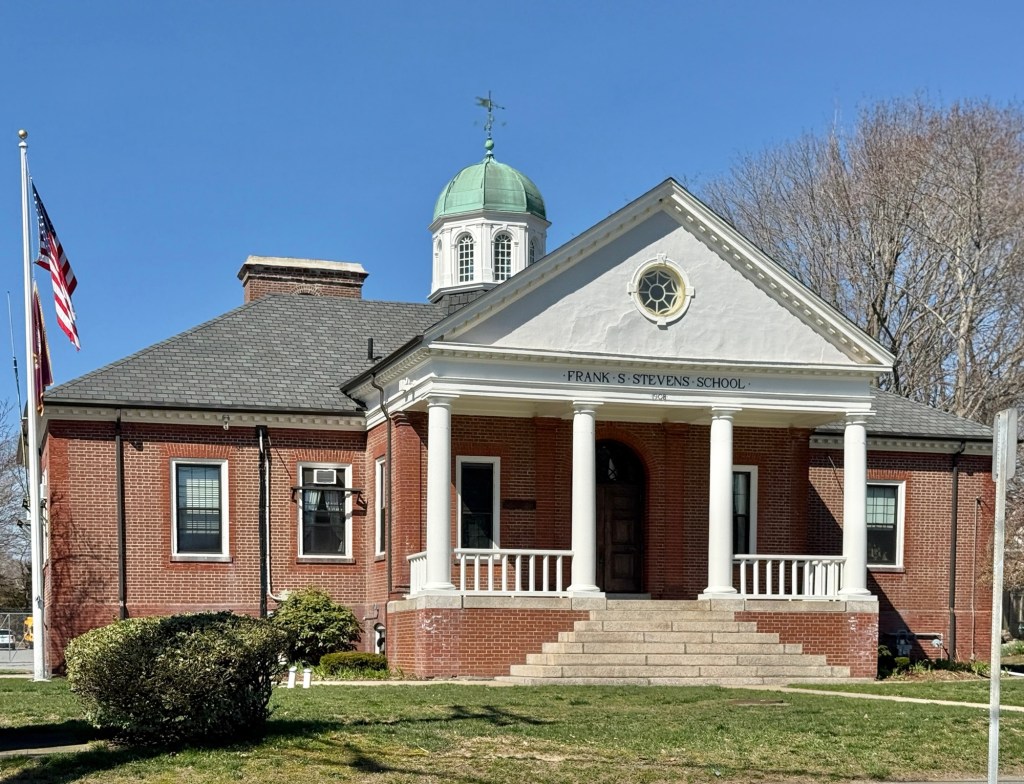
The Frank S. Stevens School in Swansea, Massachusetts, was one of a number of civic and institutional buildings donated to the small town by wealthy residents Frank and Elizabeth Stevens. Ten years after the death of her husband, Elizabeth Case Stevens retained her favorite architect, Henry Vaughan, to furnish plans for a new school building for the main village in her beloved town of Swansea, to be built in the memory of her late husband. Mr. Vaughan had already designed the town hall, library, and Episcopal church, and Mrs. Stevens thought it would be fitting for an architecturally appropriate public school to also be built in the quaint New England village. Neo-Classical in style, the one-story brick school building is distinguished for its full-height pedimented portico supported by classical Doric columns and a cupola atop the hipped roof. The school was eventually outgrown and is now the school administration building for the town’s three later public school buildings.
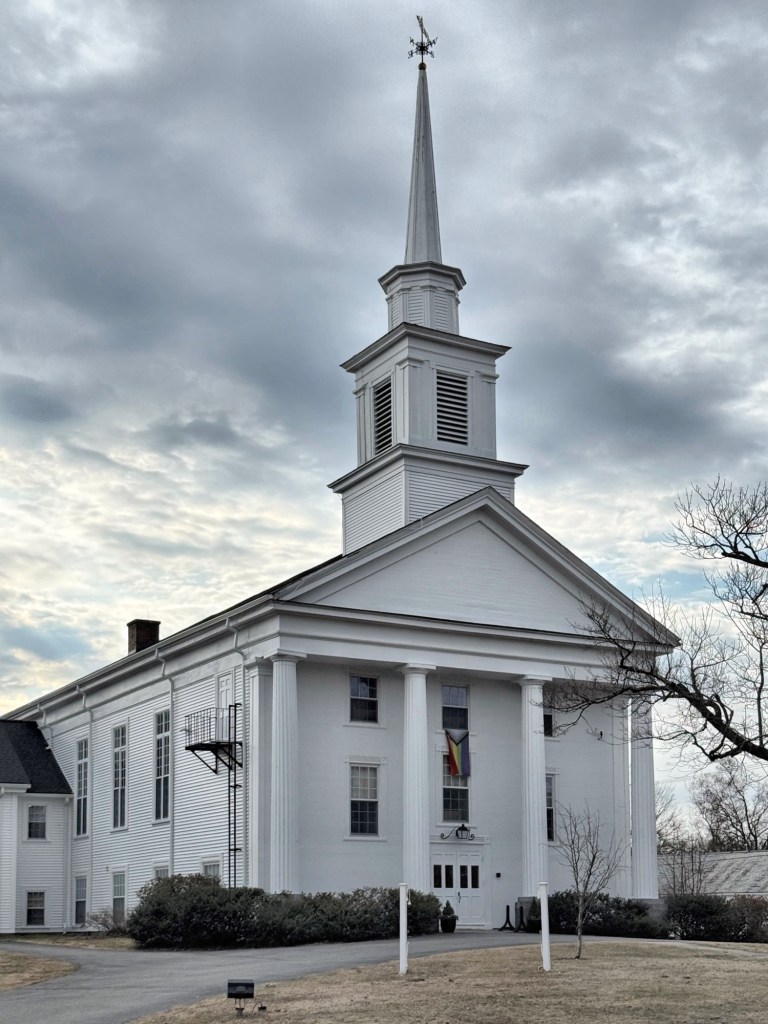
Sharon, Massachusetts, is a small suburban community south of Boston that is lesser known than its neighbors, but the community has some great old buildings! The Town of Sharon was originally part of a 1637 land grant given by the Dorchester Proprietors to encourage new settlement in areas southward. In 1726, the lands of the present towns of Sharon, Canton and Stoughton, were separated from Dorchester and called the Stoughton Territory. Settlers in present-day Sharon found it difficult to attend mandated church services centered around present-day Stoughton and petitioned the General Court in 1739 to set off as a separate precinct. The request was granted and the Second Precinct was established, and incorporated as Stoughtonham in 1765, changing its name in 1783 to Sharon, named after the Sharon Plain in Palestine. In 1813, the local congregationalists split due to theological differences and some formed a Unitarian church. The Congregationalists moved down the street and built a new church in 1822 which was destroyed by fire in 1838 and replaced a year later by this edifice. Built in 1839 the First Congregational Church of Sharon is a vernacular and well-preserved example of a Greek Revival church building in the Doric order with towering pilastered steeple, monumental portico supported by four fluted Doric columns, and flushboard siding. The Congregational Church retains an original bell cast by the The Revere Copper Company of nearby Canton.