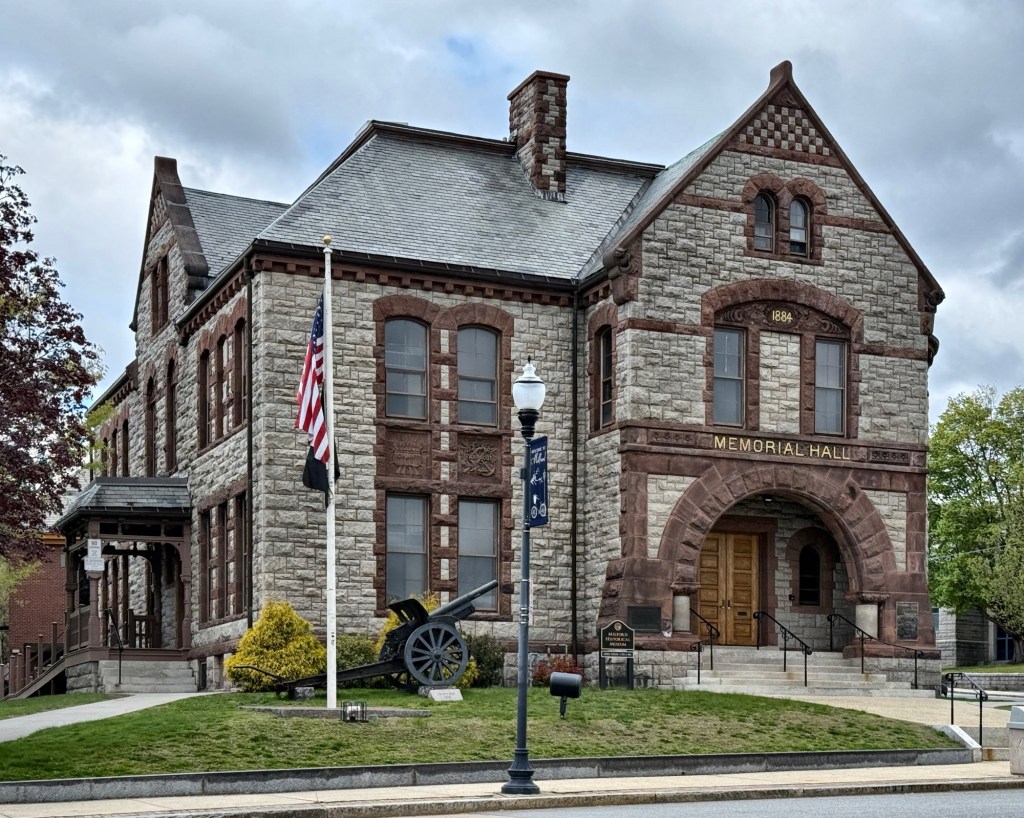
Memorial Hall, Milford // 1884

Designed by architect Fred Swasey in the Richardsonian Romanesque style, Memorial Hall in Milford, Massachusetts, is one of the finest examples of the style in the state and is built of locally quarried Milford granite with Longmeadow brownstone. The building was constructed in 1884 to serve multiple purposes: a free public library, meeting hall for the local Grand Army of the Republic (GAR) lodge, and most importantly, a memorial to honor the Civil War soldiers and sailors of Milford and nearby Hopedale. As a true Memorial Hall, the building features cannons in the front yard and on its facade, carved brownstone panels inscribed “Farragut” and “Grant” after Civil War generals, David Farragut and Ulysses S. Grant. Inside, the main staircase features the names of iconic Civil War battles and the entry features large marble panels with the list of local men who fought and died to fight for the nation. The library moved out of the building in 1986 when the current library was built behind Memorial Hall, and since then, the space has been occupied by the Milford Historical Commission as a local history museum space.
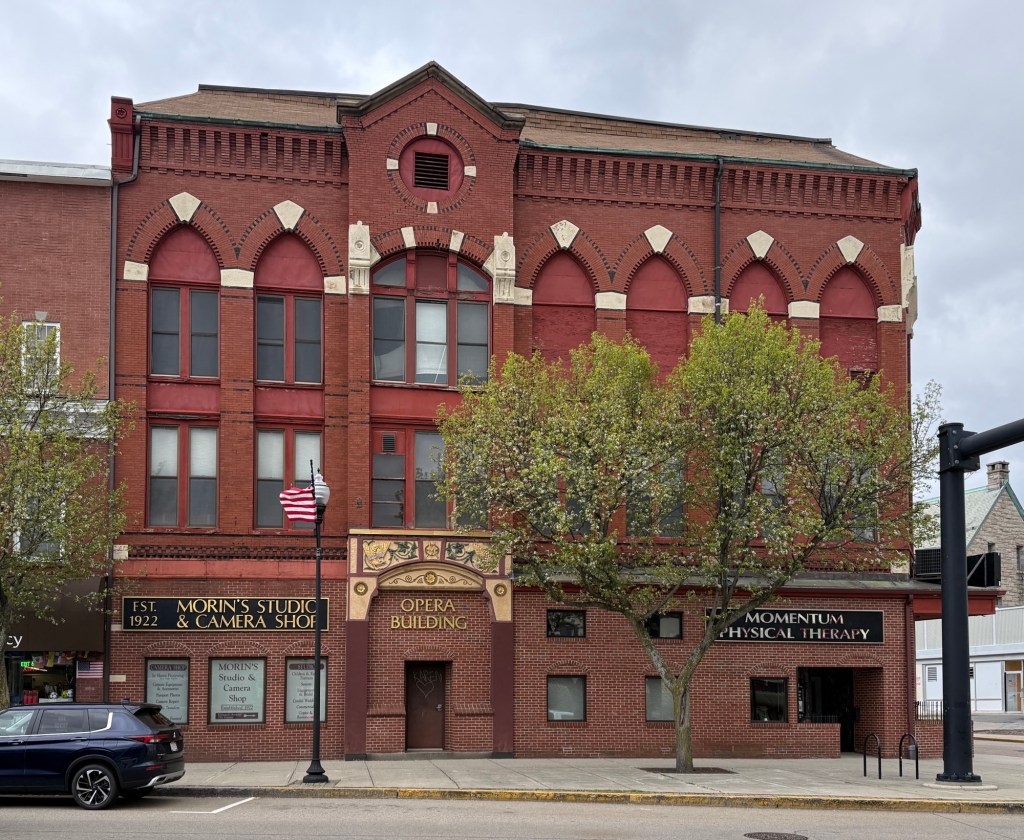
Milford Opera House Block // 1881

While altered, the Milford Opera House Block on Main Street, stands as one of the architecturally distinctive and significant 19th century buildings in Milford, Massachusetts. As the town prospered in the decades following the Civil War, and wealthy residents, including William F. Draper, an executive with the Draper Corporation in nearby Hopedale, sought to use their wealth to improve their community. In 1880, planning began to erect an opera house building, which would bring the arts to the community, and after months of discussion and planning, funding and a site on Main Street was secured. Architect, Frederick Swasey was hired by the association, who furnished plans for the Victorian Gothic building to contain five retail stores on the ground floor with an auditorium above capable of seating 1,100. The building suffered from a fire in 1912 and use as an opera house ceased and starting in the 1920s and the building began showing moving pictures. Later in the 20th century, the building was altered with the storefronts enclosed, windows on upper stories changed, iron cresting at the roof and clock face removed, but the building still retains its ornate entrance and is an important landmark on the town’s Main Street.

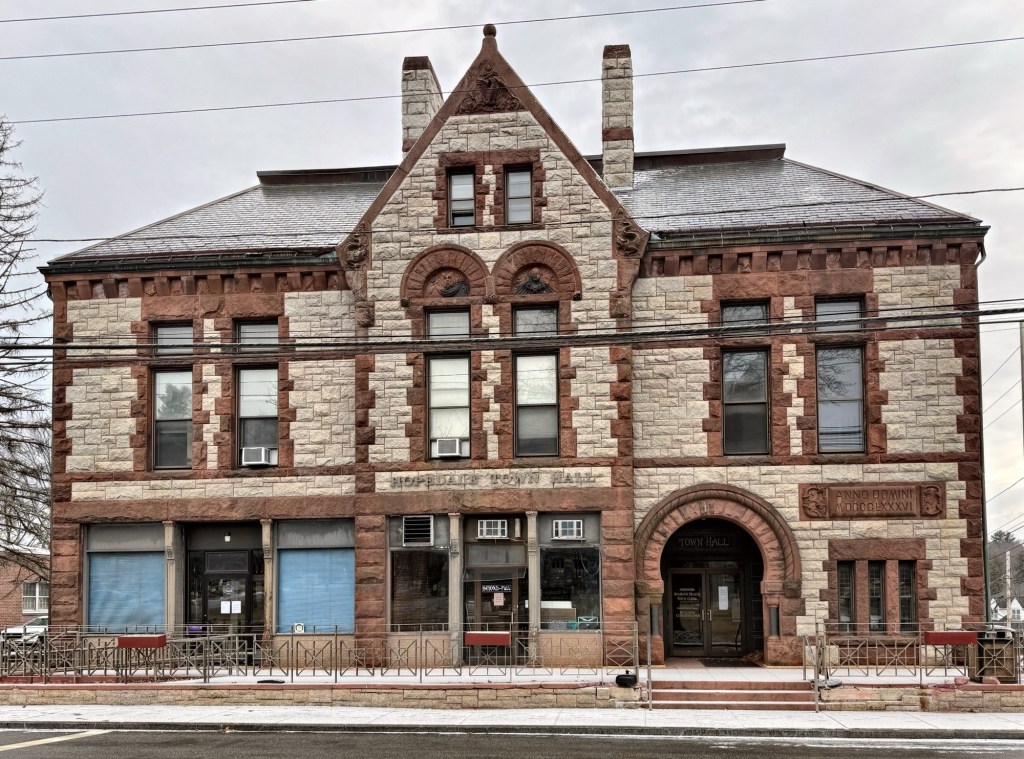
Hopedale Town Hall // 1886

In 1886, when the Town of Hopedale was incorporated, George Draper, the head of the Draper Corporation, bankrolled $40,000 for the design and construction of a new town hall building for his new hometown. Designed to house municipal offices, a meeting hall, the town’s library, with ground floor commercial spaces, the building is the work of architect, Frederick Swasey. The Richardsonian Romanesque style town hall is constructed of Milford granite with contrasting trim in Longmeadow sandstone with a lot of great detailing and a prominent entry arch with engaged colonettes. Before the building opened, its donor, George Draper died, and the building was officially donated to the town by his heirs. After over 100 years as the town hall, in 2025, the town voted to sell the building as its restoration and updates to make the building fully accessible would be too expensive. As of the time of posting, the building’s future is uncertain, but the building really needs to be preserved!