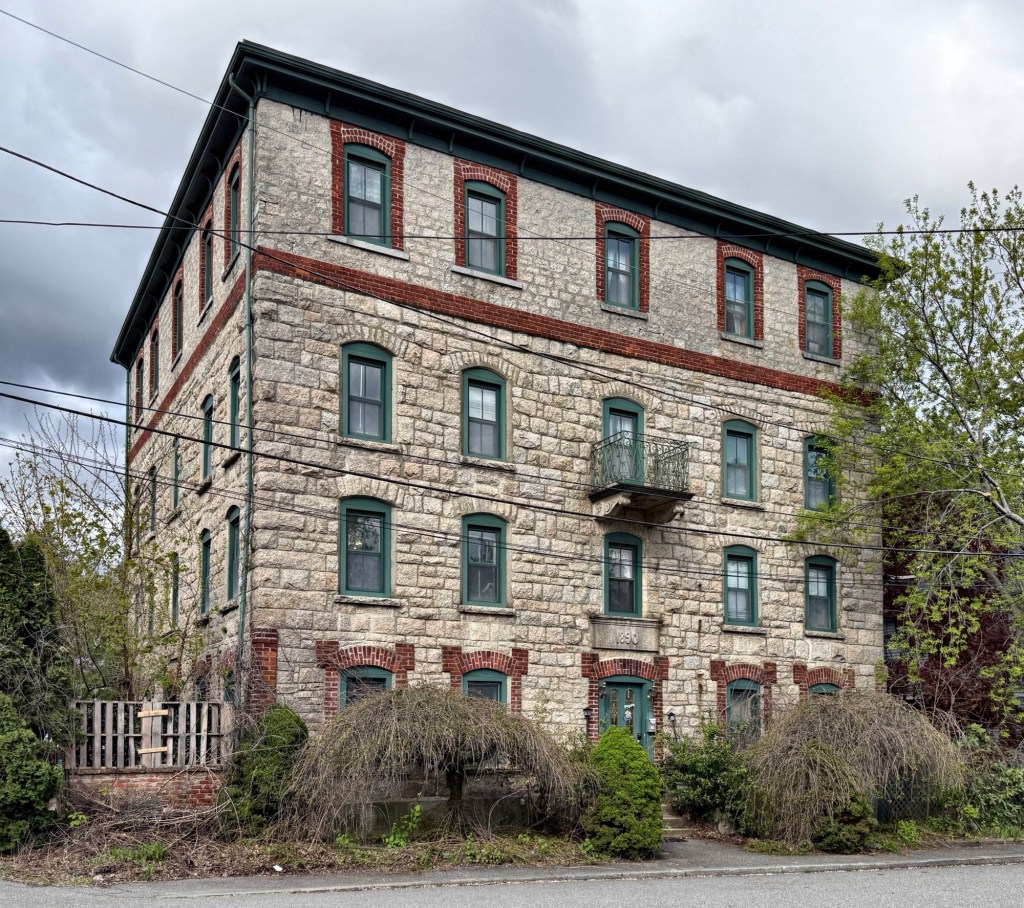
Ambrosoli Block – Stone Castle // 1890

The Ambrosoli Block, also known as the Stone Castle, is a stunning four-story building constructed of locally quarried Milford granite and brick, that has ties to the early development and history of Italians in Milford, Massachusetts. As local granite quarries in Milford prospered, many Italian-born immigrants settled in the community near their place of employment. Bernardo Ambrosoli (1843-1896), a well-known hotel proprietor in Boston’s North End, owned this structure in Milford, which served as a residential building and meeting and social hall for the local Italian community. The building was constructed by Giovanni Battista Giacomuzzi (1857-1919), a local stone cutter and builder. Bernardo Ambrosoli had connections to Milford as he also operated a hotel there, and owned this building which became a hub of early Italian-American life in town. The Stone Castle also served as the early meeting place for congregants of what would become the Sacred Heart Church of Milford. Bernardo Ambrosoli tragically died in 1896 when he was shot and killed by a bartender at his North End hotel. The Stone Castle, when built, was three stories tall with a one-and-a-half-story four-gabled roof on top, which burned in 1900. The present fourth floor in stone was added soon after with the brick banding showing the location of that addition. Today, the building is residential use.
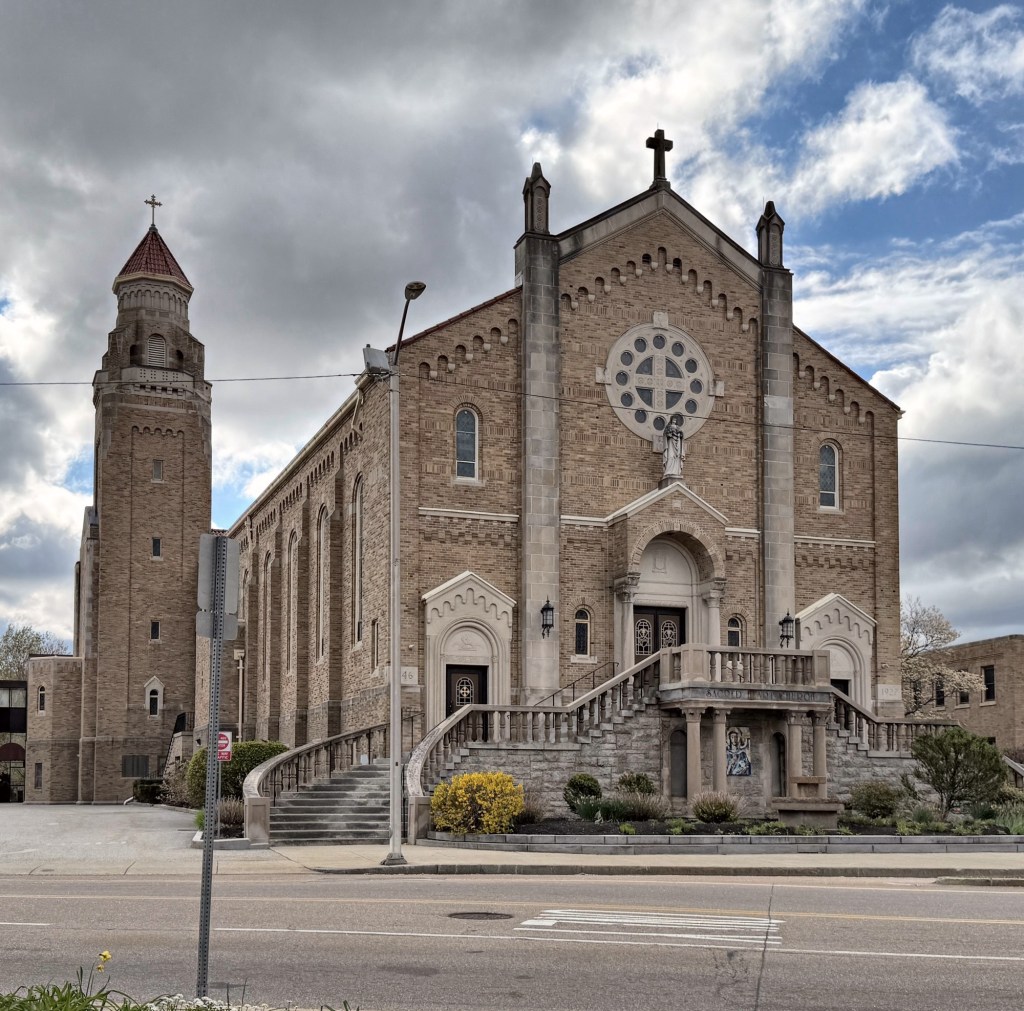
Sacred Heart of Jesus Church, Milford // 1927 & 1941

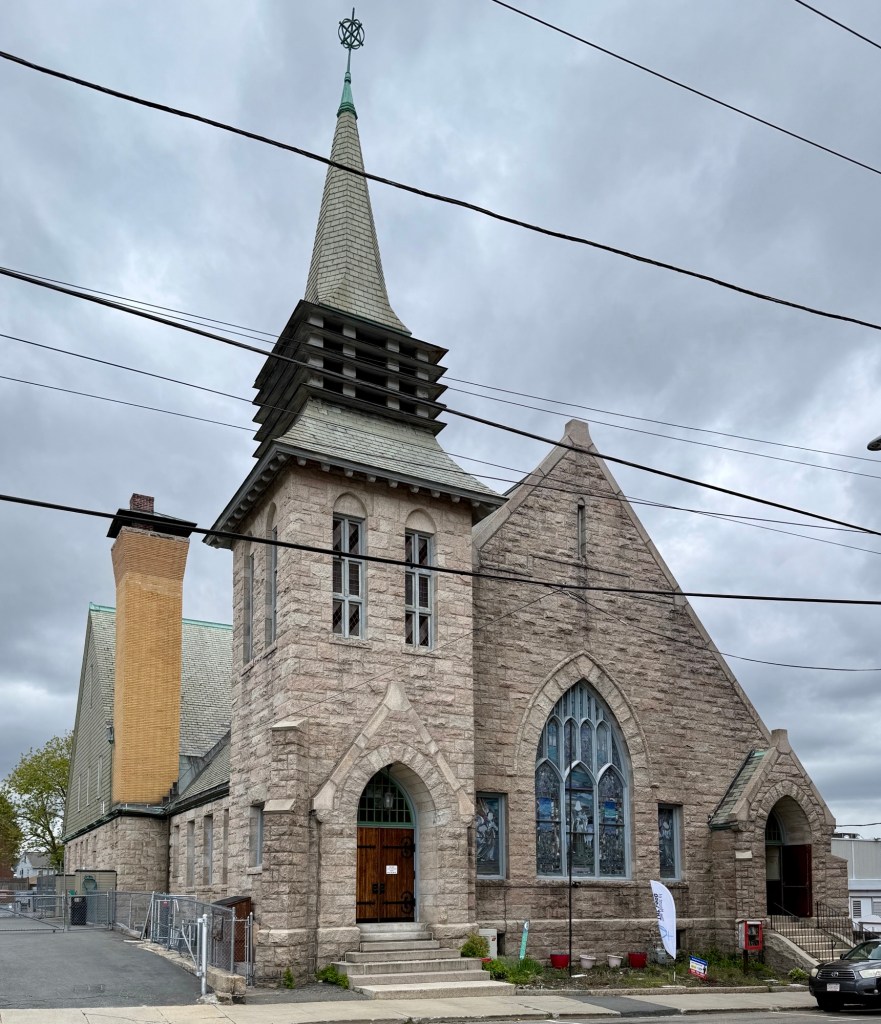
The Sacred Heart of Jesus Church in Milford, Massachusetts, was formed in 1905 as a local Catholic church that was the Italian response to the Irish, Saint Mary of the Assumption Catholic Church nearby. The congregation struggled to build an edifice that could compete with its Irish counterpart a few blocks away, that was until 1927, when funding was secured and construction began on the church. Architect, John W. Donohue was selected by the Roman Catholic Bishop of the Springfield Diocese, to furnish the plans for the building, which was delayed by the Great Depression. The church, which was long unfinished as a one-story building with basement, was ultimately constructed after plans were finalized in 1941 by architect, Anthony J. DePace, but construction did not begin until after WWII. Work on the upper church began in 1946 and it was dedicated in 1947. With its iconic Roman brick walls, red tile roof, bell tower, and entry staircase built of locally quarried Milford granite, the building showcases the Italian-American culture through its architecture.

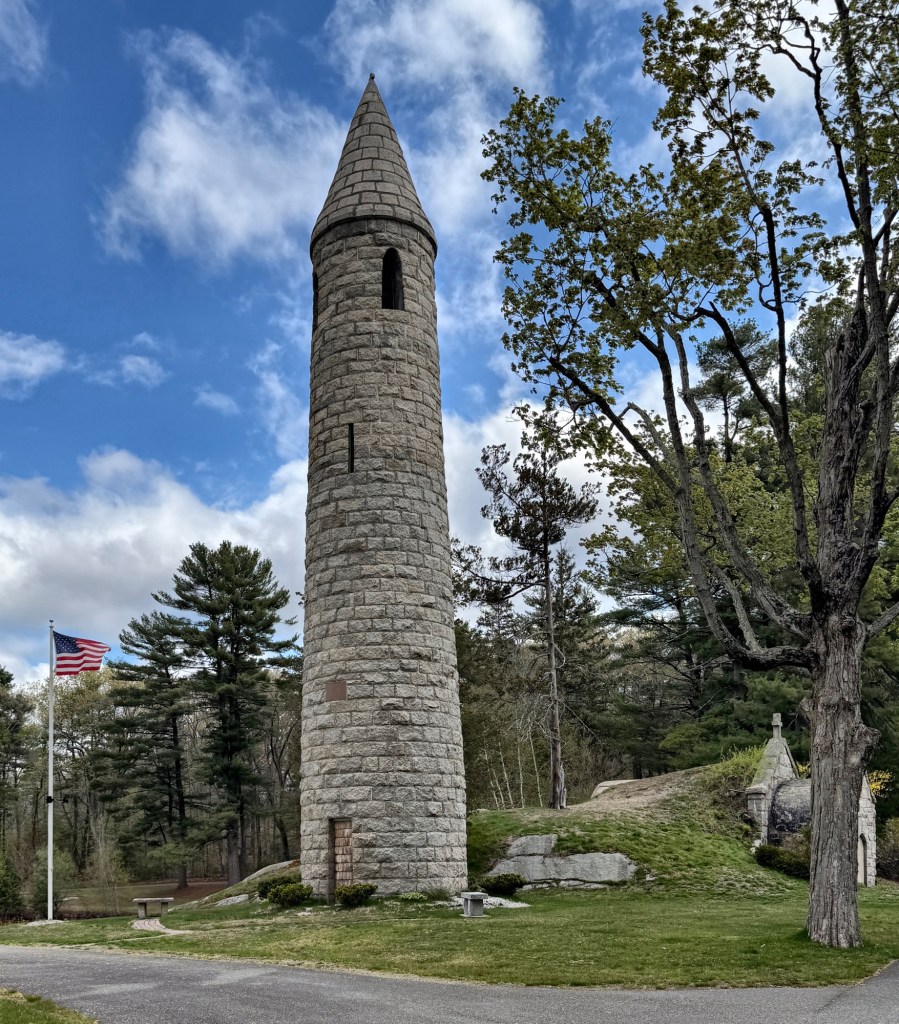
Irish Round Tower, St. Mary’s Cemetery // 1894

Thought to be the only example of an Irish Round Tower in the United States, the obscure Irish Round Tower in the St. Mary’s Catholic Cemetery in Milford, Massachusetts, stands as a piece of local history and an architectural landmark. The tower was envisioned by Father Patrick Cuddihy (1809-1898), the pastor of the St. Mary of the Assumption Catholic Church of Milford, who was born in County Tipperary, Ireland, and oversaw a largely Irish-born congregation here in the States. In 1893, Father Cuddihy sought to expand the existing St. Mary’s Cemetery which had been running out of space for the ever-growing Catholic population of Milford. For the cemetery, he envisioned an Irish Round Tower as a symbol of the Emerald Isle, his land of birth and that of most of his parishioners. Irish Round Towers were historically used in Ireland as bell towers, but for the cemetery in Milford, it would serve the purpose of beautification of the new grounds of the cemetery. Local workers began construction on the tower in 1894. Constructed of locally quarried Milford granite, the tower stands 73.5′ with a conical roof and walls two feet thick. The Milford tower is said to have been modeled after the tower on Devenish Island in Ireland and stands just 10 feet shorter than its inspiration.

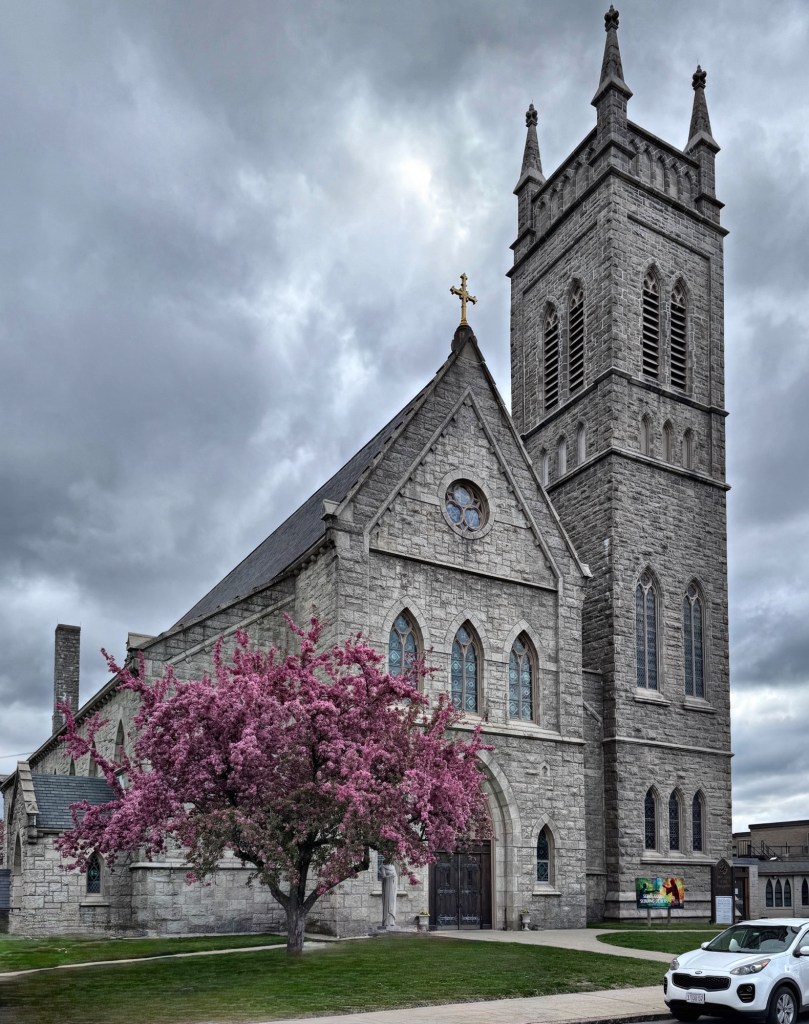
Saint Mary of the Assumption Catholic Church, Milford // 1870

The grand St. Mary of the Assumption Catholic Church in Milford, Massachusetts, was built in 1870 and is tied to the period of great growth and prosperity for the community. After the Civil War, the quarrying and sale of the iconic local Milford “pink” granite boomed, and thousands of immigrants moved to the area for work, many of them Irish-born, bringing their traditions and religion. The local Catholic church was led by Father Patrick Cuddihy, who oversaw a building campaign and expansion of the church here in Milford. In the 1860s, Father Cuddihy hired architect, Patrick C. Keely to design the edifice, built of local granite quarried by many congregants. Once the foundation was laid for the church Keely was tasked to oversee the design of the new Cathedral of the Holy Cross in Boston, so he abandoned work in Milford, leaving the remainder of the overseeing of construction to ecclesiastical architect, James Murphy, who often worked alongside Keely. Original plans for a towering belfry were uncompleted for over a decade until 1887, when work began to erect the iconic Victorian Gothic tower, it was completed by 1888. The church remains an architectural and cultural landmark in the community which offers masses in English, Spanish and Portuguese, showing the rich cultural diversity in Milford.

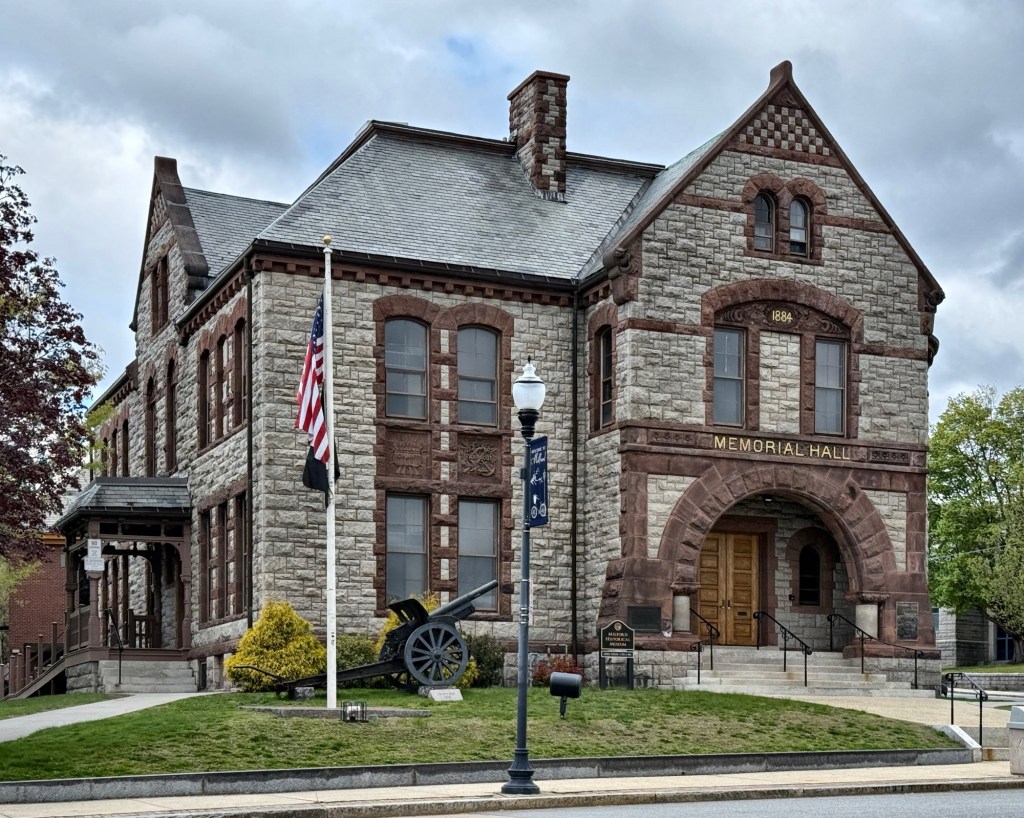
Memorial Hall, Milford // 1884

Designed by architect Fred Swasey in the Richardsonian Romanesque style, Memorial Hall in Milford, Massachusetts, is one of the finest examples of the style in the state and is built of locally quarried Milford granite with Longmeadow brownstone. The building was constructed in 1884 to serve multiple purposes: a free public library, meeting hall for the local Grand Army of the Republic (GAR) lodge, and most importantly, a memorial to honor the Civil War soldiers and sailors of Milford and nearby Hopedale. As a true Memorial Hall, the building features cannons in the front yard and on its facade, carved brownstone panels inscribed “Farragut” and “Grant” after Civil War generals, David Farragut and Ulysses S. Grant. Inside, the main staircase features the names of iconic Civil War battles and the entry features large marble panels with the list of local men who fought and died to fight for the nation. The library moved out of the building in 1986 when the current library was built behind Memorial Hall, and since then, the space has been occupied by the Milford Historical Commission as a local history museum space.

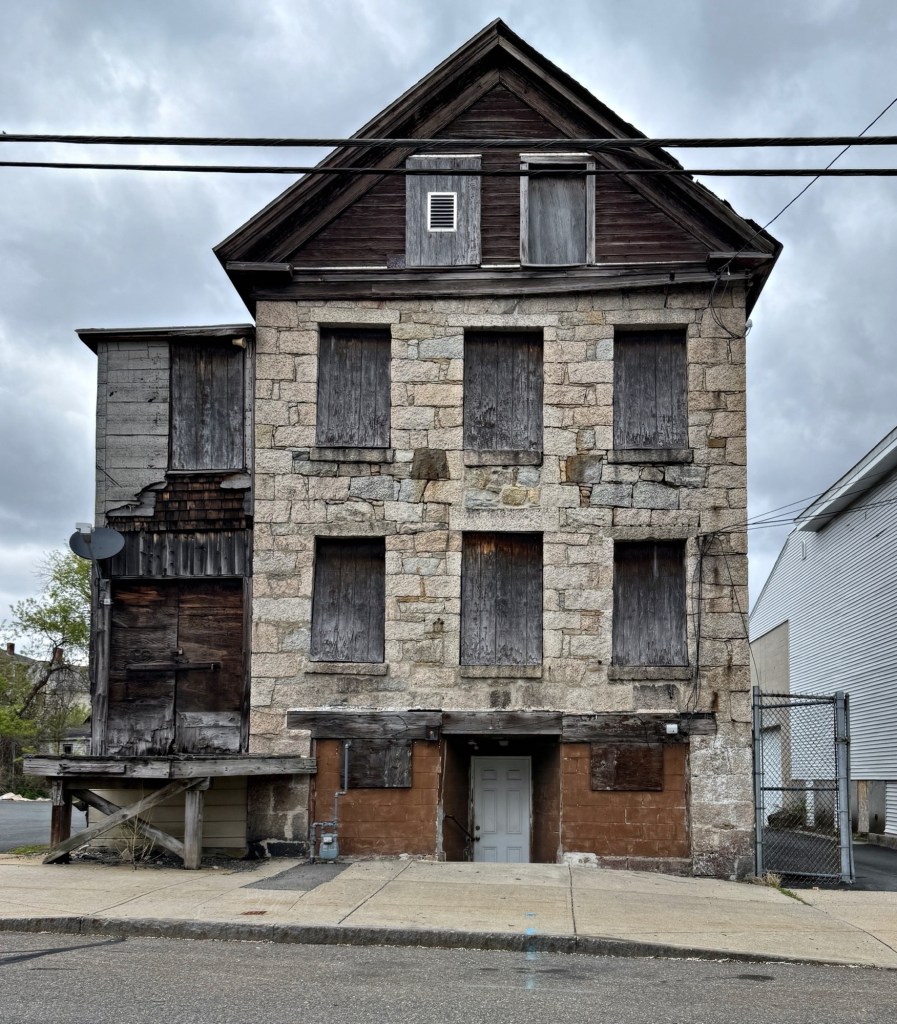
Claflin & Thayer Shoe Shop // c.1866

The Claflin & Thayer Company was established in 1851 by Aaron Claflin (1807-1890) and quickly became a leading boot and shoe manufacturer in Milford, Massachusetts. The business expanded after the Civil War, and built multiple buildings on the town’s Central Street, including this early stone building constructed of locally quarried Milford “pink” granite. The building depicted here included a large engine and boilers on the first floor with two stories above housing workers and boot crimping stations. After Aaron Claflin died in 1890, the business dissolved and this building became used for storage for other corporations, with the significant, yet vernacular building sitting to deteriorate.

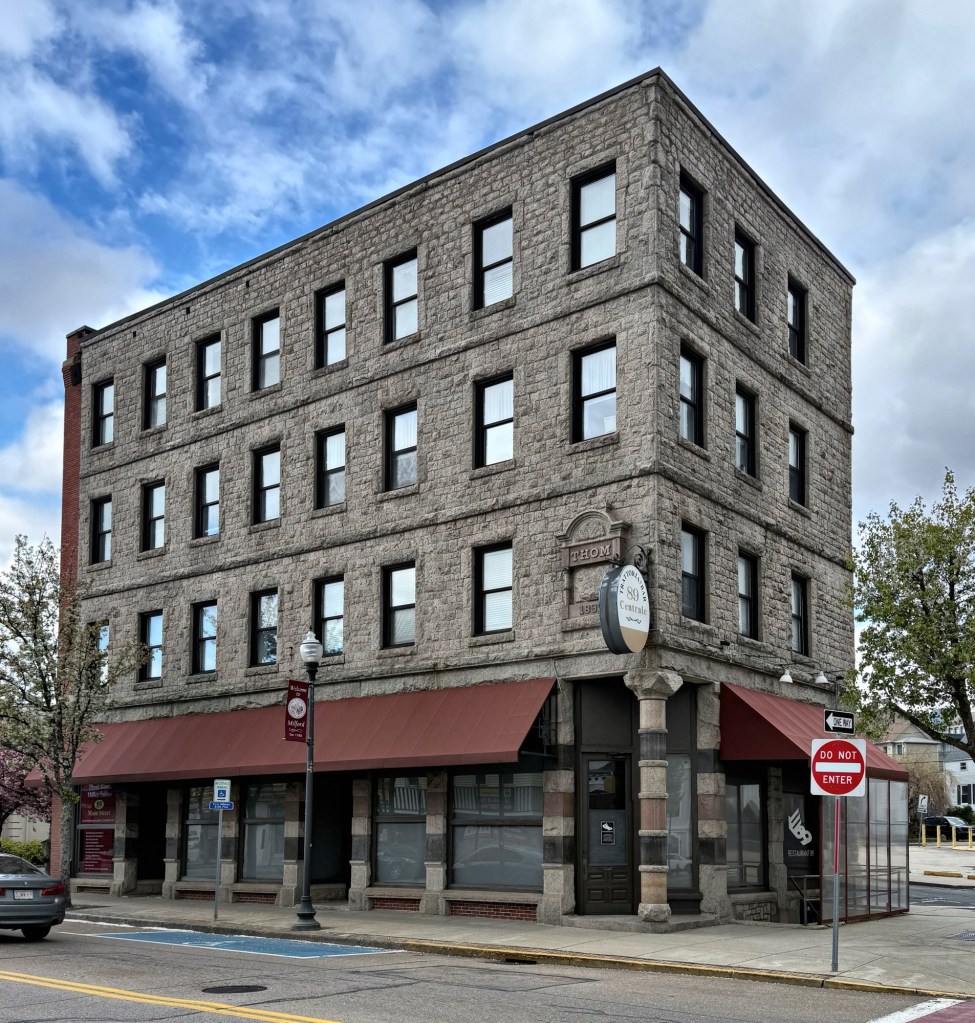
Thom Block // 1891

The Thom Block on Main Street in Downtown Milford, Massachusetts, is a historic mixed-use commercial block built of locally quarried Milford “pink” granite. The structure was constructed in 1891 by owner (and likely builder), James Thom, who arrived to Milford around 1889 and was hired by the Milford Pink Granite quarries as a foreman. Mr. Thom was the target of a vicious attack by a disgruntled quarry-worker and James would submit his resignation, turning his pursuits toward a local bicycle and horse racetrack and two of the town’s semi-professional baseball teams. He also got involved in real estate, in 1891 submitting plans for this building on Main Street that bears his name. Shortly after completion, a fire gutted the inside of the building and was rebuilt. Thom’s insurance did not fully cover the loss and he defaulted on the mortgage, selling the building and moved out of Milford. The Thom Block retains the polychromatic piers between storefronts and at the corner, which feature rounded granite blocks of polychromatic polished granite. The major ornament of the upper stories is a large plaque on the Main Street facade just above the recessed entrance with two Corinthian colonettes, spanned by a frieze and plinth on which “THOM” and “1891” are carved, respectively, showing us over a century later the original owner and his story.

First Universalist Church of Milford // 1899

In the summer of 1785, a Universalist congregation was formed in Milford, Massachusetts, making it one of the first in the United States. The Universalists here were led by some illustrious ministers including Thomas Whittemore, an energetic advocate of abolition and an ardent foe of the Fugitive Slave Law; Ebenenzer Fisher who left the Milford congregation to become the first president of what became St. Lawrence University; and Adin Ballou who, after serving the congregation for six years, established a religious commune in the Hopedale section of Milford called “The Hopedale Community” that was to become a model for similar religious organizations. The congregation grew and by the late 19th century, it was decided that a new church in Milford should be built. Local architect, Robert Allen Cook, who was then in his twenties, was hired to furnish plans for this handsome edifice, which was built of locally quarried Milford “pink” granite. Robert A. Cook was a personal favorite architect of the Draper Family of Hopedale and Milford, who likely held sway in his selection. The church was built in 1899 and remains an excellent example of Victorian Gothic architecture with large lancet window and many beautiful stained glass windows in the sanctuary.

Former Milford Post Office – Milford Police Station // 1911

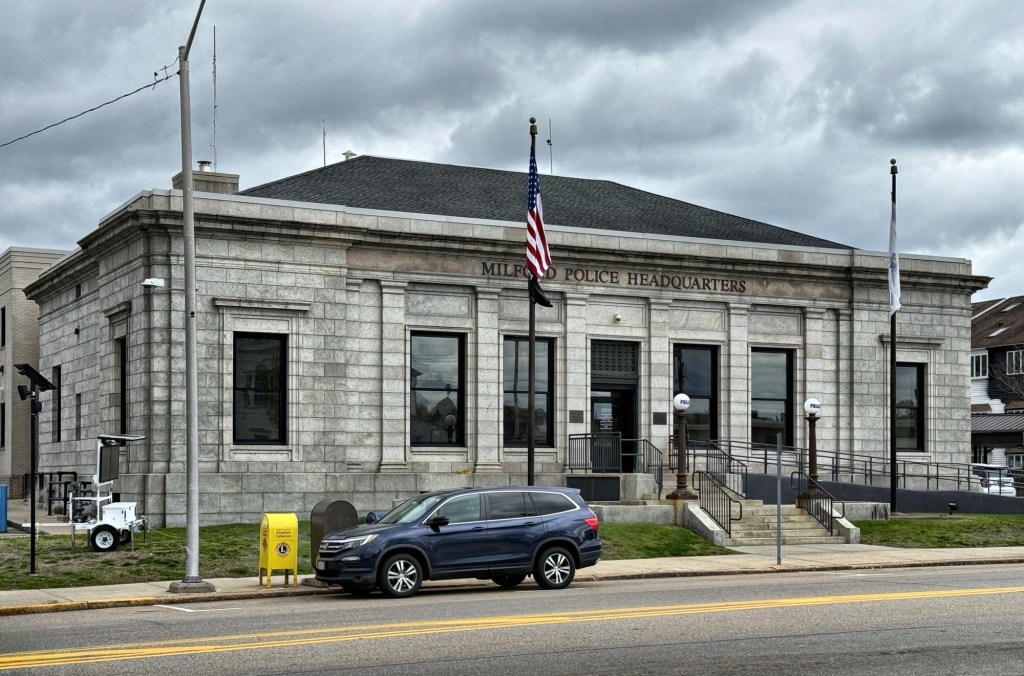
The present Police Station in Milford, Massachusetts, faces the town’s Draper Memorial Park and was built in 1911-12 from locally quarried Milford “pink” granite. While currently a police station, the building was actually constructed as the town’s first purpose-built post office, and constructed after a years’ long planning process to find a suitable site, funding, and design review. When the site and funding was set, James Knox Taylor, supervising architect of the United States Department of the Treasury and supervising architect of hundreds of federal buildings built throughout the United States during the period from 1897-1912, was hired to furnish designs. When his plans were unveiled, the community protested against the use of any granite other than the locally quarried “pink” Milford granite in the construction of the local post office. Mr. Taylor conceded and after two years of delays, the Post Office officially opened in 1914. Rectangular in plan, the granite structure is Classical Revival in style with its projecting cornice, symmetrical facade, and pilasters dividing the bays on the facade. The building also included a New Deal-era mural inside. The USPS moved into a contemporary building across the park in the 1960s and the Town of Milford purchased the old Post Office, converting it to the community’s Police Department Headquarters.

Milford Armory // 1912 

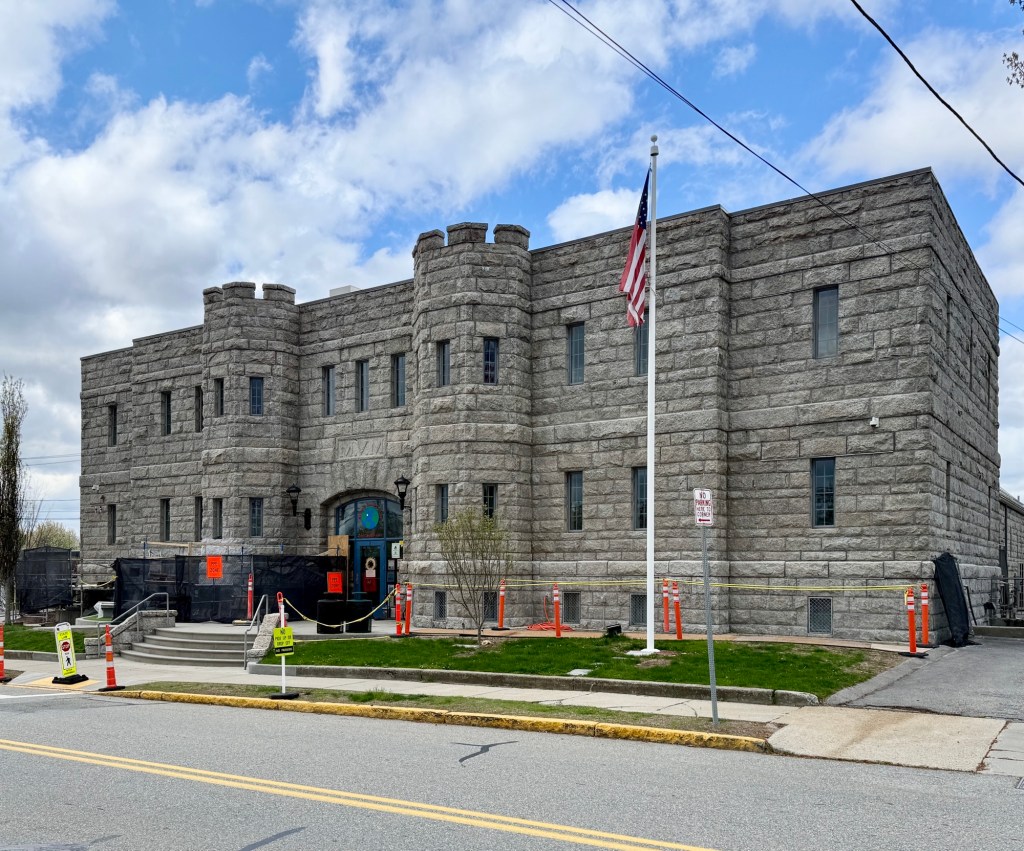
A source of local pride, the Milford Armory building on Pearl Street in Milford, Massachusetts, is an architectural landmark in the community and shows how adaptive reuse can give old buildings new life. The structure was completed in 1912 and constructed of locally quarried and cut Milford granite, a pinkish-grey granite that covers an area of approximately 39 square miles, centered around present-day Milford. Between the Civil War and WWII, the town of Milford became famous for its “pink” granite as a building material, with over 1,000 men laboring in dozens of quarries supplying the stone for some of America’s most iconic buildings including: the Boston Public LibraryWorcester City Hall, as well as the original Penn Station and Natural History Museum in New York, among many others. Besides being built of local granite, the Armory was also designed by local architect, Wendell T. Phillips, who followed nationwide trends designing the building like a fortified Medieval castle with crenellated towers, with long and narrow windows recessed, emulating the slit windows used in similar medieval structures. Like in many communities all over the country, the need to store firearms and major National Guard trainings declined with some being demolished, others sitting vacant, and others like the Milford Armory, seeing new life. The Milford Armory was slated for closure in 2002 and was ultimately saved when the Town of Milford and the National Guard struck a deal to initially rent the building for a Youth Center and gymnasium and share the space with the Guard.  The armory was home to the popular Youth Center, which needed gym space not available anywhere else. The building was ultimately purchased by the town and underwent a massive restoration, being rededicated as the Milford Youth Center in 2016

Stoneholm Manor // 1865

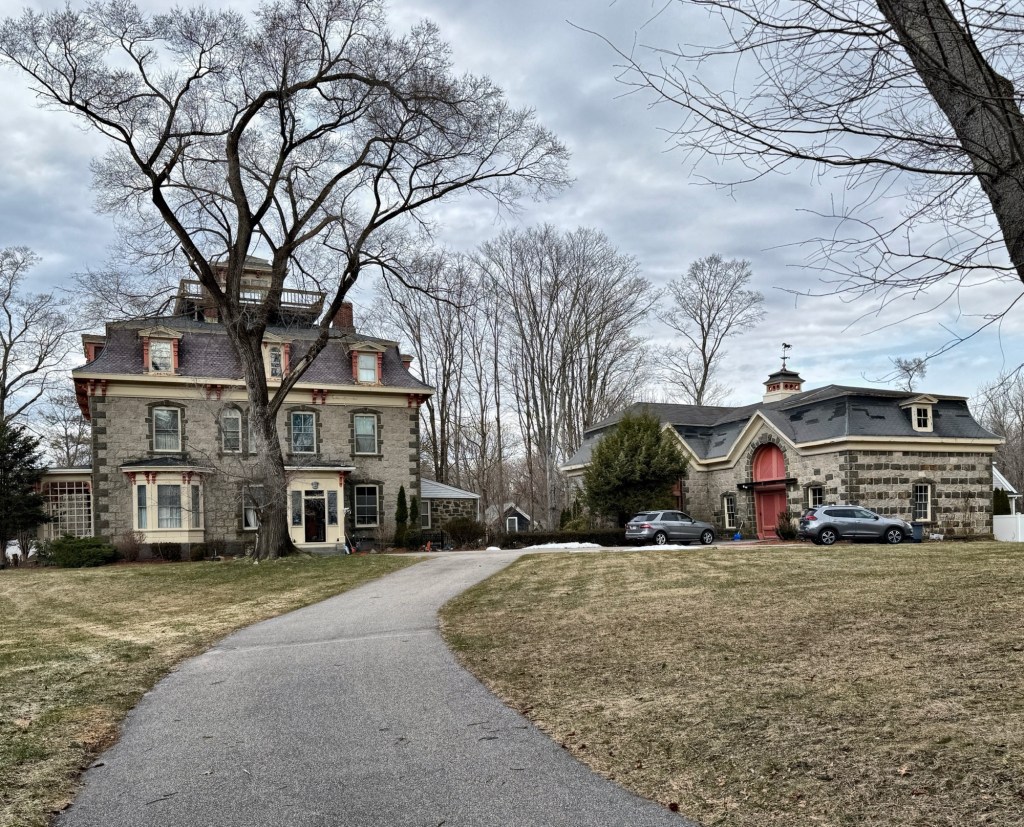
Stoneholm Manor is a historic estate tucked away in Sharon, Massachusetts, that remains one of the finest examples of a Second Empire style mansion and carriage house built of stone in New England. Stoneholm was built in 1865 for Horace Augustus Lothrop (1828-1898) within a year of his marriage to second wife, Sarah Gorham Swain. Horace A. Lothrop was a manufacturer and businessman with factories in Sharon and nearby towns and he invented innovative tools like hoes and wooden shanks for foot support in shoes and boots. He was also engaged in politics, serving in the state legislature and on the local school board. His country estate in Sharon is unique for its construction of locally quarried rock-face granite walls, fine mansard roof with cupola, and matching L-shaped carriage house, all in great condition. Stoneholm was listed on the National Register of Historic Places and remains a private residence.

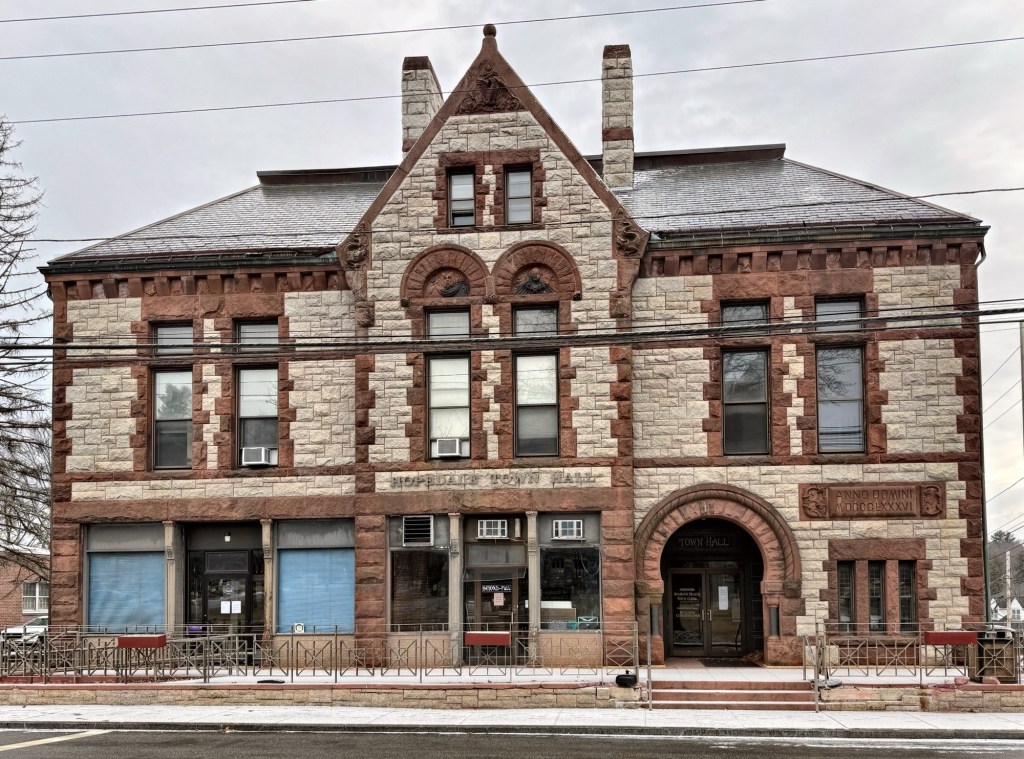
Hopedale Town Hall // 1886

In 1886, when the Town of Hopedale was incorporated, George Draper, the head of the Draper Corporation, bankrolled $40,000 for the design and construction of a new town hall building for his new hometown. Designed to house municipal offices, a meeting hall, the town’s library, with ground floor commercial spaces, the building is the work of architect, Frederick Swasey. The Richardsonian Romanesque style town hall is constructed of Milford granite with contrasting trim in Longmeadow sandstone with a lot of great detailing and a prominent entry arch with engaged colonettes. Before the building opened, its donor, George Draper died, and the building was officially donated to the town by his heirs. After over 100 years as the town hall, in 2025, the town voted to sell the building as its restoration and updates to make the building fully accessible would be too expensive. As of the time of posting, the building’s future is uncertain, but the building really needs to be preserved!