Mason-Fitz House // 1829

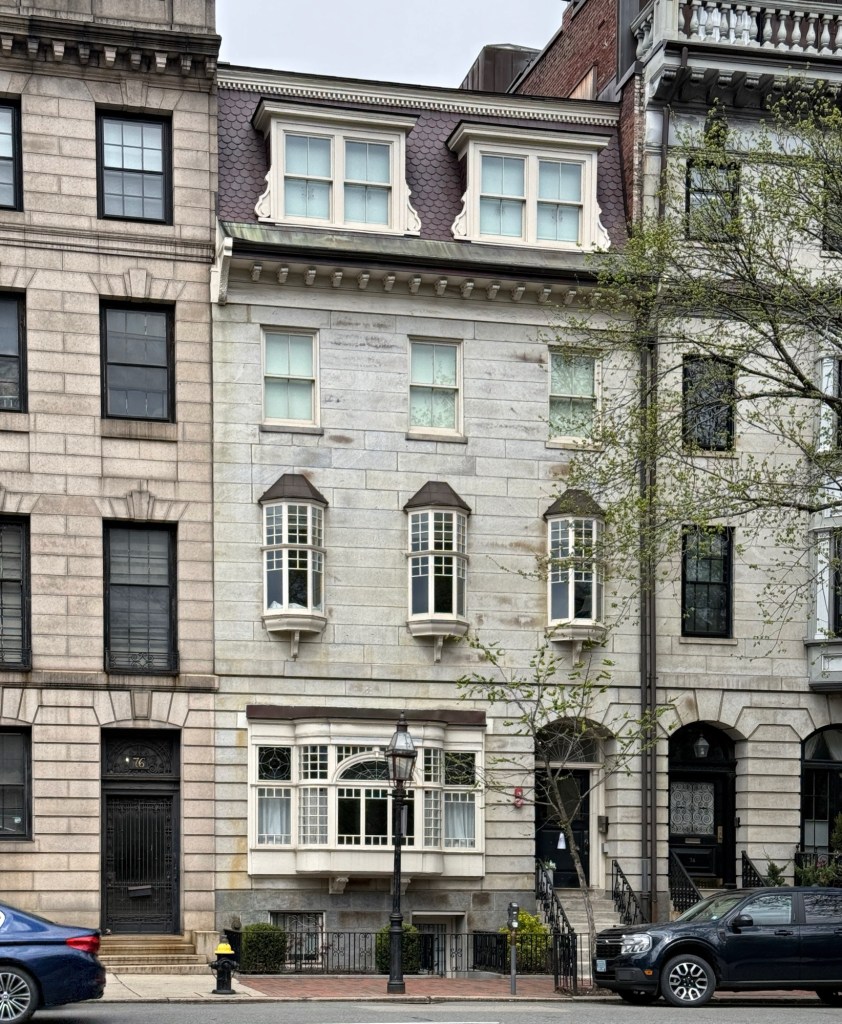
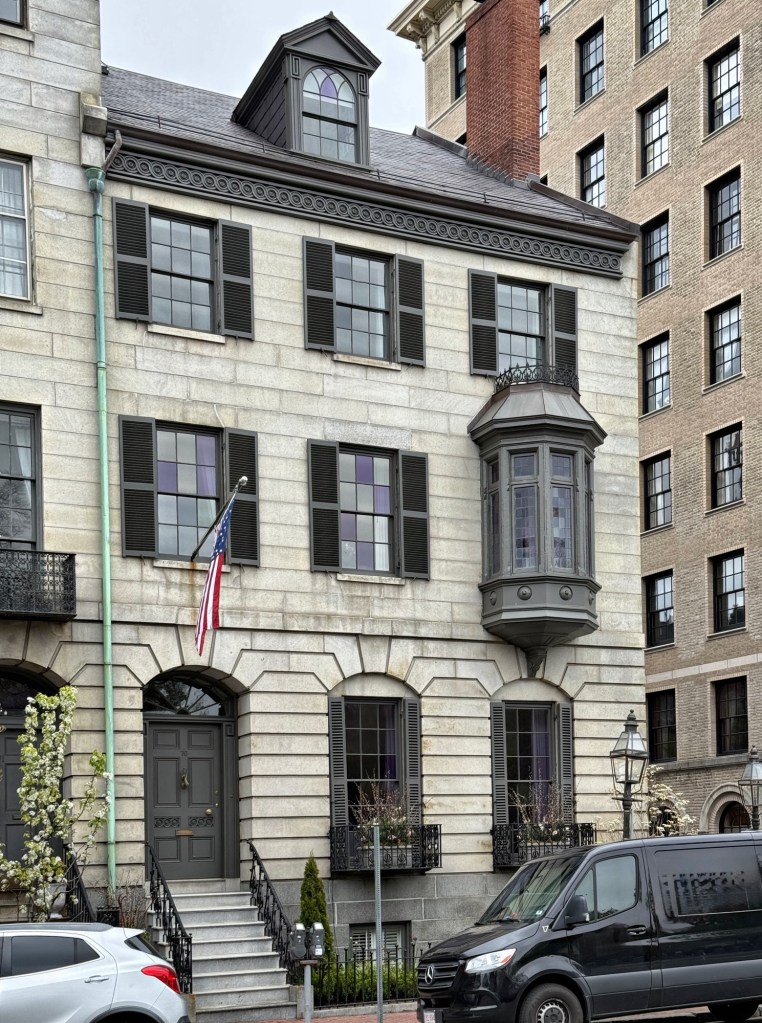
One of six attached houses townhouses between 70-75 Beacon Street, this stately granite-faced residence was built concurrently with its neighbors in 1828 on speculation for the Mount Vernon Proprietors, a group of wealthy Boston businessmen who helped develop Beacon Hill into the posh, architecturally significant neighborhood it is today. The Mount Vernon Proprietors knew how important Beacon Street was as the entry into the neighborhood, and thus, hired Boston’s premier architectAsher Benjamin, to design the row. When completed, all of the houses were identical, but throughout the 19th and 20th centuries, they all deviated from the original design, some gaining additional floors, others adding bay windows, but all together form a cohesive and architecturally significant span of houses. Completed in 1829, the residence at 75 Beacon Street is known as the Mason-Fitz House and was originally owned by Jonathan Mason (1756-1831), a U.S. Congressman and U.S. Senator, and later inherited by his son, William Powell Mason (1791-1867), who engaged in real estate. It was likely William Mason who added the mansard roof in the late 1850s or 1860s, but the main unique detailing of the residence occurred in 1889 when newlyweds, Henrietta G. and Walter Scott Fitz hired the popular architectural firm of Little & Browneto reconfigure the front of the house in the Colonial Revival style. Little & Browne added the rather fanciful, oriel windows on the facade, which include the three, small hipped-roof oriels on the second story and larger projecting oriel on the first floor with fanlight and leaded glass. Cambridge architect, Edward T. P. Graham later purchased the residence and petitioned to convert the single-family house into eight apartments, but was denied, later converting the residence into four units. Today, the Mason-Fitz House is broken up into two larger condominium units. 
Greenough-Dwight House // 1829

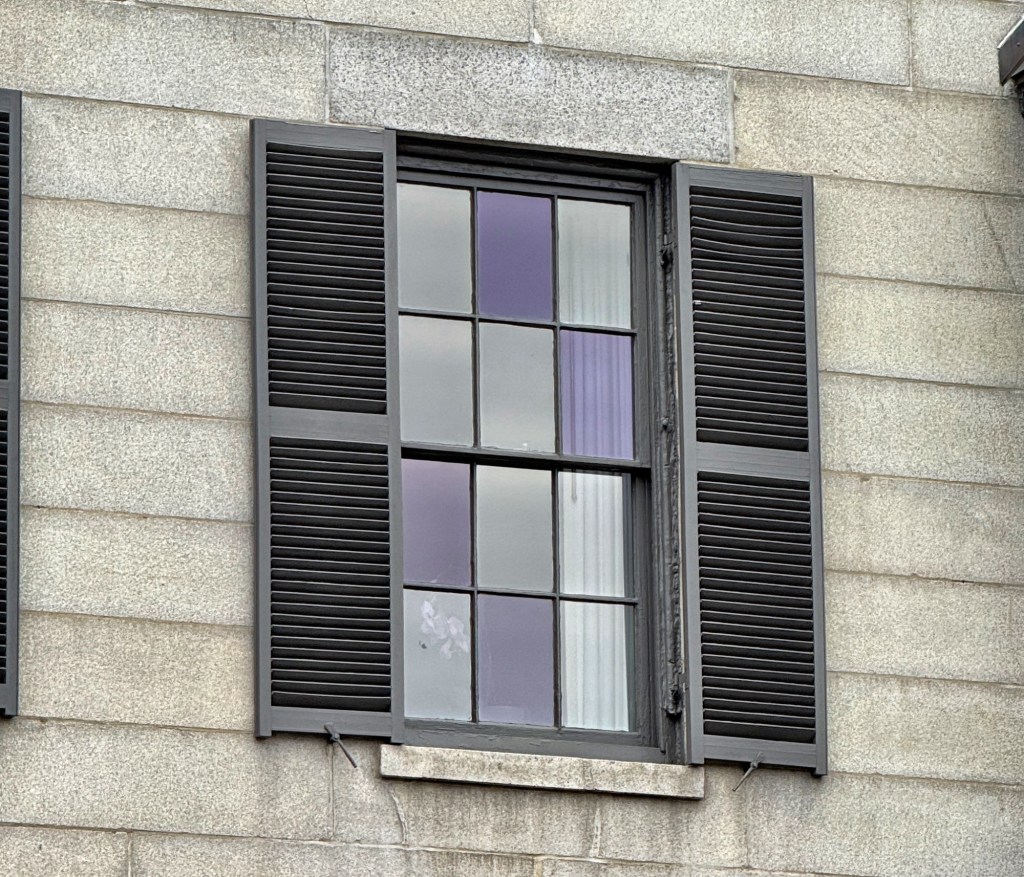
One of six attached houses townhouses between 70-75 Beacon Street, this stately granite-faced residence was built concurrently with its neighbors in 1828 on speculation for the Mount Vernon Proprietors, a group of wealthy Boston businessmen who helped develop Beacon Hill into the posh, architecturally significant neighborhood it is today. The Mount Vernon Proprietors knew how important Beacon Street was as the entry into the neighborhood, and thus, hired Boston’s premier architectAsher Benjamin, to design the row. When completed, all of the houses were identical, but throughout the 19th and 20th centuries, they all deviated from the original design, some gaining additional floors, others adding bay windows, but all together form a cohesive and architecturally significant span of houses. Completed in 1829, the corner dwelling is known as the Greenough-Dwight House and it retains its original three-story rusticated granite façade with segmental arch openings. The major change to the exterior of the Greenough-Dwight House is the addition of the ornate wood oriel window with iron cresting in 1874, the oriel and facade feature the iconic purple windows, which became a status symbol in the 20th century. The story goes, that between 1818 and 1824, an English company sent shipments of glass that contained too much manganese oxide into Boston Harbor. After being exposed to sunlight for an extended period of time, the manganese oxide in the glass began to turn purple creating the colored panes we love today. Over time, many panes broke or were replaced, creating the checkerboard appearance on so many windows, but many owners in the 20th century had imitation purple glass installed as a marker of wealth and prestige, like in this house and bay, which were built after the period that the glass was brought over from England. My favorite in the row, the Greenough-Dwight House shines with its granite facade and brick end wall, with panes reflecting the sun off her violet glass windowpanes. 

Stoneholm Manor // 1865

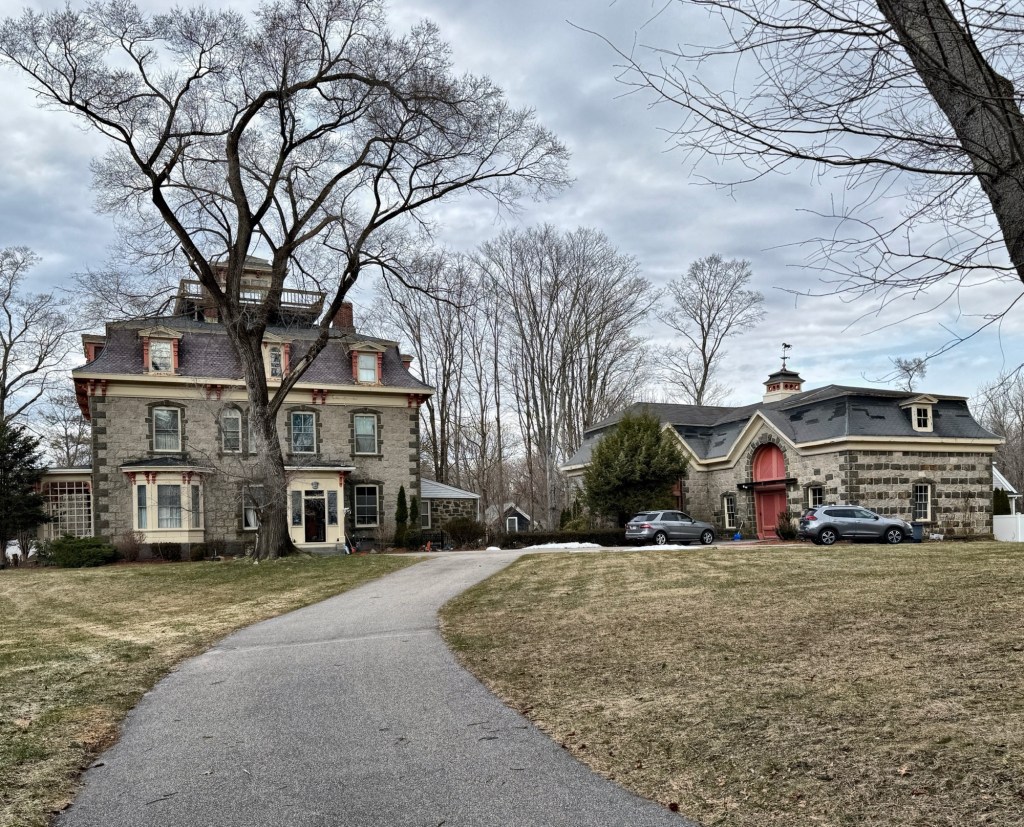
Stoneholm Manor is a historic estate tucked away in Sharon, Massachusetts, that remains one of the finest examples of a Second Empire style mansion and carriage house built of stone in New England. Stoneholm was built in 1865 for Horace Augustus Lothrop (1828-1898) within a year of his marriage to second wife, Sarah Gorham Swain. Horace A. Lothrop was a manufacturer and businessman with factories in Sharon and nearby towns and he invented innovative tools like hoes and wooden shanks for foot support in shoes and boots. He was also engaged in politics, serving in the state legislature and on the local school board. His country estate in Sharon is unique for its construction of locally quarried rock-face granite walls, fine mansard roof with cupola, and matching L-shaped carriage house, all in great condition. Stoneholm was listed on the National Register of Historic Places and remains a private residence.

Darius Lothrop House // c.1830

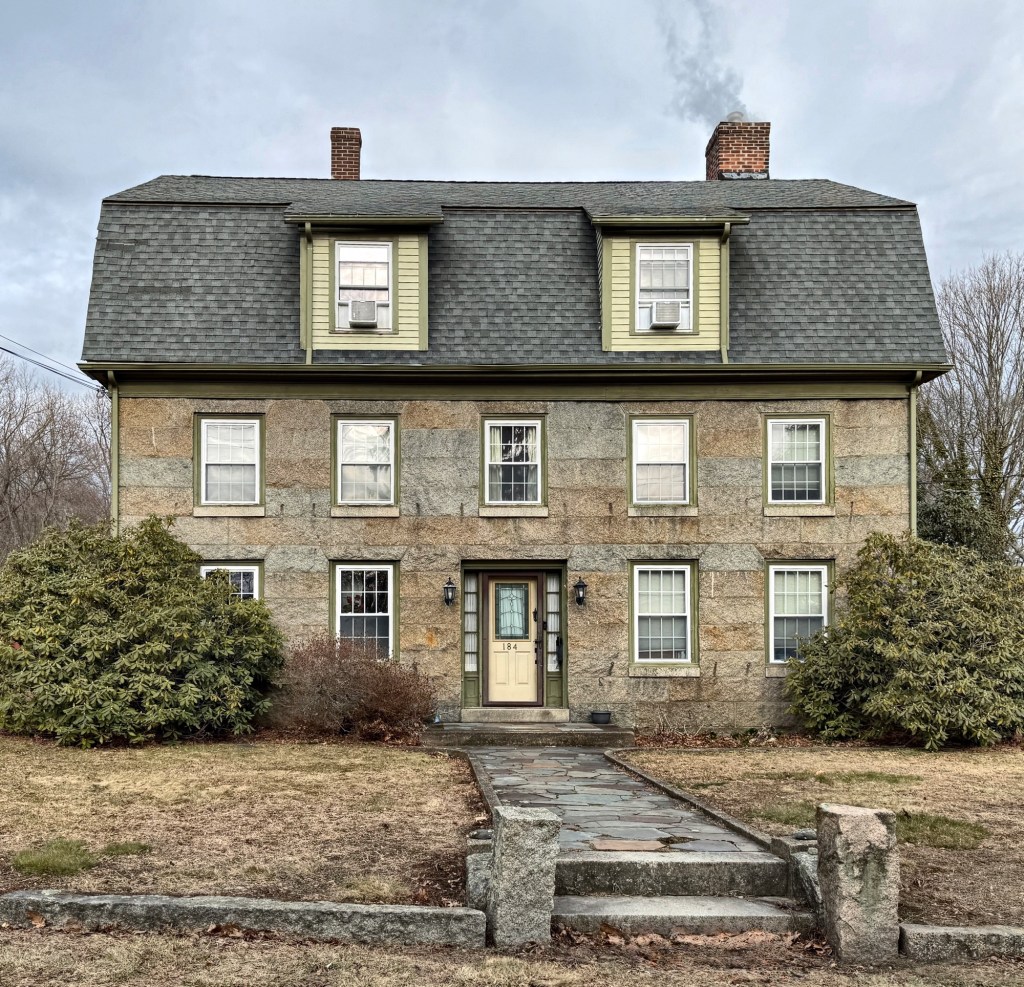
Located on North Main Street in Sharon, Massachusetts, the Darius Lothrop House stands as a unique late-Georgian style residence built of locally quarried stone. Darius Lothrop (1777-1841) is said to have built the large, two-story house in the 1830s and resided here until his death in 1841. The Lothrop House retains its large gambrel roof, center entry set within the stonework, splayed lintels over the first floor windows, and twin shed dormers.

Powers-Rosenthal House // c.1877

This gorgeous stone house was built circa 1877 by Phillip M. Powers (1814-1889), who served as President of the Millstone granite quarry in Waterford, Connecticut. The home is said to have been built off an earlier 1700s home, but all was constructed in ashlar granite to showcase Mr. Powers’ quality stone. It is said that Phillip went bankrupt not long after the construction of this home. In 1930, the house was purchased by Beatrice H. Rosenthal and her husband. Ms. Rosenthal served as both a delegate and as a committeewoman of the Democratic National party, and a staunch advocate for women’s rights. She was also active in women’s educational institutions around New England. The old home and barn are now available for rentals for events or overnight stays.