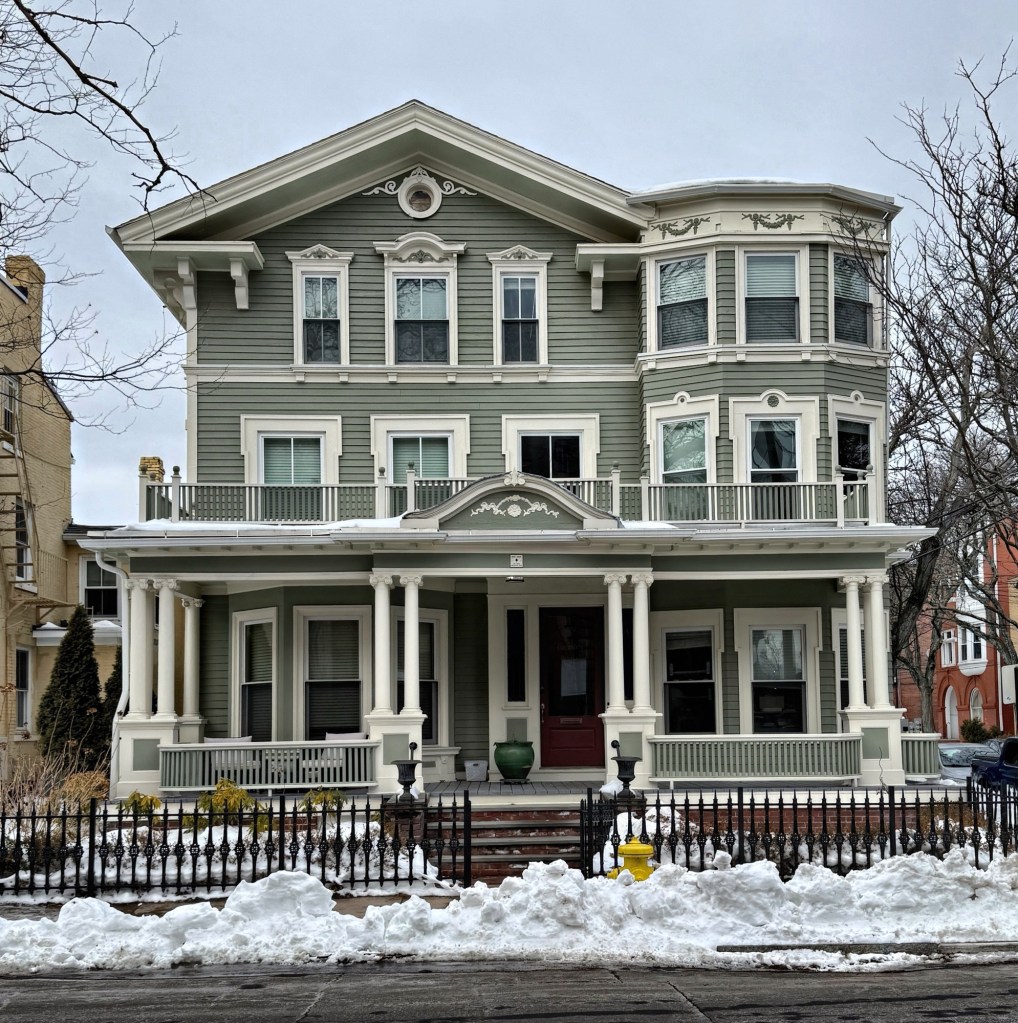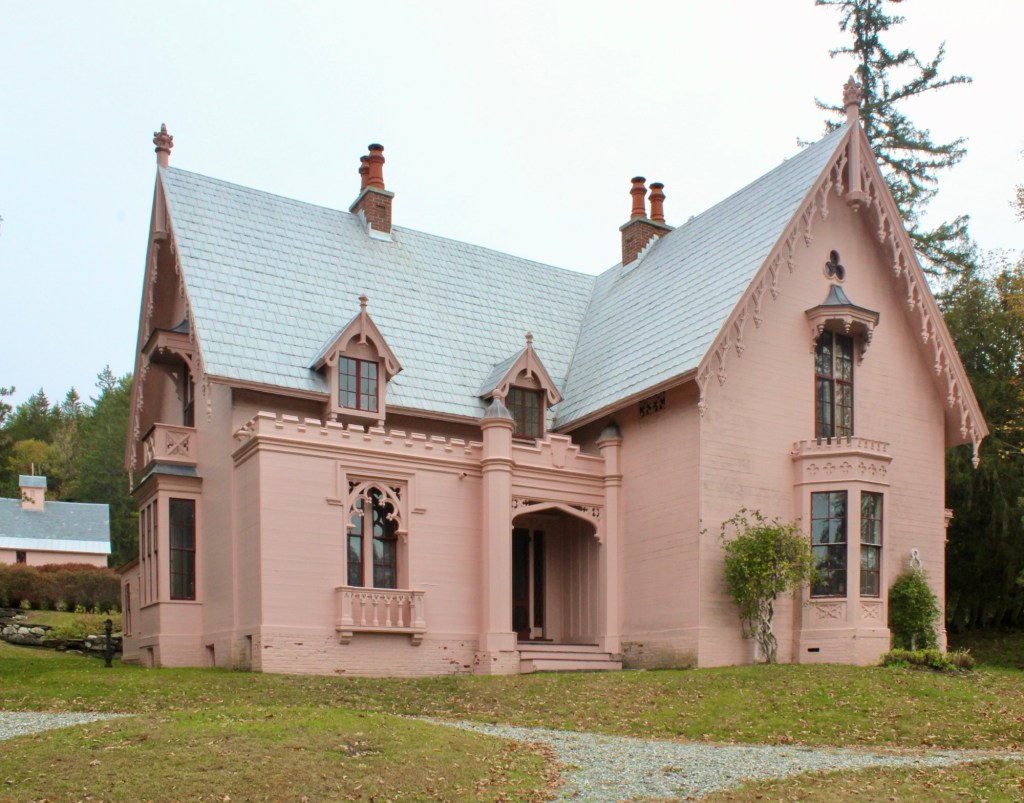
Webber-Bouve Mansion // 1885

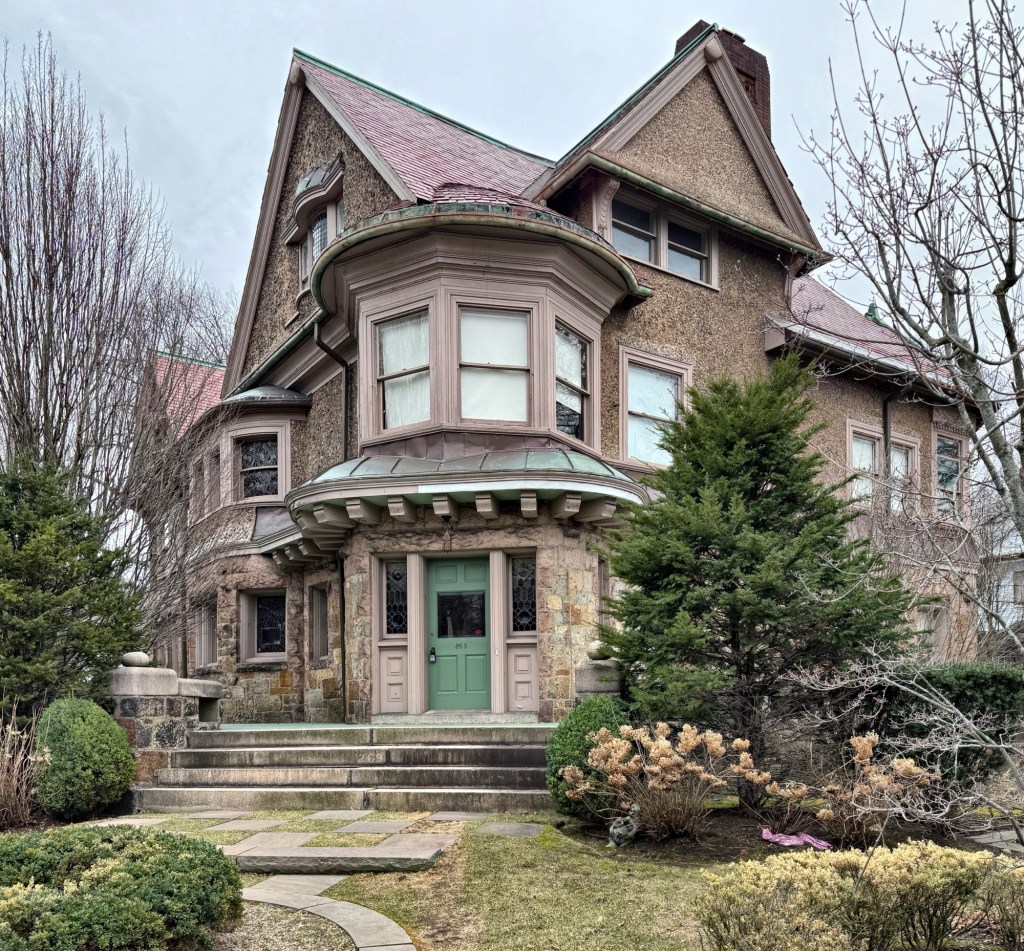
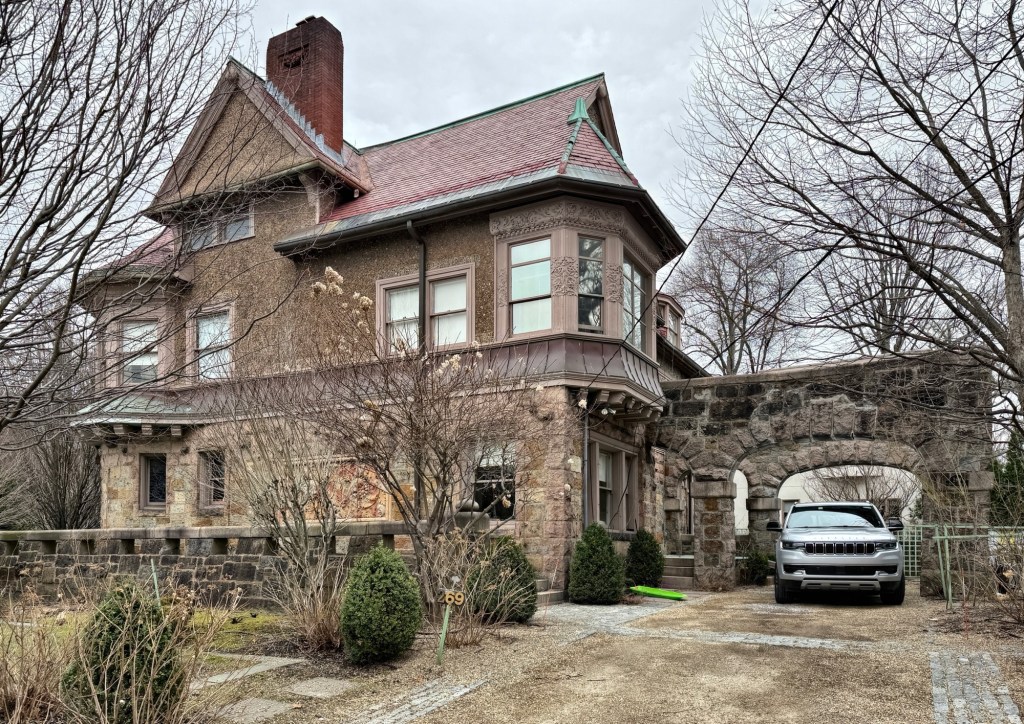
One of the most unique and truly great Victorian-era residences in Brookline, Massachusetts, can be found on Kent Street, an eclectic and fairly hidden mansion built of stucco, stone and terracotta. Built in 1885 by John Prescott Webber, a Maine lumber baron who moved to the Boston area and became a real estate magnate, the handsome residence was designed by architect, S. Edwin Tobey. The most important element of the structure is its surfacing material, with random and quarry-faced ashlar used on the first floor with roughcast stucco on the second level. Additional detailing includes the large brackets, irregular form and fenestration, massive bays, gables, stone porte-cochere, and carved terracotta details. The house was likely sold to George F. Bouve shortly after it was completed, and he remained the owner until his death in 1898. Mr. Bouve was a shoe and leather dealer and shoe manufacturer. The Webber-Bouve Mansion is one of those houses that the more you look at it, the more detail and unique features you notice. The historic stable was demolished in 1995 in exchange for a preservation restriction on the main house by the owners.

Charles P. Flagg House // 1899

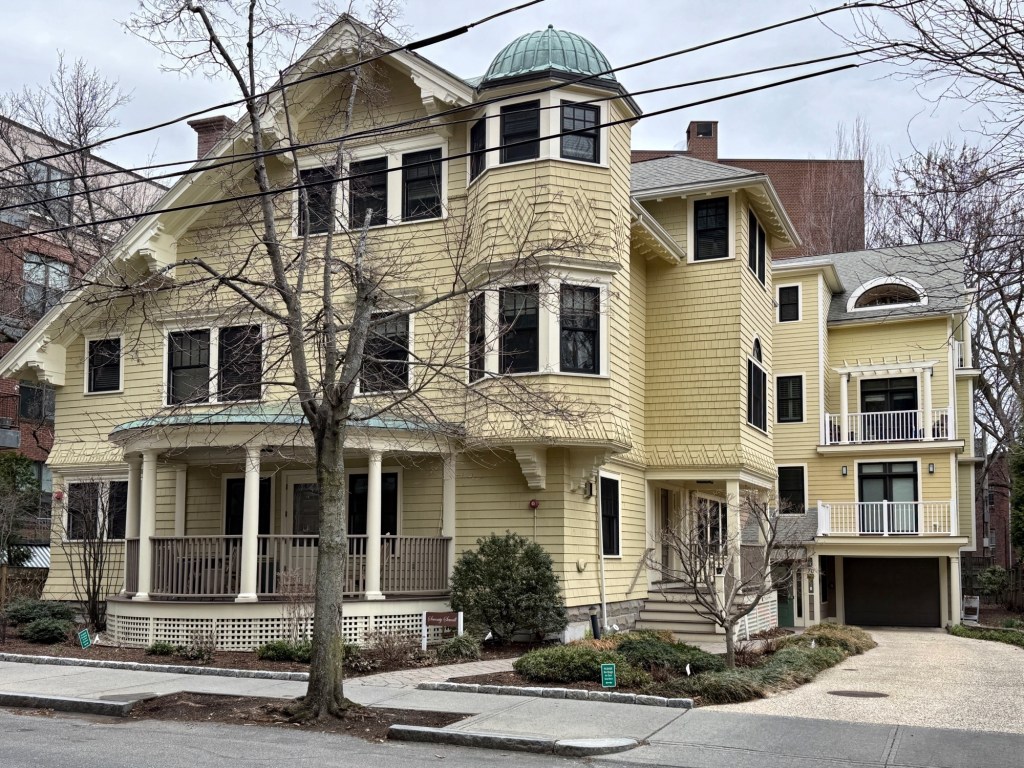
Located on Sewall Avenue in Brookline, Massachusetts, the Charles P. Flagg House exemplifies upper-class single-family housing built in the late 19th century that has been added onto and converted into multi-family housing to serve a growing city. Charles Partridge Flagg (1851-1911) was a real estate developer and head of the D. F. Flagg & Co., a wholesale liquor company his father started in Boston. He purchased the former Dexter property, subdivided the estate, and hired architect Julius A. Schweinfurth to design a home for his family. “Jule” Schweinfurth was long-associated with the firm of Peabody & Stearns of Boston, which in the late 19th century, was one of the premier architectural offices in the United States, but when he was not offered a partnership offer by his bosses, he established a new firm under his name. For the Flagg House, Schweinfurth blended the Shingle, Queen Anne, and Arts and Crafts architectural styles with a unique asymmetrical roofline, wide overhanging eaves with cross brackets and exposed rafter tails, consistent shingle siding, and a two-story polygonal oriel with domed roof at the corner. The Flagg House was moved forward on the lot to facilitate a rear addition and completely renovated in 2011, transforming it into a seven-unit condominium building with garage and elevator. This example of “gentle density” is exactly what communities should allow for, to preserve the character at the streetscape but provide additional housing.

Willis Bristol House // 1845

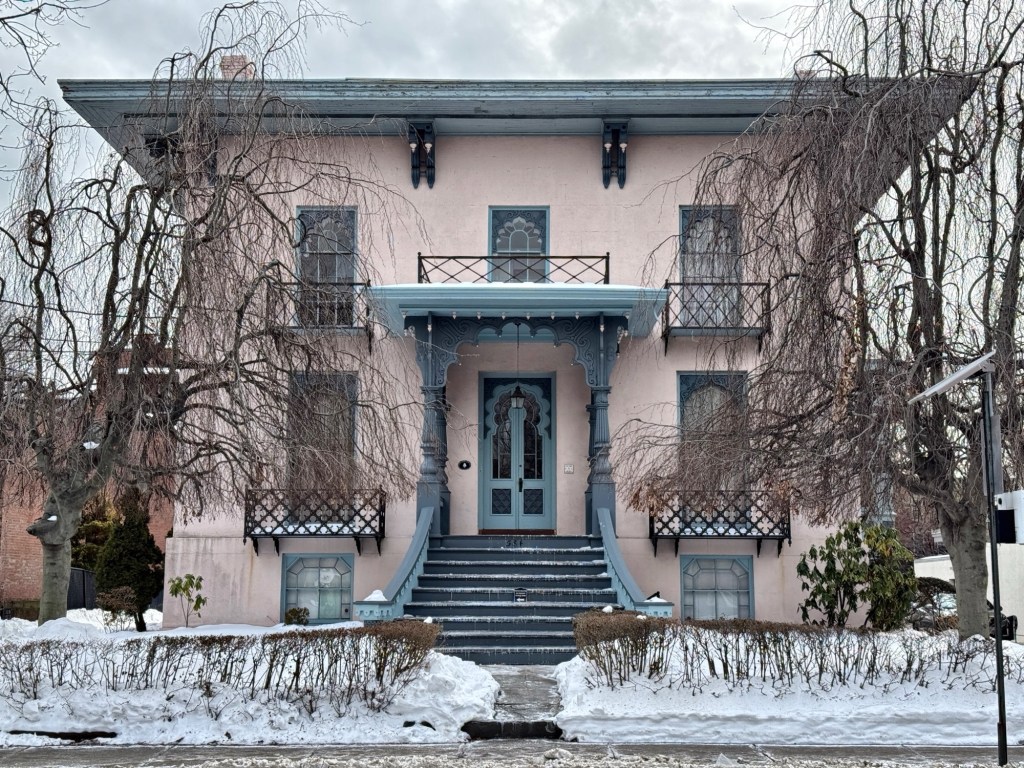
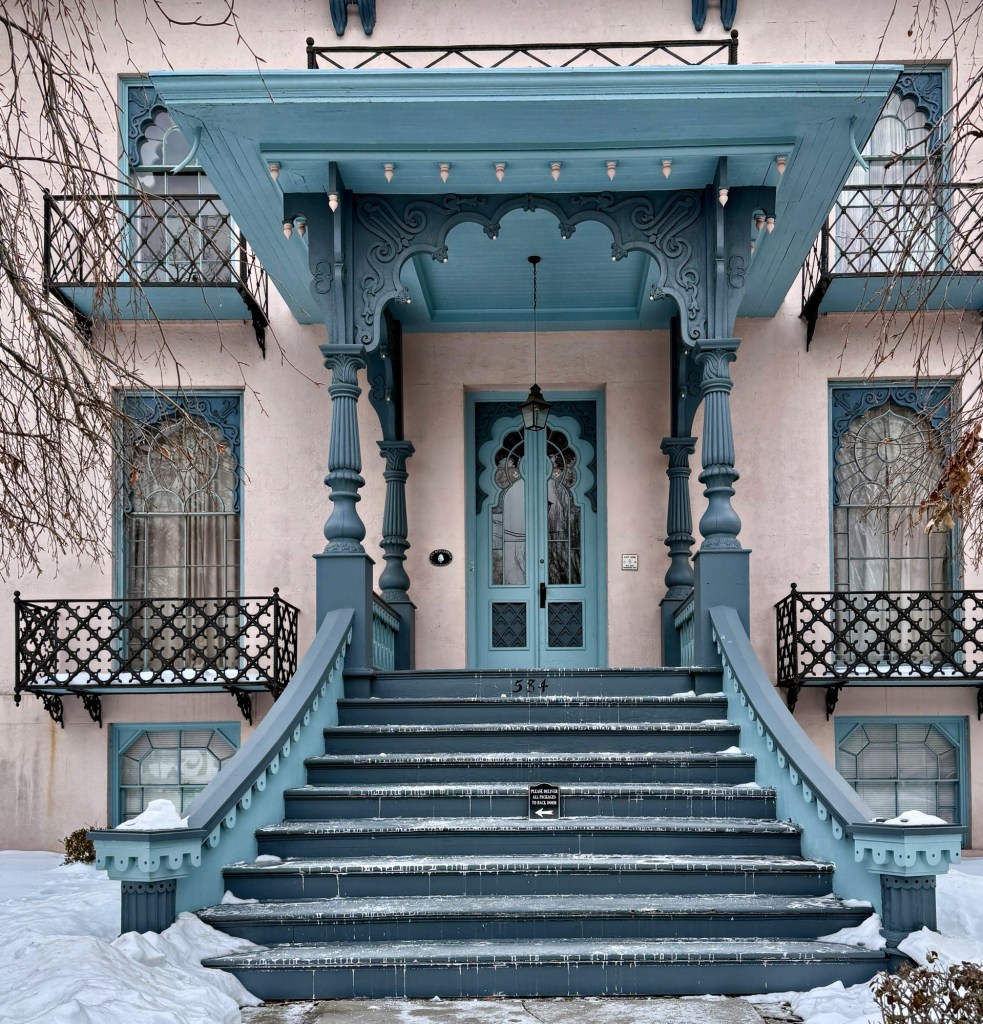
The Willis Bristol House on Chapel Street in the Wooster Square neighborhood of New Haven, Connecticut, is one of the finest and most architecturally distinctive residences in New England. Built in 1845 for Willis Bristol (1804-1875), a partner in the shoe manufacturer of Bristol & Hall, the home was designed by Connecticut architect, Henry Austin, who designed many of the other great mansions in Wooster Square around this period. The Bristol House is Italianate in style with Exotic Revival detailing which has often been described as Moorish Revival, but it is actually more Indian Revival, an extreme rarity in 19th century New England. It is believed that Henry Austin was influenced by an illustration of columns and capitals at the Ellora Caves in India published by Henry Repton in Designs for the Pavilion at Brighton (1808) and through this worked picked up a fascination with Indian architecture that was to influence his designs in the mid-19th century. Many of Austin’s designs in Wooster Square feature these Indianesque columns on their porches. The Willis Bristol House remained in the family until 1876 and was subsequently used as a congregation house, school, beauty parlor, and presently as apartments. The owners should be commended for preserving and protecting this ornate and unique residence for all to enjoy.

James E. English House // 1845

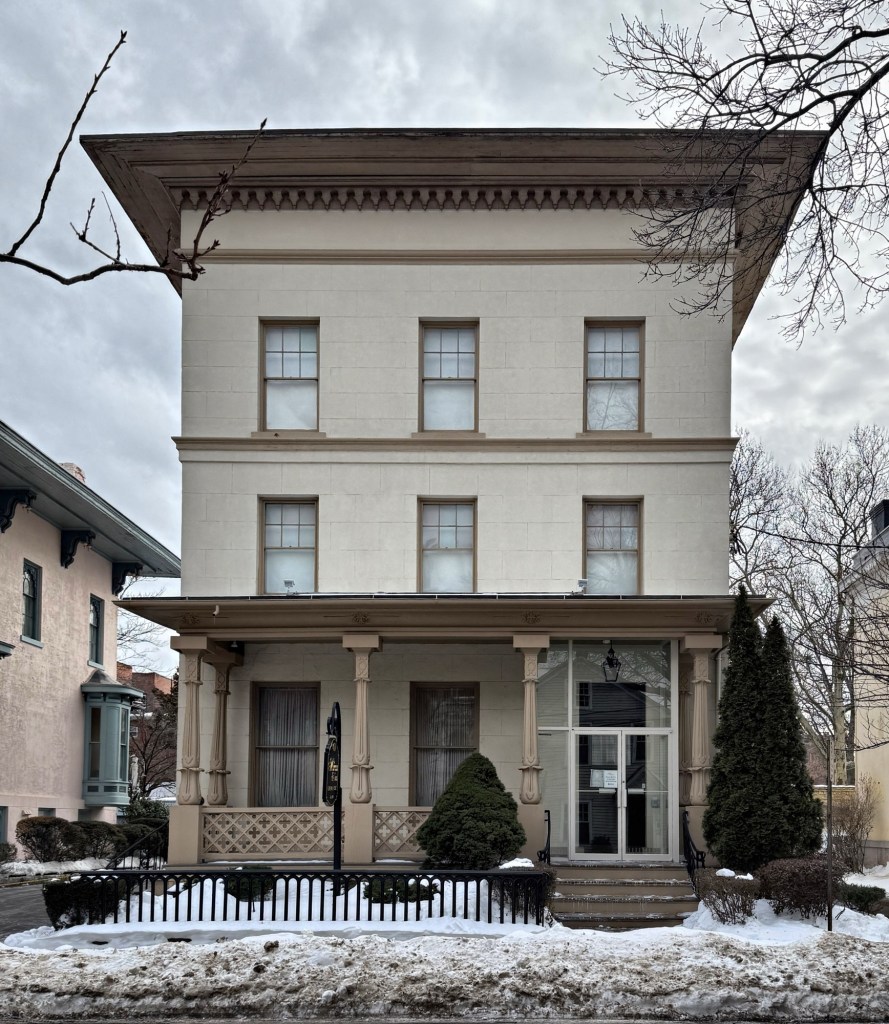
The oddly proportioned James E. English House stands on Chapel Street in New Haven’s Wooster Square neighborhood and remains one of the most interesting mid-19th century residences in the city. Built in 1845 for James Edward English (1812-1890), a prominent businessman who later became Governor of Connecticut and U.S. Senator. James English started his career as a carpenter and expanded to open the English & Welch Lumber Company. He was a savvy businessman and helped restructure the New Haven Clock Company into one of the largest clock manufacturers in the region. From his success, he purchased property in the new fashionable Wooster Square district and moved into this residence which was designed by architect, Henry Austin, who designed many other homes in the neighborhood. English got engaged in politics and served as the 43rd and 45th Governor of Connecticut and later as a U.S. Senator (1870-1871). Upon returning to Connecticut, James English continued his lumber business and with his own product, expanded his Wooster Square home, vertically. In the mid-1870s, the house, which was originally two stories, was given a third floor, creating the strong vertical proportions we see now. Today, the James E. English House operates as the Maresca & Sons Funeral Home, one of the many prominent Italian-American-owned businesses that helped revitalize the neighborhood in the 20th century.

Bromley-Bradley House // c.1850

One of the eclectic mid-19th century residences in New Haven’s Wooster Square neighborhood is the Bromley House, an exuberant blending of architectural styles that have been lovingly preserved. The history is a little murky on this residence but from research, the home was built around 1850 and was possibly a two-story flat-roofed Italianate style design with three-bay facade and off-center entrance. The home was acquired by Joseph Bromley, who appears to have added a third-story with gable roof. After the Civil War, the property was purchased by Lyman Erving Bradley, a veteran of the war who was employed as a police officer and later as private security for an area factory. It appears that Mr. Bradley, before his death in 1901, had the property expanded with a whimsical front porch, three-story side addition, and applied ornament in the Queen Anne style. The home is today a three-unit condominium, similar to the three-deckers found in cities all over New England.

Buckingham House // 1903

This unique Queen Anne style house at the corner of Washington and Eddy streets in Warren, Rhode Island, stands out for its use of materials and late Victorian design, a departure from the Federal and mid-19th century architecture the waterfront community is best-known for. The residence was built for Hannah and Erastus Buckingham and today remains essentially as originally built. Its slightly asymmetric massing combining multiple materials of brick and weathered shingles with diamond pane sash windows, illustrate early 20″ century design simplification while retaining the use of materials typical of late 19″ century Queen Anne style. Erastus Buckingham inherited his father’s oyster farming business, which harvested over 200 acres of beds in the bays off Nayatt, Conanicut, Quonset, Rocky Point and Patience Island before packaging and shipping to markets.

William Winslow House // 1850

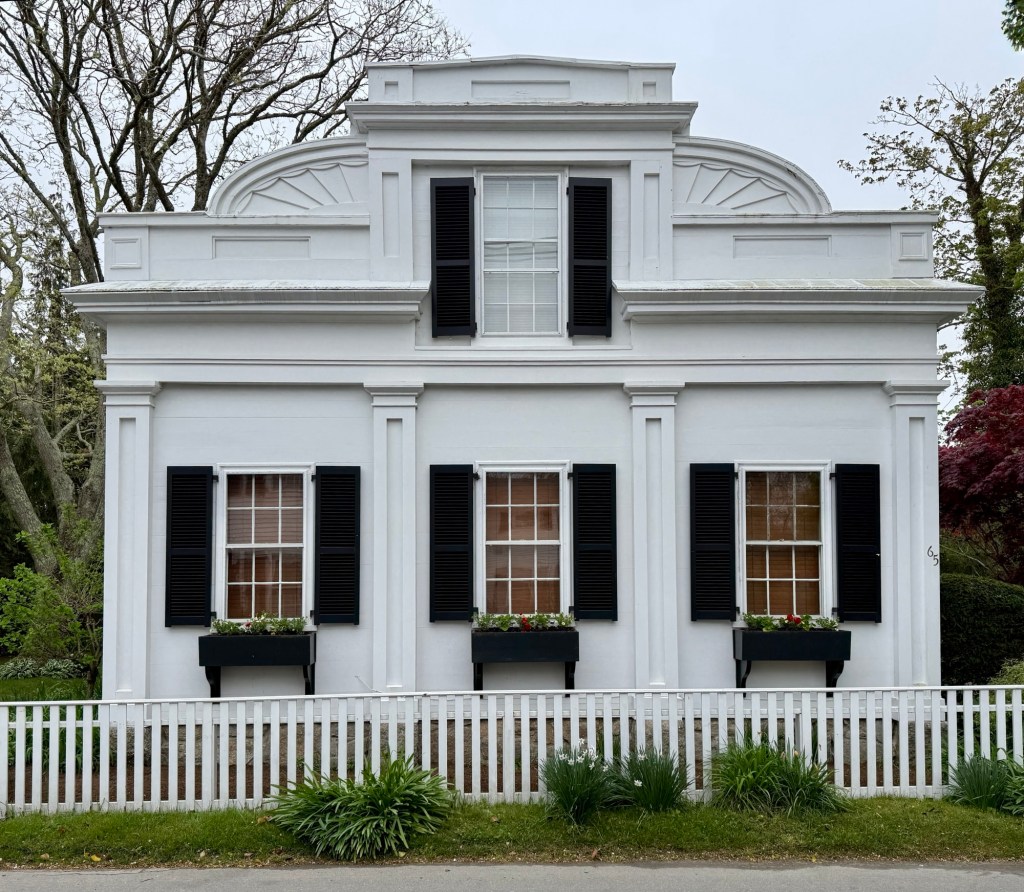
The Smith-Winslow House on Warren’s Main Street is a striking two-story Italianate house with cubical massing with smooth stucco walls and bold detailing. The residence was constructed in around 1850
and was owned by Captain William Winslow captain of the schooner ‘‘Metamora’’, a trading vessel, and proprietor of Warwick’s Rocky Point, a shore resort and amusement park just across Narragansett Bay. The Winslow House was designed by Rhode Island architect, Russell Warren, who showcased his architectural prowess through the roof cupola, overhanging eaves, window hoods, and the unique Egyptian columns at the entry. Today, the residence operates as the Women’s Resource Center, a non-profit founded in 1977 to provide comprehensive domestic violence intervention and services that educate, advocate, and shelter any individual in need of assistance in the region.

William and Octavia Apthorp Mansion // 1885

This unique four-story brick townhouse on Otis Place in Beacon Hill, Boston, was built in 1885 by the architectural firm of Rotch & Tilden for Mrs. Octavia L. Apthorp and her husband, William F. Apthorp. Elevated on a tall brick basement, the exterior of the house is richly detailed with masonry decoration in what has become known as the “panel brick” style; with an elaborate brick entrance archway, paneled pilasters at the third floor, and vertical brick lintels above the windows. Over the ground floor windows near the entrance, iron grates with spear-like finials give the design a Medieval/English Queen Anne presence. William F. Apthorp was the only son of Robert Apthorp, a prominent Boston attorney and abolitionist who lived across the street at 2 Otis Place. William was a pianist and teacher at the New England Conservatory of Music and writer who married Octavia (sometimes spelled Octavie) Loir Iasigi in 1876, she was also from a well-connected Beacon Hill family.

Sunflower Castle // 1878

This absolutely unusual and enchanting cottage on Mount Vernon Street in Beacon Hill, Boston, was originally was constructed in the 1840s but completely altered decades later in its distinctive English Queen Anne style. In 1878, Frank Hill Smith, an artist and interior designer, worked with architect, Clarence Luce to renovate what was originally a two-story Greek Revival house into one of the most eclectic and unique residences in New England. The Sunflower Castle, a name reputedly coined by Oliver Wendell Holmes, features a yellow stucco first floor with the upper floors covered with red fish-scale shingles. Further detail includes the half-timbering, decorative panels depicting a gryffin and a sunflower in the gable, and carved wood frieze over the doorway. Clarence Luce was likely so inspired by this project, that he built an even more extravagant example of this house for Edward Stanwood in Brookline soon after. By 1903, the property was sold to the painter, Gertrude Beals Bourne and her husband, architect, Frank A. Bourne, who were both key players in the revival and gentrification of the Beacon Hill Flat neighborhood west of Charles Street in the early 20th century. The Sunflower Castle was used as their home and as an artist’s studio for the couple, with Frank adding the side garden wall with tile-roofed gateway to enclose a private open space. The property remains as a private residence.


James Dwight Dana House // 1849

The James Dwight Dana House at 24 Hillhouse Avenue in New Haven, Connecticut, is a landmark early example of an Italianate style residence designed by a famed 19th century architect. Built in 1849 from plans by architect Henry Austin, the house was constructed for owner, James Dwight Dana (1813-1895) and his new wife, Henrietta Silliman and possibly funded by her father, Benjamin Silliman, a Yale professor who was considered “The Father of Science in America”. James Dwight Dana’s education in geology, in addition to his studies with his father-in-law, Professor Silliman, extended to the four-year United States Exploring Expedition between 1838–1842), in which Dana served as the staff geologist and mineralogist, exposing him to a wide-ranging variety of geological formations and minerals. Upon his return to New Haven, he married Silliman’s daughter and then moved into this stately home. Later in his career, Dana was responsible for developing much of the early knowledge on Hawaiian volcanism. In 1880 and 1881 he led the first geological study of Hawaii. The James Dwight Dana House has a three-bay front facade, with a single-story porch extending across its width, supported by wooden columns with unique capitals. The shallow roof has broad, overhanging eaves sheltering a unique corbelled brick cornice. The building was added onto in 1905 with similar architecture and was purchased by Yale in 1962. Today, the building is preserved by the University and houses the Institution for Social & Policy Studies (ISPS).