Deutsch House // 1915 & 1981

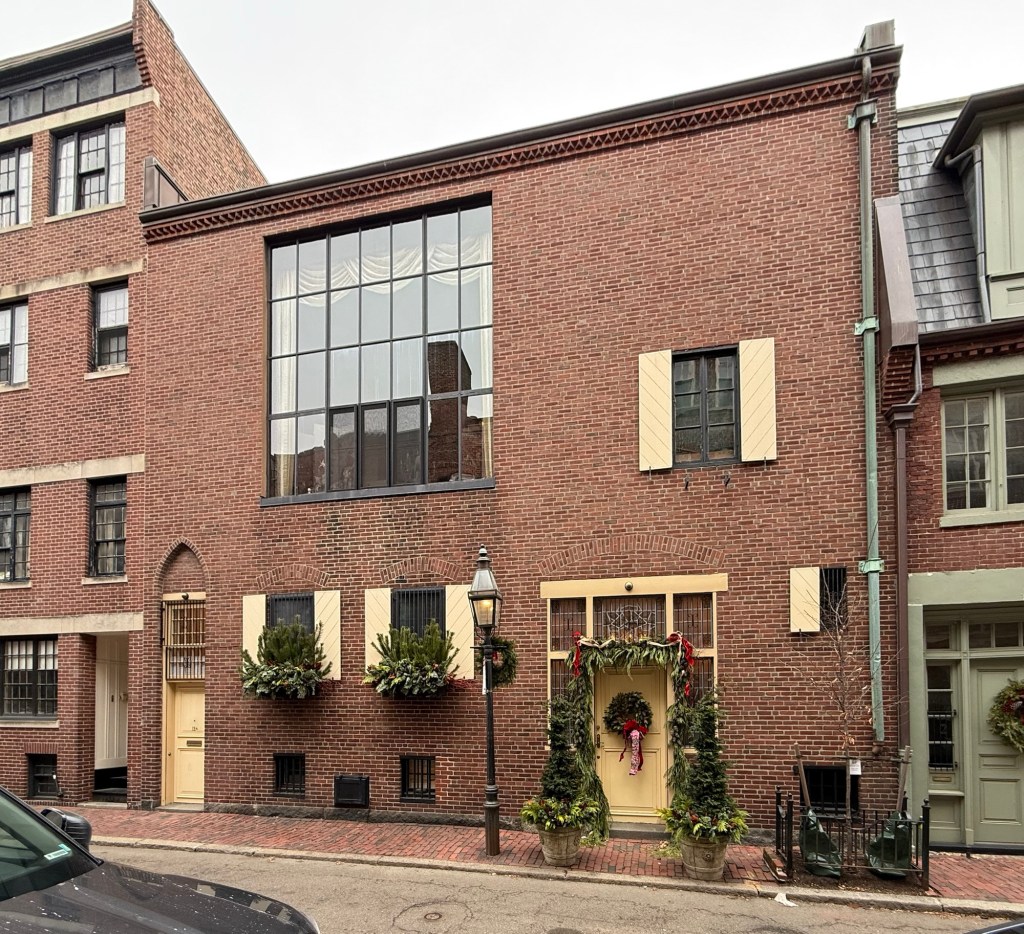
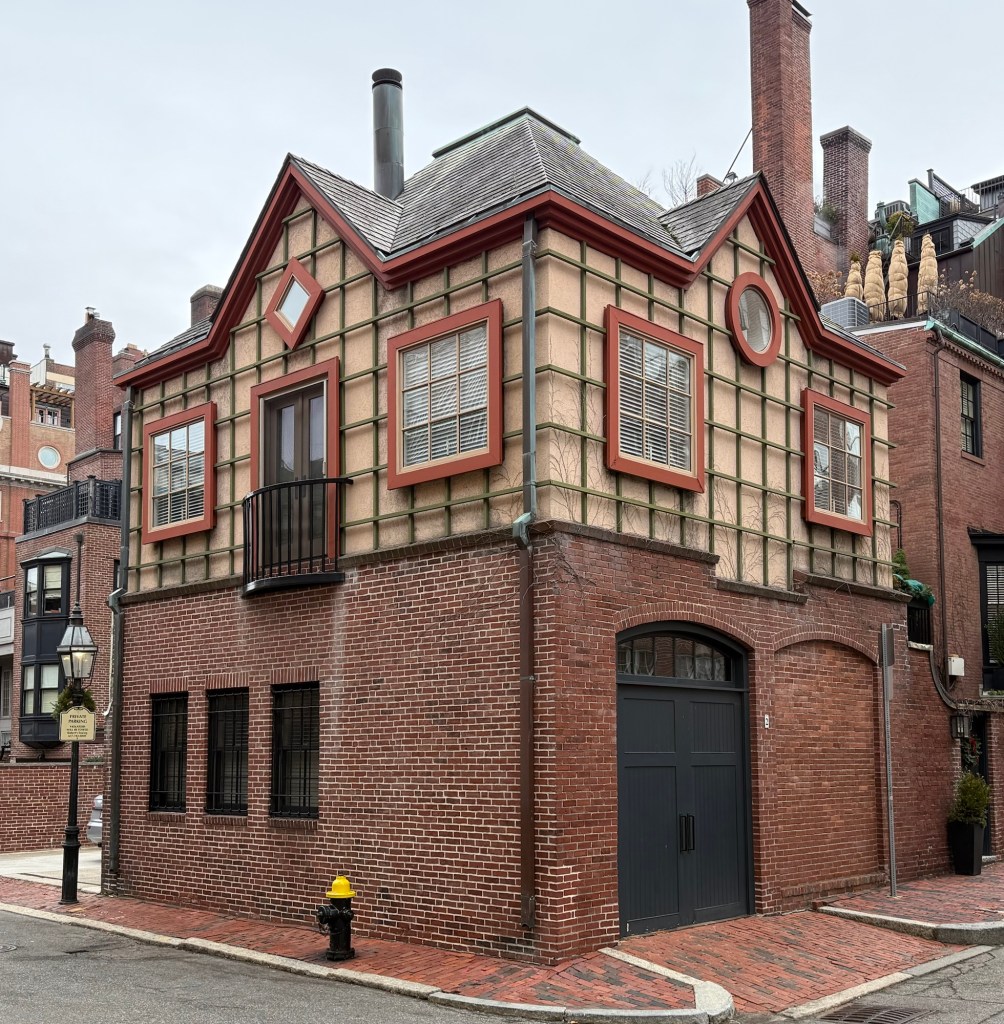
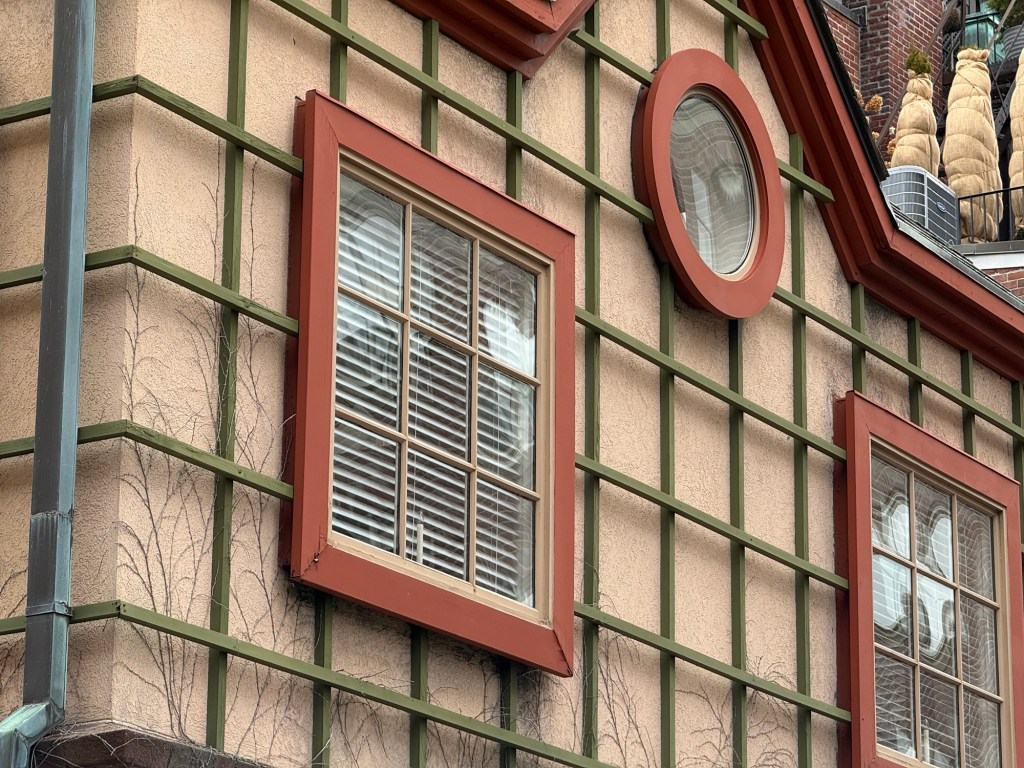
Originally built in 1915 as a two-car garage, this fanciful and diminutive residence was created atop the former garage in 1981 to become one of Boston’s best examples of Post-Modern architecture. Located at the corner of Beaver Place and Beaver Street on the Flat of Beacon Hill, the one-story brick garage was constructed behind 91 Beacon Street for Helen and Robert Emmons to store their personal automobiles. By 1981, the garage parcel was separated from the Beacon Street address and owners, Ira and Margaret Deutsch filed to build a one-story addition to the garage to create a residence. The couple worked with architect, Graham Gund, who designed a vertical, second-story addition to the brick garage, creating one of the most whimsical and unique buildings in Boston. The stuccoed walls with gables are covered with a projecting trellis which is set behind the framing of the windows to create a three-dimensional facade element.

Fleur-De-Lys Studios // 1885

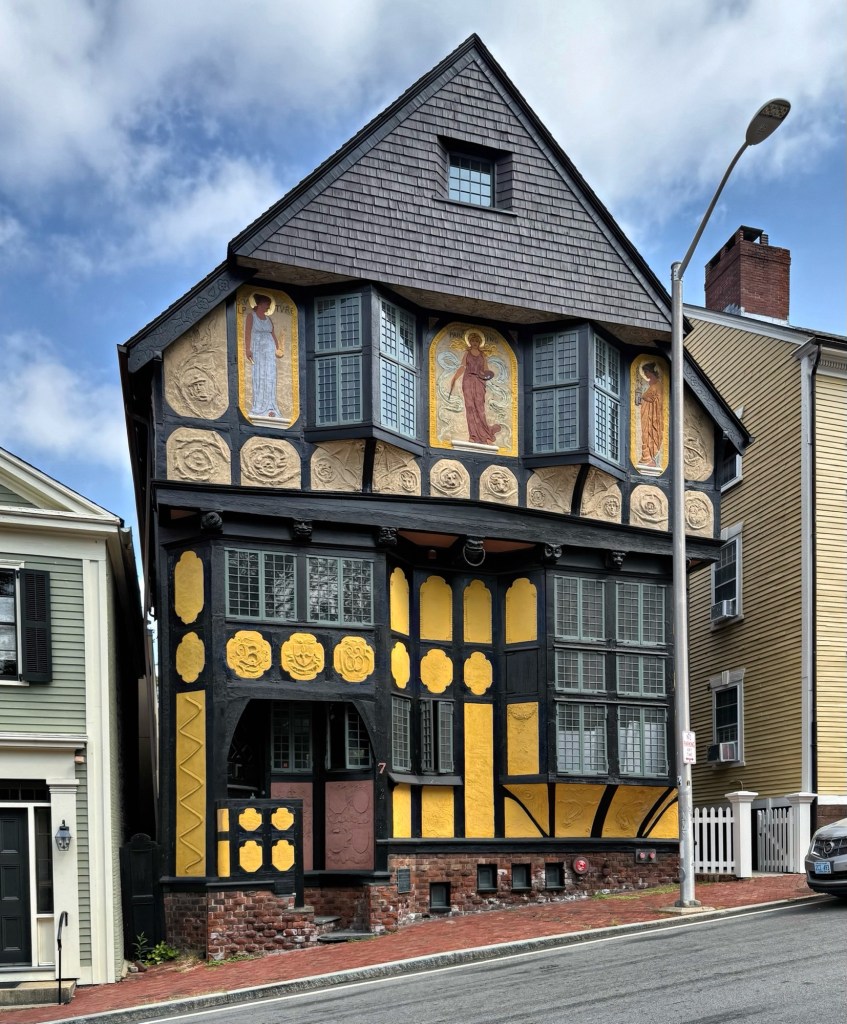
The Fleur-de-Lys Studios is of the most architecturally significant and unique buildings in New England and can be found on Thomas Street in the College Hill section of Providence. Built in 1885 and a vivid expression of the Queen Anne style and showing the emergence of the Arts and Crafts movement movement in America, the handsome building blending is the result of a partnership between artist, Sydney Richmond Burleigh and architect, Edmund R. Willson as a dedicated creative hub for working artists, a purpose it still serves today under the stewardship of the Providence Art Club, who received the deed of the property in 1939 by Burleigh’s widow. Its design draws heavily on medieval English and Tudor Revival influences, with a striking half-timbered façade, stucco panels, carved heads as hanging pendants, and projecting casement windows that break dramatically from the surrounding colonial streetscape. What truly sets the structure apart, however, is its richly symbolic ornamentation—allegorical figures representing painting, sculpture, and architecture adorn the exterior. More than a century later, the Fleur-de-Lys Studios remains both a National Historic Landmark and a living workspace, preserving its original spirit as a place where art and architecture are inseparably intertwined.

Pendleton House – RISD Museum // 1904

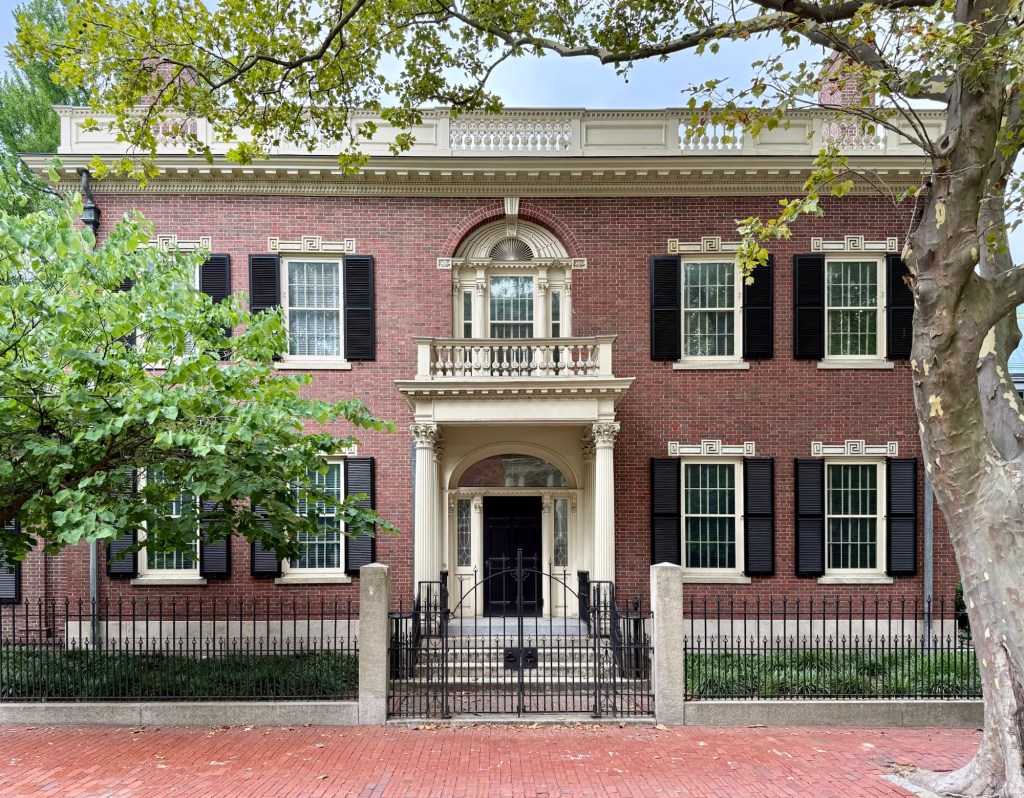
Although the Pendleton House on Benefit Street in Providence, gives the appearance of a domestic residence, it was actually built for the purpose of displaying the once private collections of Charles L. Pendleton (1846-1904), which were given to the RISD Museum in 1904. Pendleton’s bequest, which included American and European furniture, silver, glass, ceramics, textiles, and paintings, came with the stipulation that the collection remain intact and on display in a suitable building for the benefit of the public. The stipulation occurred just before Mr. Pendleton’s death in 1904 and the Rhode Island School of Design immediately hired the local architect, Edmund Willson of the local firm of Stone, Carpenter and Willson, to furnish plans for a wing to the museum. Willson was an expert in the Colonial Revival style and sought to make the private collection of the Pendleton House befitting of a grand Providence mansion. It was Willson’s last major commission before his death. The building is crafted in a refined Colonial Revival style with symmetrical facade, traditional fenestration and Palladian motif, but is beefed up internally for is museum use with brick walls over a fireproof, reinforced concrete frame. The RISD museum has continually grown over the subsequent decades with wings connecting the Pendleton House with more contemporary buildings, all-the-while retaining the residential scale of Benefit Street in this iconic structure.

South Swansea Union Church // 1916

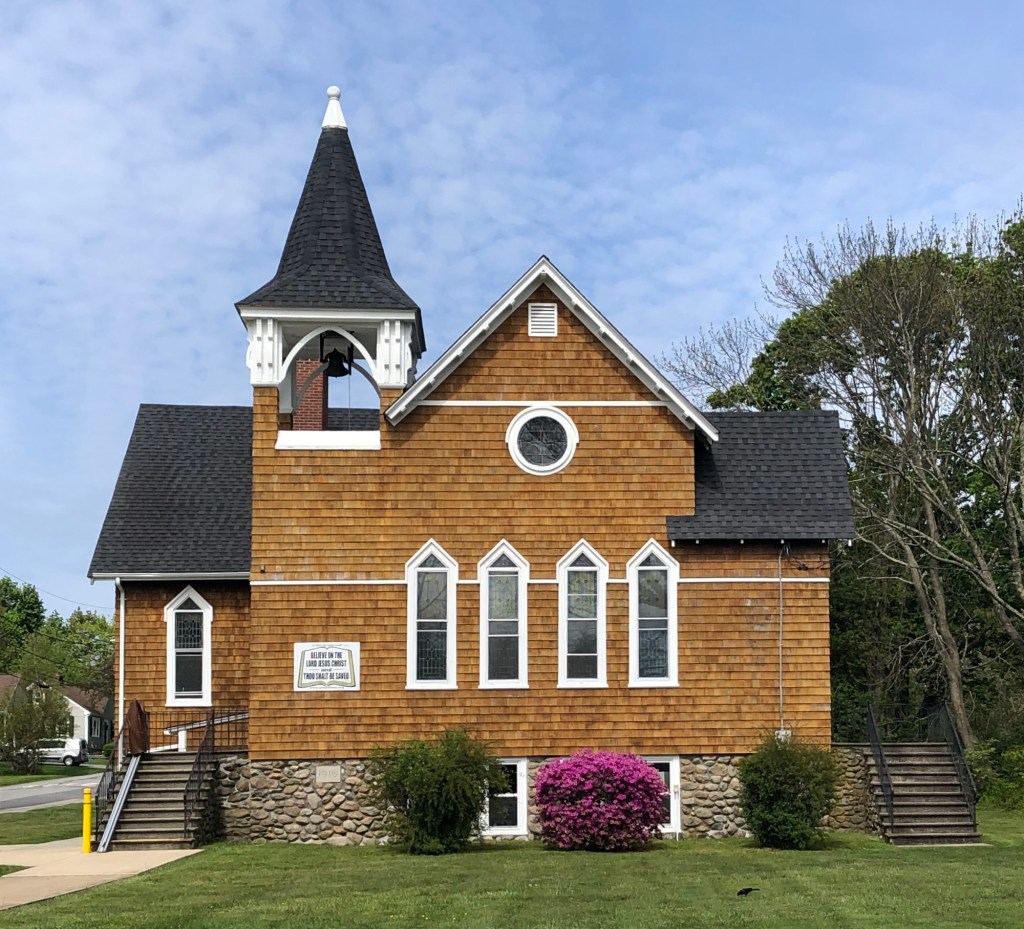
The South Swansea Union Church on Gardner’s Neck in Swansea, Massachusetts, is an excellent example of a seaside New England church that blends architectural styles in a unique composition. The church was built in 1916 years after development of the Neck began in earnest as a partnership between local congregations and the South Swansea Sunday School. The new church became a union church for multiple congregations to have a shared house of worship as well as a space for sunday school for area pupils. The building that features elements of Shingle and Neo-Gothic Revival styles, was built by William L. Hunt & Son and now houses the South Swansea Baptist Church.

Frank S. Stevens Memorial Library – Swansea Public Library // 1900

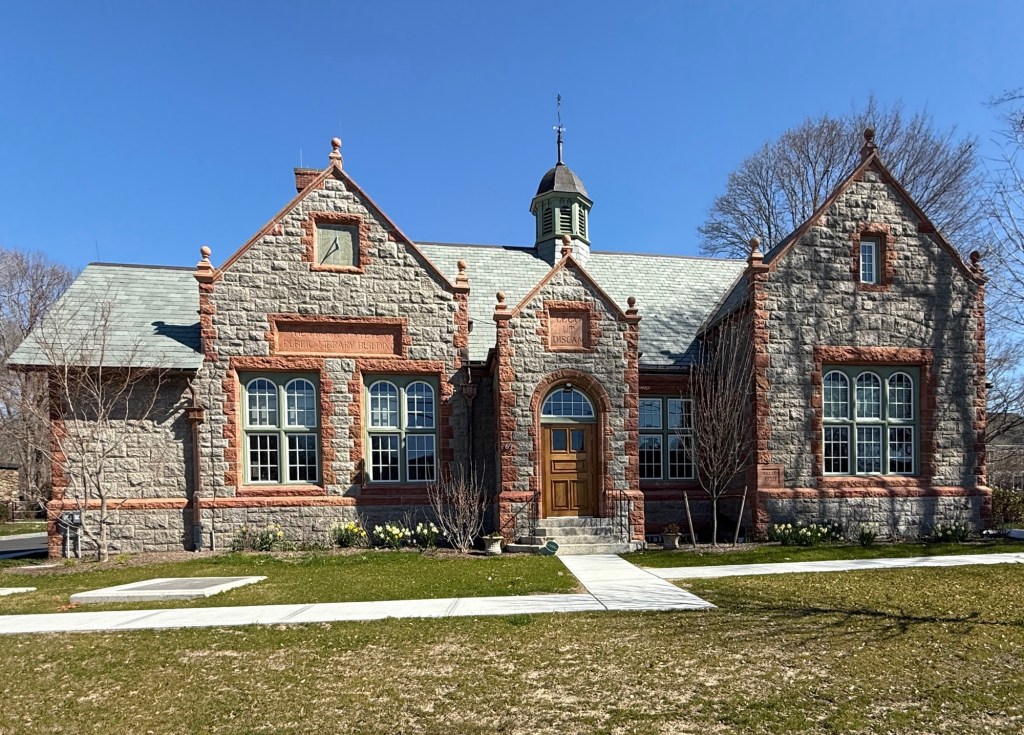
Presented to the Town of Swansea by Elizabeth Stevens as a memorial library of her late husband, Frank Shaw Stevens, the Stevens Memorial Library (also known as the Swansea Public Library) is one of the finest small-town buildings of its kind in Massachusetts. Elizabeth and her husband, Frank Stevens, lived in a large mansion nearby on Main Street and in their older years, began to bequeath their fortune to their community that they made home. The couple funded the Swansea Town Hall, a large church, and schools along with this handsome library. Built in 1900, the Swansea Library was designed by architect, Henry Vaughan, an English-born architect who designed some of the best English-inspired buildings in the United States in the late 19th and early 20th centuries. For the Stevens Memorial Library in Swansea, Vaughan drew upon Elizabethan precedence and employed the use of granite and red Potsdam sandstone to create a warm, yet stately presence on the towns Main Street. With its state roof capped by an octagonal cupola and mullioned windows in arched surrounds, the eclectic building is timeless and has been lovingly preserved by the local community, who also expanded the building to the rear, taking great care to make it less visible from the street and preserve the main building.

Swansea Town Hall // 1891

The Swansea Town Hall in Swansea, Massachusetts, is one of the most unusual and architecturally eclectic town hall buildings in New England, and was a gift to the community from a wealthy resident. Built in 1891 from plans by Boston architect, James Merrill Brown, the building is constructed of randomly laid rubblestone with brownstone trim with a massive pyrammidal slate roof and offset turret and tower containing a historic clock. The building was the gift of benefactors, Frank Shaw Stevens and Elizabeth Case Stevens, who lived down the street in the town’s largest mansion. The Stevens’ donated the building with the stipulation that the building was to be available to every and any religious society desiring to hold funeral services there and to also provide space for a public library. The town obliged. The space was outgrown and the Stevens’ would later donate the town’s public library next door and a church, that also held funeral services for the community. The building has been home to the Town Hall since 1891.

Wrentham Village Hall – Daniel Cook Store // 1853

Arguably the most recognizable and beloved building in Wrentham, Massachusetts, is this eclectic mid-19th century commercial building, known as the Wrentham Village Hall. The structure was originally constructed for Daniel A. Cook where he operated a store in the ground floor retail space and rented a meeting hall to local organizations above. The building was constructed around 1853 as a more vernacular building, but given its current appearance decades later when the ornate Stick style porches were added to the facade. While the building has served many uses over its history, the structure is suffering from some deterioration, which hopefully will not impact the rare surviving exposed porch framing and trusses, which give the building so much character.

Eben S. Draper Stable // c.1900

Located next to his Tudor Revival style mansion, Eben Sumner Draper’s stable on Adin Street in Hopedale, Massachusetts, is one of the finest examples of the type in New England. It is possibly that the stable was built before the mansion was built in 1926 for Eben Sumner Draper Jr. (1893-1959), the son of Massachusetts Governor and Draper Corporation executive, Eben Sumner Draper. Little is known about this building, which stands at the end of a drive and is accessed over an arched bridgeway. The building has its first floor in stone with half timbering above. Two rounded towers with conical roofs frame the center entry, which may have been used for horses and carriage, or for personal automobiles, of which, Mr. Draper would surely have one of the first in the state. The building has been owned by the Ledges LLC, who operated a community for developmentally disabled adults.

Narragansett Engine Company No. 3 // 1846

The Narragansett Engine Company No. 3 Station is an absolutely charming two-story building tucked away on Baker Street in Warren, Rhode Island, and is one of the oldest extant historic fire stations in New England. Built in 1846, the building features a flushboard-façade, pedimented-gable end oriented to the street, paneled double-leaf engine doors, and a rundbogenstil Palladianesque window centered on the second story. The small fire station was built to house, “Little Button”, a fire engine manufactured in Waterford, New York. This building served as a fire station well into the 20th century, and was restored decades ago by local preservationists. The building is open by appointment and houses the Warren Fire Department Museum.

William and Octavia Apthorp Mansion // 1885

This unique four-story brick townhouse on Otis Place in Beacon Hill, Boston, was built in 1885 by the architectural firm of Rotch & Tilden for Mrs. Octavia L. Apthorp and her husband, William F. Apthorp. Elevated on a tall brick basement, the exterior of the house is richly detailed with masonry decoration in what has become known as the “panel brick” style; with an elaborate brick entrance archway, paneled pilasters at the third floor, and vertical brick lintels above the windows. Over the ground floor windows near the entrance, iron grates with spear-like finials give the design a Medieval/English Queen Anne presence. William F. Apthorp was the only son of Robert Apthorp, a prominent Boston attorney and abolitionist who lived across the street at 2 Otis Place. William was a pianist and teacher at the New England Conservatory of Music and writer who married Octavia (sometimes spelled Octavie) Loir Iasigi in 1876, she was also from a well-connected Beacon Hill family.