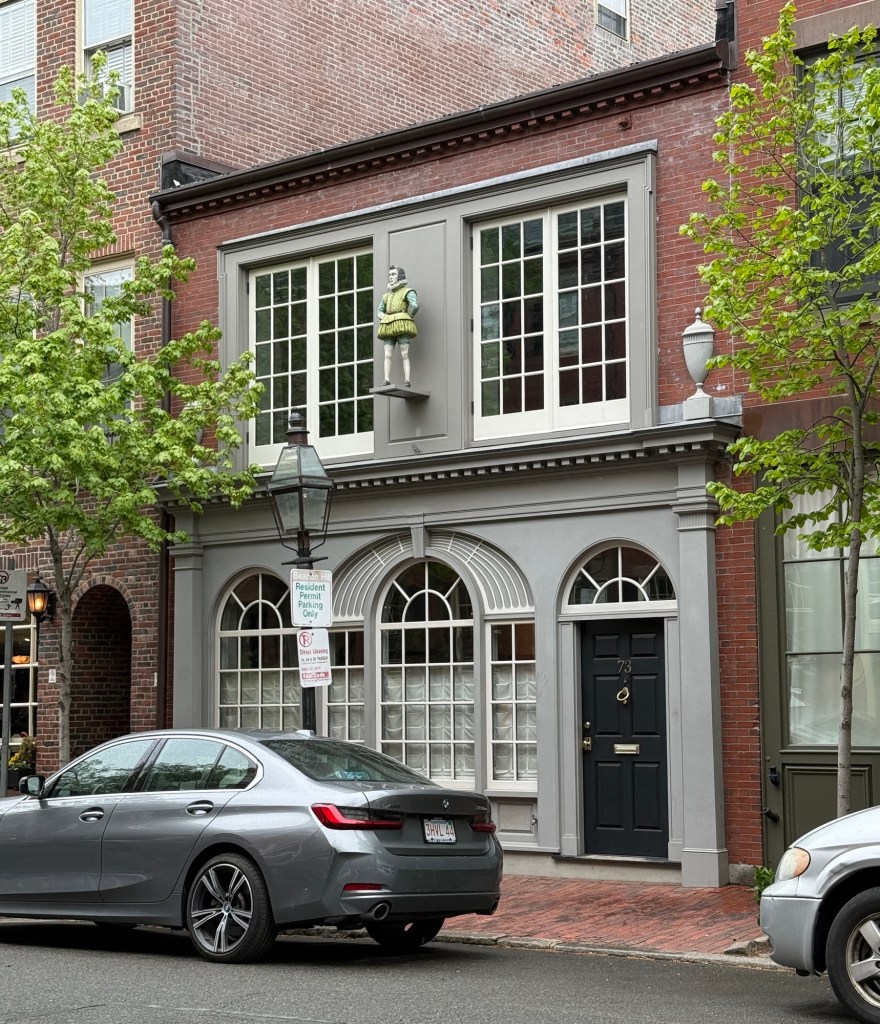
One of the many charming buildings on the Flat of Beacon Hill can be found here at 73 Chestnut Street, which has long been one of my favorites when strolling in the neighborhood. The building was constructed around 1895, replacing a wooden stable on the site, and appears to have been built as a stable and converted soon-after to commercial use. In 1917, the building was leased to tradespeople, and included a plumbing shop and cabinetmaker, but as the area gentrified after WWI, the building was purchased by Israel Sack, an antique dealer as his new store. Israel Sack was born in Lithuania and emigrated to the United States, first working as a cabinetmaker and later becoming an instrumental force in the antiques world, where he assisted with developing the private collections of Henry Ford, Henry Francis du Pont, Ima Hogg, and other leading collectors and supplying the Americana collections of many major museums. A year prior to buying and renovating this building, in 1924, Sack purchased the Robert “King” Hooper House in Marblehead, Massachusetts, and turned the 18th-century mansion into a showroom for his antiques. Israel Sack gave the building at 73 Chestnut Street its distinctive Colonial Revival facade with its urn finials and Bullfinch-eque Federal Revival storefront. Later operators of antique stores within the building include: Louis D. Prince and Stephen Score, until recently when it was converted to a residence, with the owners removing bright blue paint from the brick and restored the facade, down to the iconic wooden statuette on the second story.

