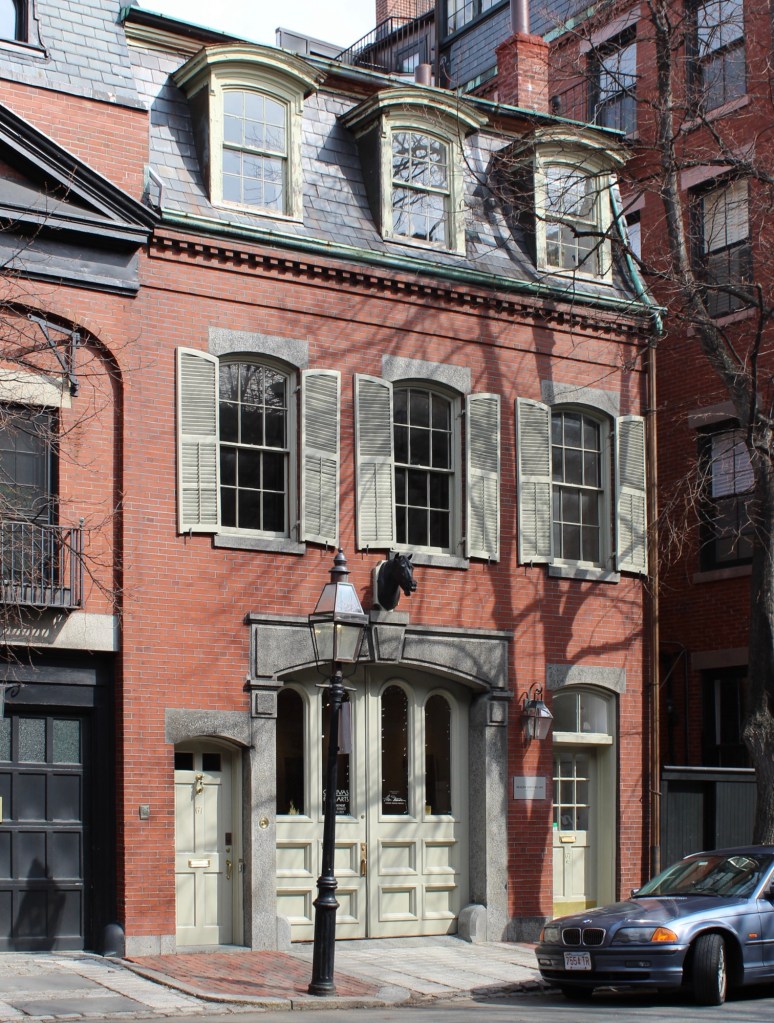
Williams-Black Stable // c.1865

This charming stable building on Chestnut Street on the Flat of Beacon Hill, Boston, was probably built around 1865 for Elijah Williams (1804-1879), a shipping merchant who also served a term on the Boston Common Council. Elijah and his wife, Mary, lived on Louisburg Square and had this stable built to hold their stable, sleigh and horses. Additionally, the stable housed a small residence inside for the stable-keeper and coachman, who would chauffer the Williams’ around and take care of their horses. In the early 20th century, the stable was owned by George Nixon Black (1842-1928), an heir to a Boston real estate fortune that came to Boston to manage the office of his father’s lumber business. He eventually became one of Boston’s largest individual taxpayers and besides his home in Boston, spent time in other homes including the late Kragsyde in Manchester-by-the-Sea and Woodlawn in Ellsworth, Maine, now a house museum. The stunning Second Empire style stable building is built of brick with granite lintels, sills, and surrounding the carriage doorway, over which is a mounted statuary of a horse head as a nod to the building’s original use.
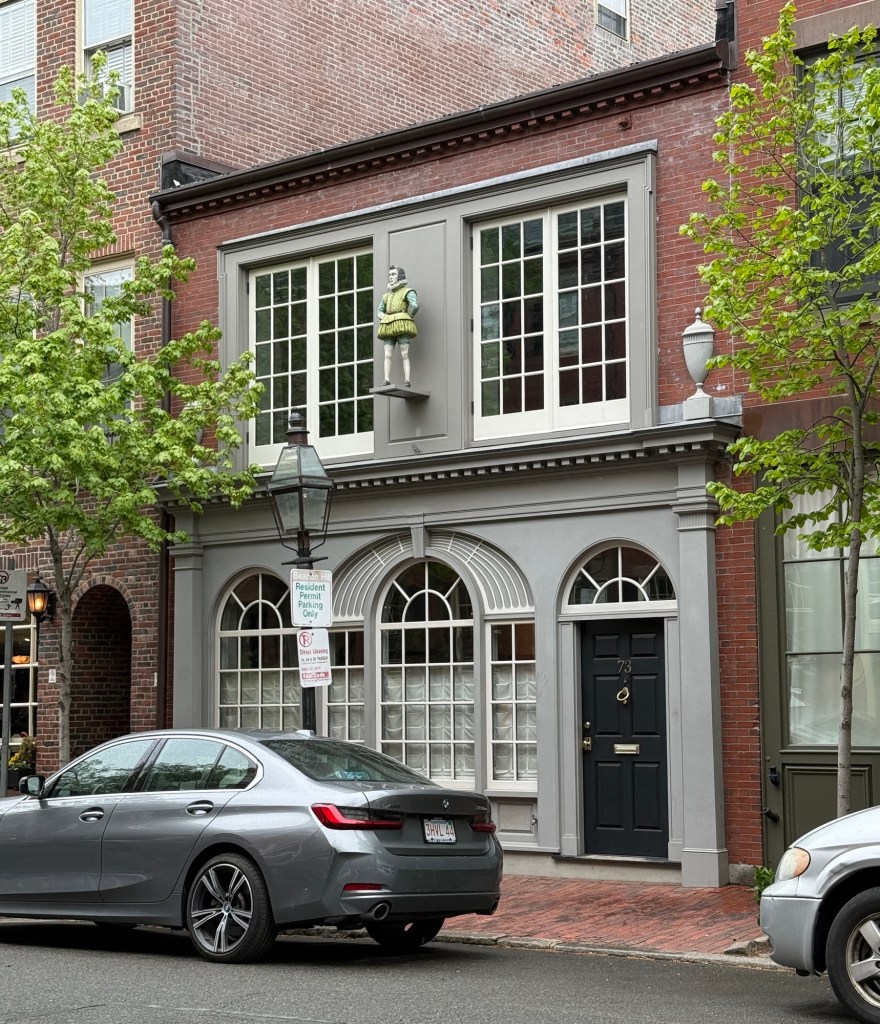
Sack-Prince-Score Antique Shop // c.1895

One of the many charming buildings on the Flat of Beacon Hill can be found here at 73 Chestnut Street, which has long been one of my favorites when strolling in the neighborhood. The building was constructed around 1895, replacing a wooden stable on the site, and appears to have been built as a stable and converted soon-after to commercial use. In 1917, the building was leased to tradespeople, and included a plumbing shop and cabinetmaker, but as the area gentrified after WWI, the building was purchased by Israel Sack, an antique dealer as his new store. Israel Sack was born in Lithuania and emigrated to the United States, first working as a cabinetmaker and later becoming an instrumental force in the antiques world, where he assisted with developing the private collections of Henry FordHenry Francis du PontIma Hogg, and other leading collectors and supplying the Americana collections of many major museums. A year prior to buying and renovating this building, in 1924, Sack purchased the Robert “King” Hooper House in Marblehead, Massachusetts, and turned the 18th-century mansion into a showroom for his antiques. Israel Sack gave the building at 73 Chestnut Street its distinctive Colonial Revival facade with its urn finials and Bullfinch-eque Federal Revival storefront. Later operators of antique stores within the building include: Louis D. Prince and Stephen Score, until recently when it was converted to a residence, with the owners removing bright blue paint from the brick and restored the facade, down to the iconic wooden statuette on the second story.

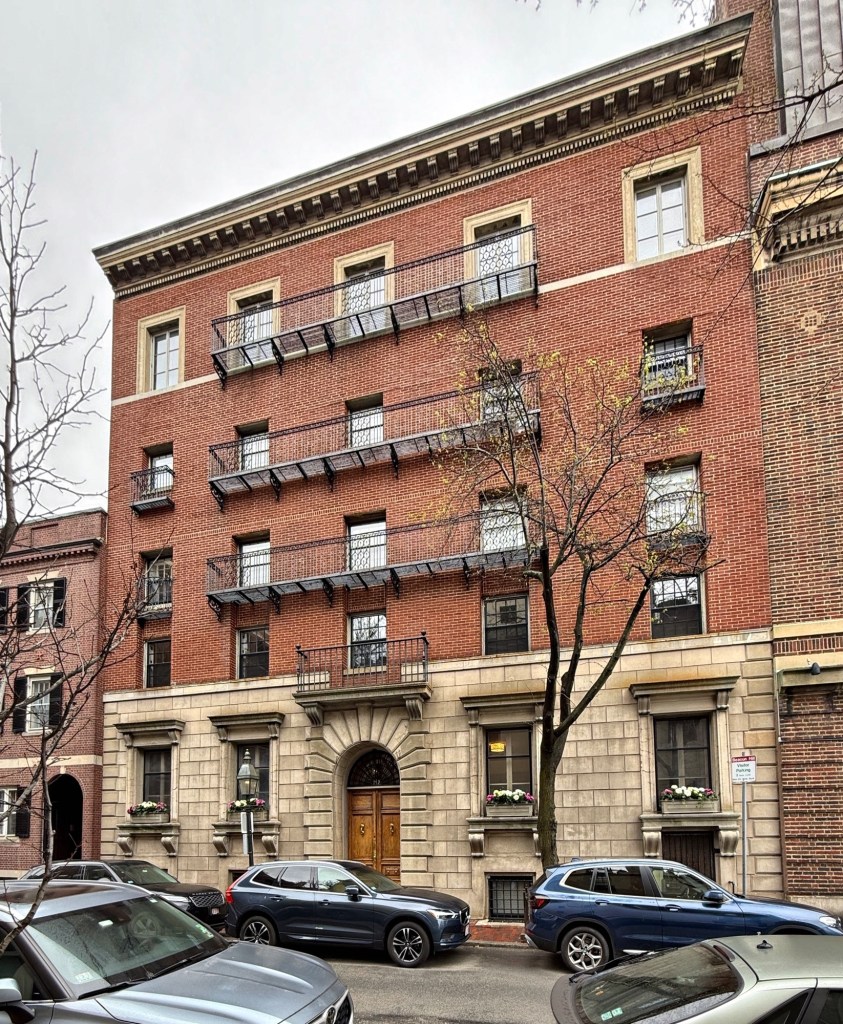
Henry Forbes Bigelow House // 1916

This massive five-story, five-bay building at 142 Chestnut Street on the Flat of Beacon Hill is today, an 11-unit condominium building, but it was originally built as a single-family home, designed by a prominent Boston architect as his own residence. Henry Forbes Bigelow (1867-1929) was born in Clinton, Massachusetts and graduated from the Massachusetts Institute of Technology in 1888. He was hired by the firm of Winslow & Wetherill and soon became a partner of the same firm, which changed its name to Winslow, Wetherill and Bigelow. The firm designed many commercial buildings, hotels, stately mansions, and academic buildings in the New England area. Henry F. Bigelow purchased a two-story stable and cleared the site to erect his home in 1915-1916. This building remained his primary residence until his death in 1929. After his death, the Bigelow heirs sold the Chestnut Street mansion to Bernard Brooker, President and Treasurer of the Building Finishing Corporation, a real estate development company, who converted the building into apartments, which were later converted again into the 11 condominium units. The handsome structure could be classified as Renaissance Revival in style with its cubic form, recessed central entrance, cornice-like window headers, limestone base and entry, iron balconies, and corbeled cornice. The building was designed with an enclosed courtyard with fountains, which today, provide a private space for residents.

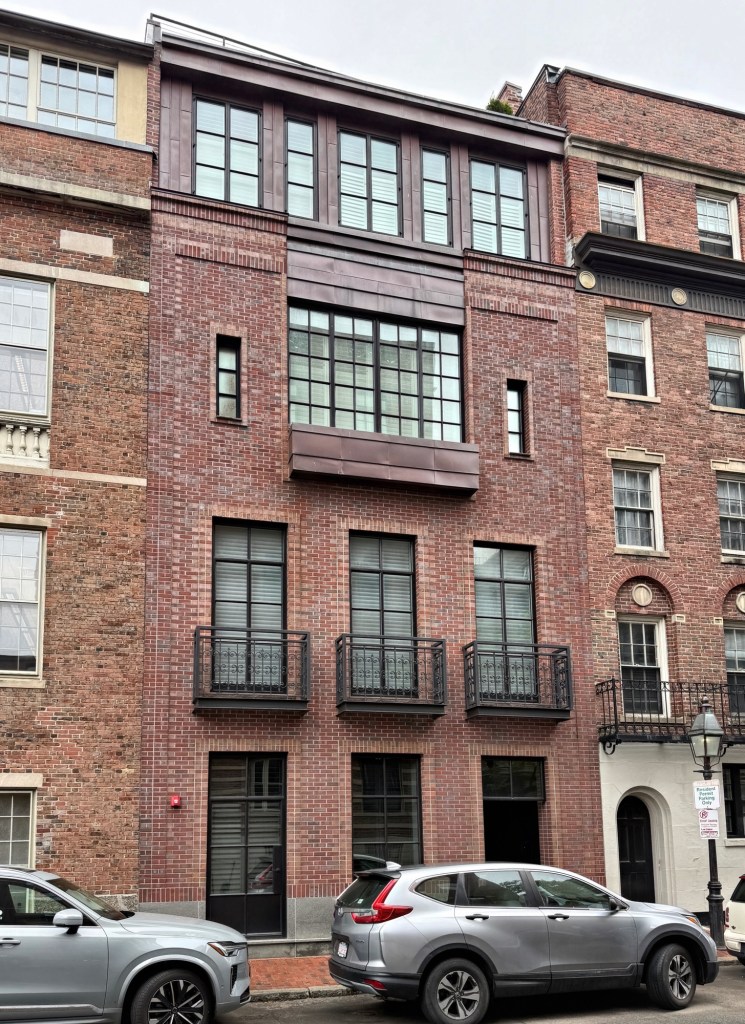
Chestnut Street Townhouse // 2016

It is uncommon to see new construction in Boston’s historic Beacon Hill, but when it happens, hundreds of eyes closely scrutinize and analyze the design to belong in one of America’s most coveted neighborhoods. The rare opportunity for infill construction occurred on this site on Chestnut Street. An 1860s stable building that was later converted into a residence and art studio in the 1920s as Beacon Hill Flat gentrified as an artist enclave, was listed for sale in 2013. The townhouse featured leaded-glass windows and Tudor elements at the interior and on its rear facade and was purchased by a developer who, after inspection, noted structural deficiencies in the building. After inspections by the City and a request to the Beacon Hill Architectural Commission, it was approved for demolition, but the replacement design would be scrutinized. Hacin, architects, brought forward plans for a new townhouse, which employed similar materials, massing, and fenestration typical for this area of Beacon Hill, but with contemporary finishes that blends old with new in a way that the new structure does not stand out nor detract from the surrounding streetscape. Through hearings, details like the window types and color of the brick were analyzed to slightly deviate from the existing fabric of the neighborhood, distinguishing the new construction as contemporary. What do you think of this new townhouse on the Flat of Beacon Hill?

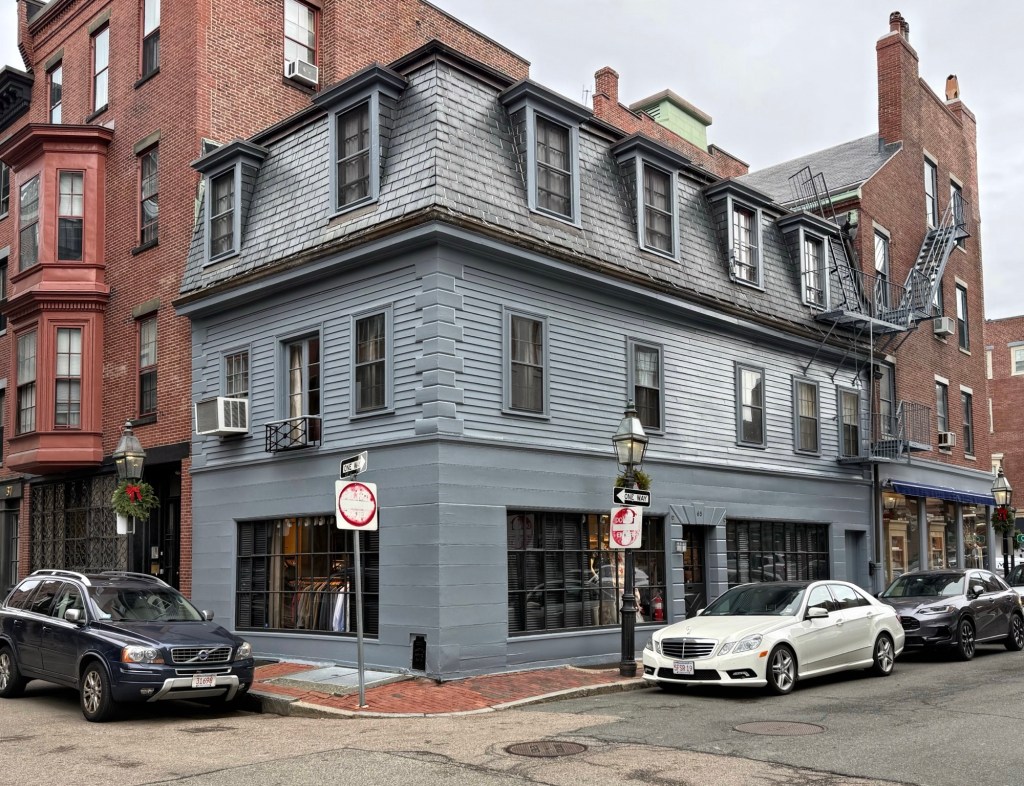
Carpenter’s Shop – Fishelson House and Store // c.1860

A rare extant wood-frame building in Beacon Hill, this Second Empire style building at the corner of Chestnut and River streets is one of the neighborhood’s most charming. It is likely that some of the wood-frame structure was originally a rear ell to the 1830s Greek Revival house it adjoins at 34 Charles Street. By the 1860s, the building was renovated for use as a carpenter’s shop, with the mansard roof, quoins, and loft door added at that time. City records indicate that the house on Charles Street housed tradesmen and it was listed as “Temporary Home”, the predecessor to the city Overseers of the Poor Temporary Home, a charitable organization providing lodging and food to those in need. From the late 1920s, the property was owned by Max and Rebecca Fishelson, who resided in and operated their florist shop here. In 1936, the former carpenter’s shop was renovated to contain a retail store on the ground floor with a two-family dwelling above, one for the Fishelson’s and one for their daughter. for a renovation of the wood frame annex on
Chestnut Street, which involved changing the occupancy of that section from a store and carpenter shop to a store and two-family dwelling: one for the Fishelsons and one for their daughter.