Garcelon Stable – Byron Street Hall // c.1850

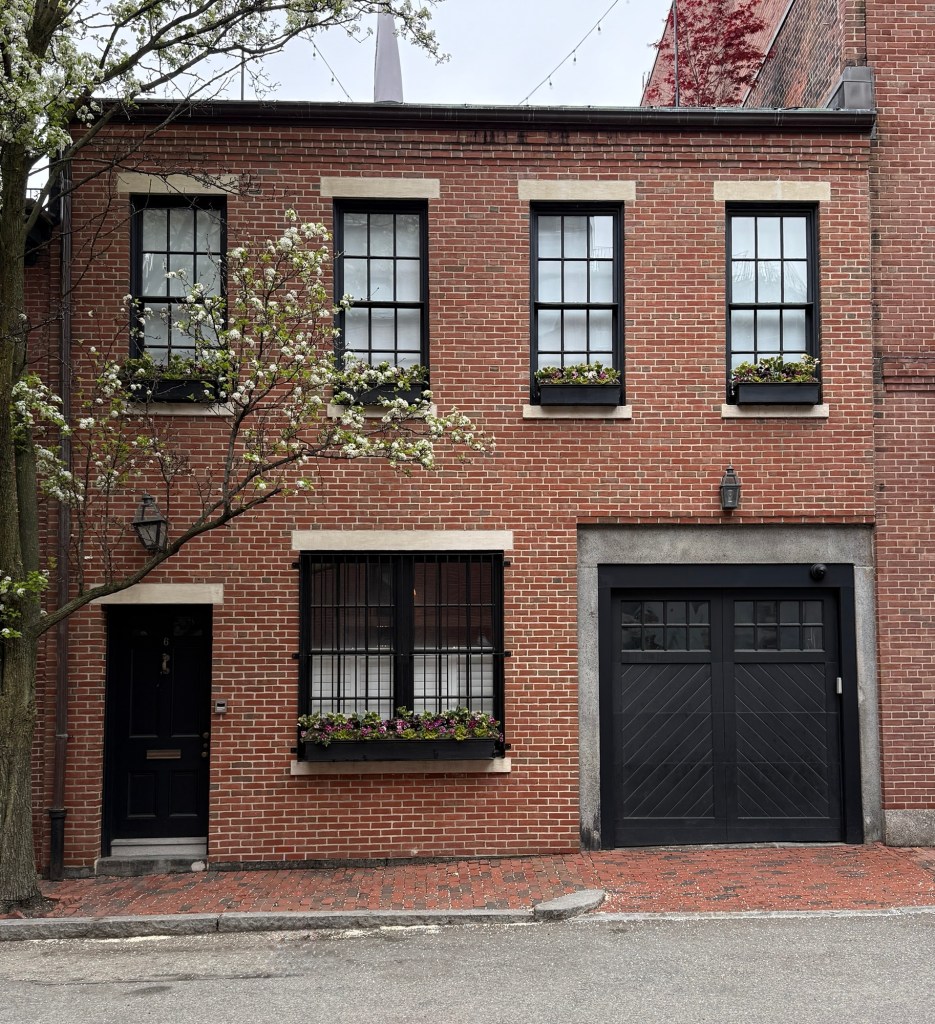
This handsome vernacular building on Byron Street on the Flat of Beacon Hill is one of a row of 19th century stables converted to residences. The building typifies the scale and appearance of many private stables in Boston of teh period and is built of brick with stone lintels over the openings. Due to its form and lack of ornamentation and sans mansard roof, the stable was likely built in the mid-19th century for an owner who resided in a mansion along Beacon Street. By 1874, the stable was run by Alsom Garcelon (1815-1881), a stable keeper who was born in New Brunswick, Canada and arrived in Boston by 1860 quickly making a business operating stables for wealthy Boston residents. He ran at least a half-dozen stables on the Flat of Beacon Hill and became a fixture in the community until his death in 1881. The building operated as a stable and later as a blacksmith shop until 1925, when owner, Andrew N. Winslow, bought the building and hired the firm of Putnam & Cox, to convert the building into a clubhouse. The site became home to the Byron Street Hall, a small public hall. It was later known as the Byron Street House and was connected to the Community Church in Boston. In 1940, the former stable was converted to the Bishop-Lee School, founded by stage actress Emily Perry Bishop, as a school for speech and acting. The school relocated by 1960, and after successive business uses, the building was converted to a residence, which it has remained ever-since.


Thayer Stable – Toy Theatre – Richard Platt House // c.1865

This charming building at 16 Lime Street on the Flat of Beacon Hill, Boston, has seen a variety of uses from carpentry shop and stable, to working theater, and finally to a residence. Let’s dive in! 

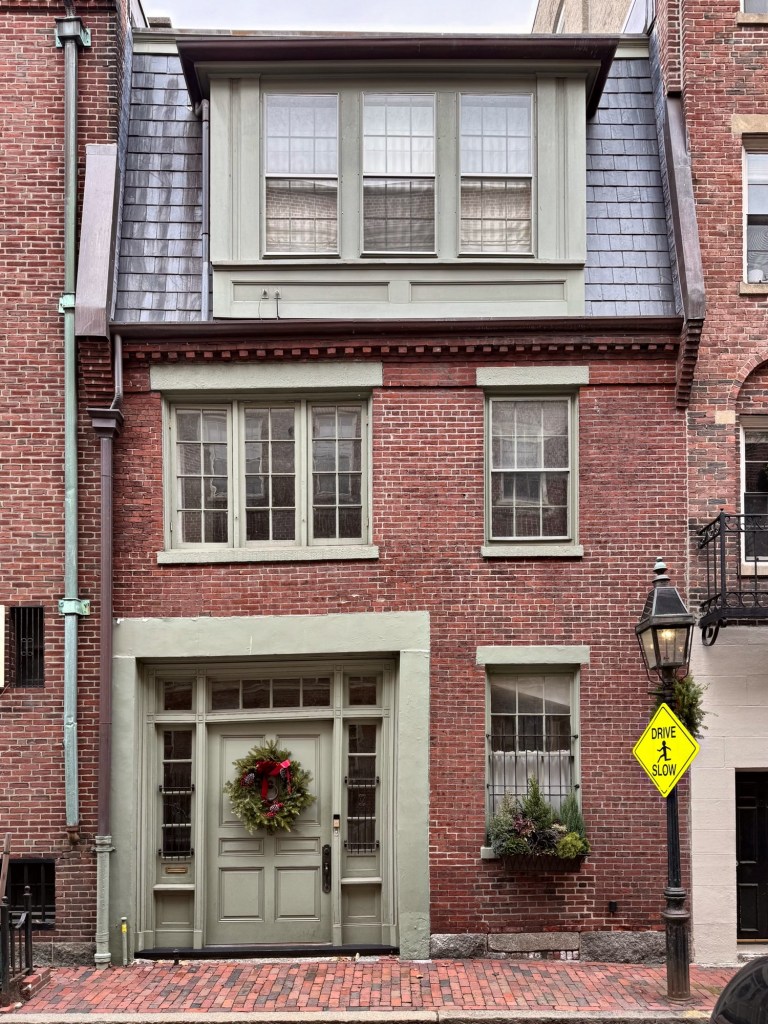
The early ownership is murky, but by the 1870s, this two-story with mansard roof stable was owned by a “Nathan Thayer”, either Nathaniel Thayer Jr. or Nathaniel Thayer III of Lancaster, who also retained city residences in Boston. The building features two portals on the first-floor that originated as doorways, the wider on the left for horses and a carriage, and the smaller for access to residential space for the stable-keeper and likely a hay loft over the carriage door.  After the turn of the 20th century, the Flat of Beacon Hill gentrified into an exclusive enclave of residences, antiques shops, and artist studios and the former Thayer Stable was purchased by Frederick Oakes Houghton, an agent for transatlantic steamers. Houghton rented the building to an amateur theatrical group who organized as the Toy Theatre, that was founded in 1911 to present plays that had not been presented professionally in Boston. The founding group consisted of the usual, artistic, high society types, and had seating for 129 with no standing room. Houghton hired architect, Harold Symmes Graves, to convert the building into its theater use, enclosing the former carriage door and hay loft with multi-light windows, and creating a larger space inside for productions. The Toy Theatre did very well (due in part to its membership of upper-class Boston residents) and a new, purpose-built Toy Theatre was built in the Back Bay by 1914. In 1917, the former stable and theatre was purchased by Richard B. Platt, a musician and music teacher, and converted to a residence, a use that has remained ever since. 

Carpenter’s Shop – Fishelson House and Store // c.1860

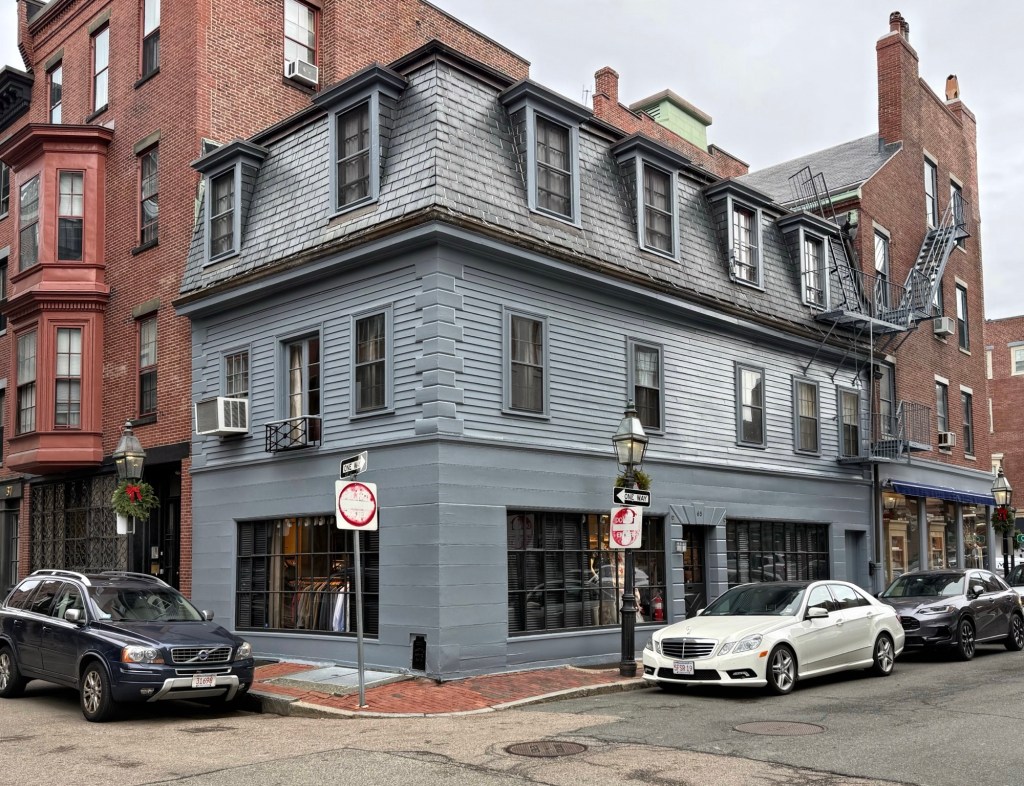
A rare extant wood-frame building in Beacon Hill, this Second Empire style building at the corner of Chestnut and River streets is one of the neighborhood’s most charming. It is likely that some of the wood-frame structure was originally a rear ell to the 1830s Greek Revival house it adjoins at 34 Charles Street. By the 1860s, the building was renovated for use as a carpenter’s shop, with the mansard roof, quoins, and loft door added at that time. City records indicate that the house on Charles Street housed tradesmen and it was listed as “Temporary Home”, the predecessor to the city Overseers of the Poor Temporary Home, a charitable organization providing lodging and food to those in need. From the late 1920s, the property was owned by Max and Rebecca Fishelson, who resided in and operated their florist shop here. In 1936, the former carpenter’s shop was renovated to contain a retail store on the ground floor with a two-family dwelling above, one for the Fishelson’s and one for their daughter. for a renovation of the wood frame annex on
Chestnut Street, which involved changing the occupancy of that section from a store and carpenter shop to a store and two-family dwelling: one for the Fishelsons and one for their daughter.

Bend O’ the Lane House // 1740

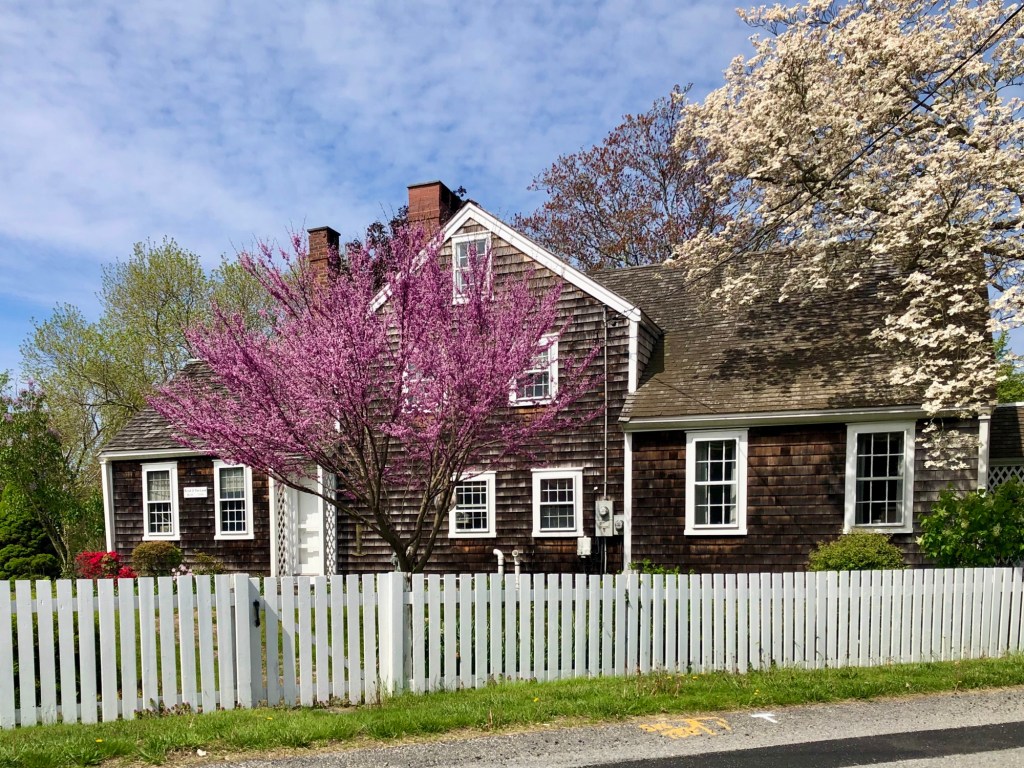
Located at a bend in the road on Cedar Avenue (formerly Cedar Lane) in Swansea, Massachusetts, the appropriately named ‘Bend O’ the Lane’ house is a charming Georgian-era farmhouse. The house was built in 1740 by Harlow Luther, who farmed the land here with his family. By the 19th century, owners included Victor Gardner, of the Gardner Family that largely settled on Gardner’s Neck in Swansea, and later by Philander Wilbur, a prominent local farmer that raised cattle and sold milk to area residents. The vernacular, Georgian farmhouse is of a unique and unpretentious form that shows the evolution of construction over time as families grew.

Unitarian Church of Sharon // 1842

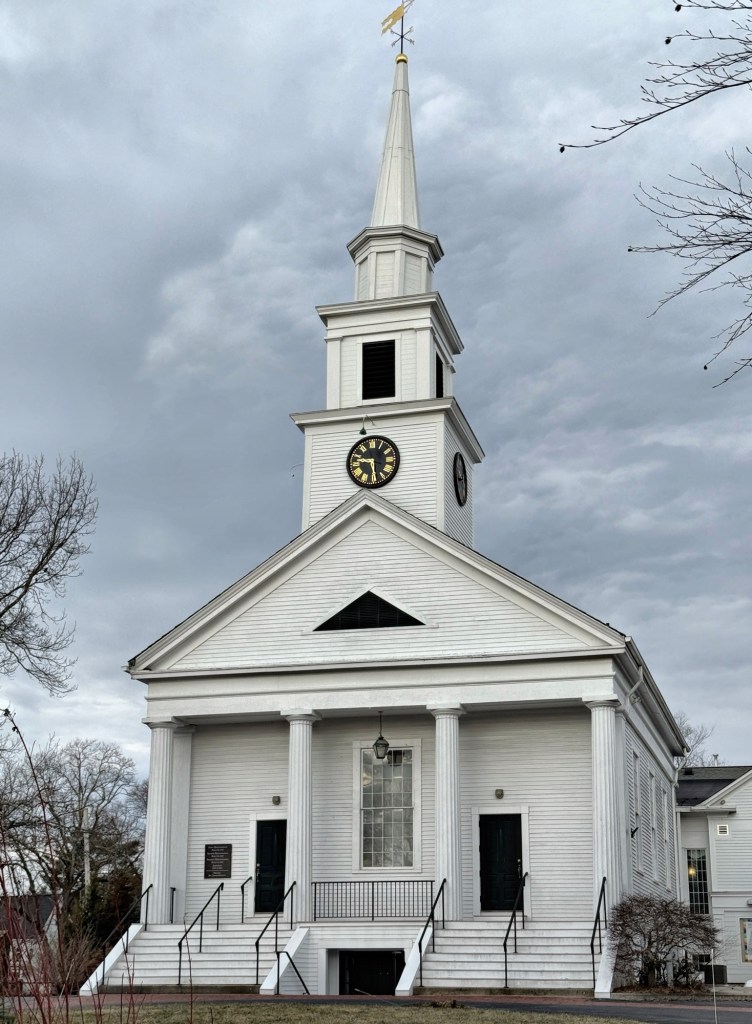
Sharon, Massachusetts, is a small suburban community south of Boston that is lesser known than its neighbors, but the community has some great old buildings! The Town of Sharon was originally part of a 1637 land grant given by the Dorchester Proprietors to encourage new settlement in areas southward. In 1726, the lands of the present towns of Sharon, Canton and Stoughton, were separated from Dorchester and called the Stoughton Territory. Settlers in present-day Sharon found it difficult to attend mandated church services centered around present-day Stoughton and petitioned the General Court in 1739 to set off as a separate precinct. The request was granted and the Second Precinct was established, and incorporated as Stoughtonham in 1765, changing its name in 1783 to Sharon, named after the Sharon Plain in Palestine. In 1813, the local congregationalists split due to theological differences and formed a Unitarian church. The Congregationalists moved and built a new church and the Unitarians remained on this site, but the larger building was too large for their needs. They demolished the original building and constructed this church in 1842, which somewhat resembles the 1839 Congregational Church of Sharon a stone’s throw away. Like its neighbor, the Unitarian Church too retains an original bell cast by the The Revere Copper Company of nearby Canton.

Little Red Shop // c. 1843

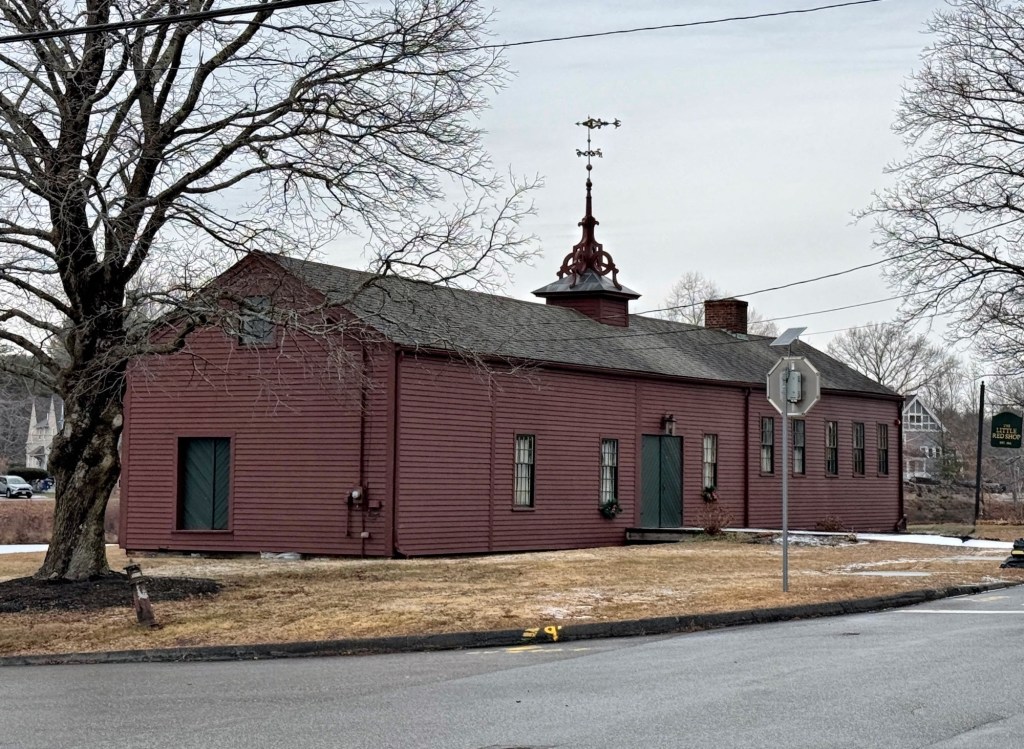
The area that is now the town of Hopedale, Massachusetts, was originally known simply as the “Dale,” a small, secluded agricultural area between Mendon and Milford, that beginning in 1842, was home to a communal Christian society called “Hopedale Community.” The communal agricultural and manufacturing society that eventually acquired over 600 acres  and numbered more than 300 members at its peak before ultimately failing in 1856 due to socioeconomic inequalities and bankruptcy resulting from conflicts between its ideology and business organization.  In that same year, the assets of Hopedale Community were purchased by the E.D. and G. Draper Company, led by Ebenezer and George Draper, who were the operators of Hopedale Community’s most successful manufacturing enterprise, textile machinery manufacturing. The Drapers had previously shared space in this old machine shop, which dates to around 1843, alongside fellow community workers who made hat and shoe boxes, sawed lumber, and ran an iron forge. As the Drapers founded the Draper Corporation, which became the largest maker of power looms for the textile industry in the United States, they never lost sight of their beginnings and preserved this building, which became known as the Little Red Shop. To preserve the building, it was moved four times in its life, to allow for the growth of the company factories, eventually being placed in its current location on town parkland, where it now houses a collection of Draper textile machinery as the Little Red Shop Museum. The Little Red Stop is just one story with nine bays and is vernacular in style, with its notable decorative feature being the metal weathervane mounted at the roof over an elaborate saw-cut wooden base. 

John Gladding House // c.1825

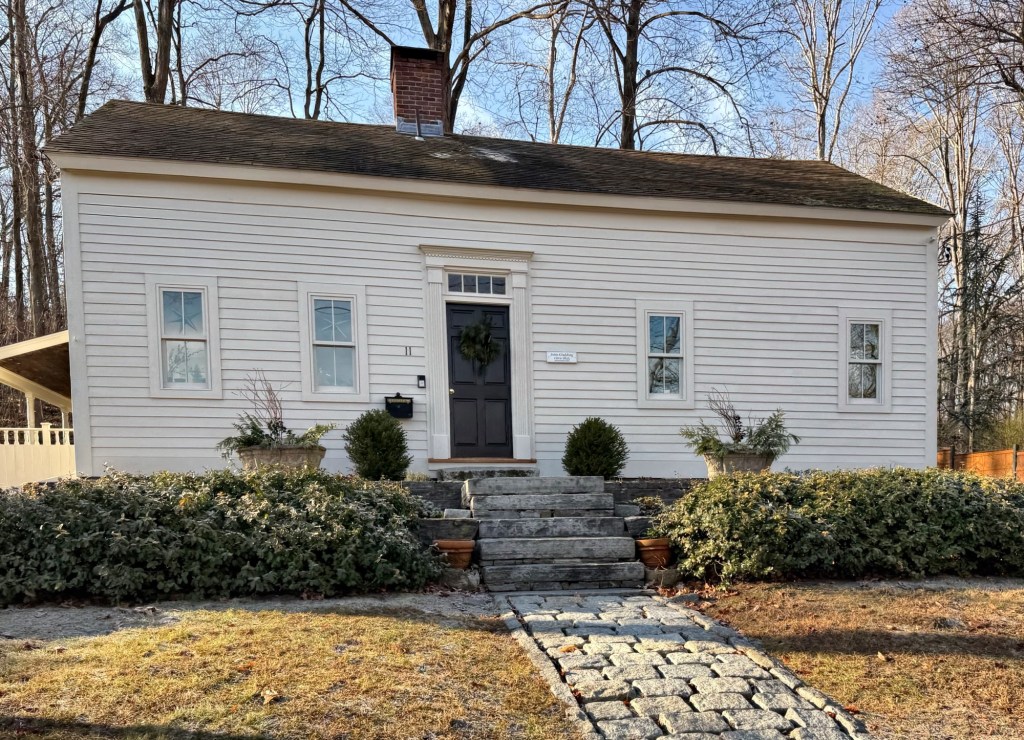
This vernacular, Federal period house on Union Street in Deep River, Connecticut, was built around 1825 for (and likely by) John Gladding. John worked in town as a joiner, a historic carpenter/woodworker, who either built houses or ships in the nearby Connecticut River. The Gladding House was likely originally built as a half cape, with a side hall entry and the two window bays to its left. As the family grew, the house was probably added onto to the right of the entry with the irregularly spaced bays. Houses like these that modestly grow and adapt to modernizations over time are what makes many New England villages great.

Mellen Law Office // c.1829

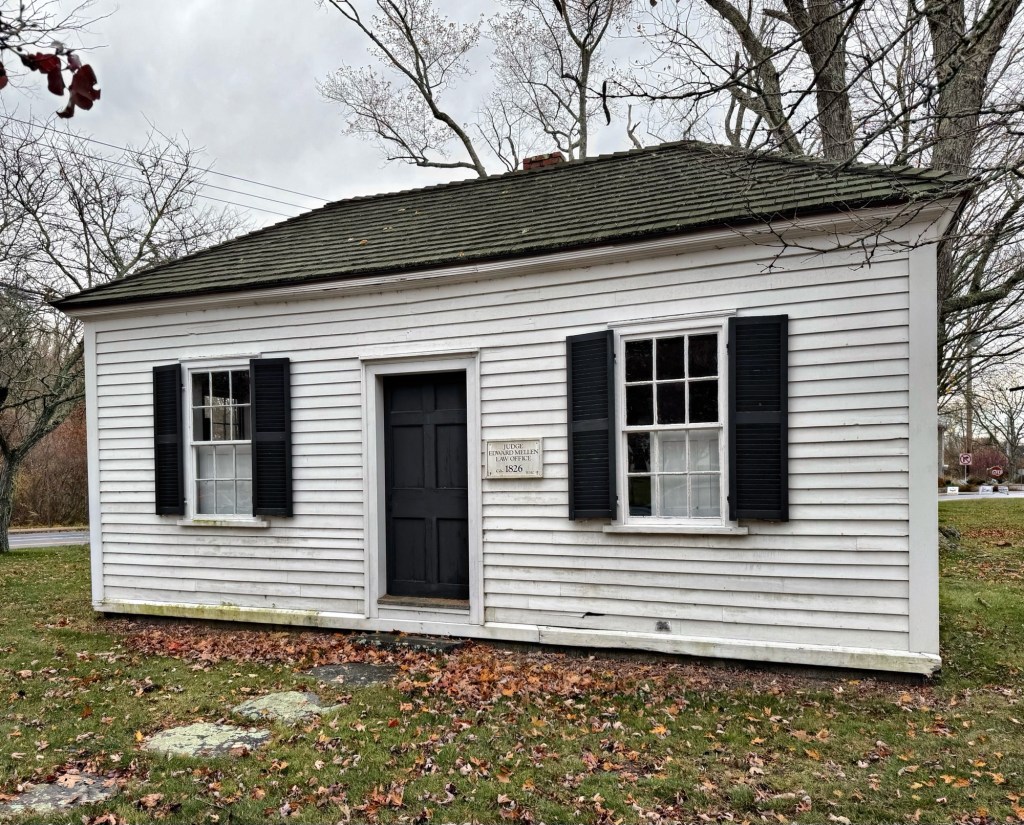
Samuel H. Mann (1801-1838), a lawyer, acquired the Dr. Ebenezer Ames House on Cochituate Road in 1829, only a month before his marriage to Isabella Ross. At about that time, Mann built this small law office across the road from his home, where he would practice law. It is not clear why, but within a year, Mann sold the house and this law office to Judge Edward Mellen (1802-1875), who was appointed Chief Justice of the Massachusetts Court of Common Pleas in 1855 and practiced law in Wayland until his death in 1875. After his death, the law office sat largely vacant until during World War II, when a newsletter to soldiers, The Village Bugle, was published here. After this, a couple of businesses used the former law office in the 1950s and 1960s until the owner donated the lot to the Town of Wayland in 1971. The diminutive building is a charming, and well-preserved example of a vernacular, Federal period professional office building that mimics the form and materials of the Ames House to which it was long affiliated with.

Reeves-Goodell House // c.1816

Built on a hill on Concord Road in Wayland, Massachusetts, the Reeves-Goodell House is a beautiful vernacular Federal period residence owned and occupied by a local builder and architect. The house was constructed by Henry Reeves (1789-1878), a local carpenter and descendant of Jacob Reeves (1720-1794) a tavern-keeper in town. In the 1920s, this property became the home of Edwin B. Goodell, Jr. (1893-1971), a prominent local architect who designed area houses before becoming a partner in the firm Andrews, Jones, Biscoe and Goodell of Boston. It was Goodell who added on the rear, three-bay addition to the residence, which blends in with the 1810s aesthetic. Interestingly, Edwin Goodell lived in this historic, vernacular house but designed some of the earliest International style modernist homes in New England.

Bow Old Town Hall // 1847

The town of Bow, New Hampshire, was incorporated in 1727 and named after its location along a bend, or “bow” in the Merrimack River at its easternmost boundary. Early town meetings were held in the town meetinghouse of 1770, and the second meetinghouse of 1801, until the separation of church and state became official in New Hampshire in 1819, with the passage of the Toleration Act. Until 1819, residents in New Hampshire conducted town business and religious services in the same building, the town meetinghouse. However, as towns diversified and religious freedom prospered, citizens grew less comfortable supporting one particular religious denomination with taxpayer money. Bow eventually secured funding to erect its first purpose-built town hall in 1847, this vernacular, two-story building on Bow Center Road. The small building served as the town hall for over 100 years, when in 1957, a growing suburban population required a larger, more modern town hall. The old Town Hall of Bow now serves as a meeting place for Town organizations and is rented out to Town residents for events.

Abraham Wilder House // 1827

This exceptional vernacular example of a brick, Federal period house in Bolton, Massachusetts, sits on the town’s Main Street in the East Bolton village. Built in 1827, this house with attached wooden ell was the home to Abraham Wilder, a local blacksmith who followed his father’s footsteps in his professional pursuits. The house is two-stories with historic six-over-nine sash windows. The main center entry, rather than displaying a common elliptical fanlight for the period, is surrounded by trim boards, four-pane sidelights and a vertical-board door. Abraham’s blacksmith shop was once located next-door but was moved and reassembled in Old Sturbridge Village in 1957.

Mason C. Richardson House // c.1839

The Stone Village of Chester, Vermont, is said to be the largest collection of stone buildings in the state. Built around 1839, the Mason C. Richardson House is one of a few dozen “snecked ashlar” buildings in the region, where rubblestone is laid up with mortar using small long stones called “snecks” to tie an outer and an inner wall together. The construction method is said to have been brought to the area by masons from Scotland and Ireland which is known there as ‘Celtic Bond’. Oral tradition state that Scottish masons from Canada introduced the technique to local masons while erecting a mill in nearby Cavendish in 1832. Local Chester resident, Dr. Ptolemy Edson became such a fan of the building that in 1834, he had his home, the first stone building in Chester, built in this method. He then would influence the rest of the North Village of Chester, where many of his neighbors, as well as the church and schoolhouse, built their structures in snecked ashlar. Designed in the Federal style, the Richardson House is a vernacular, five-bay, two-story residence with central entrance and arched fanlight transom over the front door. Mason Richardson (1811-1881) was a merchant who lived here with his family while operating a store nearby.

Yosemite Engine House // 1879

The Yosemite Engine House on Route 103 in Chester, Vermont, is a unique and iconic architectural landmark that has stood for almost 150 years. Chester’s second fire district was established in 1871, following a number of large fires in the village, prompting funding from businessmen and the town for a new engine house. Built in 1879, the Yosemite Engine house was built as a fire station for the village defined by its rectangular massing, first-floor engine hall, second-floor meeting hall, and twin bell and hose-drying towers that are capped by mansard roofs. The station originally housed horse-drawn and human-operated fire engines until the 1920s, when the doors were enlarged for the first engine-powered fire truck. The fire district, a separate taxing entity from the town since its creation, was dissolved in 1967, and its properties, including this iconic fire station, reverted to the town. It was eventually sold into private hands, and was operated for a short time as a museum by the local historical society before being reacquired by the town in 2018. The building is awaiting a full restoration.


Comfort C. Dresser House // 1799

Built just before the turn of the 19th century, this handsome five-bay vernacular Federal period house is located on the charming Main Street of Chester, Vermont, and is one of the oldest extant houses in the village. The residence was built in 1799 by Comfort Carpenter Dresser (1777-1856), who with his family, moved from Bridgewater, Massachusetts, to the town of Chester, where he found work as a carpenter and housewright, a fitting profession due to his middle name. The family resided here for nearly 30 years until they moved to New Hampshire. The beautiful home, painted a bright white sometime in the 20th century, features a front door with sidelights, 12-over-12 sash windows, and a symmetrical facade, common for the style. 

Simonsville Schoolhouse // 1856

One-room schoolhouses like this example in the Simonsville area of Andover, Vermont, have been commonplace throughout rural portions of New England where children of most ages would share the classroom and be taught everything from basic spelling to math. The Simonsville schoolhouse was built in 1856 and is a typical example of a vernacular one-room schoolhouse in rural New England, with no frills or ornament, just a house of learning. The Simonsville Schoolhouse was converted to a residence sometime in the latter half of the 20th century and has been renovated, keeping the basic form and interior floorboards from the 1850s. The school-turned-home is currently (2025) listed for sale.