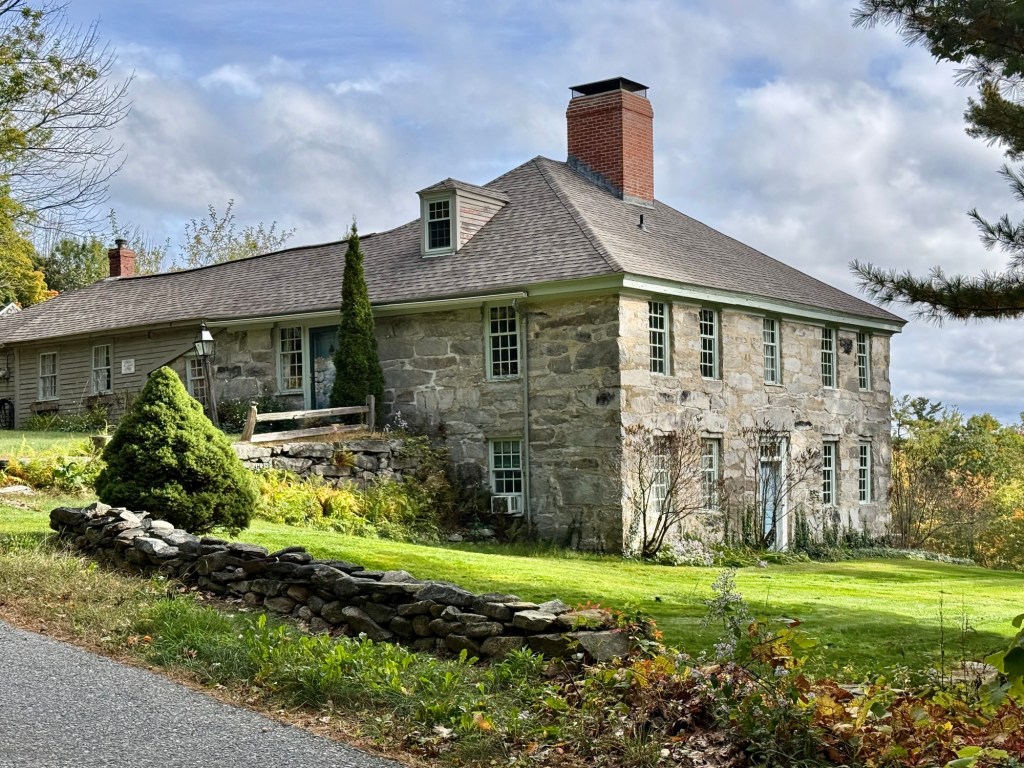
Soon after the town of Princeton, Massachusetts, incorporated in 1759, residents of other towns in the central part of the state flocked to the area to establish homesteads and farm the land. One of the new residents of Princeton at this period was Jonas Beaman (1750-1804) who settled here from Lancaster and built one of the most significant and unique farmhouses in town. Jonas built the stone house around 1780 from stones harvested near Mount Wachusett, and his family maintained the farm here. The basement of the house for a time served as a district school, following a fire that destroyed the previous school building. The Late-Georgian style residence features a hipped roof with center chimney, a center entry with transom, six-over-nine sash windows, and stunning site at the edge of a small pond.
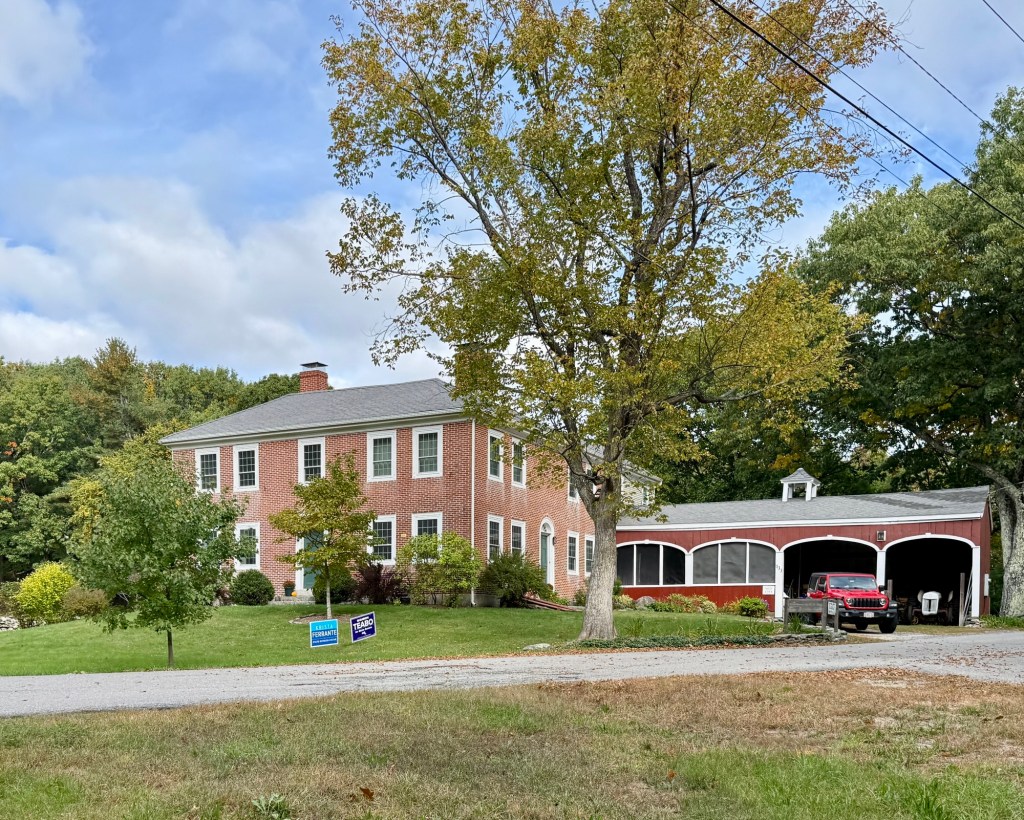
In the summer of 1793, the quiet hill town of Princeton, Massachusetts, was shaken by a brutal murder that people were still discussing long afterward. Samuel Frost (1765-1793) was born in Princeton as one of three children. At 14, Samuel’s mother died after reportedly falling ill, but he blamed his father, who reportedly abused his mother for his entire childhood. On September 23, 1783, at the age of 18, Frost murdered his father while they were digging a ditch. Frost knocked his father over, and repeatedly stabbed him in the head with a handspike until his brains were exposed. Samuel Frost was tried in court for murdering his father but was acquitted on the grounds of insanity. Years later, Captain Elisha Allen (1744-1793), a Revolutionary War Veteran and farmer in Princeton, became the guardian of Samuel Frost, providing him housing and a job on his property. On July 16, 1793, during an argument in a field on his employer’s farm, Samuel Frost killed Captain Elisha Allen. In the trial, it was discovered that Frost struck Mr. Allen more than fifteen times with the blade of a hoe and left his body lying on the ground. This time there was no acquittal. At the trial, he was found sane and sentenced to death. He was executed on a hill in Worcester on October 31, 1793. Executions then drew huge crowds and a carnival-like atmosphere. Allen’s grave in Princeton’s old burying ground records that he was “foully murdered by Samuel Frost.” The old farm in Princeton was purchased a year after Elisha’s death by Nehemiah Parker, who built this brick Federal-era farmhouse in 1794. While the home is not tied directly to Captain Elisha Allen, it was upon the fields that he brutally lost his life and is forever tied to the property here.
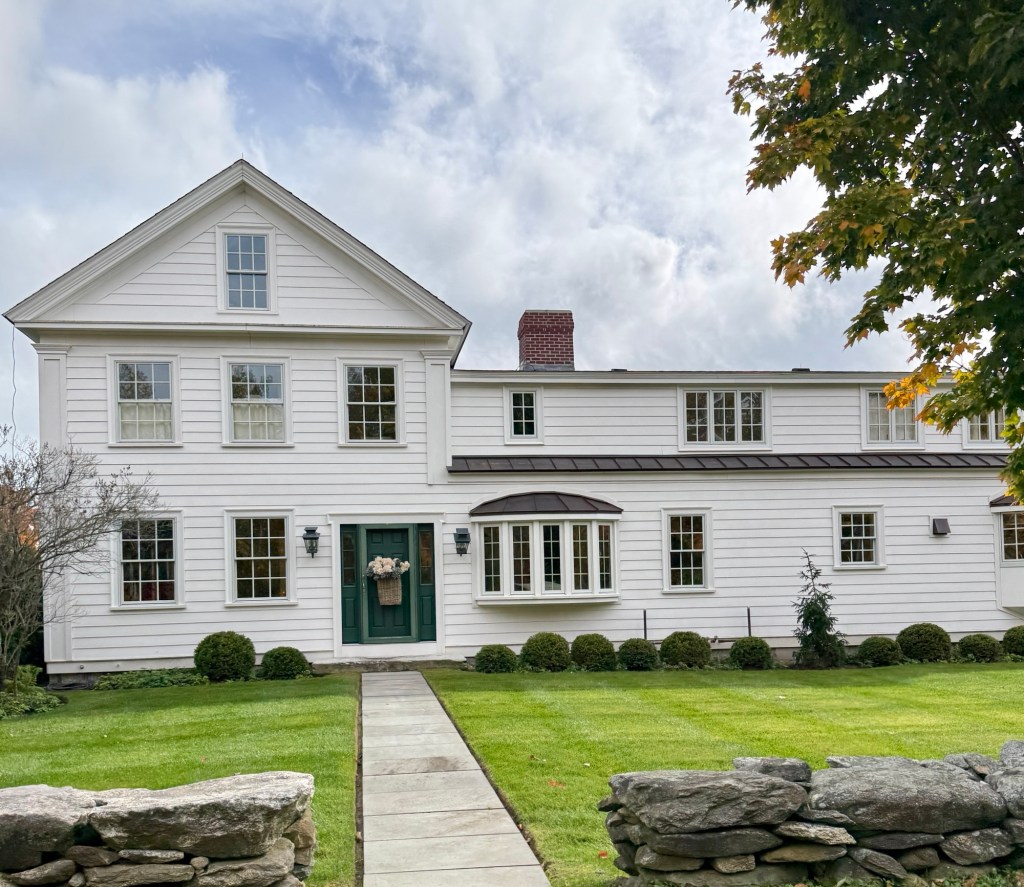
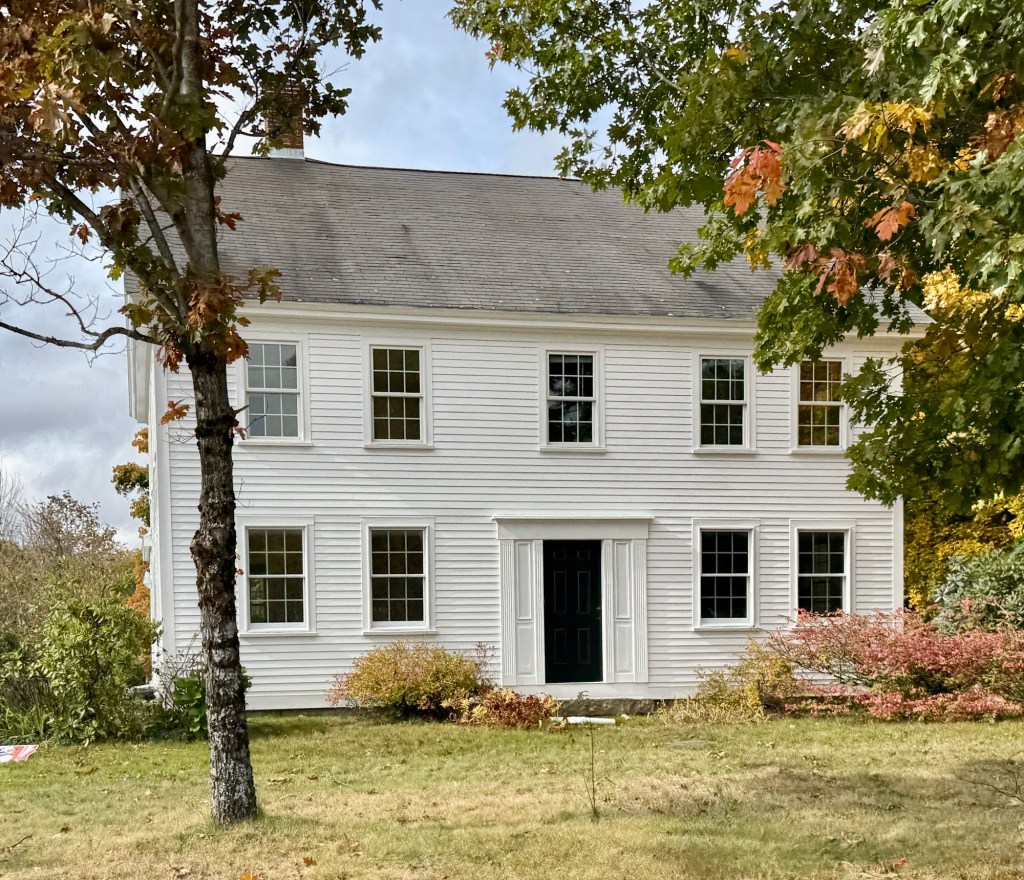
Built on the once 3,000-acre estate of Ward Nicholas Boylston’s country house in Princeton, Massachusetts, this historic farmhouse was built as the old Villa became a year-round residence. When Ward Nicholas Boylston (1747-1828) died in 1828, his Princeton estate was inherited by his grandson, Dr. Ward Nicholas Boylston (1816-1870), who further developed the property. By 1830, Ward Boylston built this Greek Revival style farmhouse where he operated the property as a gentleman’s farm, with agricultural fields, dairy cows, and out-buildings. The farm was one of the largest in central Massachusetts and was known around the state. When Dr. Boylston died in 1870, his son, Ward Nicholas III, inherited the property but eventually sold it out of the family in 1918. Boylston Villa and the adjacent Boylston Farmhouse are separately owned, but retain their architectural and historical significance thanks to great stewards to maintain the properties.
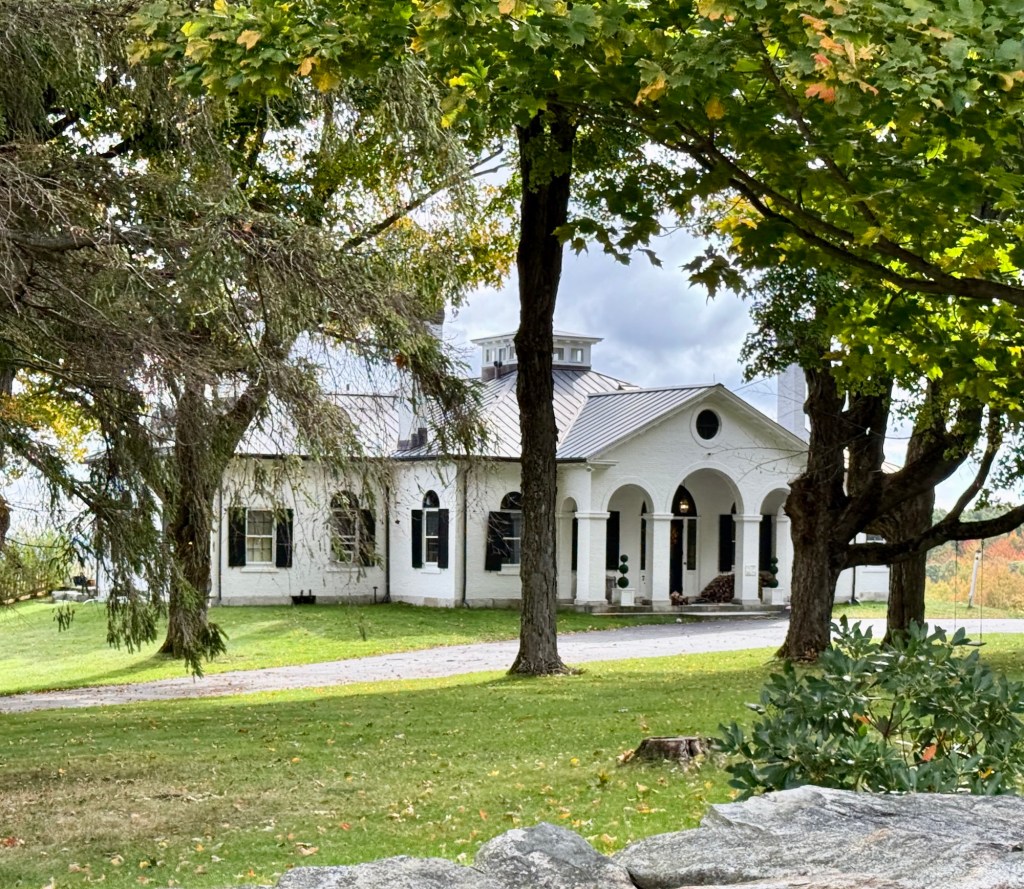
Ward Nicholas Boylston (1747-1828) was born as Ward Hallowell, in Jamaica Plain, Boston. At the age of 21, he took the name of his uncle, Nicholas Boylston, a wealthy Boston merchant who had no direct heir. A year later, he inherited his uncle’s estate and soon thereafter left for the next 27 years, taking up residence in London, and traveling across Europe and the Middle East. In 1800, Ward Nicholas Boylston inherited 3,000 acres of land from his uncle, Moses Gill, a wealthy merchant and acting Governor of Massachusetts from 1799 to 1800, when he died in office. Moses Gill was a slaveowner and when he moved to Princeton in 1767, town records indicate that he brought three “Negro servants” (slaves) with him. Interestingly, Gill thought enough of those whom he enslaved, as he bought expensive gravestones for their burial in the graveyard in Princeton, all three of which remain here to this day. They were: Nero, Flora, and Thomas. Ward Boylston spent summers at his uncle’s country estate until it was eventually demolished for his new Federal style country retreat, said to have been designed by Asher Benjamin, an architect then in the employ of Charles Bulfinch. The small brick villa is notable for its Palladian arches and walls inside lined with French Dufour wallpaper. Ward Nicholas Boylston’s name lives on through the names of Boylston Street in Boston named after him, as is the town of Boylston, Massachusetts, and Boylston Hall at Harvard University. He died in 1828 and was buried in the family tomb in Princeton. After his Nicholas’ widow, Alicia, died in 1843, the estate passed into the possession of Ward’s grandson, Dr. Ward Nicholas Boylston (1816-1870), who practiced medicine in Boston. Within a year after coming into his inheritance, the Dr. Boylston quit his career and settled at Boylston Villa, where he spent the remainder of his life and improved the estate with outbuildings.
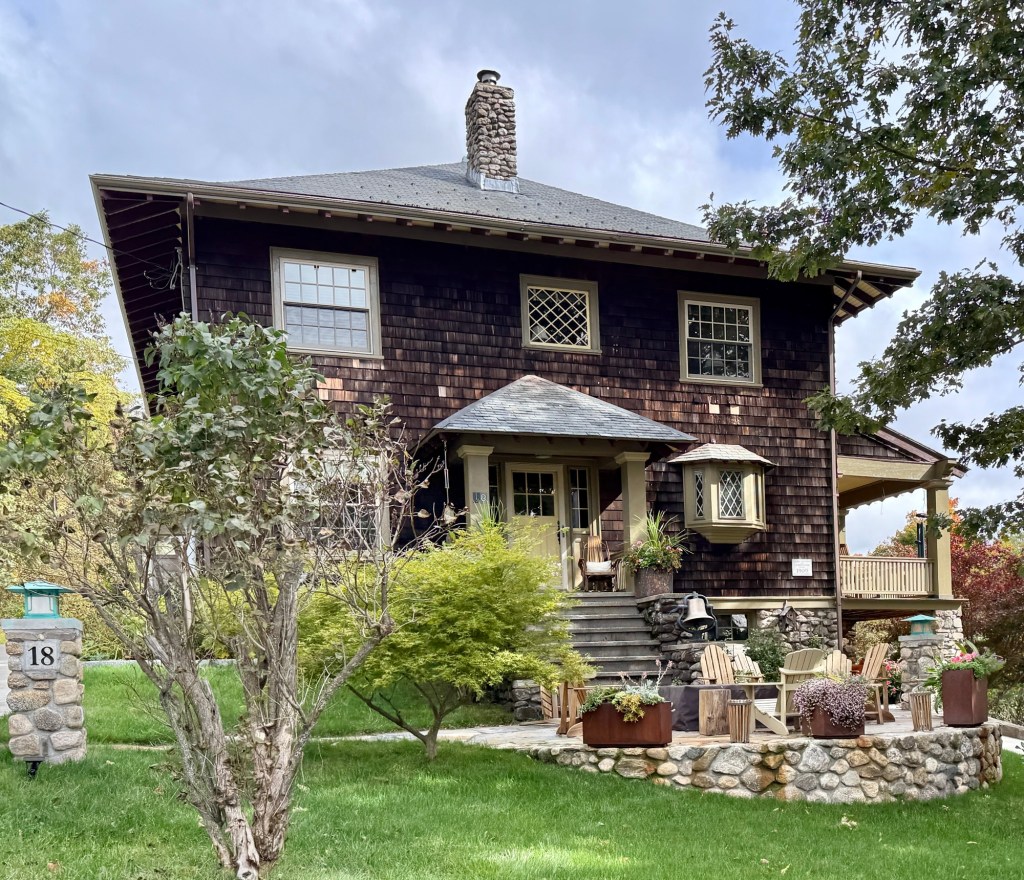
Built in 1914, this stunning Craftsman style residence sits on Mountain Road in the charming village of Princeton, Massachusetts. The rustic house was built for Dr. Elisha Sears Lewis (1874-1954), who lived in the home and built a sanatorium behind, where he would treat patients with respiratory illness. Due to its rural location and elevation with Wachusett Mountain nearby, Princeton became a popular tourist destination for city-dwellers in the 19th and 20th centuries, looking to escape the polluted and hot summer in the urban centers of Boston and Worcester. Dr. Lewis capitalized on this demand by building his home and sanatorium with appliances for hydrotherapeutic and electric treatments along with other treatments similar to a European spa. Elisha had a child with his first wife, Jane, and while he was in Europe during WWI, his daughter and wife treated local residents who contracted the Spanish Flu during the 1918 epidemic. When the flu epidemic was over there had been 69 cases in Princeton and not one death, thanks in part to these two women. The Lewis House remains a well-preserved example of its style and is characterized by its boxy form, pyramidal hip roof with broad eaves and exposed rafters, rubblestone chimney and foundation, and multi-pane windows.
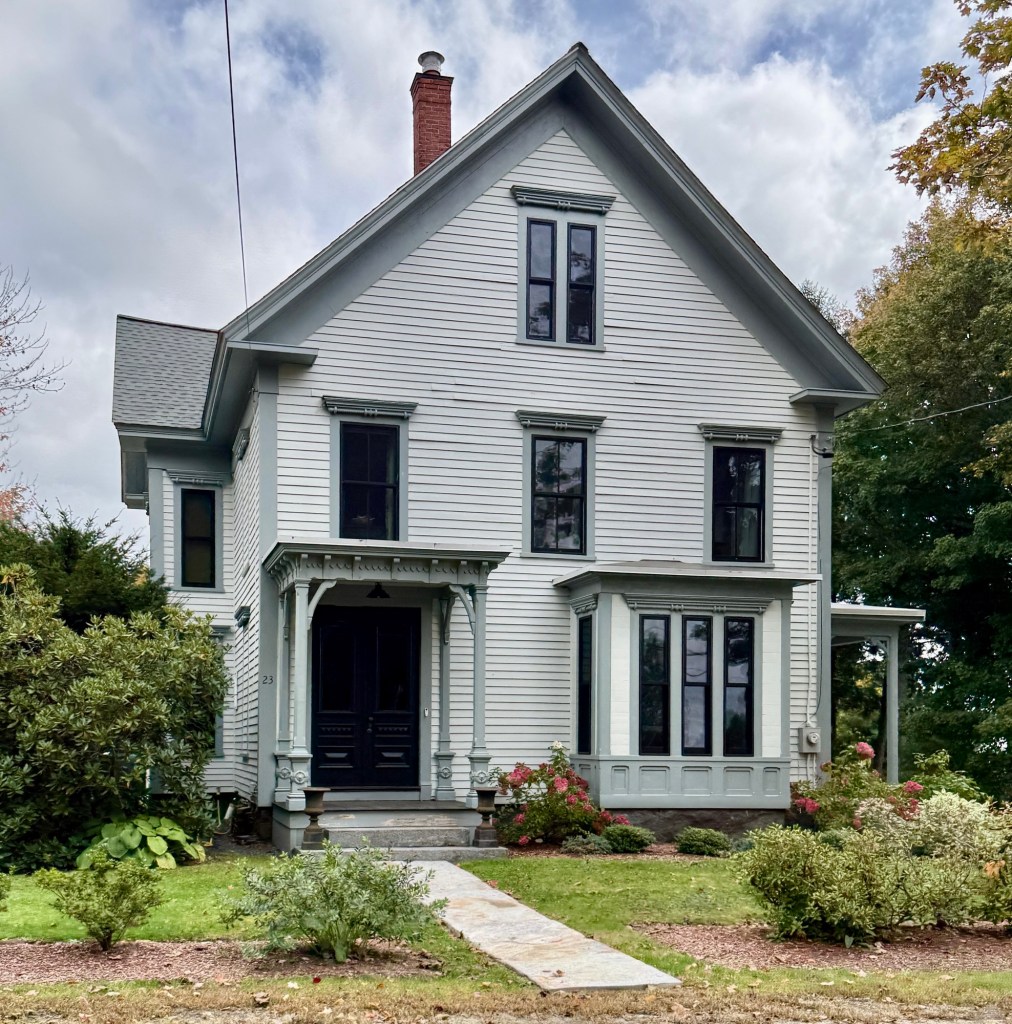
Isaac Franklin Thompson (1823-1900) was a descendant of one of the earliest settlers of Princeton, Massachsuetts. He and his brother-in-law, Phineas Beaman, were early proprietors of the Wachusett House, a hotel in Princeton that catered to visitors arriving to town to take in cool mountain breezes and views during the summer months. In 1860, Isaac Thompson purchased the Greek Revival style Baptist Church in town and converted it into the Prospect House, a large summer hotel with expansive porches to provide visitors with sweeping views near the village. When Isaac Thompson retired from his role as a hotelier in 1874, he had this home built on the outskirts of the main village to enjoy his retirement. The handsome residence operated as the Dutchess Tea House from the 1930s-1950s, and was converted back to a single-family residence later in the 20th century.
In 1842, Ivory Wilder, a shopkeeper in the village of Princeton, Massachusetts, demolished the old store formerly on the edge of the town common and oversaw construction of this residence. Ivory Wilder (1804-1886) worked for a time as the town constable and post master, and operated a store in the main village. He had this residence built as a double-house, where he resided with his family and rented the other half to boarders, including resident, Reverend Willard M. Harding and later Reverend Alfred Goldsmith, both pastors at the Congregational Church. The property later converted back to a single-family residence and was recently renovated. The Wilder House now serves as one of the important landmarks to greet those arriving to Princeton’s town common.
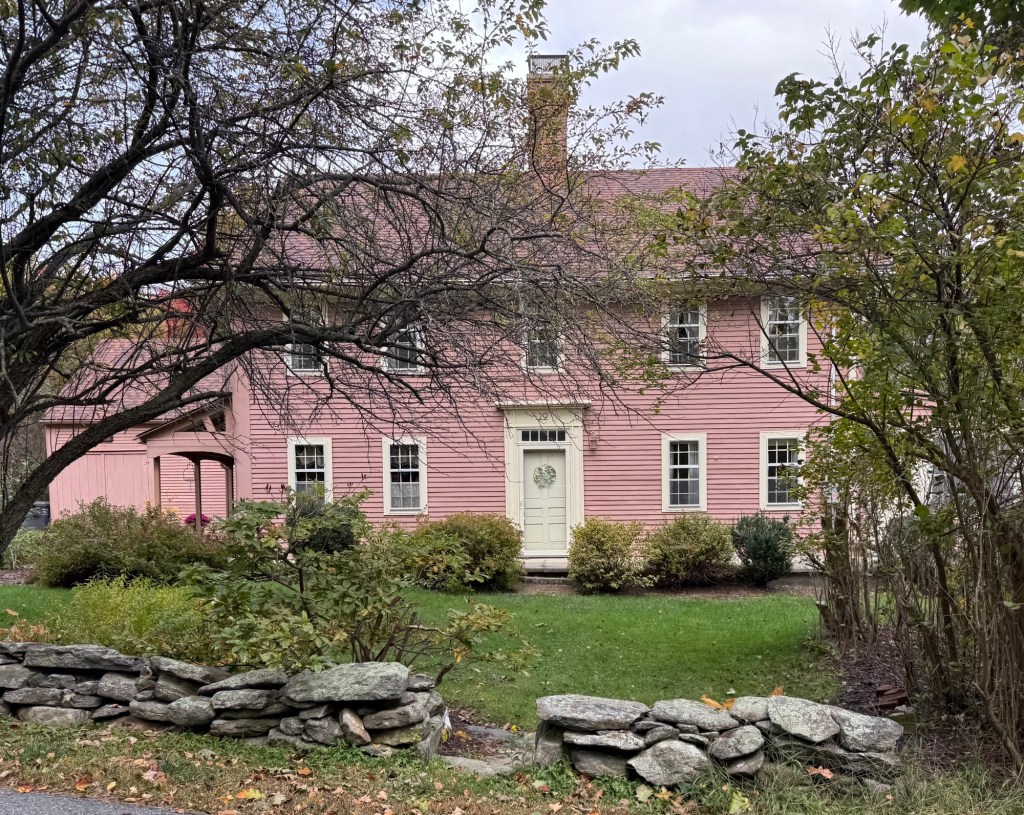
Tucked into the hills below Mount Wachusett, the Keyes Homestead in Princeton, Massachusetts, dates to the colonial era, and is part of a well-known local legend. Robert Keyes, his wife Martha, and their young family settled in present-day Princeton in 1751, and built this home to withstand rough New England winters. Within years of the family settling in Princeton, tragedy struck. Legend states that on April 14, 1755, Martha Keyes sent her two older daughters to collect sand from the banks of Wachusett Lake. Unbeknownst to the sisters, little Lucy, just four years old, followed them. She vanished into the woods and was never seen again, despite search parties combing the forest for years. Mr. Keyes was driven to near poverty in his efforts, selling portions of land and even petitioning the government for financial assistance in 1765. Mrs. Keyes is said to have been driven to near insanity, crying her daughter’s name into the woods for years after her disappearance. Two main theories emerged as to what happened to little Lucy. One grim legend says that the Keyes’ mountainside neighbor, Tilly Littlejohn murdered the young girl. According to a 1827 letter now in possession of Cornell University, a man in the New York area thought to be an elderly Tilly Littlejohn confessed on his deathbed to the brutal murder of the little girl whose father he had quarreled with. The man allegedly said that after the murder, he hid the child’s body in a hollowed-out log. The second theory is that a nearby Native American tribe found, captured and fostered the lost little girl. Reports say that many years later, two travelers came across a white woman living among a tribe near the Canadian border who knew little to no English, but recalled once living near what she called “Chusett Hill”. The old Keyes Homestead remains a well-preserved Colonial residence and tells the story of early heartbreak and the difficulty that was early settlement in New England.
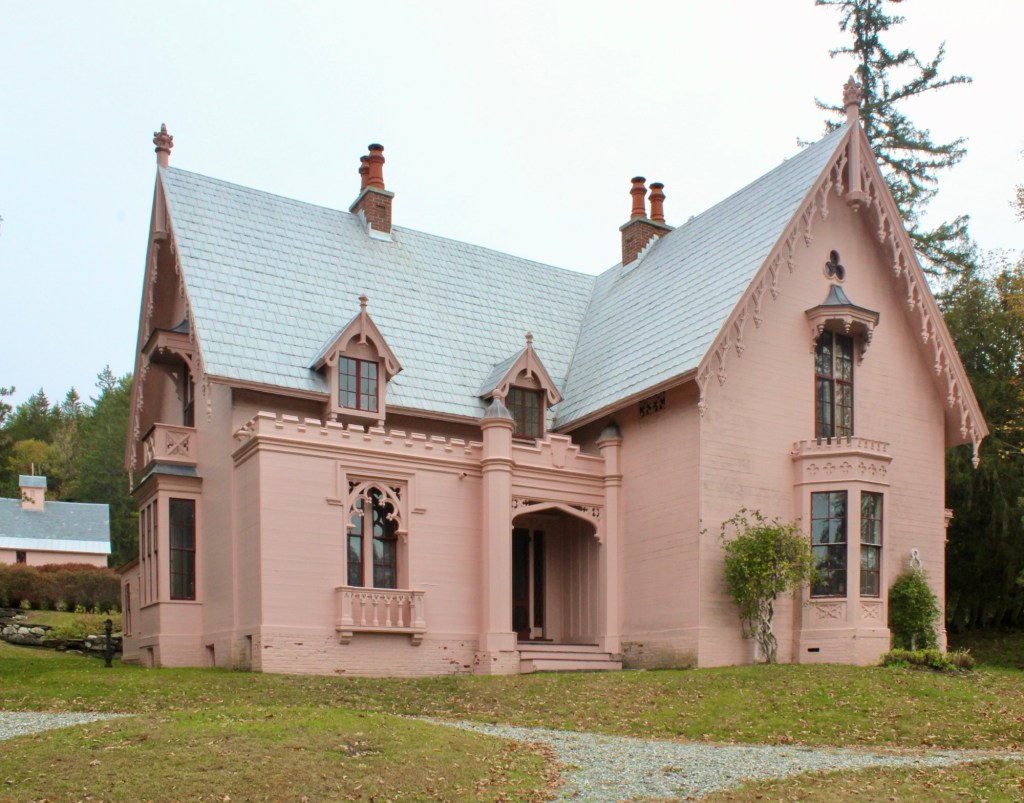
Located in the village of Strafford, Vermont, the Justin Smith Morrill Homestead is one of Vermont’s most charming architectural landmarks. Built between 1848 and 1851, the house is a rare and exuberant example of Gothic Revival design, with steeply pitched gables, pointed-arch windows, and intricate decorative trim that give it the look of a storybook cottage. Justin S. Morrill (1810-1898) was a self-taught architectural enthusiast who drew inspiration from the popular pattern books of the day, and he is said to have designed much of the house himself. Morrill also planned the surrounding gardens, studying the romantic landscape movement with its formal yet picturesque plantings. He selected only those plants that would survive the wintry Vermont climate and annually monitored their success again the harsh elements. Justin Morrill was a regular storekeeper in the village who retired early, who went on to serve in Congress for more than four decades and is best remembered as the author of the Morrill Land-Grant Acts. Signed into law in 1862, the first act helped establish public colleges across the country and opened higher education to ordinary Americans, primarily focusing on agricultural and mechanical studies. While Senator Morrill spent much of his time in the nation’s capital, his Strafford home served as his respite during the summer months. Today the homestead is a National Historic Landmark and Vermont state historic site, where visitors can walk through rooms filled with the family’s belongings and see how the ambitions of a small-town statesman shaped both a home and a nation.
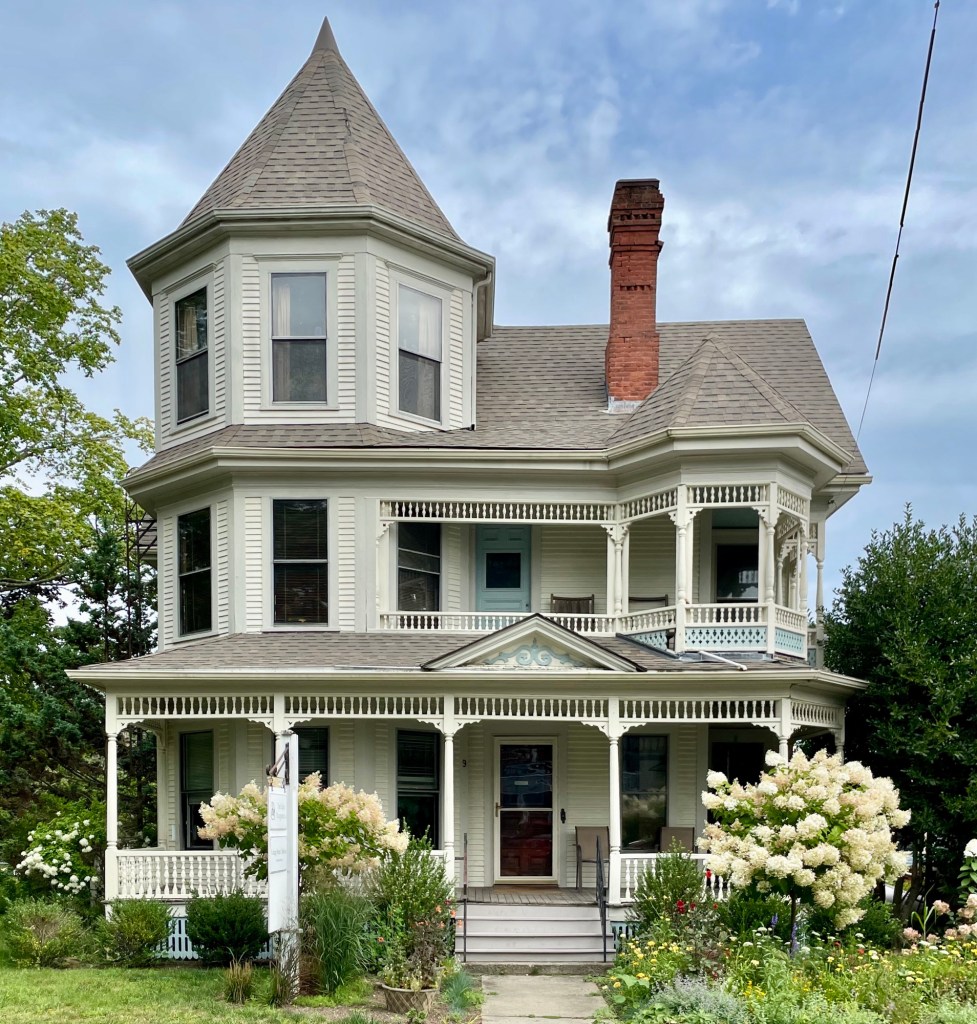
Built in 1896 by Dr. A.W. Rice, this quintessential example of a Queen Anne style Victorian residence has stood on Marion’s Cottage Street, preserved and contributing to the town’s rich history. Alger W. Rice (1855-1914) was born in Vermont and moved to Marion after graduating medical school and operated his medical office from his home here and lived with his family until his death. Dr. Rice also raised and bred award-winning Russian Wolfhounds and pigeons. Between 1921 and 1979 the property was owned by two generations of the Petersen family, beginning with Viggo Valdemar Petersen (1869-1941), a native of Bornholm, Denmark, who worked as a chef before entering the ice cream manufacturing business in the early 20th century. Peterson operated a popular ice cream parlor out of the rear carriage house during the 1930s until his death in 1941. When Viggo died in 1941, his son, Viggo C., attempted to carry on, until wartime cream rationing forced him to close for the duration of the conflict. Thereafter, Petersen’s ice cream resumed production and remained a Marion fixture until its final closing in the 1970s. The former residence remains commercial today, but maintains its charm.
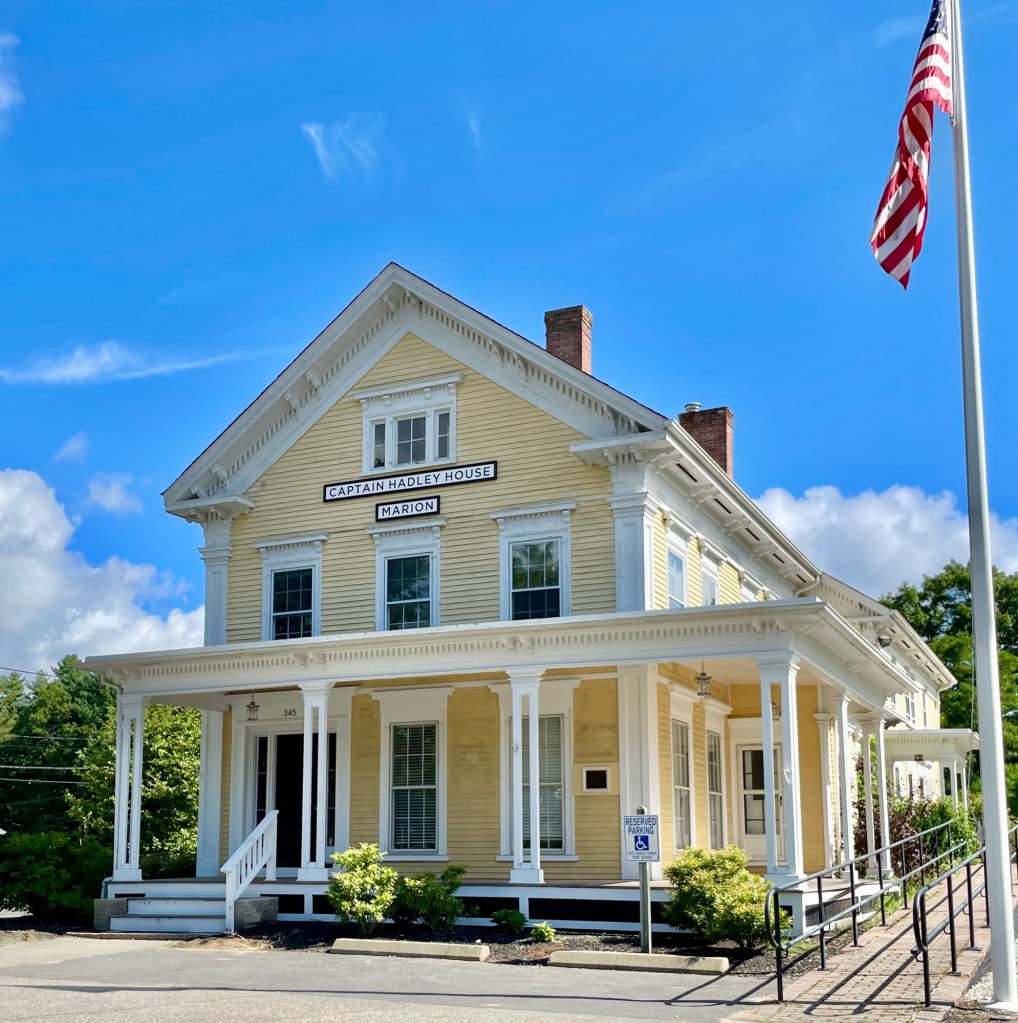
Built around 1850 for Captain Hadley this stately home in Marion, Massachusetts, is significant as a two-story transitional Greek Revival/Italianate landmark that has ties to one of the most prominent local families and has spent nearly two centuries as the visual entrance to the historic village. The home was built for sea captain, Stephen Delano Hadley (1814-1892) and his wife, Mary Soule. The home was at the northern end of the Old Landing, near the working harbor, and saw other owners in the 19th and 20th centuries until it became an office building. In the 2010s, the prominent site along a busy thoroughfare was eyed by CVS to redevelop the site with a suburban style store and parking lot. The community rallied with petitions signed by thousands and local groups mobilized to save the building and character of the community. The Sippican Historical Society and Sky Development Ltd. partnered to purchase the building and acquire a deed restriction on the site, preserving it in perpetuity. Today, the Captain Hadley House, as it’s still known locally, continues under new ownership as a small medical office, its Italianate details preserved under the historical society’s watch as one of Marion’s most recognizable surviving nineteenth-century landmarks.
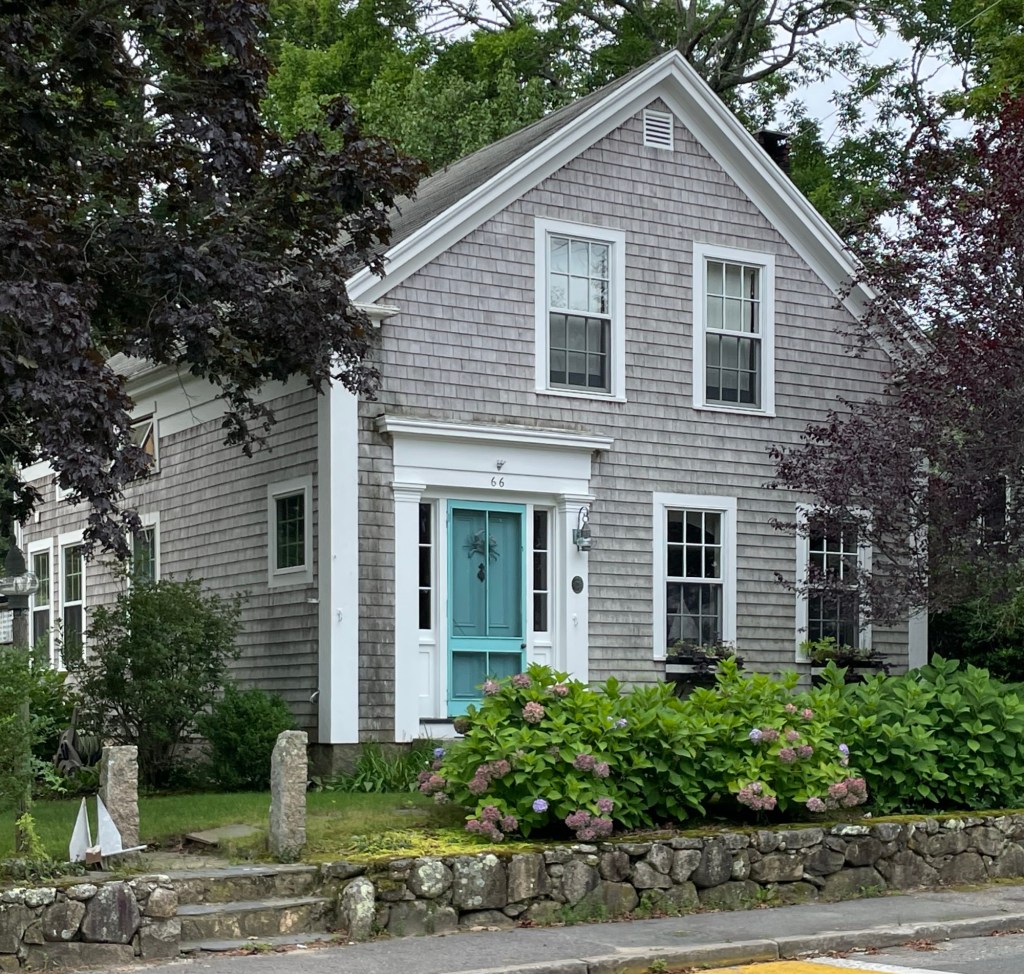
This perfect mid-19th century cottage showcases what makes coastal New England so special. Located on Main Street in the walkable historic center of Marion, Massachusetts, this 1852 home was built by Warren Blankinship (1816-1898), a carpenter, as his own residence. It was built just before his second marriage to Mercy Wing in 1853. A series of tragedies struck Blankinship’s marriages as he outlived three of his four wives. A well-preserved example of a modest Greek Revival home, it is clad in cedar shingles, a hallmark of many coastal homes in New England. White Cedar shingles are so popular historically as the species is such a hard wood that pieces are naturally insect and rot resistant and hold up amazingly well to salt air. Early colonists noted the use of the tree for canoes and other objects by Native people and followed suit, constructing homes from the native tree.
Reportedly built in 1790, this stately Federal period residence on Main Street in Marion and overlooks the sheltered harbor sharing strong connections to the sea. Known colloquially as the House of the Two Captains, this residence was built as a double house and known for its connections to sea captains, Elisha E. Luce (1786-1850) and Noble E. Bates. Captain Luce moved into this house shortly after his marriage to Jane Hiller, daughter of a local Deacon. Particularly note-worthy is the main facade’s center entrance, which exhibits unusually fine surrounds, including fluted Doric pilasters and a pediment enlivened by dentils. Inside, the house is said to have hidden passages behind a large fireplace. The captains used part of the house as a crockery and supplies store. Captain Elisha E. Luce’s best-known ship was the Persia, which made numerous profitable trade missions to the Far East. This house was also the birthplace of the Universalist Church in Marion, when during the early 1830s, Universalists met in Captain Bates’ half of the house to organize a religious society and plan the construction of the church. The Luce and Bates families co-owned this house until the mid-19th century and the residence remains one of the finest in the harbor village.
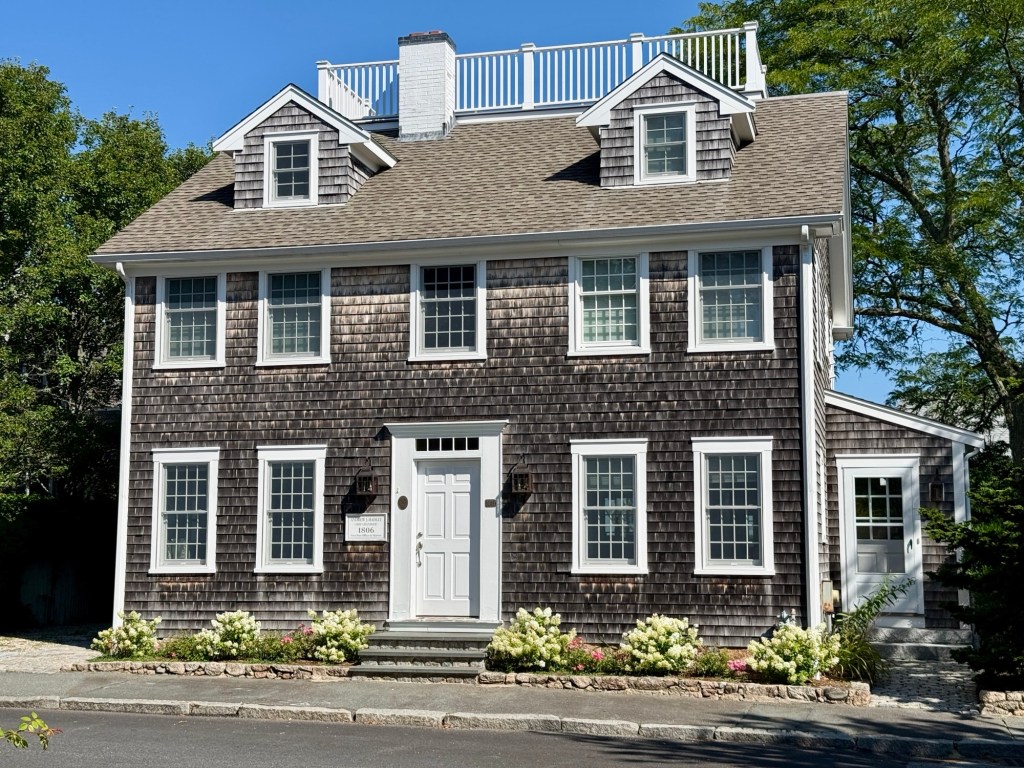
This late-Georgian style residence on Main Street in Marion’s Wharf Village is a stone’s throw from the harbor and has been conveniently located near the town’s Long Wharf since it was constructed around 1806. The building was constructed as a store for A. J. Hadley, where ships were outfitted for voyages. While Hadley’s store occupied the eastern half of the first story, the left side of the ground floor was Marion’s first post office. The second floor served as a clothes-making factory with the top floor operating as a sailmaker’s loft. By 1855, the structure was converted to a residence and owned by Sumner Ryder, who served as the Town Clerk and later joined the ranks of the Union Army during the Civil War. During the early 20th century, the property, with its widow’s walk, was owned by members of the Harwood family, including Ms. Sarah W. Harwood, who lived here with Margaret French (1860-1935) who was listed in the Census for decades as her partner, housemate, and boarder.
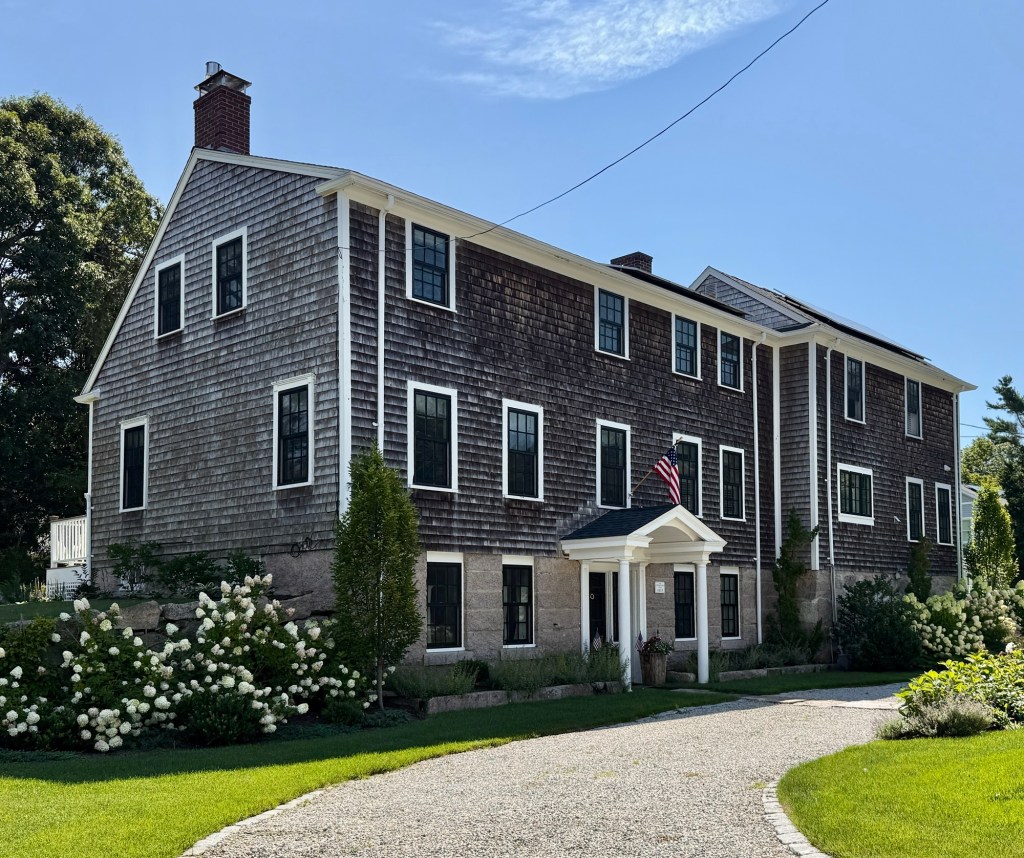
Known as the “Old Parsonage” this historic house in Marion, Massachusetts, was built in 1813 by Capt. John Pitcher (1788-1867) around the time of his marriage to Catharine Clark. John Pitcher was the brother of Elizabeth Pitcher Taber, a major benefactor of the town of Marion. The residence is unique in that the primary facade is actually facing away from the street, with the prominent three-story facade being the historic rear of the home. The Federal period house sits on a raised stone foundation with a central door and shingle siding above. Behind his home, a large pasture was grazed by sheep and cows until the land was sold off and subdivided for residential development later in the 19th century. When Capt. Pitcher died, he left his house to the Congregational Church, which used it as a parsonage for many years until 1966, when the church sold the property to Lawrence P. and Edith G. Pangaro, who co-founded the Marion Sentinel and the Sippican Publishing Company. The home was recently renovated.