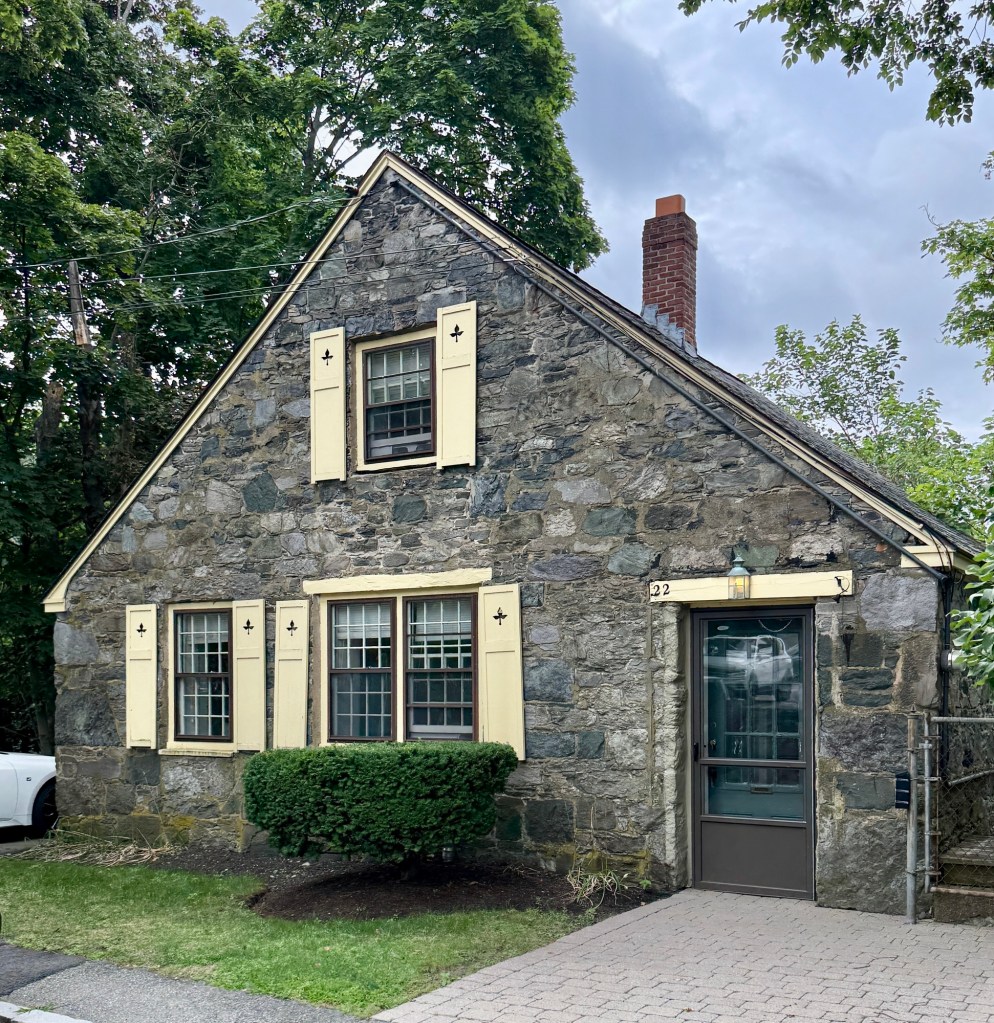
Located next to the Pettee Stone Barn in Newton’s Upper Falls village, this equally charming stone cottage was built around the same time by Otis Pettee, a wealthy industrialist and founder of the Pettee Machine Works, which manufactured cotton and silk machinery. This cottage served as a shop and later as the residence of the caretaker of the silk mill which also had space and equipment to raise the silk worms in the adjacent barn. Later in the nineteenth century, the cottage was owned by George Pettee (1827-1896), son of Otis Pettee. In the 20th century, the structures were operated by the New England Spun Silk Corporation and it now is a single-family residence. The facade of the Pettee Cottage is three bays wide with twelve-over-twelve windows with wood shutters.
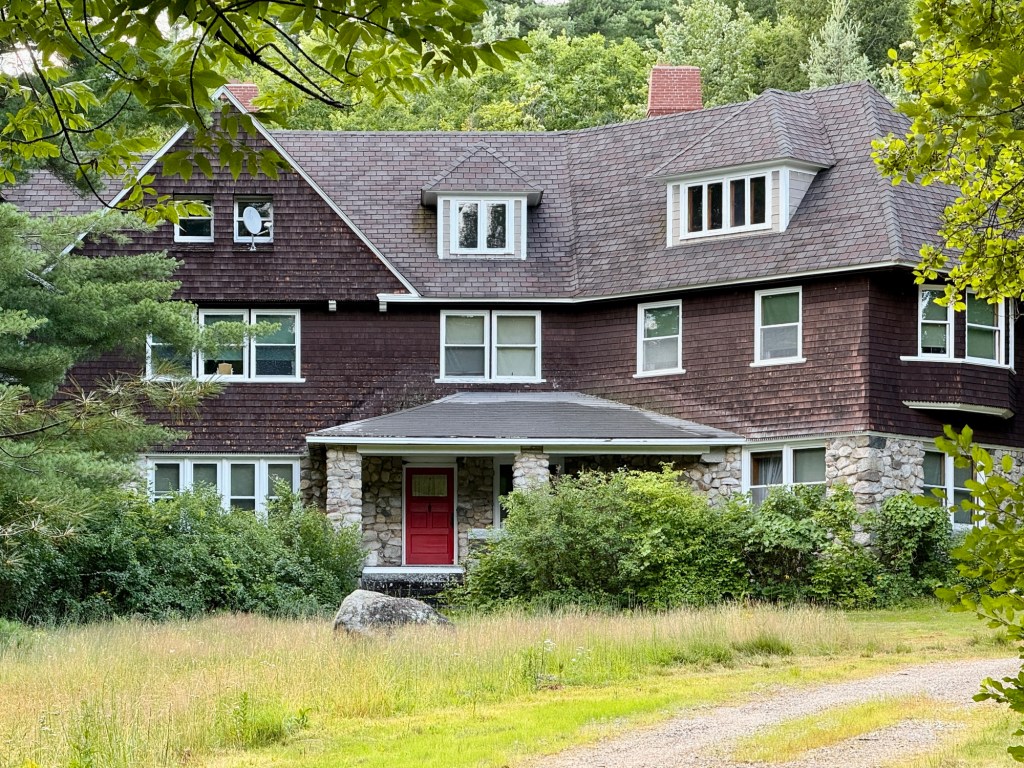
Set into the trees in Chocorua in Tamworth, Cairncroft stands as one of the many stately “cottages” built in the late 19th and early 20th centuries for city-dwellers to escape the hot summers for the fresh air and views of the White Mountains of New Hampshire. This cottage was built for Emil Christian Hammer (1823-1894), who migrated to the United States from Denmark in 1840, where he became a prominent businessman in several Boston business, including Waltham Manufacturing Company. In the mid-1880s, he founded the United States Watch Company in Waltham, one of the most important such companies in the country. From his success and connections, Emil was appointed by President Abraham Lincoln as Danish consul in 1864. Emil purchased the land here in 1886 and built a barn and ice house before having his home and nearby stone cairn built on the grounds; the latter is likely what gave the property its name. Cairncroft was designed by Boston architect, Edwin James Lewis, Jr., an expert at Arts and Crafts and Shingle style designs. After Emil’s death, just two years after his cottage was completed, the property passed to his wife, Martha. Her daughter, Cynthia Hollis and also an accomplished artist, inherited it later and eventually passed it to her husband, John Charles State Andrew, professor of theology at Harvard and Boston University.
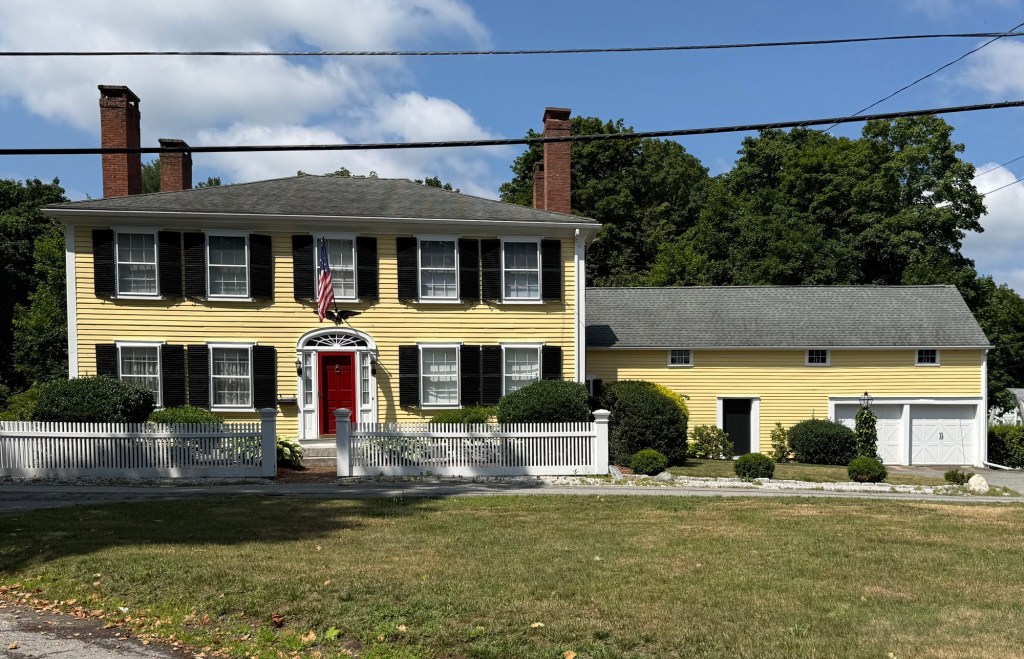
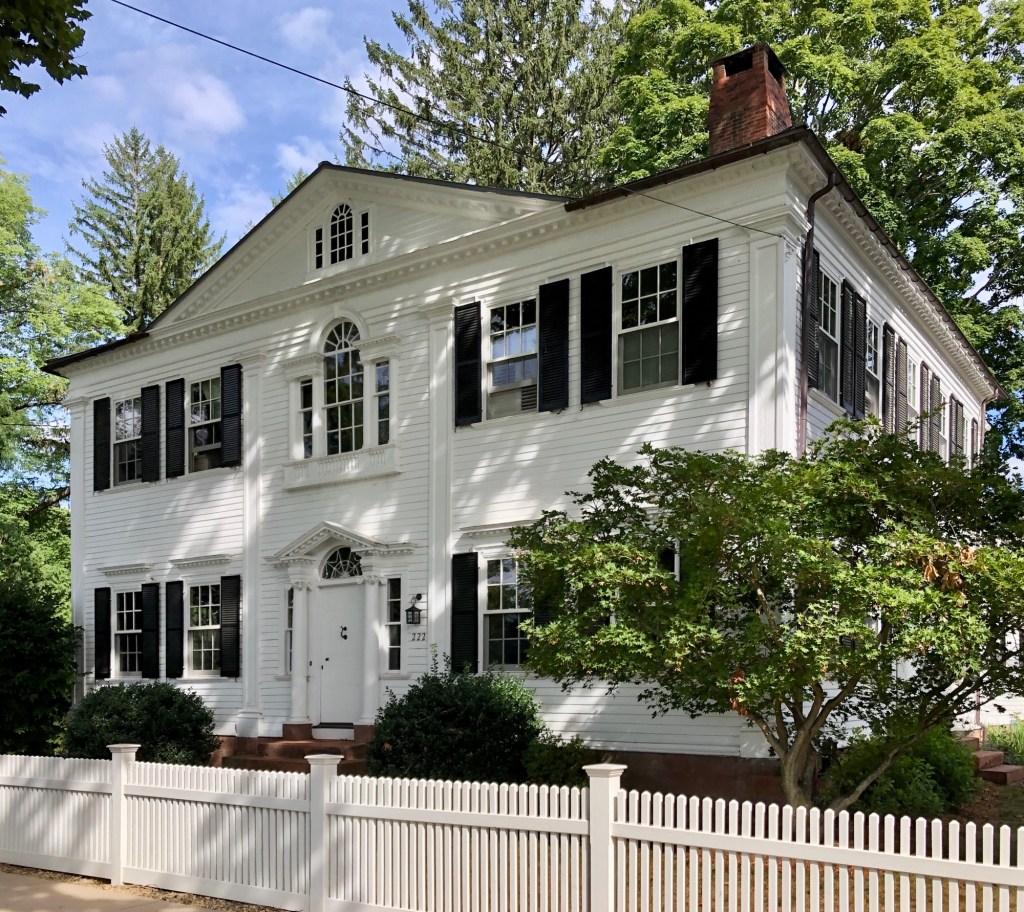
This charming example of a New England Federal style house is located in the village center of Tamworth, New Hampshire and has lived quite the life. The residence was built in about 1830 for Obed Hall (1795-1873), one of Tamworth’s first lawyers. Mr. Hall married a local woman, Elizabeth “Betsey” Gilman and they had a daughter, Caroline in 1830. Tragically, at the age of 26, Elizabeth died within a year of giving birth to Caroline, leaving Obed to care for their daughter alone. Obed Hall lived in this house with his daughter for 16 years until he remarried in 1847 to Caroline Eleanor. History repeated when Hall’s second wife had a baby daughter, Eleanor Mary (Nellie) in 1849 and then died within a month, leaving Obed with a second child to raise. Despite his family losses, Hall was Register for Probate for Carroll County from 1840 to 1851 and was a State Senator in 1854 and 1856. He appears to have extended the house to rent it to an additional family, likely to assist with raising his two daughters. After his death in 1873, the property was inherited by daughter, Nellie, and her husband, Jewett Lowe, who modernized the house likely to house hotel workers as Tamworth became a popular summer retreat in the early 20th century. In 1946, the house was sold to the New England Box Company, based in Greenfield, Massachusetts, but maintained mills around New England including one just east of Tamworth. The company divided up the house into three two-story apartments for local company employees, including lumbermen and mill workers, many of whom recently returned from overseas during WWII. The property went back to private ownership by the Dyer family, who in 2008, sold the property to the Tamworth Historical Society, now known as the Tamworth History Center, who maintain and operate it as a house museum.
A fine example of a Federal style brick-ender, the Farmer-Colson House in North Billerica is a stately and well-proportioned residence of its type in Massachusetts that has been lovingly preserved inside and out for over 200 years. The house was built in 1803 by Oliver Farmer (1760-1839) on land he acquired from his wife, Hannah’s father. The house was later inherited by Oliver and Hannah’s daughter, Rachel, and her husband Israel Colson. Israel Colson arrived in the mill village in about 1830 from Rhode Island and was a farmer by trade but became engaged in the development of the locks for the Middlesex Canal on the Concord River in the village. Architecturally, the house retains its symmetrical facade with center entrance adorned by a fanlight transom and sidelights, massive end chimneys, and an attached barn/stable.
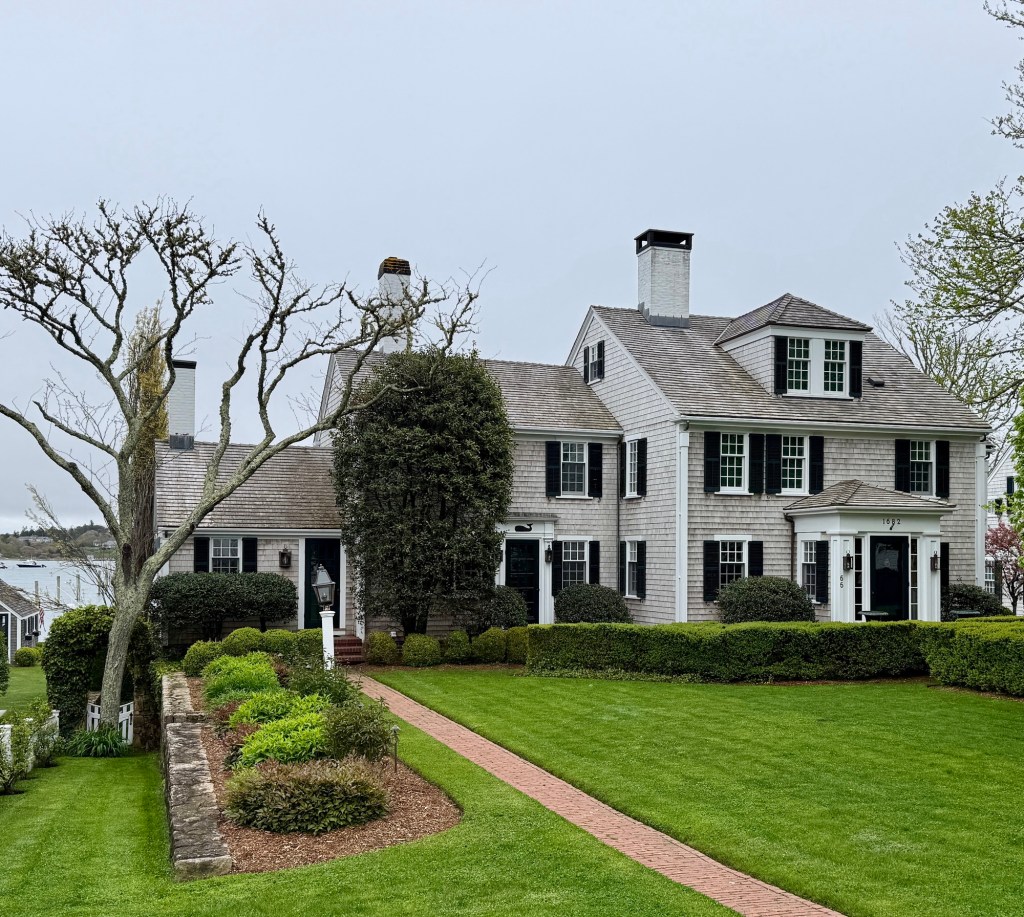
John Coffin (1647-1711) was born in Haverhill, Massachusetts, and later moved to Nantucket with his father finding work as a blacksmith. John moved to Edgartown (Martha’s Vineyard) in 1682, continuing his profession there as the island’s premier blacksmith. Soon after arriving, John Coffin and his wife, Deborah, built a small residence and blacksmith shop, here on South Water Street, which later became this stunning property with later additions and alterations. The construction of the original section is said to be built of timber infilled with brick, a luxury but also a necessity to protect John Coffin’s house in case of a fire from his attached blacksmith shop. The business did well and John and Deborah moved to a new residence on North Water Street by the turn of the 18th century. This property overlooking the harbor was later occupied and expanded by various artisans, including Elijah Dunham, a shoemaker, in 1792. It was likely under Dunham’s ownership that the house was expanded to its present two-story form with telescoping ells. More recently, the Coffin-Dunham House, one of the oldest extant buildings on the island, was thoughtfully renovated by Patrick Ahearn Architects.
In 1795, Ebenezer King Jr. (1762-1824) bought 26 acres of land on Main Street in Suffield, Connecticut, to build this stately manse. He at the time was at the height of his prosperity and lived lavishly from his new mansion until he sold his property in 1811. King’s estate was purchased by William Gay (1767-1844), a prominent lawyer and the son of Ebenezer Gay, who had been the longtime pastor of the Congregational church and lived nearby. Aside from his law practice, William Gay was also the postmaster of the town for 35 years, and for much of that time the post office was located here in his living room. The home remained in the Gay Family for generations until it was eventually purchased by Suffield Academy for use as the headmaster’s home. The symmetrical Federal style residence features a five-by-five-bay square form with center entrance. The facade is dominated by an elaborate Federal style entry with fanlight transom and Palladian stairhall window on the second floor, which is mimicked with a smaller version in the gabled peak at the roof.
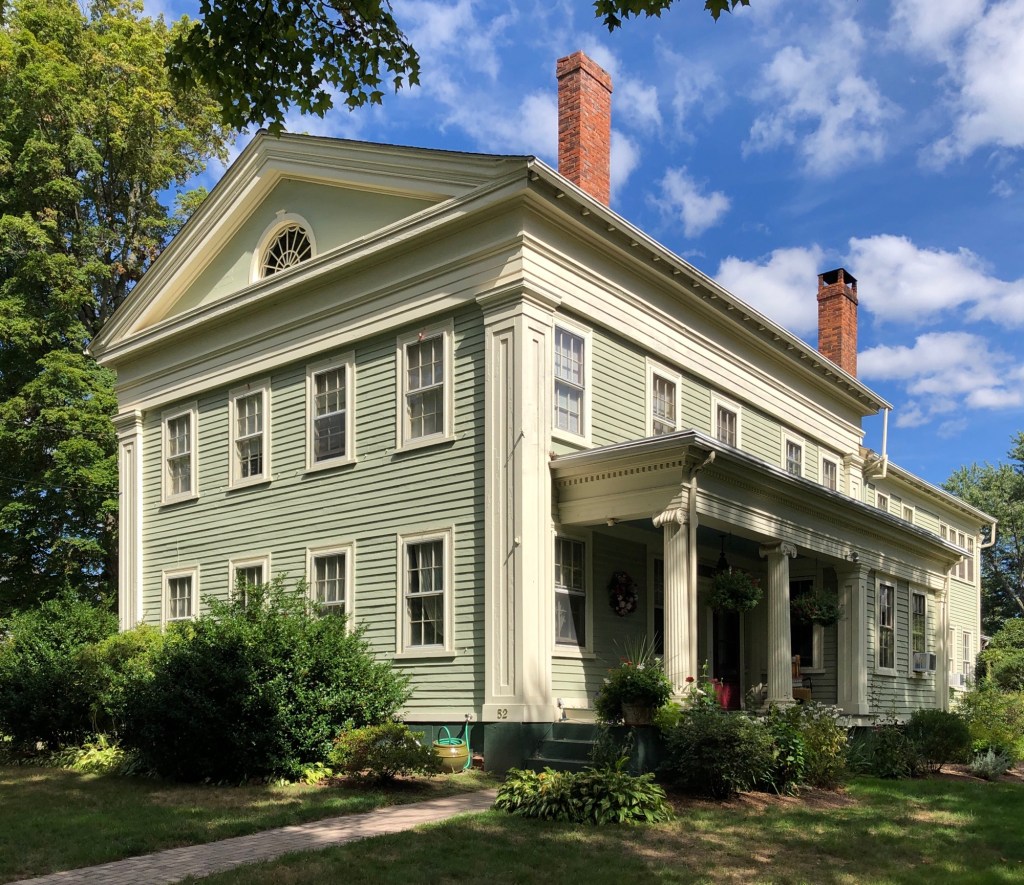
Dr. Asaph Bissell was born into the wealthy Bissell family which started here when John Bissell, the progenitor of the family in America, came from Somerset, England, and landed in Plymouth, Massachusetts, in 1628. He became one of the settlers of Windsor, CT. His descendant, Asaph Bissell (1791-1850) became one of Yale’s earliest medical graduates and built this stately Greek Revival style home on Main Street in Suffield, Connecticut, where he practiced medicine. Dr. Bissell often made house calls from his home right on Main Street until his death in 1850, after which, it was inherited by his eldest son, Charles Bissell. The house is Greek Revival in style with its entrance on the side elevation sheltered by a Classical porch, all facing southwards. The street-facing facade is four bays with large corner pilasters, a massive entablature, and pedimented gable-end with fanlight set within it.
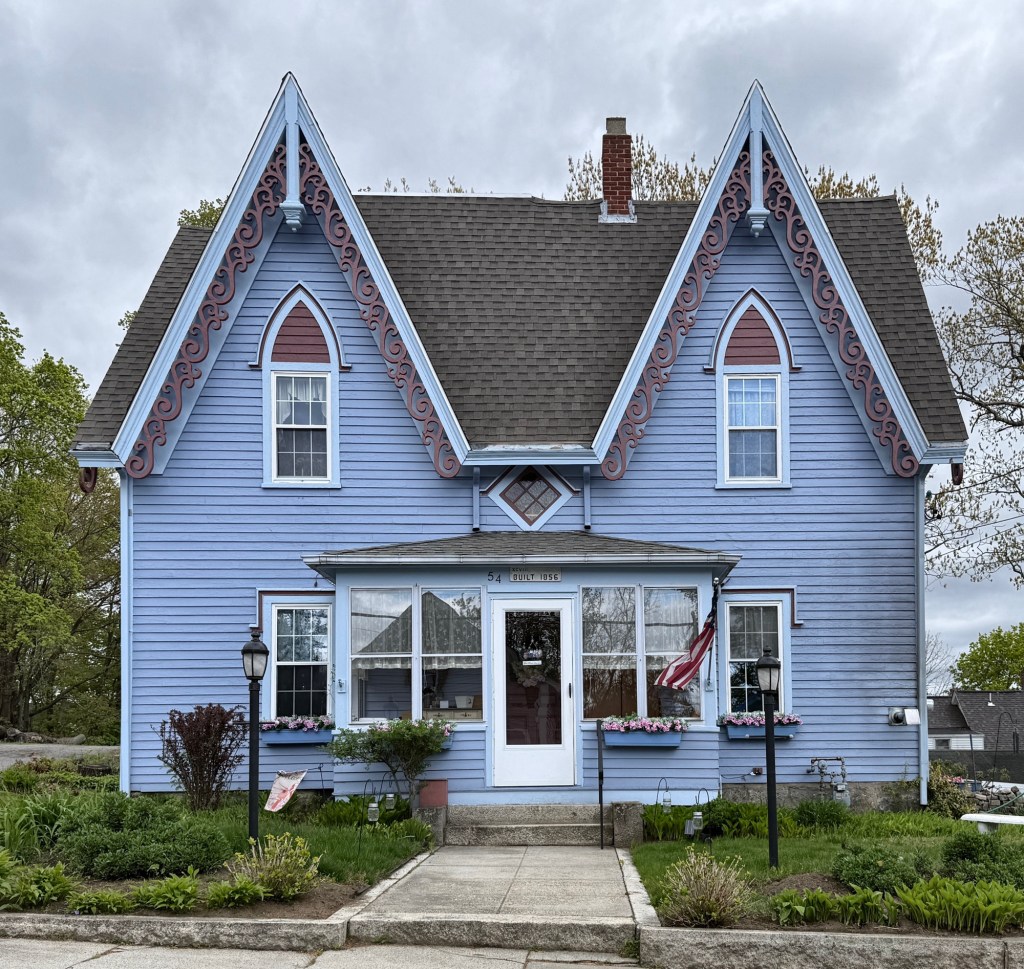
The finest Gothic Revival style residence in Milford, Massachusetts, can be found tucked away on Claflin Street, and it features the iconic hallmarks of the style. With its steeply pitched roof, blind lancet windows, drip moulds at the windows, and intricate barge boards with hanging pendants, the Nash-Wood House does not disappoint! The residence was built in 1858 and owned at different times by men who worked in the local shoe and boot manufacturing companies in Milford; William Nash and Peleg E. Wood. The property, with its playful paint colors, has been lovingly preserved my subsequent owners.
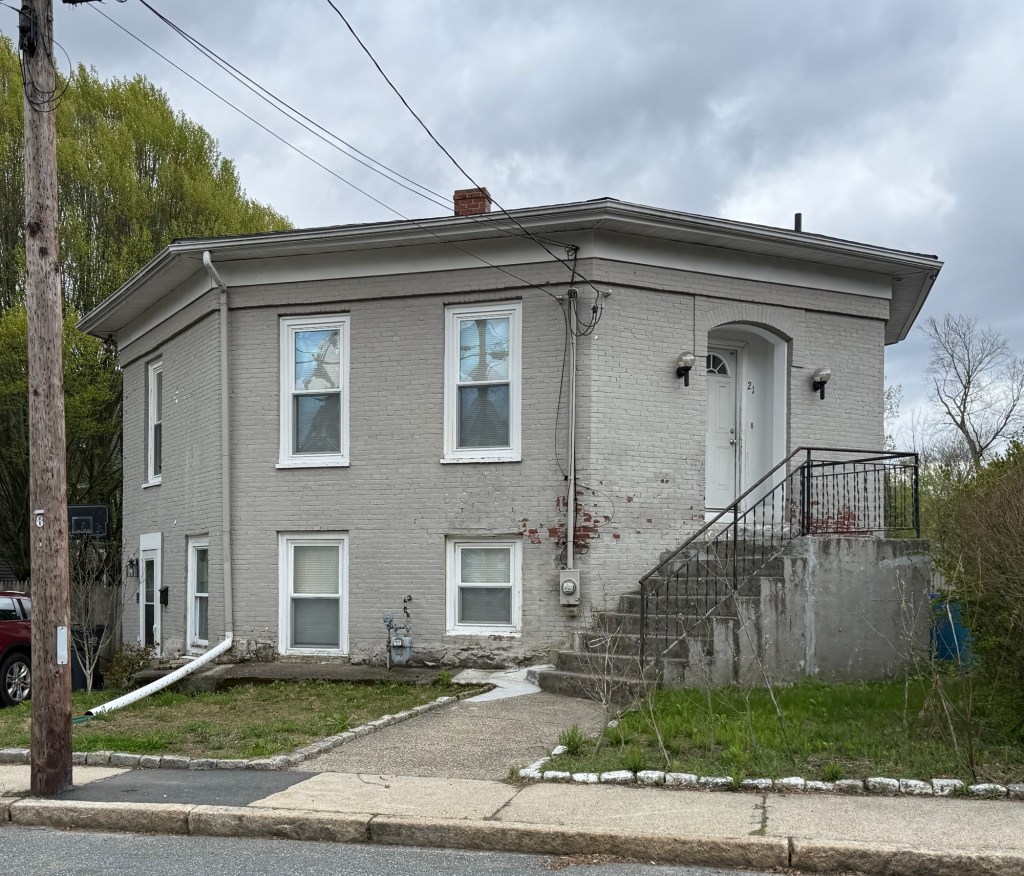
One of the rare examples of an intact Octagon house in New England, the Joel Chapin House in Milford, Massachusetts, is the only of its kind in the town. The octagonal brick residence was built for Joel Chapin (1822-1864), a produce and meat dealer in town, who resided here until his death. By the end of the 19th century, the house was owned by Anna Jourdain, who married James E. Reed, an early African-American photographer based in New Bedford They resided in the octagon house and their family members owned the property for nearly 100 years.
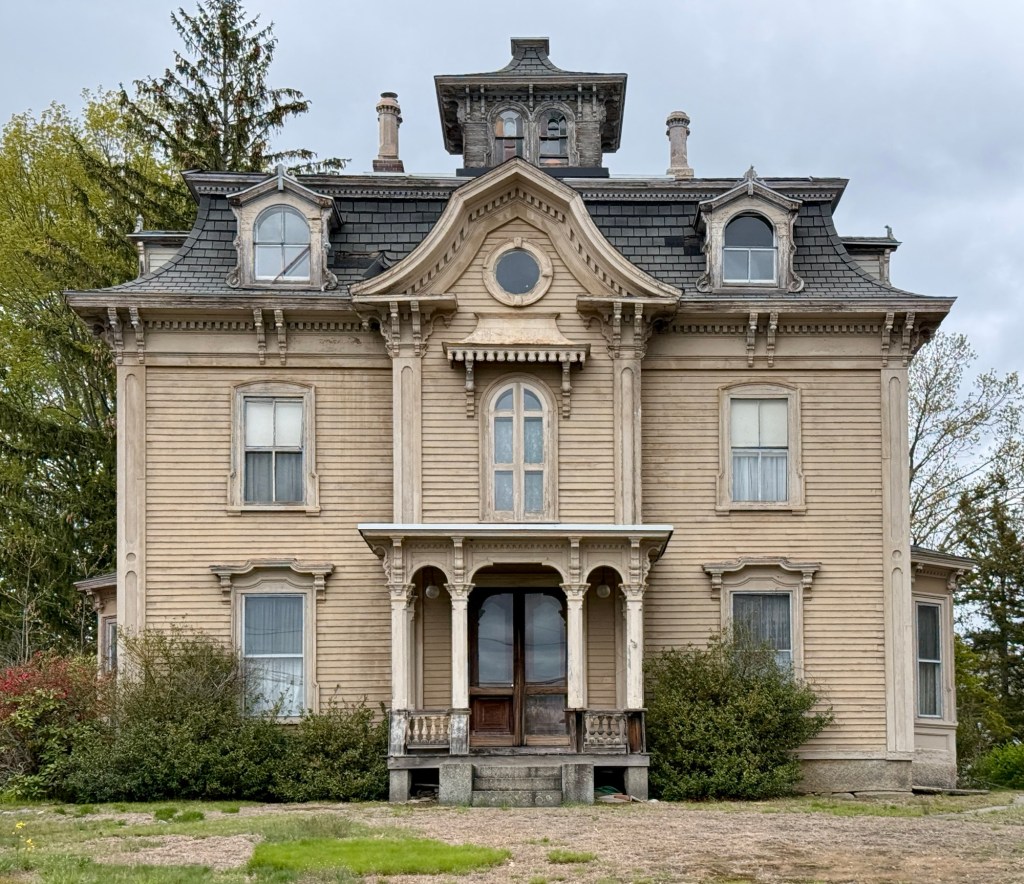
The Henry E. Fales Mansion sits prominently on Walnut Street in Milford, Massachusetts, as an intact Second Empire style residence with symmetrical facade and form. The house was built in 1866 and owned by Henry E. Fales (1837-1897) an attorney and state legislator who was heavily engaged in town affairs. Before the home was completed, Henry’s wife, Violet, died unexpectedly and he remained here until his second marriage to Clara Hayward. The Fales Mansion has a notable mansard roof with belvedere, front gambrel gable with ocular window, and window hoods. The property is in need of some work, but retains nearly all of its original detailing.
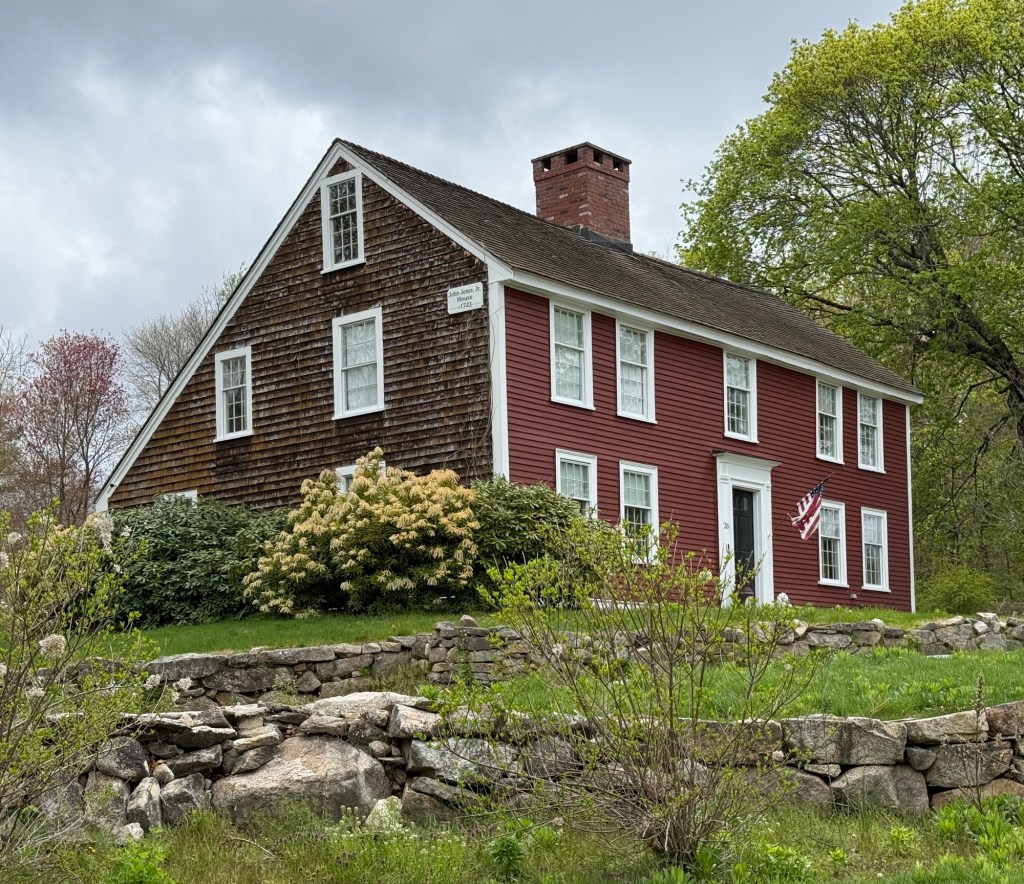
Possibly the oldest extant building in the town of Milford, Massachusetts, the Jones-Corbett Farmhouse stands as a well-preserved example of a rural, First Period residence for early settlers to the area. The Jones Family first arrived in present-day Milford in 1703, when Elder John Jones (1669-1753) settled in the area from Hull, and raised his family in the first wood-frame dwelling in the area, which was still occupied by the Nipmuc Tribe. Elder John Jones raised six children from their home (demolished in 1874), including John Jones Jr., who built this house. John Jones built this house by 1723 but after a few years, traded properties with his brother-in-law, Daniel Corbett, and sister, Sarah. The house was likely added onto with the saltbox roof as the family grew in size and prosperity, and a barn was built on the estate to house horses and other livestock. When Daniel Corbett died in 1753, among his listed property included “a negro boy, his bed and hoe”, with his enslaved young man likely residing in this home and working the property. The residence is an important piece of Milford history that tells the full story of early America.
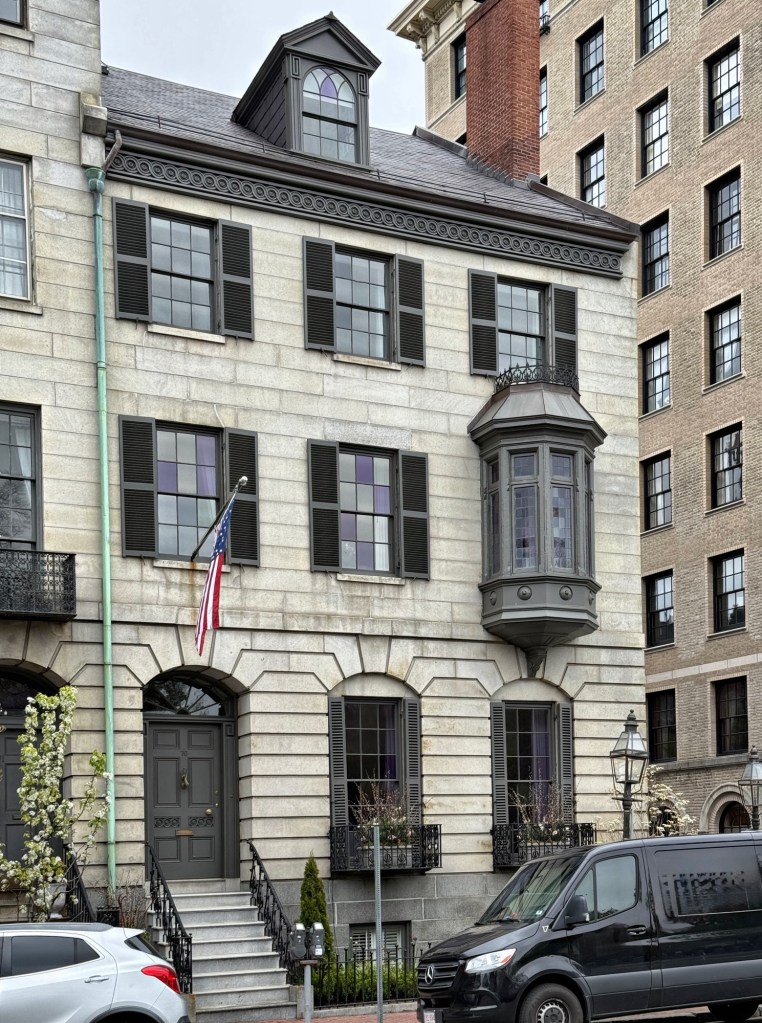
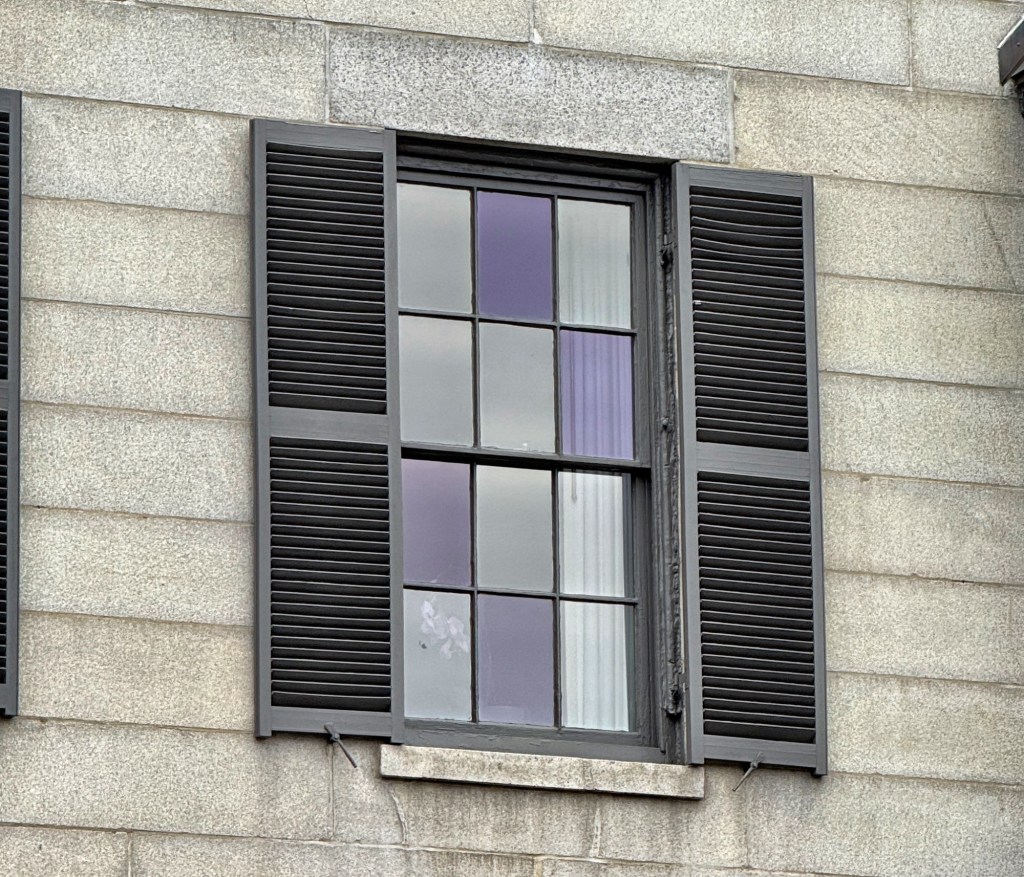
One of six attached houses townhouses between 70-75 Beacon Street, this stately granite-faced residence was built concurrently with its neighbors in 1828 on speculation for the Mount Vernon Proprietors, a group of wealthy Boston businessmen who helped develop Beacon Hill into the posh, architecturally significant neighborhood it is today. The Mount Vernon Proprietors knew how important Beacon Street was as the entry into the neighborhood, and thus, hired Boston’s premier architect, Asher Benjamin, to design the row. When completed, all of the houses were identical, but throughout the 19th and 20th centuries, they all deviated from the original design, some gaining additional floors, others adding bay windows, but all together form a cohesive and architecturally significant span of houses. Completed in 1829, the corner dwelling is known as the Greenough-Dwight House and it retains its original three-story rusticated granite façade with segmental arch openings. The major change to the exterior of the Greenough-Dwight House is the addition of the ornate wood oriel window with iron cresting in 1874, the oriel and facade feature the iconic purple windows, which became a status symbol in the 20th century. The story goes, that between 1818 and 1824, an English company sent shipments of glass that contained too much manganese oxide into Boston Harbor. After being exposed to sunlight for an extended period of time, the manganese oxide in the glass began to turn purple creating the colored panes we love today. Over time, many panes broke or were replaced, creating the checkerboard appearance on so many windows, but many owners in the 20th century had imitation purple glass installed as a marker of wealth and prestige, like in this house and bay, which were built after the period that the glass was brought over from England. My favorite in the row, the Greenough-Dwight House shines with its granite facade and brick end wall, with panes reflecting the sun off her violet glass windowpanes.
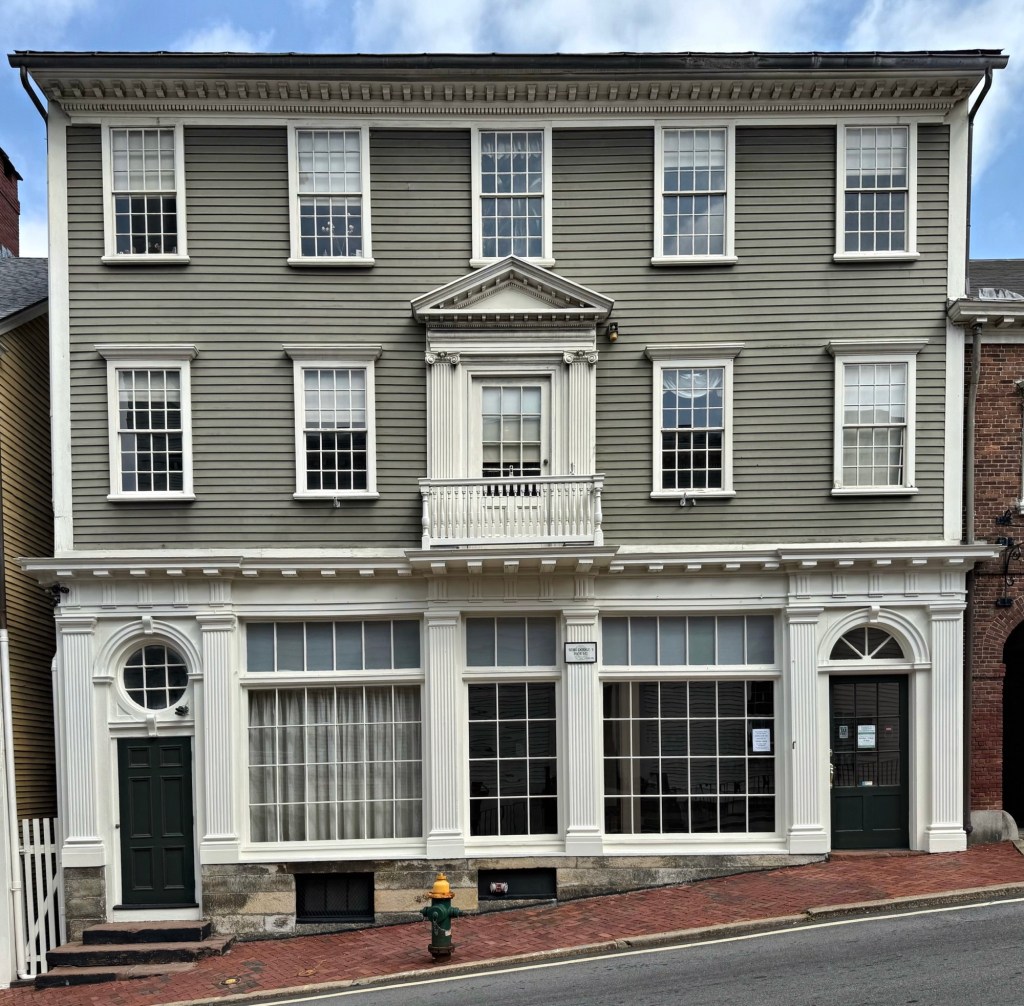
The Dodge-Brown House on Thomas Street in Providence, Rhode Island, was built in 1786 by Seril Dodge (1759-1802), a silversmith and clockmaker. Seril Dodge was a middle-class resident who did well in Providence circles, as an artisan and shop keeper. The house was originally a two-story residence with central entrance that was raised up in the early 20th century to facilitate a new storefront. Seril Dodge and his family only lived here briefly before moving to a brick house next door. Dodge sold the property to Nicholas Brown II (1769-1841) who rented the home to his stepmother, Avis Binney Brown, who became the widow of one of Providence’s richest men, Nicholas Sr. It continued to stay in Brown family hands through the nineteenth century, but only as an investment. The house was raised one story above street level in 1906, when the handsome Colonial revival storefront was installed from plans by the firm of Stone, Carpenter and Willson. The original front door with elaborate pedimented and pilastered enframement is now a door to a small second floor balcony. Since 1919, the Providence Art Club has owned the building, who for years had the ground retail space occupied as an art store, but now contains a club gallery.
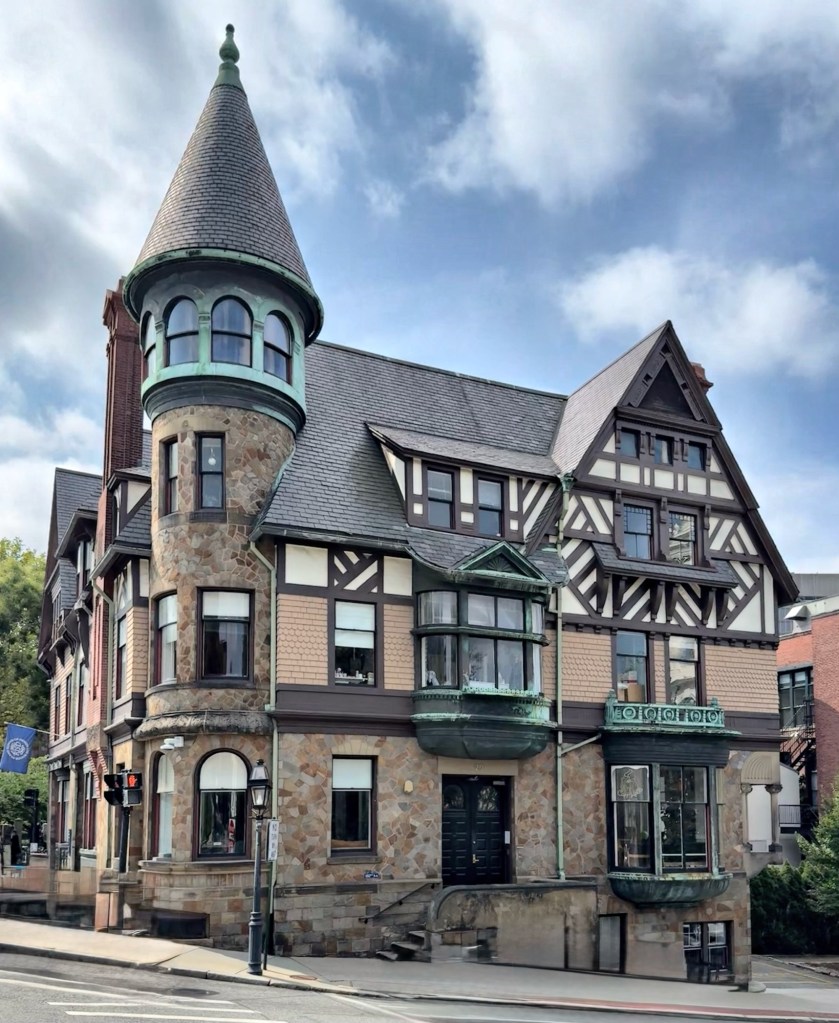
Perched on College Hill in Providence, Rhode Island, the Dr. George W. Carr Mansion at the corner of Benefit and Waterman streets, stands as one of the most attractive and interesting interpretations of the Queen Anne style in New England. The stately home was built in 1885 for George Wheaton Carr (1834-1907) a medical doctor who served as a surgeon during the Civil War and later as head surgeon for multiple Providence-area hospitals. For his Providence home, Dr. Carr hired architect, Edward I. Nickerson, to furnish plans, which resulted in this mansion with irregular plan, four-story corner corner capped with a conical roof, varied materials in stone, wood shingles, half-timbering, and copper bays. The Carr Mansion was purchased by the Rhode Island School of Design (RISD) in 1916, and has served a variety of roles for the school including as student housing and a cafe/lounge.
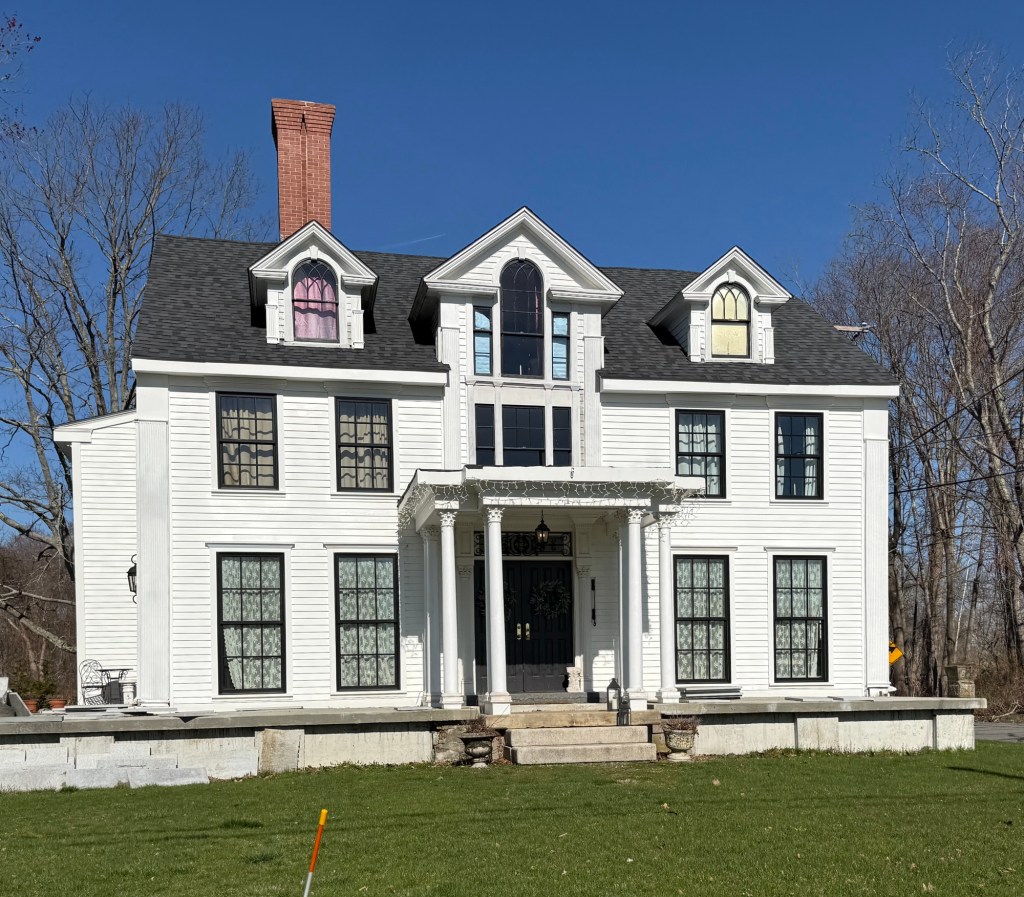
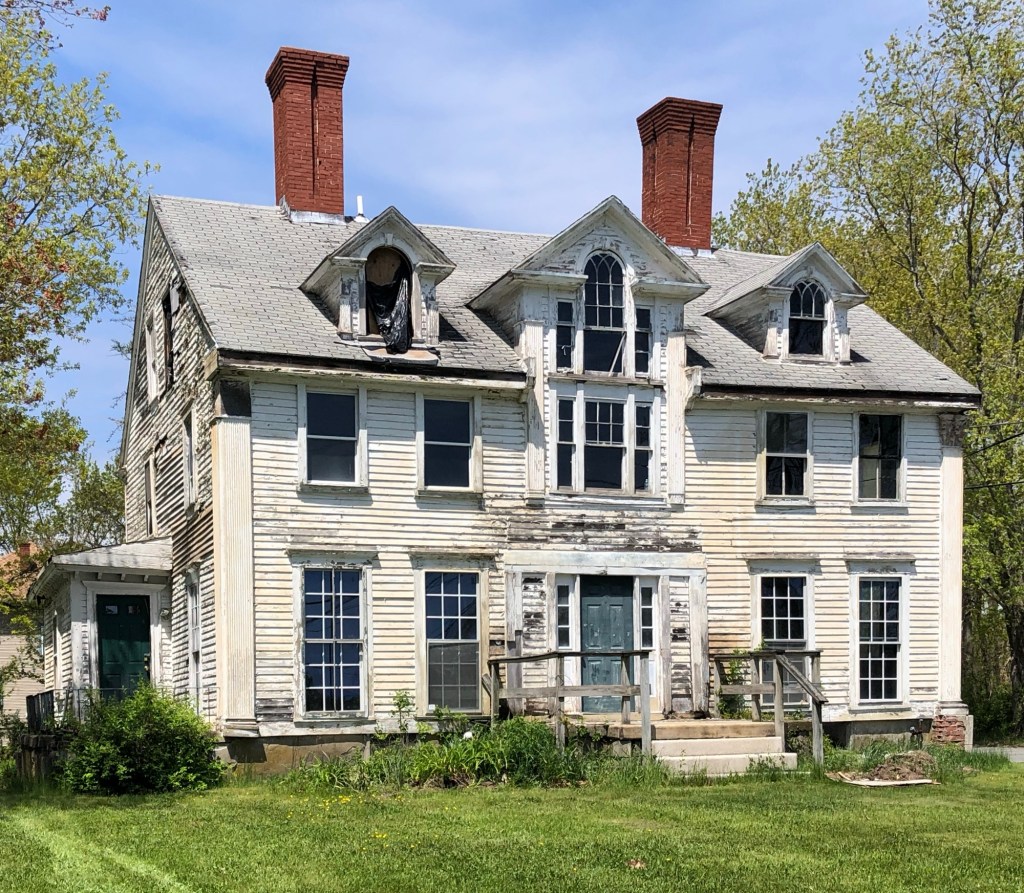
This large mansion in Swansea, Massachusetts, was constructed in the early 1800s for Mason Barney, a shipyard owner, likely by his own shipwrights. Barneyville, formerly known as “Bungtown” in the early 1770s, was a bustling village in Swansea where young men worked from sunup to sundown sawing, filing, shaping, boring, and fastening planks and timbers together for the Barney Shipyard. The shipyard was founded in the 1770s by Jonathan Barney, a prominent boat builder in New England established the shipyard in the 1770s. The Barney Shipyard saw its greatest success under Barney’s son, Mason, in the early 18th century. When Mason Barney (1782-1868) inherited his father’s shipyard, he also had this house built for his family, just a stone’s throw from the shipyard where he could oversee the many ships built and sailed down the river to Warren, Rhode Island, for fitting. By the early 20th century, the shipyard had already closed and this property was purchased by Lorenzo P. Sturtevant, a jeweler who completely updated the old Barney House in the Colonial Revival style, adding the entry porch and oversized dormers. By the end of the 20th century and early 21st, the house was abandoned and decaying until a few years ago when new owners renovated the old Barney-Sturtevant Mansion back to a livable home.