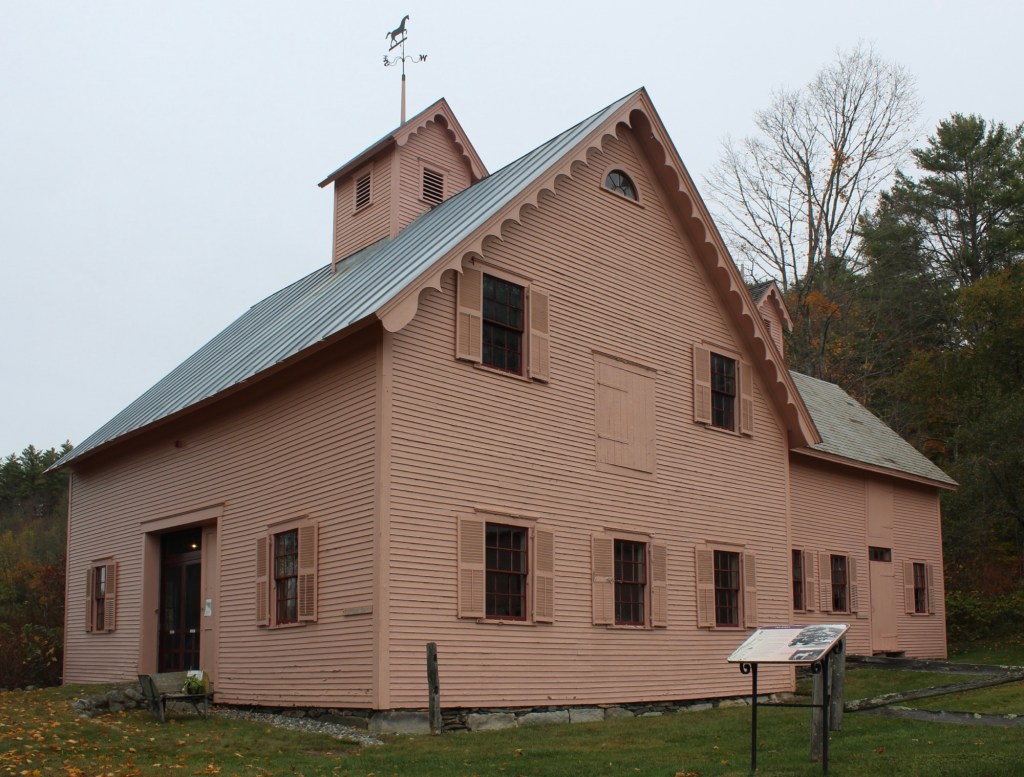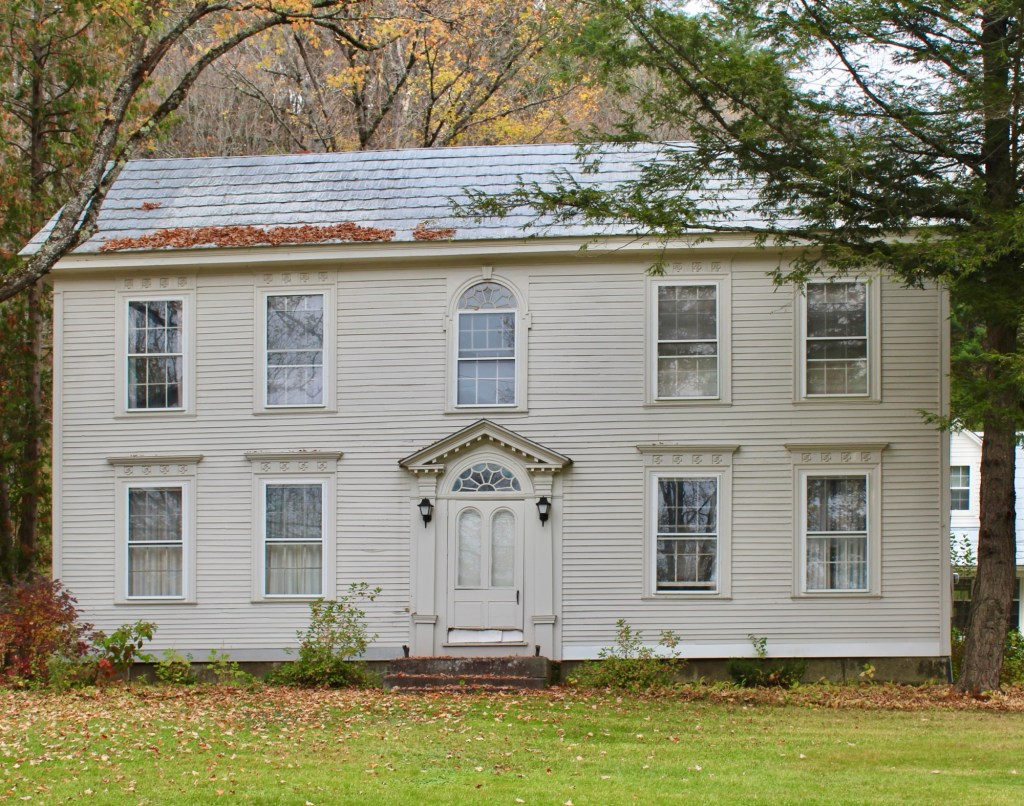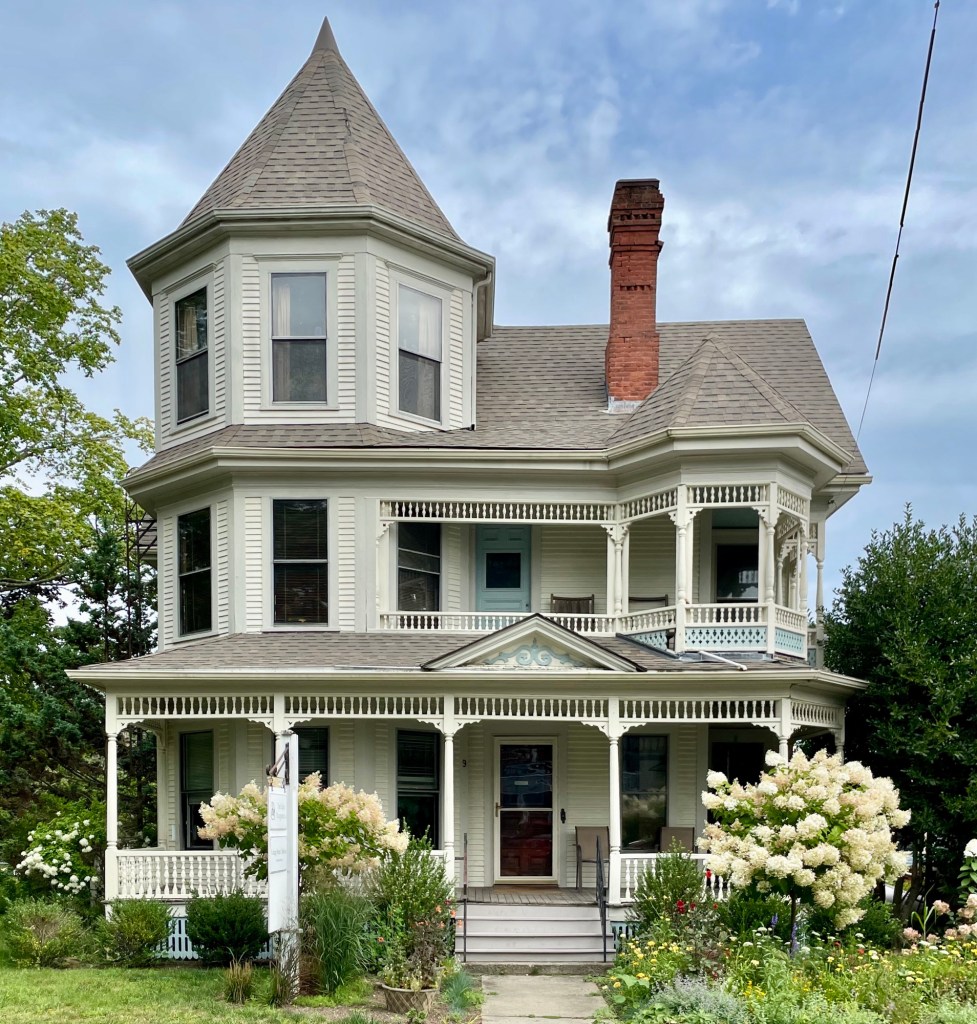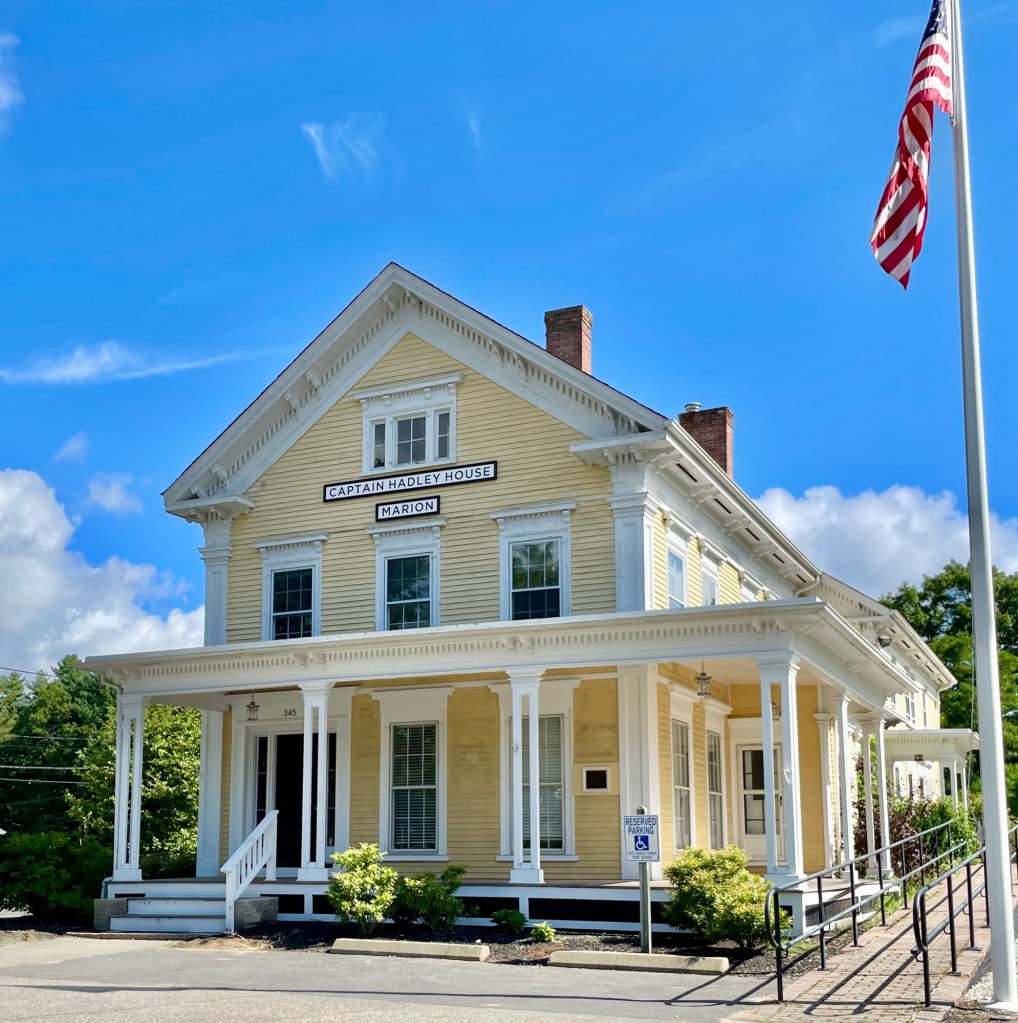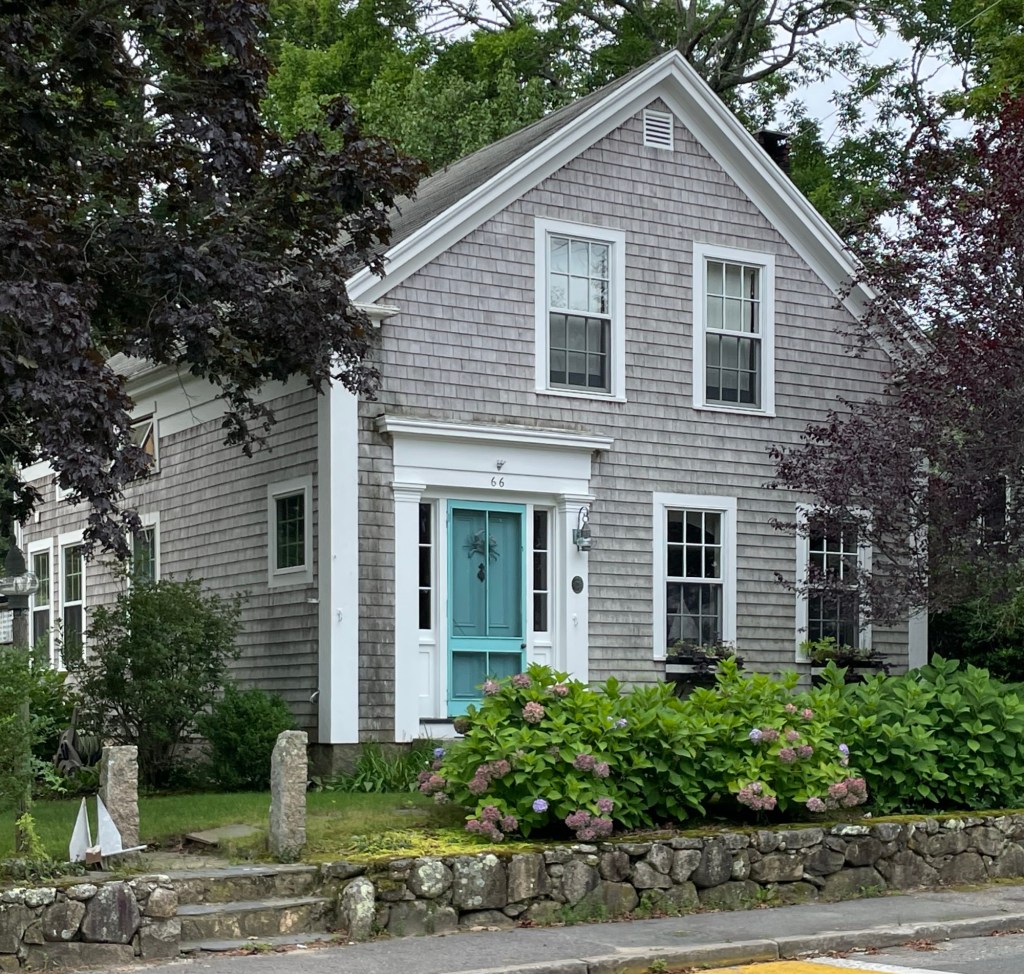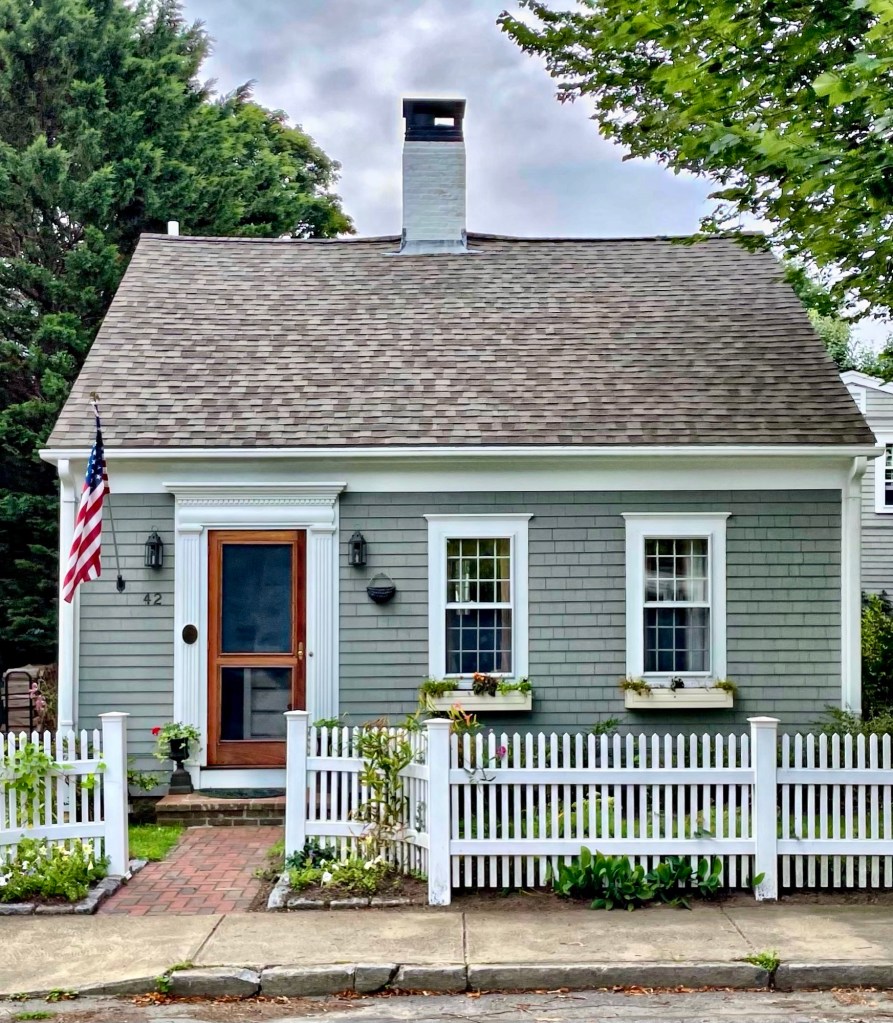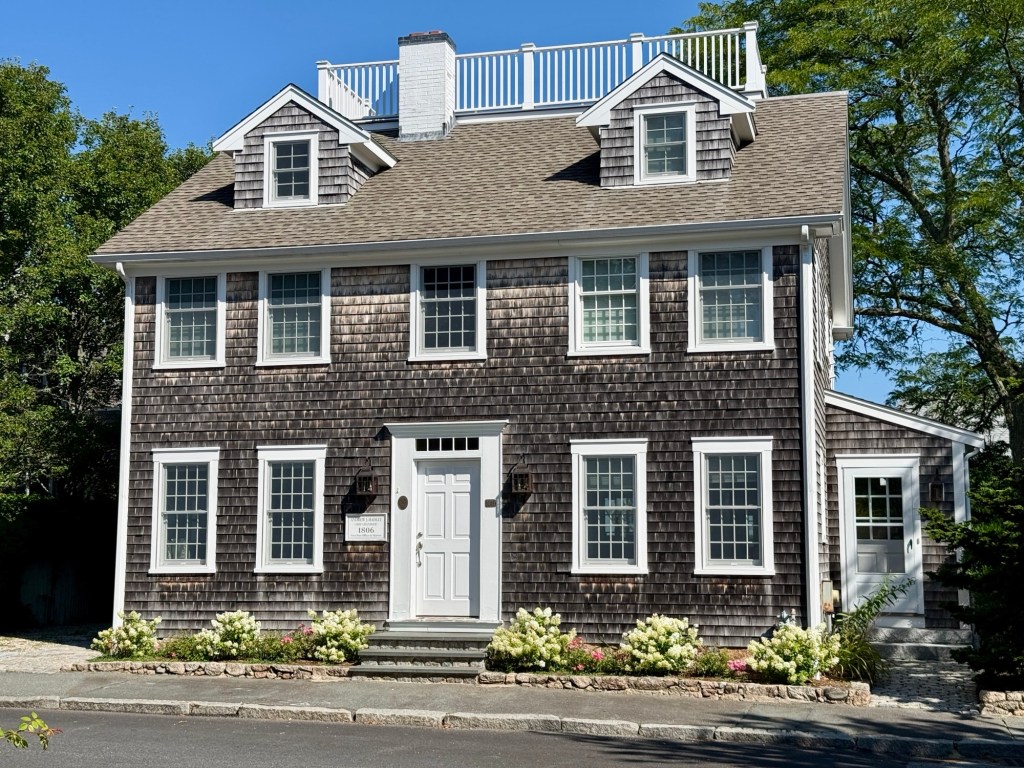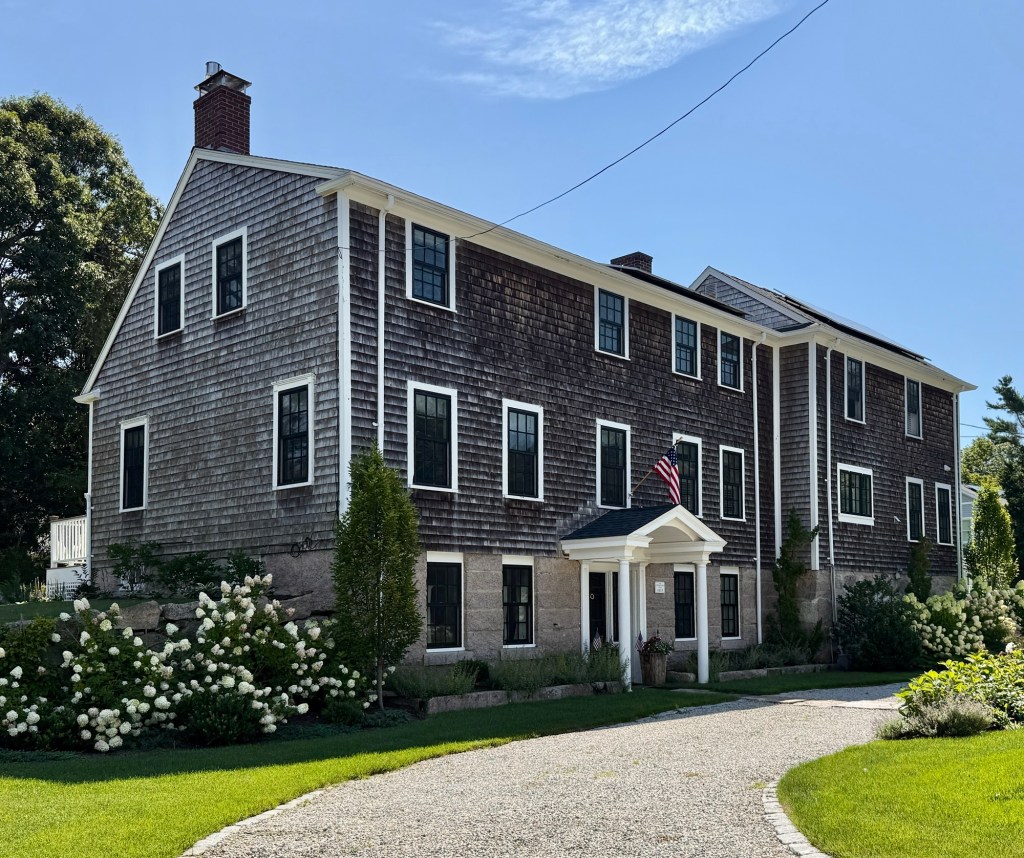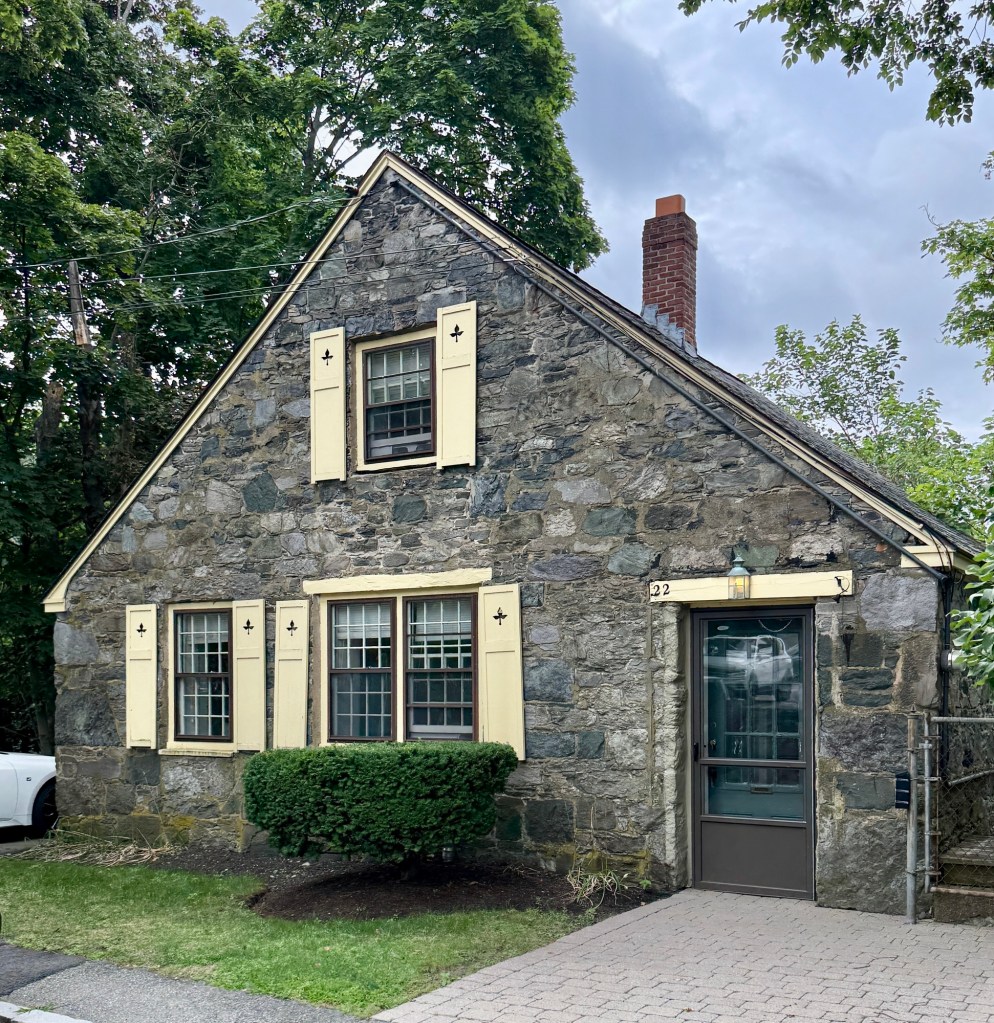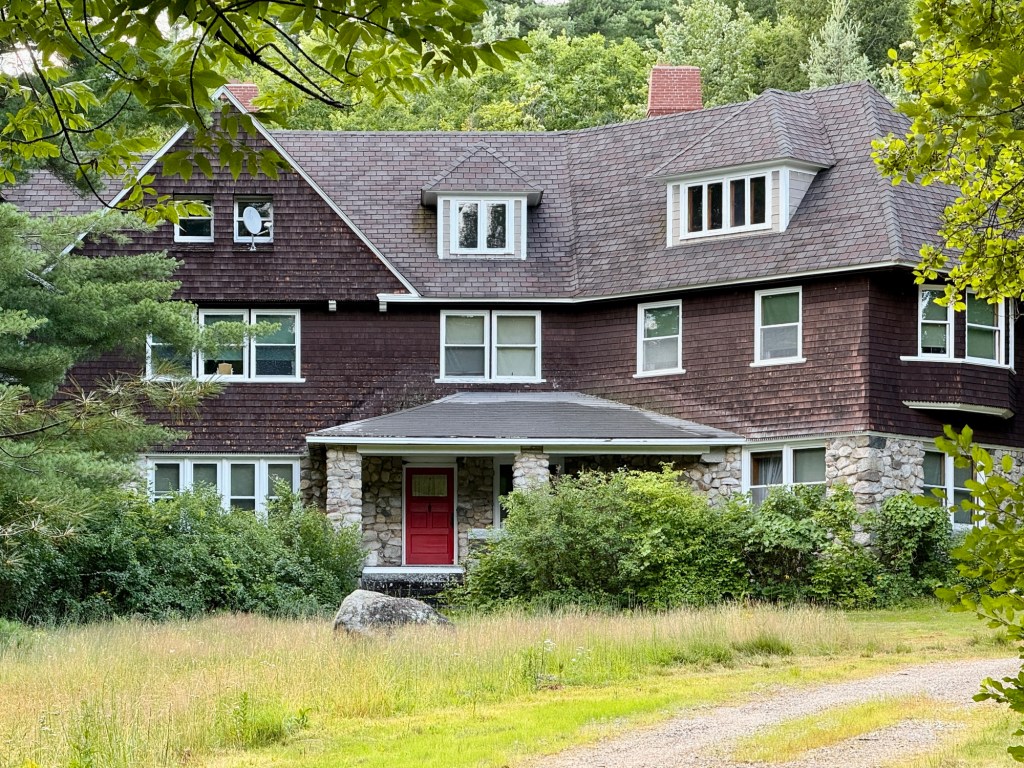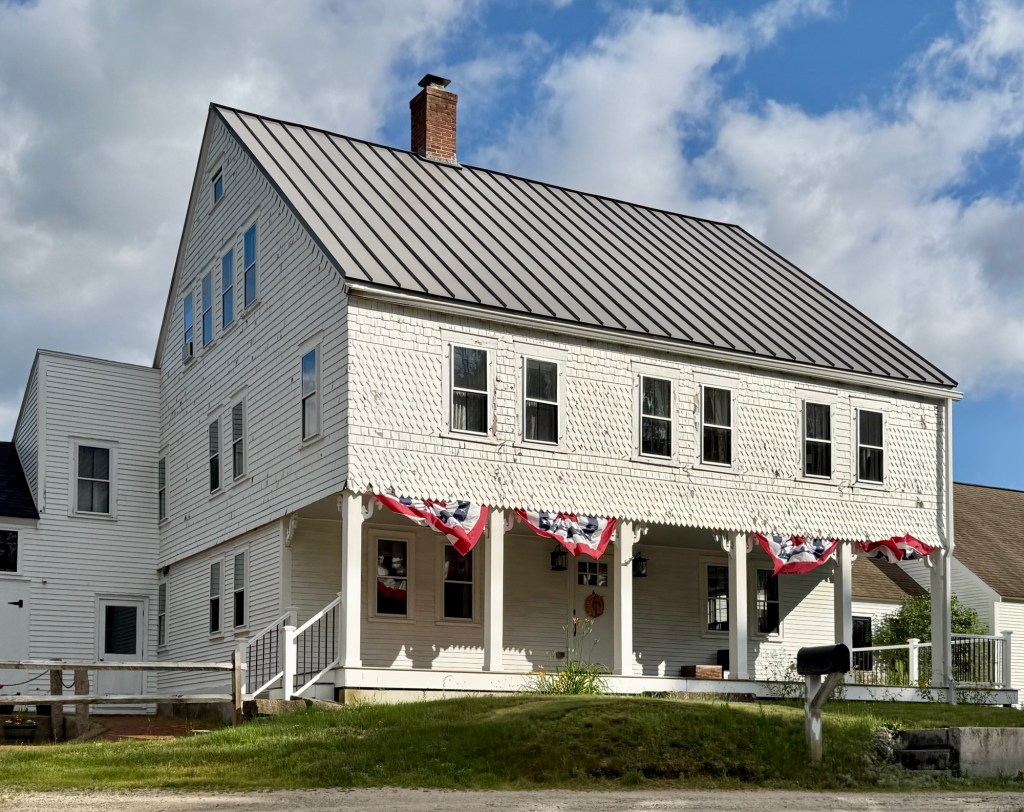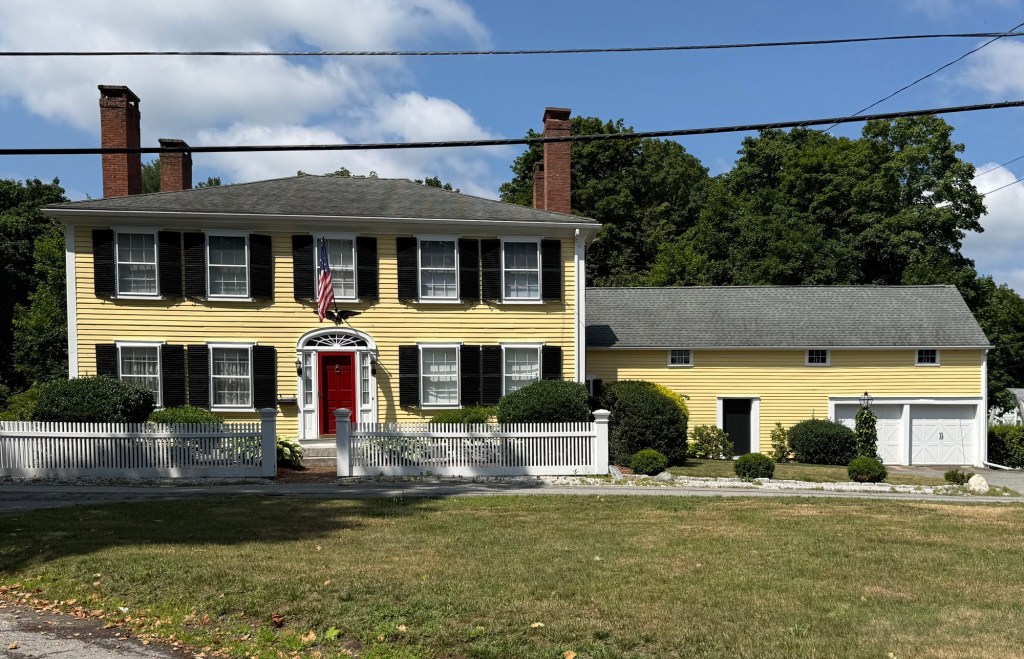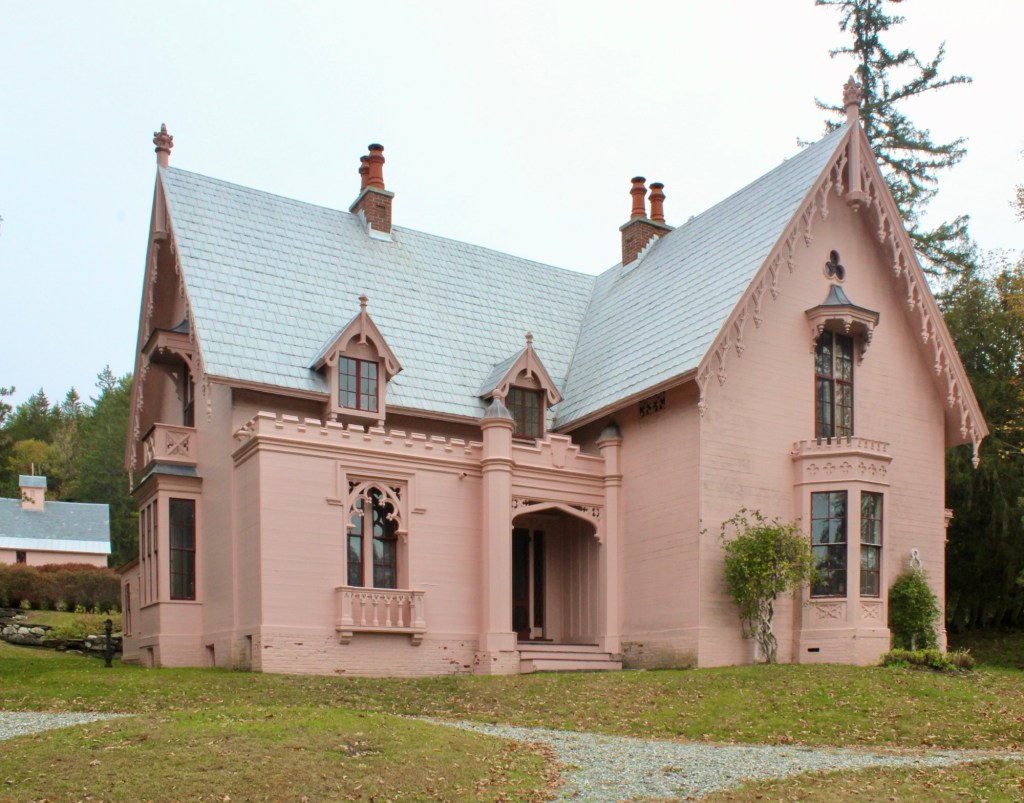
This house on Gardner’s Neck Road in Swansea, Massachusetts, was designed in 1903 by Fall River-based architect, Edward I. Marvell, for Francis L. Gardner, a descendant of the Gardners for whom Gardner’s Neck is named. Francis Gardner’s father, Leland, was a successful market gardner who farmed locally with the use of greenhouses, shipping fresh produce and other goods to Fall River and transportation to other nearby cities. This business continued under his sons, Francis and Chester until about 1925, when they began selling land on Gardner’s Neck for development. Francis’ house is an excellent early 20th century residence that blends multiple styles popular at the turn of the 20th century in a square form.
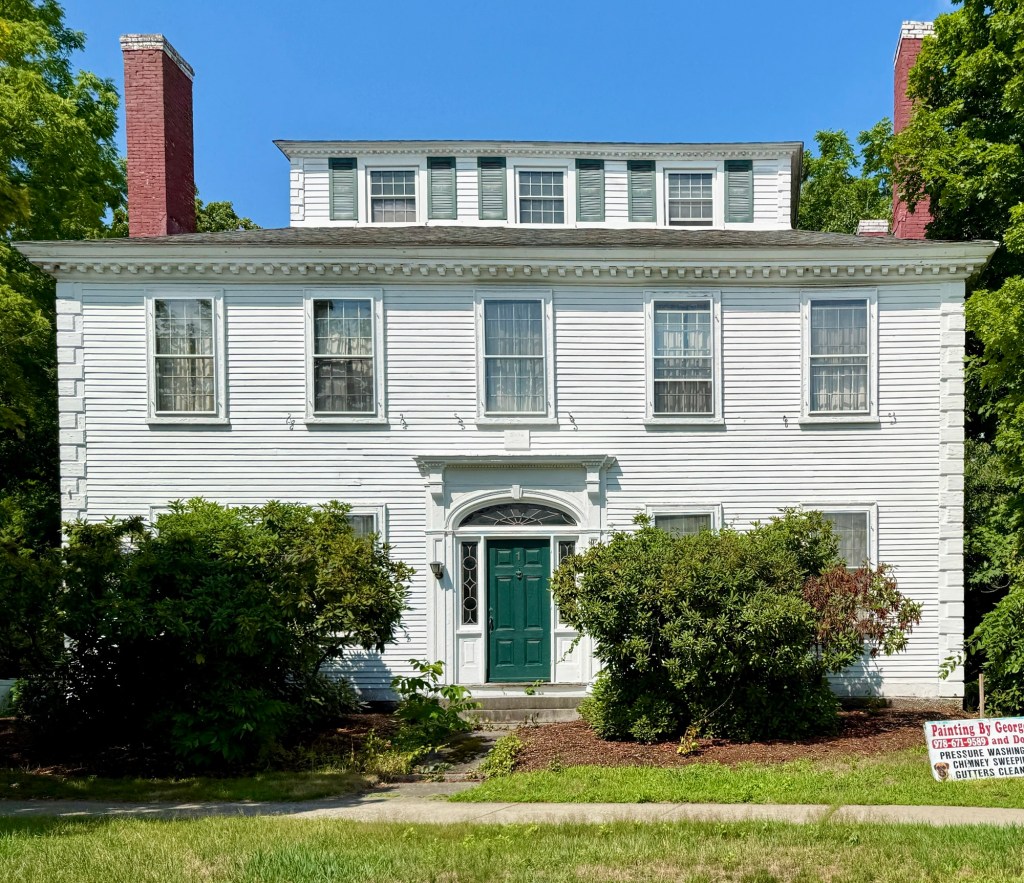
This large mansion in Swansea, Massachusetts, was constructed in the early 1800s for Mason Barney, a shipyard owner, likely by his own shipwrights. Barneyville, formerly known as “Bungtown” in the early 1770s, was a bustling village in Swansea where young men worked from sunup to sundown sawing, filing, shaping, boring, and fastening planks and timbers together for the Barney Shipyard. The shipyard was founded in the 1770s by Jonathan Barney, a prominent boat builder in New England established the shipyard in the 1770s. The Barney Shipyard saw its greatest success under Barney’s son, Mason, in the early 18th century. When Mason Barney (1782-1868) inherited his father’s shipyard, he also had this house built for his family, just a stone’s throw from the shipyard where he could oversee the many ships built and sailed down the river to Warren, Rhode Island, for fitting. By the early 20th century, the shipyard had already closed and this property was purchased by Lorenzo P. Sturtevant, a jeweler who completely updated the old Barney House in the Colonial Revival style, adding the entry porch and oversized dormers. By the end of the 20th century and early 21st, the house was abandoned and decaying until a few years ago when new owners renovated the old Barney-Sturtevant Mansion back to a livable home.
This modified First Period house on Main Street in Swansea, Massachusetts, dates to about 1720 and is a New England Colonial in all the best ways. The residence was built for Jonathan Hill (1684-1737) who purchased what was once a seventy-acre farm on the site in 1720 from Ebenezer Eddy, a local blacksmith. Jonathan Hill farmed the land nearby until his death in 1737, and in his will, the property passed to his widow, Elizabeth which was mentioned as “my new house built for the bringing up of my children.” The large colonial home is a center-hall form with a central stair surrounded by four rooms on each floor. Subsequent owners for over 300 years have lovingly maintained and preserved this important early house.
This unique two-story house on Main Street in Swansea, Massachusetts, is said to date to about 1734 but for the most part, its appearance dates to 100 years later. It is possible this was once a one-story, brick house, but by 1836, the property was owned by Samuel Sherman Hull (1788-1862) and Sarah Waite Hull (1799-1863) who married in 1835. It was during their ownership, that the house was expanded and “modernized” in the Greek Revival style in the 1830s or 1840s, when the wooden upper floor was added with elaborate central entrance with sidelights and pilasters at the corners and entry. The property was farmed by Mr. Hull and by the end of the 19th century, was owned by Mrs. Caroline A. Chace. It is possible that the brick floor operated as a store with a residence above but now is a single-family home.
Built in 1855, the Birch-Stevens Mansion of Swansea, Massachusetts, is a grand Italianate style residence distinguished by its low hipped roof with belvedere, broad overhanging eaves with brackets, paired arched windows, and expansive wrap-around porch, all of a scale not commonly found in such a small community. The residence was built for James Birch and overseen by his new bride, Julia Chace. Before construction on the home, James Birch (1828-1857), not a wealthy man, worked as a stagecoach driver in Providence. His bride-to-be desired a large mansion in her native Swansea, equipped with servants and all the finer things of life. Since this dream was not attainable in his present circumstances, Birch, an enterprising 21 year old, decided to join the Gold Rush in California to make his fortune. In California, James became a stagecoach line entrepreneur and founder of the California Stage Company, the largest stage line in California in the 1850s. James made a fortune and returned to his wife in Swansea bringing money for her to begin constructing their grand mansion. James left again, this time establishing the San Antonio -San Diego Mail Line, the first transcontinental mail route in the United States. In 1857, while heading home, James sailed from San Francisco to Panama, took a train across the Isthmus, and sailed for New York on the steamer SS Central America. During the voyage, his ship was struck by a hurricane and later sunk. Many survivors clung to pieces of the ship’s wreckage for days with many dying to exposure or were swept away to their deaths, like James. He was just 28 years old. Back in Swansea, Julia was heartbroken but remarried her late-husband’s business partner, Frank Shaw Stevens, an equally successful businessman. Julia died in 1871, and Frank married a younger Elizabeth Case. The couple resided in this mansion for decades and donated substantially to their community, including funding the Town Hall, Public Library, Episcopal Church, and local public schools. In her will, Elizabeth Case Stevens bequeathed the large mansion in 1837 to the Frank S. Stevens Home for Boys which began as a boy’s orphanage. The organization remains to this day with an expanded mission, and maintain the sprawling estate and its various outbuildings, including the historic stable and farm structures.
Among the area’s best examples of a high-style Colonial Revival residence of the early 20th century, the Eisemann Mansion on Monmouth Street in Brookline’s Longwood neighborhood stands out not only for its scale and massing, but unique architectural details. The dwelling was built in 1905 for Selly and Albert Eisemann, both German-born Jews who immigrated to the United States and originally lived in New Mexico before moving to Brookline in their retirement. Albert was a retired wool merchant, and clearly made a name for himself out west, hiring local architect, James Templeton Kelley, to furnish plans for his large mansion in Longwood. With a boxy form and five bay facade (with six smaller windows at the third floor), the center-hall mansion is notable for its elaborate first-floor windows with individual cornices, recessed entry set between Ionic columns, and recessed niche balcony over the entry as a unique interpretation of a Palladian motif.
Silas Peavy (1858-1939) was born in Waterville, Maine, and with his brothers, Gustavus and Leopold, worked at his father’s clothing and merchandise store. The family moved to the Boston area and established J. Peavy and Brothers, continuing the family business in Boston with locations in New York. In 1904, Silas Peavy purchased a house lot on Kent Street and hired the architectural firm of Hartwell & Richardson to design a house there for his family. Peavy likely moved to this neighborhood as it became a Jewish enclave around the turn of the 20th century. The Silas Peavy House is an excellent example of the Neo-Classical style with symmetrical facade, porte cochere on the side, and monumental elliptical portico supported by two-story Ionic columns.
In 1868, James Wilkinson Clapp (1847-1931) married Eliza Tuckerman and they soon after moved into this large Victorian-era house on St. Paul Street in Brookline. James was the second son of Otis Clapp, a politician, publisher, and promoter of homeopathy. Otis Clapp operated a large homeopathic pharmacy, Otis Clapp & Son, which continued as a business after his death, evolving to encompass different areas of medical technology. It was one of the oldest-operating pharmaceutical manufacturers in the United States by the time it was acquired by Medique in 2008. James Clapp was also a medical doctor and at the young age of 22, acquired a house lot here on St. Paul Street and had this large Second Empire style residence built for his family. Dr. James W. Clapp worked as a pharmacist and taught courses at the Boston University School of Medicine. He spent summers at his gentleman’s farm in Bolton, Massachusetts, until his death in 1931. The Clapp House was later used as a doctor’s residence and office and a nursing home, suffering from neglect, but was ultimately restored in the early 21st century.
Stoneholm Manor is a historic estate tucked away in Sharon, Massachusetts, that remains one of the finest examples of a Second Empire style mansion and carriage house built of stone in New England. Stoneholm was built in 1865 for Horace Augustus Lothrop (1828-1898) within a year of his marriage to second wife, Sarah Gorham Swain. Horace A. Lothrop was a manufacturer and businessman with factories in Sharon and nearby towns and he invented innovative tools like hoes and wooden shanks for foot support in shoes and boots. He was also engaged in politics, serving in the state legislature and on the local school board. His country estate in Sharon is unique for its construction of locally quarried rock-face granite walls, fine mansard roof with cupola, and matching L-shaped carriage house, all in great condition. Stoneholm was listed on the National Register of Historic Places and remains a private residence.
Located on the aptly named Mann’s Hill Road in Sharon, Massachusetts, this historic double-house was built in 1831 as worker’s housing affiliated with the former Mann’s Cotton Mill. The first Mann’s Cotton Mill was constructed in 1831 by George Harvey Mann on Devil’s Brook on the East Branch of the Neponset River. George Harvey Mann (1793-1847) bought the water privileges from Joseph Warren Revere, the son of Paul Revere, and built a factory. The business carried on until a fire in 1840 destroyed the factory and it was rebuilt by George and his son, George Rodney Mann. As part of the original mill complex in 1831, a series of double-houses were built nearby for workers at the mill, making them always available for long days at work. The Mann’s Mill closed in 1900, and it was destroyed by fire in 1919. The double-houses like the one seen here, were sold by the heirs of the family at the turn of the 20th century and feature a stone base and wood frame second floor.