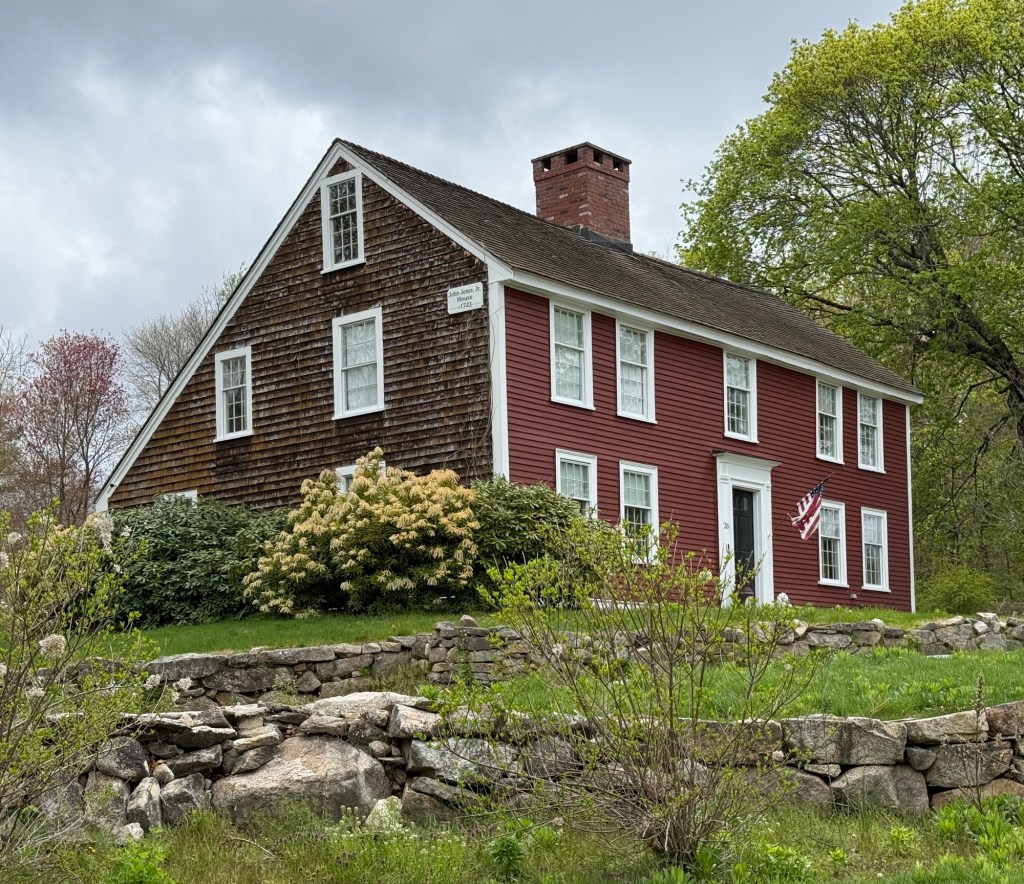
Jones-Corbett Farmhouse // 1723

Possibly the oldest extant building in the town of Milford, Massachusetts, the Jones-Corbett Farmhouse stands as a well-preserved example of a rural, First Period residence for early settlers to the area. The Jones Family first arrived in present-day Milford in 1703, when Elder John Jones (1669-1753) settled in the area from Hull, and raised his family in the first wood-frame dwelling in the area, which was still occupied by the Nipmuc Tribe. Elder John Jones raised six children from their home (demolished in 1874), including John Jones Jr., who built this house. John Jones built this house by 1723 but after a few years, traded properties with his brother-in-law, Daniel Corbett, and sister, Sarah. The house was likely added onto with the saltbox roof as the family grew in size and prosperity, and a barn was built on the estate to house horses and other livestock. When Daniel Corbett died in 1753, among his listed property included “a negro boy, his bed and hoe”, with his enslaved young man likely residing in this home and working the property. The residence is an important piece of Milford history that tells the full story of early America.

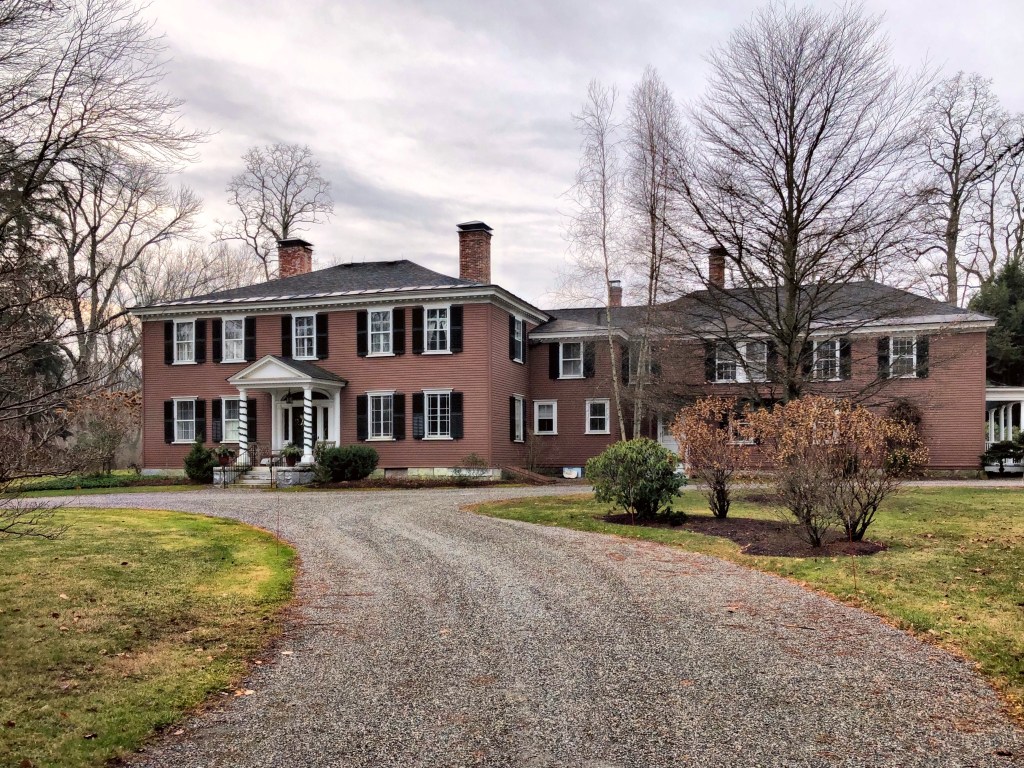
Chaddock Boarding House // 1799

Calvin Chaddock (1765-1823) graduated from Dartmouth in 1791 and three years later earned a Master of Arts degree from the college. In 1792, he married Meletiah Nye and they settled in Rochester, Massachusetts, where he became pastor of a Congregational parish in the rural northern part of town. In 1798, he opened an academy for boys and girls in the village and built this beautiful Federal style home as a boarding house for students to reside in (the schoolhouse is no longer extant). By 1804, he had “a respectable number of students from different parts of the United States.” The man moved to Ohio before settling in Charlestown, West Virginia, where he lived in a homestead with his family and three enslaved people, Charles, Thomas, and an unnamed woman. Upon his death in 1823, the three people enslaved by Chaddock, were sold at auction. The former boarding house in Rochester was later occupied as a tavern and stagecoach stop, and a store, when it was given some 19th century alterations. It has been a private home for the past hundred years.

Sedgwick House // 1785

Built in 1785, the Sedgwick House on Main Street in Stockbridge, MA, is the oldest of several Federal mansions built in town after the Revolution. Theodore Sedgwick (1746-1813), one of the early lawyers of Berkshire County, moved to Stockbridge in 1785 and built this house. From 1796 to 1799 he was a Senator in the federal government, and declined a position of Secretary of the Treasury offered by George Washington. Before this, when a House Representative, he was nominated the fourth Speaker of the House. An ardent Federalist, Theodore retired from the national arena upon Thomas Jefferson’s election. Sedgwick was also a member of an early abolitionist society organized in Pennsylvania in 1775 and played a key role in abolishing slavery in Massachusetts by his win in the case of Bett v. Ashley. In this case, Sedgwick served as attorney of Mum Bet (also known as Elizabeth Freeman) an enslaved woman in nearby Sheffield and argued that slavery was inconsistent with the 1780 Massachusetts State Constitution, and won. Bet became the first enslaved African American to file and win a freedom suit in Massachusetts, effectively abolishing slavery in the state. She was later buried in the Sedgwick Family burial plot in Stockbridge. The home was later owned and occupied by Catharine Maria Sedgwick, Theodore’s daughter, who became one of nineteenth-century America’s most prolific women writers. She published six novels, two biographies, eight works for children, novellas, over 100 pieces of short prose and other works.