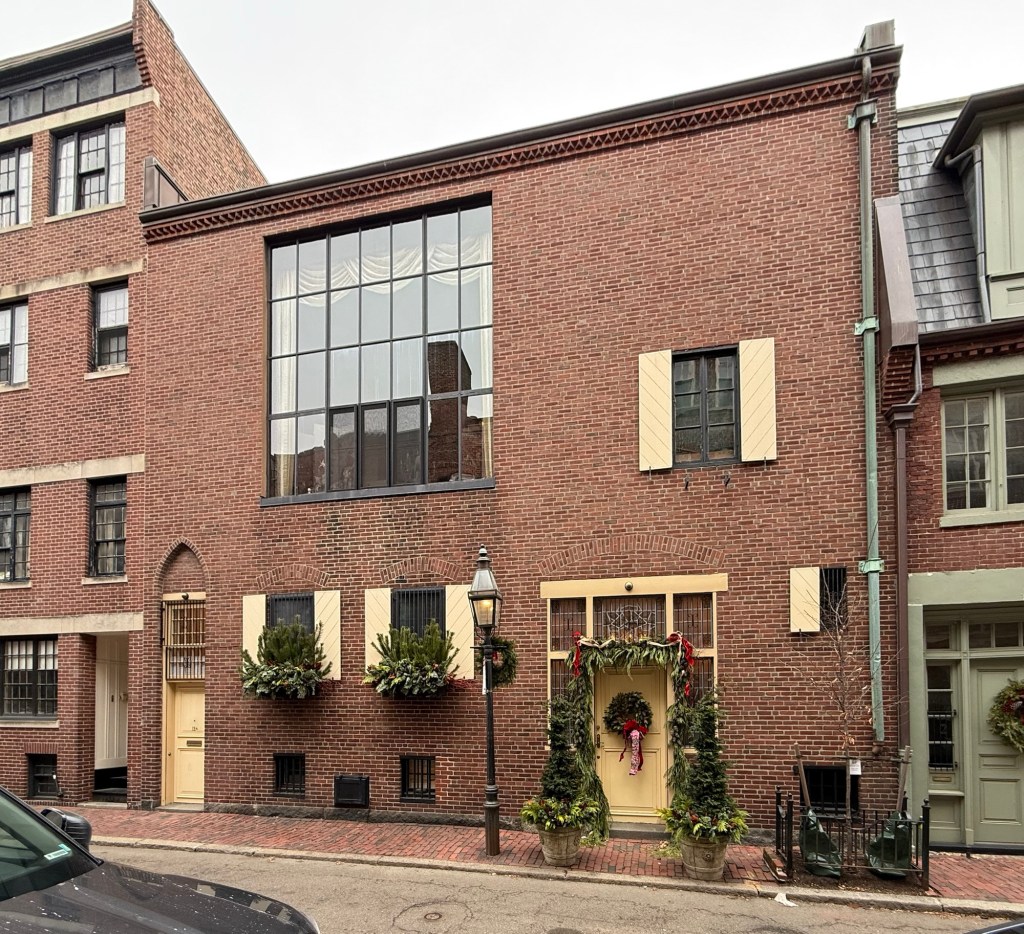
Martha Silsbee House and Studio // c.1922

Built from a historic stable building, this unique building on Lime Street in Beacon Hill served as a residence and studio for Martha Silsbee, a prominent New England watercolor and pastel artist. For her Boston residence, Martha Silsbee hired the firm of Richardson, Barott, and Richardson, an office founded by Philip and Frederic Richardson, sons of famed architect Henry Hobson Richardson, who had designed a house nearby with similar design elements years prior. Taking cues from Venetian architecture, the interior spaces were covered with cream-colored plaster with iron gates and walls lined with art. The design includes a massive studio window on the facade, which flooded Ms. Silsbee’s studio where she painted when not at her residence in the Dublin Artist Colony in New Hampshire. The facade also features pointed arches and artistic glass at the entrance. After her death, the property sold at auction. After WWII, the former studio and residence was purchased by Georges F. Doriot (1899-1987), a Parisian businessman who later taught at Harvard Business School and in 1946, founded the American Research and Development Corporation, the first publicly owned venture capital firm in the United States.
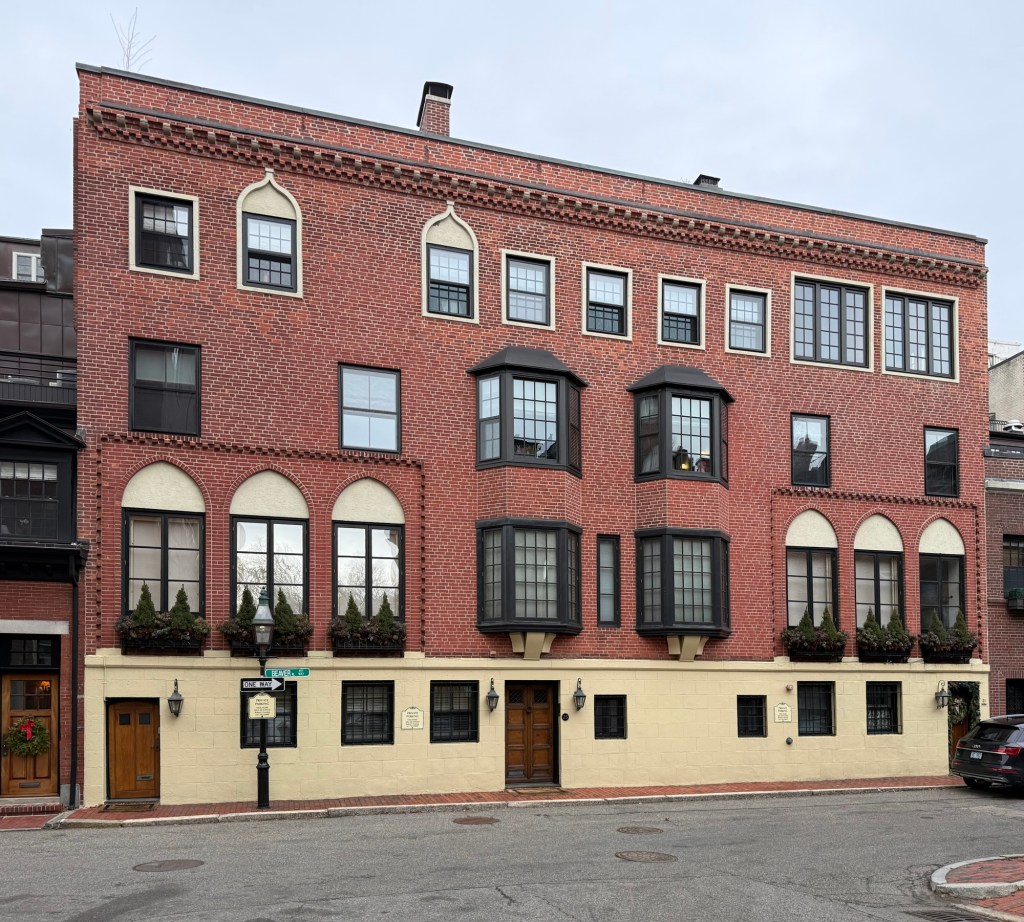
Harris and Mildred Livermore Mansion // 1919

The four-story brick residence on Beaver Street in Beacon Hill was constructed in 1919 in the style of a Venetian palazzo for Harris Livermore, president of the Coastwise Transportation Corporation, and his wife, Mildred. The large home was designed by the firm of Richardson, Barott & Richardson, an office founded by Philip and Frederic Richardson, sons of famed architect Henry Hobson Richardson. The large mansion was featured in architectural publications, highlighting the popularity for Italian styles and the interior design of the home. The facade is finished in brick a stone base, with notable lancet windows with blind arches in groups of three and projecting oriel bays. At the fourth floor, two windows are surmounted by Venetian arches. After Harris Livermore died in 1929, the property was inherited by his daughter, Elizabeth, and her new husband F. Murray Forbes Jr., a prominent Boston attorney.

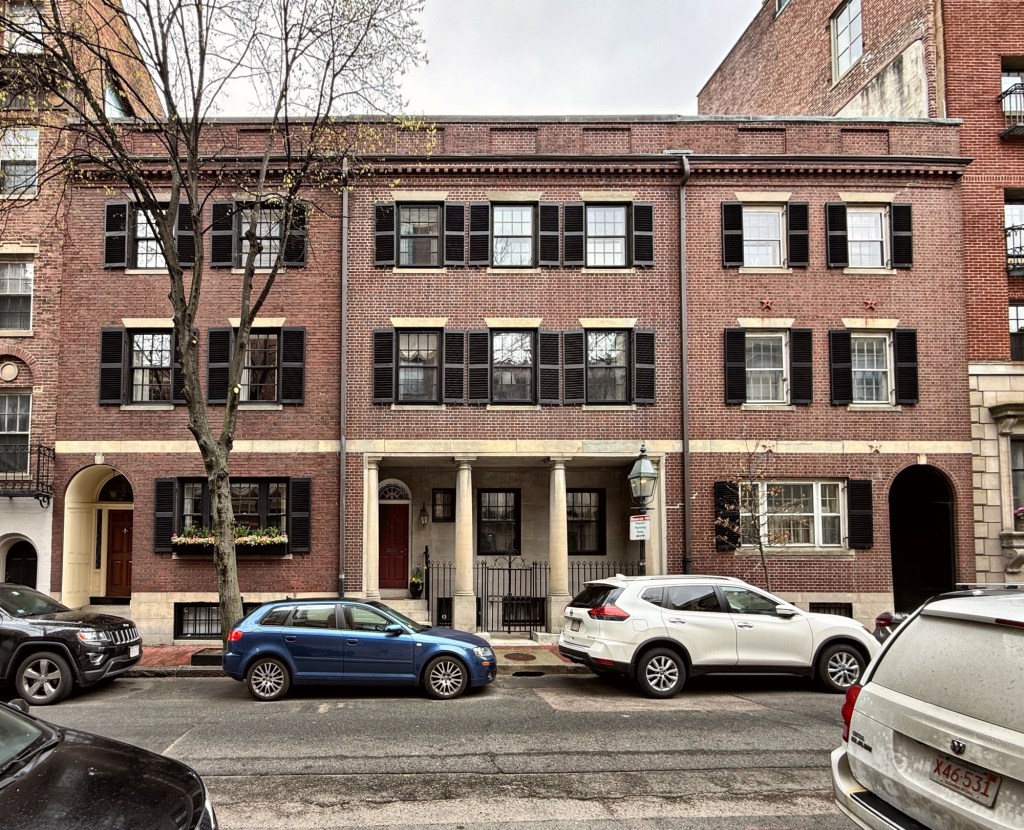
Chestnut Street Rowhouses // 1917

Similar to the Brimmer Street Terrace development nearby, this set of three rowhouses on Chestnut Street on the Flat of Beacon Hill, is an excellently designed development of residences as a collection rather than individually designed townhomes. The Chestnut Street Rowhouses replaced a stable formerly on the site, and were designed by the architectural firm of Richardson, Barott & Richardson, made up of Philip Richardson, Chauncey Edgar Barott, and Frederic Leopold William Richardson. Philip and Frederic Richardson were sons of architect Henry Hobson Richardson, but they did not reach the same level of notoriety as their late father, and charted their own course. The rowhouses read as a single composition with a unique center section flanked by two matching wings. The center house has a three bay front façade with the first-story clad in limestone which is all recessed and supported by Doric columns.